Weimar BerlinEight Reichstag elections · 1920–1933
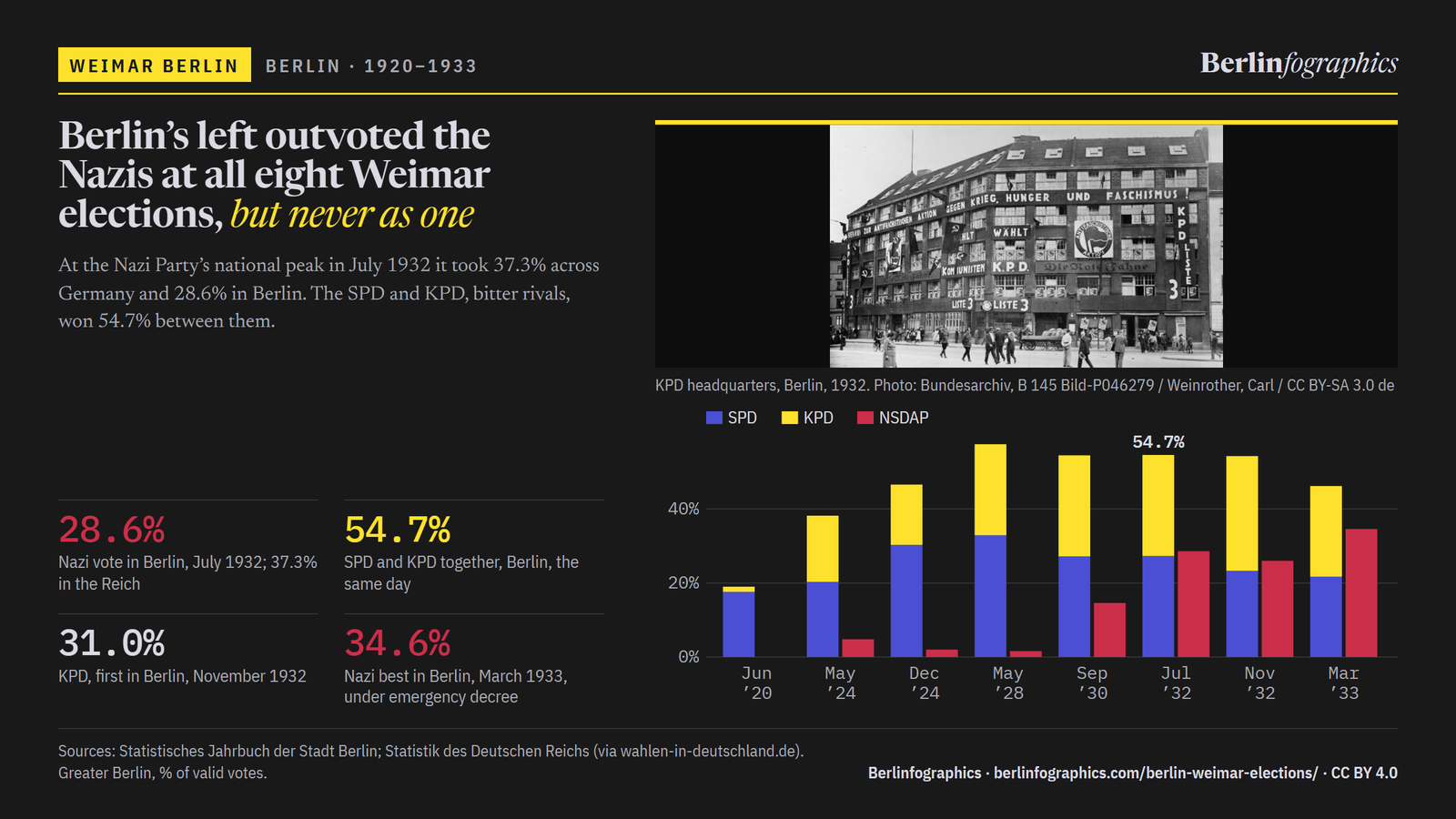
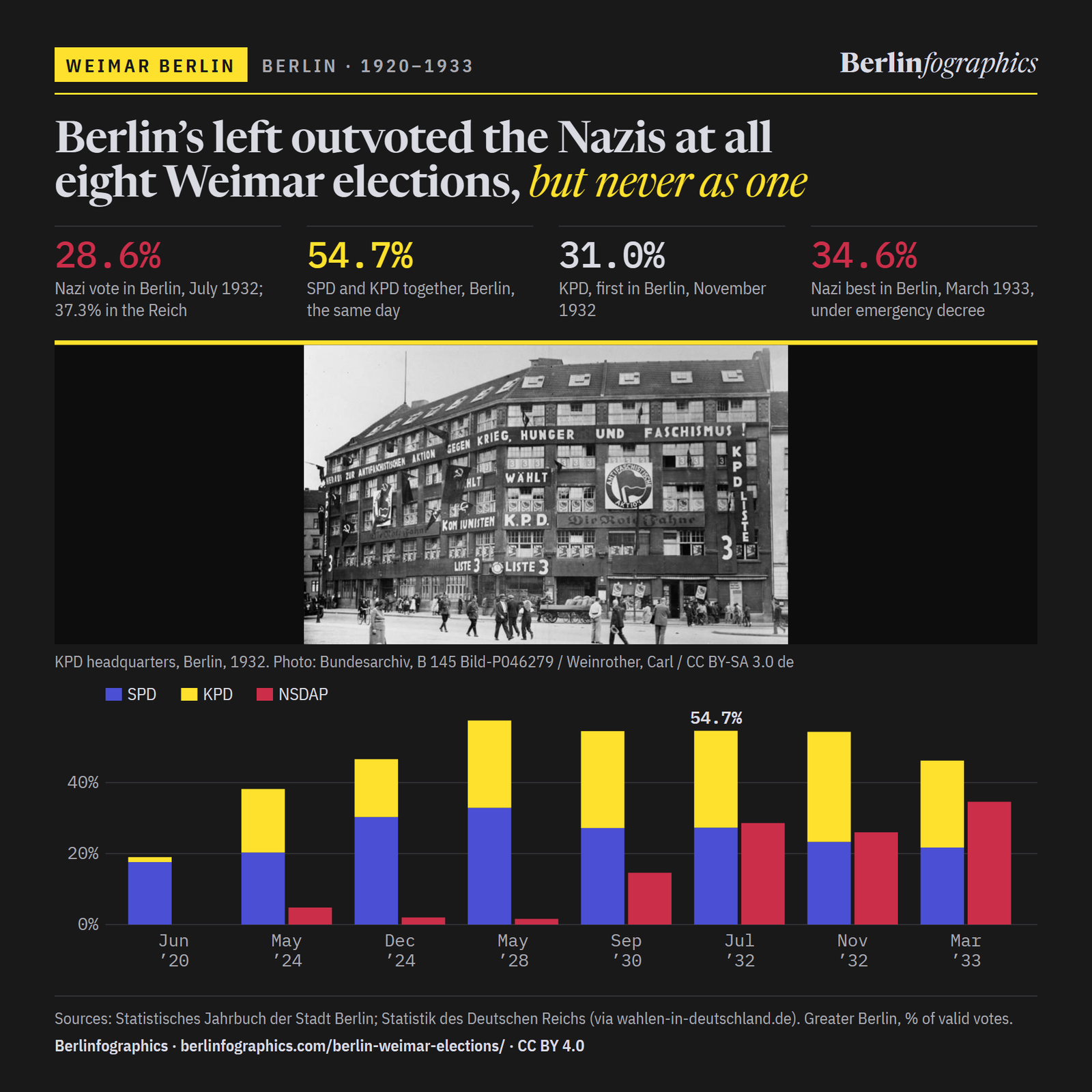
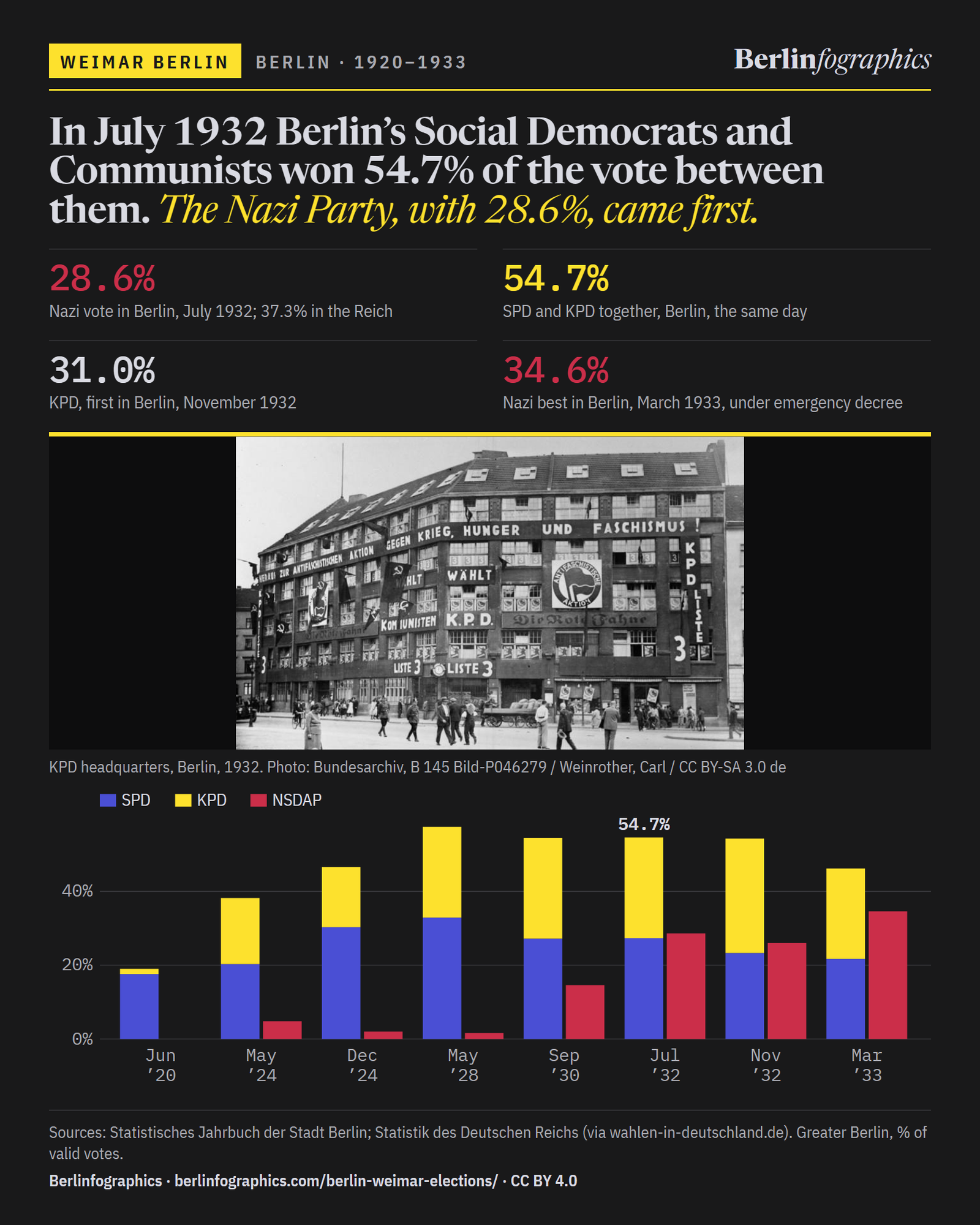
On 31 July 1932, at the Nazi Party’s national peak, it took 37.3% of the vote across Germany and 28.6% in Berlin. The SPD and the KPD won 54.7% of the city’s vote between them. They spent the campaign fighting each other, and on that day the Nazi Party came first in Berlin.
Scroll through eight elections
01Berlin against the Reich
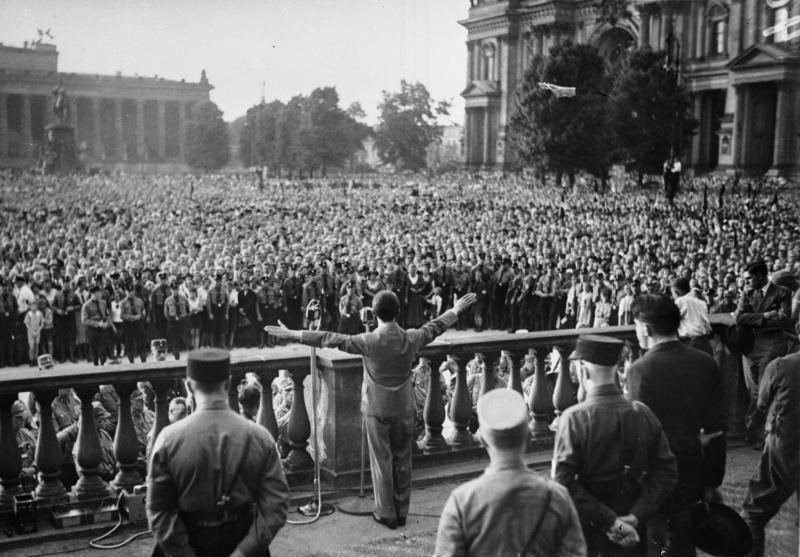
Joseph Goebbels had run the party in Berlin since Hitler made him Gauleiter on 28 October 1926. It never closed the gap. At its national peak in July 1932 it trailed its Reich share in the city by 8.6 points; in March 1933, with the Nazis already in government, by 9.3 points. Berlin never gave the party a majority.
Nazi Party share of the vote: Berlin and the whole Reich

02Eight elections
Each line is one party’s share of the Berlin vote, election by election, for the whole of Greater Berlin. The dashed red line is the Nazi Party across the Reich on the same day. Scroll, and the city votes.
Reichstag election · 6 June 1920
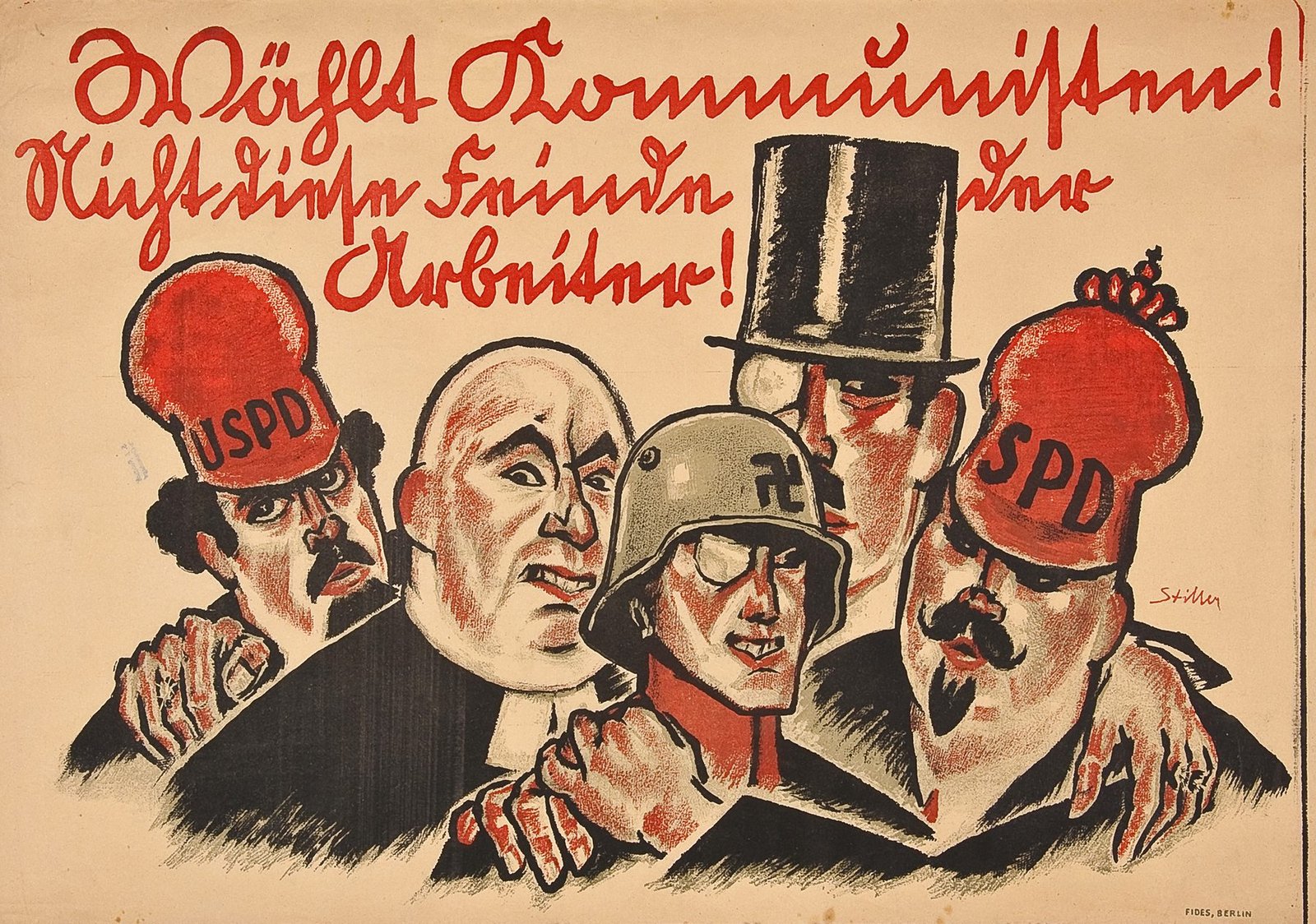
In the area that became Greater Berlin that autumn, the USPD, a breakaway from the SPD, won 37.7%. The SPD took 17.6% and the young KPD 1.4%. The Nazi Party did not stand. Already the KPD’s posters called both other workers’ parties “enemies of the workers”.
Source: Statistisches Jahrbuch der Stadt Berlin / Statistik des Deutschen Reichs · gonschior.de, Berlin
Reichstag election · 4 May 1924
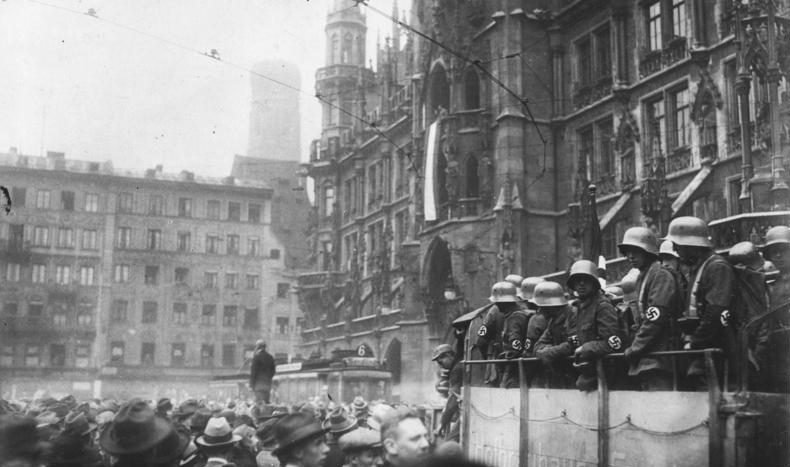
The NSDAP was outlawed after its failed putsch in Munich in November 1923. In May 1924 its candidates stood on a joint list with the Deutschvölkische Freiheitspartei: 4.8% in Berlin, 6.5% across the Reich. The USPD had collapsed to 2.6%; the KPD took 17.9%.
Source: Statistisches Jahrbuch der Stadt Berlin / Statistik des Deutschen Reichs · Statistik des Deutschen Reichs (Reich totals) · USHMM, refounding of the NSDAP
Reichstag election · 7 December 1924
Seven months later Berlin voted again. The SPD rose to 30.3%, the KPD fell to 16.3%, and the Nazis’ list, now the Nationalsozialistische Freiheitsbewegung, took 2.0% against 3.0% nationally. The party was refounded on 27 February 1925.
Source: Statistisches Jahrbuch der Stadt Berlin / Statistik des Deutschen Reichs · Statistik des Deutschen Reichs (Reich totals) · USHMM, refounding of the NSDAP
Reichstag election · 20 May 1928
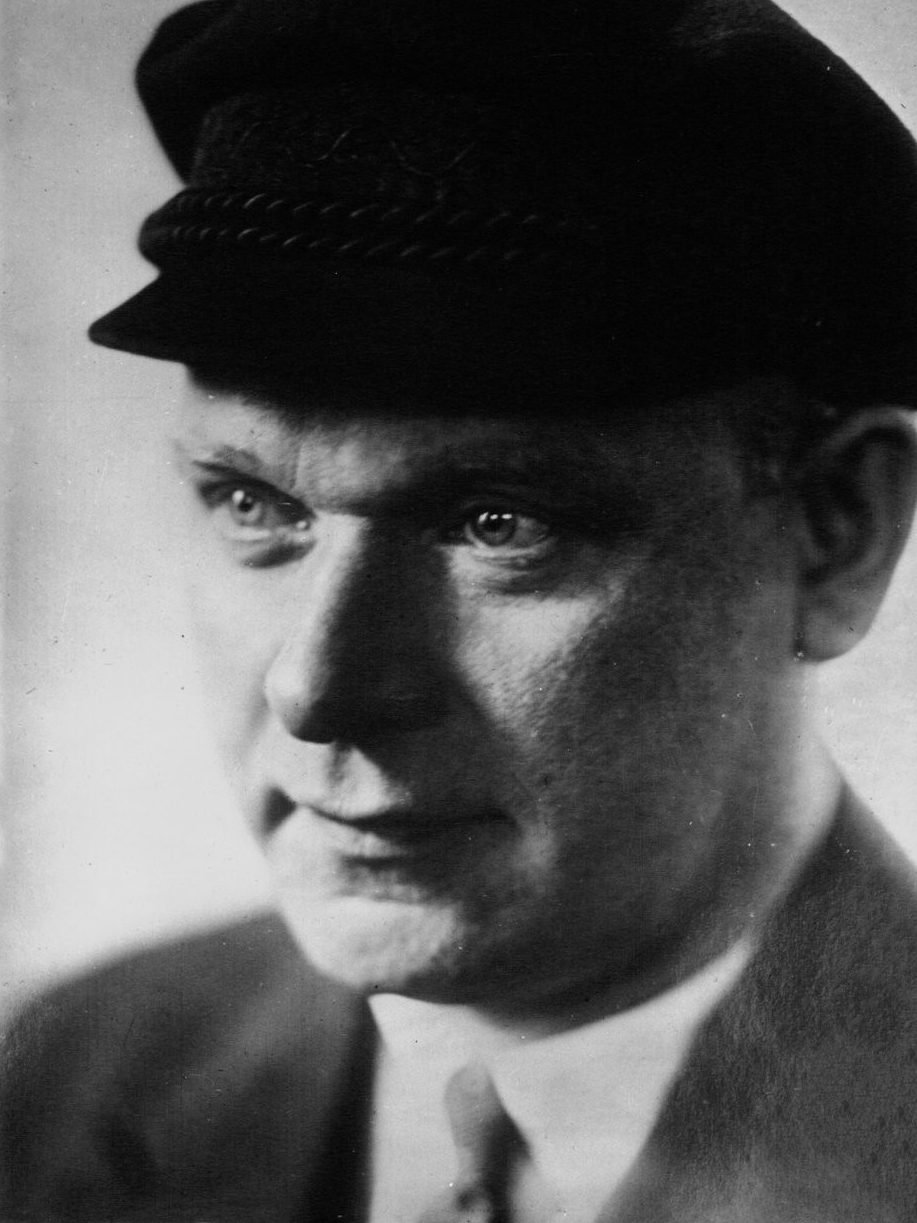
The SPD won 32.9%, its best Berlin result of the Republic, and the KPD, led since 1925 by Ernst Thälmann, 24.6%. Together: 57.5%. The Nazi Party, legal again, managed 1.6%.
Source: Statistisches Jahrbuch der Stadt Berlin / Statistik des Deutschen Reichs · DHM LeMO, Thälmann
Reichstag election · 14 September 1930
The Nazi vote in Berlin rose ninefold, to 14.6%; across the Reich it reached 18.3%. On the left, the KPD edged ahead of the SPD for the first time: 27.3% to 27.2%.
Source: Statistisches Jahrbuch der Stadt Berlin / Statistik des Deutschen Reichs · Statistik des Deutschen Reichs (Reich totals)
Reichstag election · 31 July 1932
At its national peak, 37.3%, the Nazi Party became the largest party in Berlin too, with 28.6%. The SPD and the KPD each took 27.3%; the SPD was ahead by 81 votes out of 2,641,497. Together they had 54.7%, nearly twice the Nazi vote.
Source: Statistisches Jahrbuch der Stadt Berlin / Statistik des Deutschen Reichs · Statistik des Deutschen Reichs (Reich totals) · gonschior.de, Berlin
Reichstag election · 6 November 1932
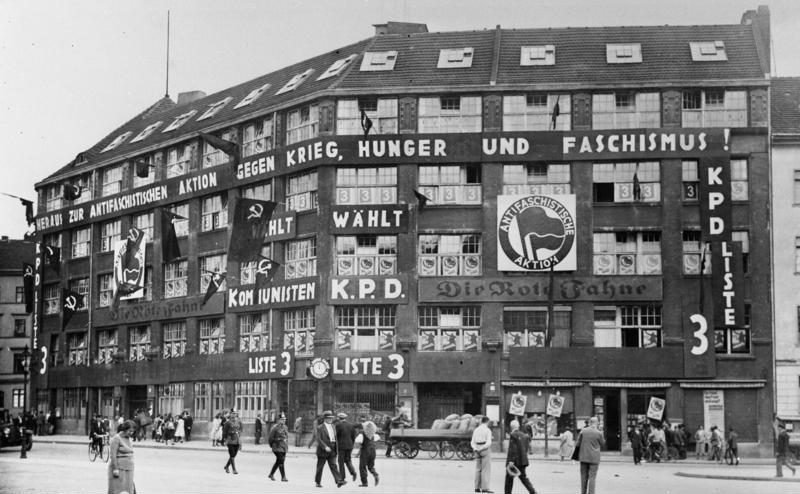
At the last free Reichstag election the KPD became the largest party in the city: 31.0%, against 26.0% for the Nazis and 23.3% for the SPD. Across the Reich the KPD took 16.9%. The campaign was run from the Karl-Liebknecht-Haus, the party’s headquarters since 1927.
Source: Statistisches Jahrbuch der Stadt Berlin / Statistik des Deutschen Reichs · Statistik des Deutschen Reichs (Reich totals) · Deutscher Bundestag · Friedmann, Die Zentrale (2011)
Reichstag election · 5 March 1933 †
Hitler had been chancellor since January; the decree of 28 February 1933 had suspended civil liberties, and Thälmann had been arrested on 3 March 1933. The Nazis took 34.6% in Berlin, 43.9% across the Reich. The KPD still won 24.5%, the SPD 21.7%. It was not a free election.
Source: Statistisches Jahrbuch der Stadt Berlin / Statistik des Deutschen Reichs · Statistik des Deutschen Reichs (Reich totals) · DHM LeMO, Thälmann · Friedmann, Die Zentrale (2011)
6 Jun 1920 – 5 Mar 1933
At all seven elections the party fought, its Berlin line runs under the dashed Reich line. And at every one of the eight, the SPD and KPD together won more Berlin votes than it did.
Source: Statistisches Jahrbuch der Stadt Berlin / Statistik des Deutschen Reichs · Statistik des Deutschen Reichs (Reich totals)
03Combined, never united
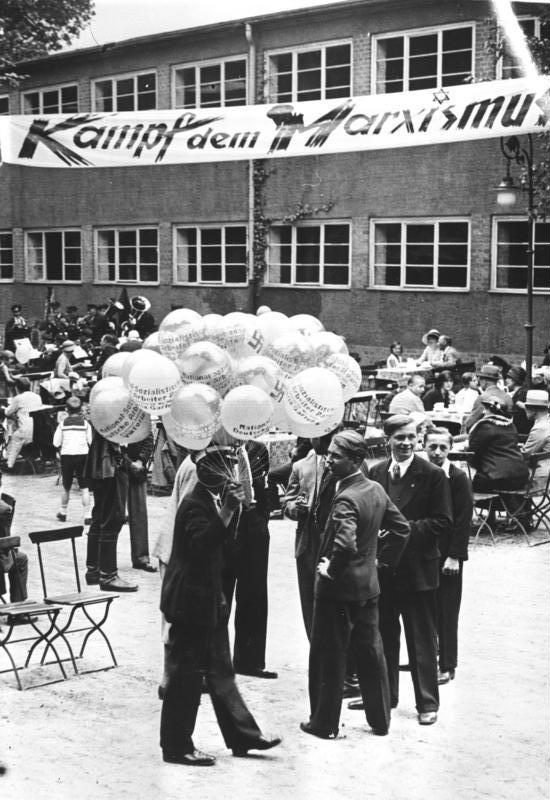
Add the SPD and the KPD together and they beat the Nazi vote in Berlin every time: by 26.0 points even in July 1932. But the sum was never cast. Under Thälmann the KPD followed Stalin’s line: it called the Social Democrats “social fascists” and treated them, not the Nazis, as its main enemy.
The two parties campaigned against each other to the end. Their voters made up a majority of Berlin’s at every election from 1920 to 1933, and still the Nazi Party came first in the city in July 1932 and March 1933.

SPD and KPD together, against the Nazi Party, Berlin, % of the vote

04Which Berlin
Greater Berlin voted in three Reichstag constituencies. Only the inner city formed the Wahlkreis called “Berlin”. Most outer districts voted in “Potsdam II”, together with the rural Kreis Teltow and Kreis Beeskow-Storkow; the north-east voted in “Potsdam I”. Every figure above is for the whole city, added up across all three.
The inner city was redder still. In November 1932 the KPD won 37.7% there and the Nazis 22.5%. Even at the Nazi peak in July 1932, the party took only 24.6% in the inner city, against 28.6% in Greater Berlin and 37.3% in the Reich.
Inner city, whole city, whole Reich: % of the vote
26 Feb 1933 to 21 Mar 1933: 23 days
05After the last vote
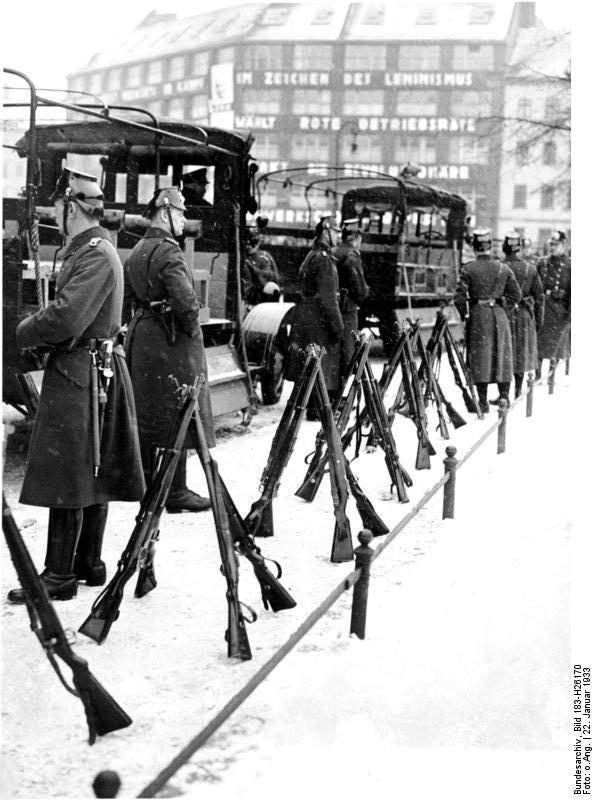
The political police closed the Karl-Liebknecht-Haus, which the KPD had bought on 26 July 1926, on 26 February 1933. Three days after the election, on 8 March 1933, the SA occupied it and renamed it Horst-Wessel-Haus.
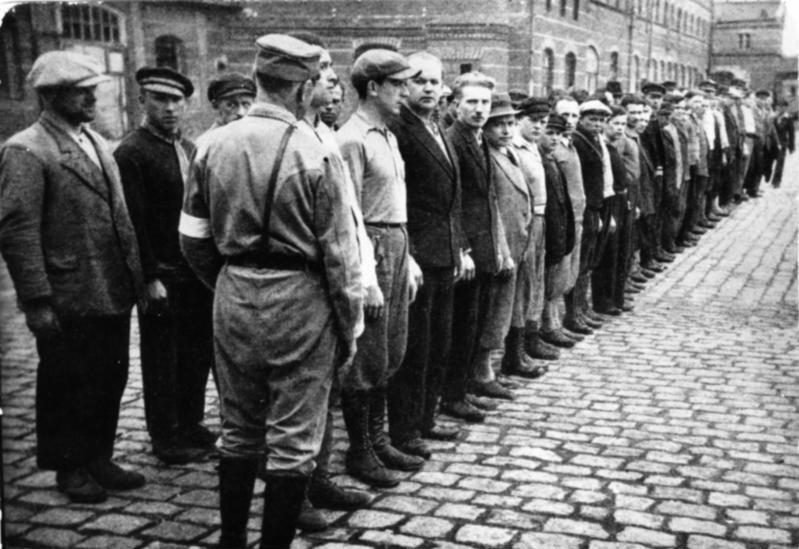
On 21 March 1933 the local SA opened a concentration camp in a disused brewery in Oranienburg, north of Berlin. Its first prisoners were almost all Communists; Social Democrats followed from June/July 1933.


Berlin never gave the Nazi Party a majority. The majority it did give, to the Social Democrats and the Communists, was never cast as one.
More from Weimar Berlin: Carl von Ossietzky’s Berlin.
Press & citation
Free to publish under CC BY 4.0 — in print, online, on Wikipedia and in teaching, commercially or not — with credit to Berlinfographics and a link to this page.
Ready-to-use image
The infographic as one image: headline, key figures, chart, sources and credit, 2,400 × 1,350 px PNG. Please use it unedited.
Download landscape (PNG)
Square format
A 1:1 version for social media and narrow columns, 1,800 × 1,800 px.
Download square (PNG)
Portrait 4:5
For Instagram and LinkedIn feeds, 1,620 × 2,025 px.
Download portrait (PNG)Credit line
Berlinfographics (berlinfographics.com), CC BY 4.0
Citation
Berlinfographics (2026). “Berlin’s Reichstag elections, 1920–1933”. Berlin Experiences. https://berlinfographics.com/berlin-weimar-elections/
Wikipedia
{{cite web |title=Berlin’s Reichstag elections, 1920–1933 |url=https://berlinfographics.com/berlin-weimar-elections/ |website=Berlinfographics |publisher=Berlin Experiences |date=2026-11-07 |access-date=2026-11-07}}
Our infographics, charts and texts are licensed CC BY 4.0: free to republish, including commercially, with credit to Berlinfographics and a link. Photographs keep their own licences, named in each caption. How to credit
Topics: The Second World War · Cold War Berlin · Nazi Berlin · Persecution & the Holocaust · Weimar Berlin · Prussia & the Kaiserreich · Architecture & the built city · Culture, science & society · Reunified Berlin · Unusual facts
Contact: info@berlinfographics.com · Press: press@berlinfographics.com · Imprint · Privacy