Berlinfographicsby Berlin Experiences

The Glienicke Bridge · 1962–1986

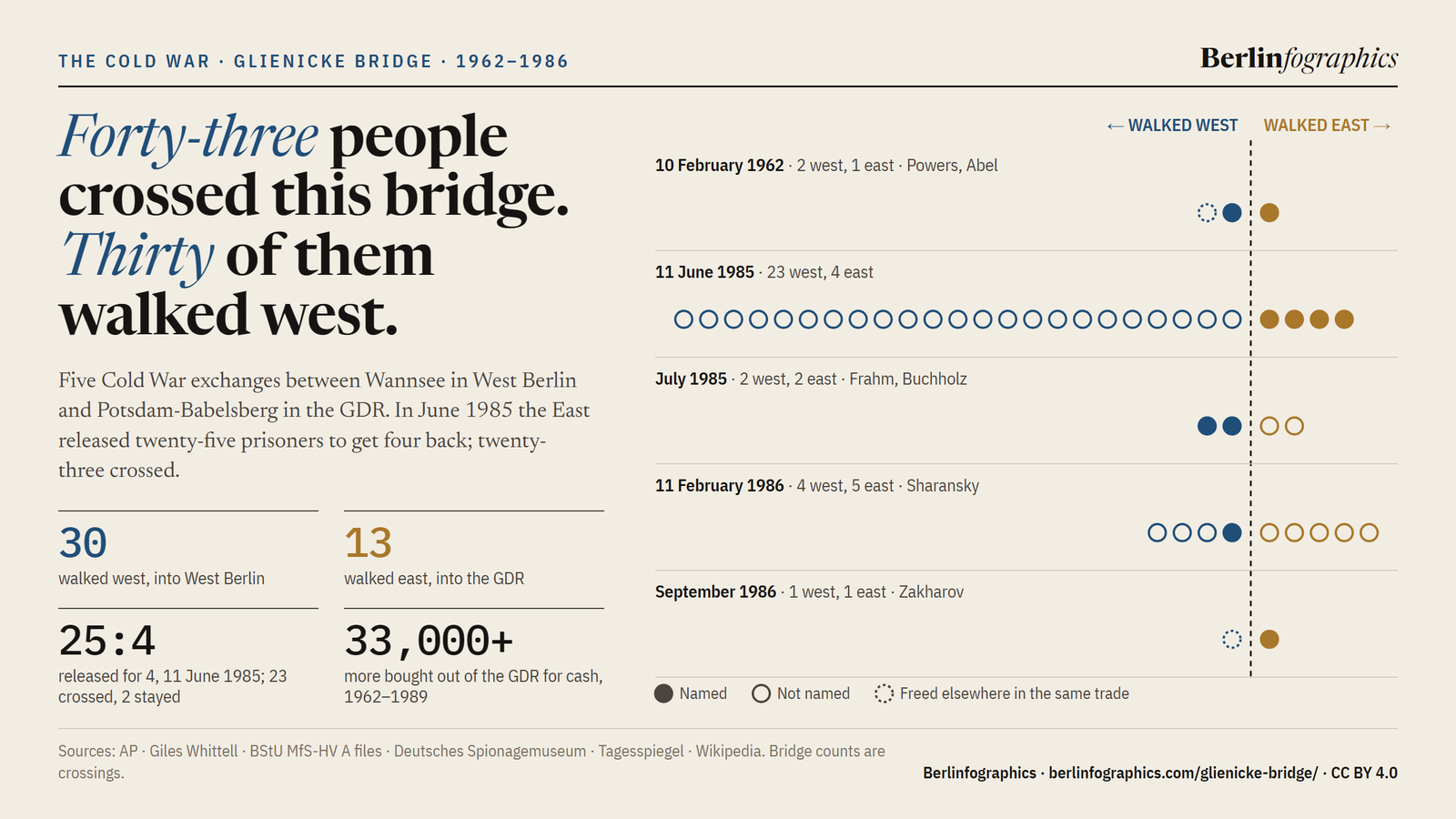
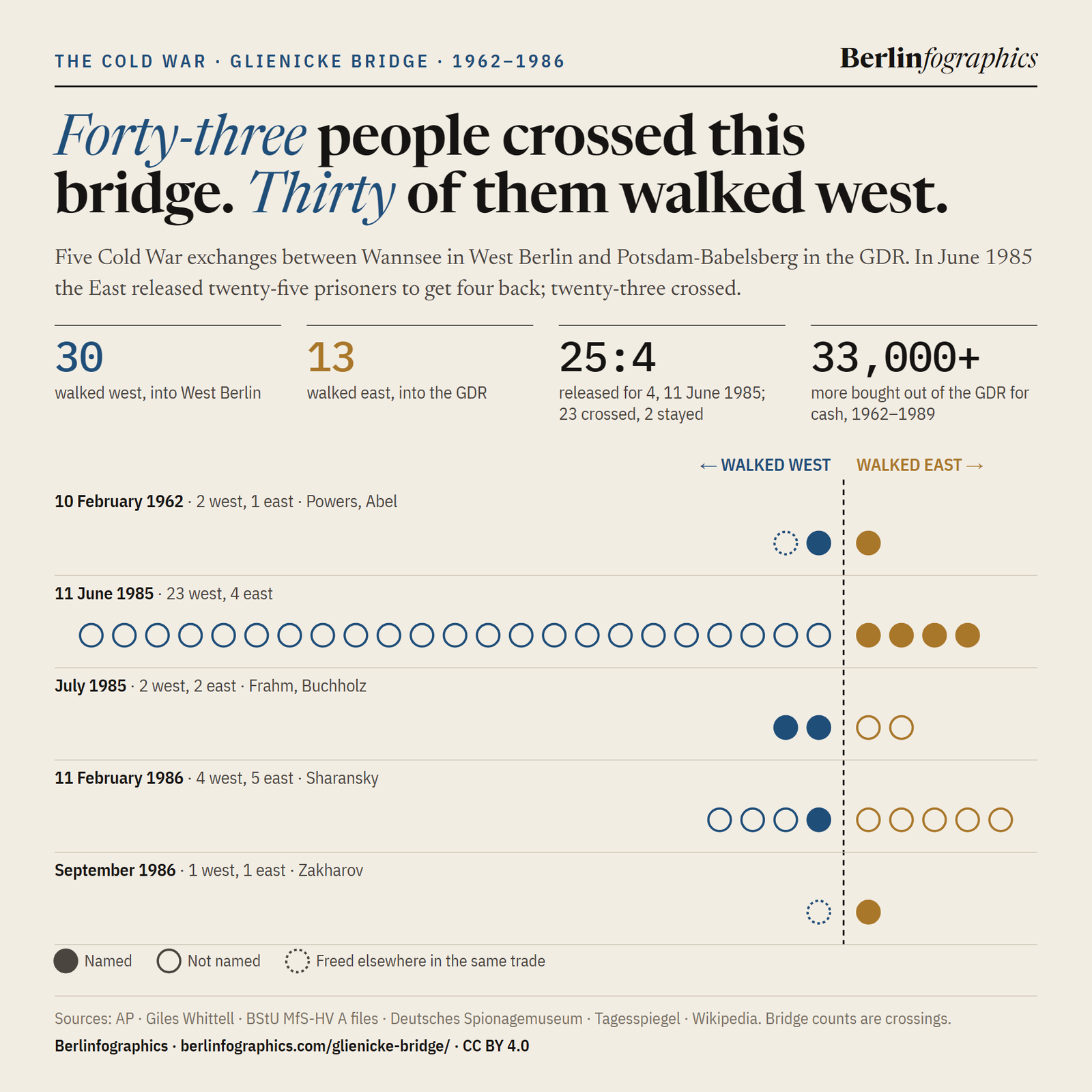
Forty-three people crossed this bridge. Thirty of them walked west.

Five Cold War exchanges at the bridge between Wannsee in West Berlin and Potsdam-Babelsberg in the GDR, 1962–1986. The first was one man for one man. In June 1985 the East released twenty-five prisoners to get four back; twenty-three of them crossed the bridge.
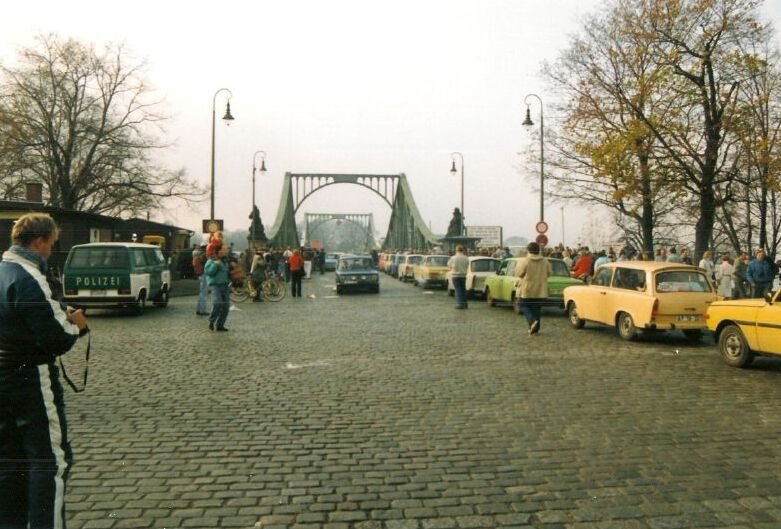
The green steel arches of the Glienicke Bridge seen down a cobbled road, with East German cars queuing and people gathered on both sides.
The Glienicke Bridge across the Havel, photographed in November 1989. Photo: Gavin Stewart, 1989. Wikimedia Commons. CC BY 2.0.

The bridge

Wannsee – Potsdam-Babelsberg
The Glienicke Bridge, West Berlin on the left and the GDR on the right, with the border across its middle. Each mark is one person exchanged.
Walked west, named Walked west, not named Walked east, named Walked east, not named not named
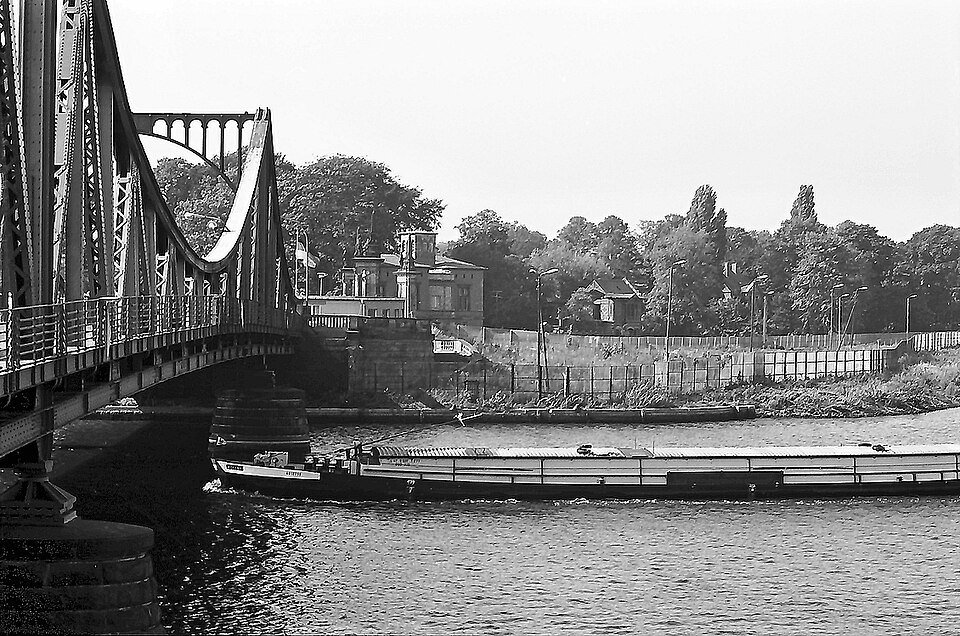
Black-and-white photograph of the steel arches of the Glienicke Bridge over the Havel, a barge passing beneath, the border fence along the far bank.
The Glienicke Bridge from the West Berlin bank, 26 September 1982.Willy Pragher, 1982. Wikimedia Commons. CC BY 4.0.

Wannsee · the Havel · Potsdam-Babelsberg

The border ran across the middle of the bridge

The bridge carried the road across the Havel between Wannsee in West Berlin and Potsdam-Babelsberg in the GDR. The border ran across it. Between 10 February 1962 and September 1986, the two sides used it five times to trade the people they held.
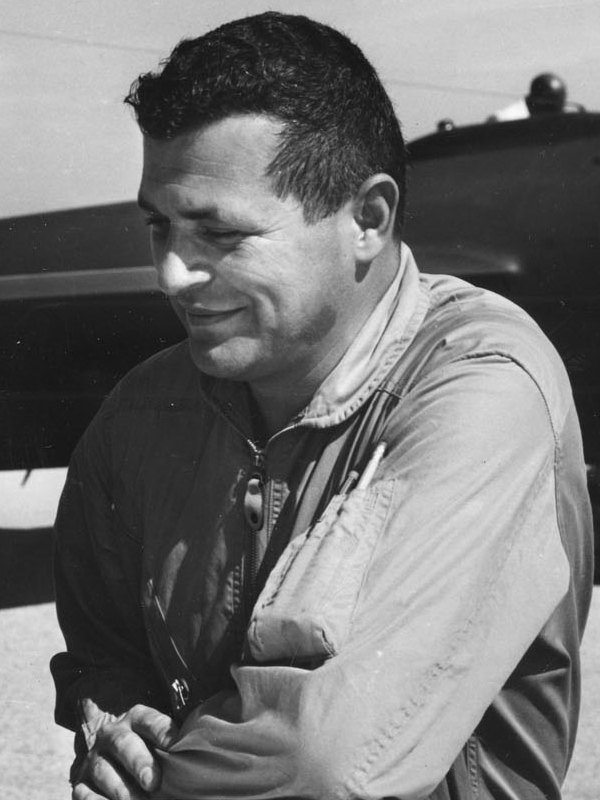
Black-and-white portrait of Francis Gary Powers in a suit and tie.
Francis Gary PowersU.S. Air Force photo, public domain.
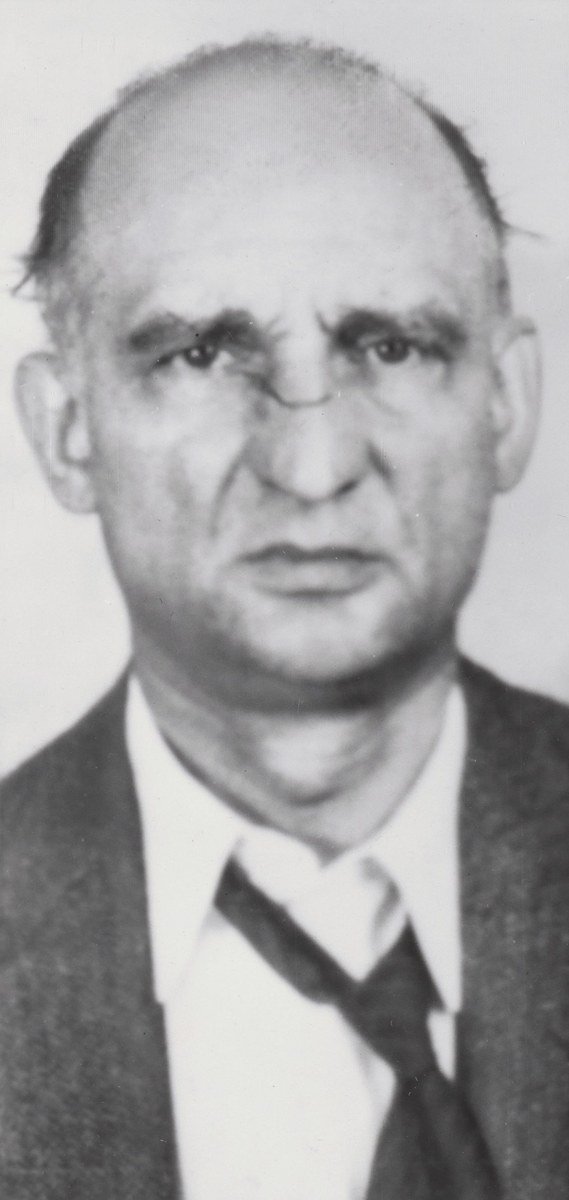
Black-and-white portrait of Rudolf Abel, balding, in a jacket and loosened tie.
Rudolf AbelAP Wire, 1957. Wikimedia Commons. Public domain.
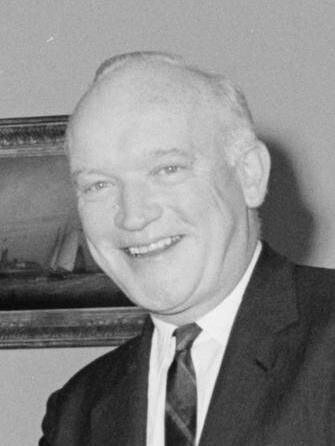
Black-and-white portrait of James B. Donovan, smiling, in a suit and tie.
James B. DonovanCecil Stoughton, White House, 1962. Public domain.
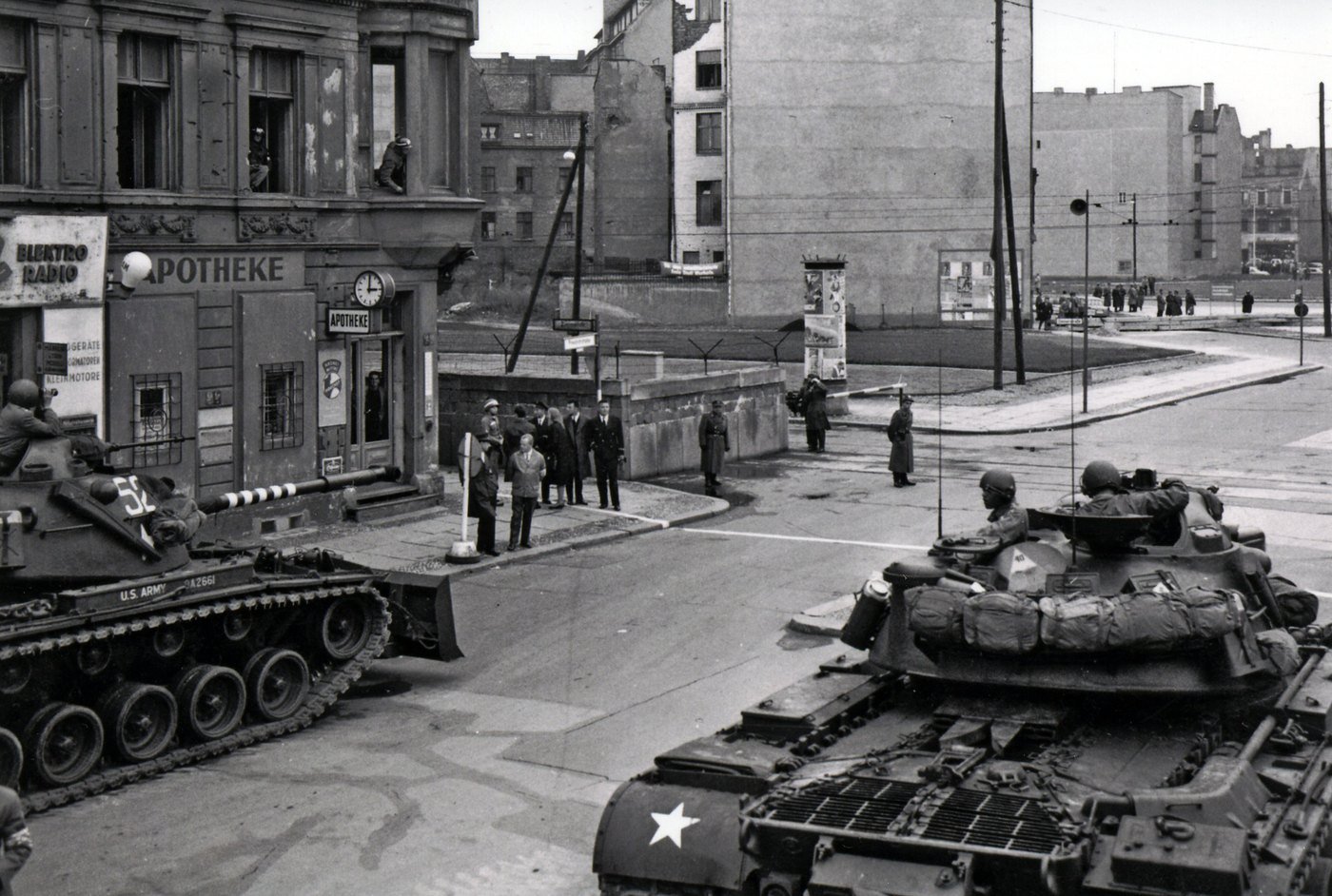
US Army tanks at the Friedrichstraße crossing point, Checkpoint Charlie, with East German police beyond the barrier.
Checkpoint CharlieU.S. Army, October 1961. Public domain.

10 February 1962

A captured U-2 pilot walked west. A KGB spy walked east.

Francis Gary Powers walked west; Rudolf Abel walked east. Frederic Pryor had been released shortly before at Checkpoint Charlie; the bridge exchange waited for him. James B. Donovan negotiated for the West.

2 west, 1 east.
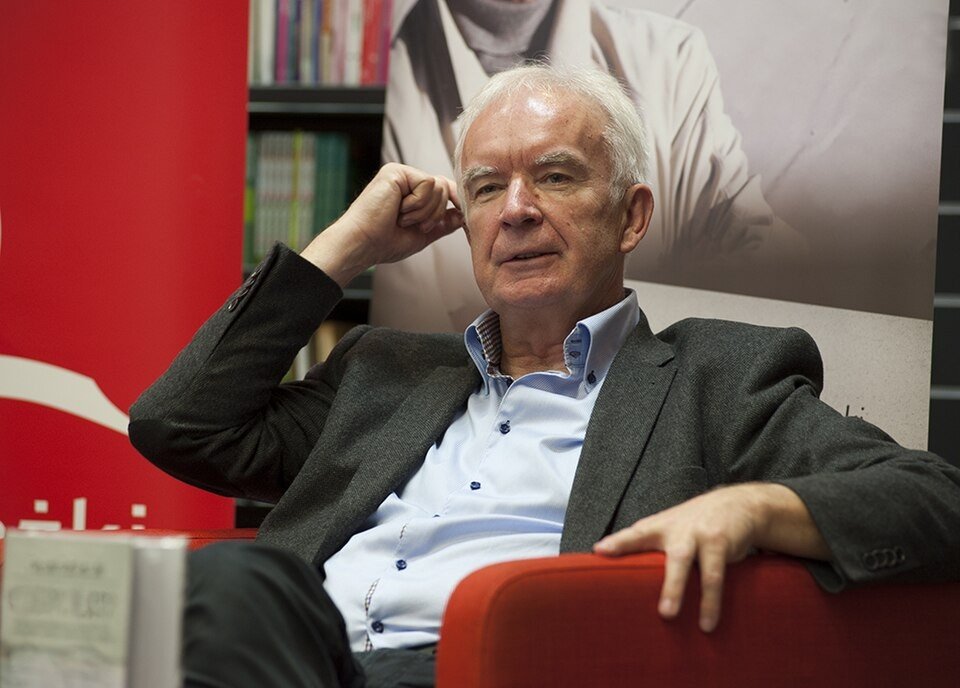
Colour photograph of Marian Zacharski, white-haired, seated in a red armchair in a bookshop.
Marian Zacharski, the Polish officer the East most wanted back, at a reading in Warsaw in 2015.Henryk Kotowski, 2015. Wikimedia Commons. CC BY 4.0.

11 June 1985

The East released twenty-five prisoners to get four back

Twenty-five people held in the East for spying for American services were released for four Eastern-bloc agents held in the United States. Two of the twenty-five chose to stay in the GDR; twenty-three walked across the bridge. Negotiated through Wolfgang Vogel. The East gave up far more than usual to recover Marian Zacharski, a Polish intelligence officer serving a life sentence in the US.

23 west, 4 east — twenty-three of those going west not named in the record.

July 1985

A crossing nobody reported

A smaller bilateral exchange: two West German agents for two HV-A operatives held in West German custody. It took place at Glienicke and received no press attention.

2 west, 2 east — two going east not named in the record.
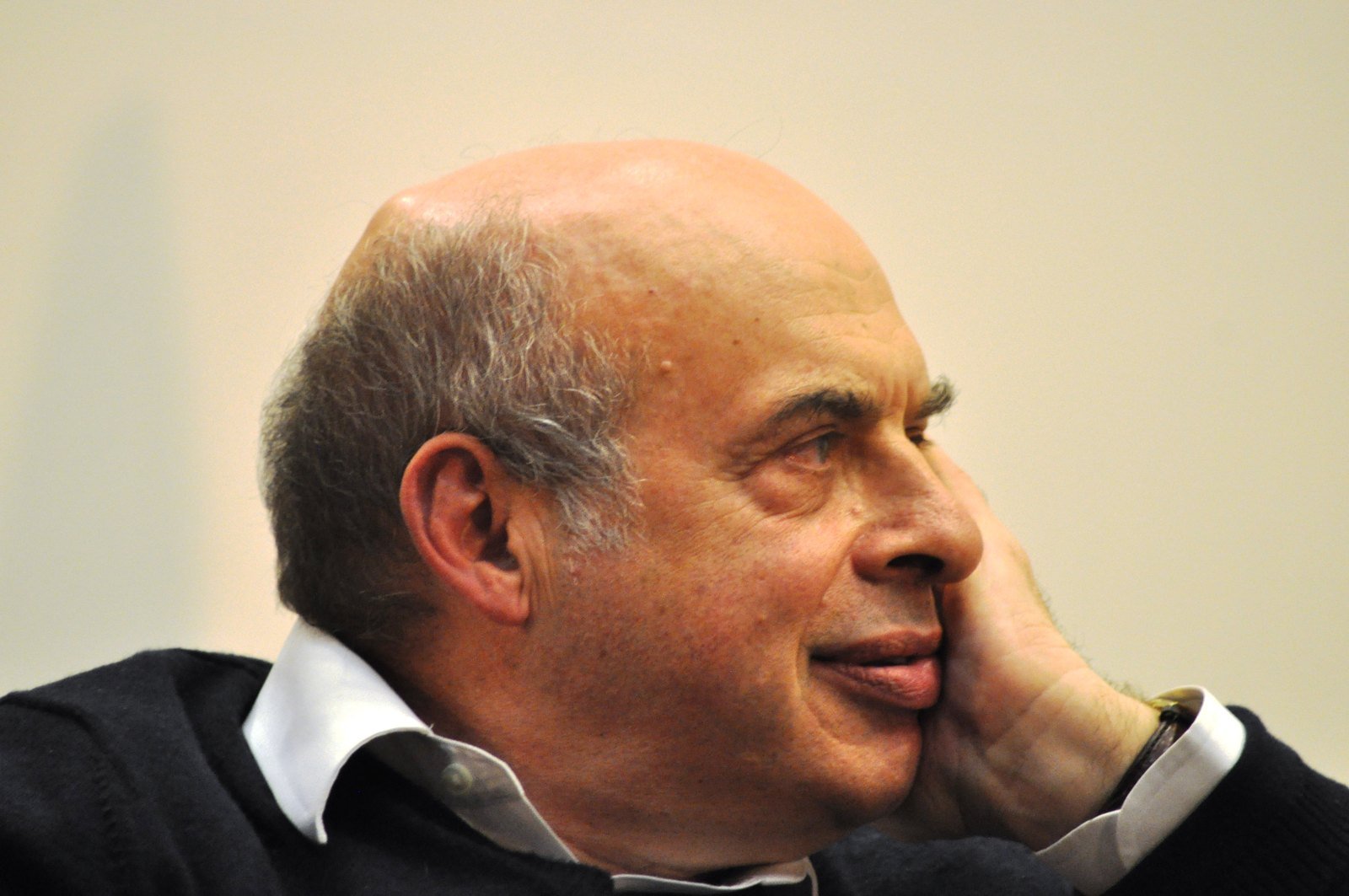
Colour photograph of Natan Sharansky, grey-haired, in a dark jacket.
Anatoly Sharansky, who took the name Natan in Israel, photographed in 2016.Nathan Roi, 2016. Wikimedia Commons. CC BY 3.0.

11 February 1986

The last formal exchange set Anatoly Sharansky free

Anatoly Sharansky, released after nine years' imprisonment, crossed west with three GDR and Czech political prisoners; five Soviet-bloc agents crossed east. Sharansky asked Vogel to return his wedding ring to Avital Sharansky in Israel.

4 west, 5 east — three of those going west and five going east not named in the record.

Nudel and Begun were released separately in 1987. Bukovsky had been exchanged in 1976, at Zurich.
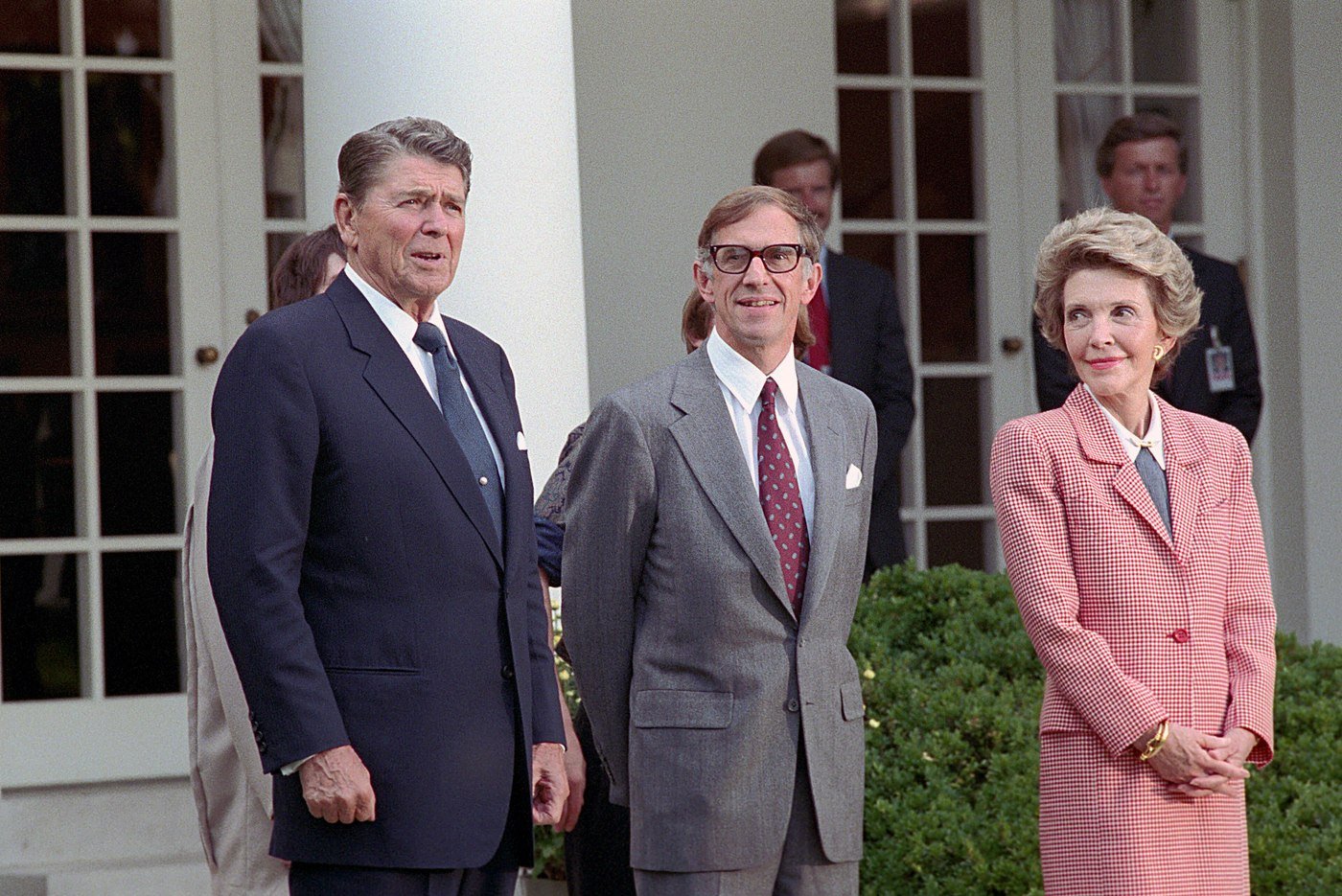
Ronald and Nancy Reagan with Nicholas Daniloff in the White House Rose Garden, 1986.
Nicholas Daniloff with President Reagan and Nancy Reagan in the White House Rose Garden after his release, 1986.White House Photographic Office, 1986. Wikimedia Commons. Public domain.

September 1986

Zakharov crossed the bridge; Daniloff was freed in Vienna

The US journalist Nicholas Daniloff for the Soviet UN clerk Gennadi Zakharov. The trade was paired across two cities: Daniloff was released at Vienna, Zakharov at Glienicke.

1 west, 1 east.

1962–1986

Thirty walked west. Thirteen walked east.

In five exchanges, 43 people crossed the Glienicke Bridge: 30 to the West, 13 to the East. Twenty-six of the thirty who walked west are not named in the record.

Two more were freed in the same trades without setting foot on the bridge: Frederic Pryor at Checkpoint Charlie and Nicholas Daniloff at Vienna.

Not counted as crossings: two of the twenty-five prisoners released on 11 June 1985 chose to stay in the GDR.
Twenty-four years, five exchanges

Four of the five exchanges came in fifteen months

The bridge's first exchange was in 1962. The other four in this record fall between 11 June 1985 and September 1986, at the end of the Cold War. One mark below is one person; the biggest trade, on 11 June 1985, sent 23 people west for 4.

West, named West, not named Freed elsewhere in the same trade East, named East, not named

The brokers

Every exchange began in a lawyer's office

Each exchange was the visible end of months of back-channel negotiation through the lawyer Wolfgang Vogel in the East and James B. Donovan, later Francis Meehan, in the West. Overall, Vogel brokered the exchange of more than 150 spies.

No freely licensed photograph of Wolfgang Vogel could be found
For the East
Wolfgang Vogel

East German lawyer, 1962–1989. Brokered the exchange of more than 150 spies. His West German counterpart: Jürgen Stange.

Black-and-white portrait of James B. Donovan, smiling, in a suit and tie.
Cecil Stoughton, White House, 1962. Public domain.
For the West
James B. Donovan

Negotiated the first exchange, 10 February 1962.

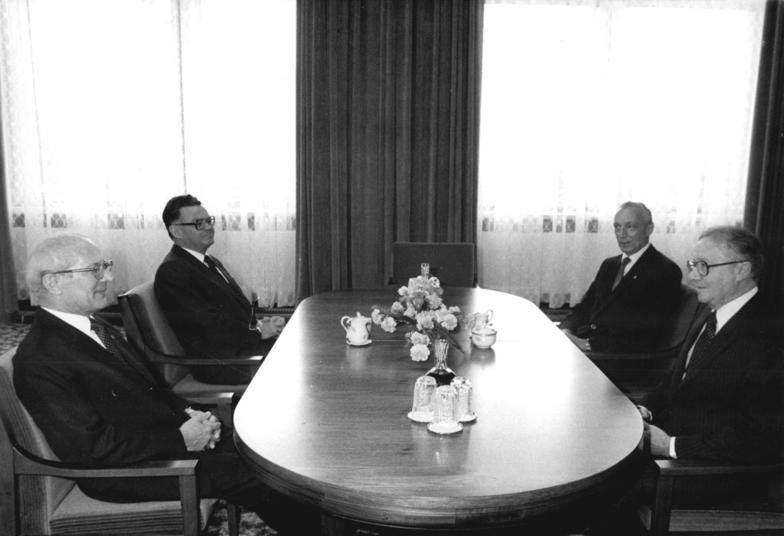
Francis Meehan presenting his credentials in East Berlin, September 1985.
Meehan presents his credentials as US ambassador in East Berlin, 17 September 1985. Bundesarchiv, Bild 183-1985-0917-318 / Rainer Mittelstädt / CC BY-SA 3.0 de
For the West, later
Francis Meehan

Later the western negotiator, after Donovan.

ExchangeBroker named in the account
10 February 1962James B. Donovan
11 June 1985Wolfgang Vogel
July 1985not named
11 February 1986Wolfgang Vogel
September 1986not named

The quieter trade

The bridge was the show. More than 33,000 others were bought out for cash.

Alongside the exchanges ran the "Häftlingsfreikauf" — the buy-out of East German political prisoners by the Federal Republic. From 1962 to 1989, more than 33,000 prisoners left the GDR this way, for about 3.4 billion DM in all. None of them needed the bridge.

The price per person ran between 40,000 and 95,000 DM, according to the prisoner's profession and conviction.

The 43 who crossed the Glienicke BridgeEach square: 43 people bought out (more than 33,000 in all)
33,000+
political prisoners bought out of the GDR
~3.4 bn DM
paid by the Federal Republic, 1962–1989
40,000–95,000
DM per person, by profession and conviction
43
people traded on the bridge, 1962–1986
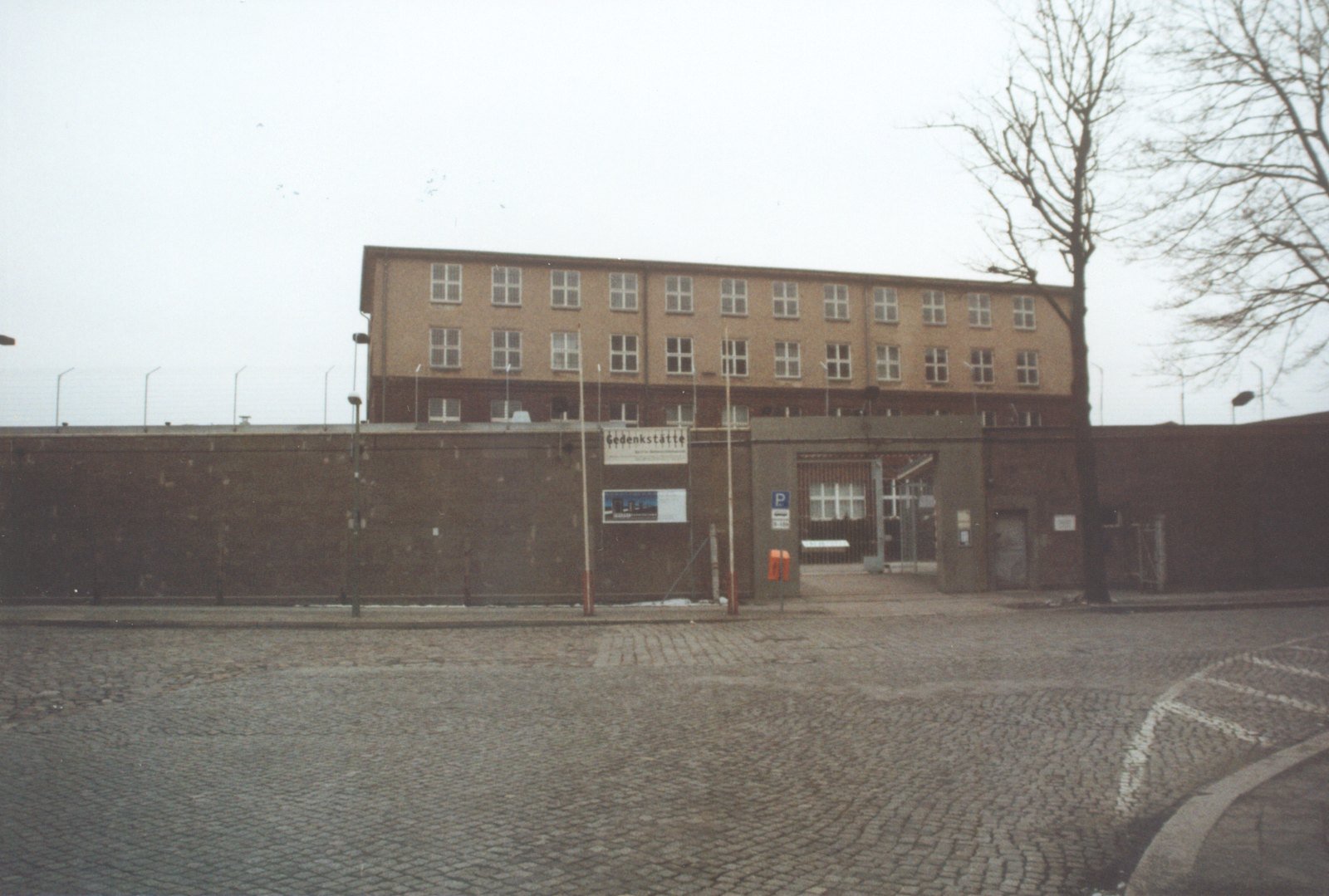
The gate and guardhouse of the former Stasi remand prison at Berlin-Hohenschönhausen, now a memorial.
The former Stasi remand prison at Berlin-Hohenschönhausen, now a memorial, 2006. Photo: Christian Liebscher, 2006. Wikimedia Commons. Public domain.

Without Vogel and his West German counterpart Jürgen Stange, the bridge was a road; with them, it was the geography of the Cold War.

Press & citation

Use this Berlinfographic

Free to publish under CC BY 4.0 — in print, online, on Wikipedia and in teaching, commercially or not — with credit to Berlinfographics and a link to this page.

The Bridge of Spies, 1962–1986: ready-to-use landscape image

Ready-to-use image

The infographic as one image: headline, key figures, chart, sources and credit, 2,400 × 1,350 px PNG. Please use it unedited.

Download landscape (PNG)
The Bridge of Spies, 1962–1986: square version

Square format

A 1:1 version for social media and narrow columns, 1,800 × 1,800 px.

Download square (PNG)

Credit line

Berlinfographics (berlinfographics.com), CC BY 4.0

Citation

Berlinfographics (2026). “The Bridge of Spies, 1962–1986”. Berlin Experiences. https://berlinfographics.com/glienicke-bridge/

Wikipedia

{{cite web |title=The Bridge of Spies, 1962–1986 |url=https://berlinfographics.com/glienicke-bridge/ |website=Berlinfographics |publisher=Berlin Experiences |date=2026-11-05 |access-date=2026-11-05}}