Berlinfographicsby Berlin Experiences

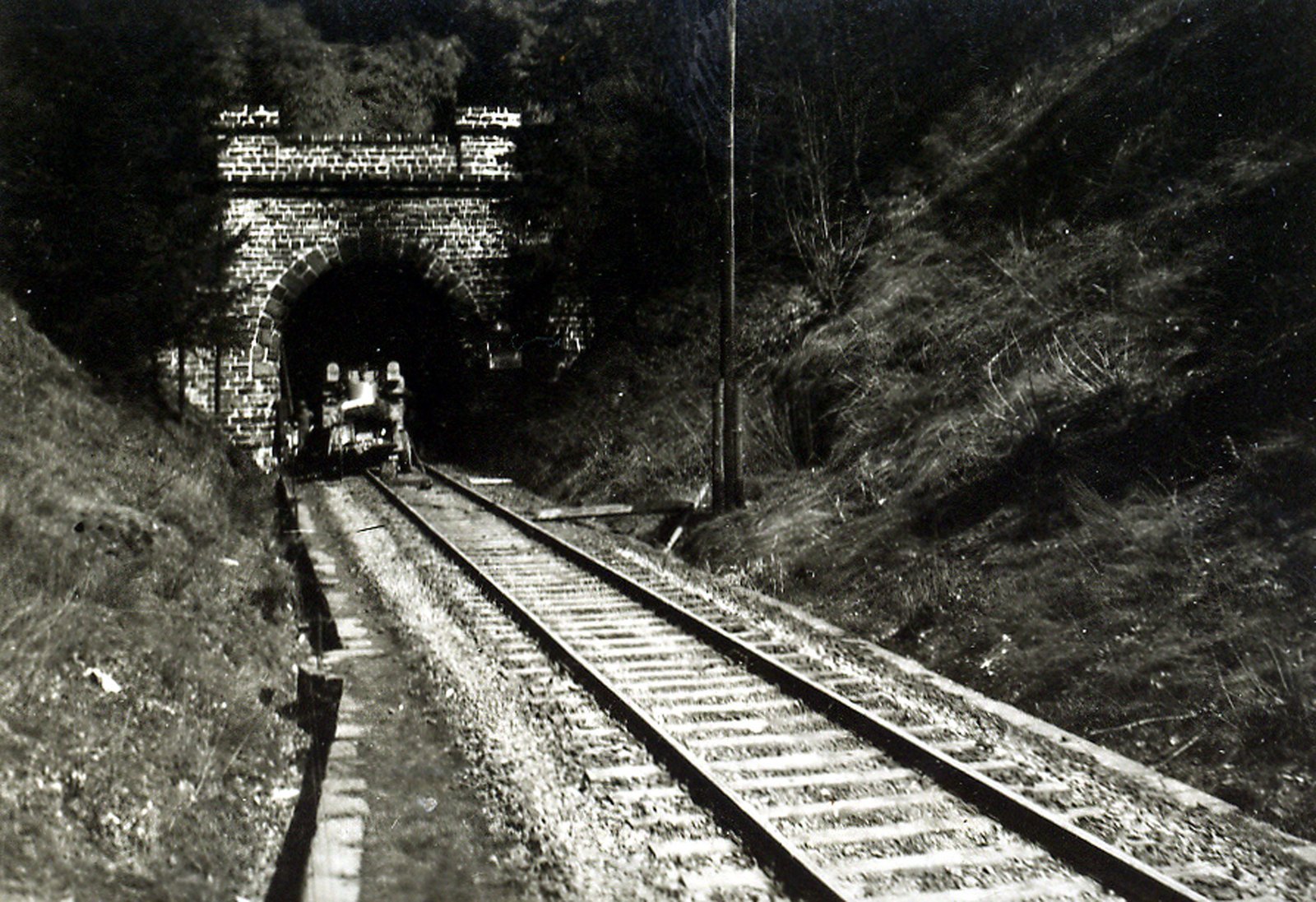
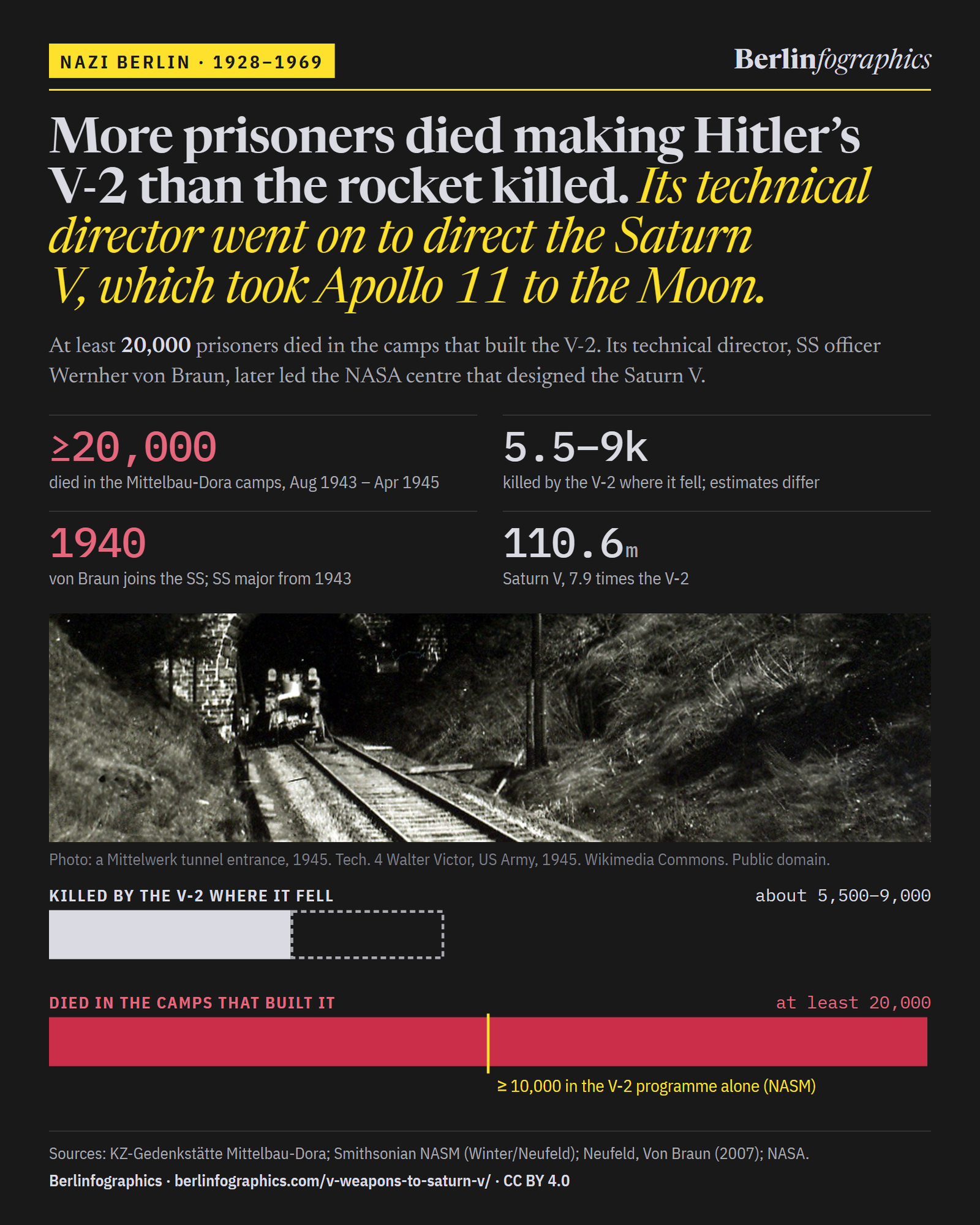
A rail entrance to the Mittelwerk tunnels under the Kohnstein ridge near Nordhausen, photographed by the US Army in 1945. Prisoners of Mittelbau-Dora dug these tunnels and worked the V-2 assembly lines inside.Photo: Tech. 4 Walter Victor, US Army, 1945. Wikimedia Commons. Public domain.

From the V-2 to the Saturn V

More people died building Hitler’s V-2 than it killed. Its technical director went on to direct the rocket that sent Apollo 11 to the Moon

The line from a Berlin rocket-car stunt in 1928 to Pad 39A in 1969 runs through one man, Wernher von Braun, one team of engineers, and the tunnels of Mittelbau-Dora, where at least 20,000 prisoners died.

≥20,000
prisoners died in the Mittelbau-Dora camps, where the V-2 was built
5,500–9,000
people killed by the V-2 where it fell; estimates differ
~3,172
V-2s fired in anger, most of them at Antwerp and London
110.6m
the Saturn V, 7.9 times the height of the V-2. The same man directed both
01Berlin, 1928–1934

A Berlin rocket craze made a 16-year-old into a rocket engineer

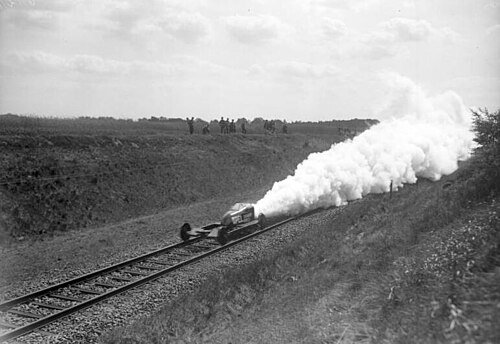
On 23 May 1928 Fritz von Opel drove the rocket car RAK 2 down the AVUS in Berlin’s Grunewald on 24 rockets, reaching 238 km/h in front of about 3,000 spectators, among them Fritz Lang and Max Schmeling. The press called it the Raketenrummel, “the rocket rumpus”.

Wernher von Braun had turned 16 two months earlier. Standard accounts credit the rocket-car demonstrations of that year with fixing his determination to work on spaceflight. He joined Berlin’s rocket society, the Verein für Raumschiffahrt, in 1930, testing liquid-fuel motors at its Raketenflugplatz in Reinickendorf. He took his engineering diploma at the Technische Hochschule in Charlottenburg in the spring of 1932, and his doctorate at the Friedrich-Wilhelms-Universität on 27 July 1934.

The army got there first. From November 1932 he was working for its ordnance office, the Heereswaffenamt, at the Kummersdorf proving ground south of the city. In 1936 the work moved to Peenemünde on the Baltic.

A low rail vehicle races along a railway line trailing a huge cloud of white smoke, watched by onlookers.
The Opel RAK.3 rocket car on rails at Burgwedel, near Hanover, 23 June 1928, a month after the AVUS run in Berlin.Photo: Bundesarchiv, Bild 102-06121 / Unknown author / CC BY-SA 3.0 de

02Peenemünde, 1936–1945

The army’s rocket was the first weapon nobody could shoot down

The A-4, which Goebbels’ propaganda ministry renamed Vergeltungswaffe 2, “retaliation weapon 2”, first flew successfully on 3 October 1942, to 84.5 km. On 20 June 1944 a vertical test, MW 18014, reached 174.6 km (some sources say 176), making it the first man-made object in space.

As a weapon it climbed to about 88 km, came down at up to 5,760 km/h and could not be intercepted. The first one to hit London fell in Chiswick on 8 September 1944.

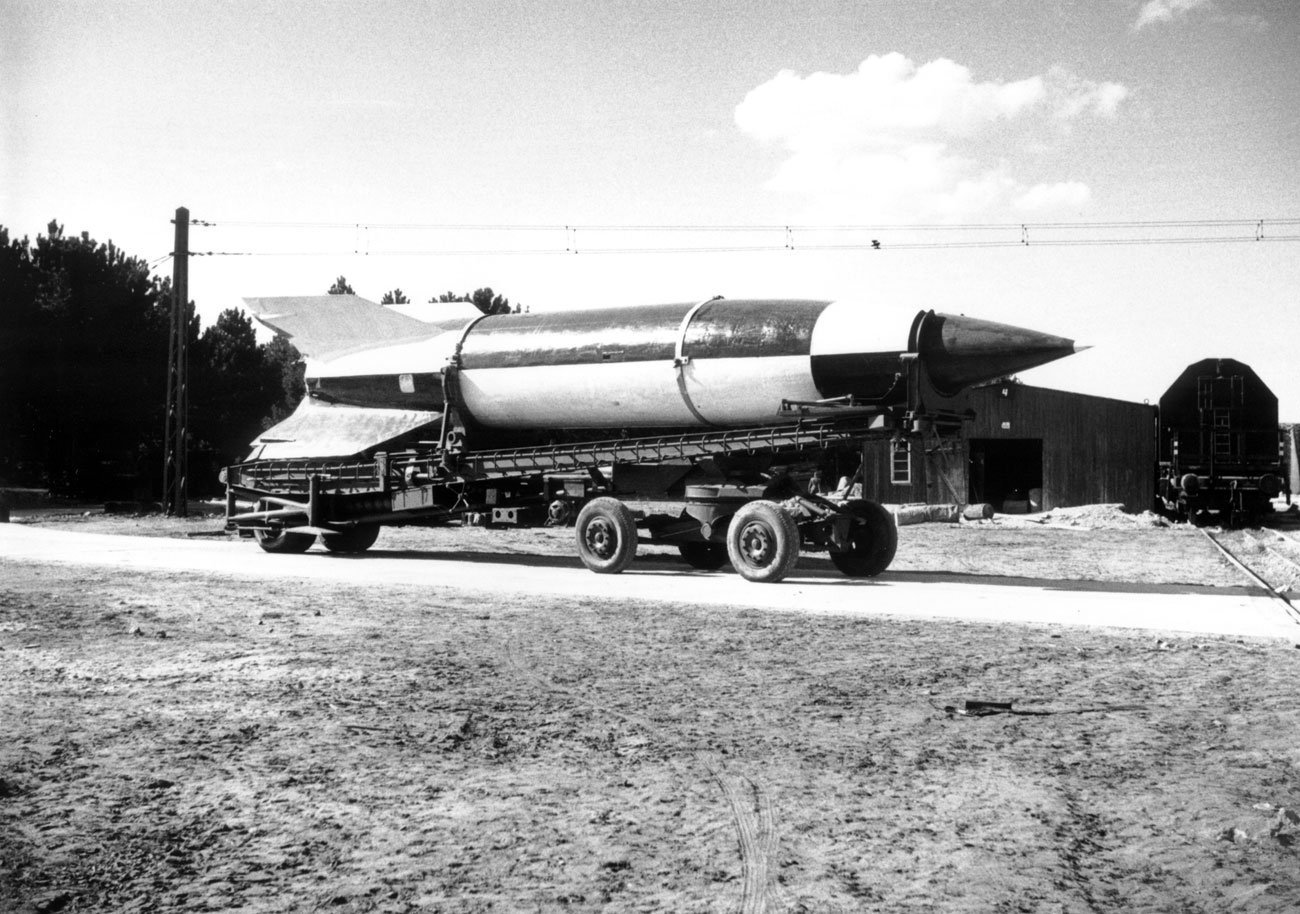
A tall pointed rocket with fins lies on a wheeled trailer cradle, tilted upward, with men beside it.
A V-2 on its Meillerwagen transporter-erector, prepared by German crews for the British test firings of Operation Backfire at Cuxhaven, 1945.Photo: Operation Backfire, Cuxhaven, 1945. Wikimedia Commons. Public domain.
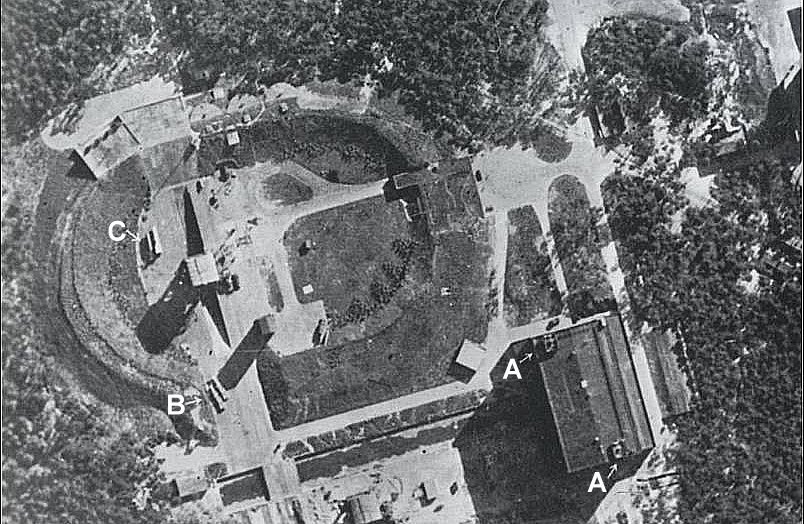
An aerial photograph of a coastal installation with roads, clearings and a large elliptical earthwork.
Peenemünde from the air: an RAF reconnaissance photograph of 1943, the year Bomber Command raided the rocket establishment.Photo: No. 540 Squadron RAF reconnaissance photograph, 1943. Wikimedia Commons. Public domain.

About 3,172 were fired in anger, most of them at Antwerp and London. Each cost 100,000 Reichsmark in January 1944 and 50,000 by March 1945. The price fell because the labour became free.

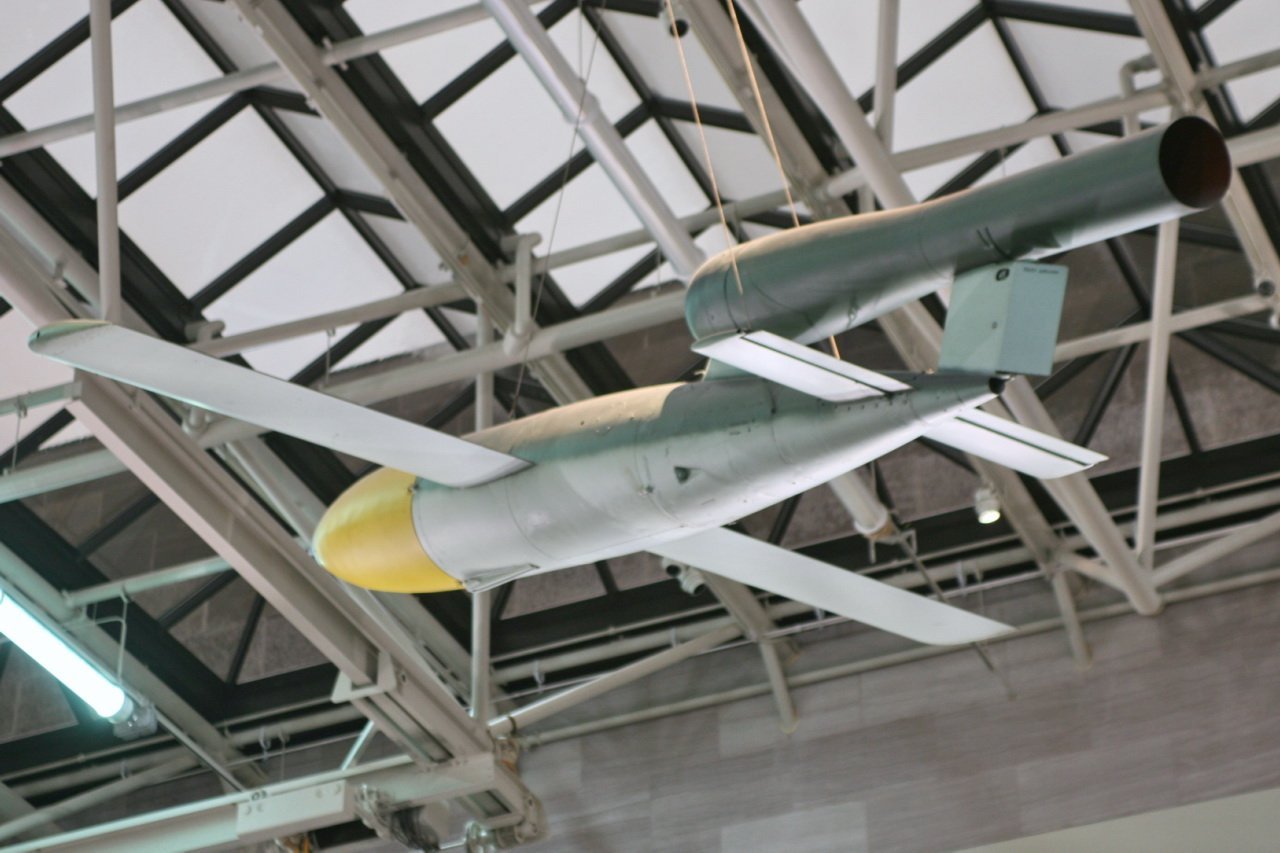
The Luftwaffe’s V-1 was something else: a cheap pulsejet flying bomb that flew at about 640 km/h and could be caught. Of about 10,000 launched at Britain, 3,957 were shot down and 2,419 got through to London. The V-1 killed 6,184 people in Britain, a figure most often given for the London Civil Defence Region.

Where the 3,172 V-2s were aimed

Of them, 1,610 were fired at Antwerp and 1,358 at London.

A small pilotless aircraft with short straight wings and a long tube mounted above its tail, displayed in a museum.
A surviving V-1 (Fieseler Fi 103) on display. The pulsejet duct above the tail is what made it a flying bomb rather than a rocket.Photo: Cliff, 2008. Wikimedia Commons. CC BY 2.0.
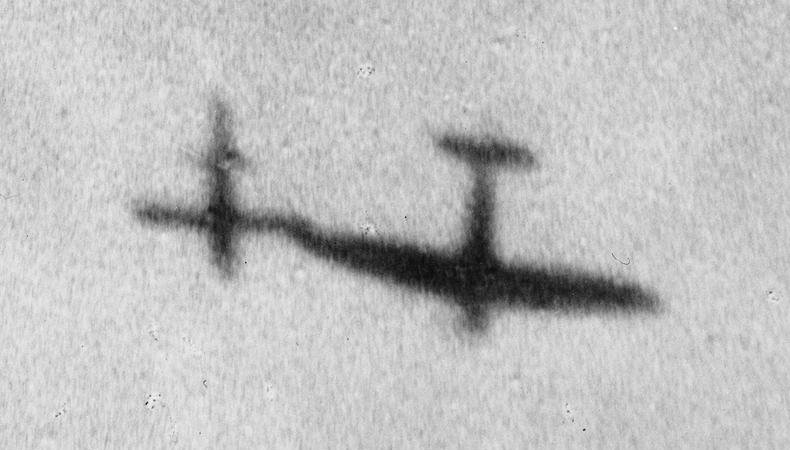
A grainy air-to-air photograph of a fighter plane flying wingtip to wingtip with a small flying bomb.
A Spitfire flies alongside a V-1 to tip it off course, 1944. Unlike the V-2, the flying bomb could be caught.Photo: Walton, 1944. Imperial War Museums via Wikimedia Commons. Public domain.

03The count

The V-2 killed more of the people who built it than of the people it was fired at

Set side by side on one scale, the dead of the targets and the dead of the factory. Each square below is a hundred people.

Two death tolls on one scale

Two blocks of squares, each square a hundred people: the people killed by the V-2 at its targets, and the prisoners held in and killed in the Mittelbau-Dora camps where it was built.
Killed by the V-2Range of estimatesHeld in Mittelbau-DoraDied thereEach square: 100 people
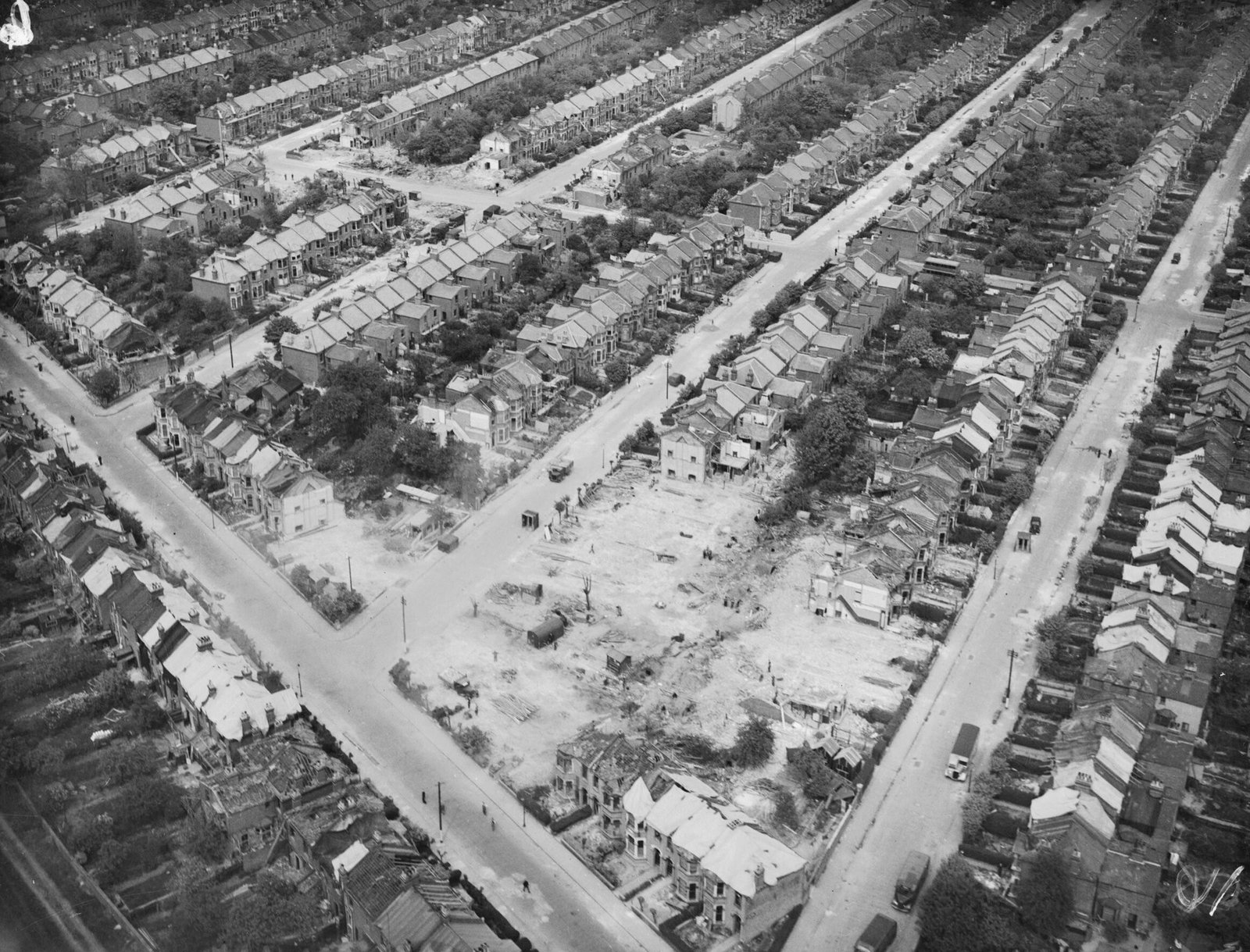
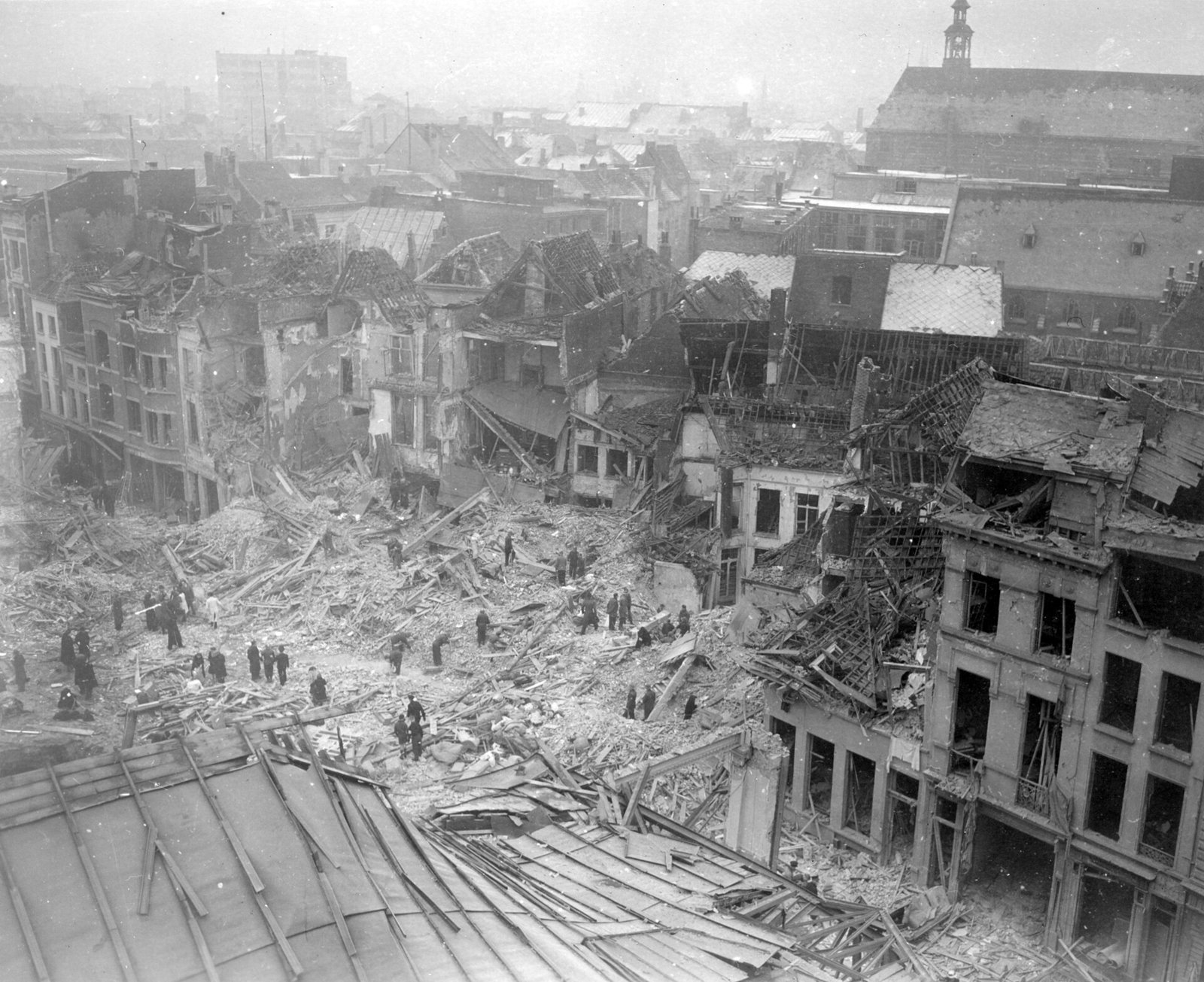
Rows of terraced houses with their roofs and fronts blown away; rubble fills the street and people stand among the debris.A city block of collapsed and roofless houses seen from above, the street filled with rubble and people picking through it.
V-2 damage, Ilford, east London: RAF official photographer, IWM, public domain · V-2 damage, Antwerp: T/3 Ingledew, US Army Signal Corps, public domain

September 1944 – March 1945

London and Antwerp took most of the rockets

In London the V-2 killed 2,754 people; in the Antwerp area, 1,736. Each square is a hundred people.

A tall pointed rocket with fins lies on a wheeled trailer cradle, tilted upward, with men beside it.
A V-2 on its Meillerwagen: Operation Backfire, public domain

All targets

In all, between 5,500–9,000 people were killed by the V-2

The Smithsonian’s National Air and Space Museum puts the total at about 5,500; the wider estimate of about 9,000 includes military personnel. The outlined squares mark the gap between the two.

A railway track runs into a stone-arched tunnel portal cut into a wooded hillside; a small rail wagon stands at the entrance.
A Mittelwerk tunnel entrance: Tech. 4 Walter Victor, US Army, public domain

August 1943 – April 1945

About 60,000 prisoners were held in the camps that built it

The SS deported about 60,000 people from across occupied Europe to the Mittelbau-Dora camps at Nordhausen, where the V-2 and the V-1 were assembled underground.

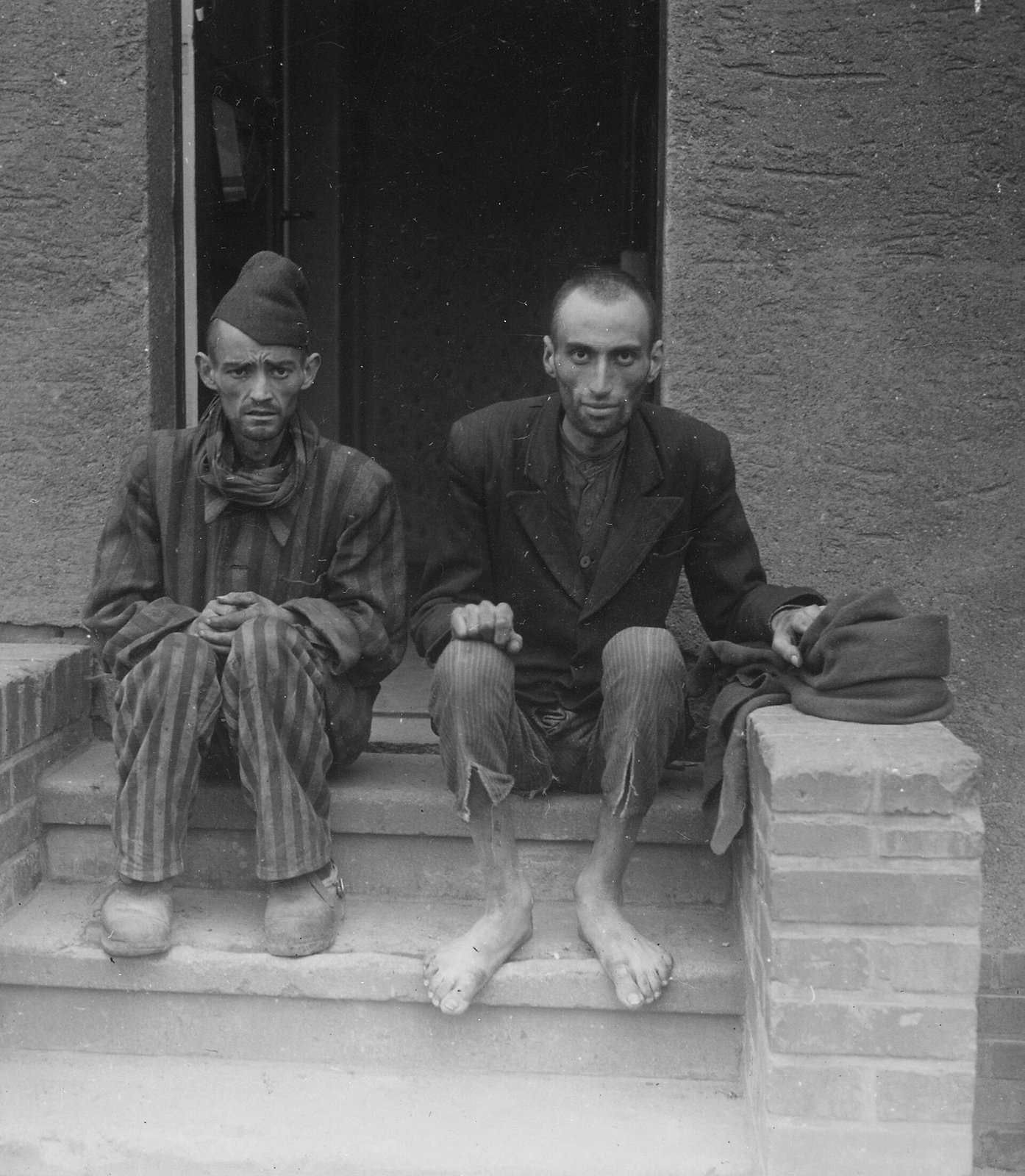
Two gaunt, emaciated men in striped and ragged clothing sit and stare toward the camera.
Liberated prisoners, Nordhausen: US Army Signal Corps, NARA, public domain

Mittelbau-Dora

At least 20,000 of them died

By the memorial’s cautious estimate at least 20,000 died, of exhaustion, disease, the conditions in the tunnels, execution and the evacuation marches. That is the toll of the whole camp system.

A tall pointed rocket with fins lies on a wheeled trailer cradle, tilted upward, with men beside it.A railway track runs into a stone-arched tunnel portal cut into a wooded hillside; a small rail wagon stands at the entrance.
A V-2 on its Meillerwagen: Operation Backfire, public domain · A Mittelwerk tunnel entrance: Tech. 4 Walter Victor, US Army, public domain

The comparison

Even counting only the V-2 programme, the factory killed more

The Air and Space Museum ascribes about half of those deaths, at least 10,000, to the V-2 programme itself. That is more than the rocket killed even at the highest estimate.

04Nordhausen, 1943–1945

Prisoners dug the tunnels, then built the rockets inside them

After the RAF raid on Peenemünde in August 1943, production moved into a gypsum ridge in the Harz mountains near Nordhausen. The SS set up a camp to supply the labour: Dora, established in August 1943 as a satellite of Buchenwald and a camp in its own right, Mittelbau, from October 1944.

Prisoners drove the tunnels and worked the underground assembly lines of Mittelwerk GmbH. About 60,000 people passed through Mittelbau-Dora and its satellite camps.

At least 20,000 of them did not survive.

Von Braun visited the Mittelwerk between 12 and 15 times by his own later account, and called the conditions there repulsive. The Air and Space Museum’s history records that he was aware of the decision to use camp labour and became increasingly involved in managing it.

Two gaunt, emaciated men in striped and ragged clothing sit and stare toward the camera.
Two liberated prisoners at the Boelcke-Kaserne camp in Nordhausen, part of the Mittelbau-Dora system, 12 April 1945. US Army Signal Corps photograph.Photo: US Army Signal Corps, 1945. National Archives (111-SC-203416) via Wikimedia Commons. Public domain.
Rows of terraced houses with their roofs and fronts blown away; rubble fills the street and people stand among the debris.
Ilford, east London, 8 March 1945: the damage done by one V-2 at the junction of Wanstead Park Road and Endsleigh Gardens.Photo: Devon S D (Flt Lt), Royal Air Force official photographer, 1945. Imperial War Museums via Wikimedia Commons. Public domain.

05Wernher von Braun, 1912–1977

An SS officer from 1940, he became the first director of NASA’s rocket centre

The record, as his biographer Michael J. Neufeld established it. Dates and numbers, no adjectives.

Nazi party
Applied 12 November 1937; membership number 5,738,692
SS
From 1940, membership number 185,068; SS-Sturmbannführer (major) from June 1943
Mittelwerk
Visited 12–15 times
Arrested
By the Gestapo, 14–15 March 1944, suspected of putting spaceflight before the war effort; released after Dornberger and Speer intervened
Surrendered
To the US Army, 2 May 1945
United States
American citizen 1955
NASA
First director of the Marshall Space Flight Center, 1 July 1960 – 27 January 1970; the Saturn V was designed there under his direction
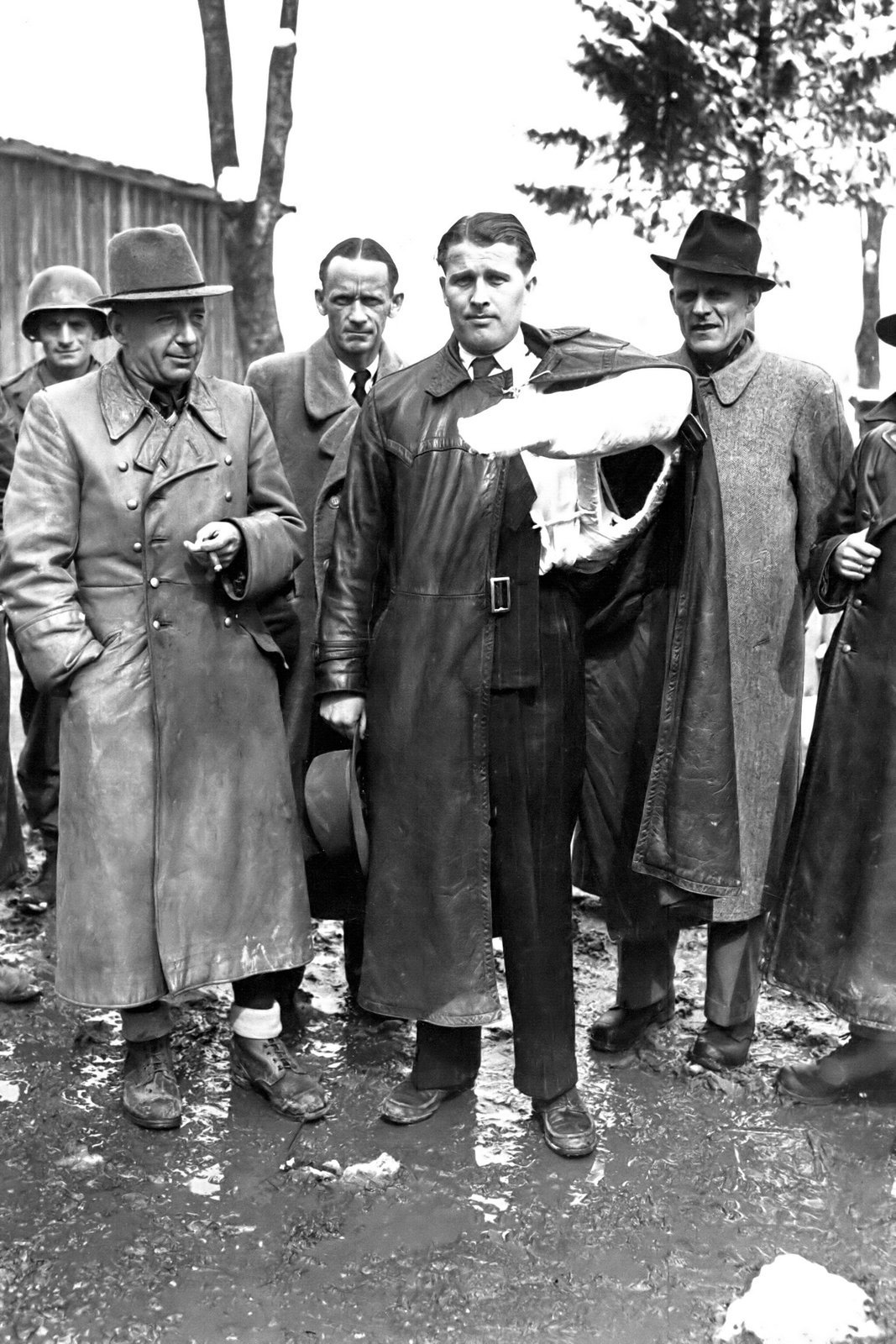
A group of men in long coats stand on muddy ground; the man at the centre has his arm in a plaster cast, and an American soldier in a helmet stands behind them.
Wernher von Braun (centre, his arm in a cast) with Walter Dornberger (left) and Herbert Axster (right) in American custody: Reutte, Tyrol, 3 May 1945, the day after the surrender.Photo: T5C. Louis Weintraub, US Army, 1945. Wikimedia Commons. Public domain.

One career: the Nazi years and the NASA years

06Fort Bliss and Huntsville, 1945–1960

The US Army shipped the rocket team to Texas

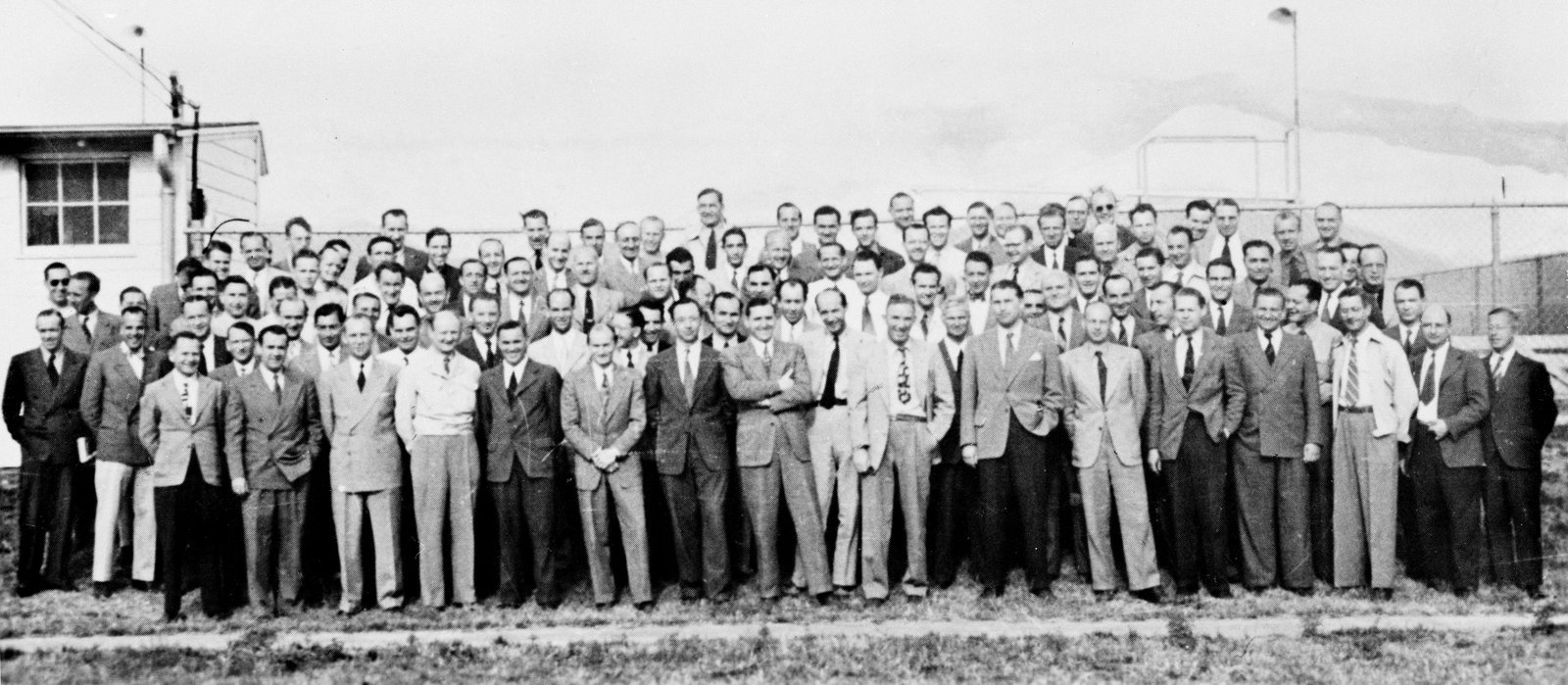
Under the programme that became Operation Paperclip, the United States brought more than 1,600 German scientists, engineers and technicians to America between 1945 and 1959. The first seven rocket engineers arrived in September 1945, and the group was assembled at Fort Bliss, Texas, firing captured V-2s at White Sands. This photograph shows 104 of them.

A large group of men in suits stand in rows outdoors for a formal group photograph.
The Peenemünde team at Fort Bliss, Texas, 1946.Photo: US Army, 1946. Wikimedia Commons. Public domain.

On 1 April 1950 more than 130 of the group moved with von Braun to the Redstone Arsenal at Huntsville, Alabama. The Redstone missile they built there first flew on 20 August 1953; the US Army called it a direct descendant of the V-2.

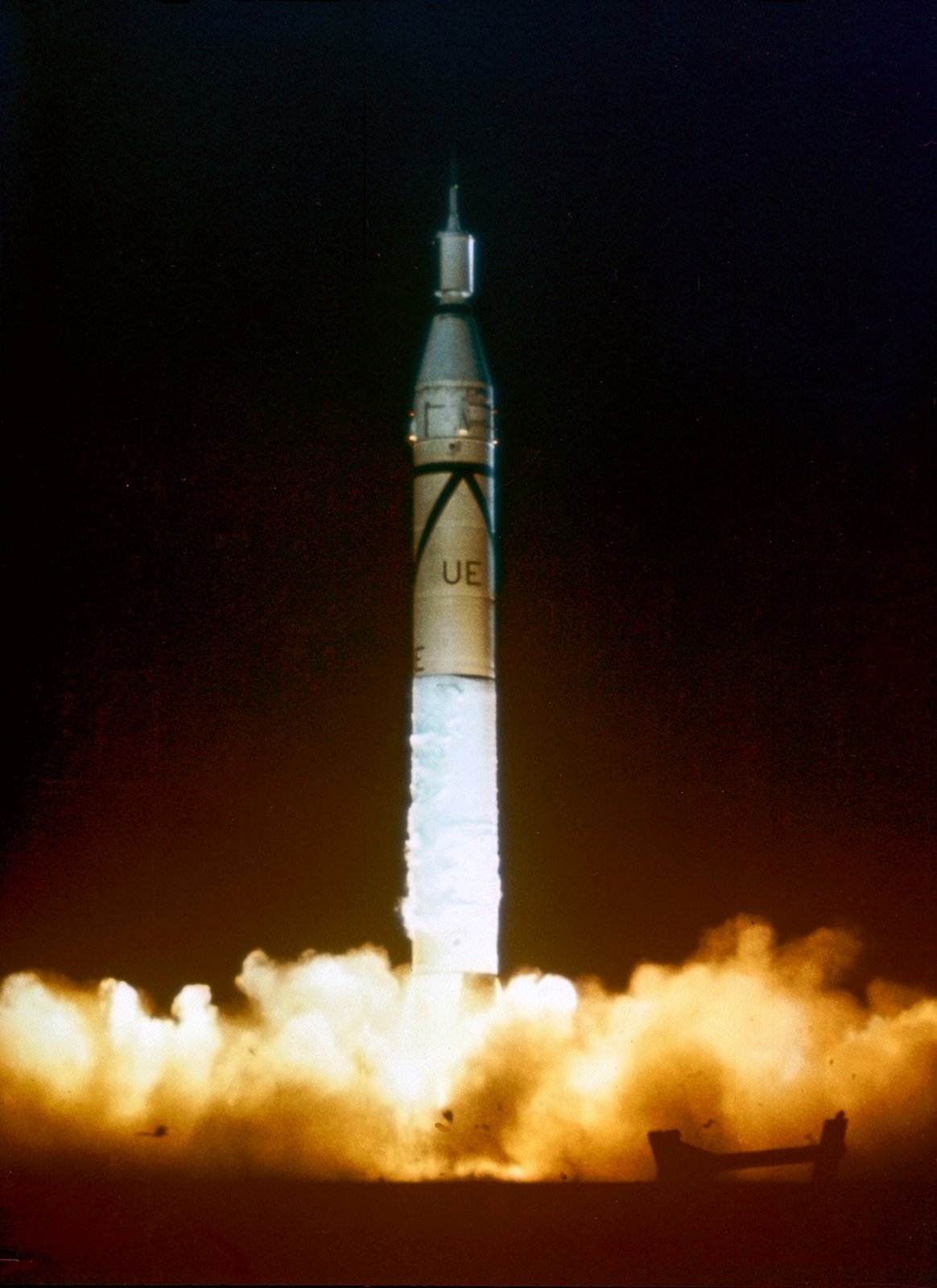
A Redstone-based Juno I put Explorer 1, America’s first satellite, into orbit on 1 February 1958 (GMT). When the Army’s rocket team passed to NASA as the Marshall Space Flight Center in 1960, 118 of the Peenemünde Germans were on its team.

A slender rocket rises from a launch gantry at night on a column of flame.
Juno I lifts off from Cape Canaveral with Explorer 1, the first American satellite, January 1958.Photo: NASA, 1958. Wikimedia Commons. Public domain.

071942–1969

The Saturn V is the V-2’s descendant, nearly eight times as tall

The V-2 stood 14.03 metres, the Saturn V 110.6. Between them came the Redstone, Juno I, the Mercury-Redstone that carried Alan Shepard on 5 May 1961, and Saturn I. Every one of them came from the same team. On 16 July 1969 a Saturn V launched Apollo 11 from Pad 39A.

Seven vehicles at one scale, height in metres. The V-1 was a pulsejet flying bomb, the rest are rockets

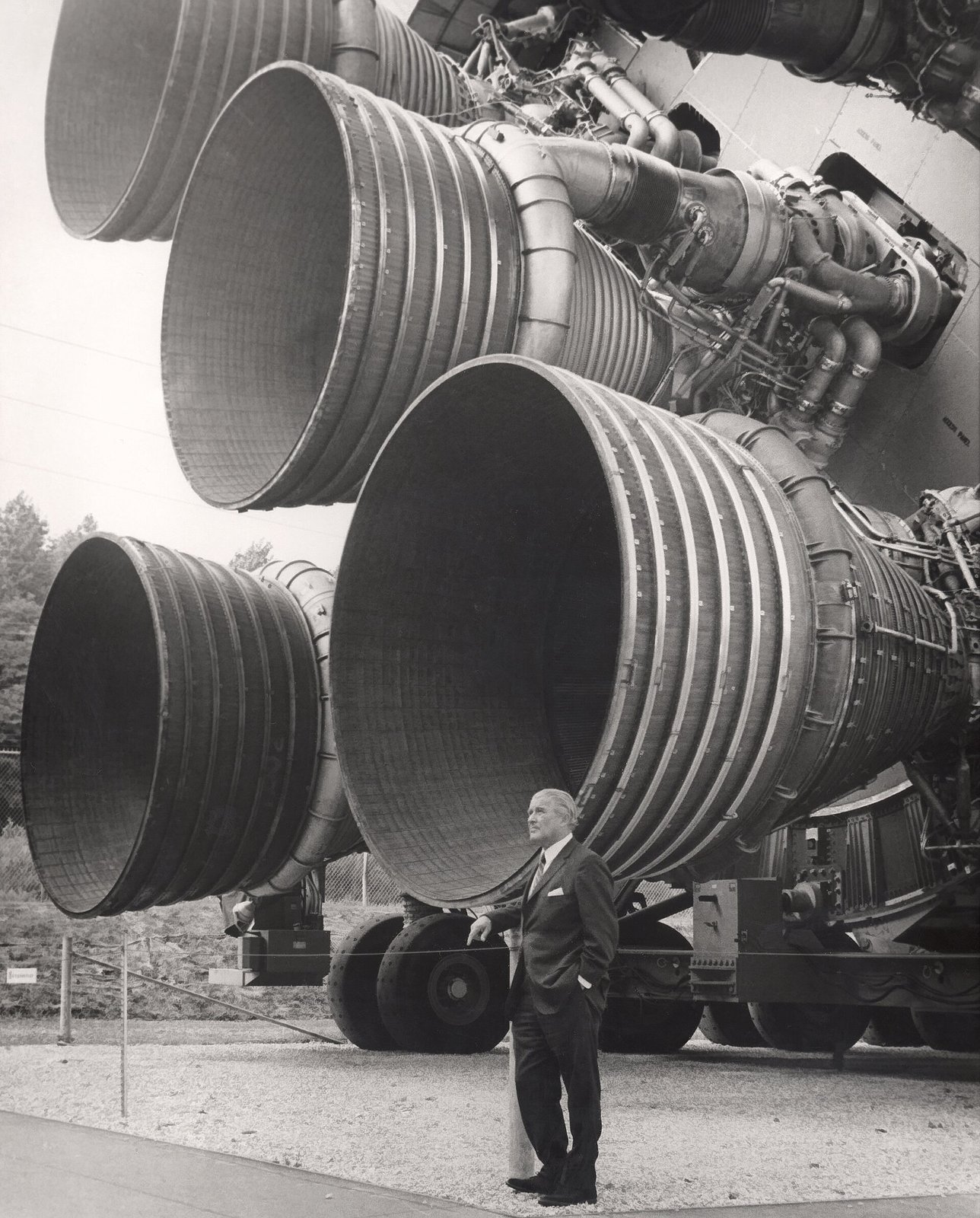
A man in a suit stands dwarfed beneath five enormous bell-shaped rocket nozzles.
Von Braun beside the five F-1 engines of a Saturn V first stage, Huntsville, probably 1969.Photo: NASA/MSFC, probably 1969. Wikimedia Commons. Public domain.
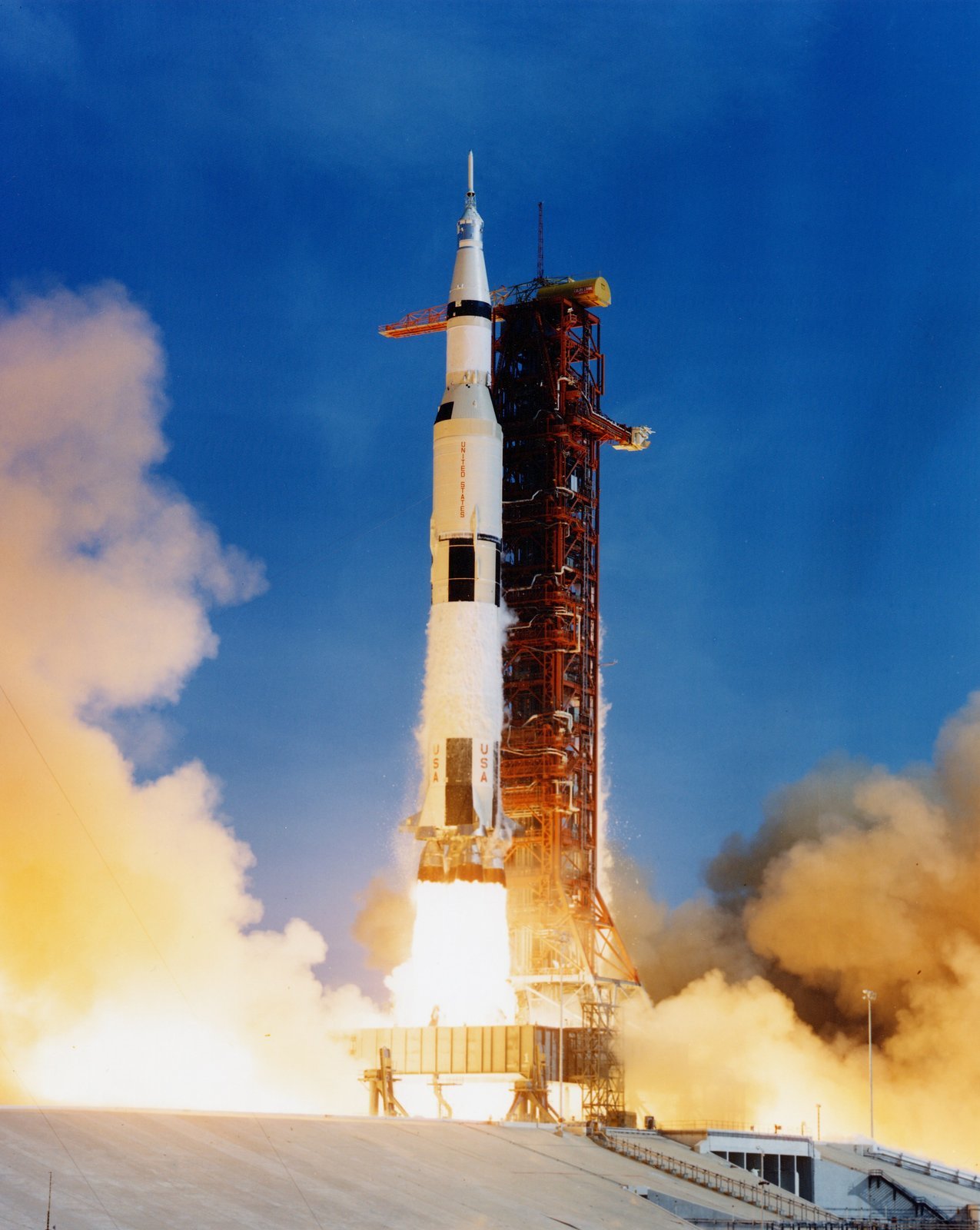
A huge white rocket climbs away from its launch tower on a bright column of flame and smoke.
Apollo 11 lifts off on a Saturn V from Pad 39A, Kennedy Space Center, 16 July 1969.Photo: NASA, 1969. Wikimedia Commons. Public domain.

American spaceflight was born in the Nazi rocket programme, and the first rocket of the line was built by prisoners, at least 20,000 of whom died in the camps that supplied them.

Press & citation

Use this Berlinfographic

Free to publish under CC BY 4.0 — in print, online, on Wikipedia and in teaching, commercially or not — with credit to Berlinfographics and a link to this page.

From the V-2 to the Saturn V, 1928–1969: ready-to-use landscape image

Ready-to-use image

The infographic as one image: headline, key figures, chart, sources and credit, 2,400 × 1,350 px PNG. Please use it unedited.

Download landscape (PNG)
From the V-2 to the Saturn V, 1928–1969: square version

Square format

A 1:1 version for social media and narrow columns, 1,800 × 1,800 px.

Download square (PNG)
From the V-2 to the Saturn V, 1928–1969: portrait version

Portrait 4:5

For Instagram and LinkedIn feeds, 1,620 × 2,025 px.

Download portrait (PNG)

Credit line

Berlinfographics (berlinfographics.com), CC BY 4.0

Citation

Berlinfographics (2026). “From the V-2 to the Saturn V, 1928–1969”. Berlin Experiences. https://berlinfographics.com/v-weapons-to-saturn-v/

Wikipedia

{{cite web |title=From the V-2 to the Saturn V, 1928–1969 |url=https://berlinfographics.com/v-weapons-to-saturn-v/ |website=Berlinfographics |publisher=Berlin Experiences |date=2026-11-05 |access-date=2026-11-05}}