Berlinfographicsby Berlin Experiences

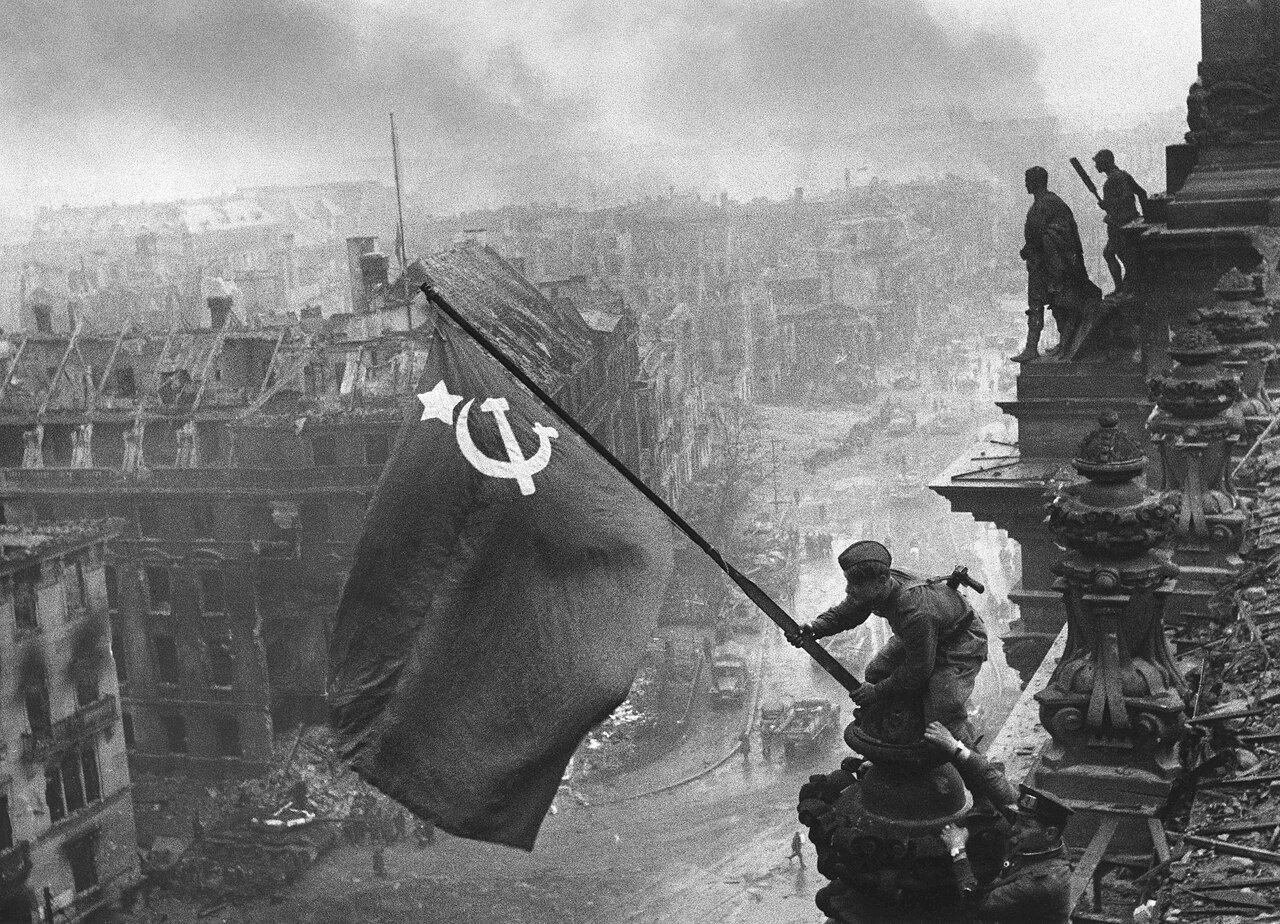
Raising a flag over the Reichstag, photographed by Yevgeny Khaldei on 2 May 1945 — staged after the fighting, and retouched before publication.Photo: Yevgeny Khaldei, 1945, restored by Adam Cuerden (public domain) · Wikimedia Commons

The Battle for Berlin

In seventeen days the Red Army broke Berlin’s three lines of defence and took Hitler’s capital street by street

From the Oder on 16 April 1945 to General Weidling’s surrender at about 06:00 on 2 May 1945. The battle for the city killed some 22,000 of its civilians; counted across the whole operation, the toll reaches 125,000.

17days
from the Oder to the surrender, 16 April – 2 May
500,000+
Soviet shells fired in the first 30 minutes
2,300,000
Soviet troops in the whole operation, Oder to Elbe
22,000–125,000
German civilians dead: the city battle, or the whole operation

01The Oder front, 16 April – 19 April

Half a million shells in half an hour opened the battle for Berlin

Zhukov’s 1st Belorussian Front attacked across the Oder at 05:00, Konev’s 1st Ukrainian Front at 06:15. More than 500,000 shells fell in the first 30 minutes. On the Seelow Heights alone the Red Army put in close to 1,000,000 men, 3,059 tanks and self-propelled guns, and 16,934 or 18,934 guns and mortars (sources differ).

It took four days, to 19 April, to break the last line. The cost is disputed: some 30,000 Soviet dead by Hastings and Beevor, 5,000–6,000 killed and missing by Isaev; about 12,000 German dead (Hastings).

On 20 April, Hitler’s 56th birthday, the first Soviet shells fell on Berlin’s eastern suburbs. He refused to leave.

A heavy tracked howitzer with soldiers riding on it crosses a muddy field; more guns follow.
Soviet 203 mm B-4 howitzers on the road to Berlin, April 1945.Photo: Aleksandr Ustinov, 1945. Mos.ru, via Wikimedia Commons. CC BY 4.0.
A long line of Soviet field guns and their crews on open, flat ground.
Soviet artillery before Berlin, April 1945. The East German archive caption dates the opening of the attack from the Oder and Neisse to 16 April.Photo: Bundesarchiv, Bild 183-E0406-0022-012 / Unknown / CC BY-SA 3.0 de
Portrait of a heavy-set Soviet marshal in dress uniform, his chest covered in orders and medals.
Georgy Zhukov, commander of the 1st Belorussian Front, 1945.Photo: Grigory Vayl, 1945. Wikimedia Commons. Public domain.
A man in a Soviet officer’s cap and field tunic looks to the side, trees behind him.
Ivan Konev, commander of the 1st Ukrainian Front, 1945.Photo: Unknown author, 1945. Wikimedia Commons. Public domain.

02Berlin, February–April 1945

Holding the outer line needed 100 divisions. Berlin had 60,000 Volkssturm, a third of them unarmed

The city’s defence, as a German staff officer, Wilhelm Willemer, described it for the US Army in 1953, was three lines. The outer one, the Hauptkampflinie (“main line of resistance”), ran for about 100 km: along the Teltow Canal in the south, round the Müggelsee in the east, along the Tegeler See and the Havel in the west. The second followed the Ringbahn, the circle railway, for about 35 km, mostly as single strongpoints, because the hard soil could not be dug in the time there was. Inside lay the Zitadelle, the government quarter, an island formed by the Spree and the Landwehr Canal.

Between the lines the city was cut into eight sectors, lettered A to H. Willemer’s staff study judged that the outer line alone needed at least 100 battle-worthy divisions. Inside the Berlin Defence Area, Beevor counts about 45,000 troops and 40,000 Volkssturm; the commandant’s own report listed 92 Volkssturm battalions, some 60,000 men (sources differ).

Two railway wagons and timber block a wide square; people walk past a damaged colonnade and an office block.
A tank barrier at Potsdamer Platz, early April 1945. The archive caption records that Berlin had been declared a “defence area” on 1 February.Photo: Bundesarchiv, Bild 183-R71639 / Unknown / CC BY-SA 3.0 de
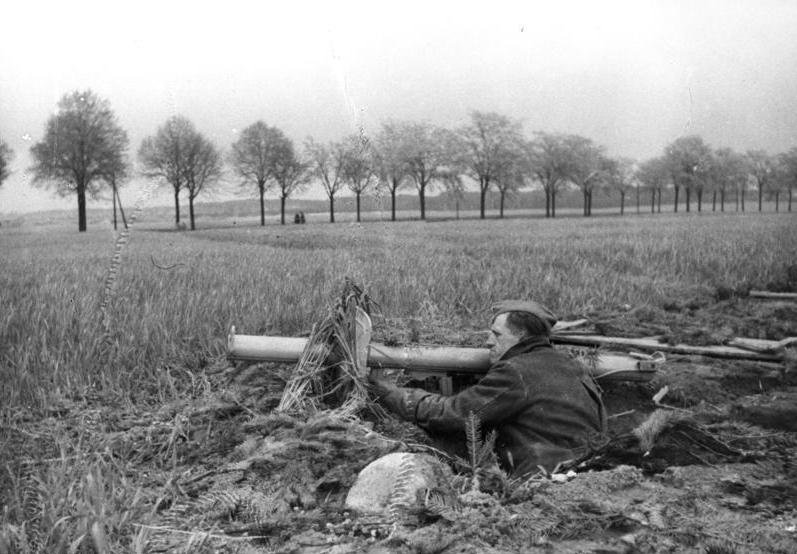
A man lies in a foxhole in a flat field, aiming a tube-shaped anti-tank weapon; a line of trees behind.
A Volkssturm man with an anti-tank weapon in a foxhole outside Berlin, 1945.Photo: Bundesarchiv, Bild 146-1985-092-29 / Woscidlo, Wilfried / CC BY-SA 3.0 de

Against them came 2,300,000 Soviet troops across the whole operation, with 6,250 tanks and self-propelled guns, 41,600 guns and 7,500 aircraft, and 155,900–200,000 men of the two Polish armies beside them.

Berlin’s three lines of defence

16 April – 2 May
Map of central Berlin with the Ringbahn defence line, the Teltow Canal on the outer line, and the Spree and Landwehr Canal around the government quarter; places light up as the Red Army reaches them, day by day, from 16 April to 2 May 1945.
German line of defence, holdingbrokenReached by the Red ArmyFührerbunker

Railways, water and positions: © OpenStreetMap contributors, as they are today. The outer line is marked where it ran along the Teltow Canal.

From a wooded slope, a view over a flat green plain stretching to the horizon.
The Seelow Heights: the Oderbruch below the memorial, 2015Photo: Tsungam, 2015. Wikimedia Commons. CC BY-SA 4.0.

Day 1–4 · 16 April – 19 April

Four days to break through on the Oder

The offensive opened at 05:00 on 16 April, some way east of the city. By 19 April the last German line on the Oder was broken and the 9th Army enveloped. Berlin’s own lines had not yet been touched.

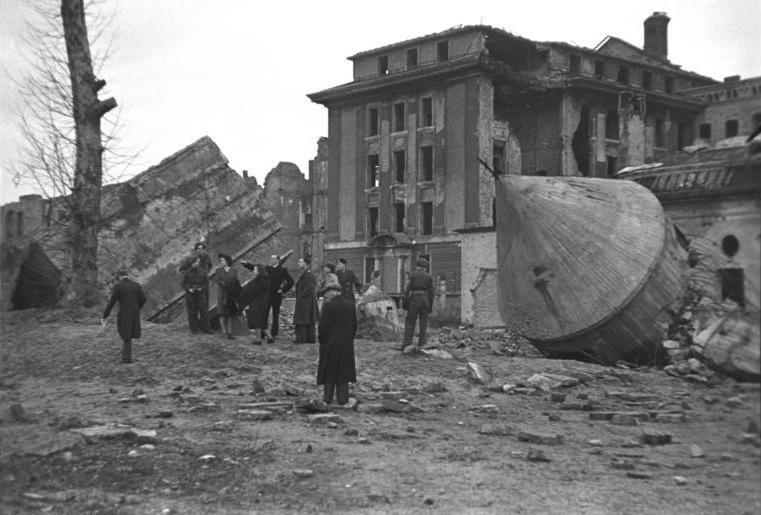
People walk across a rubble field before a gutted stone building; a toppled concrete dome lies on its side at right.
The Reich Chancellery, above the Führerbunker, in ruins in 1947Photo: Bundesarchiv, Bild 183-M1204-318 / Otto Donath / CC BY-SA 3.0 de

Day 5–7 · 20 April – 22 April

The first shells fall on Berlin

On 20 April the 79th Rifle Corps fired the first Soviet shells into the eastern suburbs. On 22 April, in the afternoon conference in the bunker, Hitler admitted for the first time that the war was lost, and said he would stay in Berlin to the end.

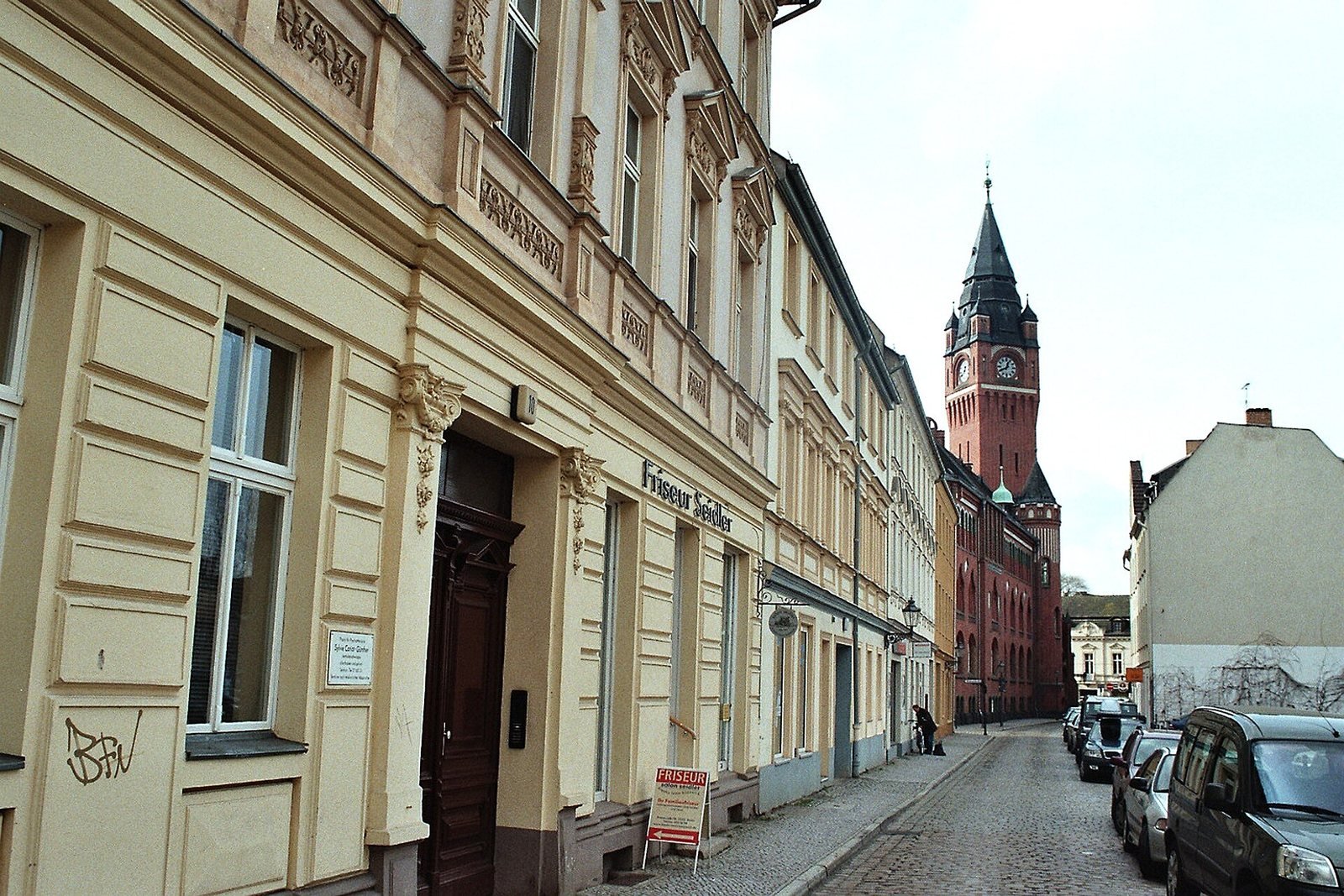
A quiet old-town street of low painted houses leading to a red-brick tower.
Köpenick, the old town (2006)Photo: Dguendel, 2006. Wikimedia Commons. CC BY 4.0.
Studio portrait of a Soviet colonel general in dress uniform, rows of medals on his chest, a sabre at his side.
Vasily Chuikov, 1945Photo: Unknown author, 1945. Mil.ru, via Wikimedia Commons. CC BY 4.0.

Day 8 · 23 April

The outer line is crossed

On 23 April Chuikov’s 8th Guards Army crossed the Spree and the Dahme south of Köpenick: the first Soviet troops inside the outer line. The same day Hitler appointed General Helmuth Weidling commander of the Berlin Defence Area.

An American and a Soviet officer embrace in front of a hand-painted sign reading East Meets West.
Torgau: US and Soviet officers meet on the ElbePhoto: Pfc. William E. Poulson, 1945. Wikimedia Commons. Public domain.
A stone wreath bound with striped ribbon in front of a long lawn; a monumental soldier statue stands on a mound in the distance.
Treptower Park: the Soviet War Memorial (2005)Photo: Matthias Trautsch, 2005. Wikimedia Commons. CC BY-SA 3.0.

Day 9–10 · 24 April – 25 April

Berlin is surrounded

On 24 April, after a 06:20 bombardment by 3,000 guns and heavy mortars, Soviet tanks crossed the Teltow Canal, Treptow Park fell, and Katukov’s 1st Guards Tank Army reached the Ringbahn. On 25 April the two Soviet fronts met at Ketzin, west of the city: Berlin was surrounded. The same day Konev’s men met the Americans at Torgau, on the Elbe.

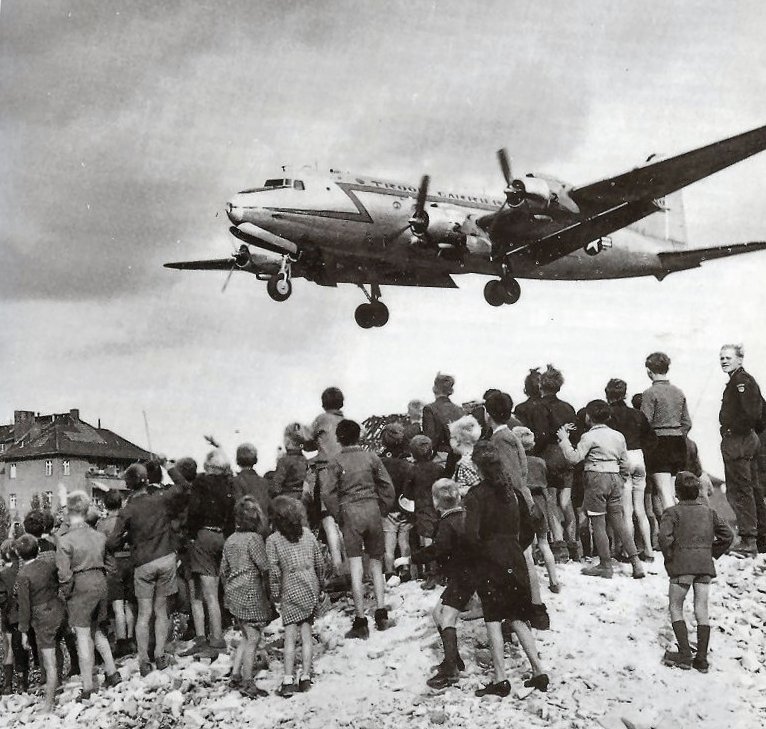
A four-engined aircraft flies low over a crowd of children standing on a mound of rubble.
Tempelhof airfield, 1948Photo: US Air Force photograph, public domain.
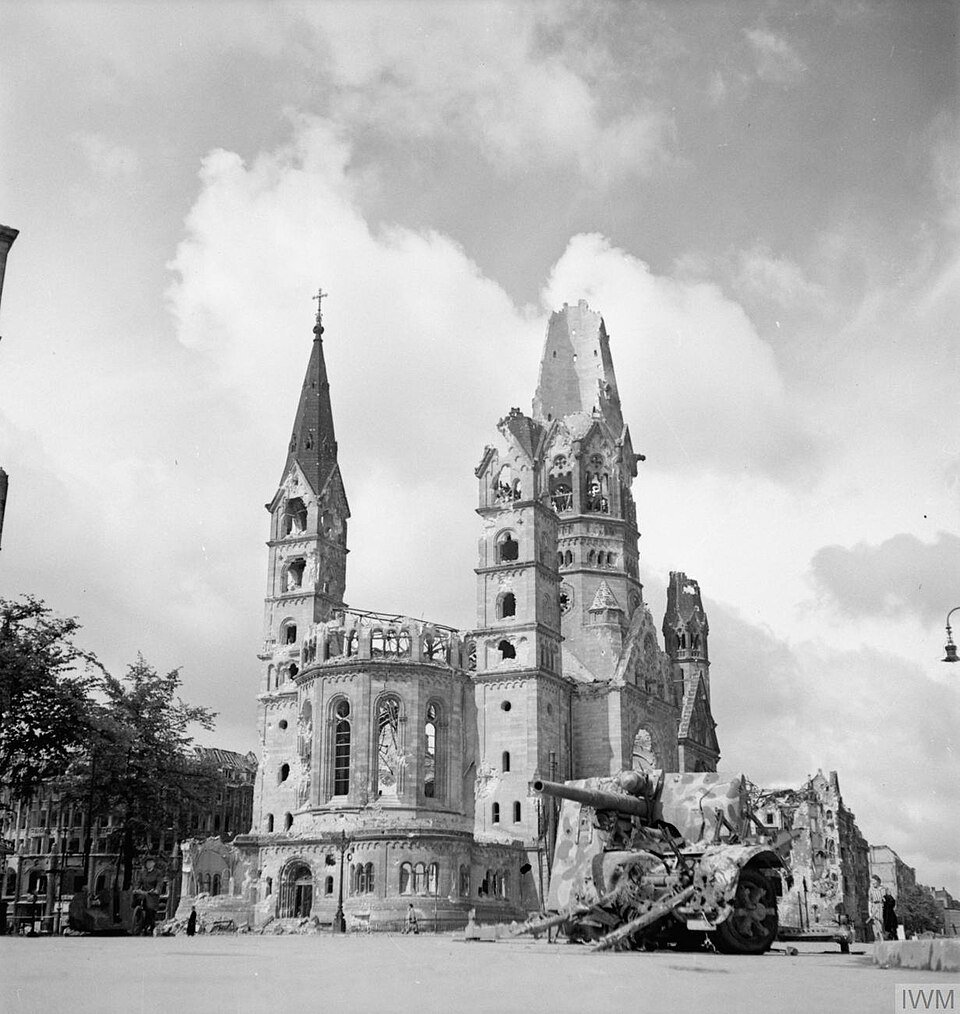
The broken spire and walls of a large church stand above a wrecked gun on an empty square.
Charlottenburg, July 1945Photo: Hewitt C H (Sergeant), No 5 Army Film Photographic Unit, 1945. Wikimedia Commons. Public domain.

Day 11–12 · 26 April – 27 April

The Ringbahn line is broken all round

Soviet tanks reached Tempelhof airfield, 6 km from the bunker, on 26 April (some accounts say 25 April: sources differ). On 27 April the Ringbahn line was breached from every direction, and Rybalko’s tanks entered Charlottenburg. What the Germans still held was about 25 km by 3 km. Hitler rejected Weidling’s plan to break out.

A vast iron-and-glass train shed with tracks and platforms running into the distance.
Anhalter Bahnhof, the train shed (1880)Photo: Hermann Rückwardt, 1880 · Architekturmuseum der TU Berlin BZ-F 08,019 · public domain · Wikimedia Commons

Day 13 · 28 April

The front reaches the Zitadelle

On 28 April the 3rd Shock Army stormed Moabit prison and crossed the Moltke Bridge over the Spree, the government quarter’s river line. In the south the fighting reached Anhalter station, 1 km from the bunker. The German-held strip was under 5 km wide and 15 km long.

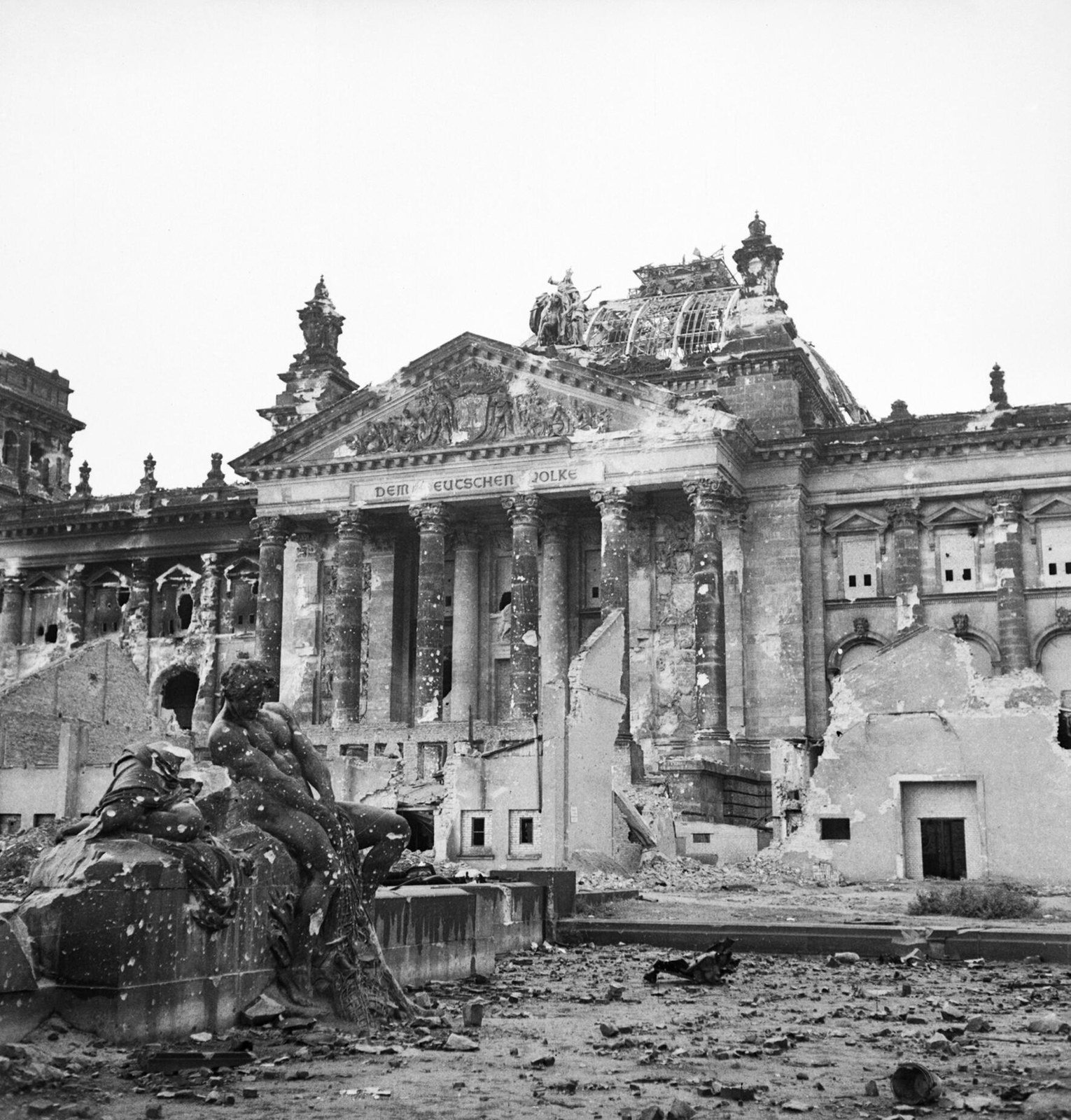
The scarred, roofless facade of the Reichstag behind a foreground of rubble.
The Reichstag, 3 June 1945Photo: Sgt Hewitt, No. 5 Army Film & Photographic Unit, 1945. Imperial War Museum BU 8573, via Wikimedia Commons. Public domain.

Day 14–15 · 29 April – 30 April

The Reichstag is stormed; Hitler is dead

On 29 April Hitler married Eva Braun and dictated his will; Wenck’s 12th Army reported that it could not relieve the city. On 30 April the attacks on the Reichstag began at 06:00. At about 15:30, in the bunker, Hitler and Braun killed themselves.

Four German officers in uniform stand side by side in a doorway.
General Weidling and his staff after the surrenderPhoto: Gleb Samsonov (Izvestia), 1945. Mil.ru, via Wikimedia Commons. CC BY 4.0.

Day 16–17 · 1 May – 2 May

Weidling surrenders the city

Early on 1 May, General Krebs crossed the lines to ask for a ceasefire and was told: unconditional surrender only. That evening the Goebbels had their six children killed, then took their own lives. At about 06:00 on 2 May Weidling surrendered to Chuikov. The guns fell silent at 15:00.

03Berlin and Halbe, late April

Outside the city, 30,000 German soldiers died in the Halbe pocket

When the ring closed, the 9th Army was trapped south-east of Berlin, between Lübben, Zossen and Beeskow: about 80,000 men. In the battle of Halbe, from 24 April to 1 May, some 30,000 of them were killed and 25,000 escaped west to Wenck’s 12th Army. About 10,000 civilians died with them. The Red Army lost about 40,000 dead and missing of the 280,000 men it committed.

Rows of small flat stone markers among pine trees in a forest cemetery.
The forest cemetery at Halbe, 2007, where many of those killed in the Halbe pocket are buried.Photo: Clemensfranz, 2007. Wikimedia Commons. CC BY 3.0.
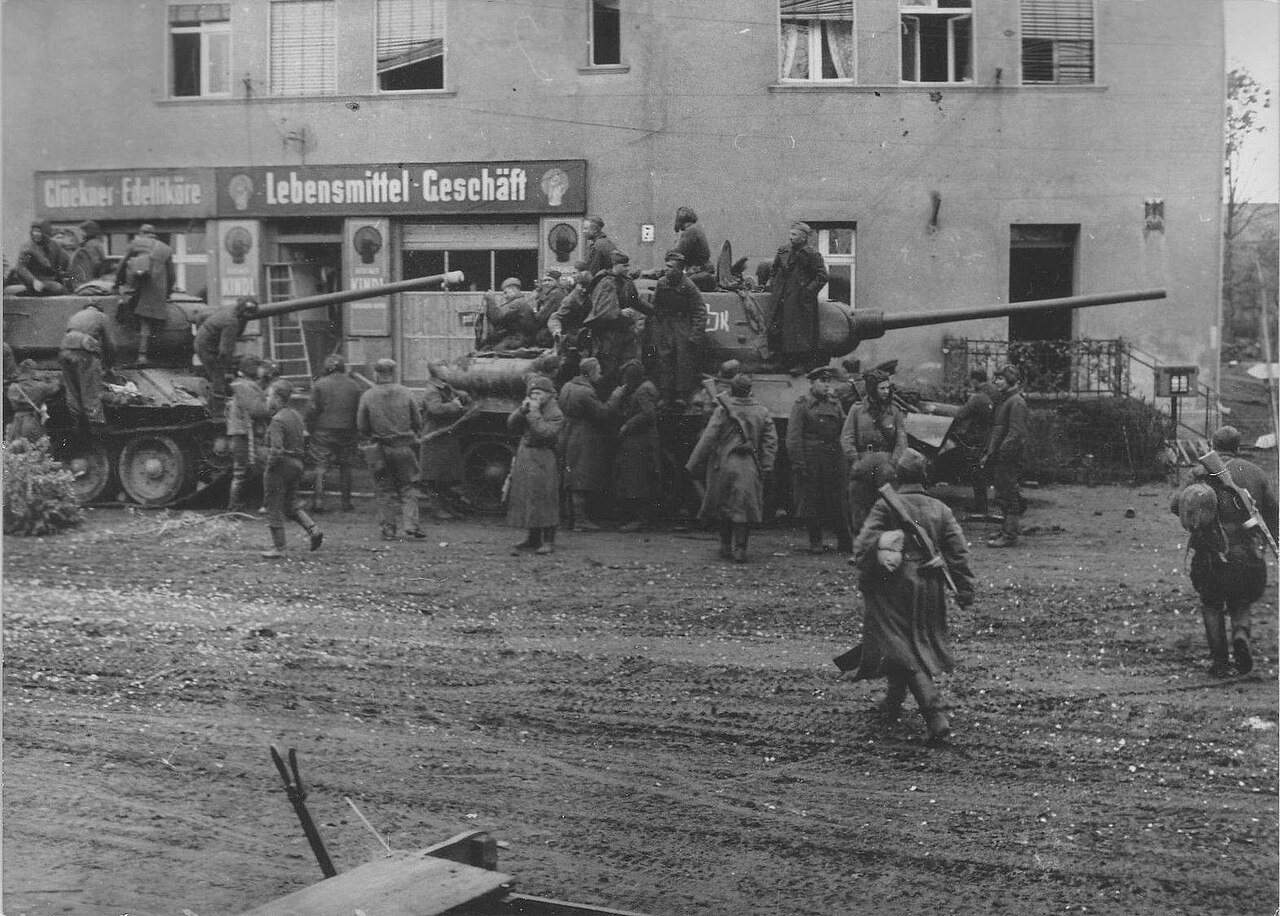
Soviet soldiers climb onto and gather around tanks in a street outside a grocer’s shop.
Tanks and infantry of the 2nd Guards Tank Army in the Berlin operation, 1945.Photo: Unknown author, 1945. Wikimedia Commons. Public domain.
A heavy tank stands in a rubble-strewn street while soldiers move along the walls.
An IS-2 tank supports infantry in a Berlin street, 27 April 1945.Photo: Boris Ilyich Velyashev / Yefim Davidovich Kopyt, 1945. Wikimedia Commons. Public domain.

Inside the city the Red Army fought block by block through Tempelhof, Kreuzberg, Neukölln and Friedrichshain, while civilians sheltered in cellars and U-Bahn tunnels as artillery reduced whole blocks to rubble. The North–South S-Bahn tunnel flooded too. Beevor dates the blast to the last night of the battle; other accounts put the flooding on 28 April, and some blame shell damage rather than demolition (sources differ).

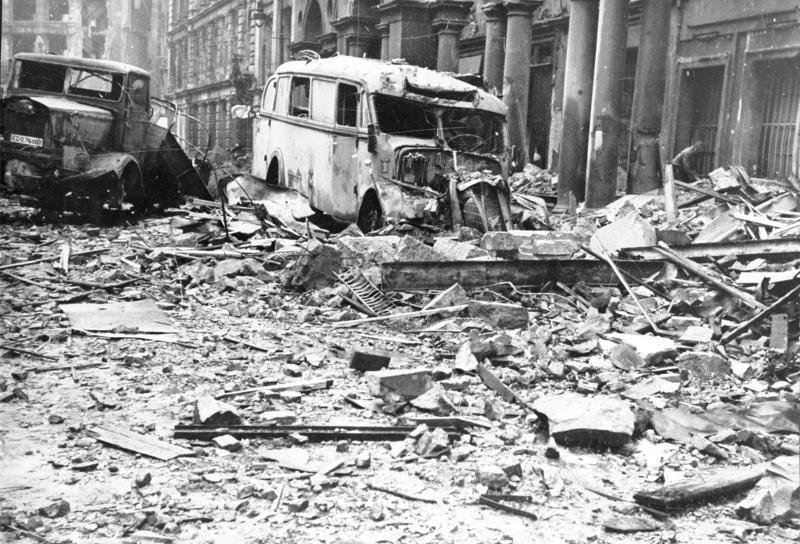
Much of the centre was already in ruins from the air raids before the ground battle reached it.

Burnt-out vehicles stand among rubble in a street of gutted buildings.
Mohrenstraße after the Anglo-American air raid of 3 February 1945: the centre was already in ruins before the ground battle reached it.Photo: Bundesarchiv, Bild 183-J31347 / Unknown / CC BY-SA 3.0 de

04The government quarter, 29 April – 1 May

Hitler killed himself in his bunker while the Red Army fought its way into the Reichstag

The attacks on the Reichstag began at 06:00 on 30 April; at 18:00 three regiments went in. About 1,000 defenders held the building. When it was over, 300 had surrendered, 200 were dead and 500 wounded.

Moscow claimed that the Red Banner was on the roof at 22:50 that night; Beevor thinks the claim may be exaggerated (sources differ). Fighting inside went on until the morning of 2 May. The most famous photograph of the battle, Khaldei’s flag over the city, was staged on 2 May and retouched before it was published.

Nearby, in the bunker, Hitler and Eva Braun had died at about 15:30 on 30 April. On the evening of 1 May Joseph and Magda Goebbels had their six children sedated and poisoned with cyanide in the bunker, then killed themselves.

Two small figures stand before the battered, pockmarked facade of the Reichstag.
A Soviet officer and soldier in front of the Reichstag, early May 1945.Photo: Bundesarchiv, Bild 204-009 / Gorovits, Henryk / CC BY-SA 3.0 de
A Soviet soldier on a high ledge of the Reichstag holds a red flag over the smoking ruins of central Berlin.
Raising a flag over the Reichstag, photographed by Yevgeny Khaldei on 2 May 1945 — staged after the fighting, and retouched before publication.Photo: Yevgeny Khaldei, 1945, restored by Adam Cuerden (public domain) · Wikimedia Commons

05Berlin, 2 May 1945

At about 06:00 on 2 May, the last commander of Berlin gave the city up

General Krebs had crossed to Chuikov’s headquarters at 03:00 or 04:00 on 1 May (sources differ) to report Hitler’s death and ask for a ceasefire. He was refused, and killed himself in the bunker in the early hours of 2 May. Weidling, appointed only nine days earlier, drafted the order for the whole garrison to stop fighting, and surrendered with his staff at about 06:00.

His order was read out over loudspeakers across the city. By Stalin’s order of the day the garrison ceased resistance at 15:00, and 70,330 prisoners had been taken by 21:00.

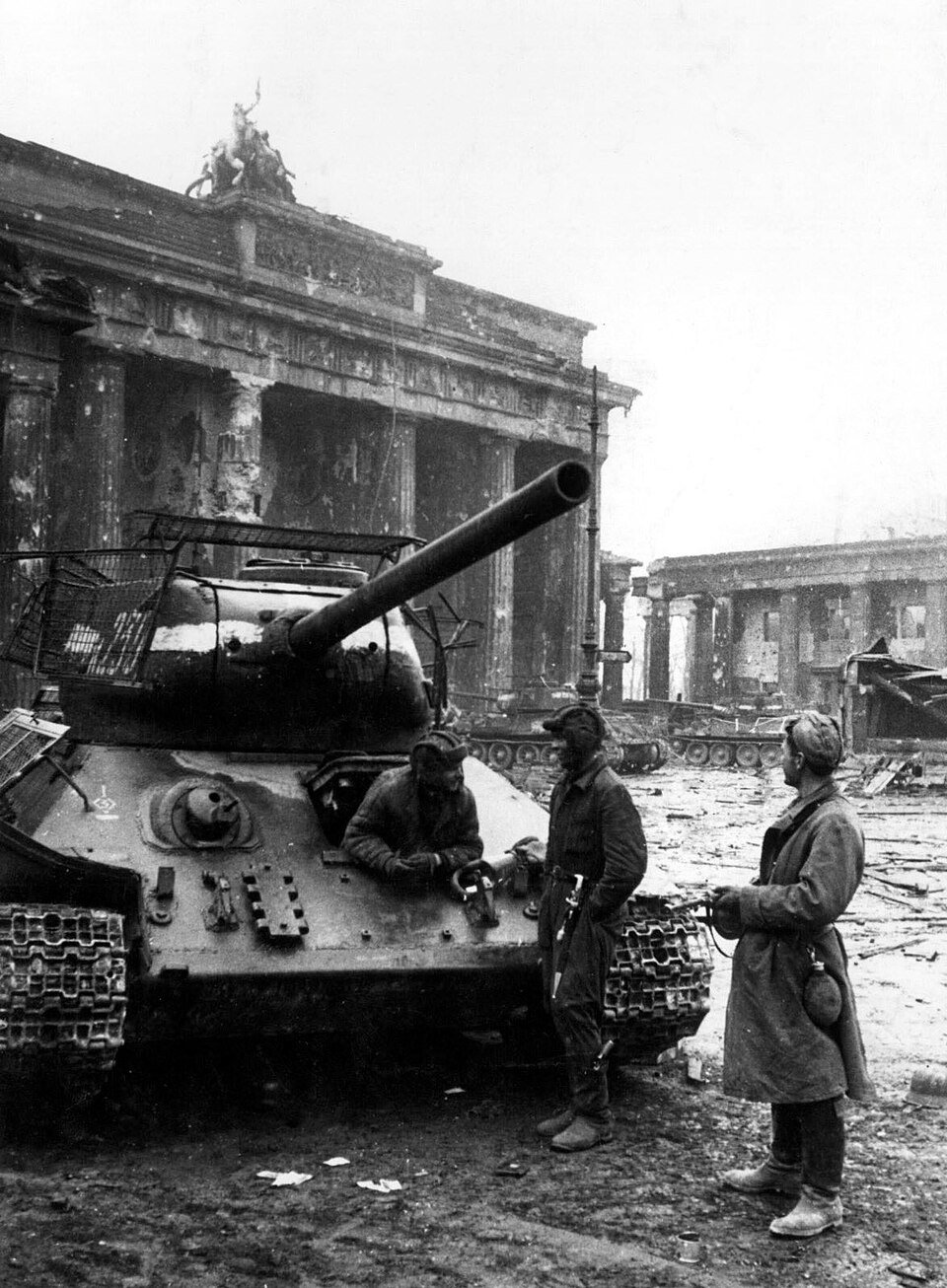
Soldiers stand beside a Soviet tank fitted with metal screens; the battered Brandenburg Gate rises behind them.
A Soviet tank with bedspring screens near the Brandenburg Gate, May 1945.Photo: Unknown author, 1945. Wikimedia Commons. Public domain.

06The dead

The battle for the city killed some 22,000 Berlin civilians

No one recorded the dead day by day; only totals survive, and each is counted over its own ground. The Bundeszentrale für politische Bildung gives about 22,000 civilians killed in the battle for the city. Antill gives 125,000 for the whole operation, from the Oder to the Elbe. They are different ground, not rival counts.

German civilians

22,000the battle for the city · 125,000the whole operation
the city (bpb)the rest of the operation (Antill)

German soldiers

92,000–100,000the whole operation
at leastup to (Müller)

Soviet and Polish soldiers

78,291Soviet dead and missing · 81,116with the Polish armies
Soviet (Krivosheev)Polish16 Apr – 8 May 1945

Each square: a thousand dead, rounded. German soldiers, red: the forces of the Nazi state.

Soviet losses of every kind, killed, wounded and sick, came to 352,475 (Krivosheev). The German military dead, 92,000–100,000, rest on incomplete archives.

Hitler’s capital fell in seventeen days. The battle for the city alone killed some 22,000 of the people who lived in it.

Press & citation

Use this Berlinfographic

Free to publish under CC BY 4.0 — in print, online, on Wikipedia and in teaching, commercially or not — with credit to Berlinfographics and a link to this page.

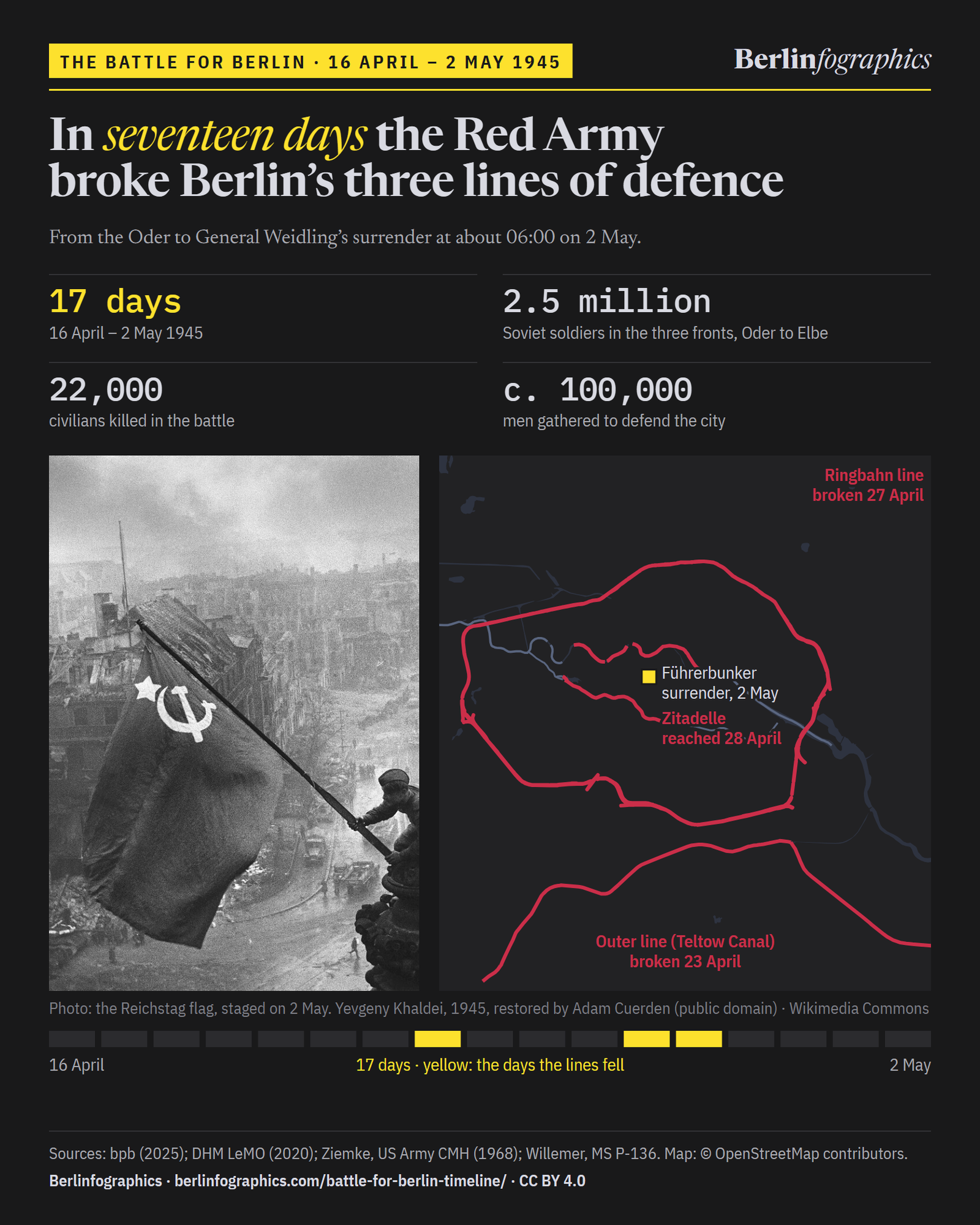
The Battle for Berlin, 16 April – 2 May 1945: ready-to-use landscape image

Ready-to-use image

The infographic as one image: headline, key figures, chart, sources and credit, 2,400 × 1,350 px PNG. Please use it unedited.

Download landscape (PNG)
The Battle for Berlin, 16 April – 2 May 1945: square version

Square format

A 1:1 version for social media and narrow columns, 1,800 × 1,800 px.

Download square (PNG)
The Battle for Berlin, 16 April – 2 May 1945: portrait version

Portrait 4:5

For Instagram and LinkedIn feeds, 1,620 × 2,025 px.

Download portrait (PNG)

Credit line

Berlinfographics (berlinfographics.com), CC BY 4.0

Citation

Berlinfographics (2026). “The Battle for Berlin, 16 April – 2 May 1945”. Berlin Experiences. https://berlinfographics.com/battle-for-berlin-timeline/

Wikipedia

{{cite web |title=The Battle for Berlin, 16 April – 2 May 1945 |url=https://berlinfographics.com/battle-for-berlin-timeline/ |website=Berlinfographics |publisher=Berlin Experiences |date=2026-11-05 |access-date=2026-11-05}}