24 June 1948 – 12 May 1949
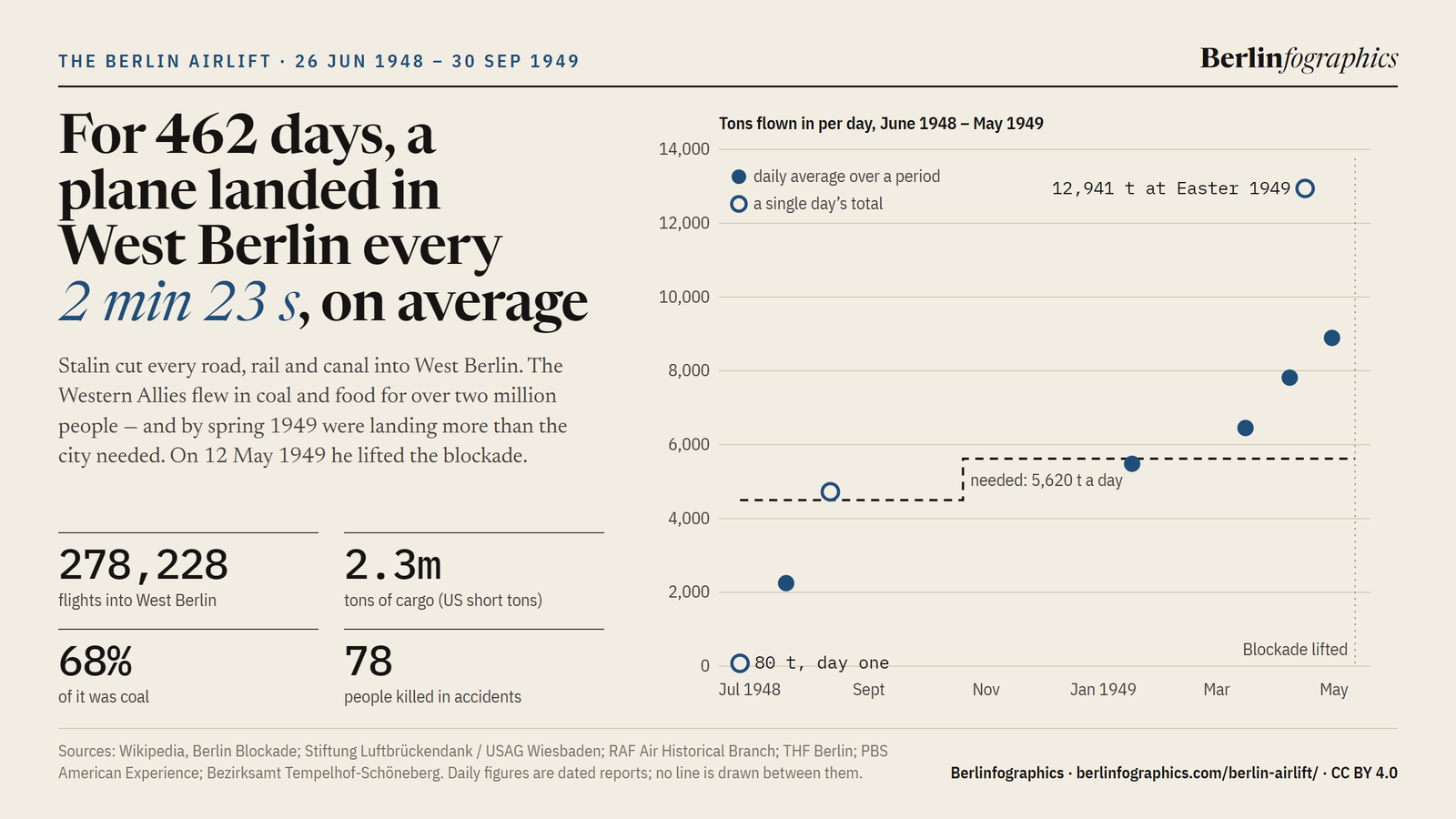
Stalin bet West Berlin could not be fed from the air. For fifteen months a plane landed, on average, every 2 min 23 s.
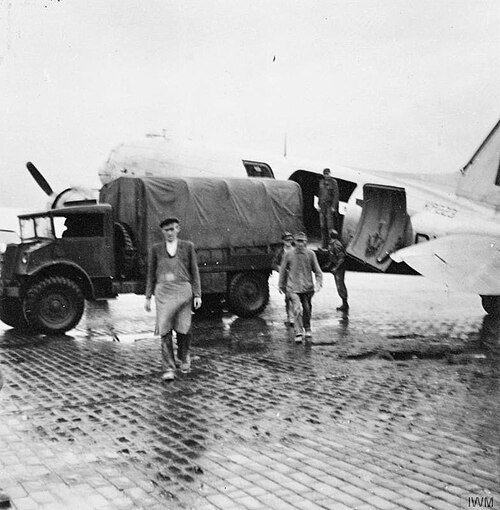
On 24 June 1948 the Soviet Union blockaded the western sectors of Berlin and the over two million people who lived in them. For 322 days their coal, their food and their medicine came by air — 278,228 flights in all.

Tons flown into West Berlin a day

26 June 1948
Day one: 80 tons
On 25 June 1948 General Lucius D. Clay, the US military governor, telephoned LeMay: could his aircraft haul coal? “We can deliver anything,” LeMay replied. The next day 32 C-47s, about three tons apiece, flew 80 tons into Tempelhof. It was Clay’s decision, not LeMay’s; by the end of 1948 LeMay had gone home to run Strategic Air Command. The city needed 4,500 tons a day.
July 1948
The Candy Bomber
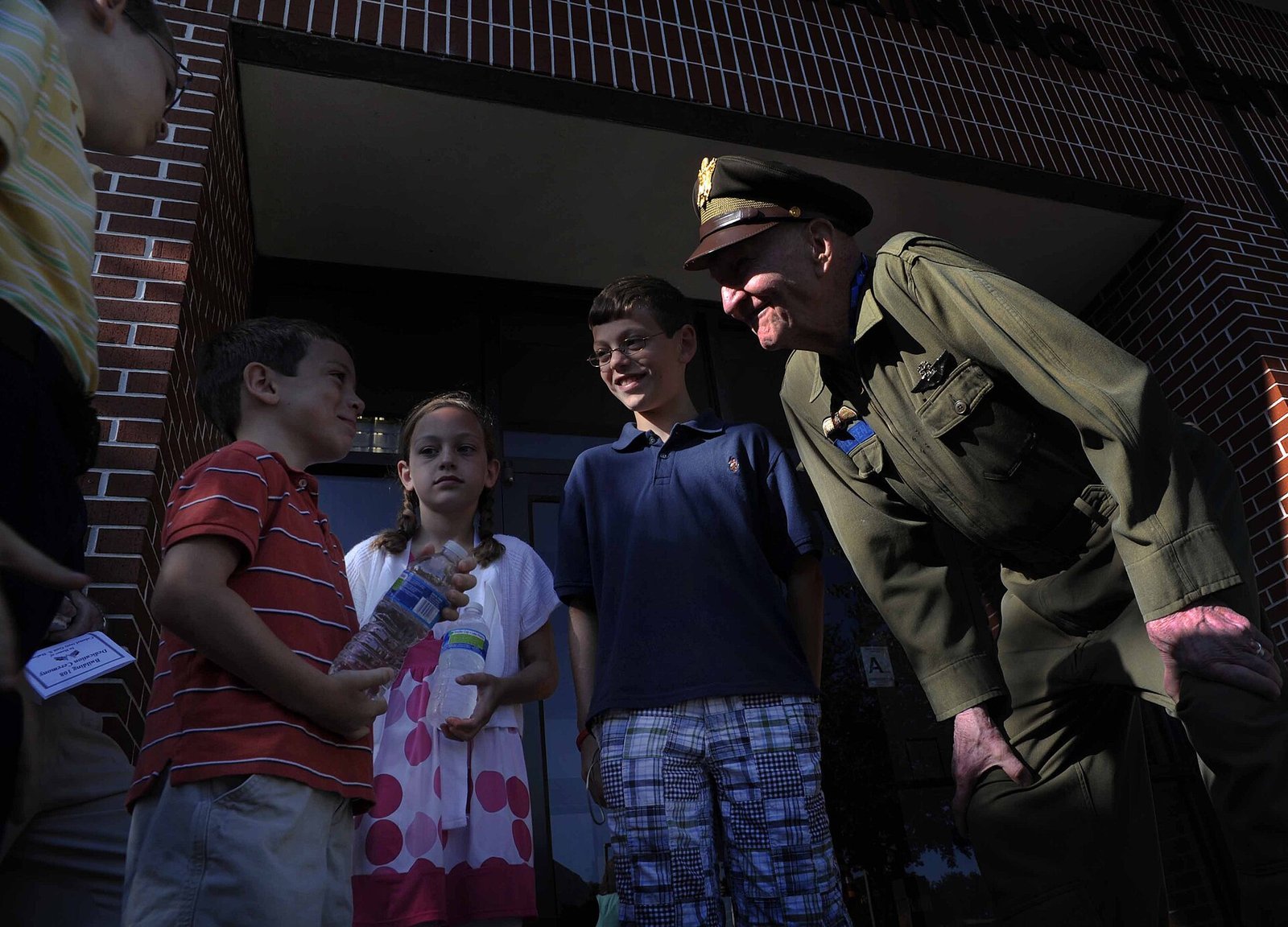
A C-54 pilot out of Rhein-Main, Halvorsen began dropping sweets on handkerchief parachutes to children at the Tempelhof fence in July 1948, wiggling his wings so they would know him. He flew 126 missions. The drops he started, Operation Little Vittles, released over 23 tons of sweets on more than 250,000 parachutes.

28 July 1948
Seven weeks to beat the target
William Tunner, who had run the wartime airlift over the Himalayas, arrived on 28 July 1948. On 12 August 1948 the Airlift landed 4,724 tons in a single day — the first day over the target.

9 September 1948
Ernst Reuter speaks at the Reichstag
On 9 September 1948 Reuter spoke to some 300,000 people in front of the burnt-out Reichstag: “People of the world … look upon this city and see that you should not, cannot abandon this city and this people!” The aircraft overhead were the answer.

October 1948 – March 1949
The target rose. So did the deliveries.
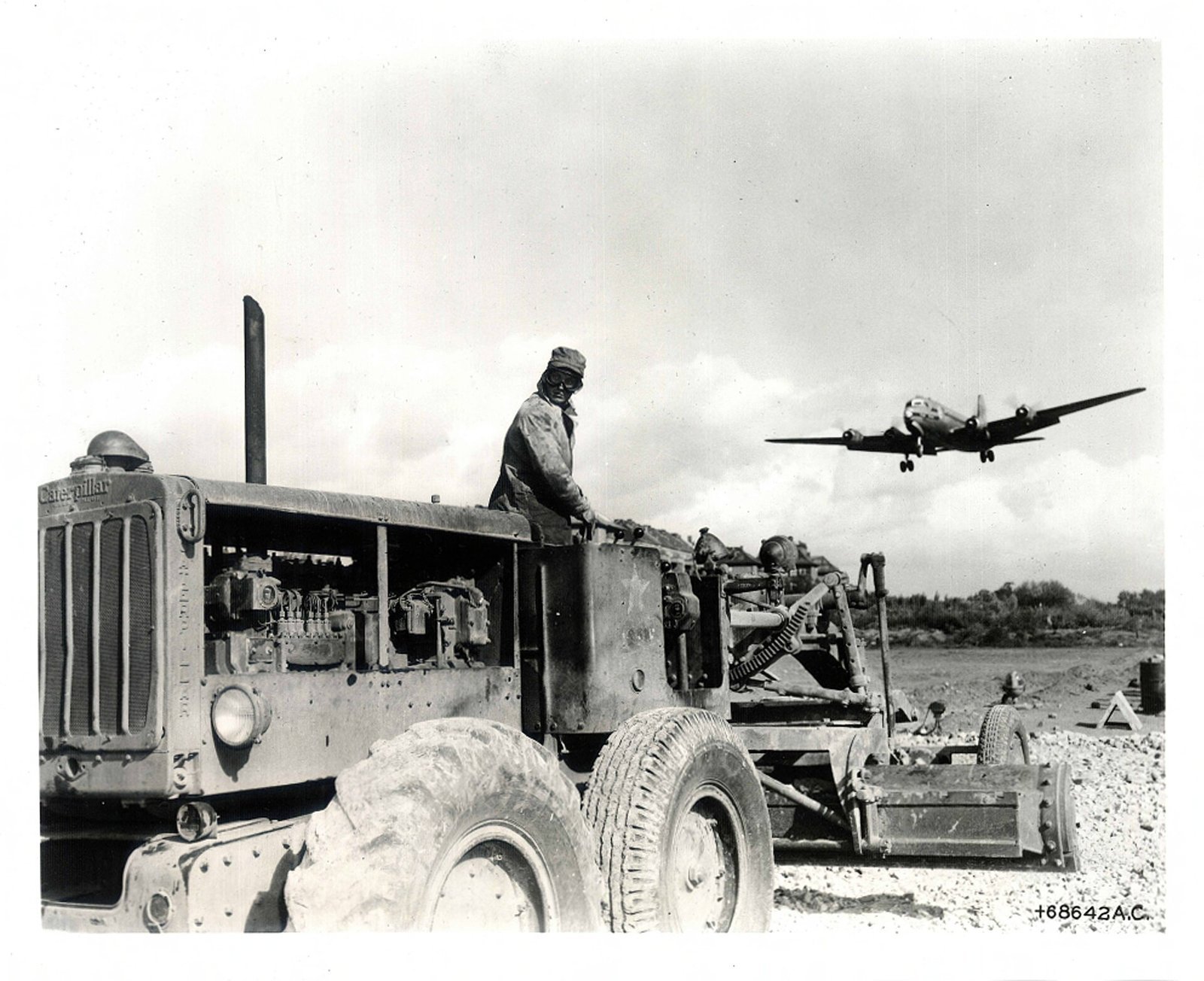
In October the daily requirement was raised to 5,620 tons for the winter. On 5 November 1948 the first aircraft landed at Tegel, the new airfield in the French sector. January brought in over 170,000 tons, March nearly 200,000.
noon 15 Apr – noon 16 Apr 1949
Easter: 12,941 tons in a day
From noon 15 Apr to noon 16 Apr 1949, crews flew 1,398 flights carrying 12,941 tons — on average one landing every 62 seconds, across all three airfields.

12 May 1949
Stalin gave up
After Easter the Airlift averaged 8,893 tons a day — more than the city needed. The blockade was lifted on 12 May 1949, after 322 days.