Berlinfographicsby Berlin ExperiencesPrussian Berlin · Wilhelmstraße · 13 June – 13 July 1878
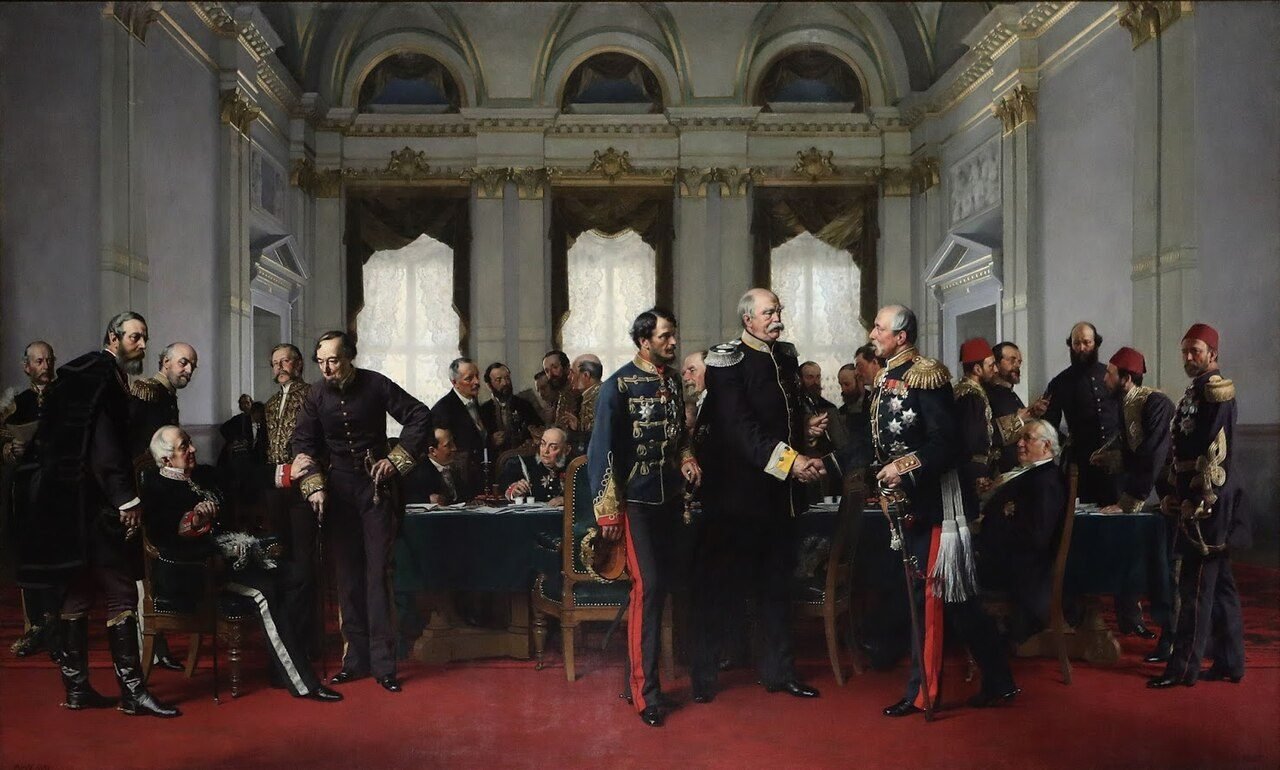
Anton von Werner’s “Congress of Berlin”: the final sitting on 13 July 1878, completed in 1881 for the city of Berlin and today in the Rotes Rathaus. At the centre Bismarck shakes hands with Count Shuvalov; Andrássy looks on; Gorchakov sits at the left, Disraeli stands beside him. Shown whole.Anton von Werner, 1881. Wikimedia Commons. Public domain.
Prussian BerlinWilhelmstraße · 13 June – 13 July 1878
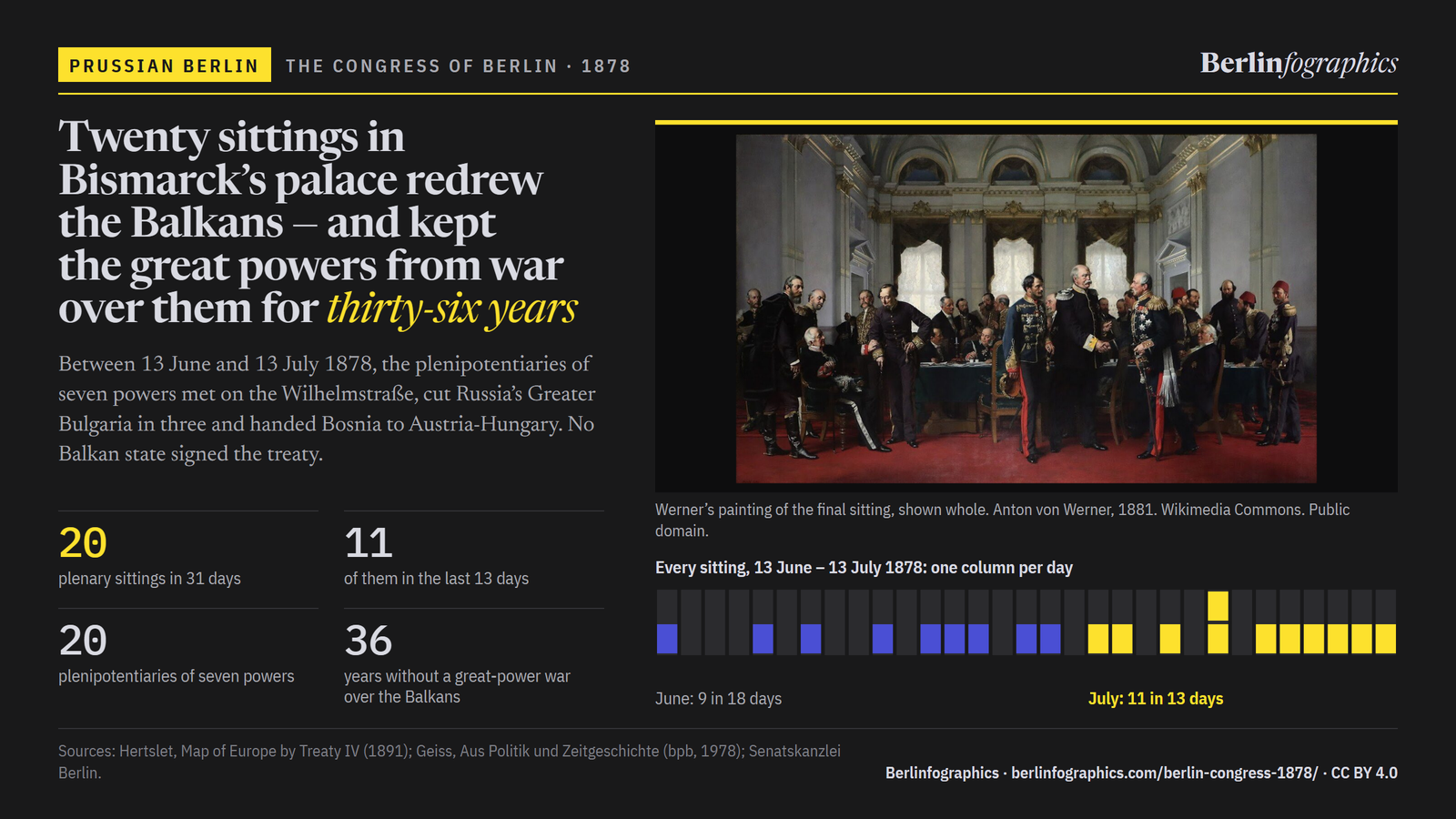
Twenty sittings in Bismarck’s palace redrew the Balkans — and kept the great powers from war over them for thirty-six years
Between 13 June and 13 July 1878, 20 plenipotentiaries of seven powers met on the Wilhelmstraße and rewrote the peace Russia had dictated at San Stefano. They cut its Greater Bulgaria in three and gave Bosnia to Austria-Hungary. No Balkan state signed the treaty.
Scroll: from the war to the table
01The Reichstag, 19 February 1878
Berlin got the Congress because its host claimed to want nothing
In the Reichstag on 5 December 1876 Bismarck said he would not advise any active German part in the Eastern crisis while no German interest was at stake “worth the healthy bones of a single Pomeranian musketeer”. Fourteen months later, with a Russian army before Constantinople, he offered Germany a different part:
“…in the role of an honest broker, who desires to bring the affair to a favorable end.”Bismarck in the Reichstag, 19 February 1878, as the US legation translated it
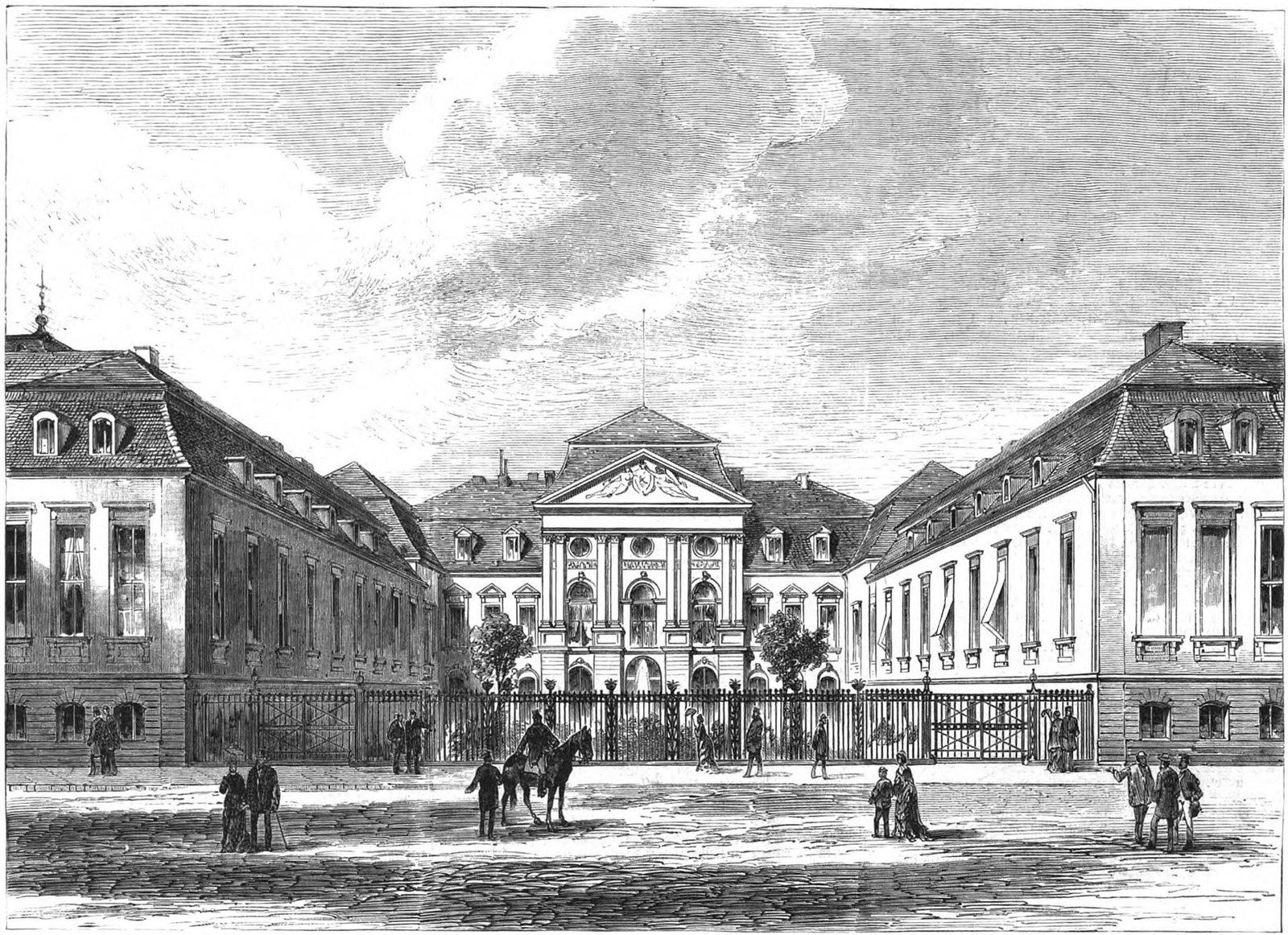
Vienna could not host a congress — Austria-Hungary was one of Russia’s likely enemies — and London, Constantinople and St Petersburg were out for the same reason. Berlin, the historian Imanuel Geiss wrote for the Federal Agency for Civic Education, was the capital of the great power with no direct interests of its own in the Balkans. The Congress sat in the Reichskanzlerpalais, the chancellor’s official residence, newly moved into.
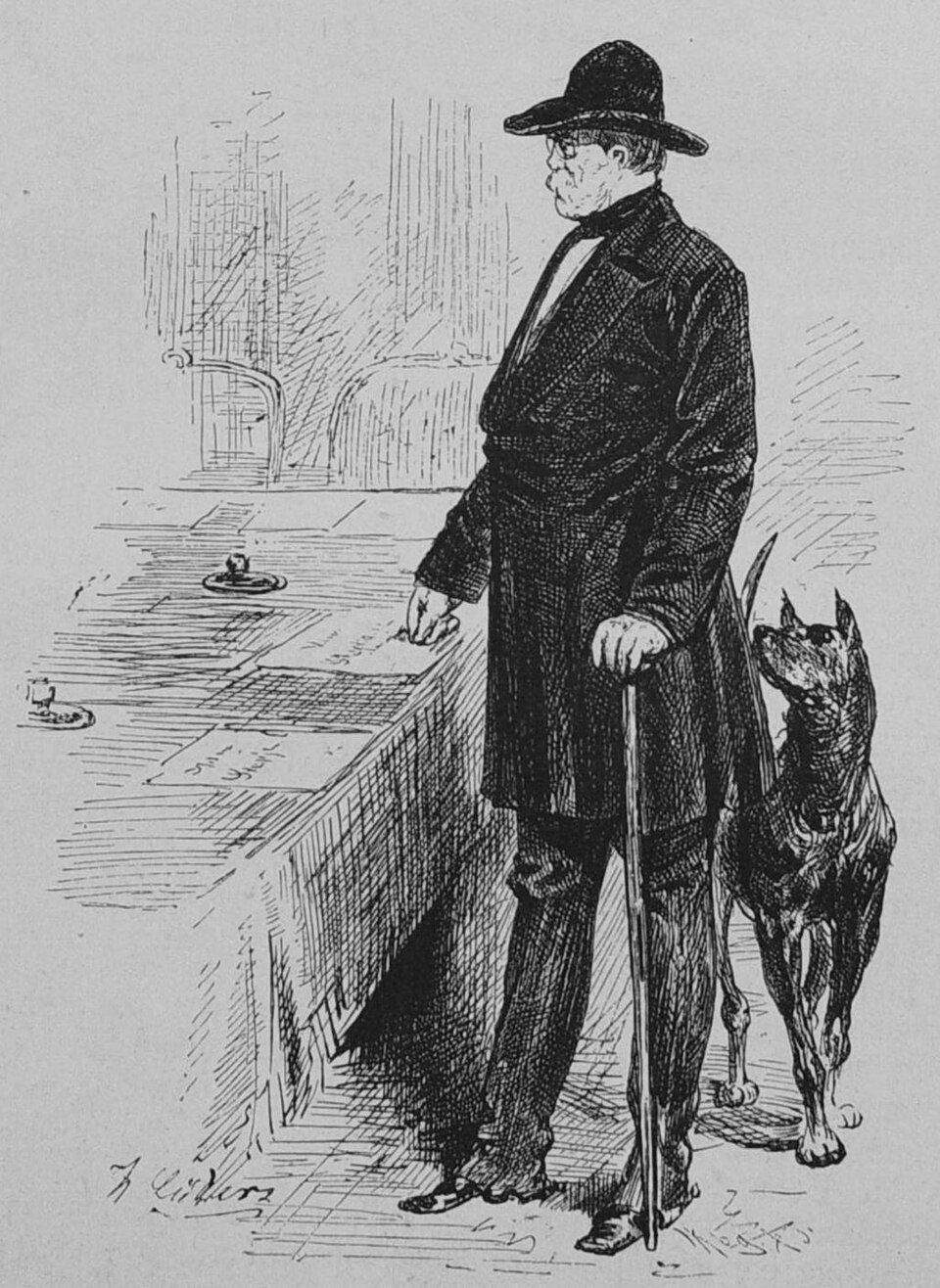
“Prince Bismarck inspects the Congress hall” — H. Lüders’ drawing for Die Gartenlaube, 1878: the host in his greatcoat beside the table, his dog at his side.H. Lüders, Die Gartenlaube, 1878. Wikimedia Commons. Public domain.
The Reichskanzlerpalais on the Wilhelmstraße, the former Palais Radziwiłł, as the Illustrirte Zeitung engraved it in 1878. The Congress sat in the hall behind the centre of the upper floor.Gottlob Theuerkauf (engraver), Illustrirte Zeitung, 1878. Wikimedia Commons. Public domain.
02From the war to the table
Fourteen months from a declaration of war to a congress
Russia’s war against the Ottoman Empire ended in a peace that Britain and Austria-Hungary refused to accept. The Congress was how Europe avoided a second war over the first.
Fred. W. Rose, “The Avenger”, an allegorical war map for 1877.Fred. W. Rose, 1877. Cornell University Library, PJ Mode Collection. Wikimedia Commons. Public domain.
24 April 1877
Russia goes to war with the Ottoman Empire
On 24 April 1877 Russia declared war on the Ottoman Empire. After early setbacks its armies broke Ottoman resistance in the Balkans and in Armenia.
Source: Hertslet, Map of Europe by Treaty IV (1891) · Geiss, Aus Politik und Zeitgeschichte (bpb, 1978)
31 January 1878
The Russians stand before Constantinople
By January 1878 the Russian army stood before the Ottoman capital. An armistice was signed at Adrianople on 31 January 1878.
Source: Hertslet, Map of Europe by Treaty IV (1891) · Geiss, Aus Politik und Zeitgeschichte (bpb, 1978)
19 February 1878
A British fleet, and an “honest broker”
In February 1878 Britain sent its fleet into the Bosporus as a counterweight to the Russian troops. On 19 February 1878 Bismarck offered to act as an honest broker.
Source: FRUS 1878, Germany, doc. 143 · Geiss, Aus Politik und Zeitgeschichte (bpb, 1978)
Hertslet’s map: San Stefano’s Bulgaria against Berlin’s, 1878.Edward Hertslet, 1878. Wikimedia Commons. Public domain.
3 March 1878
San Stefano: a Bulgaria to the Aegean
At San Stefano, on 3 March 1878, Russia dictated the peace. It drew a Greater Bulgaria reaching the Aegean and the gates of Adrianople and Constantinople. Britain readied an expeditionary corps of 70,000 men.
Source: Hertslet, Map of Europe by Treaty IV (1891) · Geiss, Aus Politik und Zeitgeschichte (bpb, 1978)
Count Shuvalov, Russia’s ambassador in London: a detail of Werner’s painting.Anton von Werner, 1881. Wikimedia Commons. Public domain. (detail)
7 March 1878
Vienna proposes Berlin
On 7 March 1878 Austria-Hungary proposed a European congress at Berlin. Russia took the idea up in mid-April. Its ambassador in London, Count Shuvalov, agreed to make Bulgaria smaller and divide it.
Source: Hertslet, Map of Europe by Treaty IV (1891) · Geiss, Aus Politik und Zeitgeschichte (bpb, 1978)
Cyprus on Mitchell’s map of July 1878 (detail).Samuel Augustus Mitchell Jr., 1878 (detail). Wikimedia Commons. Public domain.
3 June 1878
Three deals in four days
Germany sent out the invitations on 3 June 1878, the day after the second attempt on Wilhelm I’s life. On 4 June Britain won the right to occupy Cyprus if Russia kept Batum. On 6 June it agreed with Austria-Hungary to make Bulgaria smaller and divide it.
Source: Hertslet, Map of Europe by Treaty IV (1891) · Geiss, Aus Politik und Zeitgeschichte (bpb, 1978)
The Reichskanzlerpalais, 1878.Gottlob Theuerkauf (engraver), Illustrirte Zeitung, 1878. Wikimedia Commons. Public domain.
13 June 1878
The Congress opens on the Wilhelmstraße
On 13 June 1878 the Congress met in the Reichskanzlerpalais: 20 plenipotentiaries of seven powers, with Bismarck in the chair. On questions of substance, decisions had to be unanimous.
Source: Hertslet, Map of Europe by Treaty IV (1891) · Geiss, Aus Politik und Zeitgeschichte (bpb, 1978)
0313 June – 13 July 1878
Twenty sittings in thirty-one days — and eleven of them crammed into the last thirteen
The protocols record 20 plenary sittings. Bismarck kept pushing the pace. In June the Congress sat 9 times in 18 days; in July it sat 11 times in 13, twice on 6 July.
At the start, a quarrel over Bulgaria between Britain and Russia brought the Congress to the edge of breaking up, with war in the air. Bismarck saved it outside the plenary, in private talks with the two chief delegates, Gorchakov and Beaconsfield. The sittings then recorded what had been settled.
“This impatience of the Chancellor’s, justified by his state of health, speeds the work along, but its drawbacks will be felt later, because much will have been settled only superficially. I would rather work more slowly.”Prince Hohenlohe, Germany’s third plenipotentiary, in his diary, 5 July 1878
Every plenary sitting, 13 June – 13 July 1878: one mark per sitting, one column per day
No. 1 · 13 JuneBismarck takes the chair. Bulgaria is to come first.
No. 4 · 22 JuneSalisbury’s plan: Bulgaria ends at the Balkan range, and the south becomes Eastern Roumelia. Gorchakov is absent, ill.
No. 8 · 28 JuneSalisbury proposes that Austria-Hungary occupy Bosnia and Herzegovina; Bismarck supports him. The Ottomans object.
No. 20 · 13 JulyClosing speeches, then the signatures.
“On the garden balcony of the Reichskanzlerpalais: Beaconsfield, Gorchakov, Bismarck, Andrássy” — H. Lüders for Die Gartenlaube, 1878.H. Lüders, Die Gartenlaube, 1878. Wikimedia Commons. Public domain.
04Werner’s painting, 1881
The famous picture shows a handshake — not the men who fought hardest
The city of Berlin commissioned Anton von Werner to paint the final sitting of 13 July 1878 and approved 60,000 marks for it. He presented the canvas, 6.15 m wide, on 22 March 1881, the Kaiser’s 84th birthday. At its centre Bismarck shakes hands not with Gorchakov, Russia’s chancellor, but with his deputy Shuvalov — the man who had agreed in London to cut Bulgaria down. Gorchakov resented Shuvalov’s good relations with Bismarck, GHDI notes; Werner seats him at the edge. The picture, Geiss wrote, is a stylised record of the signature. Tap the numbers.
1GorchakovRussia’s chancellor, seated
2Disraeli (Beaconsfield)Britain’s prime minister
3AndrássyAustria-Hungary’s foreign minister, looking on
4Bismarckthe president, shaking hands
5ShuvalovRussia’s second plenipotentiary
Each power sent three plenipotentiaries, Italy two: 20 men, named in the treaty’s preamble. France came with no claim in the Balkans, but asked on the margins for compensation for Cyprus. It got it three years later, when it made Tunis a protectorate.
The plenipotentiaries who signed, power by power, as the treaty lists them
Great Britain
BeaconsfieldPrime Minister (Benjamin Disraeli, Earl of Beaconsfield)
SalisburySecretary of State for Foreign Affairs
Odo RussellAmbassador in Berlin
Germany
BismarckChancellor of the Empire
BülowSecretary of State for Foreign Affairs
HohenloheAmbassador in Paris
Austria-Hungary
AndrássyMinister for Foreign Affairs
KárolyiAmbassador in Berlin
HaymerleAmbassador in Rome
France
WaddingtonMinister for Foreign Affairs
Saint-VallierAmbassador in Berlin
Desprezdirector of political affairs
Italy
CortiMinister for Foreign Affairs
de LaunayAmbassador in Berlin
Russia
GorchakovChancellor of the Empire
ShuvalovAmbassador in London
OubrilAmbassador in Berlin
Ottoman Empire
KaratheodoriMinister of Public Works
Mehmed AliMushir (marshal)
SadullahAmbassador in Berlin
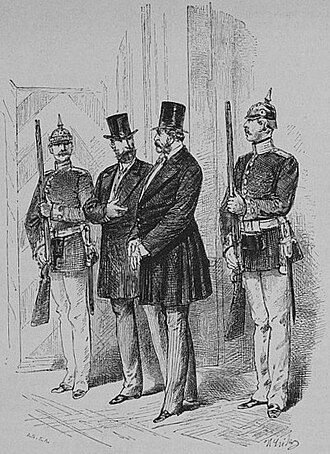
“St. Vallier and Waddington before the French embassy” — two of France’s three plenipotentiaries, between sentries, drawn by H. Lüders for Die Gartenlaube, 1878.H. Lüders, Die Gartenlaube, 1878. Wikimedia Commons. Public domain.
Prince Alexander Gorchakov, Russia’s chancellor and first plenipotentiary, in a portrait by Johann Köler repeating his likeness of 1867.Johann Köler, after his portrait of 1867. Wikimedia Commons. Public domain.
05The Treaty of Berlin, 13 July 1878
Bulgaria filled the first twenty-two of the treaty’s sixty-four articles
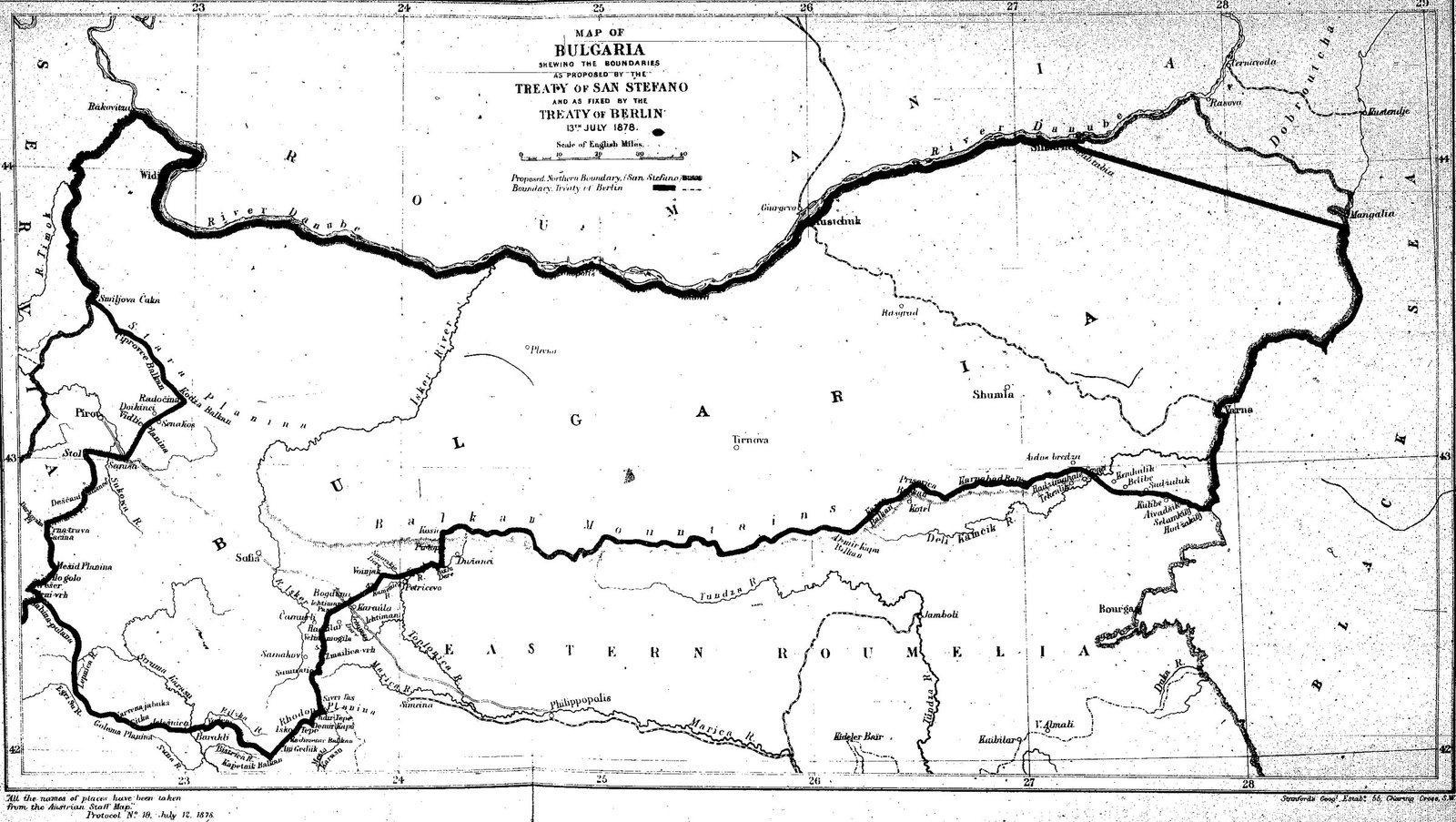
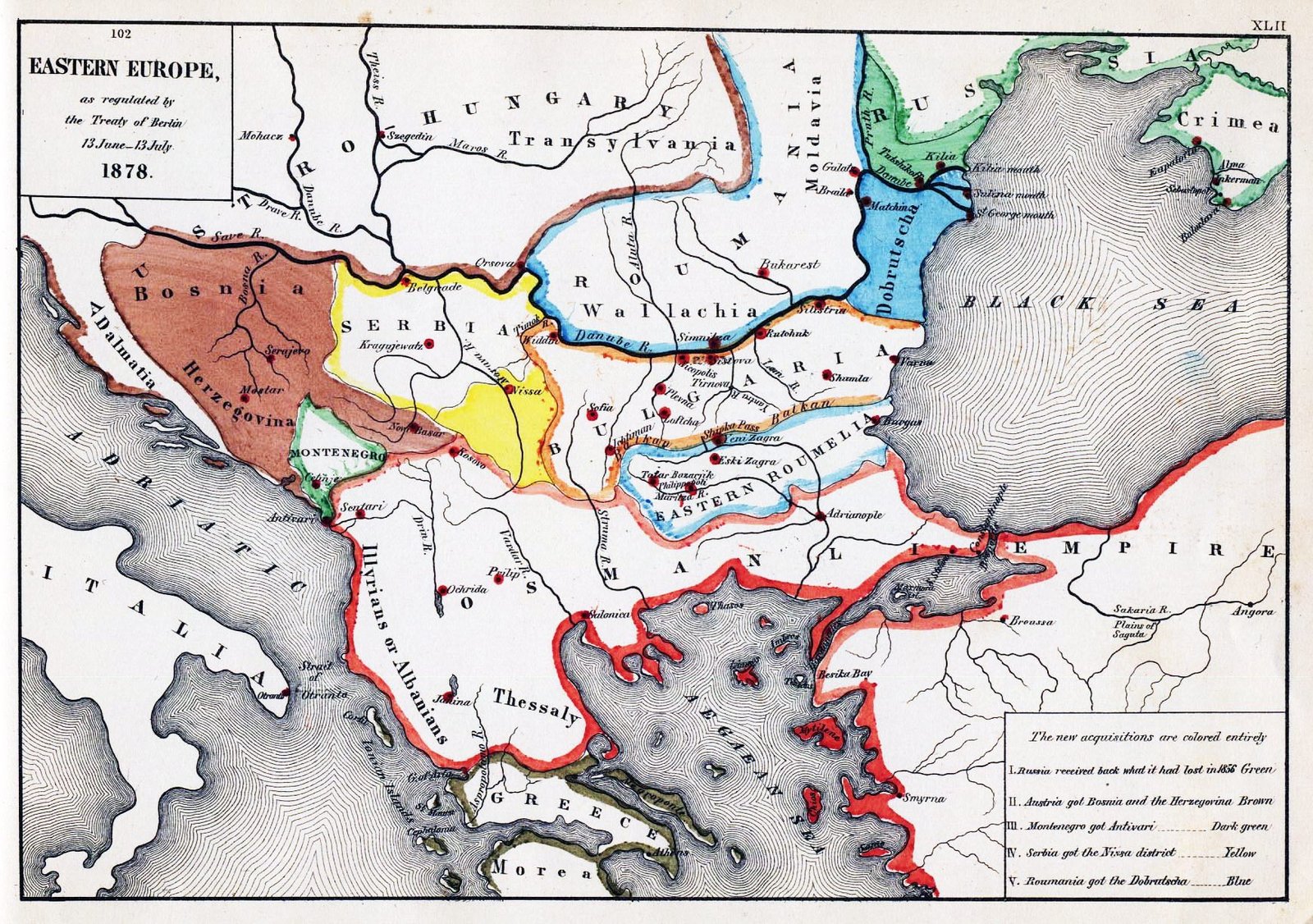
The quarrel was Bulgaria, so the treaty began there. Article I made it “an autonomous and tributary Principality under the suzerainty” of the Sultan, north of the Balkan range. Article XIII formed a province south of the range, Eastern Roumelia, under the Sultan’s direct authority with a Christian governor-general. The rest of San Stefano’s Bulgaria, in Macedonia, went back to the Sultan.
The 64 articles in order, by subject
Single articles: XXII Russian occupation of both · XXIII Crete and Turkey in Europe · XXIV Greece’s frontier · XXV Bosnia-Herzegovina, Novi Pazar · LXII Religious liberty in Turkey.
Hertslet’s map of 1878 for the Foreign Office: Bulgaria’s boundaries “as proposed by the Treaty of San Stefano and as fixed by the Treaty of Berlin”. The principality north of the Balkan range; Eastern Roumelia south of it.Edward Hertslet, 1878. Wikimedia Commons. Public domain.
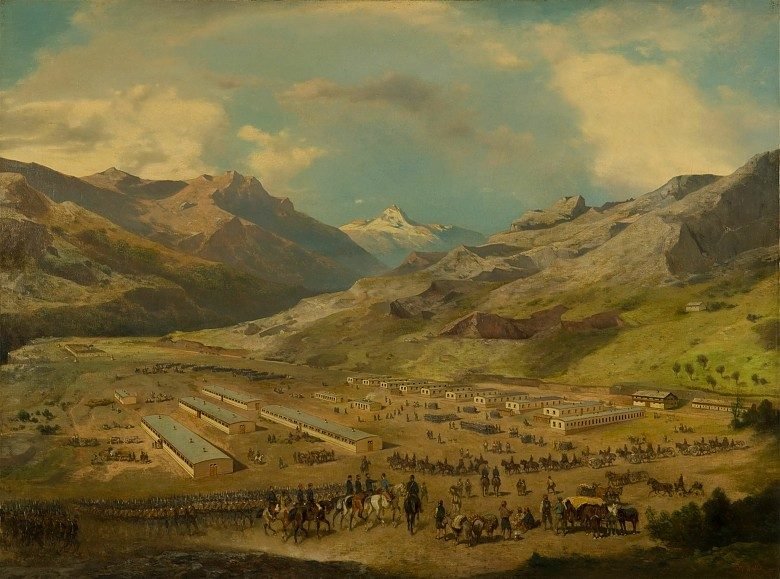
The Austro-Hungarian camp near Mostar, 1878.Alexander von Bensa and Adolf Obermüller, 1878. Wikimedia Commons. Public domain.
Art. XXV
Austria-Hungary: Bosnia and Herzegovina, without a war of its own
Article XXV: the provinces “shall be occupied and administered by Austria-Hungary”, with garrisons in the Sanjak of Novi Pazar. The Congress overrode every protest from the people of the two provinces. Austria-Hungary needed almost 200,000 men to force the occupation through.
Source: Treaty of Berlin (Fordham Sourcebook) · Geiss, Aus Politik und Zeitgeschichte (bpb, 1978)
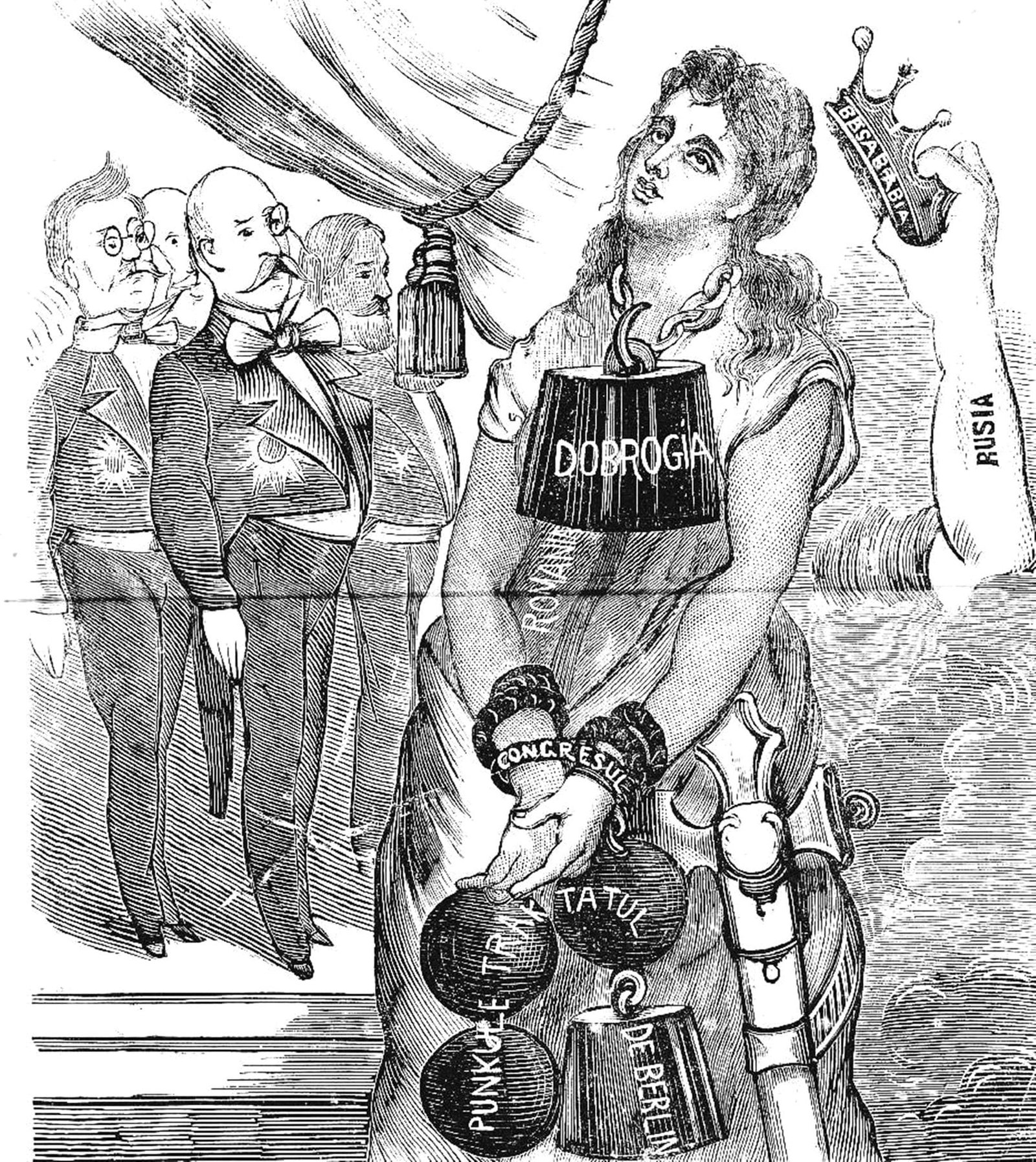
“Romania as the Congress left her”, Bobârnacul, 1878.Bobârnacul, Bucharest, 1878. Wikimedia Commons. Public domain.
Art. XLIII, XLIV, XLV, XLVI
Romania: independent, on conditions — and short of Bessarabia
Articles XLIII–XLVI: Romania’s independence was recognised on condition that no one be excluded from civil or political rights because of their religion. The clause was meant for Romania’s Jews, and the government evaded it after the Congress. Romania gave back to Russia the strip of Bessarabia that Russia had lost in 1856, and received the Danube delta and the Dobruja.
Source: Treaty of Berlin (Fordham Sourcebook) · Hertslet, Map of Europe by Treaty IV (1891) · Geiss, Aus Politik und Zeitgeschichte (bpb, 1978)
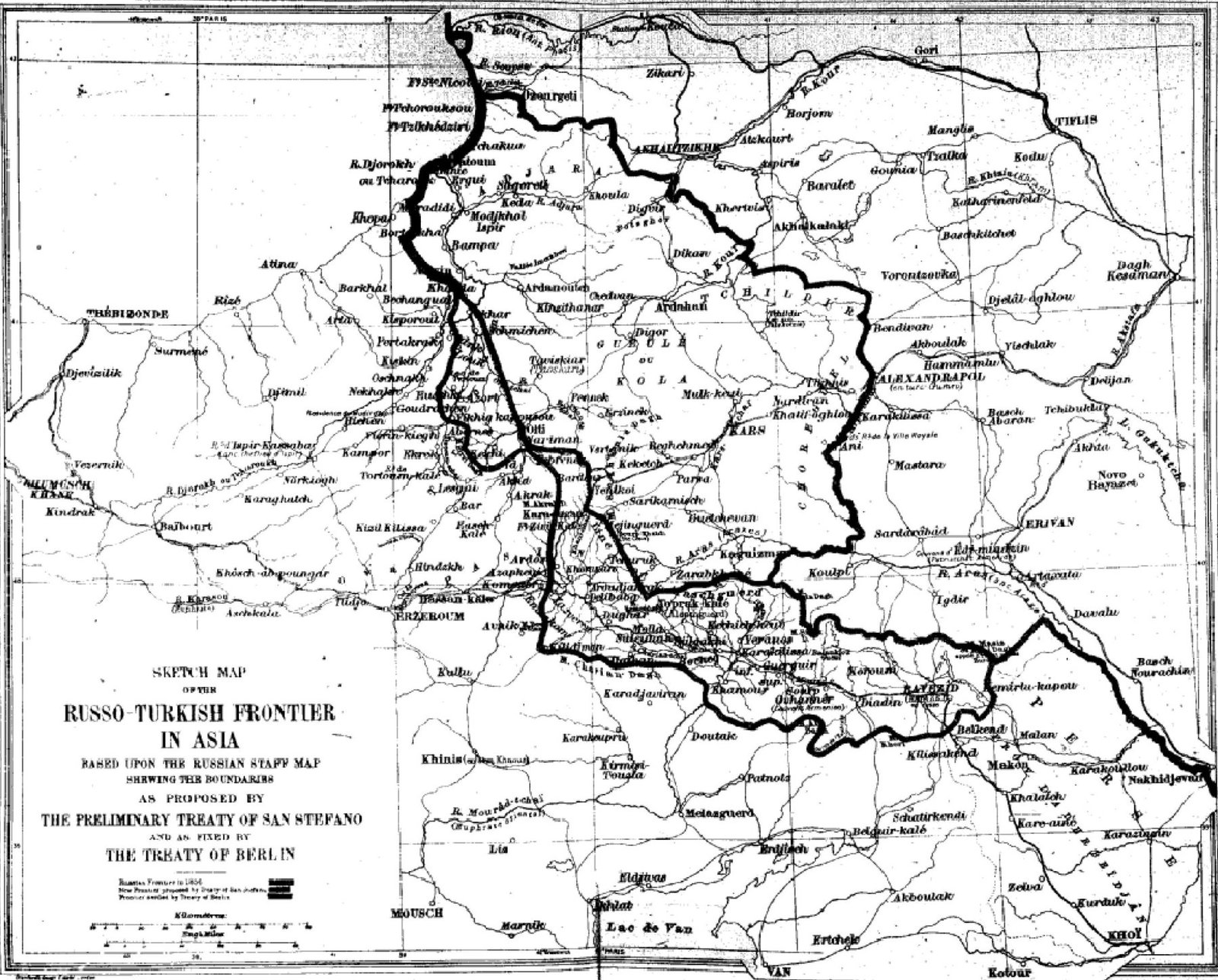
Hertslet’s map of the new frontier in Asia.Edward Hertslet, The Map of Europe by Treaty, vol. IV, 1891. Wikimedia Commons. Public domain.
Art. LVIII
Russia: Ardahan, Kars and Batum
Article LVIII: the Sultan ceded Ardahan, Kars and Batum to Russia in Asia. Russia promised to make Batum a free port. With Bessarabia back, these were what Russia kept of San Stefano.
Source: Treaty of Berlin (Fordham Sourcebook)
Cyprus on Mitchell’s map of July 1878 (detail).Samuel Augustus Mitchell Jr., 1878 (detail). Wikimedia Commons. Public domain.
Convention of 4 June 1878
Britain: Cyprus, outside the treaty
Cyprus appears nowhere in the treaty. A secret convention of 4 June 1878 let Britain occupy and govern the island, which stayed Ottoman in name. Britain annexed it formally in 1914, at the start of the First World War.
Source: Hertslet, Map of Europe by Treaty IV (1891) · Geiss, Aus Politik und Zeitgeschichte (bpb, 1978)
“Eastern Europe as regulated by the Treaty of Berlin, 13 June – 13 July 1878”, from Robert H. Labberton’s Historical Atlas of 1884. Its key: Russia got back what it lost in 1856 (green), Austria Bosnia and Herzegovina (brown), Montenegro Antivari, Serbia the Nissa (Niš) district (yellow), Romania the Dobruja (blue).Robert H. Labberton, An Historical Atlas, 1884. Wikimedia Commons. Public domain.
061878–1914
It kept the great powers from war over the Balkans for thirty-six years. Then the Bosnian fuse burned through
Disraeli came home to cheering crowds in London and declared “peace with honour”. Geiss judged that the Congress more than met its short-term aim. It decided the provinces’ futures “in the style of old cabinet politics”, without regard for the right of nations to self-determination.
Bulgaria and Eastern Roumelia united on their own in 1885. A year after the Congress, Germany and Austria-Hungary formed the Dual Alliance (1879). Austria-Hungary’s occupation of Bosnia later became annexation. The resistance it bred produced, a generation later, the assassins of Sarajevo.
Samuel Augustus Mitchell’s “Map of Turkey in Europe, illustrating the Berlin Congress Treaty, July 1878”, with insets of Armenia and of Cyprus.Samuel Augustus Mitchell Jr., 1878. Wikimedia Commons. Public domain.
From the treaty to Sarajevo, 1878–1914, on one scale of years
The Congress of Berlin · 1878
Europe’s great powers kept the peace among themselves by dividing the Balkans in a Berlin palace, in a treaty no Balkan state signed. The bill came due in Sarajevo.
Beaconsfield, Gorchakov, Bismarck and Andrássy on the garden balcony, Die Gartenlaube, 1878.H. Lüders, Die Gartenlaube, 1878. Wikimedia Commons. Public domain.
Corrected from our earlier sheet
Bismarck’s “honest broker” was a Reichstag speech of 19 February 1878, not a circular to the powers. Austria-Hungary proposed Berlin as the venue, and Germany’s invitation followed on 3 June 1878.
The plenipotentiaries are those the treaty names. The sheet listed four men who were not among them and left out seven who were.
Disraeli attended from the first sitting, on 13 June 1878, not from later in June.
San Stefano’s Bulgaria reached the Aegean, but it did not cover most of the Balkan peninsula.
The British fleet entered the Bosporus in February 1878, not January.
The sheet’s story of Bismarck refusing to speak English and Disraeli refusing French, and its archive signatures, could not be traced to any source; they are left out.
Two cartoons on the sheet are not about the Congress at all: one is about the Anti-Socialist Law, the other about Bismarck and the Pope.
Press & citation
Use this Berlinfographic
Free to publish under CC BY 4.0 — in print, online, on Wikipedia and in teaching, commercially or not — with credit to Berlinfographics and a link to this page.
Ready-to-use image
The infographic as one image: headline, key figures, chart, sources and credit, 2,400 × 1,350 px PNG. Please use it unedited.
Berlinfographics (berlinfographics.com), CC BY 4.0
Citation
Berlinfographics (2026). “The Congress of Berlin, 1878”. Berlin Experiences. https://berlinfographics.com/berlin-congress-1878/
Wikipedia
{{cite web |title=The Congress of Berlin, 1878 |url=https://berlinfographics.com/berlin-congress-1878/ |website=Berlinfographics |publisher=Berlin Experiences |date=2026-11-09 |access-date=2026-11-09}}
Every figure comes from the sources listed above; tap any underlined figure in the story to see its source.
Photographs in the story and in the ready-to-use images are not ours and keep the licences named in their captions and credits — keep those credits when you republish. The CC BY 4.0 licence covers our infographics, charts, texts and design.
Our infographics, charts and texts are licensed CC BY 4.0: free to republish, including commercially, with credit to Berlinfographics and a link. Photographs keep their own licences, named in each caption. How to credit