Circle area is the number of people; each destination’s figures are given below. Coastlines from Natural Earth; today’s borders are left out, because they are not those of 1941–45. The transport of June 1942 to Majdanek and Sobibór is drawn at Sobibór; the last four transports east, to Ravensbrück and Sachsenhausen, at Sachsenhausen. Places: OpenStreetMap.
Auschwitz
18,507 people · 37 transports
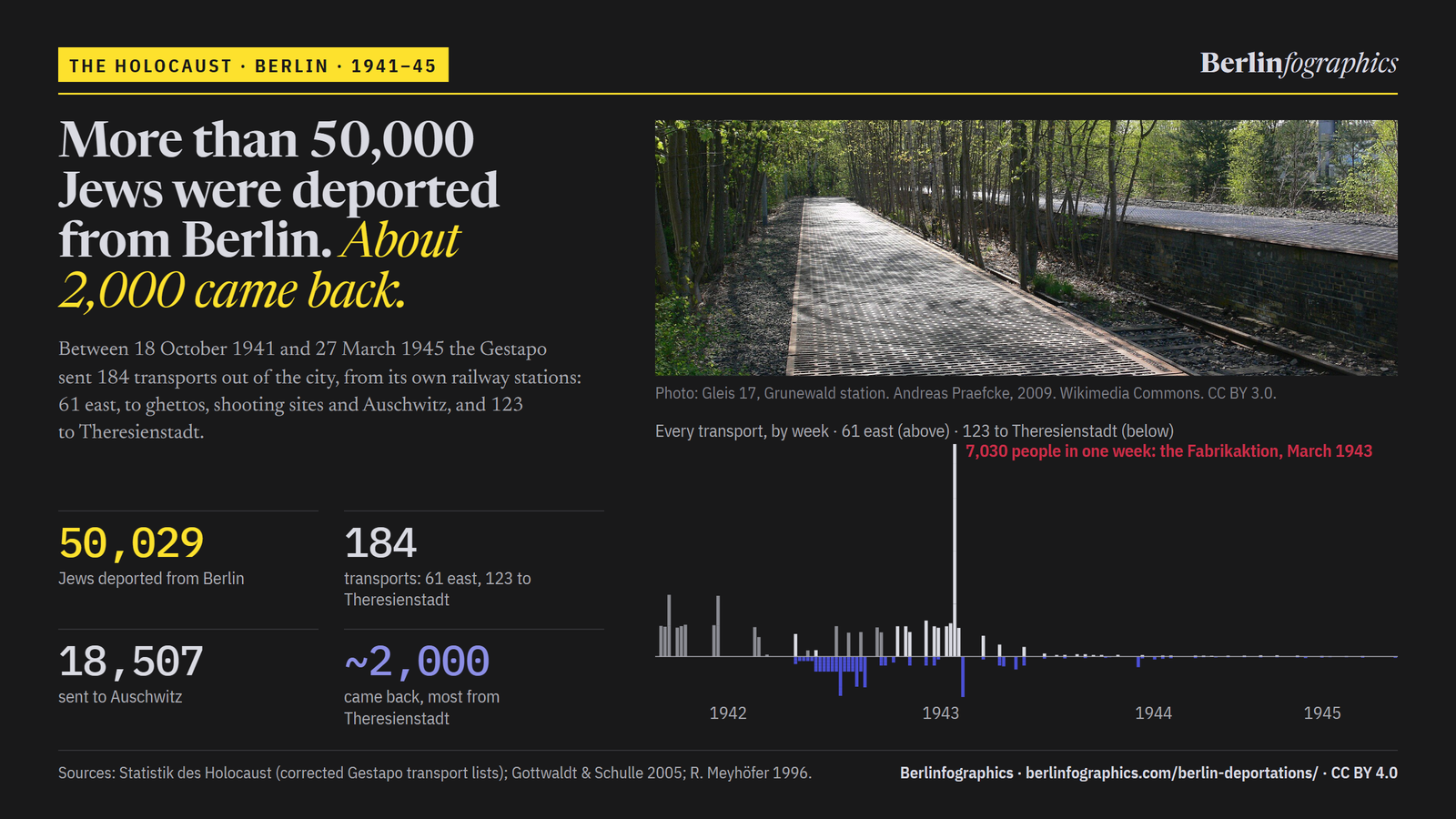
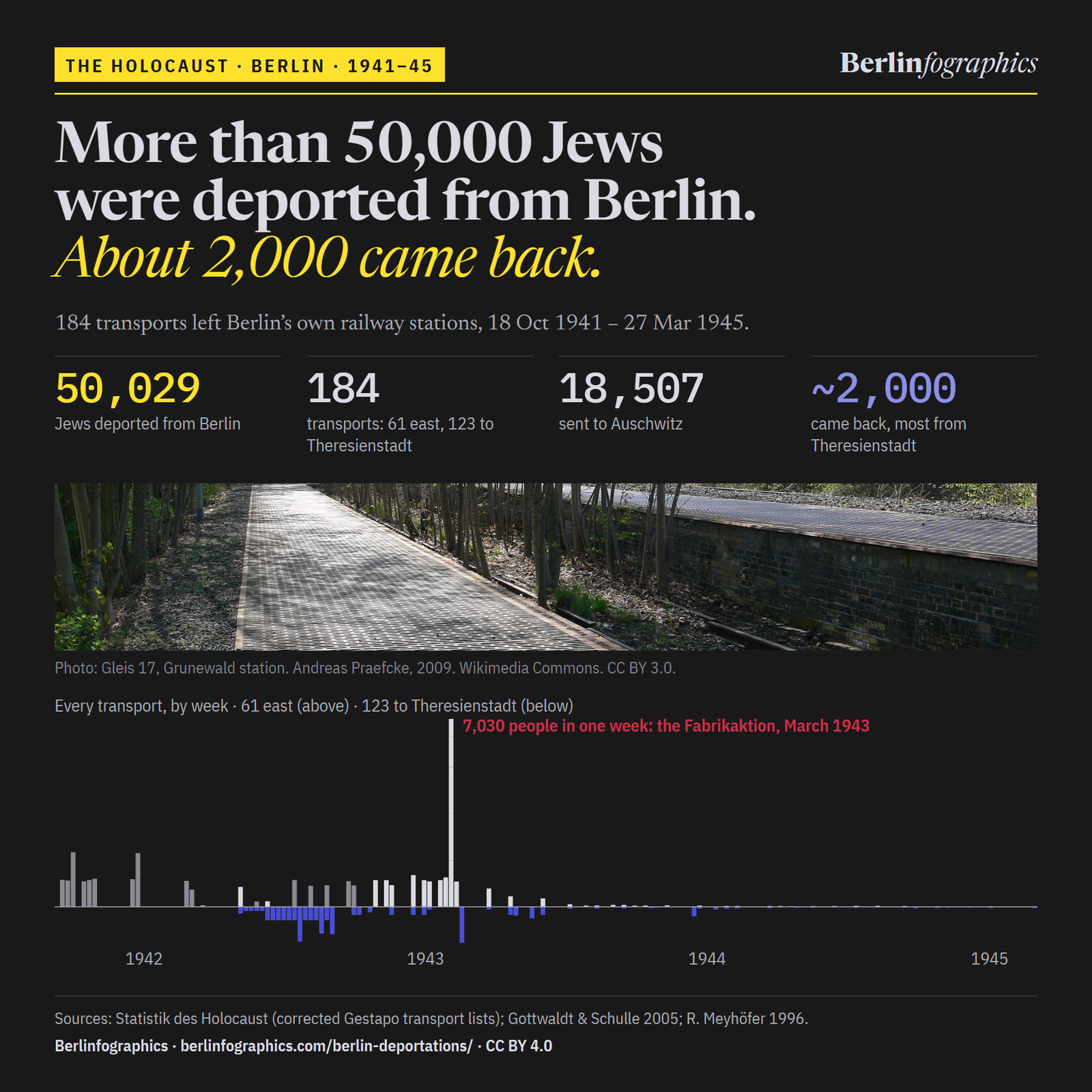
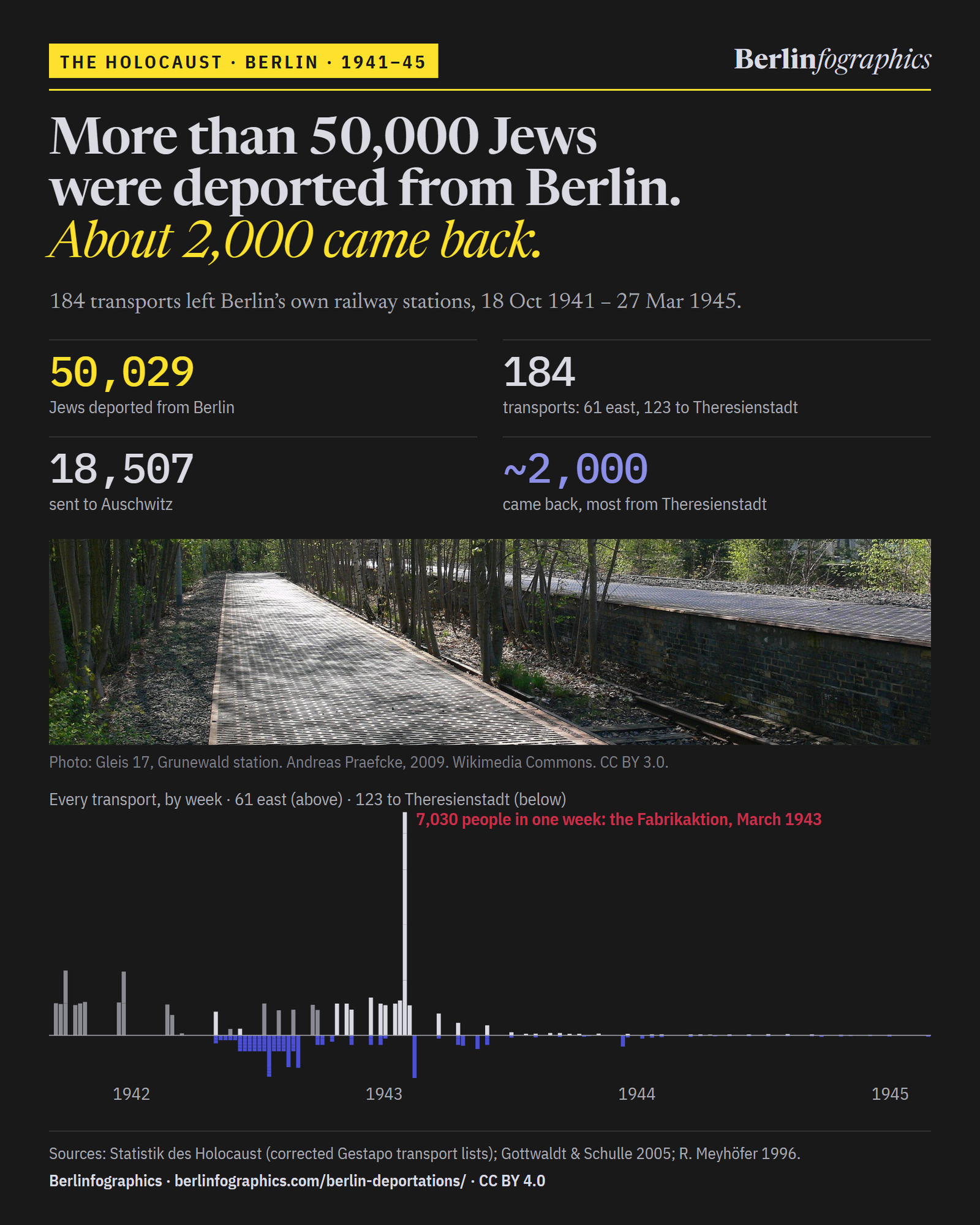
Most were murdered on arrival. Of 1,736 on the first Fabrikaktion transport, 677 were registered for labour; the other 1,059 were killed at once.
The International Monument to the Victims of Fascism at Auschwitz II-Birkenau, 2012. Jorge Láscar from Australia, 2012. Wikimedia Commons. CC BY 2.0.
Theresienstadt
15,125 people · 123 transports
The ghetto for the old. Fewer than one in eight of the Berliners sent there survived.
A transport arrives at the Theresienstadt ghetto: gouache by Ferdinand Bloch, a Viennese artist held there, 1942–44. He was murdered in the ghetto’s Small Fortress in October 1944. Ferdinand Bloch · Ghetto Fighters' House · public domain · Wikimedia Commons
Riga
7,655 people · 8 transports
The 1,053 on the first transport were shot in the Rumbula forest on arrival, 30 Nov 1941.
The memorial stone in the Rumbula forest outside Riga, set up in 1964 by activists of Riga’s Jewish community, where the people on the first Berlin transport to Riga were shot on arrival, 30 November 1941. Its inscription, in Latvian, Russian and Yiddish: “To the victims of fascism”. Adam Jones, 2011. Wikimedia Commons. CC BY-SA 2.0.
Łódź
4,042 people · 4 transports
The Berlin lists hold 4,042 names; the arrival records count 4,172 to 4,206, including 122 Jews from Emden added to the second transport.
The memorial at Radegast station in Łódź, the railway station of the Łódź ghetto, where Jews of the ghetto were gathered for deportation. Brücke-Osteuropa, 2010. Wikimedia Commons. Public domain.
Minsk
1,158 people · 2 transports
The second transport's destination is not certain.
Kaunas
1,006 people · 1 transport
All 1,006 were shot at Fort IX within days of arrival, on 25 November 1941.
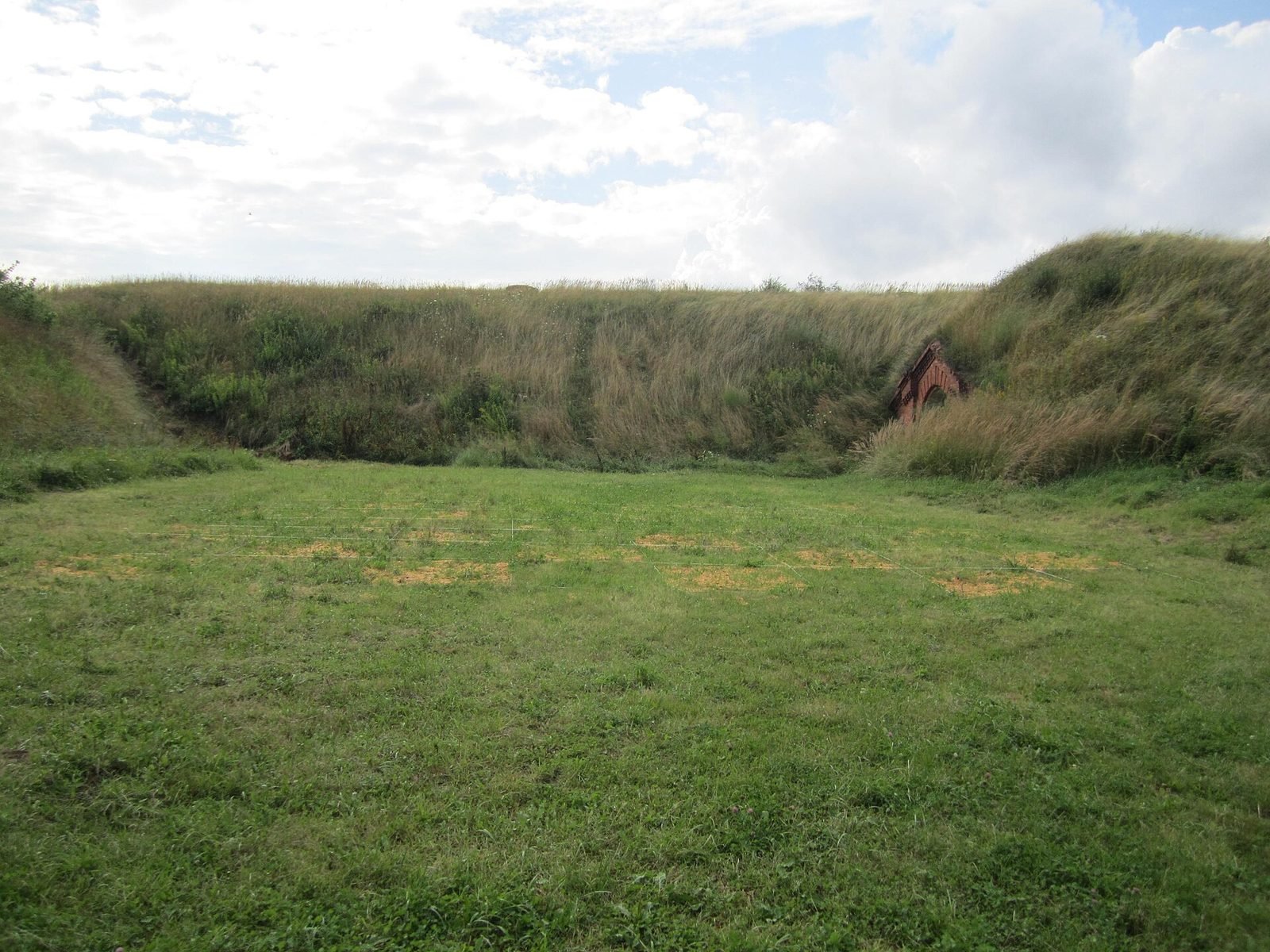
The killing ground at the Ninth Fort, Kaunas, where the people on the Berlin transport of 17 November 1941 were shot on 25 November. חיים 7, 2012. Wikimedia Commons. CC BY-SA 3.0.
Piaski
973 people · 1 transport
A memorial stone at the new Jewish cemetery in Piaski, the small town in the Lublin district whose ghetto received the Berlin transport of 28 March 1942. Photographed 2026. Grażyna Adamczyk, 2026. Wikimedia Commons. CC BY 4.0.
Raasiku, Estonia
809 people · 1 transport
A few hundred were picked for Jägala camp; the rest were shot at Kalevi-Liiva.
The memorial at Kalevi-Liiva, near Raasiku in Estonia. The people on the Berlin transport of September 1942 who were not picked for the Jägala camp were shot here. Kristjan Lust from Estonia, 2011. Wikimedia Commons. CC BY 2.0.
Majdanek / Sobibór
746 people · 1 transport
36 men were taken off at Lublin for Majdanek; the rest went on, most likely to Sobibór.
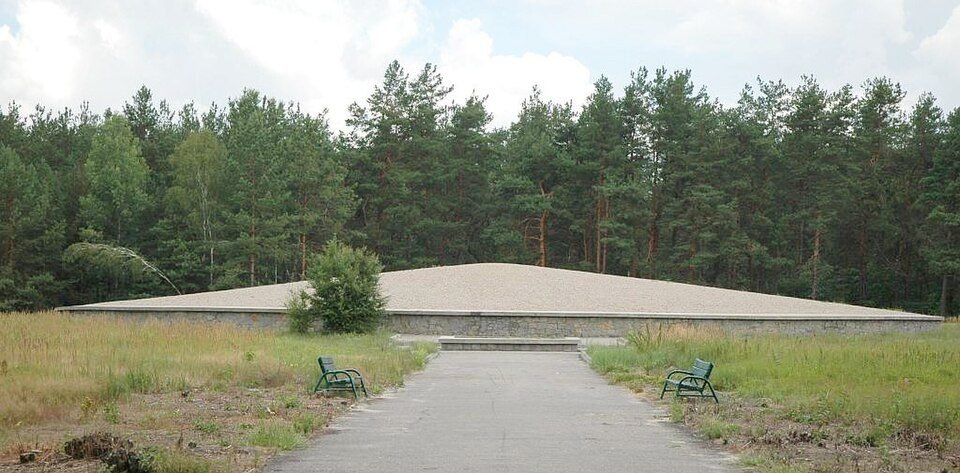
The mausoleum at the site of the Sobibór extermination camp. Merlin. Wikimedia Commons. CC BY-SA 3.0. · Detail of the monument to the victims of the Majdanek camp, Lublin, 2007. Roland Geider ( Ogre ), 2007. Wikimedia Commons. Public domain.
Warsaw
708 people · 2 transports
Counted here: the Berliners. Both trains also carried Jews from Brandenburg, Magdeburg and Anhalt.
The Umschlagplatz memorial in Warsaw, on the site from which the ghetto’s inhabitants were deported. Reuvenk, 2007. Wikimedia Commons. CC BY-SA 3.0.
Ravensbrück / Sachsenhausen
88 people · 4 transports
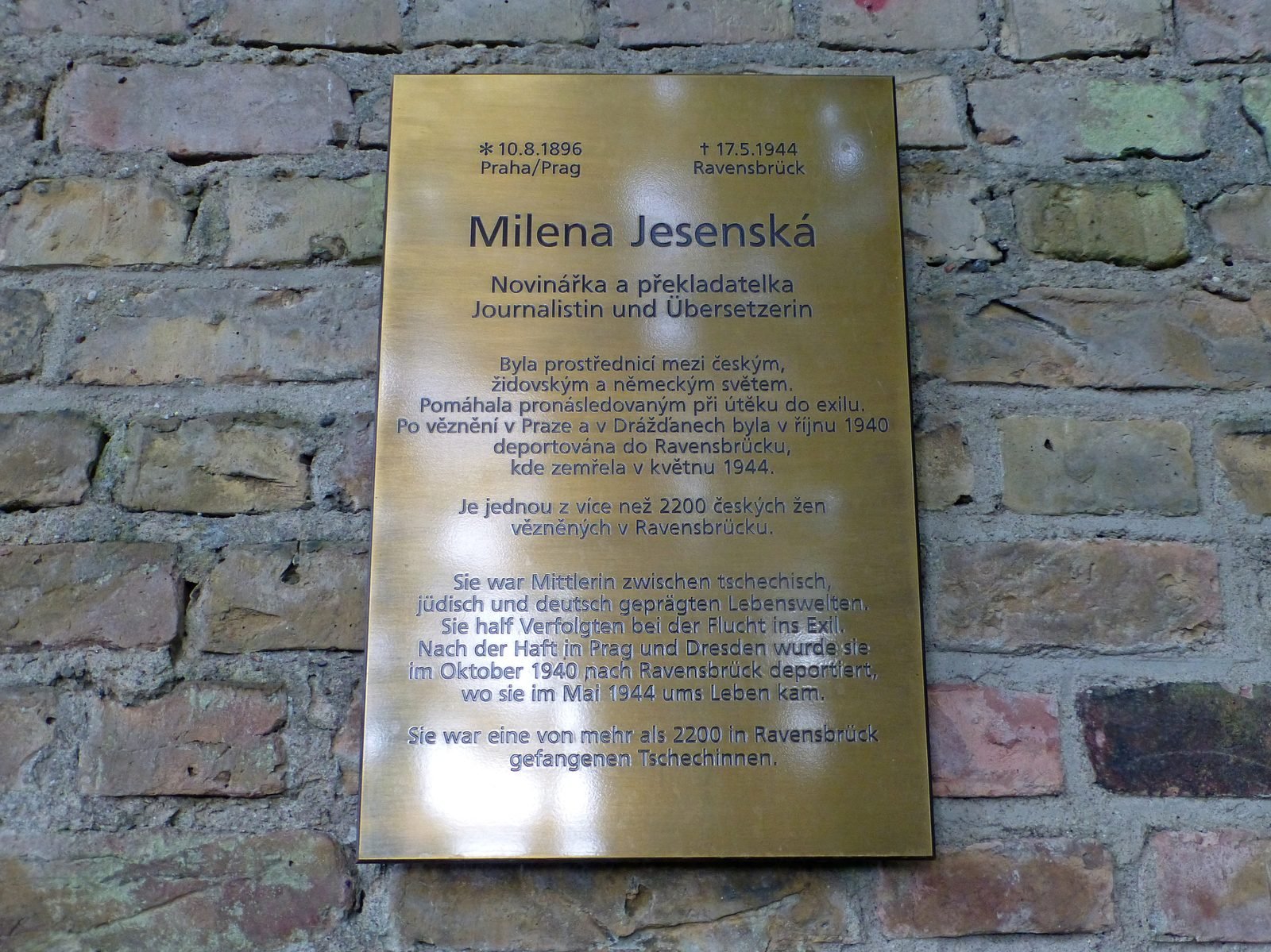
At the Ravensbrück memorial: the plaque to Milena Jesenská on the former camp prison, 2015. Wald1siedel, 2015. Wikimedia Commons. CC BY-SA 4.0. · The obelisk on the former roll-call ground of the Sachsenhausen camp, 2010. Alex Walker, 2010. Wikimedia Commons. CC BY-SA 3.0.