A specimen (“Muster”) of the Reichsbank’s note for 100 Billionen marks, 100 trillion in English numbers, dated Berlin, 15 February 1924. Notes of this denomination were the highest the Reichsbank issued.Reichsbank, 1924. Wikimedia Commons. Public domain.
The great inflation
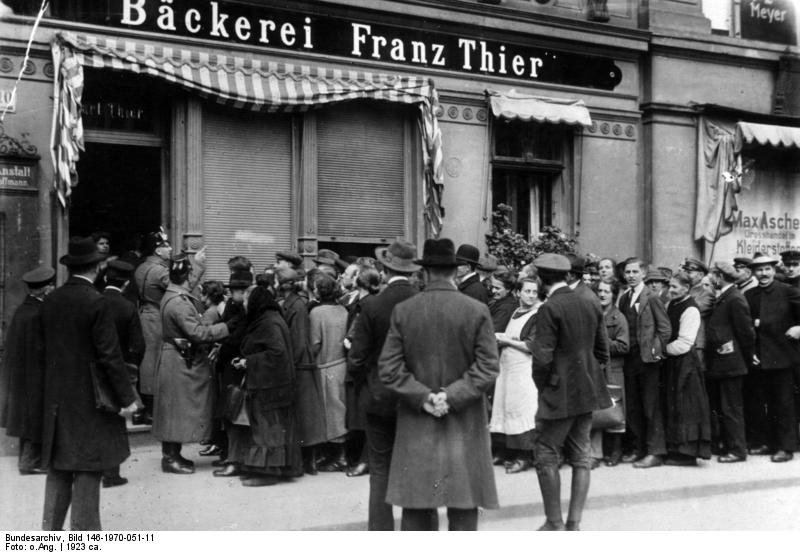
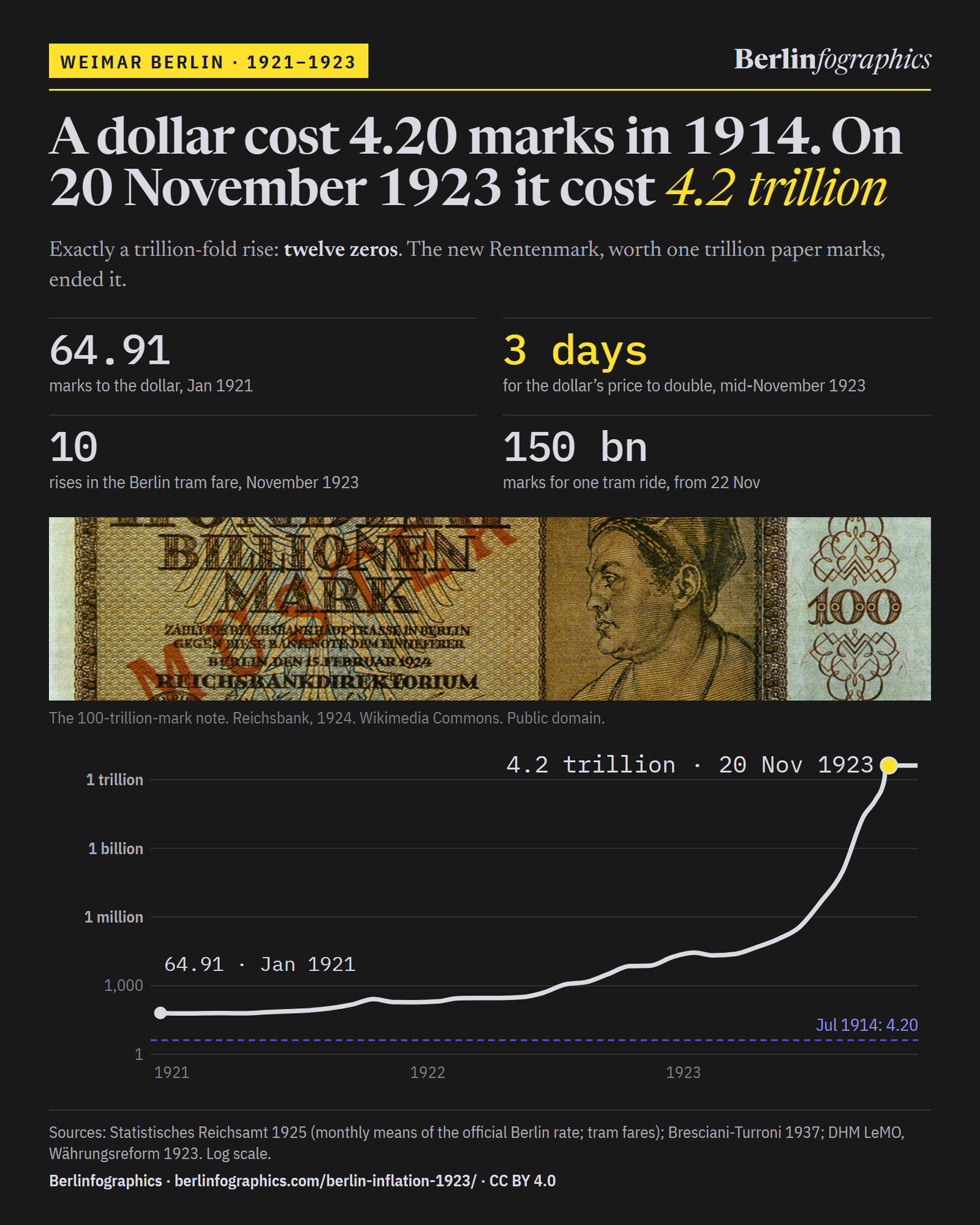
Berlin lived the collapse by the day. In November 1923 alone the city’s tram fare went up ten times. By the middle of the month the price of a dollar was doubling every three days, until a new currency struck twelve zeros off.
01Berlin, 1914–1921
In July 1914, the month the war began, a US dollar cost 4.20 marks on the Berlin exchange. By January 1921 it cost 64.91. Bad, but a long way from what came next.
On 20 November 1923 the official Berlin quotation was 4,200,000,000,000 marks: exactly a trillion times the rate of 1914. The Statistisches Reichsamt, Germany’s statistical office, published the whole series in 1925, month by month and day by day. Every rate in this story comes from its tables.

4.20 marks to the dollar in July 1914, times a trillion, is 4,200,000,000,000 marks: the official rate on 20 November 1923. Twelve zeros. In German the figure is 4,2 Billionen, since German counts a Billion as a million million: this story uses English numbers throughout.
Marks per US dollar, Berlin · log scale
Monthly averages of the official Berlin rate, daily quotations in November 1923; each grid line is ten times the one below. Source: Statistisches Reichsamt (1925).
January 1921
Two years after the war the mark had lost most of its value: 64.91 to the dollar, against 4.20 in 1914. On this scale every grid line is ten times the one below it.
24 June 1922
Walther Rathenau was shot on the Koenigsallee, Grunewald by members of the far-right Organisation Consul. The dollar averaged 317 marks that June and 1,135 in August.
11 January 1923
Berlin answered with passive resistance and paid for it with the printing press. January’s dollar averaged 17,972 marks, more than double December’s 7,589.
February 1923 – 18 April 1923
From February the Reichsbank sold foreign currency to hold the mark, and the curve flattened: March averaged 21,190. On 18 April, the economist Bresciani-Turroni wrote, “the dam raised by the Reichsbank broke down”.
July – October 1923
The monthly average went from 353,412 marks in July to 4,620,455 in August, 98.86 million in September and 25.26 billion in October.
20 November 1923
From 130 billion marks on 1 November, the official rate reached 4.2 trillion on 20 November, and there it stayed every trading day to the end of the year: one trillion paper marks to the gold mark.
20 November 1923, Cologne
4.2 trillion was the official Berlin quotation. On the open market in Cologne a dollar fetched 11.7 trillion the same day: by Schacht’s own figures, quoted by Bresciani-Turroni, the highest quotation of all.
02The speed of it
How long did it take for the dollar’s price to double? In 1921, about 234 days. In the week before the rate was fixed, 3. Each bar below is as long as the doubling time over that stretch, averaged between the monthly figures.
The one pause is real. While the Reichsbank sold foreign currency in the spring of 1923, the doubling time stretched to 202 days. After the dam broke it fell to 24, then 8, 7, 4, and 3.
03Berlin, November 1923
The Reichsamt printed the Berlin tram company’s single fare for every change: 10 pfennigs in 1913, 1 mark from 3 March 1921, 1.5 billion marks from 27 October 1923.
Then, in November, the fare went up ten times in three weeks. Converted at the dollar rate, the final 150 billion was 15 gold pfennigs, against 10 in 1913. In gold the fare had risen by half. In paper marks it had risen 1.5 trillion times.

The single tram fare, November 1923, billions of marks
Source: Statistisches Reichsamt (1925), Berliner Straßenbahn. The fare did not change again that year.

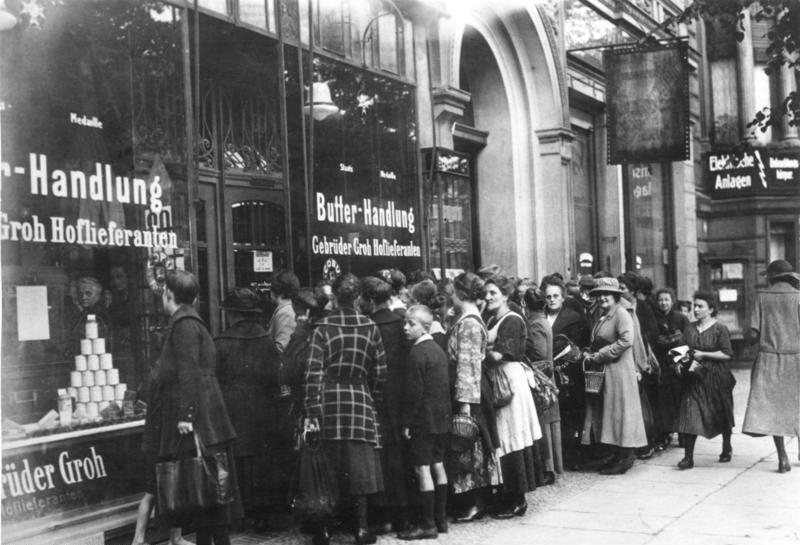
Berlin prices towards the end of November 1923
Source: C. Bresciani-Turroni, The Economics of Inflation (1937). A kilo of rye bread was 428 billion marks; butter, 5.6 trillion.
Firms went from paying wages weekly to paying them daily, and then to paying them in the lunch break.
So the Bundestag’s research service sums it up. Some workers fetched their pay with handcarts at the factory gates. Bread shows the race they were running: the Reichsamt’s average price for a kilo of rye bread in Berlin went from 29 pfennigs in 1913 to 201 billion marks in November 1923, and late that month it was 428 billion.
A kilo of rye bread in Berlin, marks · log scale
Monthly averages (Statistisches Reichsamt); the last bar is Bresciani-Turroni’s late-November price.
04Kreuzberg and beyond, autumn 1923
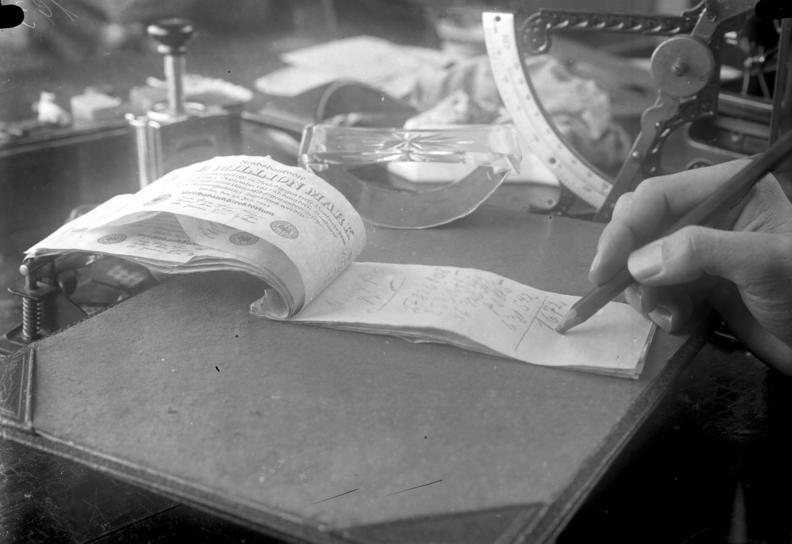
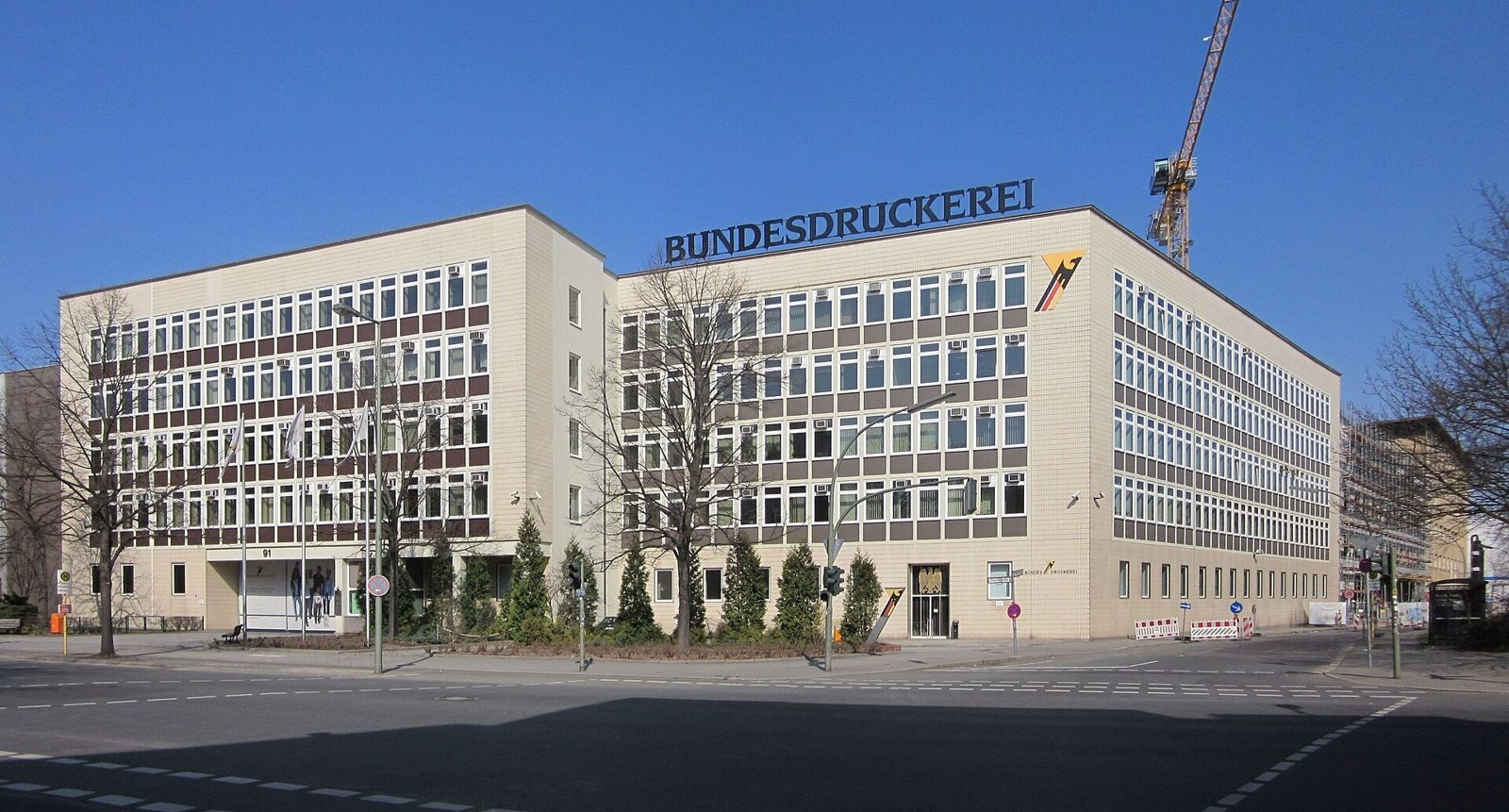
The Reichsdruckerei, the Reich’s printing works on Oranienstraße, Kreuzberg, printed its money. By the autumn of 1923 it was not enough. The Deutsches Historisches Museum counts up to 133 outside firms with 1,783 presses working for it day and night, paper from 30 paper mills, and about 30,000 people making the money.


The economist Bresciani-Turroni counted about 100 private presses “in Berlin and the provinces” printing notes for the Reichsbank, and 1,000 women and girls in the dispatch departments doing nothing but counting the notes in the packets.
By 30 November 1923 the Reichsbank had 400 quintillion marks of notes in circulation. At one trillion paper marks to the gold mark, all of it was worth about 400 million gold marks.
The Reichsbank’s notice of 25 October 1923
Published in the daily papers; quoted by Bresciani-Turroni. The Reichsbank hoped to raise its daily output to half of that by the end of the week.

05Berlin, November 1923
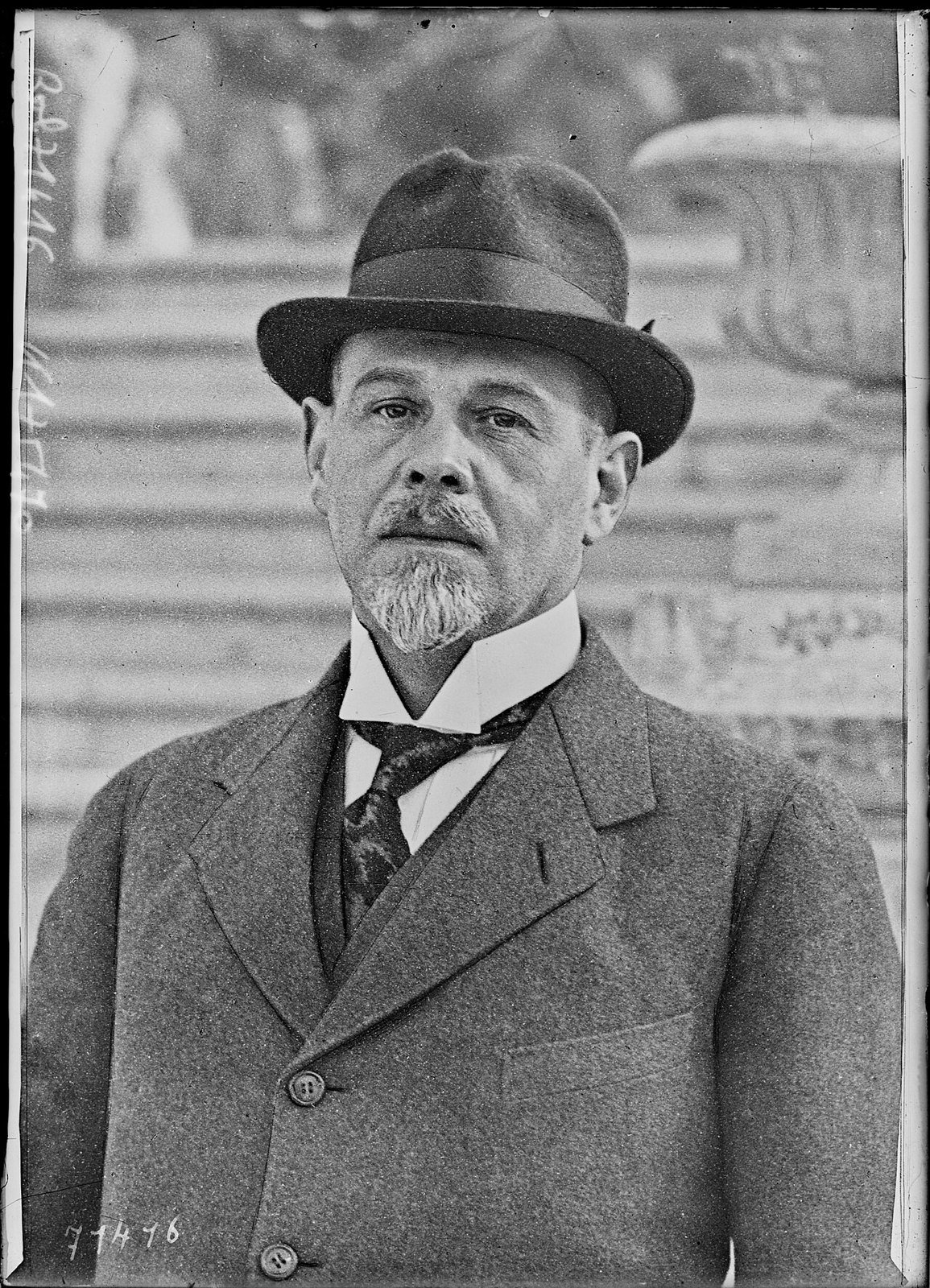
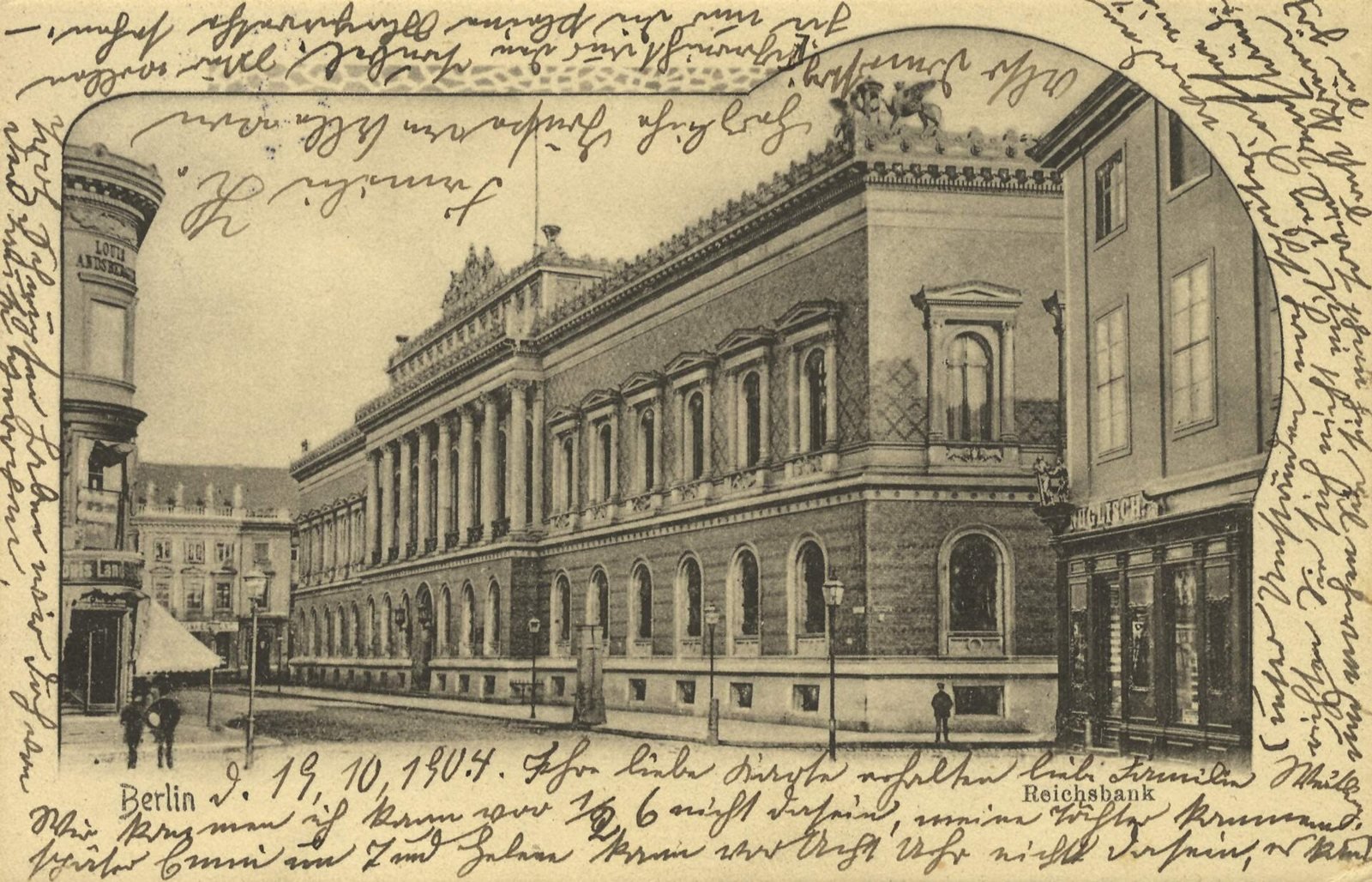
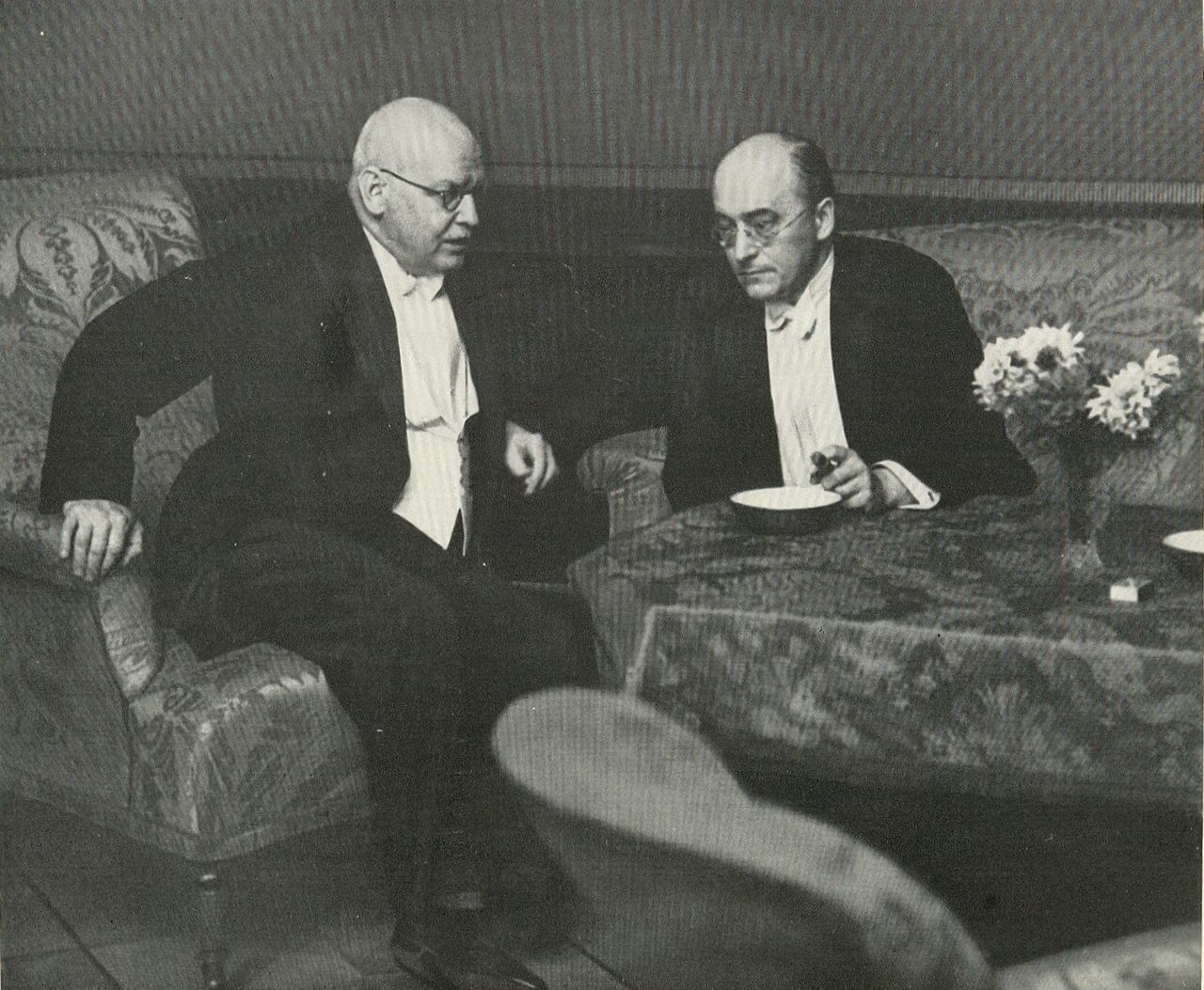
On the morning of 12 November 1923 the finance minister, Hans Luther, called in the banker Hjalmar Schacht and asked him to become currency commissioner. The new money was Luther’s: a transitional currency backed by a charge on land, an idea he took from Karl Helfferich’s plan.
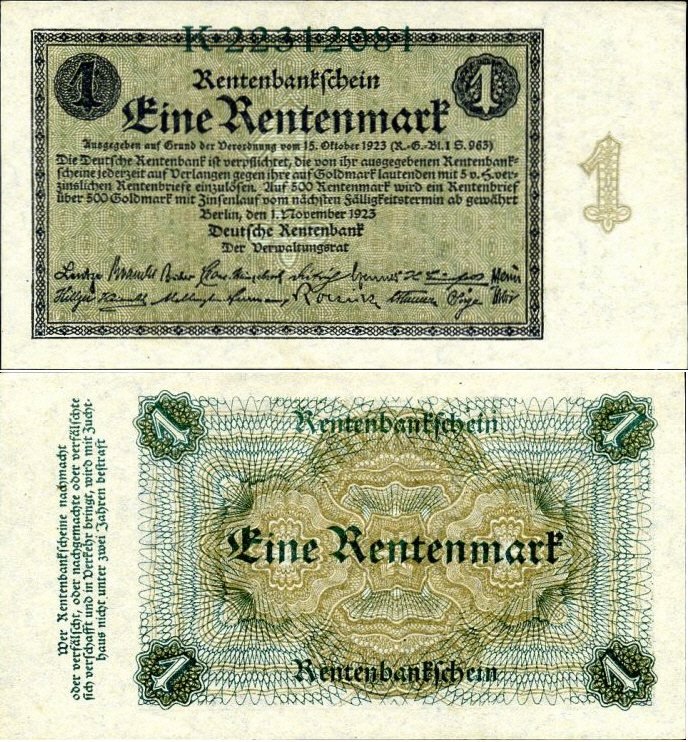
The Rentenbank began issuing the Rentenmark on 15 November 1923, at one Rentenmark to one trillion paper marks. On 20 November 1923 the Berlin dollar rate was fixed at 4.2 trillion, and the same day the Reichsbank’s president since 1908, Rudolf Havenstein, died.
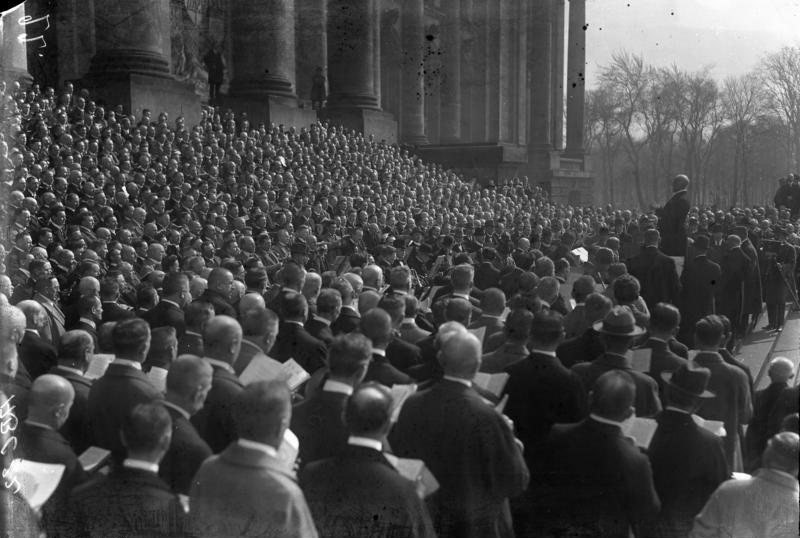
“The depreciation of money in Germany, which came to an end with the introduction of the Rentenmark on 20 November 1923…” (translated)
So the Statistisches Reichsamt opened its tables in 1925. The law of 30 August 1924 wrote the rate into the new Reichsmark: one for a trillion. The old paper notes ceased to be legal tender on 5 June 1925, though Reichsbank branches still exchanged them for some weeks after.


Between July 1914 and 20 November 1923 the price of a dollar in Berlin rose exactly a trillion-fold. The Rentenmark struck the twelve zeros off again.
Press & citation
Free to publish under CC BY 4.0 — in print, online, on Wikipedia and in teaching, commercially or not — with credit to Berlinfographics and a link to this page.
Ready-to-use image
The infographic as one image: headline, key figures, chart, sources and credit, 2,400 × 1,350 px PNG. Please use it unedited.
Download landscape (PNG)
Square format
A 1:1 version for social media and narrow columns, 1,800 × 1,800 px.
Download square (PNG)
Portrait 4:5
For Instagram and LinkedIn feeds, 1,620 × 2,025 px.
Download portrait (PNG)Credit line
Berlinfographics (berlinfographics.com), CC BY 4.0
Citation
Berlinfographics (2026). “The Berlin inflation, 1921–1923”. Berlin Experiences. https://berlinfographics.com/berlin-inflation-1923/
Wikipedia
{{cite web |title=The Berlin inflation, 1921–1923 |url=https://berlinfographics.com/berlin-inflation-1923/ |website=Berlinfographics |publisher=Berlin Experiences |date=2026-11-09 |access-date=2026-11-09}}
Our infographics, charts and texts are licensed CC BY 4.0: free to republish, including commercially, with credit to Berlinfographics and a link. Photographs keep their own licences, named in each caption. How to credit
Topics: The Second World War · Cold War Berlin · Nazi Berlin · Persecution & the Holocaust · Weimar Berlin · Prussia & the Kaiserreich · Architecture & the built city · Culture, science & society · Reunified Berlin · Unusual facts
Contact: info@berlinfographics.com · Press: press@berlinfographics.com · Imprint · Privacy