Berlinfographicsby Berlin Experiences

The Hohenzollern crypt under the Berliner Dom, April 2026, after the coffins came back.Photo: LarsMueller, 2026. Wikimedia Commons. CC0.

The Hohenzollern crypt

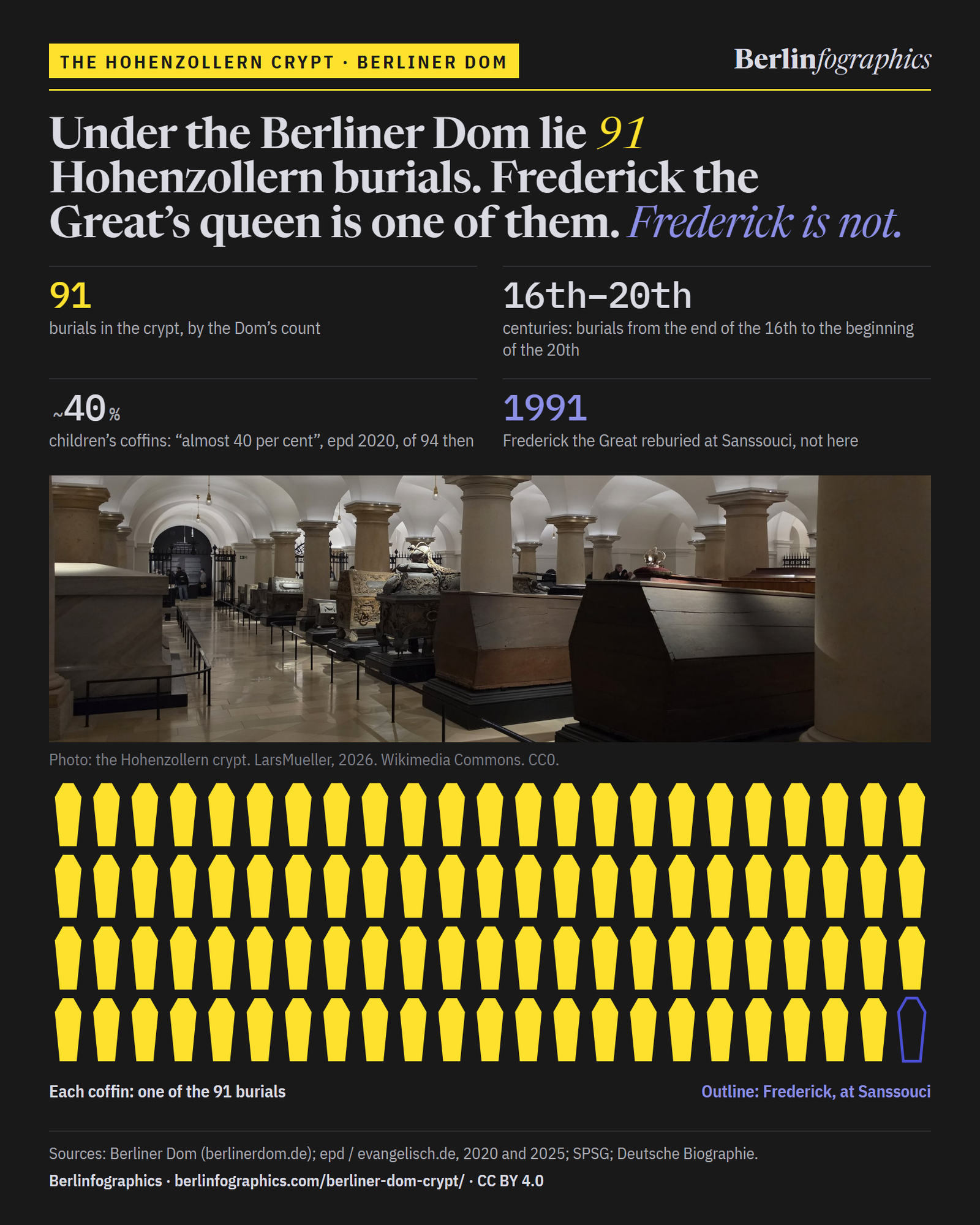
Under the Berliner Dom lie 91 Hohenzollern burials. Frederick the Great’s queen is one of them. Frederick is not.

The dynasty brought its dead here from the end of the 16th century to the beginning of the 20th: electors, kings, queens, and children, in almost 40 per cent of the coffins, the epd reported in 2020. The last burial, in the years of the Weimar Republic, was a “nameless princess”.

91
burials in the crypt, the Dom’s own count
16th–20th
centuries: from the end of the 16th century to the beginning of the 20th
~40%
of the coffins held children: “almost 40 per cent”, epd, 2020, when it counted 94
1991
Frederick the Great reburied, at Sanssouci in Potsdam, not here

01Spree island, Berlin-Mitte

The Dom calls the vault under its floor the most important dynastic burial place in Germany

Beneath the cathedral on the Lustgarten stand the coffins and sarcophagi of the Hohenzollerns, the family that ruled Brandenburg and Prussia. The Dom counts 91 burials, from the end of the 16th century to the beginning of the 20th.

Among them, by the Dom’s own list, are the Great Elector, King Friedrich I and his queen Sophie Charlotte, and Queen Elisabeth Christine, the wife of Frederick the Great.

Frederick himself lies on a terrace at Sanssouci, in Potsdam, near the graves of his dogs.

A black-and-white photograph of a huge domed cathedral with corner towers, seen across an open square.
The Berliner Dom on the Spree island, photographed in 1905.Photo: Unknown photographer, 1905. Via Wikimedia Commons (Public domain).
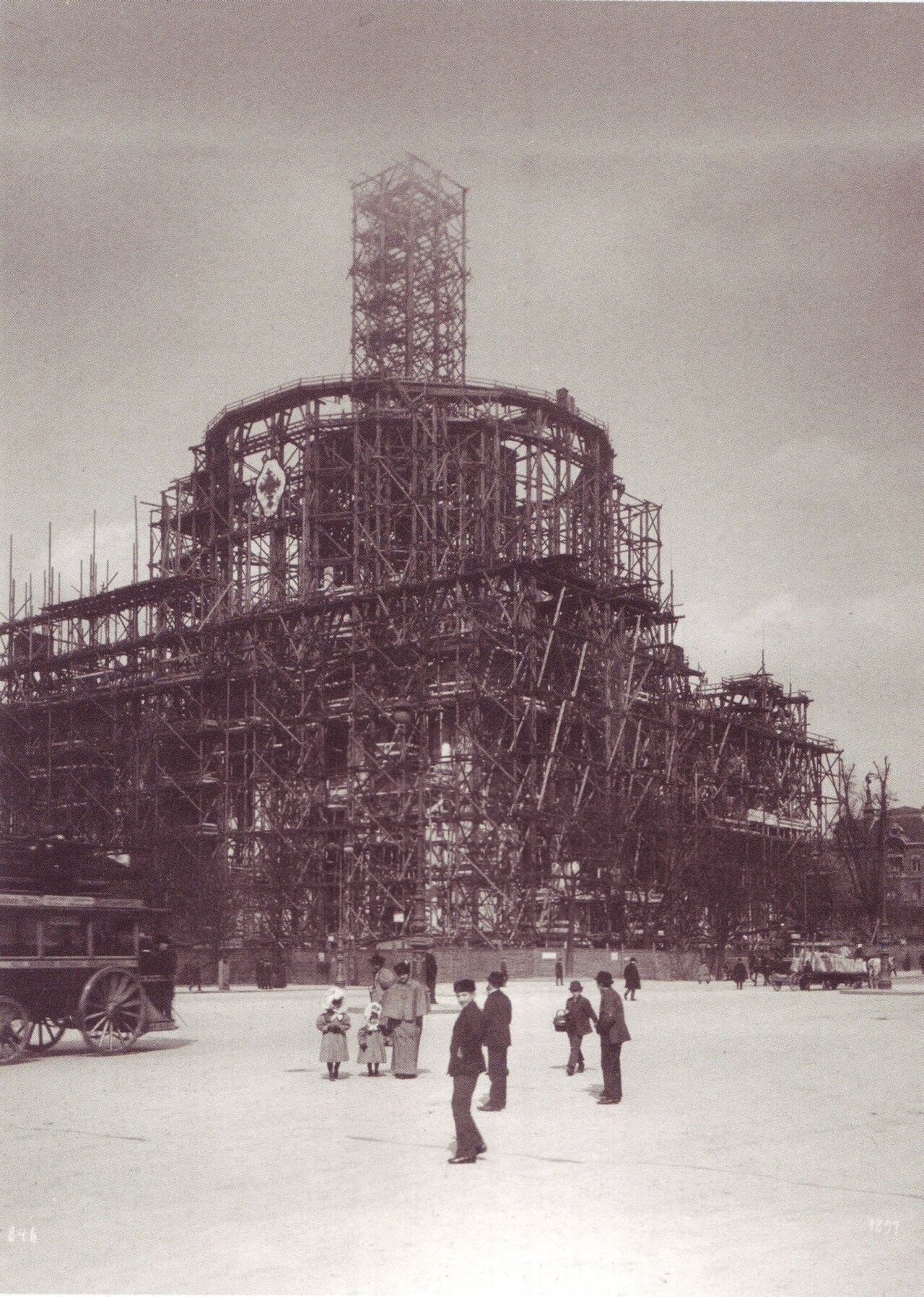
An old photograph of a large building under construction, its dome and towers surrounded by scaffolding.
The new Dom under construction, 1897.Photo: Hugo Rudolphy (1855-around 1914), 1897. Wikimedia Commons. Public domain.
A wide vaulted hall seen across a dark ornamented sarcophagus lid in the foreground, with more coffins and visitors among the columns behind.
Sarcophagi in the crypt, April 2026.Photo: LarsMueller, 2026. Wikimedia Commons. CC0.

Four centuries on one time scale

A time line from the late sixteenth century to today. A band marks the span of burials in the crypt; bars mark the lives of the Great Elector, Friedrich I, Sophie Charlotte and Elisabeth Christine, who lie there, and of Frederick the Great, who does not. Marks above show Schlüter's two state sarcophagi in the church; a line shows Frederick's reburial at Sanssouci.
Lies in the cryptNot hereSchlüter’s state sarcophagus, in the church above
An ornate black iron gate with a cross on top, opening onto a long lit crypt lined with columns and coffins.
The wrought-iron gate into the crypt, 2015, before the rebuilding.Rolf Dietrich Brecher from Germany, 2015. Wikimedia Commons. CC BY-SA 2.0.

16th → 20th century

Three centuries of one family’s dead

The Dom dates the burials in its crypt from the end of the 16th century to the beginning of the 20th. It gives the span in centuries, not years.

A portrait of a man with long curled hair, in armour and an ermine-lined electoral mantle.
The Great Elector, by Romandon, 1687.Gedeon Romandon, 1687. Wikimedia Commons. Public domain.
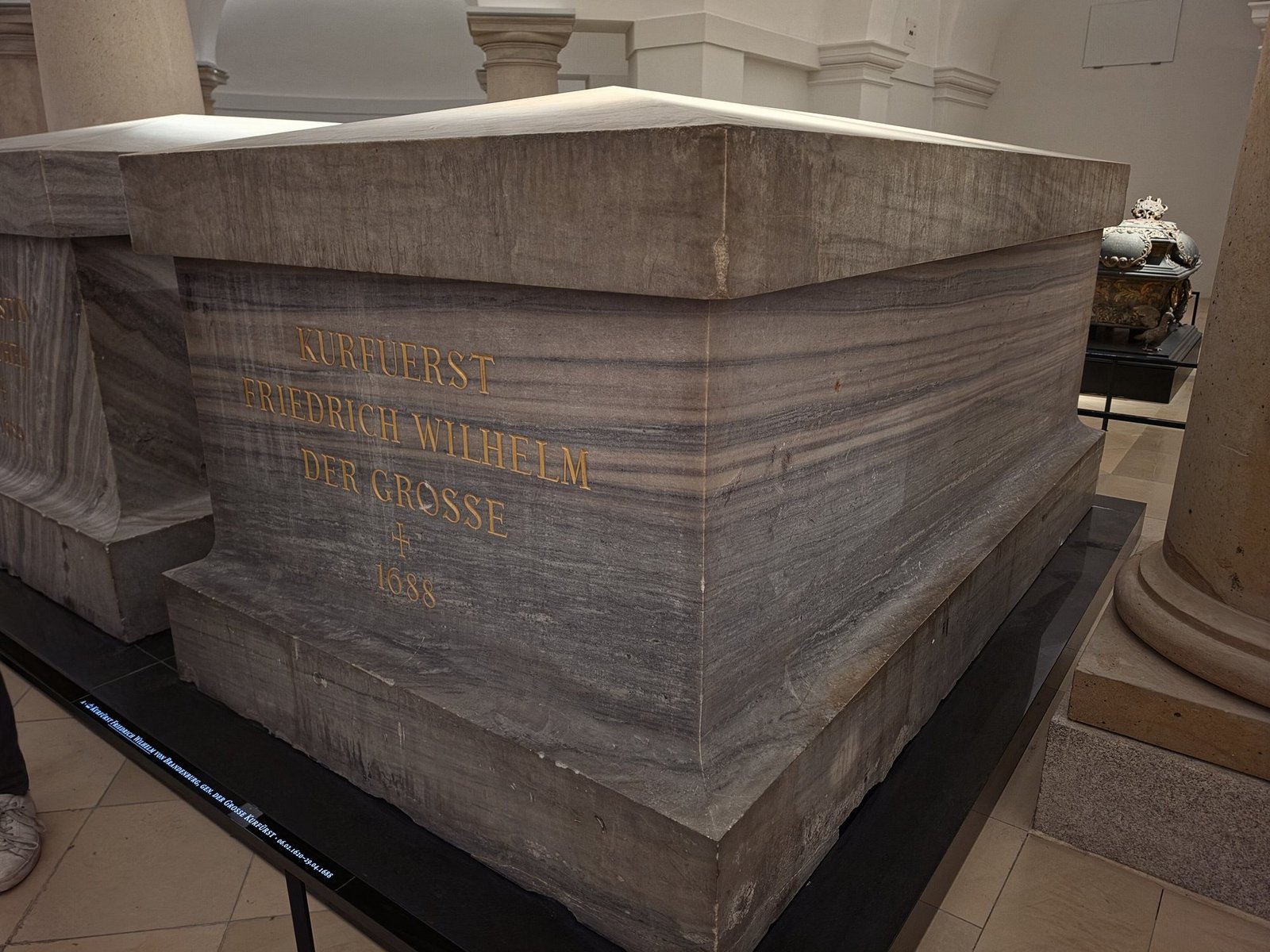
A massive grey marble coffin with a gold inscription naming Kurfürst Friedrich Wilhelm der Grosse, on a low black plinth between columns.
The Great Elector’s coffin in the crypt, April 2026: “Kurfürst Friedrich Wilhelm der Grosse”, died 1688.LarsMueller, 2026. Wikimedia Commons. CC0.

1620–1688

The Great Elector, the oldest of the four the Dom names

Friedrich Wilhelm, Elector of Brandenburg, 1620–1688. His coffin weighs several tonnes.

A portrait of a king in a long curled wig, armour and a red, ermine-lined royal mantle.
Friedrich I, by Weidemann.Friedrich Wilhelm Weidemann, 1701. Wikimedia Commons. Public domain.
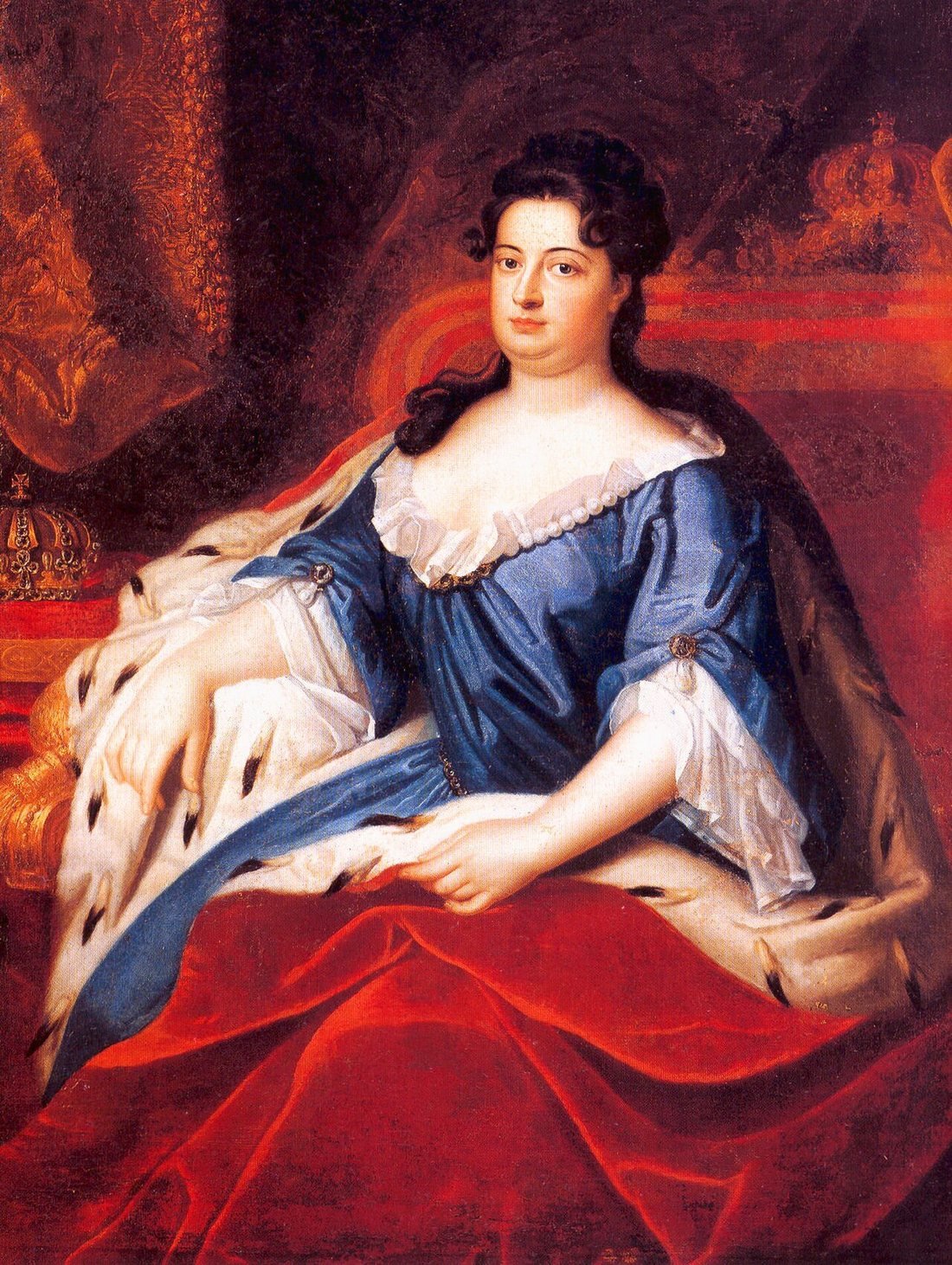
A portrait of a woman with dark piled-up hair, in a low-cut gown with an ermine-lined mantle.
Sophie Charlotte, by Weidemann.Friedrich Wilhelm Weidemann, 1705. Wikimedia Commons. Public domain.
A gilded baroque sarcophagus draped with a crowned mantle; a mourning figure leans on an oval portrait medallion at its head.
Schlüter’s sarcophagus for Sophie Charlotte, 1705.Thomas Quine, 2014. Wikimedia Commons. CC BY 2.0.
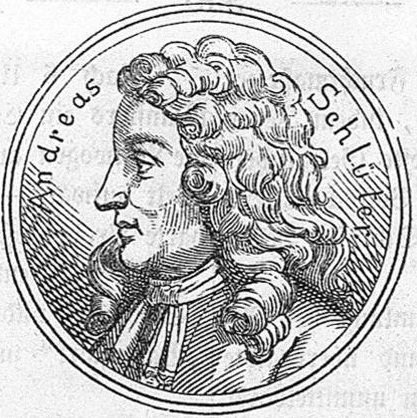
An oval engraved portrait of a man in a long curled wig, set in a decorative medallion frame.
Andreas Schlüter, medallion.Unknown author, 1855. Via Wikimedia Commons (Public domain).

1705 and 1713

A king and queen with two resting places in one building

Friedrich I (1657–1713) and Sophie Charlotte (1668–1705) lie in the crypt. Andreas Schlüter’s state sarcophagi for them, of 1705 and 1713, stand in the church above.

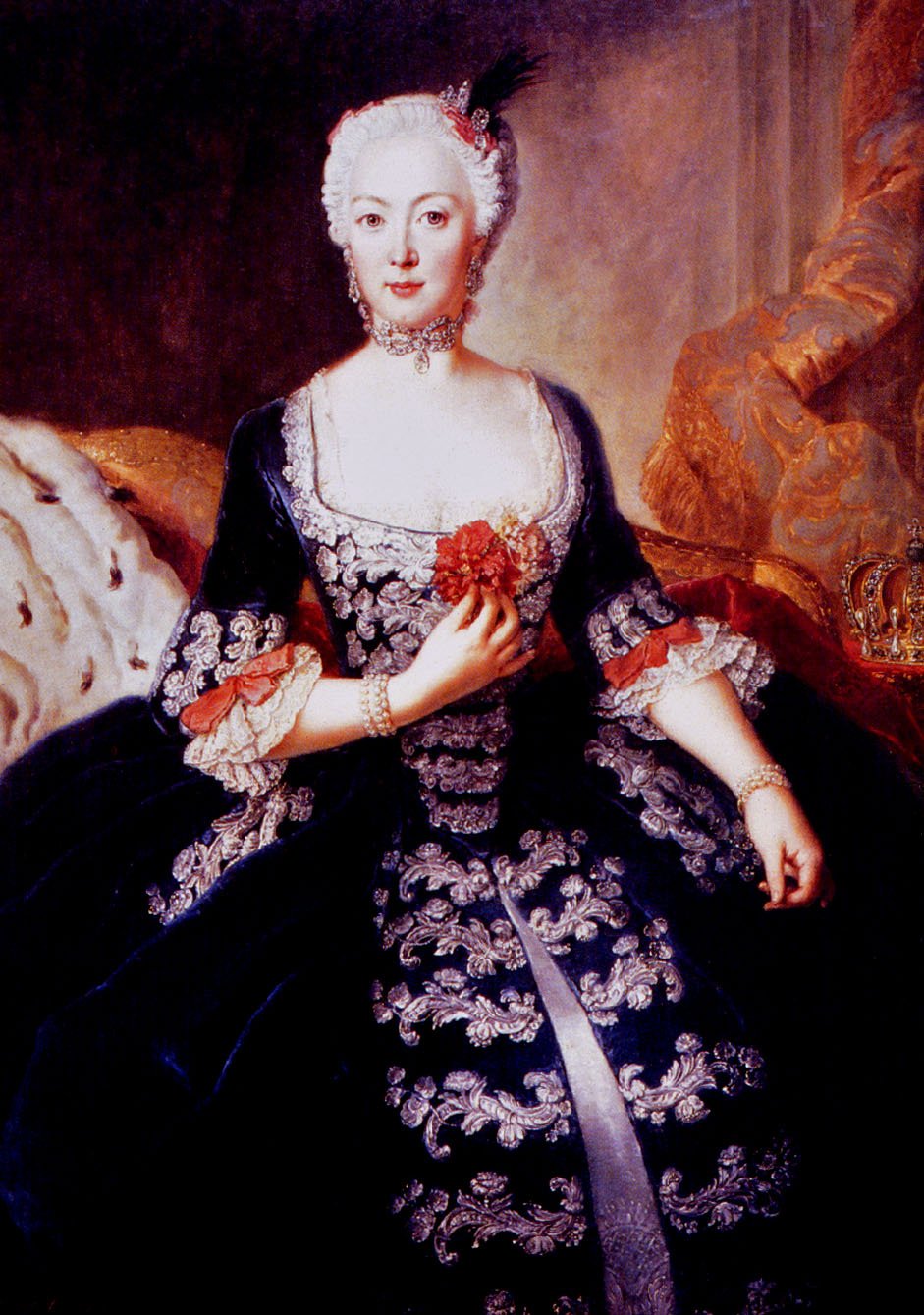
A portrait of a young woman with powdered hair, in a pale silk gown with an ermine-lined mantle.
Elisabeth Christine, by Pesne, 1739.Antoine Pesne, 1739. Wikimedia Commons. Public domain.
A portrait of an elderly man in a blue uniform coat with a star on the breast, looking at the viewer.
Frederick the Great, by Graff, 1781.Anton Graff, 1781. Wikimedia Commons. Public domain.

Married 1733

Frederick the Great’s queen lies here

Elisabeth Christine (1715–1797) married the crown prince on 12 June 1733. He became Frederick the Great (1712–1786). She outlived him by 11 years.

A candle-lit rococo music room; the king stands playing the flute before an audience of courtiers and musicians.
Sanssouci: Menzel’s “Flute Concert”, 1850–52.Adolph von Menzel, 1850. Wikimedia Commons. Public domain.
A plain stone slab on a gravel terrace, with flowers and potatoes laid on it.
His grave on the Sanssouci terrace, 2022.Flocci Nivis, 2022. Wikimedia Commons. CC BY 4.0.

17 August 1991

205 years after his death, Frederick was reburied at Sanssouci

He was reburied on the terrace at Sanssouci on 17 August 1991, the 205th anniversary of his death, near the graves of his dogs.

A wide vaulted hall seen across a dark ornamented sarcophagus lid in the foreground, with more coffins and visitors among the columns behind.
Sarcophagi in the crypt, April 2026.LarsMueller, 2026. Wikimedia Commons. CC0.

The Weimar Republic

The last to be buried here had no name

The last burial in the crypt was that of the “nameless princess”, in the years of the Weimar Republic, at the beginning of the 20th century.

A massive grey marble coffin with a gold inscription naming Kurfürst Friedrich Wilhelm der Grosse, on a low black plinth between columns.
The Great Elector’s coffin in the crypt, April 2026: “Kurfürst Friedrich Wilhelm der Grosse”, died 1688.LarsMueller, 2026. Wikimedia Commons. CC0.

2020–26

All 91 coffins went back under the floor

The crypt was rebuilt in 2020–26. When the coffins returned, in 2025, the Great Elector’s was the first unveiled. All 91 are back.

02The register

Many of the coffins are children’s

The crypt holds rulers and queens, but not only them. When the epd reported on the crypt in 2020, it counted 94 coffins and wrote that children had been buried in almost 40 per cent of them. The Dom now gives 91 burials.

Burials in the crypt

91

burials in the crypt, from the end of the 16th century to the beginning of the 20th, and one empty place for the king who is not here

one burial in the cryptFrederick the Great: at Sanssouci since 1991
An ornate black iron gate with a cross on top, opening onto a long lit crypt lined with columns and coffins.
The wrought-iron gate into the crypt, 2015, before the rebuilding.Photo: Rolf Dietrich Brecher from Germany, 2015. Wikimedia Commons. CC BY-SA 2.0.

03Four who lie here

An elector, a king, two queens, and the most famous Hohenzollern missing from among them

The Dom names four of those buried in its crypt. The most famous Hohenzollern of all is not among them.

A massive grey marble coffin with a gold inscription naming Kurfürst Friedrich Wilhelm der Grosse, on a low black plinth between columns.
The Great Elector’s coffin in the crypt, April 2026: “Kurfürst Friedrich Wilhelm der Grosse”, died 1688.Photo: LarsMueller, 2026. Wikimedia Commons. CC0.
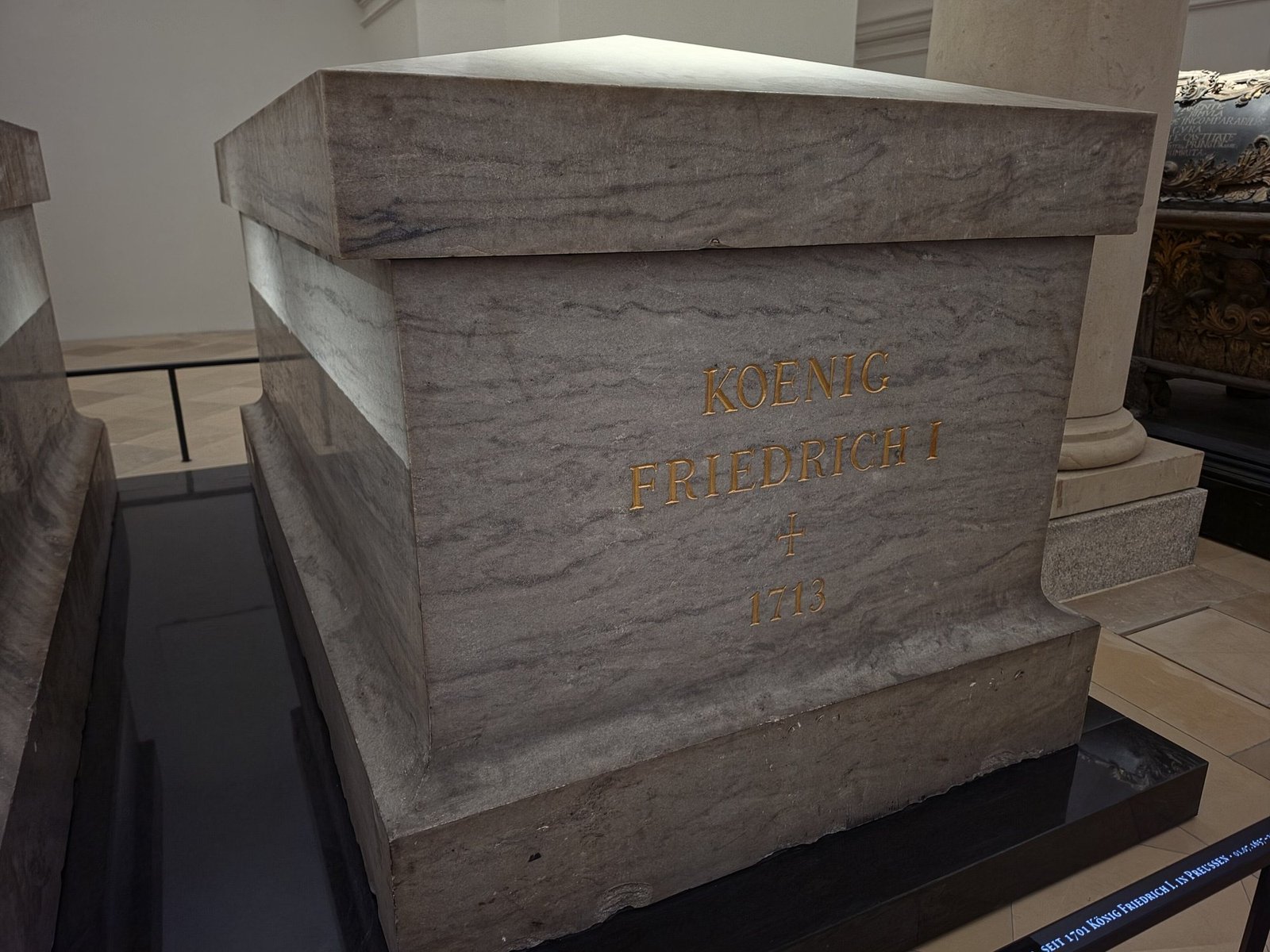
A grey marble coffin with a sloping lid and a gold inscription naming König Friedrich I.
“Koenig Friedrich I”, died 1713: his coffin in the crypt, April 2026.Photo: LarsMueller, 2026. Wikimedia Commons. CC0.
The end of a veined marble coffin with a gold inscription: Koenigin Sophie Charlotte, a cross, and the year of her death.
“Koenigin Sophie Charlotte”, died 1705: her coffin in the crypt, April 2026.Photo: LarsMueller, 2026. Wikimedia Commons. CC0.

Portraits: Gedeon Romandon, 1687. Wikimedia Commons. Public domain. · Friedrich Wilhelm Weidemann, 1701. Wikimedia Commons. Public domain. · Friedrich Wilhelm Weidemann, 1705. Wikimedia Commons. Public domain. · Antoine Pesne, 1739. Wikimedia Commons. Public domain. · Anton Graff, 1781. Wikimedia Commons. Public domain.

04Sanssouci, Potsdam · 17 August 1991

Frederick the Great was reburied 205 years after his death, at Sanssouci, not here

Friedrich II, Frederick the Great (1712–1786), is not in the crypt. On 17 August 1991, the 205th anniversary of his death, he was reburied on the terrace at Sanssouci, near the graves of his dogs.

His queen stayed in Berlin. Elisabeth Christine had married him on 12 June 1733; she died in 1797, 11 years after him, and lies under the Dom.

She lies here. He does not.

A portrait of an elderly man in a blue uniform coat with a star on the breast, looking at the viewer.
Frederick the Great (1712–1786), painted by Anton Graff in 1781.Painting: Anton Graff, 1781. Wikimedia Commons. Public domain.
A plain stone slab on a gravel terrace, with flowers and potatoes laid on it.
Frederick the Great’s grave on the terrace at Sanssouci, 2022, with the potatoes visitors leave on the slab. He has lain here since 17 August 1991.Photo: Flocci Nivis, 2022. Wikimedia Commons. CC BY 4.0.

05The crypt, 2020–26

The Great Elector’s coffin, several tonnes of it, was the first to come home

The crypt was emptied and rebuilt in 2020–26. When the coffins came back, in 2025, the Great Elector’s was the first to be unveiled. All 91 have returned.

The last burial here was long before: a “nameless princess”, in the years of the Weimar Republic.

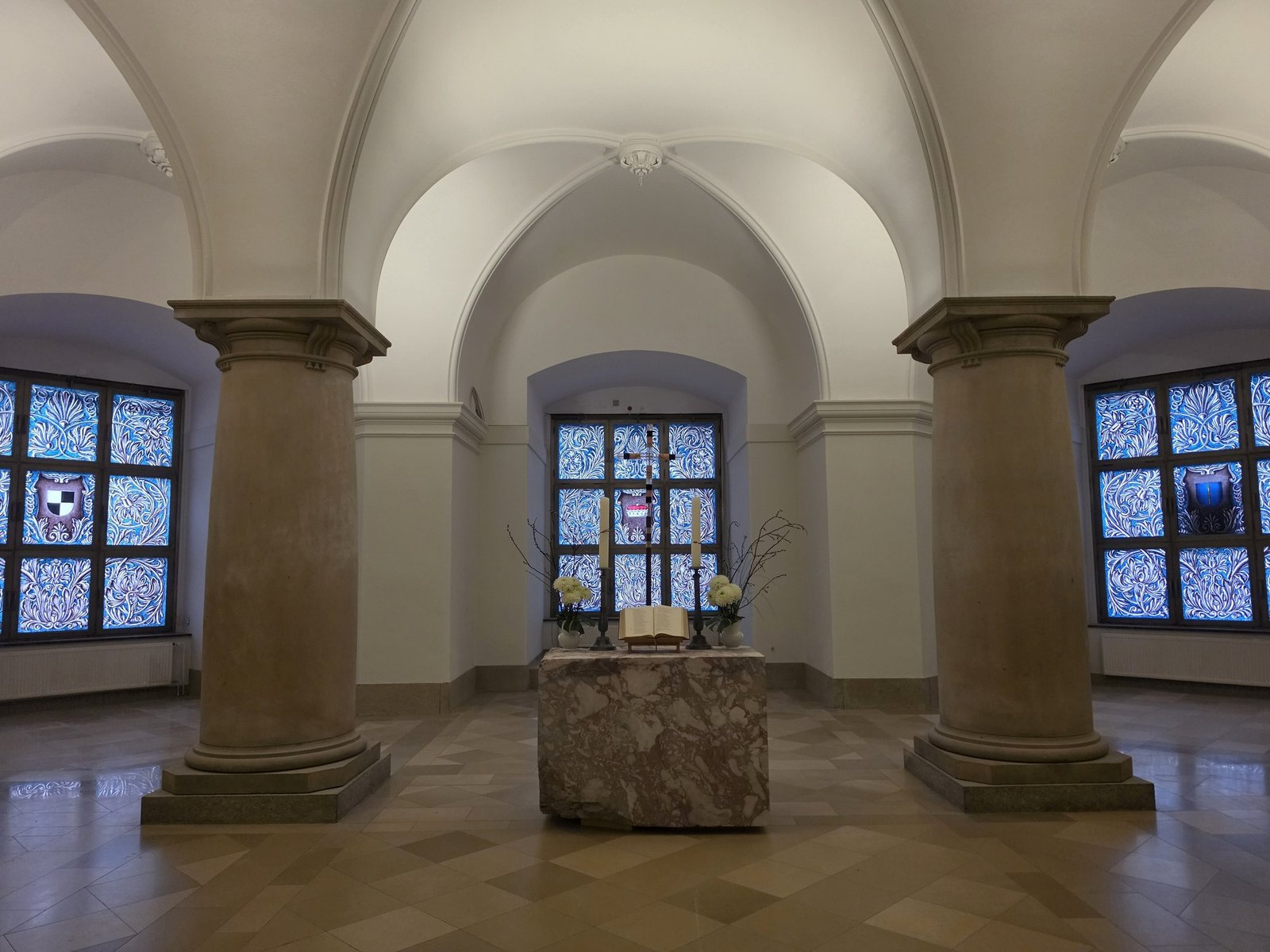
A white cross-vaulted room with two stone columns, a marble altar with candles and an open book, and three windows of blue stained glass behind.
The crypt, April 2026: an altar beneath stained-glass windows at the end of the vault.Photo: LarsMueller, 2026. Wikimedia Commons. CC0.

For three centuries the Hohenzollerns brought their dead to this crypt. The most famous of them is the one who is missing.

Press & citation

Use this Berlinfographic

Free to publish under CC BY 4.0 — in print, online, on Wikipedia and in teaching, commercially or not — with credit to Berlinfographics and a link to this page.

The Hohenzollern crypt under the Berliner Dom: ready-to-use landscape image

Ready-to-use image

The infographic as one image: headline, key figures, chart, sources and credit, 2,400 × 1,350 px PNG. Please use it unedited.

Download landscape (PNG)
The Hohenzollern crypt under the Berliner Dom: square version

Square format

A 1:1 version for social media and narrow columns, 1,800 × 1,800 px.

Download square (PNG)
The Hohenzollern crypt under the Berliner Dom: portrait version

Portrait 4:5

For Instagram and LinkedIn feeds, 1,620 × 2,025 px.

Download portrait (PNG)

Credit line

Berlinfographics (berlinfographics.com), CC BY 4.0

Citation

Berlinfographics (2026). “The Hohenzollern crypt under the Berliner Dom”. Berlin Experiences. https://berlinfographics.com/berliner-dom-crypt/

Wikipedia

{{cite web |title=The Hohenzollern crypt under the Berliner Dom |url=https://berlinfographics.com/berliner-dom-crypt/ |website=Berlinfographics |publisher=Berlin Experiences |date=2026-11-05 |access-date=2026-11-05}}