Berlinfographicsby Berlin Experiences

The Friedrich-Ludwig-Jahn-Sportpark in Prenzlauer Berg, where BFC Dynamo were presented with the title in 1984 and 1985. Photographed in 2009.Photo: Eisern2009, 2009. Wikimedia Commons. Public domain.

BFC Dynamo

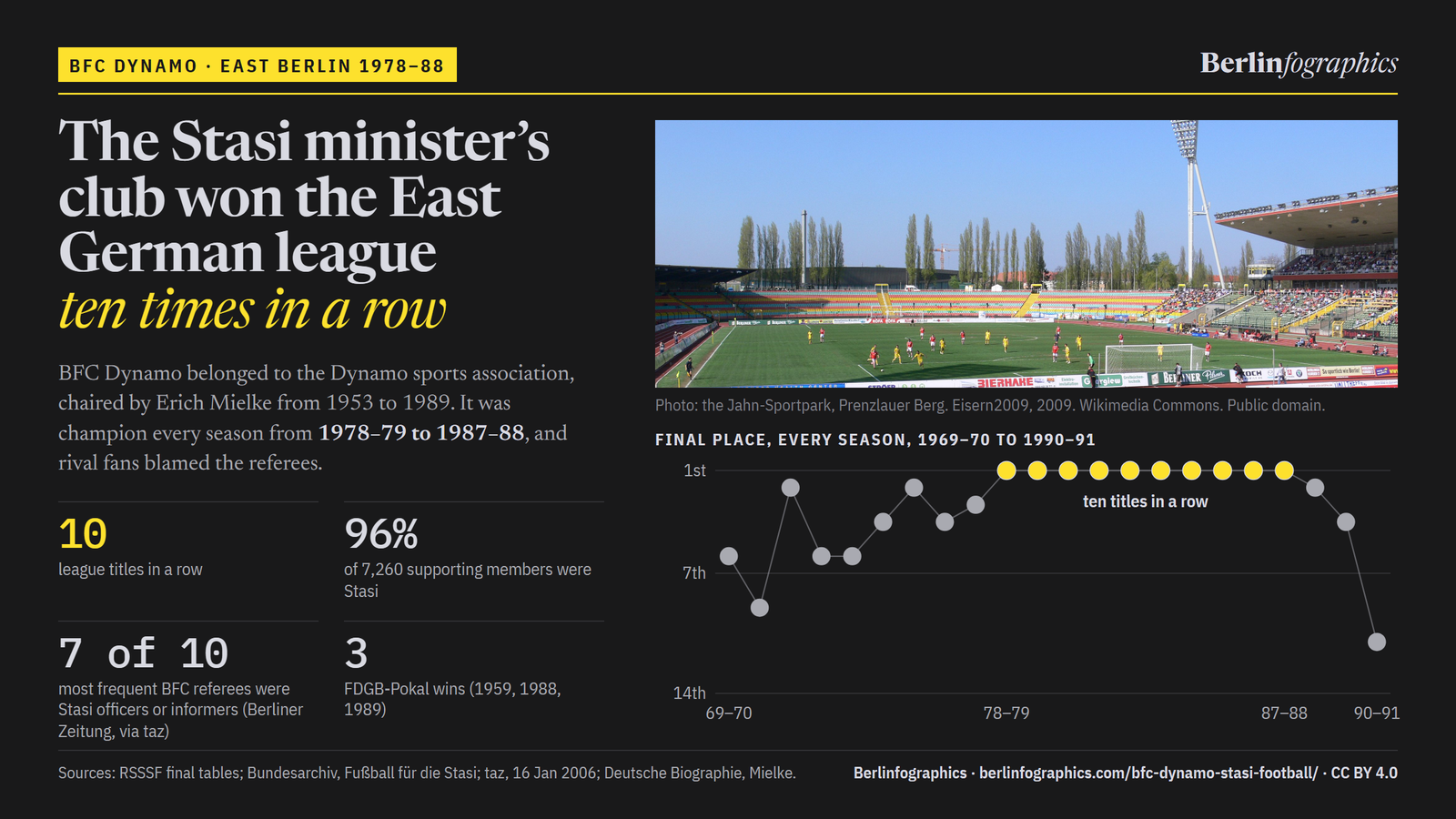
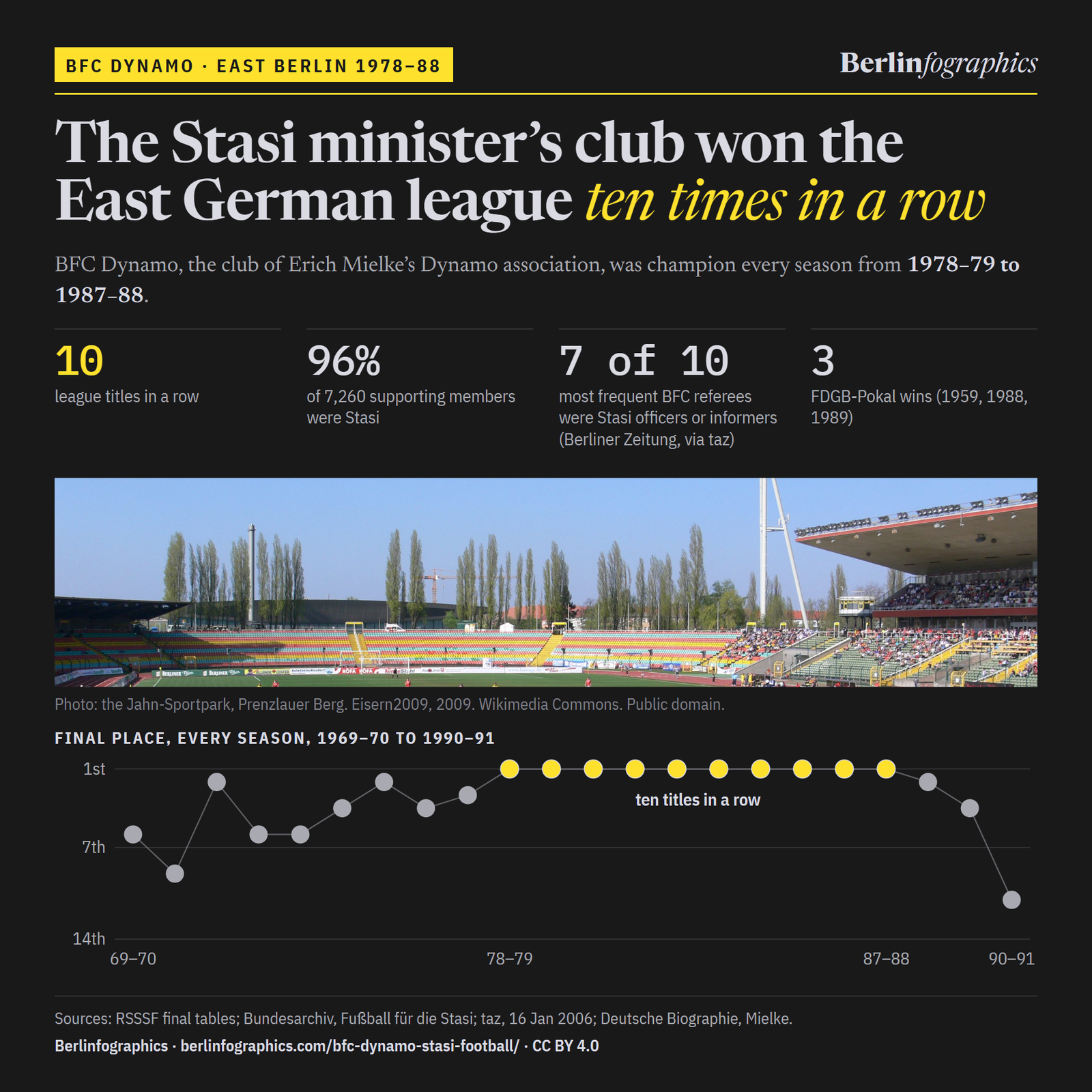
The Stasi minister’s football club won the East German league ten times in a row

BFC Dynamo belonged to the Dynamo sports association, which Erich Mielke chaired for 36 years. From 1978–79 to 1987–88 it was champion every season, and rival fans blamed the referees.

10
league titles in a row, 1978–79 to 1987–88
96%
of the club’s 7,260 supporting members belonged to the Stasi
36yrs
Mielke chaired the Dynamo sports association, 1953–1989
3
FDGB-Pokal wins: 1959, 1988, 1989
01Lichtenberg, 1953–1966

The club belonged to the secret police before it had a name

On 27 March 1953 the sports clubs of the Ministry for State Security, the Interior Ministry and the customs service were merged into one association on the Soviet model: Dynamo. Its first chairman was Erich Mielke, and he stayed in the chair until 1989. From 1957 he was also Minister for State Security.

Berlin needed a team to match. In November 1954, in the middle of the season, Dynamo’s first team in Dresden was moved to East Berlin, with its place in the league, and played on as SC Dynamo Berlin. It won the FDGB-Pokal, the East German cup, in 1959.

The football section became a club of its own on 15 January 1966: the Berliner Fußball-Club Dynamo.

For nine seasons it was a good side and nothing more: runner-up two times, and once as low as 9th. The titles went to Dresden, Magdeburg and Jena.

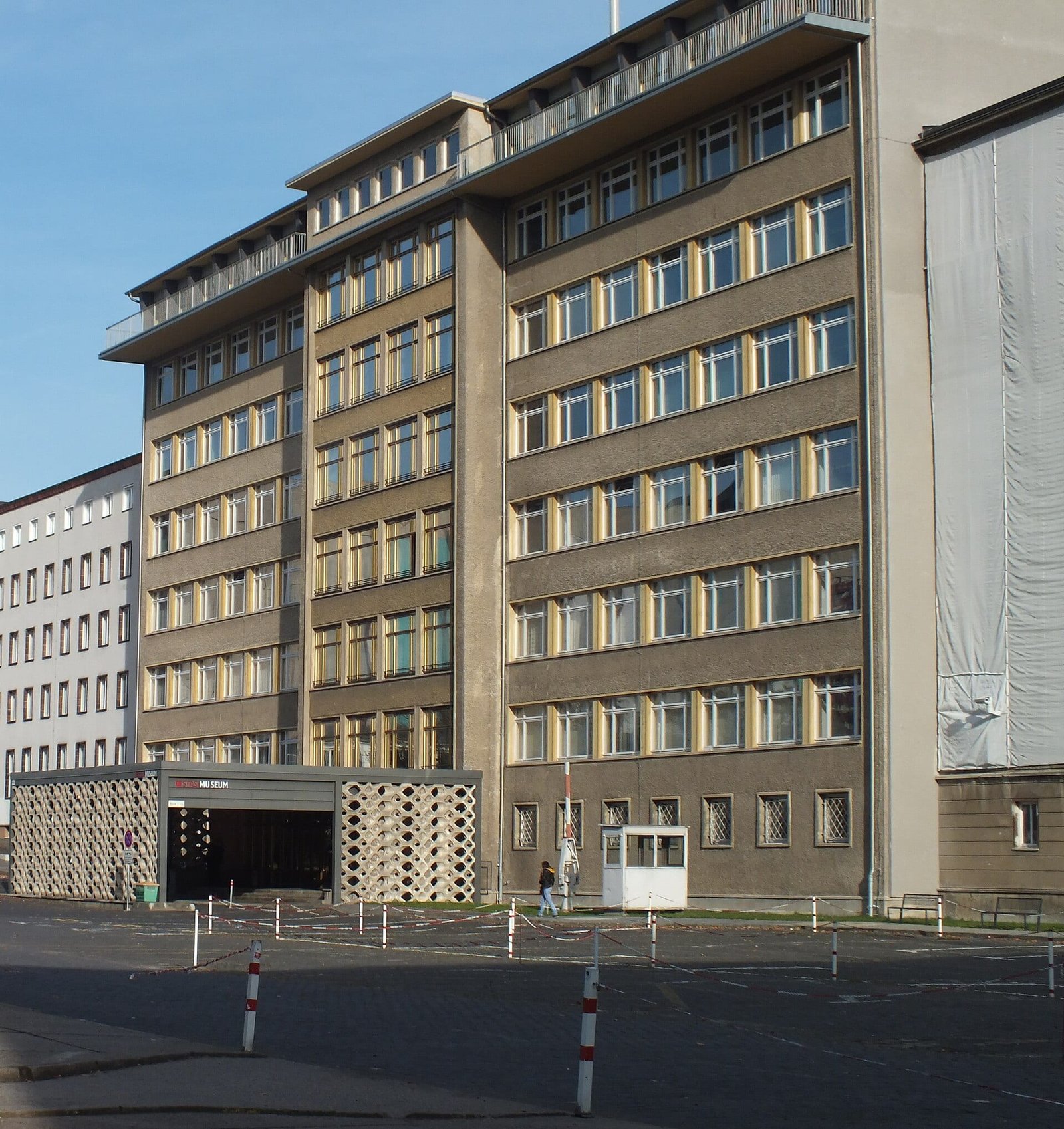
A long, grey, multi-storey office block of the 1960s behind a forecourt.
Haus 1 of the former Ministry for State Security on Normannenstraße, Lichtenberg: Mielke’s ministry, now the Stasimuseum. Photographed in 2015.Photo: Angela Monika Arnold (=44Pinguine), 2015. Wikimedia Commons. CC BY 2.5.
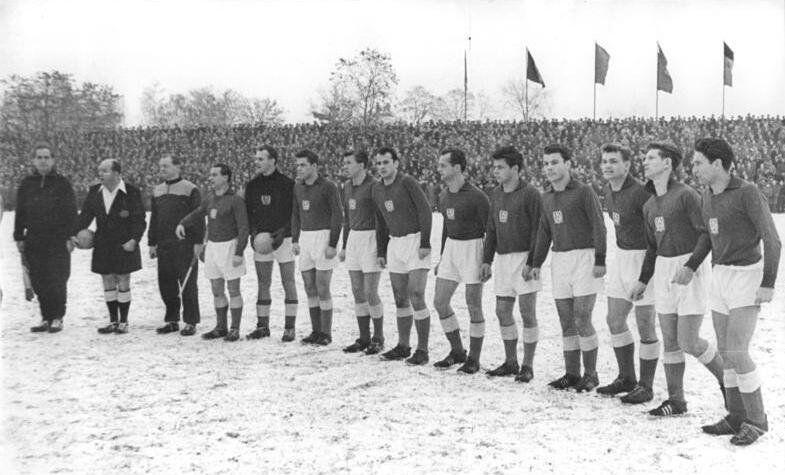
A football team lined up in dark shirts on a winter pitch.
SC Dynamo Berlin after winning the FDGB-Pokal replay against SC Wismut Karl-Marx-Stadt in Leipzig’s Bruno-Plache-Stadion, 13 December 1959: the club’s first trophy.Photo: Bundesarchiv, Bild 183-69512-0004 / Helmut Schaar / CC BY-SA 3.0 de

BFC Dynamo’s final place, every season, 1969–70 to 1990–91

BFC Dynamo’s final placeother seasons
BFC Dynamo's final DDR-Oberliga position in every season from 1969–70 to 1990–91, and, for the ten title seasons, its points beside the runner-up's.

14 clubs a season. Source: RSSSF final tables.

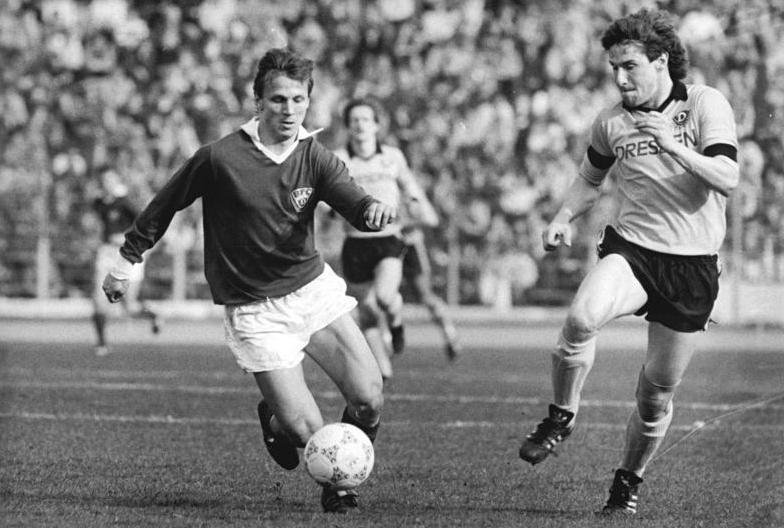
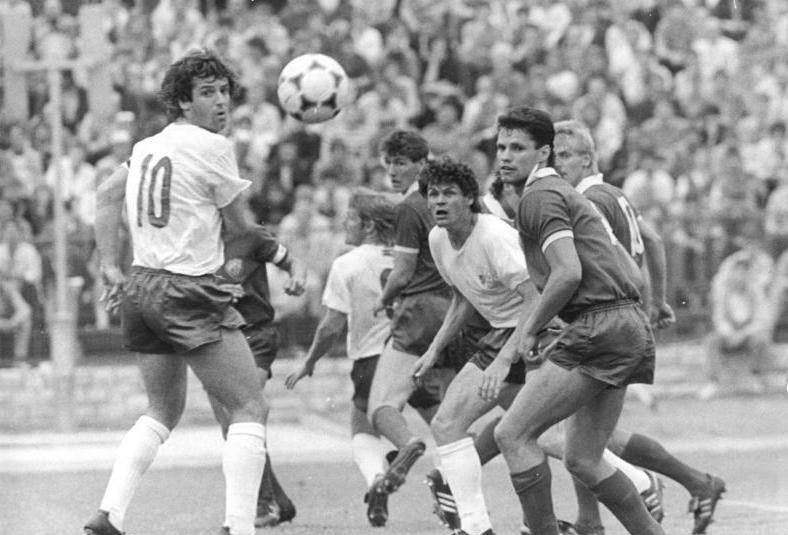
Two footballers chase the ball, one in white, one in dark kit.
BFC against Dynamo Dresden, 1988: two clubs of one sports association.Photo: Bundesarchiv, Bild 183-1988-0406-032 / Rainer Mittelstädt / CC BY-SA 3.0 de

1969–70 – 1977–78

Nine seasons without a title

BFC finished as high as second and as low as 9th. Dynamo Dresden, from the same sports association, won five of those nine titles.

A football squad in two rows with officials in suits, holding bouquets.
BFC Dynamo’s squad and club leadership with their first East German title, 1979 (ADN photograph).Photo: Bundesarchiv, Bild 183-U0529-0306 / Rainer Mittelstädt / CC BY-SA 3.0 de

1978–79

The first title, by seven points

BFC took 46 points, seven clear of Dresden. After the second title, a year later, Mielke joined the champagne in the dressing room, photographs in the Stasi files show.

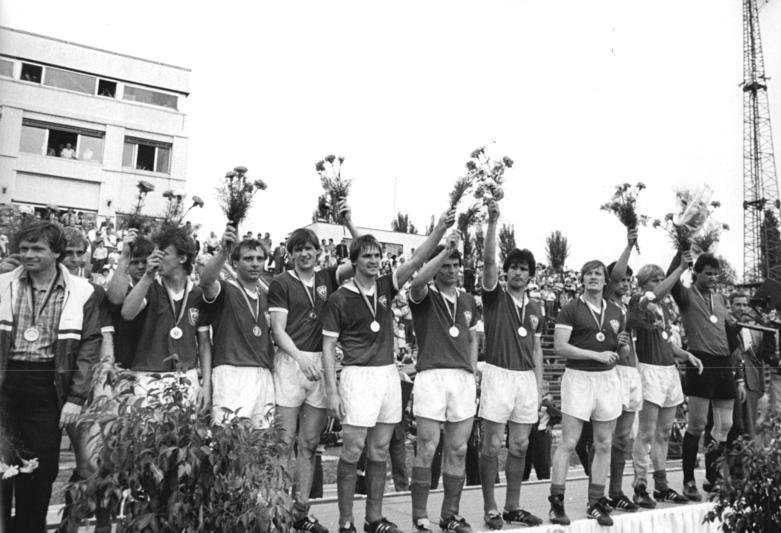
Footballers in white shirts line up on a pitch as an official hands out medals.
The title presentation in the Jahn-Sportpark, 19 May 1984: captain Bodo Rudwaleit (right) and the team receive the champions’ gold medals.Photo: Bundesarchiv, Bild 183-1984-0519-014 / Rainer Mittelstädt / CC BY-SA 3.0 de

1978–79 – 1987–88

Ten in a row

Champion every season for ten years: from 1978–79 to 1987–88, the title never left East Berlin.

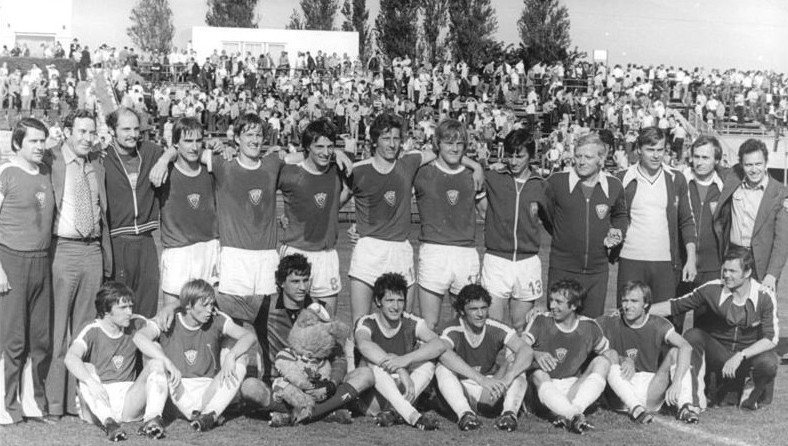
A football team posed in two rows with a trophy and flowers.
BFC Dynamo after the last game of 1984–85 in the Jahn-Sportpark, 1 June 1985: the seventh title in a row.Photo: Bundesarchiv, Bild 183-1985-0601-012 / Hubert Link / CC BY-SA 3.0 de

The margins

Some titles were runaways

In 1982–83 BFC finished 12 points clear. In 1979–80 the gap was one point. Bars are points, on one scale from zero.

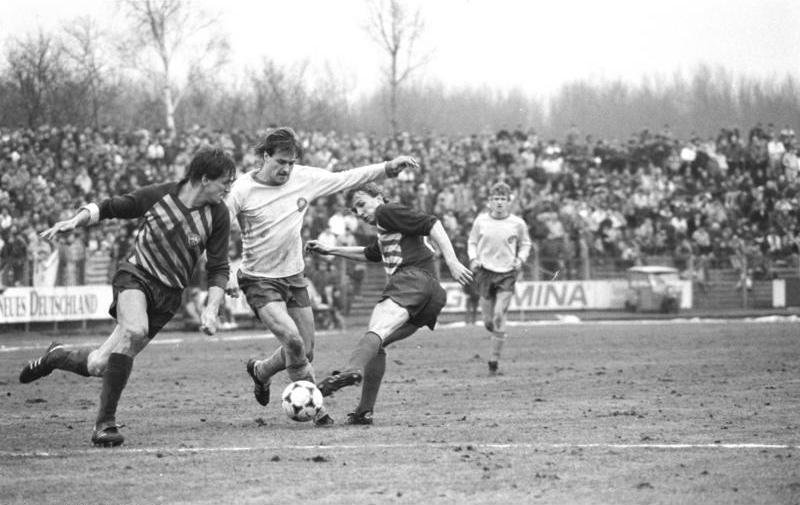
Three footballers contest the ball in a penalty area in front of a crowded terrace.
Lok Leipzig against BFC Dynamo, 22 March 1986.Photo: Bundesarchiv, Bild 183-1986-0322-026 / Wolfgang Kluge / CC BY-SA 3.0 de

1985–86 and 1987–88

Two titles came down to a whisker

In 1985–86 BFC won by two points, the season of the Leipzig penalty. In 1987–88 it finished level with Lok Leipzig and won on goal difference.

A goalkeeper dives at the feet of a forward in front of the goal.
The 1989 FDGB-Pokal final in the Stadion der Weltjugend, 1 April 1989: BFC goalkeeper Bodo Rudwaleit stops Karl-Marx-Stadt’s Hans Richter. BFC won 1–0.Photo: Bundesarchiv, Bild 183-1989-0401-014 / Bernd Settnik / CC BY-SA 3.0 de

1988–89 – 1990–91

After the run

Second in 1988–89, with the cup. Fourth in 1989–90, the season the club became FC Berlin. Eleventh in the last season of the league.

02Leipzig, 22 March 1986

A penalty in the last seconds, and a protest from inside the party

Lok Leipzig, who would finish second, met BFC in Leipzig on 22 March 1986. The game ended 1–1. BFC’s goal was a penalty given in stoppage time, which the Stasi archive’s own commentary calls one “felt to be unjustified”.

This time the anger reached the party. Helmut Hackenberg, second secretary of the SED in Leipzig, sent a written protest to the party headquarters in East Berlin. The referee was suspended and the football association’s referees’ commission dismissed, according to the archive. The referee, Bernd Stumpf, was removed by the association’s presidium a week later, taz reported in 1996. No published file shows that he acted on instructions.

The game that became the scandal did not decide the title. Had Leipzig won, both clubs would have finished on 33 points, and BFC would still have been champion on goal difference.

Three footballers contest the ball in a penalty area in front of a crowded terrace.
Lok Leipzig against BFC Dynamo in Leipzig, 22 March 1986: Leipzig’s Hans Richter between BFC’s Frank Rohde (left) and Heiko Brestrich in the Berlin penalty area.Photo: Bundesarchiv, Bild 183-1986-0322-026 / Wolfgang Kluge / CC BY-SA 3.0 de

03Normannenstraße

The ministry paid for the club. What it did with the referees is still argued over

The Stasi backed BFC with staff, organisation and money, the Federal Archives says, and 96 per cent of its 7,260 supporting members belonged to the ministry. Hanns Leske’s study of Mielke and East German football, published in 2004, describes players and whole teams moved to suit the club.

The referees are harder. Many fans suspected Stasi influence and blamed obvious bad decisions on it, the archive notes. It also records that referees needed the ministry’s approval to travel if they wanted to officiate international games, which made them dependent on the MfS.

In 2006 the taz reported a finding by the Berliner Zeitung: of the ten referees who most often took BFC’s games, seven were Stasi officers or unofficial collaborators. Being on the books is not the same as fixing a game: the archive itself speaks of suspicion, not proof.

A wood-panelled office with a large desk, a conference table and chairs.
Erich Mielke’s office in Haus 1, kept as it was, in the Stasimuseum. Photographed in 2012.Photo: Anagoria, 2012. Wikimedia Commons. CC BY 3.0.

Supporting members of BFC Dynamo

96per cent Stasi
StasiothersEach square: about 73 members

The ten referees who most often took BFC’s games

7 of 10

Filled: Stasi officers or unofficial collaborators. Berliner Zeitung research, as reported by the taz, 16 January 2006.

Inside the club’s structure

31 Interior Ministry staff and 10 Stasi staff in official posts8 unofficial collaborators and 7 officers on special assignment in the records

04Berlin-Mitte, 9 December 1979

The Stasi kept the handwriting of fans who mocked its club

On 9 December 1979 BFC beat 1. FC Union 2–0 in the Berlin derby, in front of 20,000 at the Stadion der Weltjugend. That night eight small cards reading “Scheiss BFC” were found in the street in Friedrichshain, a few hundred metres from the ministry.

An unofficial collaborator handed them in. The Stasi sent them on the next day for a handwriting sample and storage, and filed them. For the ministry, the Federal Archives’ historian says, protests against its club were highly sensitive.

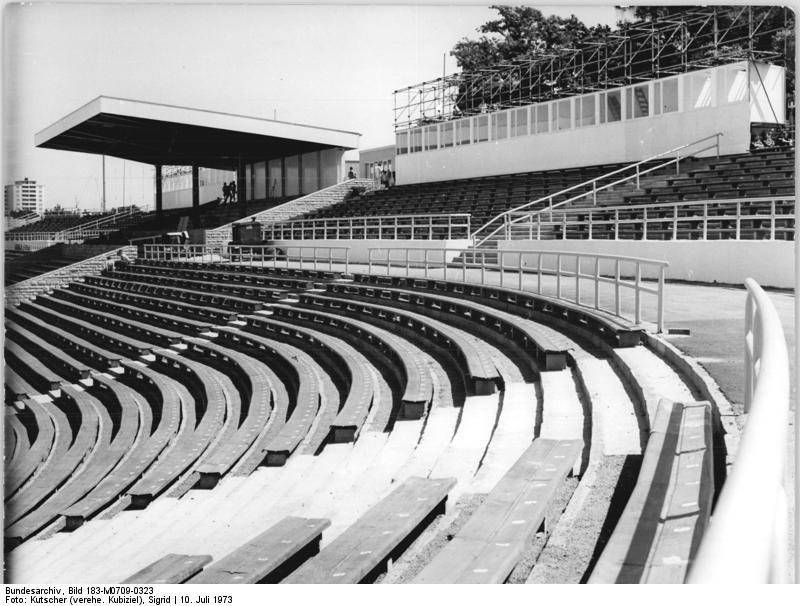
An oval stadium seen from above, with a running track and floodlight masts.
The Stadion der Weltjugend in Berlin-Mitte, newly rebuilt in 1973. BFC played the 1979 derby against Union here.Photo: Bundesarchiv, Bild 183-M0709-0323 / Kutscher / CC BY-SA 3.0 de
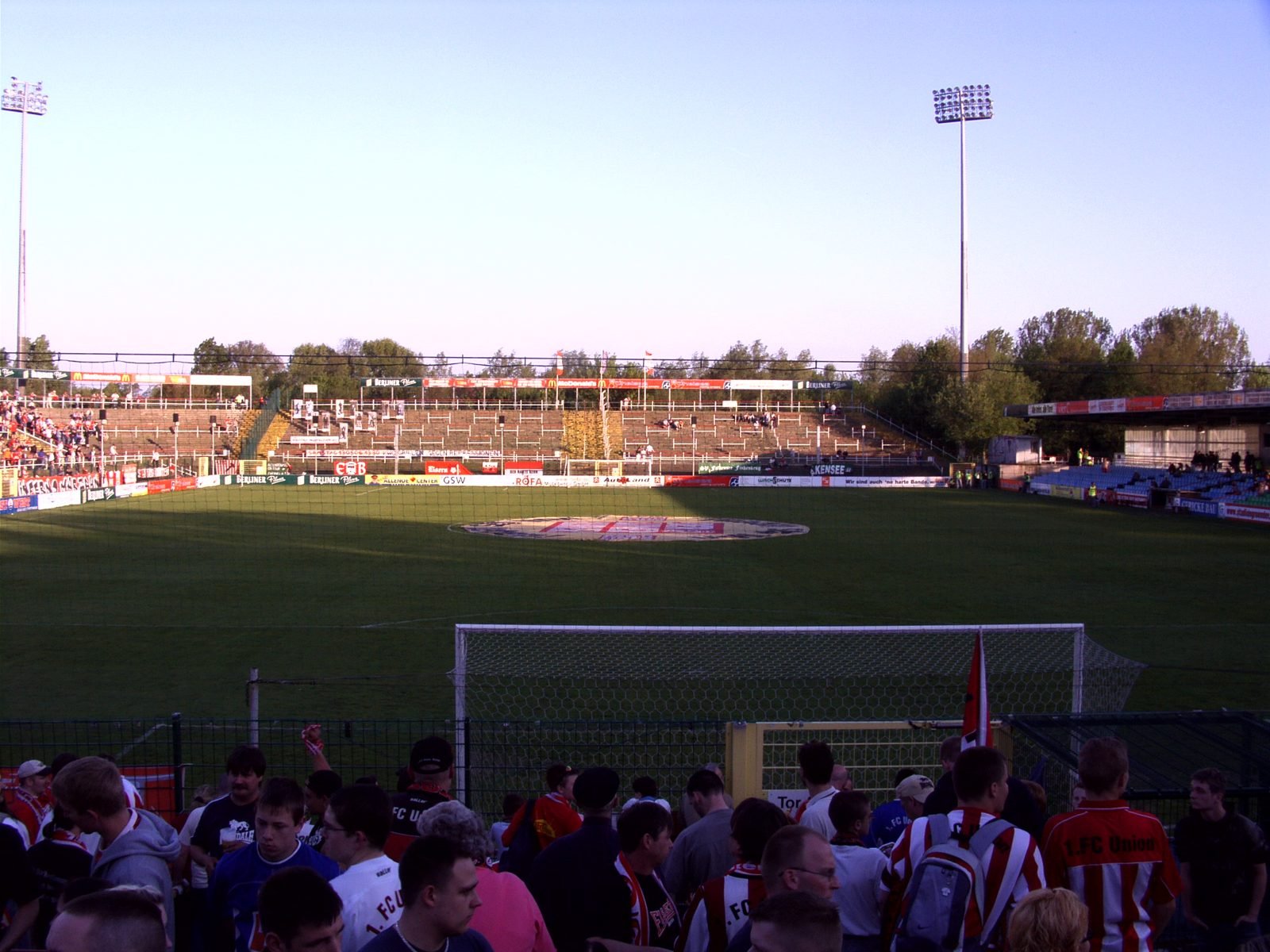
A football ground with steep standing terraces under trees.
The Stadion An der Alten Försterei in Köpenick, home of 1. FC Union Berlin, in 2006.Photo: Christian Liebscher (Platte), 2006. Wikimedia Commons. CC BY-SA 3.0.

051989–1991

The run ended before the state did

Dresden took the title back in 1988–89. BFC won the cup in 1988 and 1989, its last trophies. On 7 December 1989 Erich Mielke was arrested. In February 1990 the club dropped the name Dynamo and became FC Berlin. It finished fourth that season and eleventh in the last one.

The conviction, when it came, was for something else. In 1993 a Berlin court sentenced him to six years for the killing of two police officers in 1931.

Three players rise for a header in front of a packed stand.
The 1988 FDGB-Pokal final in the Stadion der Weltjugend, 4 June 1988: BFC beat FC Carl Zeiss Jena 2–0 after extra time.Photo: Bundesarchiv, Bild 183-1988-0604-010 / Klaus Oberst / CC BY-SA 3.0 de

Ten titles in a row for the minister’s club, and seven of its ten most frequent referees on the Stasi’s books.

Press & citation

Use this Berlinfographic

Free to publish under CC BY 4.0 — in print, online, on Wikipedia and in teaching, commercially or not — with credit to Berlinfographics and a link to this page.

BFC Dynamo: the Stasi minister’s club, 1979–88: ready-to-use landscape image

Ready-to-use image

The infographic as one image: headline, key figures, chart, sources and credit, 2,400 × 1,350 px PNG. Please use it unedited.

Download landscape (PNG)
BFC Dynamo: the Stasi minister’s club, 1979–88: square version

Square format

A 1:1 version for social media and narrow columns, 1,800 × 1,800 px.

Download square (PNG)
BFC Dynamo: the Stasi minister’s club, 1979–88: portrait version

Portrait 4:5

For Instagram and LinkedIn feeds, 1,620 × 2,025 px.

Download portrait (PNG)

Credit line

Berlinfographics (berlinfographics.com), CC BY 4.0

Citation

Berlinfographics (2026). “BFC Dynamo: the Stasi minister’s club, 1979–88”. Berlin Experiences. https://berlinfographics.com/bfc-dynamo-stasi-football/

Wikipedia

{{cite web |title=BFC Dynamo: the Stasi minister’s club, 1979–88 |url=https://berlinfographics.com/bfc-dynamo-stasi-football/ |website=Berlinfographics |publisher=Berlin Experiences |date=2026-11-09 |access-date=2026-11-09}}