Berlinfographicsby Berlin ExperiencesReunified Germany · Bonn and Berlin · 1991–2025
The Reichstag building, seat of the Bundestag since 1999, west front with the glass dome, October 2006.Luukas, 2006. Wikimedia Commons. Public domain.
Bonn · Berlin
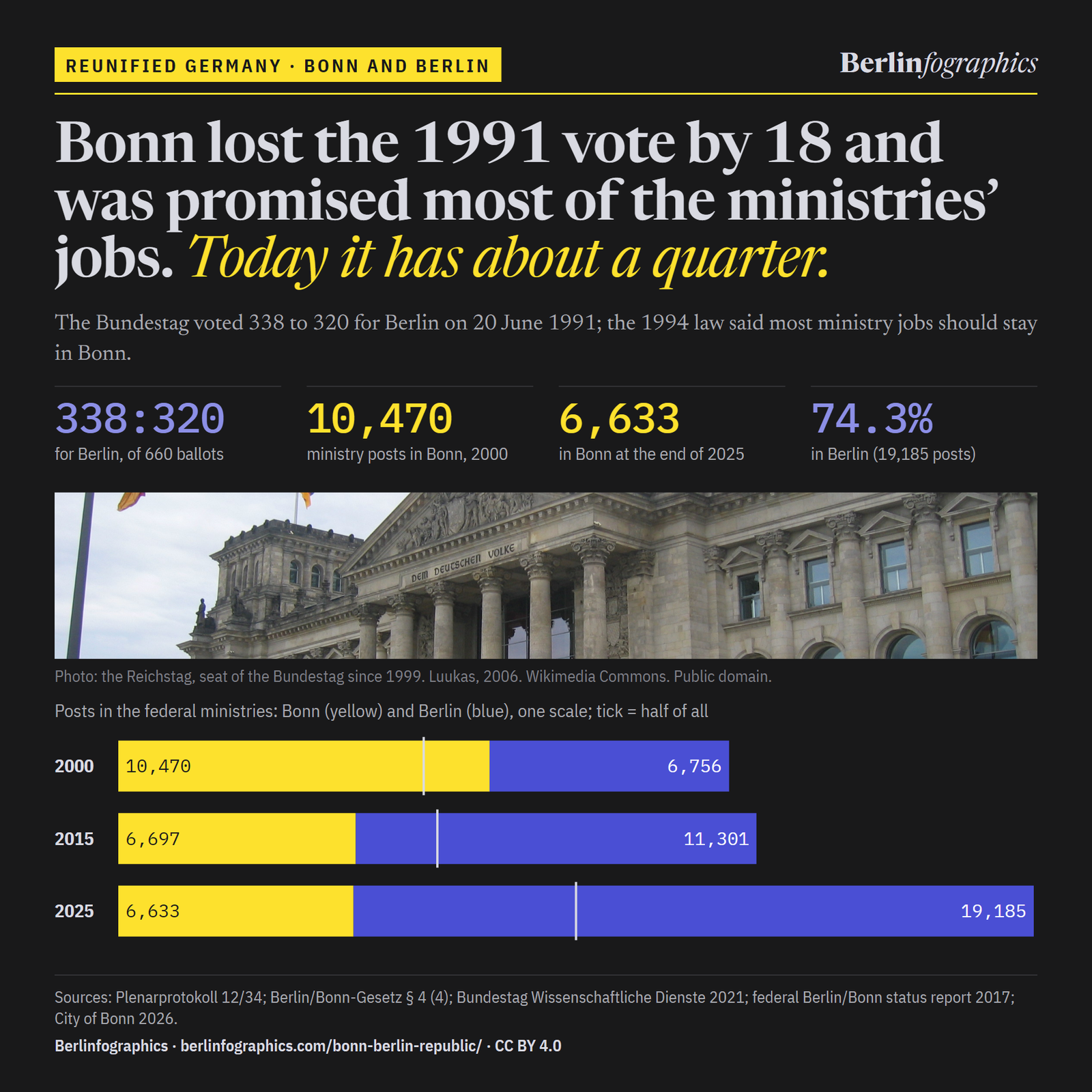
Bonn lost the 1991 vote by 18 and was promised most of the ministries’ jobs. Today it has about a quarter.
Berlin was already Germany’s capital. On 20 June 1991 the Bundestag decided that parliament and government would follow, and a law of 1994 said that the greater part of the ministries’ jobs should stay on the Rhine. Nine years after the move, Berlin had the majority.
338 : 320
for Berlin, 20 June 1991
660
ballots cast, after a sitting of almost twelve hours
5,299
workplaces moved by the Bundestag, July 1999
74.3%
of ministry posts in Berlin at the end of 2025
01The question
The capital was never the question
In 1949 the first Bundestag confirmed Bonn as the provisional seat of the federal institutions. It also resolved that they should move to Berlin once democratic elections had been held across the city and the Soviet zone.
The Unification Treaty settled half the matter and postponed the other half. Its second article reads: “Hauptstadt Deutschlands ist Berlin. Die Frage des Sitzes von Parlament und Regierung wird nach der Herstellung der Einheit Deutschlands entschieden.” Berlin, in other words, became the capital on 3 October 1990. What the Bundestag still had to decide was where it would sit, and where the government would sit.
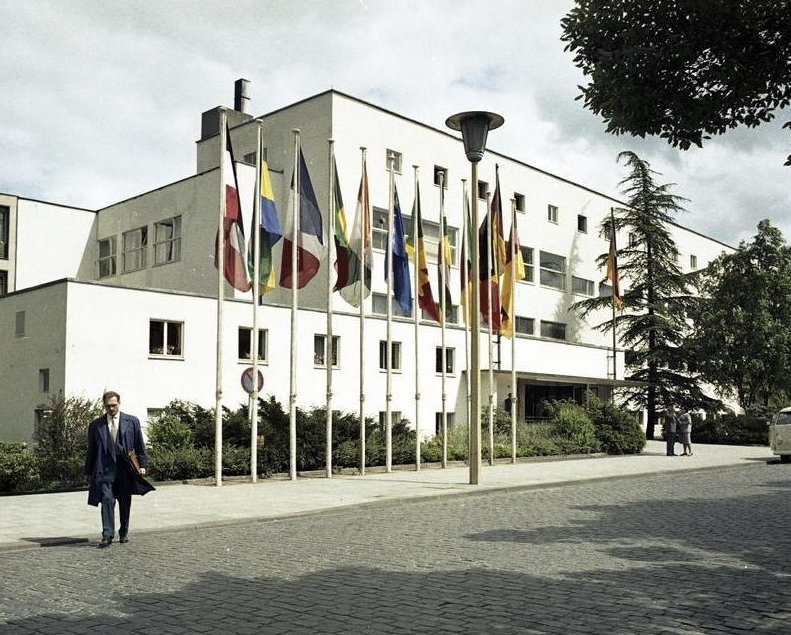
The Bundeshaus in Bonn, seat of the West German parliament, with flags, 6 May 1961.Bundesarchiv, B 145 Bild-F010479-0006 / CC-BY-SA 3.0
02The vote
660 ballots, eighteen apart
The debate ran from 10.00 in the morning until the evening. Party discipline played no part: members voted as individuals, and 107 speeches were made. Each square below is one ballot.
Every ballot, 20 June 1991
Berlin motionBonn motionabstainedinvalid
The old waterworks in Bonn’s government quarter, 2012. Converted into a stand-in chamber, it was where the Bundestag sat from September 1986, and where it voted on 20 June 1991.Hans Weingartz, 2012. Wikimedia Commons. CC BY-SA 3.0 de.
20 June 1991, from 10.00
A vote held in a waterworks
The Bundestag had sat in Bonn’s converted waterworks since 9 September 1986. That day it had five motions on the seat of parliament and government before it. Half of the ballots cast would be 330.
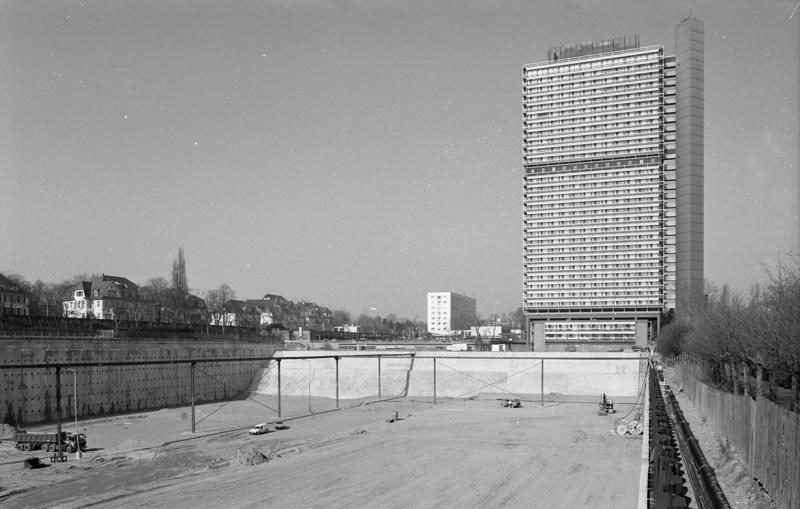
The building site of the Bundestag’s new Bonn chamber, 14 March 1991, with the MPs’ high-rise, the Langer Eugen, behind it. The archive caption reads: “Baustelle für den Bundestag in der Gronau”.Bundesarchiv, B 145 Bild-F087443-0012 / Reineke, Engelbert / CC-BY-SA 3.0
The Bonn motion
320 for staying
The Bonn motion, titled “Bundesstaatslösung”, would have kept parliament and government on the Rhine. Bonn was still building its new chamber. 320 members voted for it.
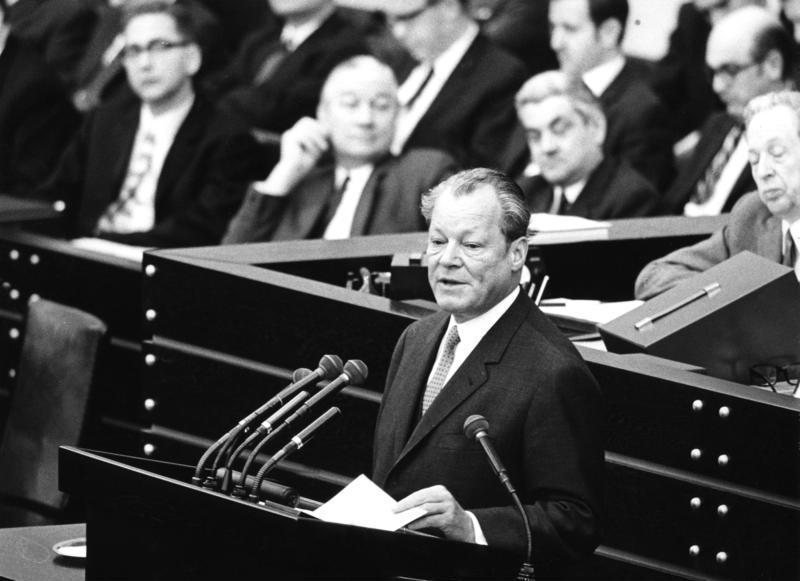
Willy Brandt speaks in the Bundestag in Bonn, 28 January 1971. Twenty years later he was among the signatories of the Berlin motion.Bundesarchiv, B 145 Bild-F033246-0009 / Wegmann, Ludwig / CC BY-SA 3.0 de
The Berlin motion
338 for Berlin
The Berlin motion, “Vollendung der Einheit Deutschlands”, was signed by Willy Brandt and Wolfgang Schäuble, among others. It promised Bonn a “fair division of labour”. 338 members voted for it.
Helmut Kohl, photographed in 1996. On 20 June 1991, as chancellor, he voted for Berlin.Christian Lambiotte, 1996. Wikimedia Commons. CC BY 4.0.
The margin
eight ballots past half
Berlin won by 18 votes over Bonn, but only eight past half of the ballots cast. Helmut Kohl’s name stands in the final list of Yes votes for the Berlin motion.
The first count
Announced: 337
The president of the Bundestag first announced 337 votes for Berlin, 320 for Bonn and two abstentions, with 659 valid ballots.
The final count · sitting closed 21.49
Final: 338 to 320
The final result in the record gives Berlin 338, with one abstention and one invalid ballot. The sitting had lasted 11 hours 49 minutes.
03The law
A law that said “should”
The Berlin/Bonn Act was passed by the Bundestag on 10 March 1994, signed on 26 April 1994 (BGBl. I S. 918) and in force from 7 May 1994. It made Berlin the seat of both parliament and government, and called Bonn the Bundesstadt, the federal city. Every ministry was to keep an office in both cities. The jobs were dealt with in section 4:
“Die Entscheidungen nach den Absätzen 1 bis 3 sollen so gestaltet werden, daß insgesamt der größte Teil der Arbeitsplätze der Bundesministerien in der Bundesstadt Bonn erhalten bleibt.”
The decisions under paragraphs 1 to 3 should be made in such a way that, overall, the greater part of the jobs in the federal ministries remains in the federal city of Bonn.
Berlin/Bonn-Gesetz, § 4 (4)
Sollen means “should”, not “must”. In 2008 Bonn’s share of the ministries’ jobs fell below half. The federal government’s own status report later concluded: “Diese Erwartung des Gesetzgebers hat sich nicht erfüllt.” (“The legislator’s expectation has not been fulfilled.”) Total costs, including Bonn’s compensation, were capped at DM 20 billion, and DM 16 billion of that was for the move itself.
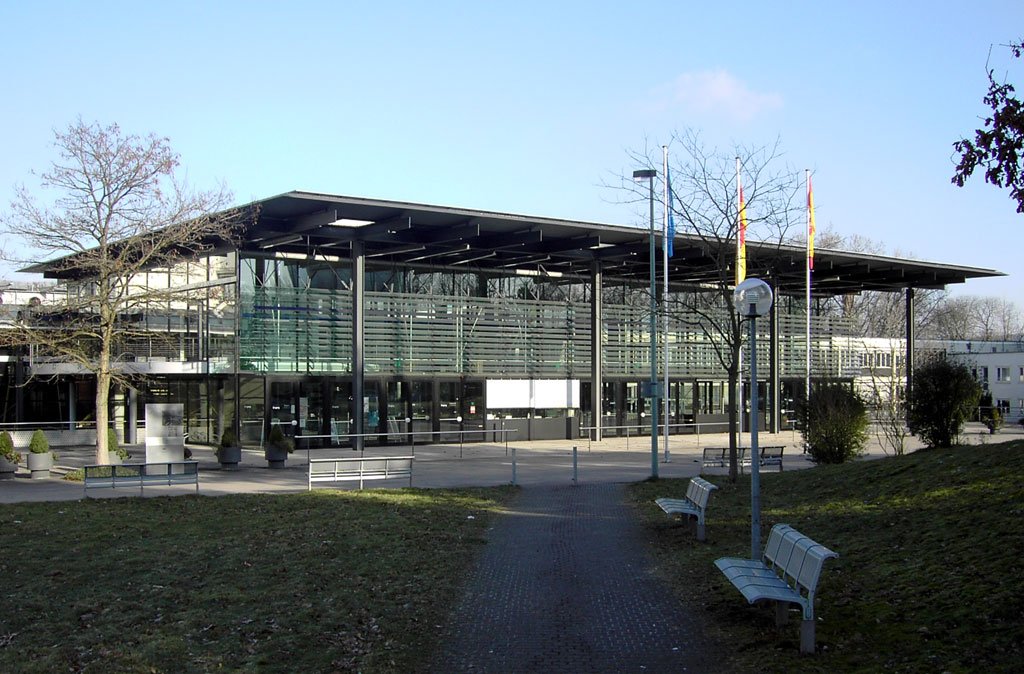
The new Bonn plenary building, photographed in 2005. It opened on 30 October 1992, more than a year after the vote to leave, and the Bundestag sat in it until July 1999.Qualle, 2005. Wikimedia Commons. CC BY-SA 3.0.
04The move
24 trains in four weeks
Between 5 and 31 July 1999 the Bundestag moved to Berlin: 24 trains of furniture, files and books in four weeks.
5,299
workplaces
~150,000
pieces of furniture
38 km
of books
11 km
of files
Books, laid end to end38 km
Files, laid end to end11 km
Both bars on one scale, at their true length.
Berlin’s government quarter in the bend of the Spree from the air, 2009: the Chancellery, the Reichstag and the Bundestag’s new office buildings.Benjamin Janecke, 2009. Wikimedia Commons. CC BY-SA 3.0.
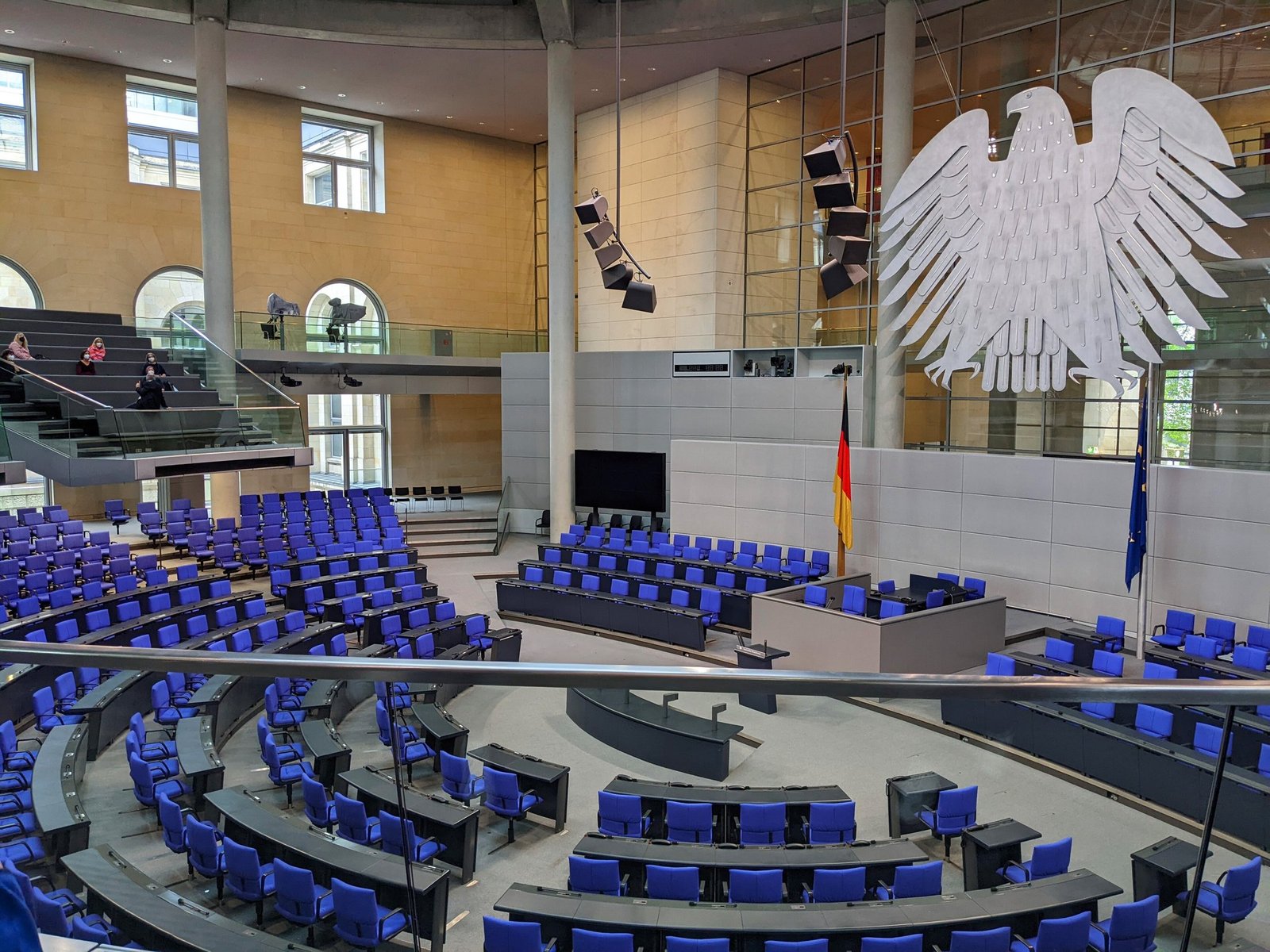
The Bundestag’s plenary chamber in the Reichstag building, Berlin, April 2022, under the federal eagle.Gerd Eichmann, 2022. Wikimedia Commons. CC BY 4.0.
05The slide
Bonn kept its posts for a while. Berlin’s nearly tripled
The count is of posts in the federal ministries, the measure the government’s own reports use. All three years are drawn on one scale. The tick on each bar marks half of that year’s total, the line the law hoped Bonn would stay above.
Posts in the federal ministries, by city
BonnBerlinhalf of all posts
The Bundeshaus in Bonn, seat of the West German parliament, with flags, 6 May 1961.Bundesarchiv, B 145 Bild-F010479-0006 / CC-BY-SA 3.0
2000
Bonn 10,470, Berlin 6,756
A year after the move, the law’s hope held. Bonn had 10,470 ministry posts and Berlin 6,756.
2008
The majority tips
In 2008 Bonn’s share fell below half. Officials called the steady drift of posts to Berlin the Rutschbahneffekt, the slide effect.
2015
Berlin 11,301, Bonn 6,697
By the end of 2015 Berlin held 62.8% of the posts. Bonn’s count had fallen by 3,773 since 2000.
Berlin’s government quarter in the bend of the Spree from the air, 2009: the Chancellery, the Reichstag and the Bundestag’s new office buildings.Benjamin Janecke, 2009. Wikimedia Commons. CC BY-SA 3.0.
2025
Berlin 19,185, Bonn 6,633
At the end of 2025 Berlin had 19,185 posts and Bonn 6,633. Bonn has about a quarter: 25.7%.
2000 → 2025
Berlin grew. Bonn held still
Since 2015 Bonn has lost only 64 posts, while Berlin gained 7,884. Berlin’s count is now 2.8 times what it was in 2000.
06What Bonn kept
Six ministries, and the United Nations
Six federal ministries still have their first seat in Bonn, and ten others a second one. Between 1994 and 2004 about €1.437 billion of compensation went into 90 projects in the Bonn region. The city now hosts more than 25 United Nations institutions and about 150 non-governmental organisations.
Two seats cost money. The government’s report put the bill for 2025 at about €10.3 million. Business travel between the cities, its largest item, rose by just over 15 per cent to €5.9 million.
The building site of the Bundestag’s new Bonn chamber, 14 March 1991, with the MPs’ high-rise, the Langer Eugen, behind it. The archive caption reads: “Baustelle für den Bundestag in der Gronau”.Bundesarchiv, B 145 Bild-F087443-0012 / Reineke, Engelbert / CC-BY-SA 3.0
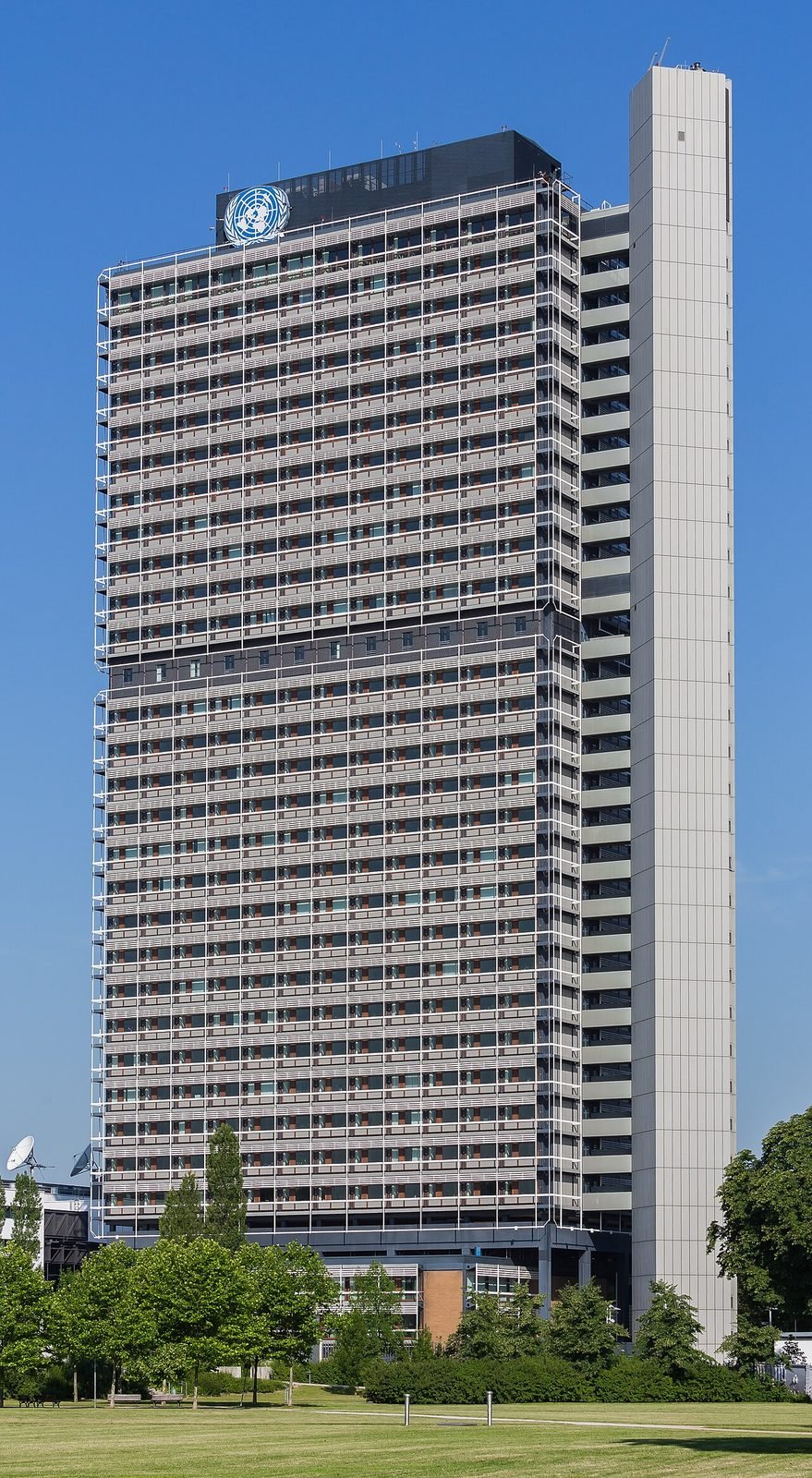
The Langer Eugen in 2014. Built as the MPs’ high-rise, it was handed to the United Nations on 11 July 2006, and the UN campus grew around it.Eckhard Henkel, 2014. Wikimedia Commons. CC BY-SA 3.0 de.
07A capital, not a centre
The courts and the central bank were never in the bargain
The 1991 vote moved the parliament and the government. Germany’s top courts and its central bank sit where federal statutes put them, away from the capital. In May 1992 a federal–state commission recommended moving one court out of Berlin, into the east.
Distance from Berlin, as the crow flies
Each dot sits at its true great-circle distance from Berlin, measured between OpenStreetMap city points and rounded to the kilometre. The labels are spread out so they can be read; their leader lines lead back to the true position.
Leipzig
148 km from Berlin · Federal Administrative Court
The Federal Administrative Court left Berlin on 26 August 2002 for the former Reichsgericht building.
The former Reichsgericht in Leipzig, home of the Federal Administrative Court since 2002, photographed in 2010. Photo: Andreas Praefcke, 2010. Wikimedia Commons. CC BY 3.0.
Erfurt
236 km from Berlin · Federal Labour Court
The Federal Labour Court moved here from Kassel; its first working day in Erfurt was 22 November 1999.
The Federal Labour Court in Erfurt, built 1996–99, photographed in 2005. Christoph Hoffmann, 2005. Wikimedia Commons. CC BY-SA 2.0 de.
Kassel
299 km from Berlin · Federal Social Court
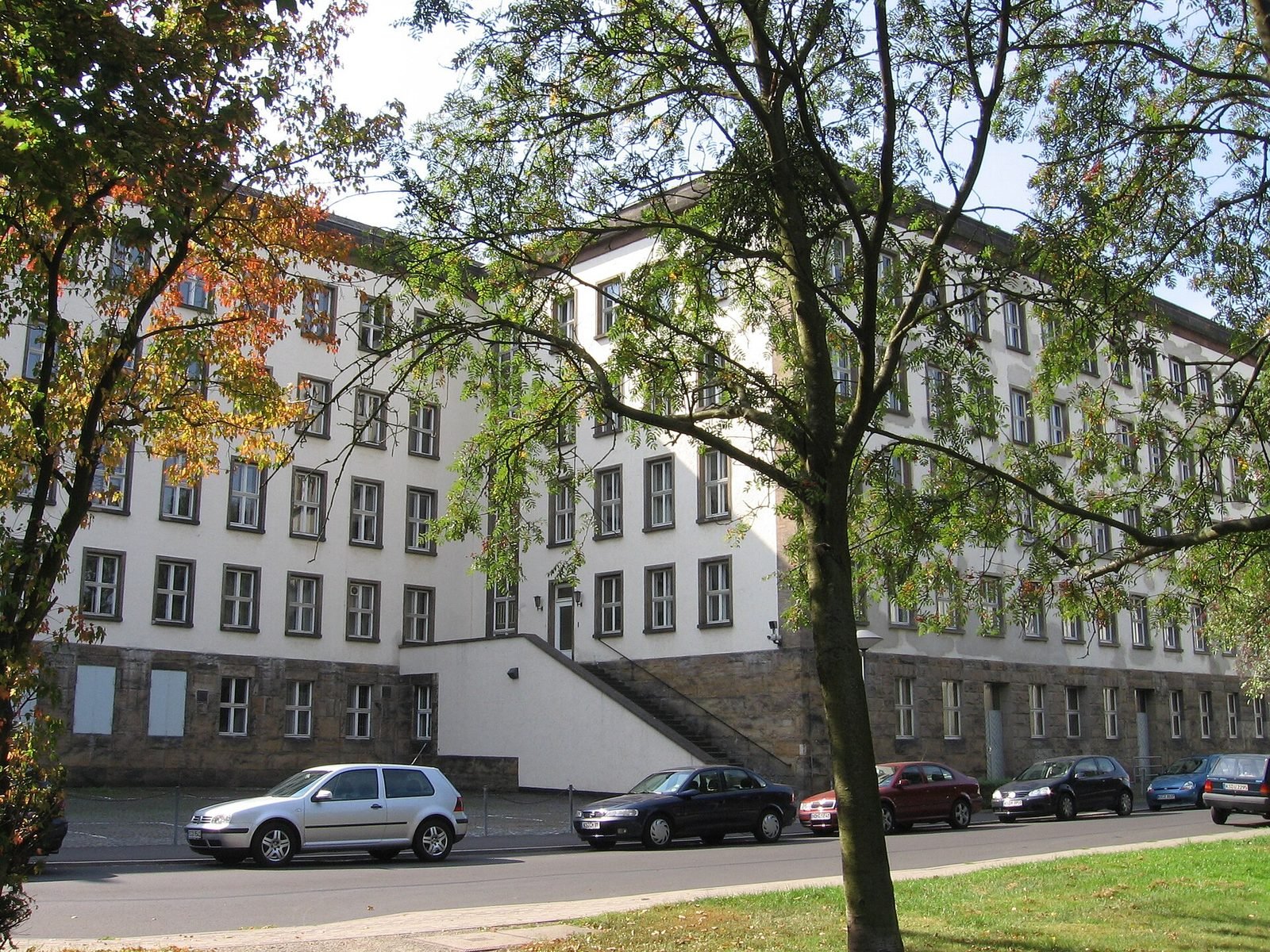
The Federal Social Court opened on 11 September 1954.
The Federal Social Court in Kassel, north side, 2006. Peter Schlömer, 2006. Wikimedia Commons. CC BY 2.5.
Frankfurt am Main
423 km from Berlin · Deutsche Bundesbank
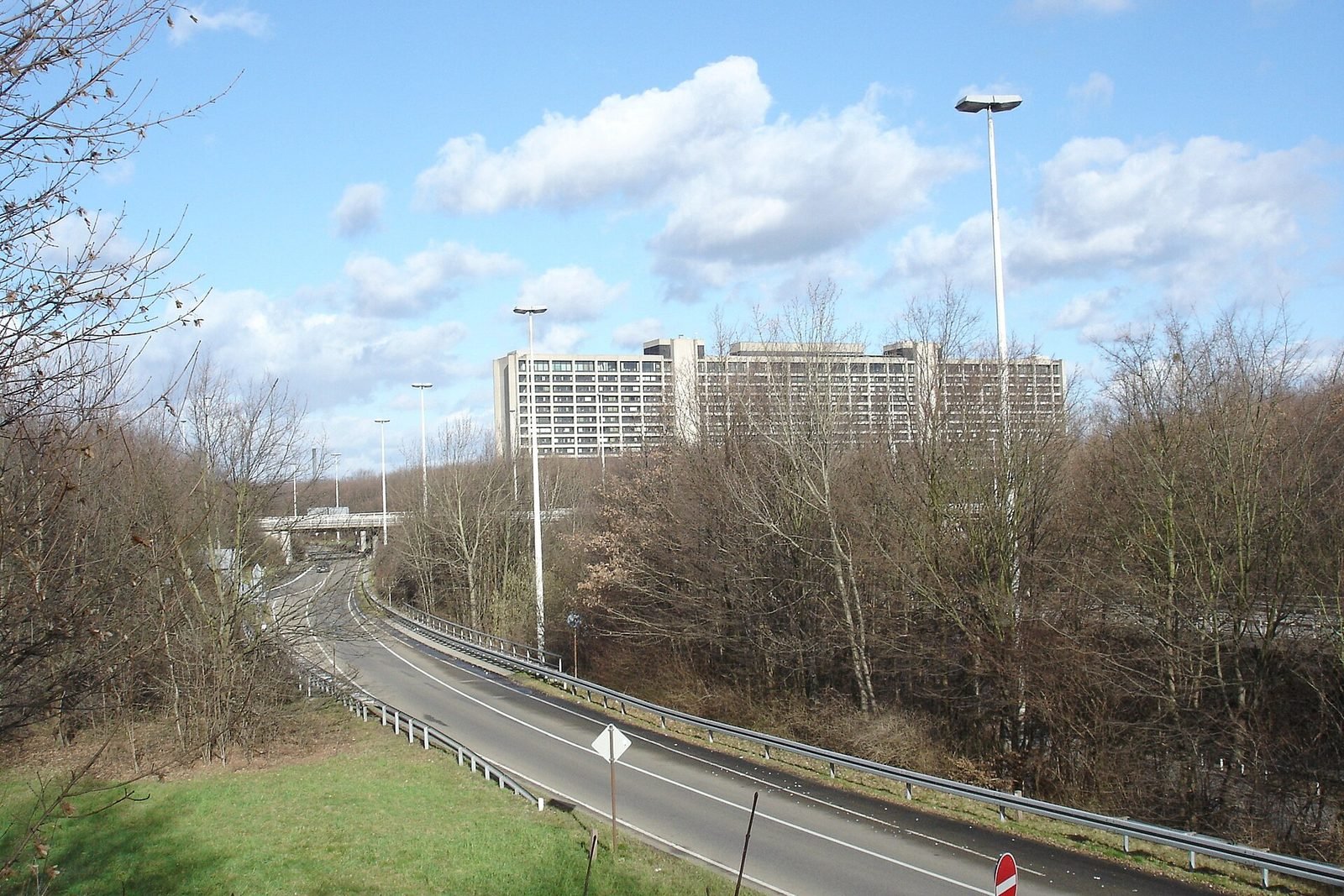
The Deutsche Bundesbank replaced the Bank deutscher Länder on 1 August 1957. Its seat is Frankfurt by law.
The Bundesbank’s headquarters in Frankfurt am Main, the long slab on the horizon, 2007. dontworry, 2007. Wikimedia Commons. CC BY-SA 3.0.
Karlsruhe
525 km from Berlin · Federal Constitutional Court and Federal Court of Justice
The Federal Constitutional Court opened on 28 September 1951. The Federal Court of Justice sits here too. Both seats are fixed in statute.
The Federal Constitutional Court, Karlsruhe, at dusk, 2015. Baden de, 2015. Wikimedia Commons. CC BY 3.0.
The Federal Court of Justice in Karlsruhe, in the former Erbgroßherzogliches Palais, 2012. Photo: Andreas Praefcke, 2012. Wikimedia Commons. CC BY 3.0.
The law could say where the ministries sat. On their jobs it could only say “should”, and from 2008 the greater part of them sat in Berlin.
Free to publish under CC BY 4.0 — in print, online, on Wikipedia and in teaching, commercially or not — with credit to Berlinfographics and a link to this page.
Ready-to-use image
The infographic as one image: headline, key figures, chart, sources and credit, 2,400 × 1,350 px PNG. Please use it unedited.
Berlinfographics (berlinfographics.com), CC BY 4.0
Citation
Berlinfographics (2026). “Bonn, Berlin and the distributed republic”. Berlin Experiences. https://berlinfographics.com/bonn-berlin-republic/
Wikipedia
{{cite web |title=Bonn, Berlin and the distributed republic |url=https://berlinfographics.com/bonn-berlin-republic/ |website=Berlinfographics |publisher=Berlin Experiences |date=2026-11-09 |access-date=2026-11-09}}
Every figure comes from the sources listed above; tap any underlined figure in the story to see its source.
Photographs in the story and in the ready-to-use images are not ours and keep the licences named in their captions and credits — keep those credits when you republish. The CC BY 4.0 licence covers our infographics, charts, texts and design.
Our infographics, charts and texts are licensed CC BY 4.0: free to republish, including commercially, with credit to Berlinfographics and a link. Photographs keep their own licences, named in each caption. How to credit