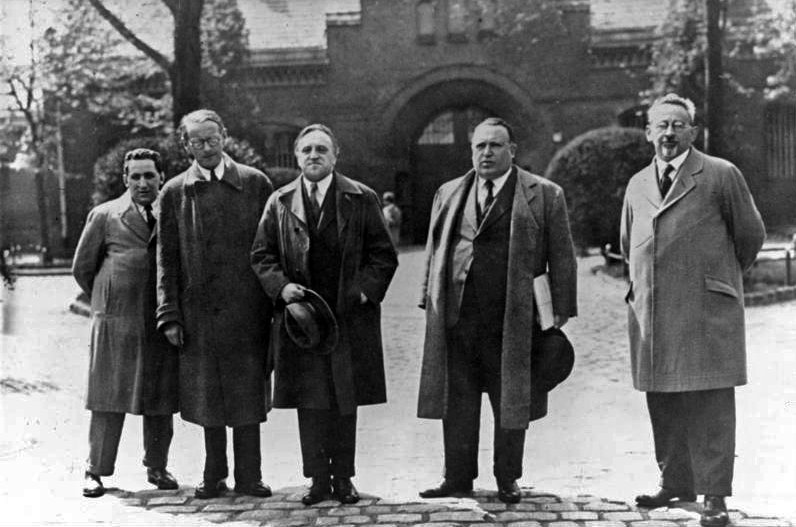
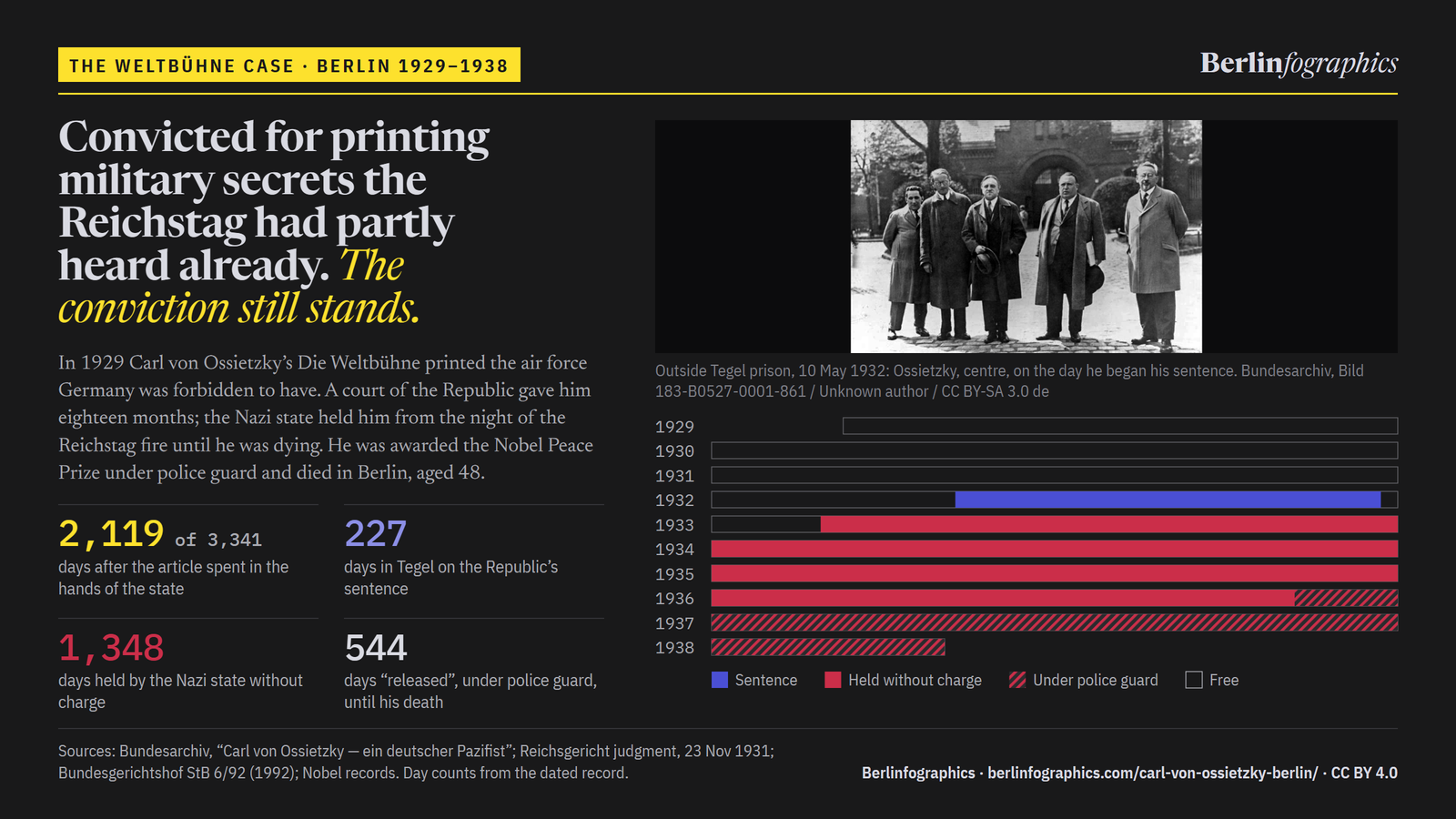
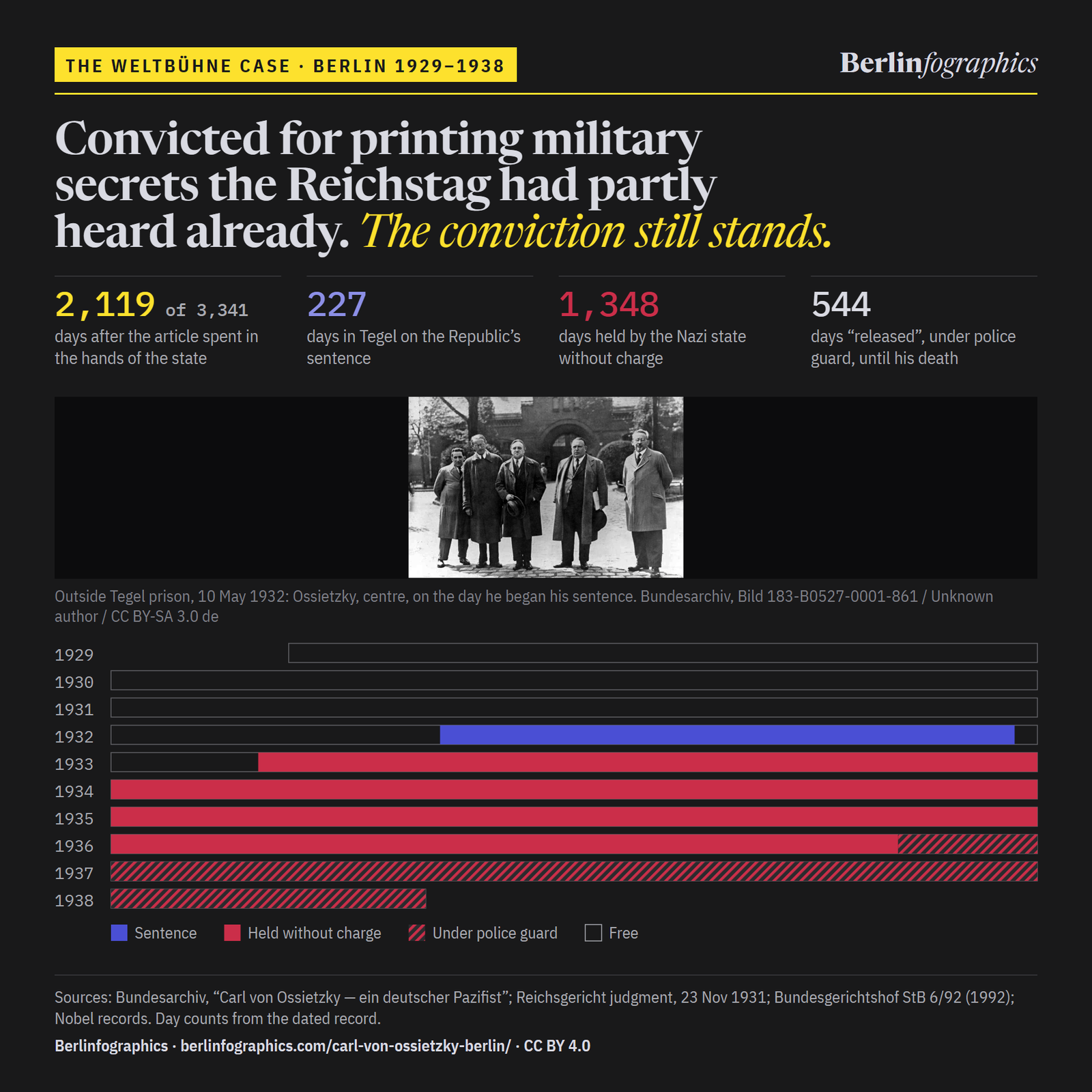
Outside Tegel prison, Berlin, 10 May 1932, the day Carl von Ossietzky (centre, hat in hand) began his sentence. From left: Kurt Grossmann and Rudolf Olden of the German League for Human Rights, Ossietzky, and the lawyers Alfred Apfel and Kurt Rosenfeld (names as in the archive’s original caption).Photo: Bundesarchiv, Bild 183-B0527-0001-861 / Unknown author / CC BY-SA 3.0 de
The Weltbühne case · Berlin 1929–1938
Carl von Ossietzky edited Die Weltbühne from Kantstraße in Charlottenburg. On 12 March 1929 the paper carried an article on the air force Germany was forbidden to have and was building anyway. The Reichsgericht tried him behind closed doors and gave him eighteen months. He was arrested again on the night of the Reichstag fire, was awarded the Nobel Peace Prize while under police guard, and died in a Berlin hospital on 4 May 1938 of tuberculosis he contracted in a concentration camp. Twice since reunification, German courts have refused to reopen the case.
01Kantstraße, Charlottenburg
What Die Weltbühne was. A weekly of politics, art and economics, published in Berlin and read far beyond it. Ossietzky began writing its lead articles in 1926 and took over as its editor in May 1927, after the death of its founder. It printed Kurt Tucholsky, Erich Mühsam and Ossietzky himself, and it was the sharpest critical voice of the Weimar Republic. It was banned in 1933.
On 12 March 1929 it carried the article that ended his freedom. Under the name Heinz Jäger, the aviation journalist Walter Kreiser described a secret department of the Reichswehr that was building military aircraft and training pilots abroad — an air force the Treaty of Versailles forbade Germany to have. Ossietzky published it and never disputed that he was responsible for it.
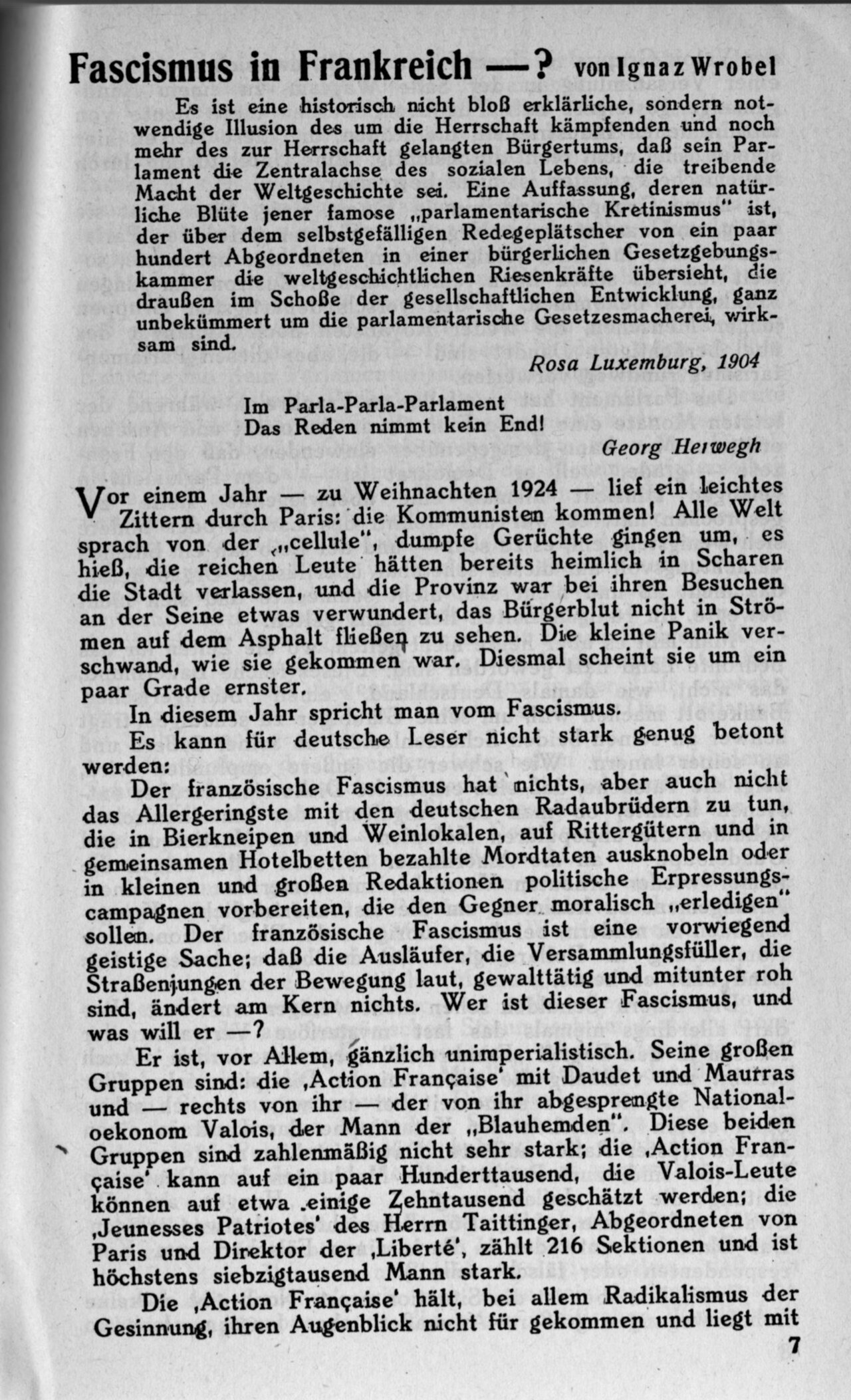
Four numbers of one weekly. A small paper of dense type with no pictures, arguing at length, week after week, with the government of the day. One number of it — the eleventh of 1929 — was enough to convict its editor. The following number, printed while the investigation was already running, carried an essay by Ossietzky on the book trade.


02Leipzig, November 1931
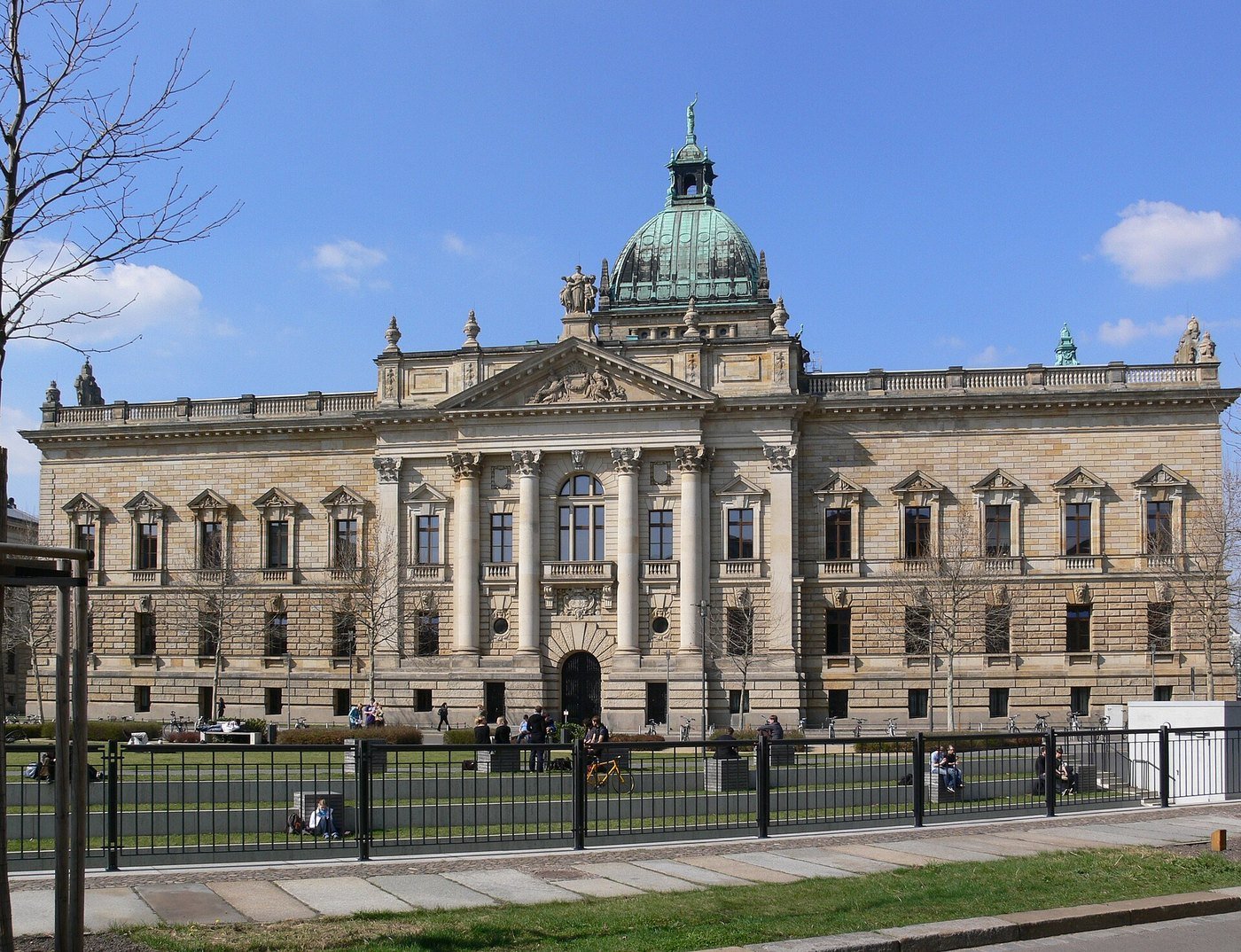
Ossietzky and Kreiser were tried for betraying military secrets, under a law of 3 June 1914 and the treason paragraph of the criminal code. The public was excluded from the courtroom. There was no jury; the senate's judges decided. On 23 November both men were sentenced to eighteen months. Kreiser left for France; Ossietzky stayed.
What he was actually accused of. Not of stealing anything, and not of being wrong. Nobody at the trial argued that the rearmament had not happened. The charge was that putting it in a magazine told a foreign power something the German state wished to keep to itself. Ossietzky's defence was that a citizen cannot commit treason by describing his own government breaking a treaty it had signed. The court did not accept it, and no German court has accepted it since.
That the article betrayed a military secret: paragraph 1, subsection 2 of the Law against the Betrayal of Military Secrets of 3 June 1914, together with the treason paragraph of the criminal code.
That part of it had already been laid before the Reichstag's budget committee at its 312th session, on 3 February 1928, and printed in the proceedings.
The Reichsgericht convicted anyway. Sixty-one years later the Bundesgerichtshof was asked again and held that the budget committee's protocol did not cover the particular matters the verdict rested on, and that the article had carried a range of others that were not public. That is why the conviction stands.
The case on a true time scale
The budget committee, the article and the verdict fall inside four years. The courts were next asked about the verdict 61 years after it was handed down.


0312 March 1929 – 4 May 1938
Between the article and his death — nine years and fifty-three days — Ossietzky was free for two stretches. The calendar below fills in as you read, one row for each year: blue for the sentence a court of the Republic gave him, red for the custody of the Nazi state, which had no charge, no term and no end.
12 March 1929
Under the name Heinz Jäger, the aviation journalist Walter Kreiser described a secret department of the Reichswehr that was building military aircraft and training pilots abroad — an air force the Treaty of Versailles forbade Germany to have. Ossietzky published it and never disputed that he was responsible for it.
17, 19, 23 November 1931
Ossietzky and Kreiser were tried for betraying military secrets, under a law of 3 June 1914 and the treason paragraph of the criminal code. The public was excluded from the courtroom. There was no jury; the senate's judges decided. On 23 November both men were sentenced to eighteen months. Kreiser left for France; Ossietzky stayed.
Fourth Criminal Senate of the Reichsgericht, Leipzig
10 May 1932
He reported to Tegel prison and served 227 days. Friends had urged him to leave the country instead.
Strafanstalt Tegel, Berlin
22 December 1932
After 227 days in Tegel, a Christmas amnesty for political prisoners released him. He did not leave Germany. He had 67 days of freedom left.
28 February 1933
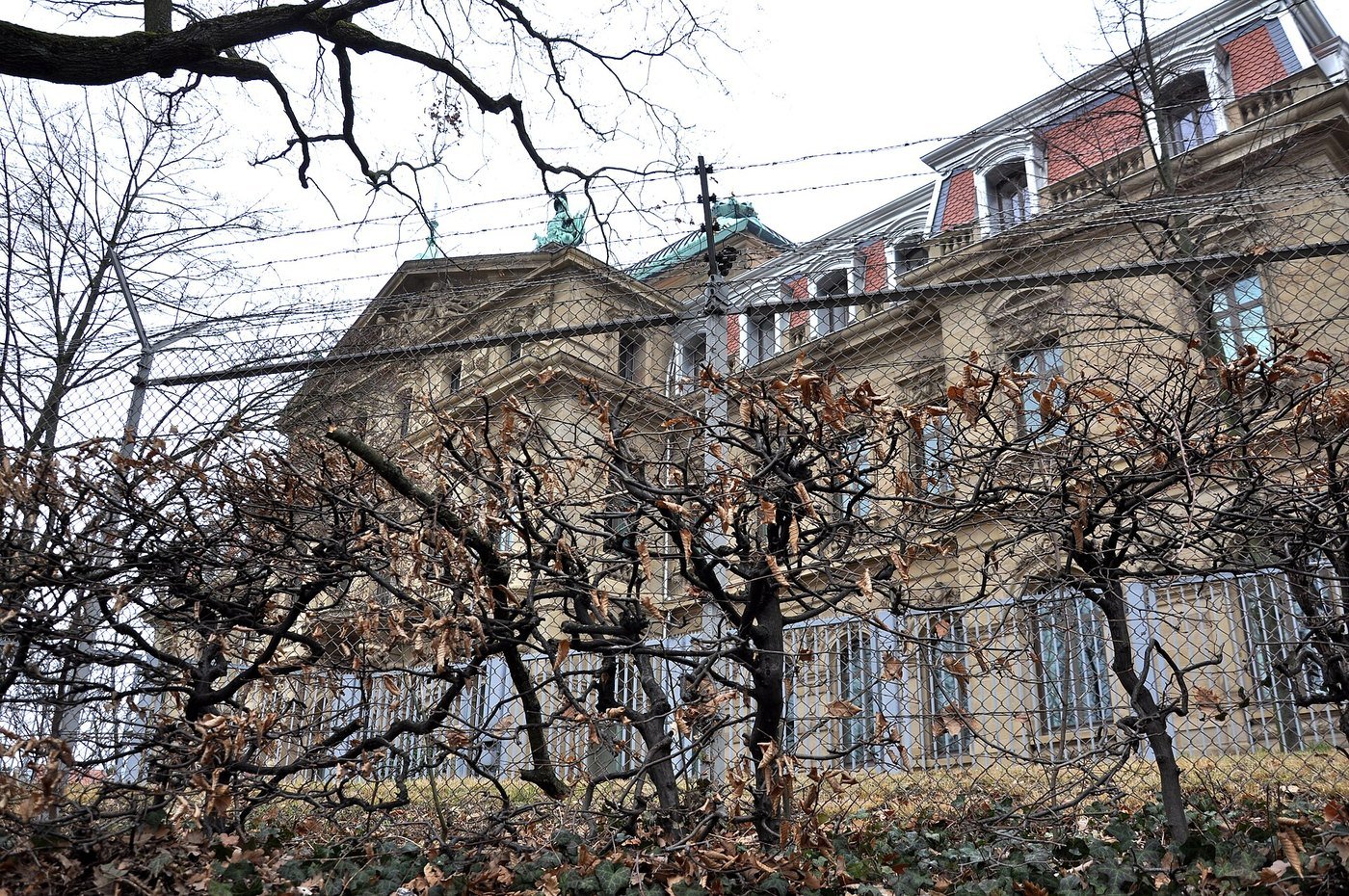
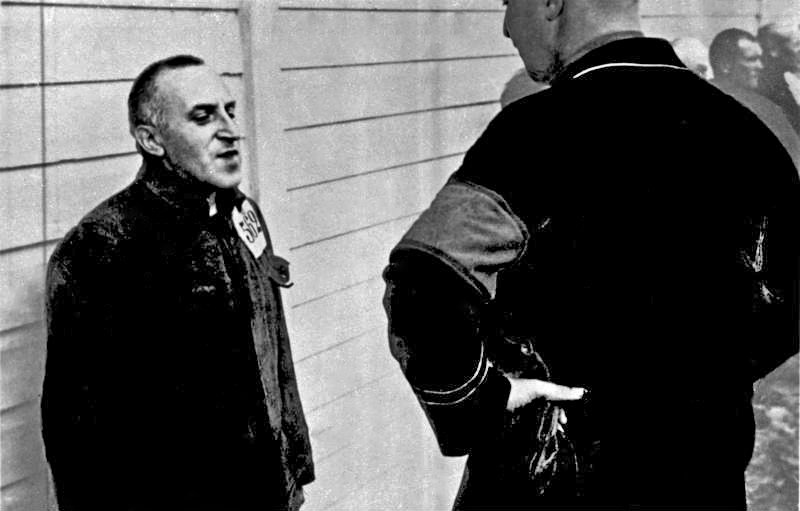
He was taken from his flat in Wilmersdorf in the small hours, in the mass arrests that followed the Reichstag fire, and held in Spandau prison. There was no charge and no court. He was never released.
6 April 1933
From Spandau to the Sonnenburg camp on 6 April 1933, then to Esterwegen in the Emsland peat bogs. He contracted tuberculosis there.
Esterwegen, 1933–36
His second imprisonment had no sentence to serve out. The calendar does not stop filling.
28 May 1936 – 7 November 1936
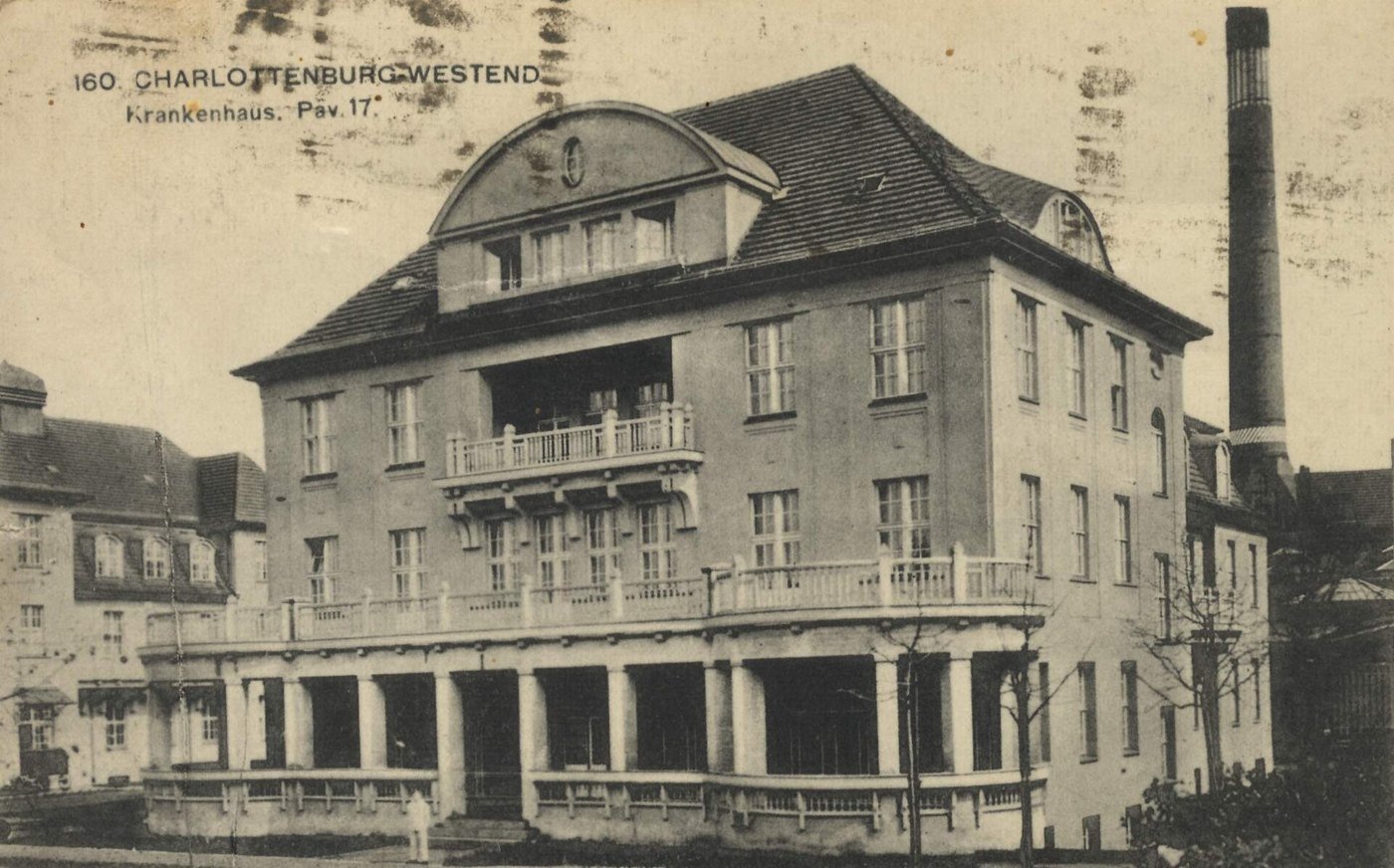
On 28 May 1936 he was moved to the state police hospital in Berlin, still in custody. On 7 November 1936 he was formally released, to Krankenhaus Westend, and kept under police guard. The custody had lasted 1,348 days.
23 November 1936
The Committee had reserved the 1935 Peace Prize rather than award it. A year later it gave that reserved prize to Ossietzky, sixteen days after the state let him out of custody. He was not allowed to travel to Oslo; at the ceremony on 10 December 1936 his place was empty.
30 January 1937
Hitler answered the award by founding a German prize of his own, and in the same decree forbade Germans to accept a Nobel Prize “for all time to come”. The ban held until 1945: Richard Kuhn in 1938 and Gerhard Domagk in 1939 both had to decline.
7 March 1938
The prize money was 100,000 Reichsmark. A Berlin lawyer, Kurt Wannow, who held his power of attorney, collected it and kept almost all of it. Ossietzky gave evidence against him in the Moabit courthouse on 7 March 1938, eight weeks before he died. Wannow was convicted and sentenced to two years.
4 May 1938
He died of tuberculosis and the effects of his imprisonment, aged 48, still under guard.
Krankenhaus Nordend, Berlin-Niederschönhausen
12 March 1929 – 4 May 1938
2,119 of 3,341 days
227 days on a sentence; 1,348 days without charge; 544 days under guard. He had 67 days of freedom between the two imprisonments.
04The night of 28 February 1933
He was taken under the Decree of the Reich President for the Protection of People and State. It suspended 7 articles of the constitution at a stroke.

What the constitution had promised
What “protective custody” meant. With those seven articles suspended, the police could hold anyone for as long as they liked without charging them, without bringing them before a judge, and without setting a release date. The suspension was never lifted; it stood until the end of the Nazi state in 1945.
05Oslo and Berlin, 1936–38
The Norwegian Nobel Committee could not agree on a peace laureate for 1935 and reserved the prize. On 23 November 1936 it awarded that reserved 1935 prize to Ossietzky, who was then in a Berlin hospital under police guard. It was a deliberate rebuke to the German government, and the German government read it as one.
He was refused permission to travel. The medal and diploma were presented in Oslo on 10 December 1936 to nobody; his place at the ceremony was empty.
On 30 January 1937 Hitler founded a German National Prize for Art and Science and in the same decree forbade Germans to accept a Nobel Prize “for all time to come”.
Richard Kuhn in 1938 and Gerhard Domagk in 1939 had to refuse theirs. The ban lasted until 1945.
16 days, November–December 1936

06Oldenburg, Berlin and Karlsruhe, 1974–1992
His daughter applied to have the case reopened. The Berlin court ruled the application inadmissible and the federal court upheld that ruling. Neither reached the question of guilt: reopening needs new facts, and the courts held that nothing produced in 1990 showed that the particular matters the 1931 verdict rested on had been public. The conviction has never been quashed.
Why it still stands. Germany quashed whole classes of Nazi judgments after 1945 and again after 1998. Ossietzky's is not among them: it was handed down in 1931, by a court of the Weimar Republic, under a law of 1914. Reopening it needed new facts, and the courts held that the arguments made in 1990 did not supply them. His name is on a university and on a grave of honour. The judgment is still on the record.


Nobody at the trial argued that the rearmament had not happened.
The judgment is still on the record.
Press & citation
Free to publish under CC BY 4.0 — in print, online, on Wikipedia and in teaching, commercially or not — with credit to Berlinfographics and a link to this page.
Ready-to-use image
The infographic as one image: headline, key figures, chart, sources and credit, 2,400 × 1,350 px PNG. Please use it unedited.
Download landscape (PNG)
Square format
A 1:1 version for social media and narrow columns, 1,800 × 1,800 px.
Download square (PNG)
Portrait 4:5
For Instagram and LinkedIn feeds, 1,620 × 2,025 px.
Download portrait (PNG)Credit line
Berlinfographics (berlinfographics.com), CC BY 4.0
Citation
Berlinfographics (2026). “Carl von Ossietzky: the editor convicted for printing a secret, 1929–1938”. Berlin Experiences. https://berlinfographics.com/carl-von-ossietzky-berlin/
Wikipedia
{{cite web |title=Carl von Ossietzky: the editor convicted for printing a secret, 1929–1938 |url=https://berlinfographics.com/carl-von-ossietzky-berlin/ |website=Berlinfographics |publisher=Berlin Experiences |date=2026-11-06 |access-date=2026-11-06}}
Our infographics, charts and texts are licensed CC BY 4.0: free to republish, including commercially, with credit to Berlinfographics and a link. Photographs keep their own licences, named in each caption. How to credit
Topics: The Second World War · Cold War Berlin · Nazi Berlin · Persecution & the Holocaust · Weimar Berlin · Prussia & the Kaiserreich · Architecture & the built city · Culture, science & society · Reunified Berlin · Unusual facts
Contact: info@berlinfographics.com · Press: press@berlinfographics.com · Imprint · Privacy