Berlinfographicsby Berlin Experiences

American M48 tanks on Friedrichstraße, facing the Soviet sector, October 1961.U.S. Army / USAMHI, 1961. Wikimedia Commons. Public domain.

Checkpoint Charlie · 22–28 October 1961

A diplomat would not show his passport. Five days later, American and Soviet tanks stood a hundred yards apart.

The Americans in Berlin were determined not to recognize the East German border guards as having any authority over them. On 22 October 1961 the deputy chief of the US Mission refused to show his papers at the Friedrichstraße crossing. Within the week, American and Soviet tanks faced each other across the sector line, and nobody fired.

10
American M48A1 tanks, with three M59 armoured carriers
10
Soviet tanks up Friedrichstraße; 30 in the area by midnight
100 yd
between them: “barely one hundred yards apart”, about 90 metres
16–24+ h
face to face: 16 hours by the Berlin count, more than 24 by the US Army’s
01Friedrichstraße × Zimmerstraße

Seven days on one street

Checkpoint Charlie was the Allied name for the crossing where Friedrichstraße met Zimmerstraße: the American sector to the south, the Soviet sector to the north. That October, East German police began to stop American officials there and ask them for their papers. The Americans would deal only with Soviet officers. General Lucius D. Clay, Kennedy’s special representative in Berlin, was ready to defend the right of free entry by force, if necessary.

The plan below is today’s street grid from OpenStreetMap. The streets run where they ran in 1961; the buildings, drawn faintly, do not. The tanks are drawn one mark to a tank, but their exact positions are not recorded: only the distance between the two lines is.

Checkpoint Charlie: the street plan

A street plan of Friedrichstraße where it crossed Zimmerstraße, the line between the American sector to the south and the Soviet sector to the north. Through the scroll it shows Lightner's escorted drives into the Soviet sector, the American tanks moving up, the Soviet tanks facing them across the line, and both withdrawing.
US tankSoviet tankLightner’s drivesSector line
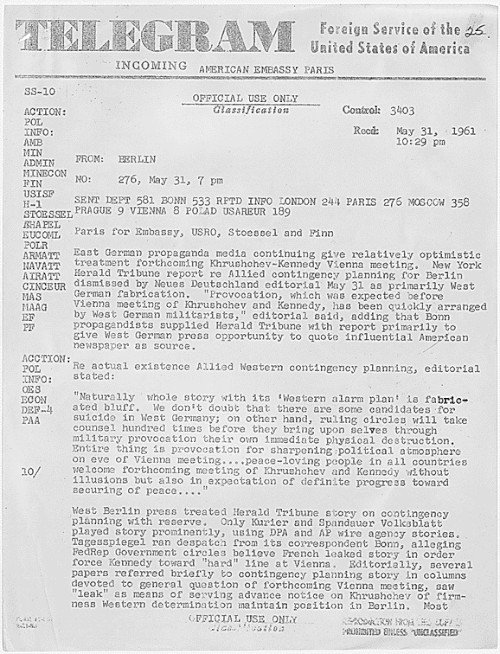
A typed Foreign Service telegram headed 'Telegram', from Berlin, May 1961.
A telegram Lightner sent from Berlin five months earlier, on 31 May 1961.Telegram from E. Allan Lightner Jr., 31 May 1961. John F. Kennedy Presidential Library (via DPLA). Public domain.
A US tank and a jeep with helmeted soldiers in a street; East German police stand beyond.
US soldiers face East German police at the checkpoint, 1961. That autumn, armed military police escorted American officials across.U.S. Army photo, 1961, via U.S. European Command. Wikimedia Commons. Public domain.

22 October 1961 · 7.15 p.m.

The diplomat who would not show his passport

E. Allan Lightner Jr., deputy chief of the US Mission in Berlin, drove up to the crossing with his wife, on their way to the theatre in East Berlin. East German police stopped him and asked for identification. He refused, and asked for a Soviet officer.

After a long wait an escort came: in the Berlin Wall Foundation’s account, two jeeps and eight armed military policemen. He drove about two blocks into the Soviet sector and back, twice. It took nearly four hours. At about 10 p.m. the Soviet political adviser called it a “mistake”.

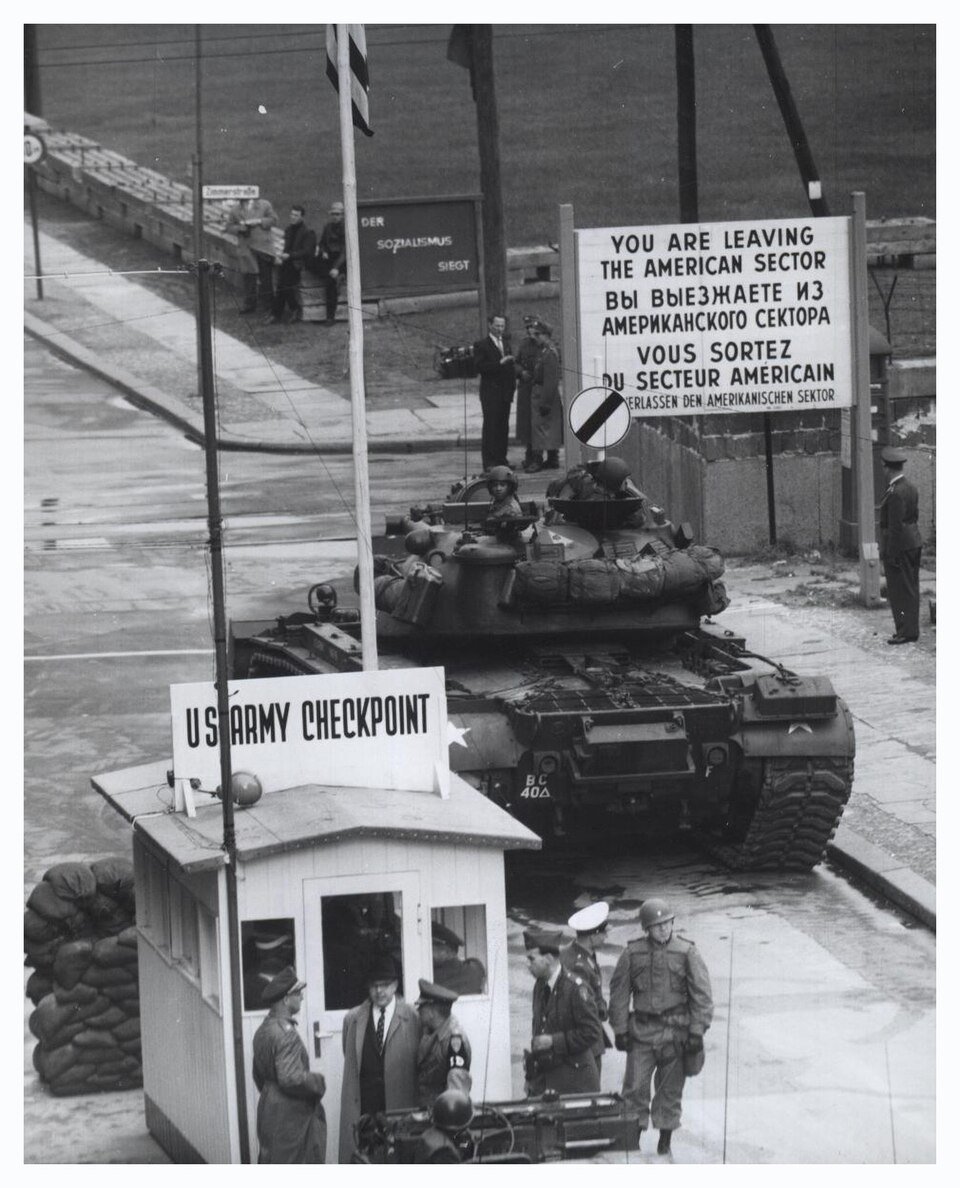
A US tank beside the small US Army Checkpoint hut, under a sign reading 'You are leaving the American sector'.
US tanks move up to Checkpoint Charlie, 25 October 1961.Central Intelligence Agency, 25 October 1961. Wikimedia Commons. Public domain.
Two men talking, seated, in the Oval Office; Kennedy in his rocking chair.
General Lucius D. Clay with President Kennedy in the Oval Office, 15 September 1961.Abbie Rowe, White House Photographs, 15 September 1961. John F. Kennedy Presidential Library and Museum, Boston. Public domain.

25 October 1961

Clay sends the tanks

That morning, US soldiers in jeeps escorted an American vehicle through the crossing. Then, on Clay’s orders, the Americans brought up ten tanks: three drove up to the line on Friedrichstraße, and seven more stood on the open ground on either side of it.

They pulled back that evening, and came back the next afternoon for an hour.

Two US tanks in a street by a corner building; soldiers and police stand on the far side.
US Army Berlin Command tanks and troops at the checkpoint, October 1961.Unknown U.S. Army photographer, October 1961. Public domain (official U.S. Army work), via Wikimedia Commons.

26 October 1961

Ten tanks and three carriers

The US Army moved ten M48A1 tanks and three M59 armoured personnel carriers to the crossing. American officials kept crossing with military police escorts. The day before, the Soviet commandant had warned that his “tanks too” would answer.

Tanks in a street beneath a U-Bahn sign, flags on poles in the foreground, a small booth at the corner.
Soviet tanks move up Friedrichstraße to the sector line, 27 October 1961.Central Intelligence Agency, 27 October 1961. Wikimedia Commons. Public domain.

27 October 1961 · shortly after 6 p.m.

The Soviet tanks come up Friedrichstraße

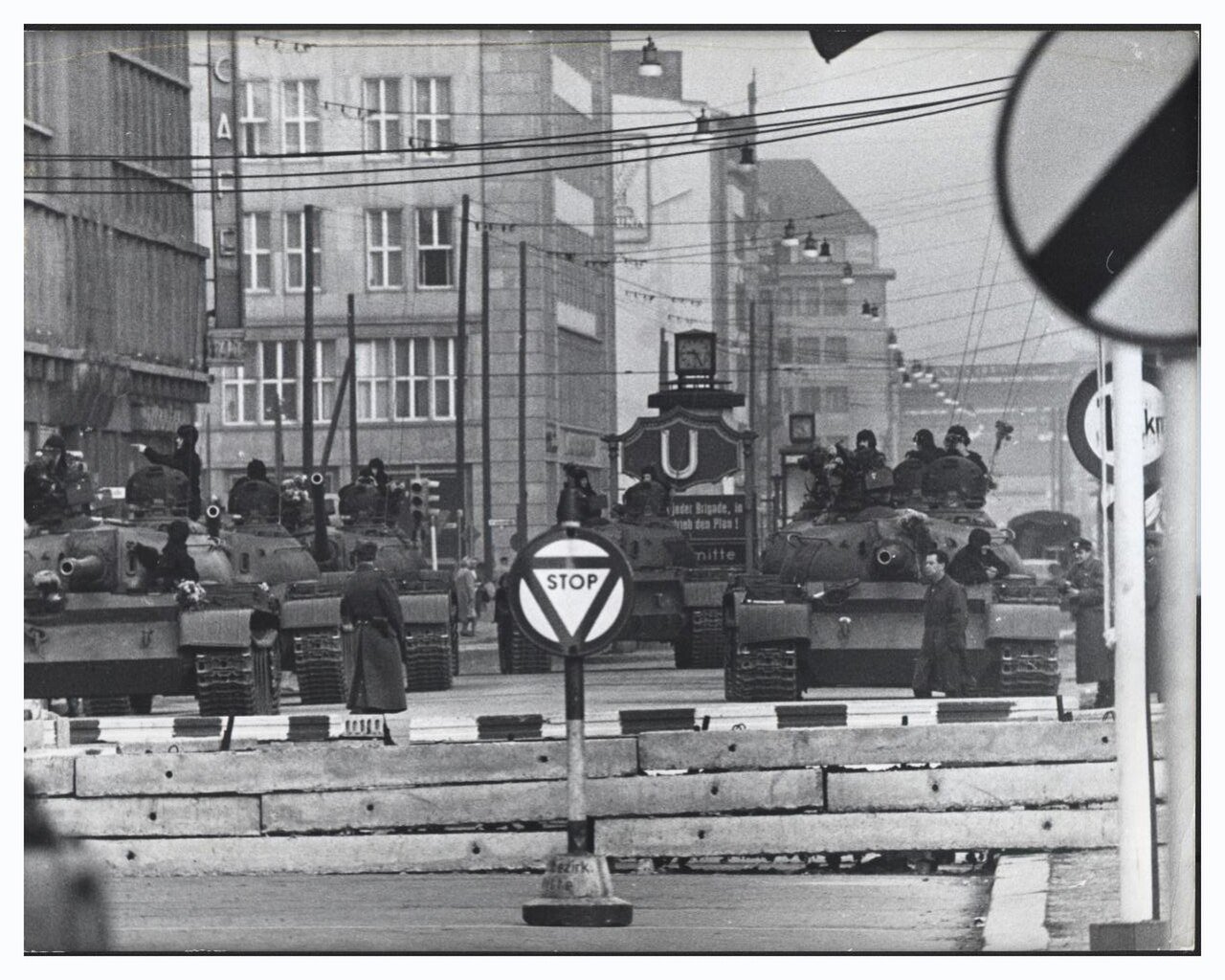
In the late afternoon, ten Soviet tanks drove up Friedrichstraße and stopped facing the Americans. It was the first time Soviet tanks had come up to the crossing. The two lines stood “barely one hundred yards apart”, in the US Army’s words: about 90 metres.

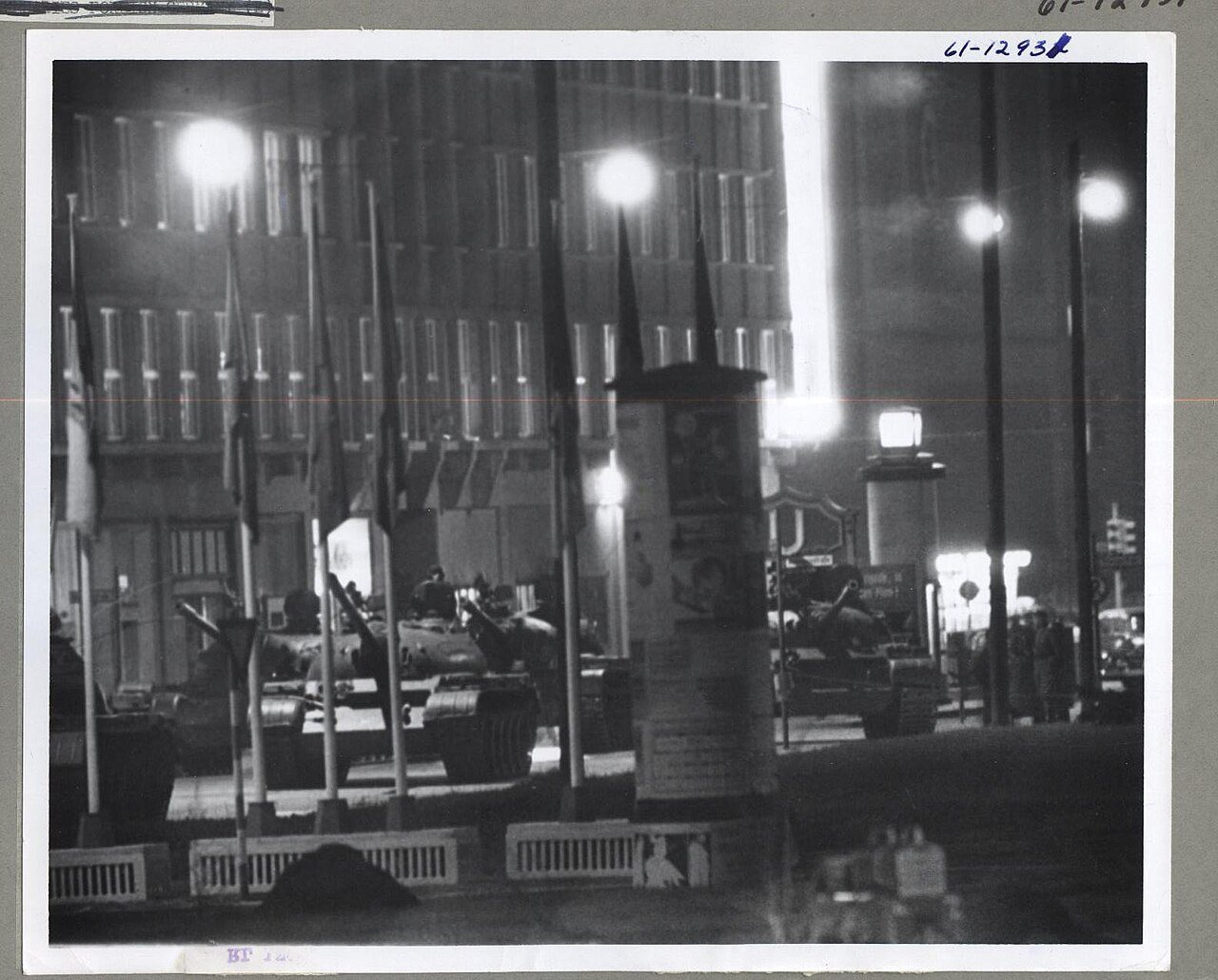
Tanks under street lamps at night, a lit advertising column beside them.
US tanks on the western side as the face-off goes on into the night, 27 October 1961.Central Intelligence Agency, 27 October 1961. Wikimedia Commons. Public domain.

27 October · midnight

Through the night

By midnight the number of Soviet tanks in the area had reached 30, according to the State Department’s record. The American tanks stayed on their side of the line, under the street lamps.

Tanks turning in a street, seen from the western side past flagpoles.
The Soviet tanks move out, 28 October 1961.Central Intelligence Agency, 28 October 1961. Wikimedia Commons. Public domain.

28 October 1961 · 10.30 a.m.

The Soviet tanks go first

At 10.30 a.m. Berlin time the Soviet tanks began to pull back up Friedrichstraße.

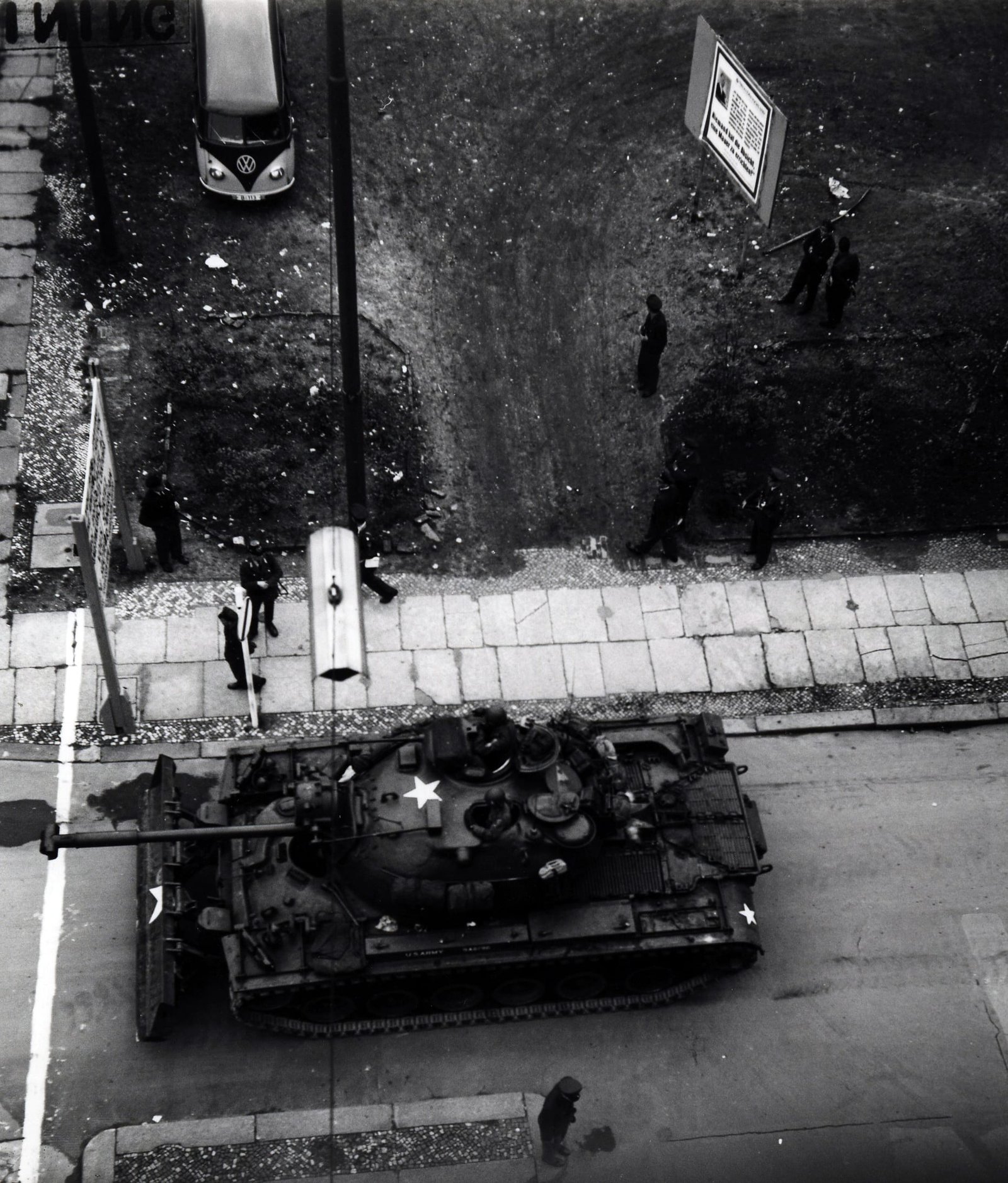
A tank seen from directly above in a street, a sign on a pole beside it.
A US tank at Checkpoint Charlie, 1961, seen from above.United States Army, 1961. US Army photograph, public domain. Wikimedia Commons.

28 October · half an hour later

Then the Americans

After about half an hour, the American tanks pulled back too. No shot had been fired.

A row of tanks behind a barrier in a street, a 'Stop' sign in the foreground.
Soviet tanks on Friedrichstraße, 28 October 1961.Central Intelligence Agency, 28 October 1961. Wikimedia Commons. Public domain.
A US tank and a jeep with helmeted soldiers in a street; East German police stand beyond.
Armed escorts were the point of the week: American officials crossed with military police while a tank and infantry stood by.U.S. Army photo, 1961, via U.S. European Command. Wikimedia Commons. Public domain.

02How long they stood there

16 hours, or more than 24

The Berlin Wall Foundation and the AlliiertenMuseum both count 16 hours: from shortly after 6 p.m. on 27 October, when the Soviet tanks arrived, to the next morning. The US Army’s own history says the tanks faced each other for more than 24 hours; its account has the American tanks at the crossing from 26 October. Both are shown here.

The week, hour by hour · 22–28 October 1961

Lightner’s drives start at 7.15 p.m. and last nearly four hours (State Department). The hours the American tanks spent at the line on 25 October and 26 October are not recorded; those bars span the daylight hours, faintly. On the night of the standoff they are drawn from the Soviet arrival to half an hour after the Soviet withdrawal. The Soviet bar runs from shortly after 6 p.m. on 27 October (Berlin Wall Foundation) to 10.30 a.m. on 28 October (State Department). The US Army’s “more than 24 hours” gives no start time, so its bracket is drawn open, back from the end.

03Washington · Moscow

Who blinked: two accounts, and no record

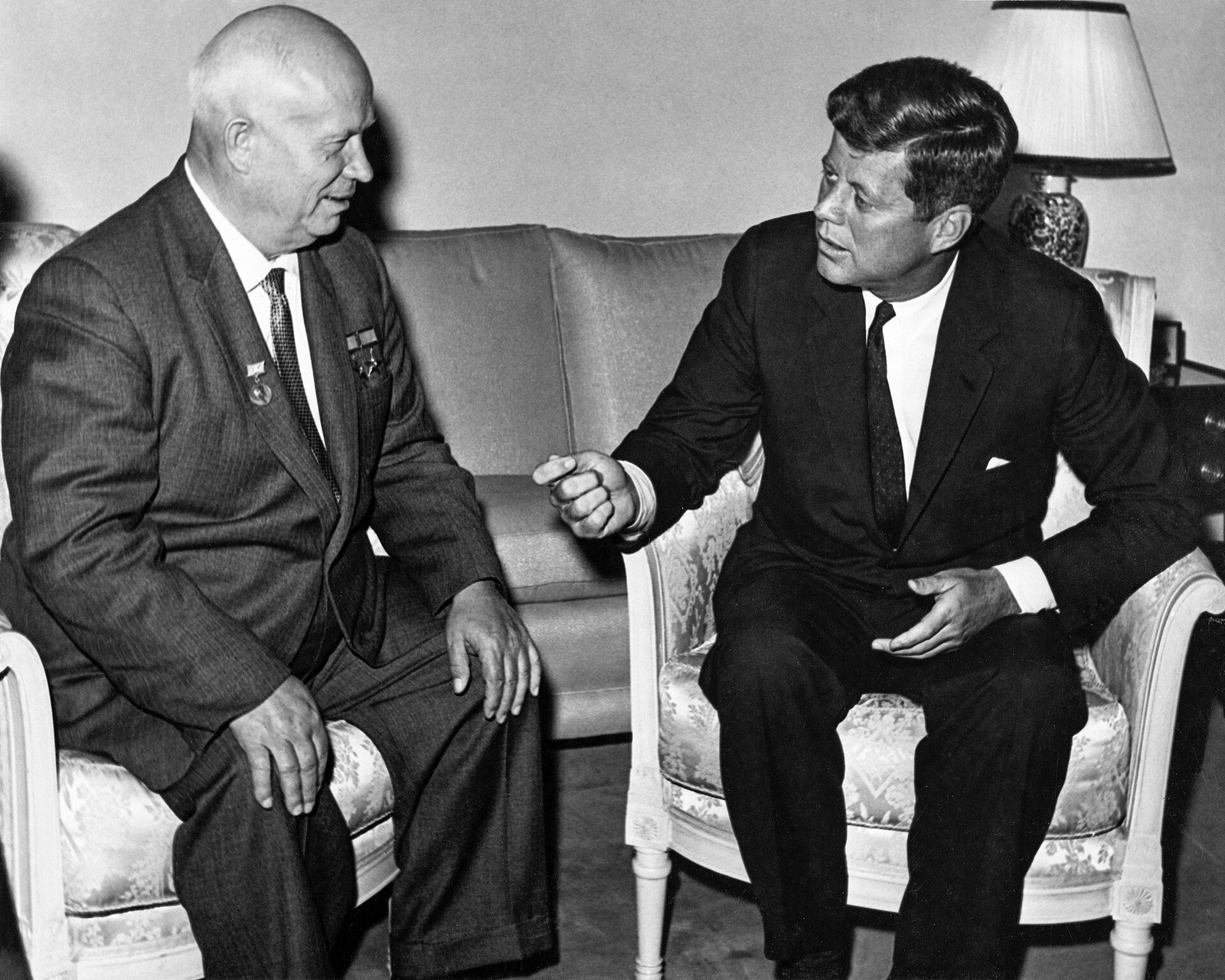
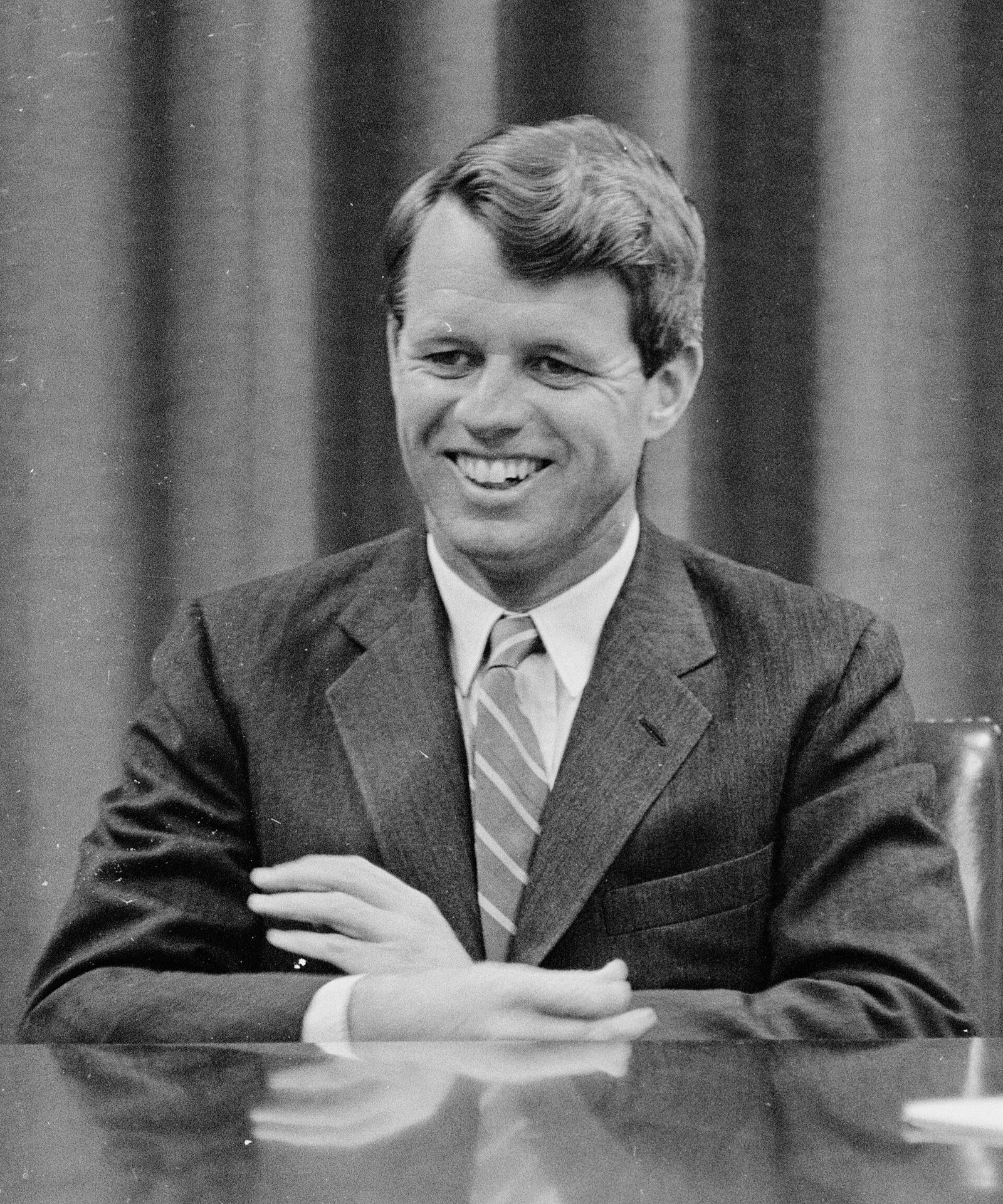
Why did the Soviet tanks leave first? Kennedy and Khrushchev had met face to face in Vienna that June. By October, Robert Kennedy, the President’s brother and Attorney General, had a regular back channel to the Soviet side that bypassed the diplomats. The State Department’s published record gives two versions of what happened through the night.

Khrushchev and Kennedy seated in armchairs, Kennedy gesturing as he talks.
Kennedy and Khrushchev in Vienna, 3 June 1961, four months before the standoff.U.S. Department of State, 3 June 1961. John F. Kennedy Presidential Library and Museum, Boston. Public domain.
Robert Kennedy, seated at a table, smiling.
Attorney General Robert F. Kennedy, 1963.Warren K. Leffler, U.S. News & World Report, 1963. Library of Congress. Public domain.
A black-and-white portrait of a man in a suit and tie.
Georgi Bolshakov, the Soviet intelligence officer who had been Robert Kennedy's regular back channel for the previous six months.Ministry of Defence of the Russian Federation. Wikimedia Commons. CC BY 4.0.

“Neither account can be confirmed from records at the Kennedy Library or the Department of State.”Foreign Relations of the United States, 1961–1963, vol. XIV, editorial note

04Zehlendorf, today

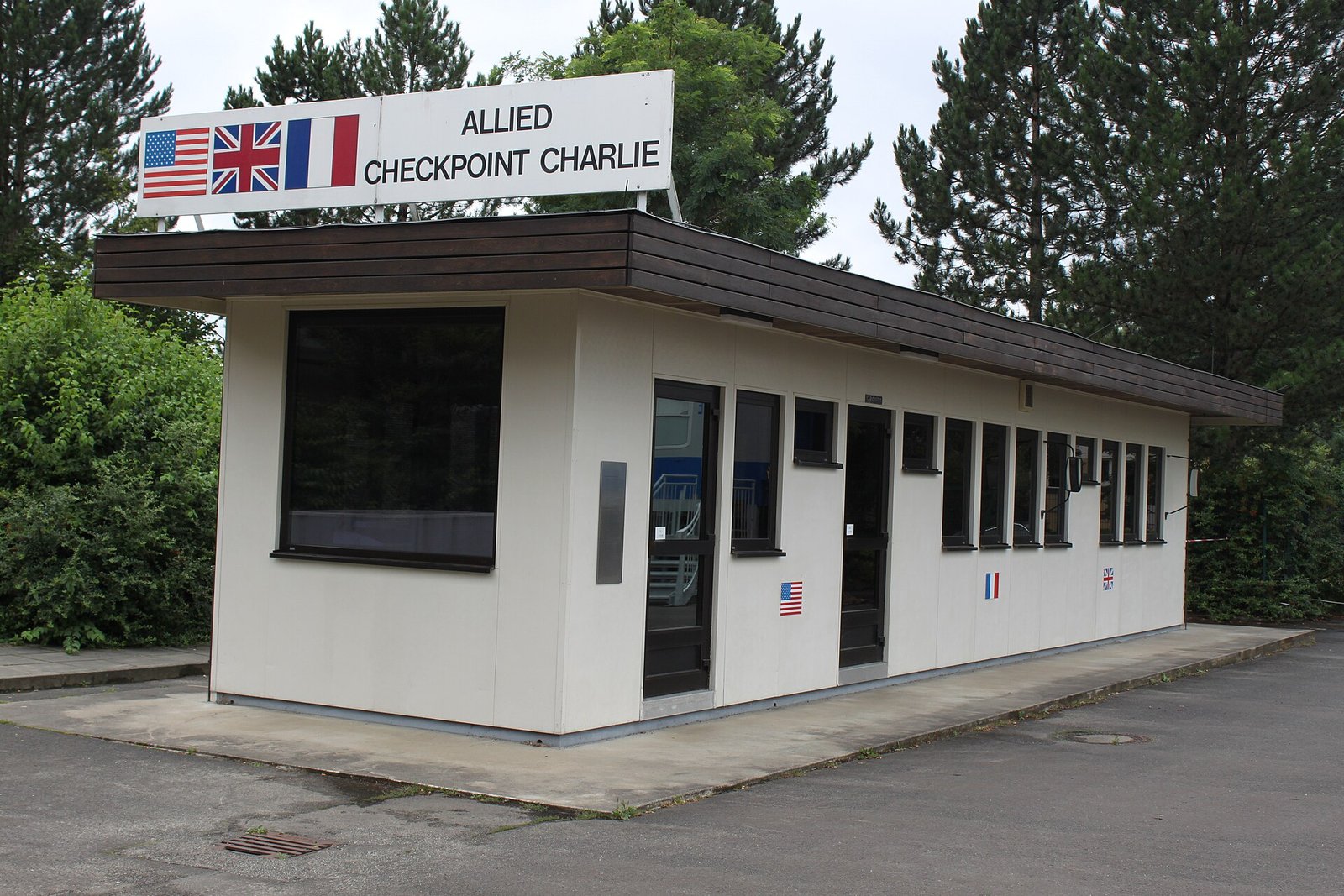
The hut went to a museum

The Allied checkpoint was never more than a hut in the middle of Friedrichstraße. It always remained a makeshift structure, a way of saying that the Americans did not accept the division of the city. The wooden booth was replaced by a metal container in the mid-1970s.

The last guardhouse, used until 1990, now stands in the outdoor exhibition of the AlliiertenMuseum on Clayallee in Zehlendorf.

A small white cabin with the flags of the US, Britain and France and the sign 'Allied Checkpoint Charlie'.
The last Allied guardhouse of Checkpoint Charlie, used 1986–90, now at the AlliiertenMuseum in Zehlendorf.Anagoria, 2012. Wikimedia Commons. CC BY 3.0.

A passport, shown or not shown, brought ten American and ten Soviet tanks to within 100 yards of each other.

Both sides went home without a shot, and the Wall stayed.

Press & citation

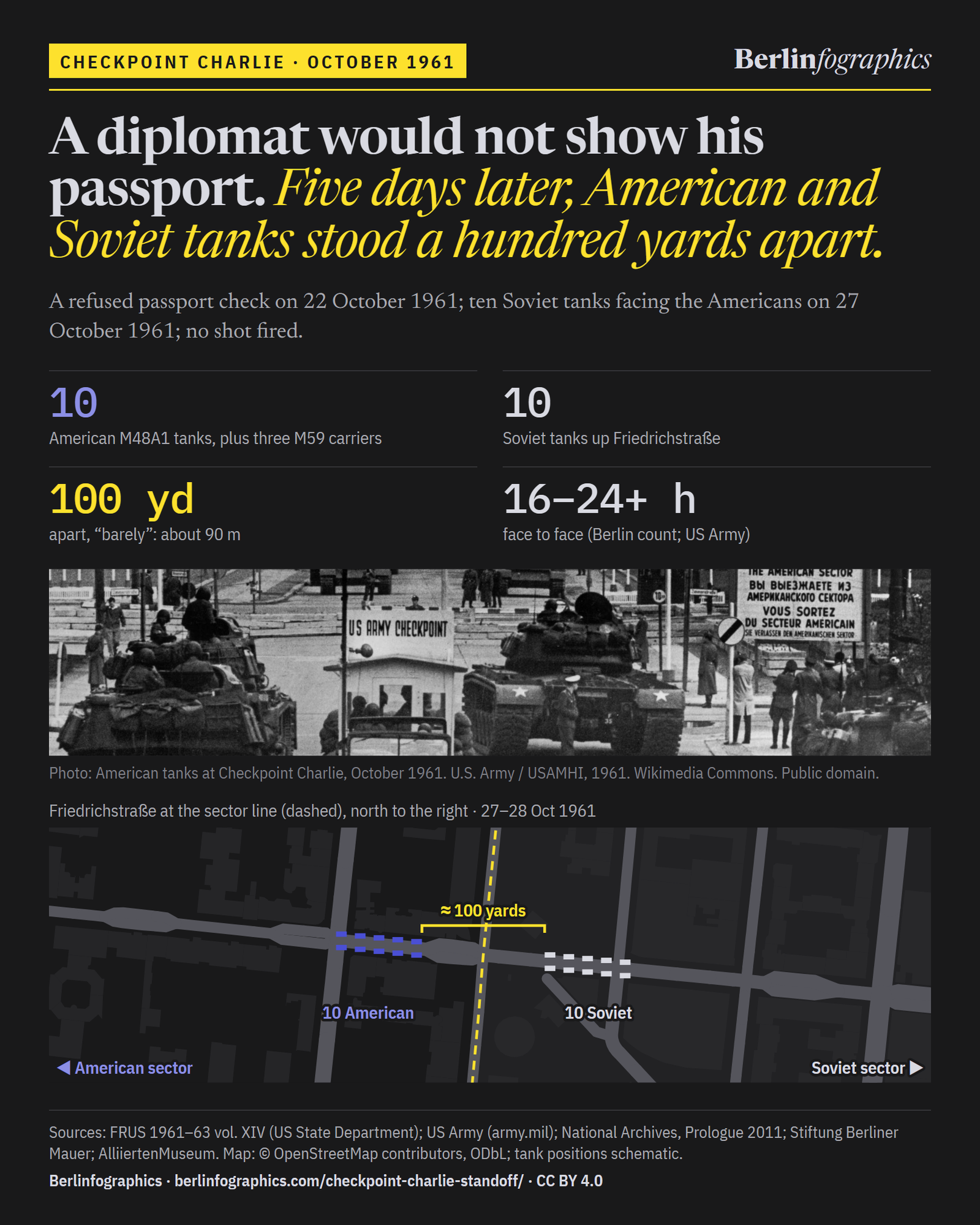
Use this Berlinfographic

Free to publish under CC BY 4.0 — in print, online, on Wikipedia and in teaching, commercially or not — with credit to Berlinfographics and a link to this page.

The tanks at Checkpoint Charlie, October 1961: ready-to-use landscape image

Ready-to-use image

The infographic as one image: headline, key figures, chart, sources and credit, 2,400 × 1,350 px PNG. Please use it unedited.

Download landscape (PNG)
The tanks at Checkpoint Charlie, October 1961: square version

Square format

A 1:1 version for social media and narrow columns, 1,800 × 1,800 px.

Download square (PNG)
The tanks at Checkpoint Charlie, October 1961: portrait version

Portrait 4:5

For Instagram and LinkedIn feeds, 1,620 × 2,025 px.

Download portrait (PNG)

Credit line

Berlinfographics (berlinfographics.com), CC BY 4.0

Citation

Berlinfographics (2026). “The tanks at Checkpoint Charlie, October 1961”. Berlin Experiences. https://berlinfographics.com/checkpoint-charlie-standoff/

Wikipedia

{{cite web |title=The tanks at Checkpoint Charlie, October 1961 |url=https://berlinfographics.com/checkpoint-charlie-standoff/ |website=Berlinfographics |publisher=Berlin Experiences |date=2026-11-09 |access-date=2026-11-09}}