Berlinfographicsby Berlin Experiences

BundesverfassungsgerichtKarlsruhe · 1951–2024

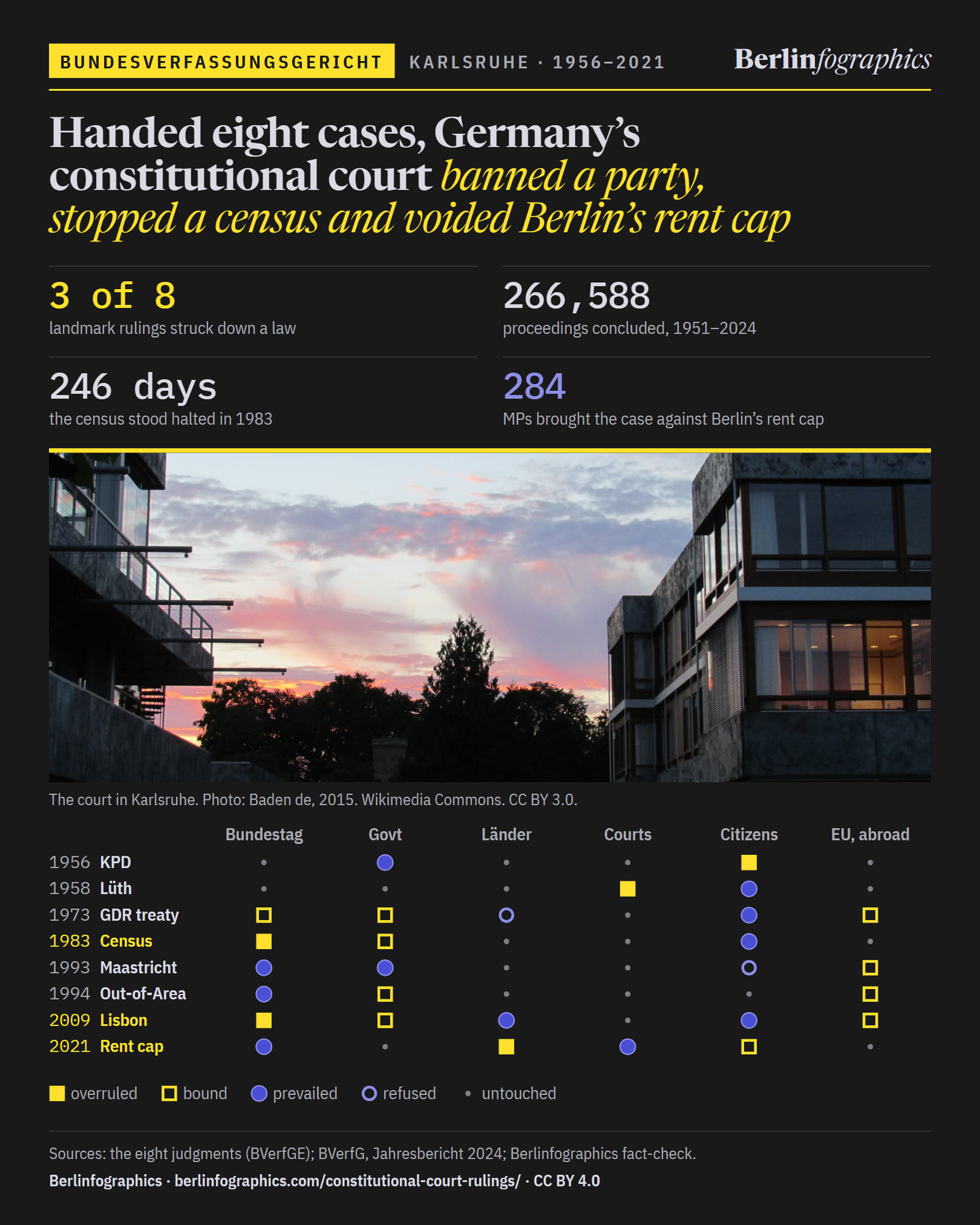
Germany’s constitutional court cannot start a case. Handed eight, it banned a party, stopped a census and voided Berlin’s rent cap

Since it opened on 28 September 1951, the Bundesverfassungsgericht has concluded 266,588 proceedings. Someone had to bring every one: a government, a Land, a quarter of the Bundestag, a judge with doubts, or any citizen at all. In three of these eight landmark rulings it struck down a law. In the other five it decided who gets to decide.

Scroll through the rulings

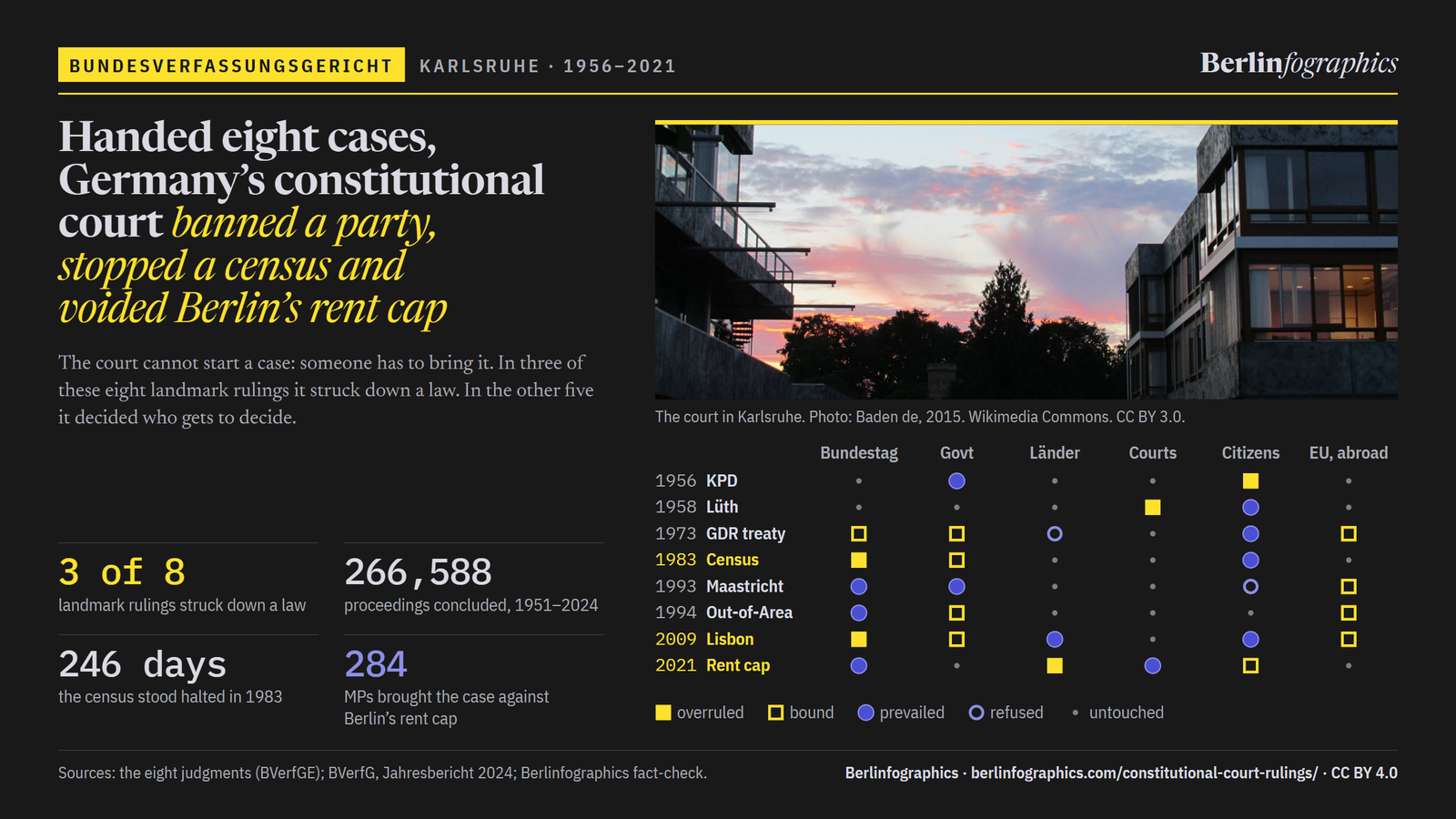
The Bundesverfassungsgericht at dusk, 2015: two of Paul Baumgarten’s pavilions in Karlsruhe.Baden de, 2015. Wikimedia Commons. CC BY 3.0.

01Who brings the cases

For every party-ban case, citizens have filed more than 25,000 complaints

Anyone who believes the state has violated their basic rights may go to Karlsruhe. Since September 1951, 258,712 constitutional complaints have arrived: 96% of all 268,777 proceedings. Bans on parties, the most drastic power the court holds, account for ten. Few complaints succeed: in 2024 the court decided 4,595 and upheld 39.

A granite block lettered Bundesverfassungsgericht in front of the court’s glass pavilion, with a gatepost bearing the federal eagle.
The entrance in Karlsruhe, 2023, with the federal eagle on the gatepost.Nicola Quarz, 2023. Wikimedia Commons. CC BY-SA 4.0.

Proceedings received, September 1951 – December 2024, and where the eight rulings sit

258,712constitutional complaints received
10party-ban and party-funding proceedings
39complaints upheld in 2024, of 4,595 decided

02Eight rulings, six players

Three of the eight struck down a law. The other five decided who gets to decide

Every ruling lands on someone. Read each one across: the court can strike an act down, let it stand under a condition that binds from then on, hand a player a power it did not have, or turn it away.

eightrulings, six players
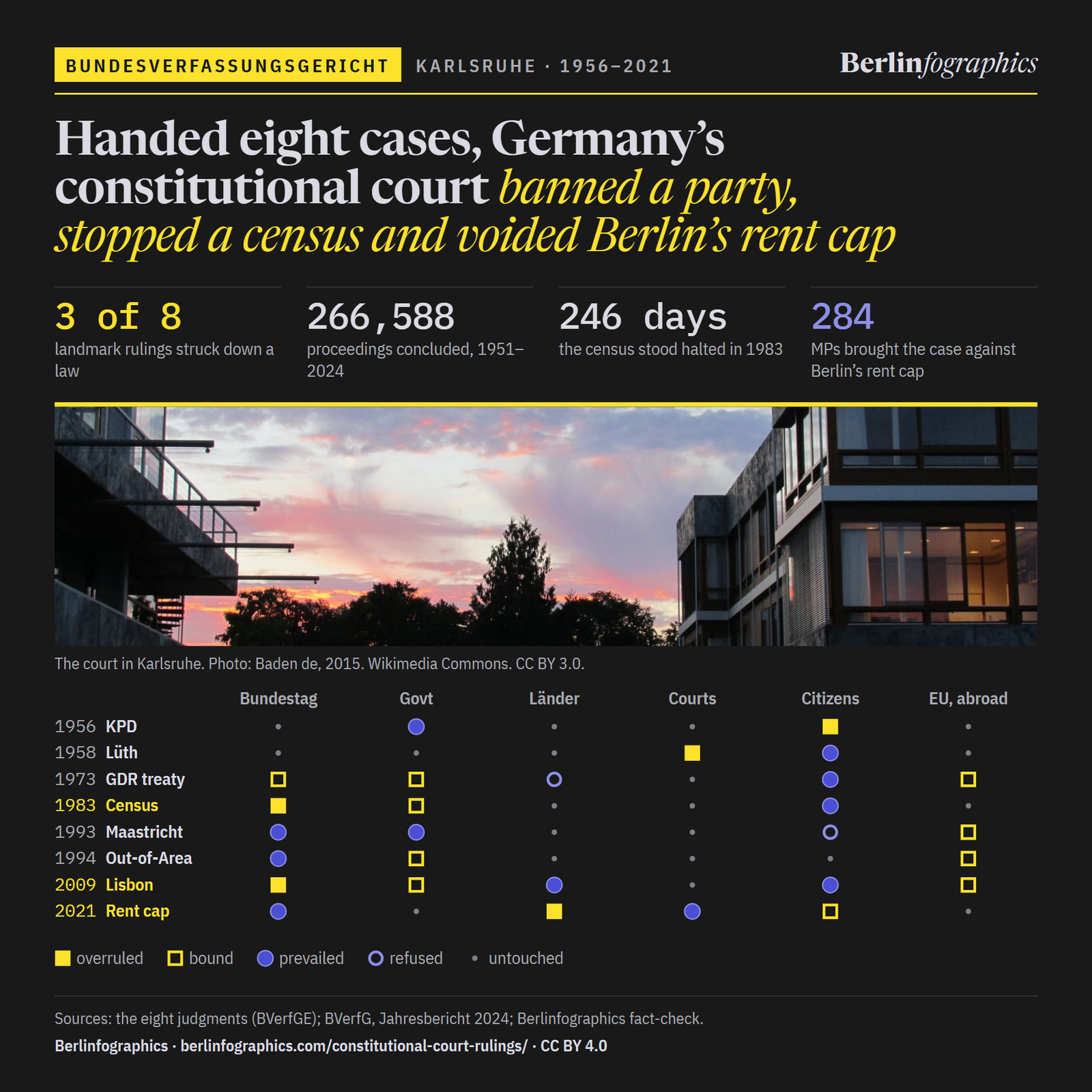
A table of the landmark rulings against the players they touched: the Bundestag, the federal government, the Länder, the ordinary courts, citizens and parties, and foreign and European affairs. As you read, each ruling's row fills in to show who was overruled, bound, prevailed, was refused, or was not touched.
A corner building in Berlin covered in Communist Party election banners and slogans.
The KPD’s Berlin headquarters, the Karl-Liebknecht-Haus, 1932.Bundesarchiv, B 145 Bild-P046279 / Weinrother, Carl / CC-BY-SA 3.0

17 August 1956 · 1 BvB 2/51 · BVerfGE 5, 85

The only party ever banned that had sat in the Bundestag

On the federal government’s own application, Karlsruhe banned the KPD, the Communist Party, as anti-constitutional. It had won 5.7% and 15 seats in 1949 and had lost them by 1953. The government applied in November 1951 and waited four years and nine months. The ban set the precedent of a “streitbare Demokratie”, a democracy that defends itself.

Overruled: Citizens & parties · Prevailed: Federal government

Source: BVerfGE 5, 85 · Deutscher Bundestag

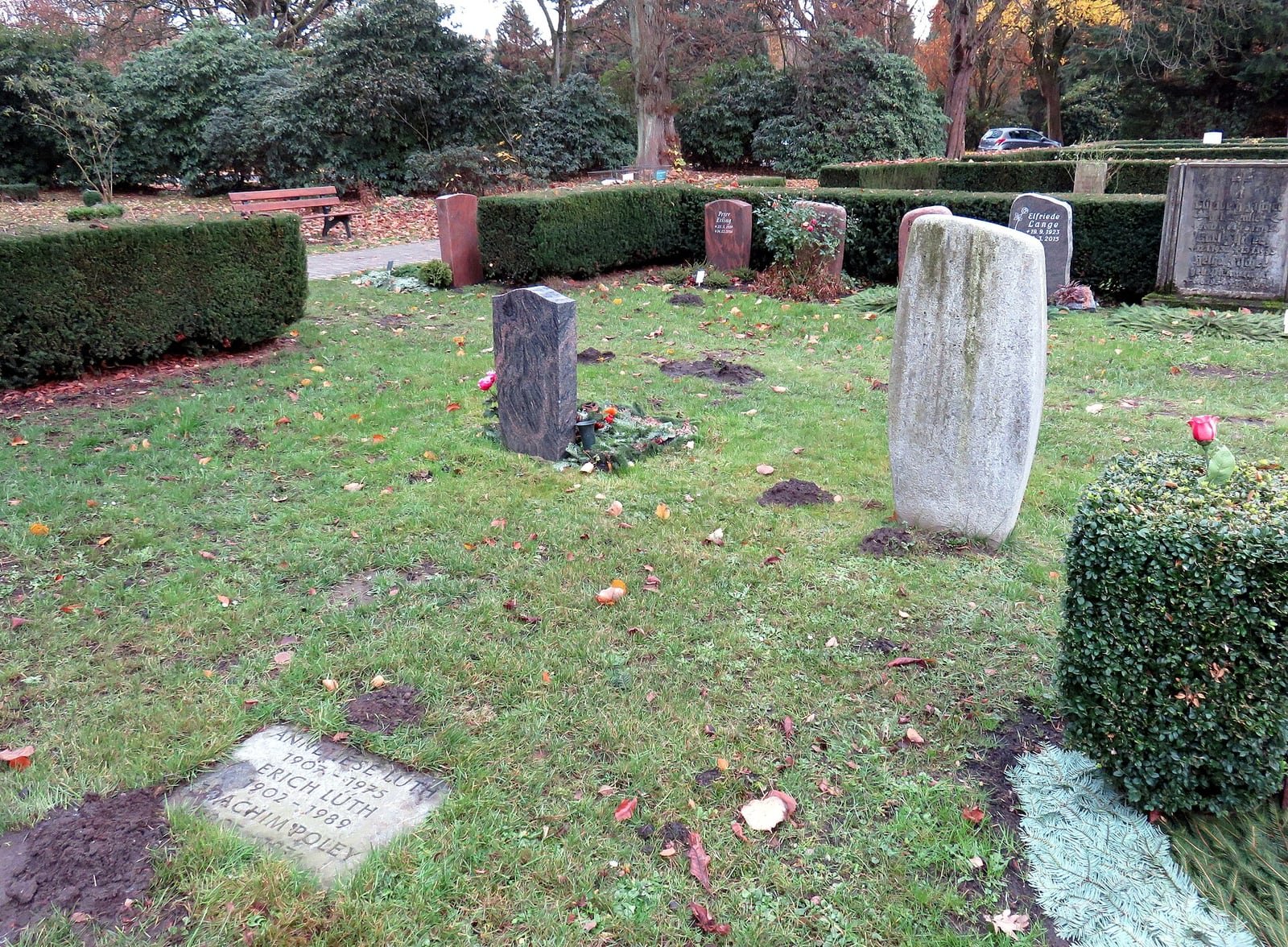
A small flat grave stone for Erich Lüth in the grass of Ohlsdorf cemetery, among hedges and older headstones.
Erich Lüth’s grave, Ohlsdorf cemetery, Hamburg.Vitavia, 2018. Wikimedia Commons. CC BY-SA 4.0.

15 January 1958 · 1 BvR 400/51 · BVerfGE 7, 198

A boycott call carried basic rights into private life

On 20 September 1950 Erich Lüth called for a boycott of Unsterbliche Geliebte, a new film by Veit Harlan, who had directed the antisemitic Nazi film “Jud Süß”. Lüth lost in the Hamburg civil courts. Seven years later Karlsruhe quashed their injunction: basic rights reach into private law too (“Drittwirkung”, their effect between private parties). Every German free-speech case since stands on it.

Overruled: Ordinary courts · Prevailed: Citizens & parties

Source: BVerfGE 7, 198 · de.wikipedia “Lüth-Urteil”

Two delegations of men in dark coats walking together; Willy Brandt and Willi Stoph at the front.
Willy Brandt (front left) and Willi Stoph in Erfurt, March 1970.Bundesarchiv, B 145 Bild-F031406-0017 / Unknown / CC BY-SA 3.0 de

31 July 1973 · 2 BvF 1/73 · BVerfGE 36, 1

Bavaria sued over the treaty with East Germany, and had its answer in 64 days

The Bayerische Staatsregierung, Bavaria’s government, asked the court on 28 May 1973 to strike down Willy Brandt’s Basic Treaty with the GDR. Only a government, a Land or a quarter of the Bundestag may bring such a case. On 31 July, 64 days later, Bavaria lost. The treaty stood, but only as the court read it: a working arrangement, not formal recognition of the GDR, keeping a single German citizenship until 1990.

Bound: Bundestag, Federal government, Foreign & EU · Prevailed: Citizens & parties · Refused: The Länder

Source: BVerfGE 36, 1 · Berlinfographics fact-check

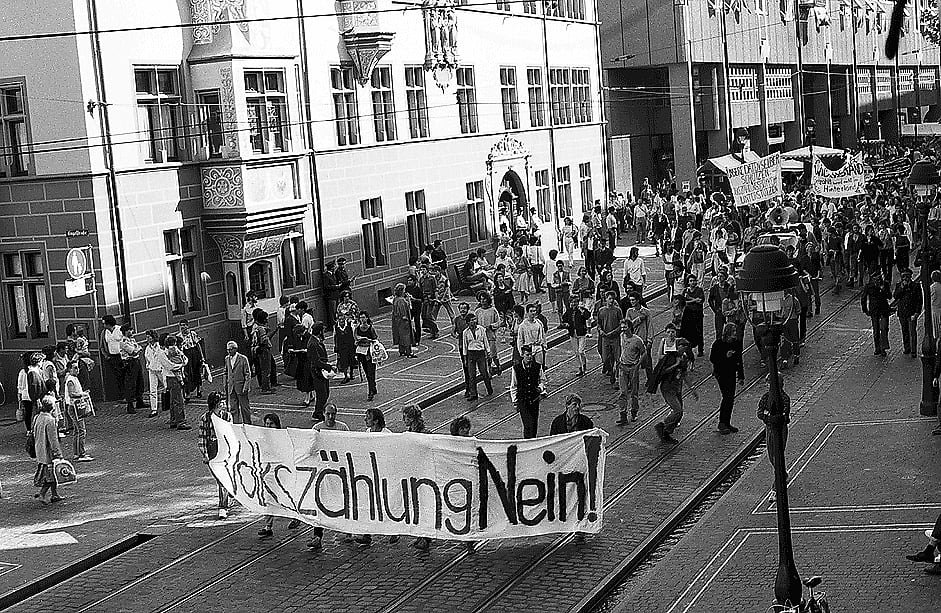
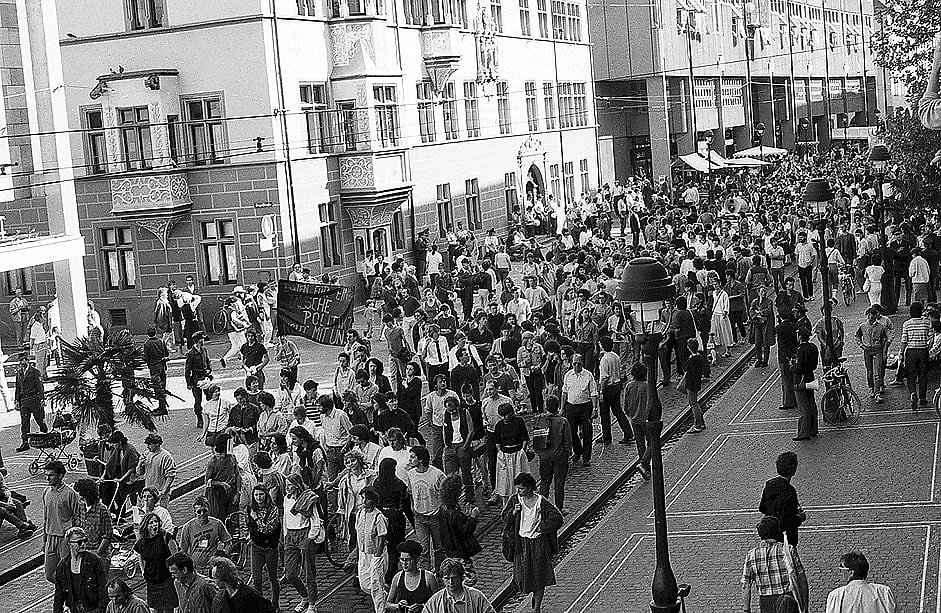
Demonstrators with banners in a street in Freiburg protesting against the census.
Protest against the census, Freiburg, 1987.Marlis Decker, 1987. Wikimedia Commons. CC BY 4.0.

15 December 1983 · 1 BvR 209/83 u. a. · BVerfGE 65, 1

Six complaints stopped a national census

The court halted the count on 13 April 1983. On 15 December it struck down the data-sharing clauses of the census law (§ 9 Abs. 1–3), let the count go ahead only under new safeguards, and named a right written nowhere in the Grundgesetz: “informationelle Selbstbestimmung”, the right to decide what is known about you.

Overruled: Bundestag · Bound: Federal government · Prevailed: Citizens & parties

Source: BVerfGE 65, 1 · Berlinfographics fact-check

A treaty page with the handwritten signatures of Hans-Dietrich Genscher and Theo Waigel.
The German signatures on the Maastricht Treaty.Hans-Dietrich Genscher and Theo Waigel. Wikimedia Commons. Public domain.

12 October 1993 · 2 BvR 2134/92 u. a. · BVerfGE 89, 155

The complaint failed, but Karlsruhe kept a check on the European Union

The Maastricht Treaty was ratified. What survives is the court’s claim to review whether an act of the Union exceeds the powers Germany handed over, and its name for the Union: a “Staatenverbund”, a union of states. Karlsruhe had first reserved the right to test European law against German basic rights in 1974, and suspended that reservation in 1986.

Bound: Foreign & EU · Prevailed: Bundestag, Federal government · Refused: Citizens & parties

Source: BVerfGE 89, 155 · BVerfGE 2, 1; 144, 20; 2 BvB 1/19

German soldiers on top of a white armoured personnel carrier marked UN, on red Somali earth.
German soldiers in Somalia during UNOSOM II, 1993.STAFF SGT. JEFFREY T. BRADY, 1993. Wikimedia Commons. Public domain.

12 July 1994 · 2 BvE 3/92 u. a. · BVerfGE 90, 286

The FDP sued the government it sat in, and parliament won a say over armed missions

The SPD and FDP groups in the Bundestag challenged the Adriatic embargo patrol, the AWACS flights over Bosnia and the logistics battalion sent to Somalia for UNOSOM II. Karlsruhe held deployments outside the NATO area lawful, but ruled that armed deployments abroad need the Bundestag’s consent: in advance, or straight afterwards in an emergency. It is why the Bundestag votes on armed missions abroad.

Bound: Federal government, Foreign & EU · Prevailed: Bundestag

Source: BVerfGE 90, 286

A treaty page with three handwritten signatures above the words for France.
Signatures on the Final Act of the Lisbon Treaty.Nicolas Sarkozy, François Fillon and Bernard Kouchner, 2008. Wikimedia Commons. Public domain.

30 June 2009 · 2 BvE 2/08 u. a. · BVerfGE 123, 267

The treaty passed. The Bundestag’s own law did not

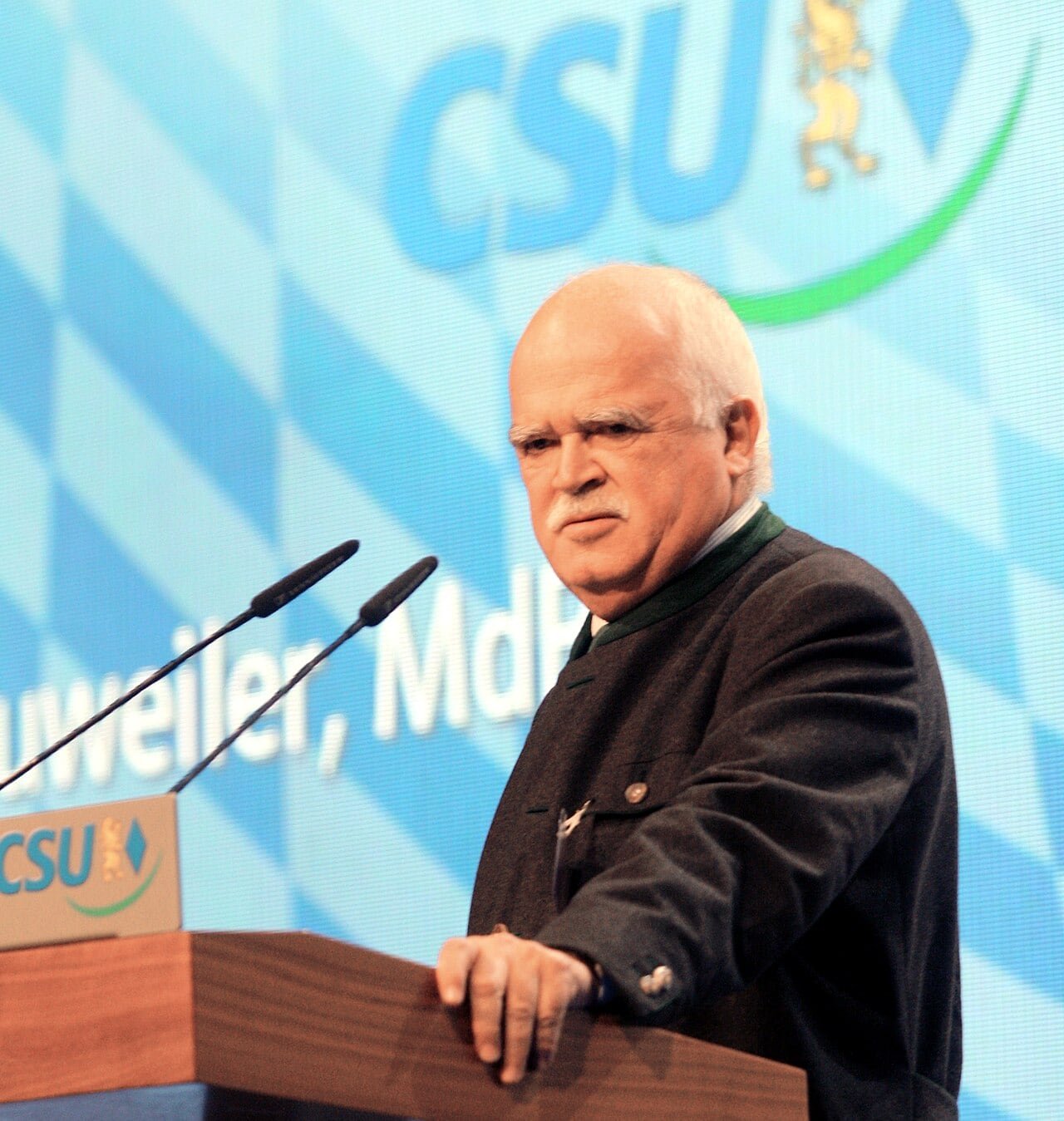
The Lisbon Treaty itself was compatible with the Grundgesetz. The accompanying law the Bundestag had passed was not: it gave parliament too little say over what Germany would agree to in the EU. Ratification waited for a better law, with the Bundesrat’s say strengthened too. Among those who brought the case were the Die Linke group in the Bundestag and the MP Peter Gauweiler.

Overruled: Bundestag · Bound: Federal government, Foreign & EU · Prevailed: The Länder, Citizens & parties

Source: BVerfGE 123, 267 · de.wikipedia “Lissabon-Urteil”

A large crowd of demonstrators with banners marching down a Berlin street.
Berlin, April 2021: a march for a nationwide rent cap.Leonhard Lenz, 2021. Wikimedia Commons. CC0.

25 March 2021 · 2 BvF 1/20 u. a. · BVerfGE 157, 223

284 MPs asked whether Berlin could cap its rents. The answer: void

Members of the Bundestag from the CDU/CSU and FDP filed on 6 May 2020, joined by two referrals from the Landgericht Berlin. On 25 March 2021 the court held the rent cap “mit dem Grundgesetz unvereinbar und deshalb nichtig”: incompatible with the Basic Law, and therefore void. Rent law belongs to the federal parliament. Landlords could claim the difference back to February 2020, when the law took effect.

Overruled: The Länder · Bound: Citizens & parties · Prevailed: Bundestag, Ordinary courts

Source: BVerfGE 157, 223 · bvg21-028 · Berlinfographics fact-check

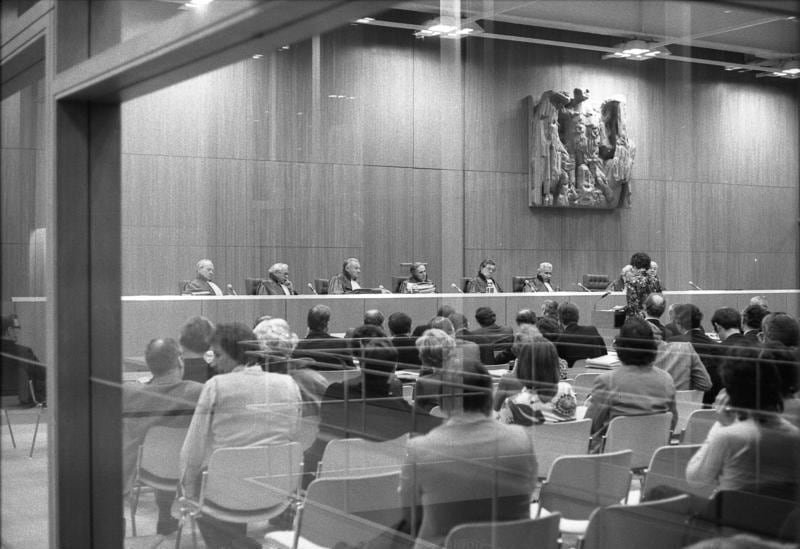
Judges in robes on a raised bench in a courtroom, with lawyers and the public seated below.
The First Senate in session, Karlsruhe, 1974.Bundesarchiv, B 145 Bild-F044191-0020 / Reineke, Engelbert / CC BY-SA 3.0 de

1956–2021 · all eight

Three laws fell. Everywhere else, the court redrew who may decide

The Bundestag was overruled two times and a Land one time. Across the eight rulings the court overruled a player five times, left ten standing only on its own conditions, and eleven times handed a player what it asked for or a power it had not had before. Citizens came out ahead in four.

Source: Berlinfographics fact-check

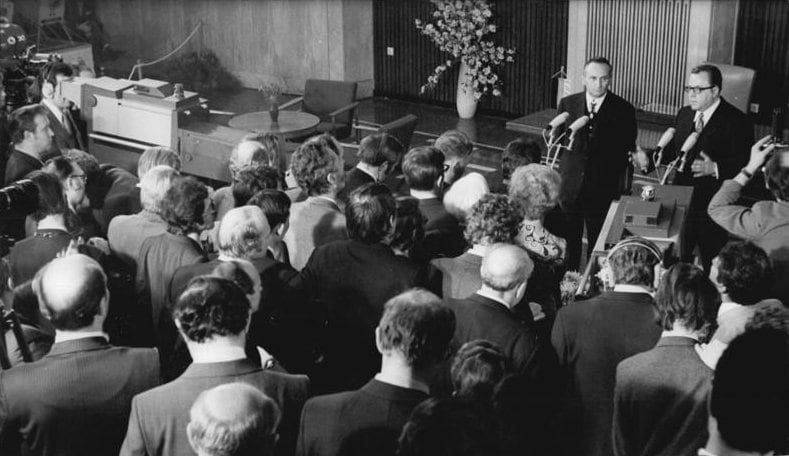
Two men at a podium with microphones facing a crowd of journalists in a wood-panelled hall.
East Berlin, 21 December 1972: after the Basic Treaty was signed, the GDR’s Michael Kohl (right) and the Federal Republic’s Egon Bahr answer journalists’ questions. Bavaria took the treaty to Karlsruhe the following spring.Bundesarchiv, Bild 183-L1221-0020 / Hubert Link / CC BY-SA 3.0 de
The floodlit nose of an AWACS aircraft on an airfield ramp at night.
A British AWACS aircraft at Aviano air base, Italy, during Operation Deny Flight, the enforcement of the UN no-fly zone over Bosnia, 1993. The AWACS flights over Bosnia were another of the deployments challenged in Karlsruhe.Department of Defense. American Forces Information Service. Defense Visual Information Center, 1993. Wikimedia Commons. Public domain.
Two armed German soldiers searching a house during an exercise.
Bundeswehr soldiers on an exercise near Pazarić, Bosnia and Herzegovina, 2002: an armed deployment of the kind that since 1994 needs the Bundestag’s consent.Camera Operator: SSGT MARIA J. LORENTE, USAF, 2002. Wikimedia Commons. Public domain.
Portrait of Peter Gauweiler, a grey-haired man in a suit.
Peter Gauweiler, 2012. He brought one of the cases against the Lisbon accompanying law.Michael Lucan, München, 2012. Wikimedia Commons. CC BY-SA 3.0 de.

03The census

Six complaints halted a national census for 246 days, and gave Germans a new right

Among the complainants were a law student, Gunther Frhr. von Mirbach, and two lawyers, Maja Stadler-Euler and Gisela Wild. On 13 April 1983 the court ordered the count stopped while it deliberated. On 15 December 1983 it struck down only the clauses that let census data be matched against registers and passed on, § 9 Abs. 1–3, and allowed the rest to go ahead under new procedural safeguards. The right it named, to decide for yourself what is known about you, is the German precursor to the EU’s data-protection law. Germany was counted in 1987 instead, under a law written to the court’s conditions.

  • 1 BvR 209/83
  • 1 BvR 269/83
  • 1 BvR 362/83
  • 1 BvR 420/83
  • 1 BvR 440/83
  • 1 BvR 484/83
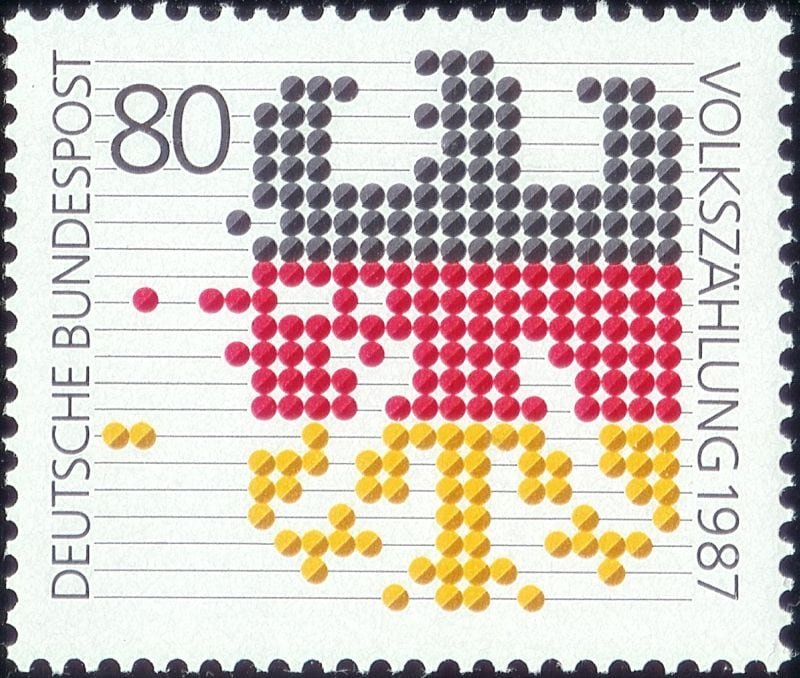
A West German postage stamp issued for the 1987 census.
The Deutsche Bundespost’s stamp for the census of 1987, the count the court had sent back to be rewritten.Deutsche Bundespost, 1987. Wikimedia Commons. Public domain.

1983: from the halt to the judgment

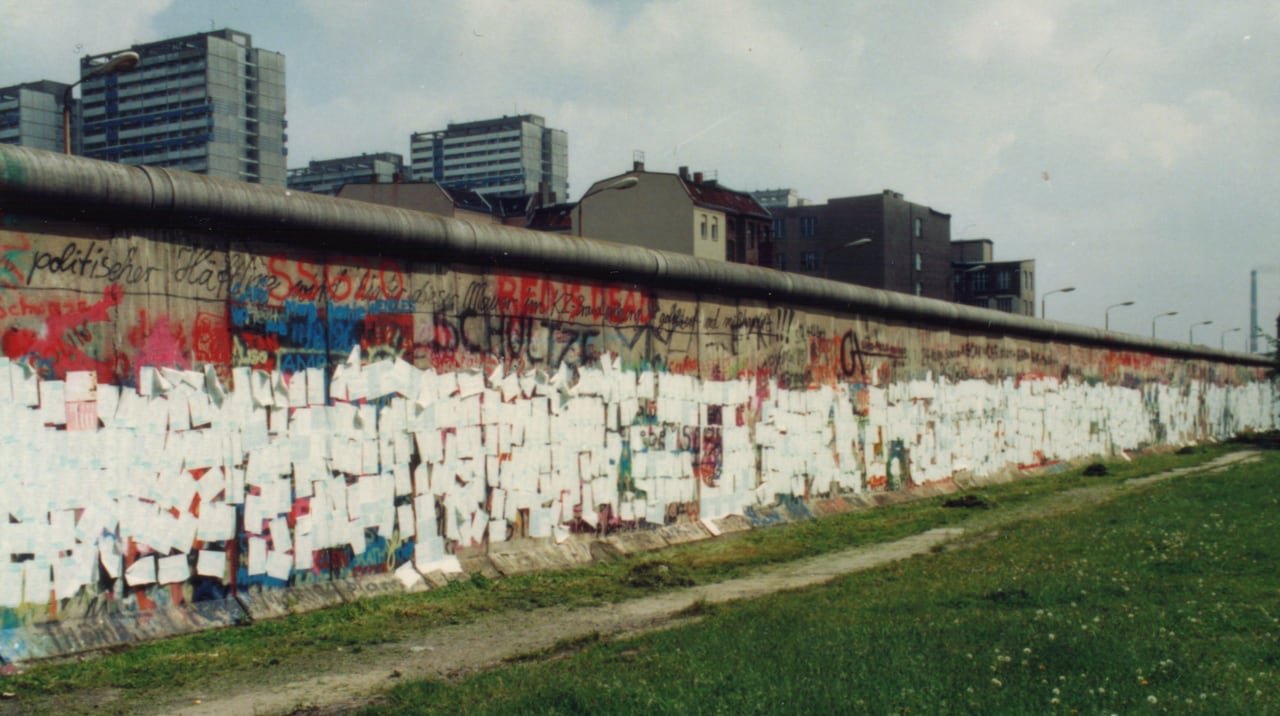
Sheets of census questionnaires stuck in rows on the graffiti-covered Berlin Wall.
Berlin, 1987: census forms pasted on the Berlin Wall in protest.Florian-schäffer, 1987. Wikimedia Commons. CC BY-SA 3.0.
A crowd of demonstrators against the census in Freiburg.
The same Freiburg demonstration against the census, 1987.Marlis Decker, 1987. Wikimedia Commons. CC BY 4.0.

04The court

No government can staff it alone: sixteen judges, each needing a two-thirds majority, for a single term

Two senates of 8; in each, half elected by the Bundestag, half by the Bundesrat

  • Judges16, 8 in each of two senates
  • Electedby the Bundestag and the Bundesrat, half each, by a two-thirds majority
  • Term12 years, no re-election; retire at 68
  • Quorum6 of 8 judges present
  • Robesscarlet, adopted in 1963
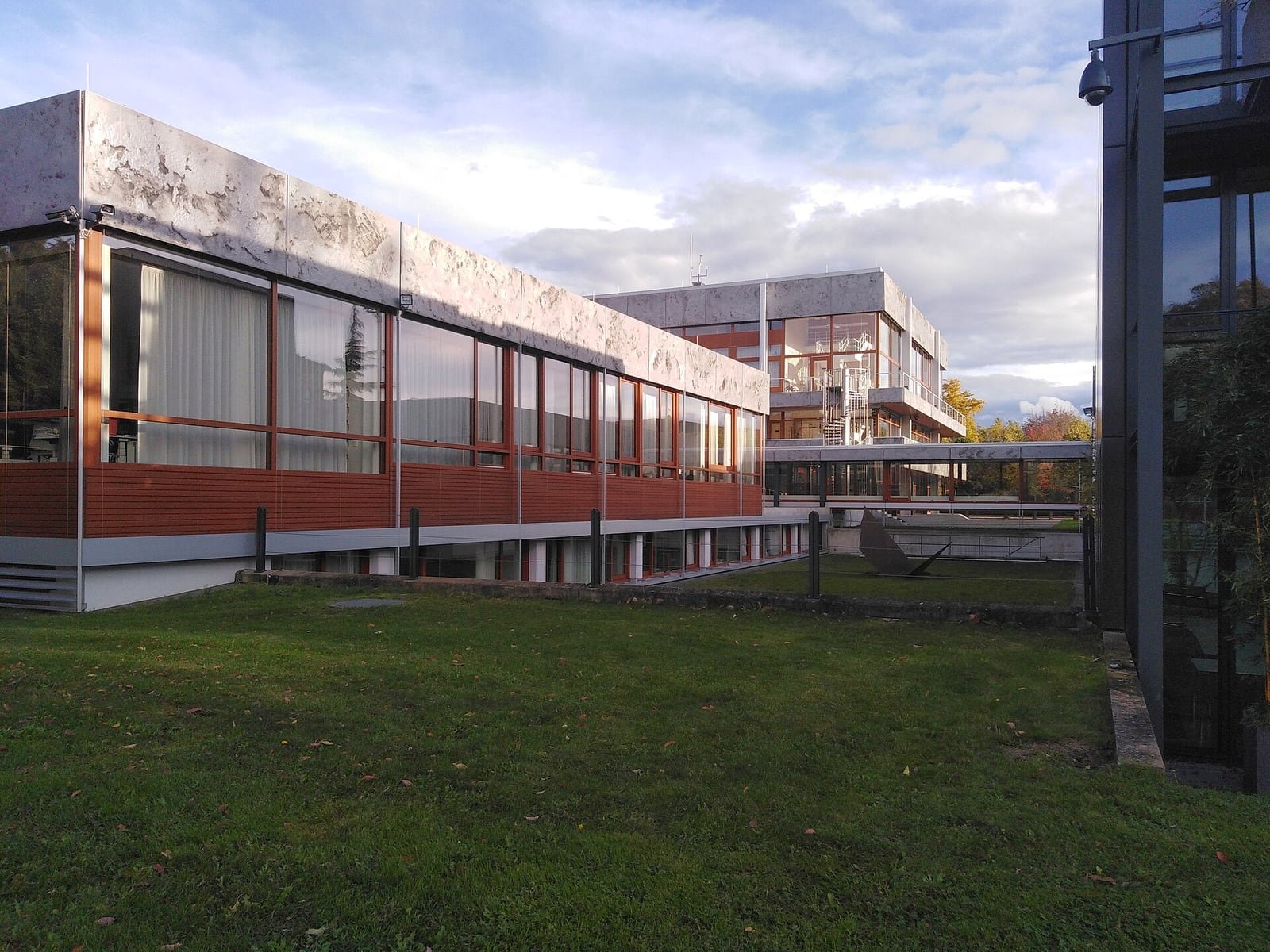
  • BuildingPaul Baumgarten, 1965–1969

A single term of 12 years, with no re-election and retirement at 68, means no judge is waiting on a government for a second term. The scarlet robes are younger than the court: adopted in 1963, cut by a costume designer at the Badisches Staatstheater in Karlsruhe after the judicial dress of fifteenth-century Florence. The court sits in Paul Baumgarten’s low glass-and-concrete pavilions of 1965–1969, beside the Karlsruhe palace.

Judges in robes on a raised bench in a courtroom, with lawyers and the public seated below.
The First Senate in session, 1974. The judges sit on a raised bench beneath a carved relief; the public sits below them.Bundesarchiv, B 145 Bild-F044191-0020 / Reineke, Engelbert / CC BY-SA 3.0 de
A low modern building on the left of a street; the tower of the Karlsruhe palace in the distance.
The court from the Schlossbezirk, 1977. Baumgarten’s low glass and concrete ends a street that runs up to the eighteenth-century palace visible behind it.Bundesarchiv, B 145 Bild-F052198-0005 / Wienke, Ulrich / CC BY-SA 3.0 de
A modern glass pavilion with bookshelves, and a second pavilion behind it, in a park.
The court’s library in the foreground, with the courtroom behind, Karlsruhe, 2019.Asmodea Oaktree, 2019. Wikimedia Commons. CC BY 4.0.

05What falls

In ten years Karlsruhe found 147 provisions unconstitutional, and threw out only three whole laws

Between 2015 and 2024 the court found fault with 62 federal provisions and 85 in the laws of the Länder. Almost always it cuts out a clause, or part of one, and leaves the statute standing, as it did with the census law.

Provisions found unconstitutional, 2015–2024: federal and Länder

Two parties banned since 1951, and none since 1956

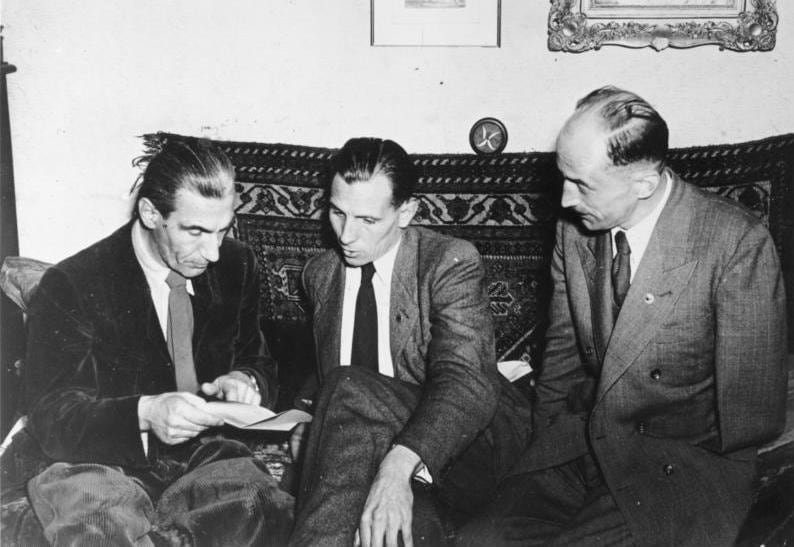
The court banned the SRP, a party in the tradition of the NSDAP, in 1952, and the KPD in 1956. In 2017 it refused to ban the NPD; in 2024 it cut its successor, Die Heimat, off from state funding instead.

Three men of the Sozialistische Reichspartei seated together, one reading a paper.
Leaders of the Sozialistische Reichspartei, Fritz Dorls, Otto Ernst Remer and Graf von Westarp, in 1952, the year Karlsruhe banned the party.Bundesarchiv, Bild 183-15845-0010 / Unknown / CC BY-SA 3.0 de
Karlsruhe · 1956–2021

The court cannot choose its cases. Since 1951, Germany has brought it 268,777.

Press & citation

Use this Berlinfographic

Free to publish under CC BY 4.0 — in print, online, on Wikipedia and in teaching, commercially or not — with credit to Berlinfographics and a link to this page.

Karlsruhe’s landmark rulings, 1956–2021: ready-to-use landscape image

Ready-to-use image

The infographic as one image: headline, key figures, chart, sources and credit, 2,400 × 1,350 px PNG. Please use it unedited.

Download landscape (PNG)
Karlsruhe’s landmark rulings, 1956–2021: square version

Square format

A 1:1 version for social media and narrow columns, 1,800 × 1,800 px.

Download square (PNG)
Karlsruhe’s landmark rulings, 1956–2021: portrait version

Portrait 4:5

For Instagram and LinkedIn feeds, 1,620 × 2,025 px.

Download portrait (PNG)

Credit line

Berlinfographics (berlinfographics.com), CC BY 4.0

Citation

Berlinfographics (2026). “Karlsruhe’s landmark rulings, 1956–2021”. Berlin Experiences. https://berlinfographics.com/constitutional-court-rulings/

Wikipedia

{{cite web |title=Karlsruhe’s landmark rulings, 1956–2021 |url=https://berlinfographics.com/constitutional-court-rulings/ |website=Berlinfographics |publisher=Berlin Experiences |date=2026-11-06 |access-date=2026-11-06}}