Einstein’s Berlin
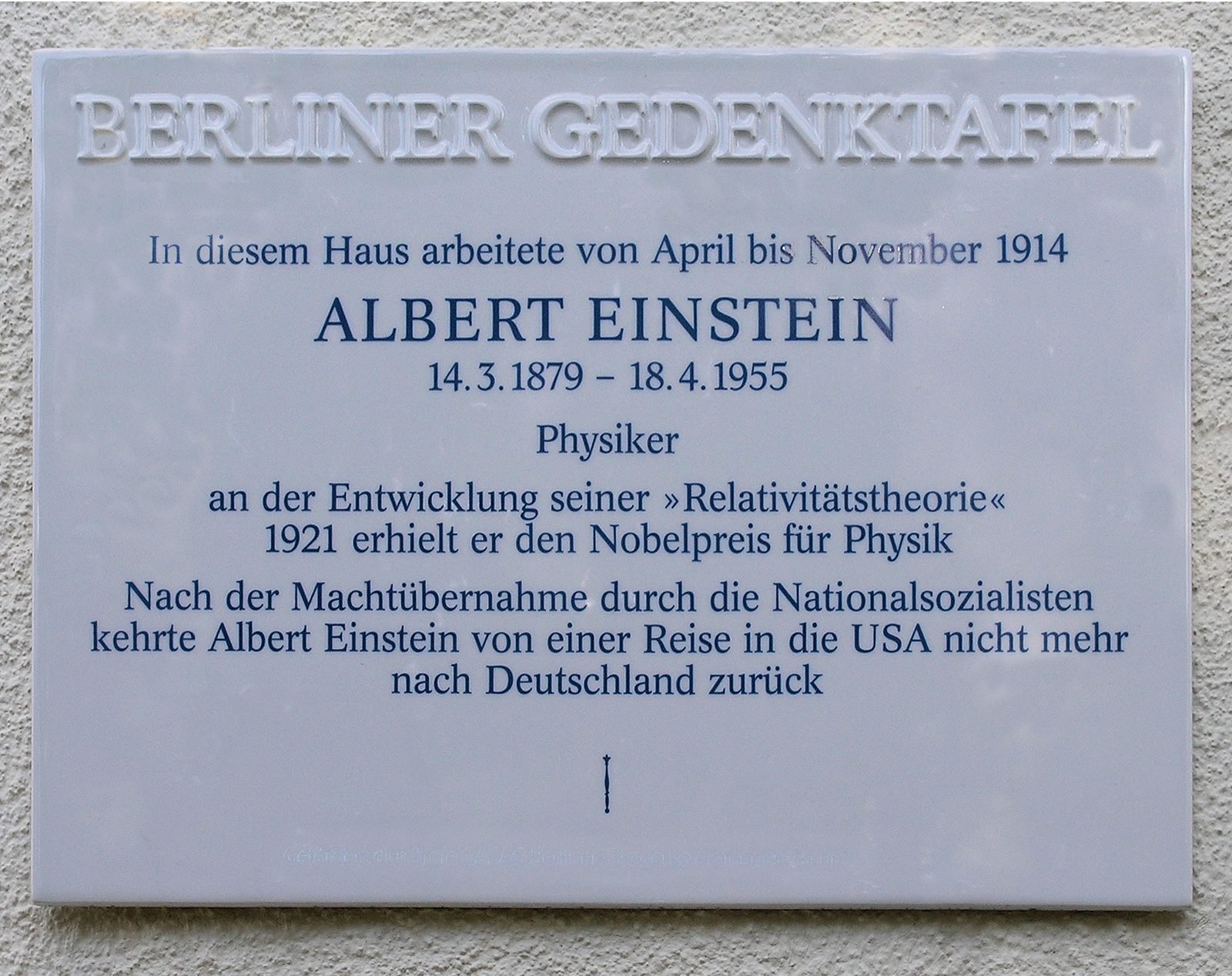
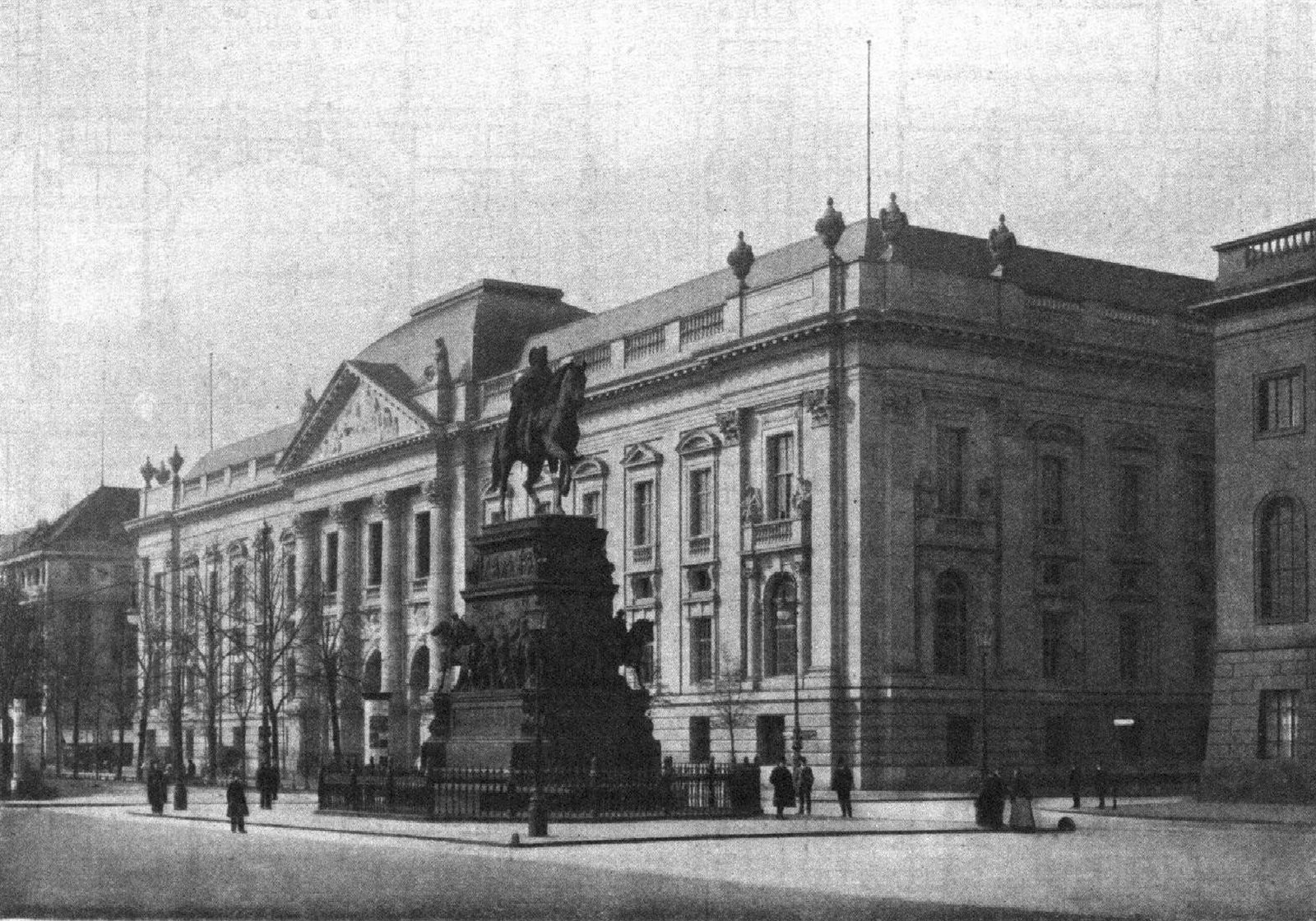
The Royal Prussian Academy paid him 12,000 marks a year with no teaching. On 25 November 1915 he gave it the field equations of general relativity. In 1933 it said it had “no reason to regret” his going.
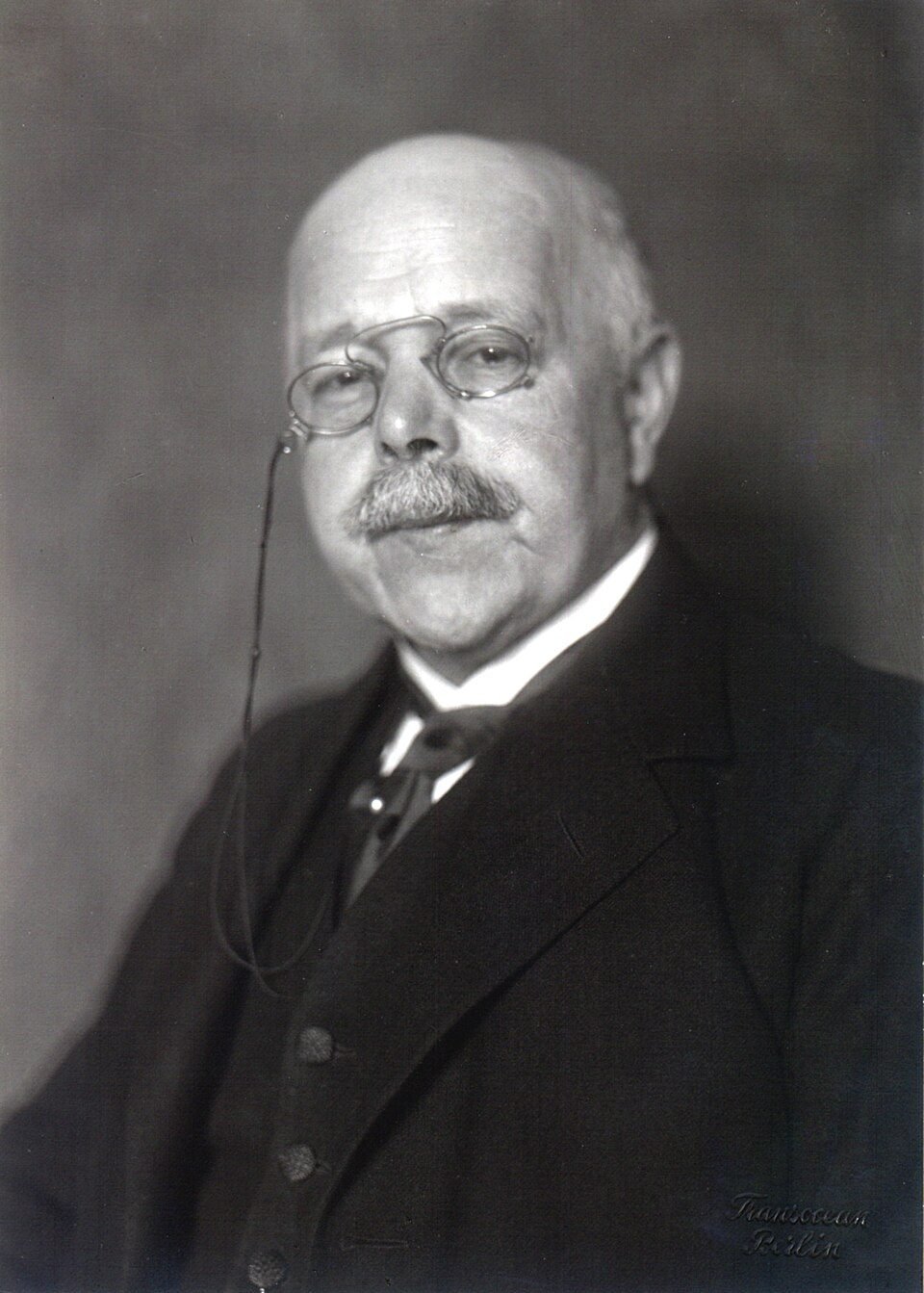
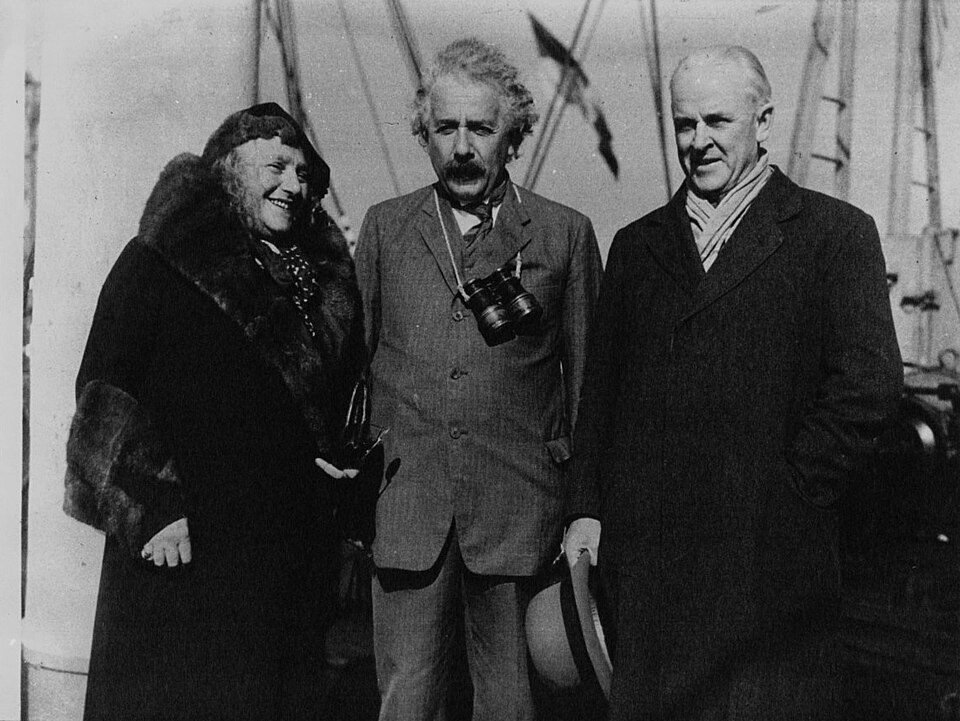
Einstein lived in Berlin for almost nineteen years, from the end of March 1914 until 6 December 1932. In that time he finished general relativity, saw it confirmed by an eclipse, won a Nobel Prize for something else, and built a summer house on the Havel. He left for a winter in California and never came back.
Einstein’s Berlin, year by year
July 1913
In mid-July 1913 Max Planck and Walther Nernst travelled to Zurich to bring Einstein to the Prussian Academy of Sciences. The Kaiser confirmed his election on 12 November 1913.
1913
The offer: 12,000 marks a year and no teaching. Half came from the industrialist Leopold Koppel, 6,000 marks a year for twelve years.
End of March 1914
Einstein arrived at the end of March 1914. His first flat, Ehrenbergstraße 33 in Dahlem, is the only one of his three Berlin flats still standing.
End of July 1914
At the end of July 1914, as Europe went to war, Mileva Marić took their two sons back to Zurich. The marriage was over; Einstein moved to a small flat in Wilmersdorf.
25 November 1915
He presented his theory of gravitation in four sessions, on 4, 11, 18 and 25 November 1915. The last gave the field equations of general relativity.
Autumn 1917
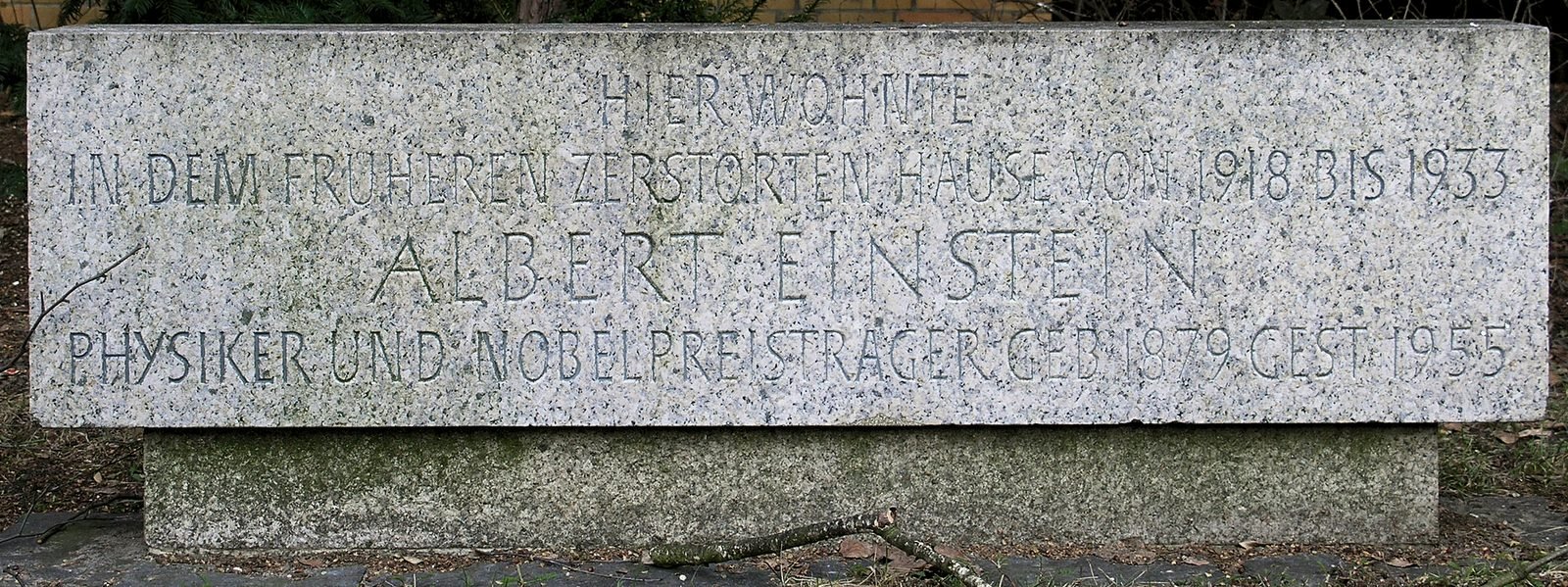
In 1917 he moved to Haberlandstraße 5, next door to his cousin Elsa. The Kaiser-Wilhelm-Institut für Physik, founded on 1 October 1917, had no building: its address was his flat.
29 May 1919
Two British expeditions photographed the stars around the eclipsed sun. The result was announced in London on 6 November 1919, 161 days later.
November 1922
The 1921 physics prize went to Einstein in 1922, for the photoelectric effect, not relativity. He was on his way to Japan. Under the divorce settlement the money, less 40,000 marks, went to Mileva.
6 December 1932
On 6 December 1932 he and Elsa left Berlin for a winter in Pasadena. He was there when Hitler became chancellor on 30 January 1933.
28 March 1933
His resignation from the Academy is dated 28 March 1933. On 1 April 1933 the Academy said it had “no reason to regret Einstein’s withdrawal”.
The prediction
Newtonian gravity, treating light as particles, gives a deflection of 0.875″ for a ray grazing the edge of the sun. The field equations of November 1915 double it. Only a total eclipse, darkening the sun, would let anyone photograph the stars beside it and measure the shift.
The test fell to two British parties on 29 May 1919. Frank Dyson, the Astronomer Royal, coordinated them from England; Arthur Eddington went to Príncipe, off West Africa, and Charles Davidson and Andrew Crommelin to Sobral in Brazil. Not every plate agreed: the plates from the larger astrograph at Sobral were discounted because the stars were out of focus. The rest pointed to Einstein.
Starlight grazing the sun, bent by gravity
The angles are exaggerated many thousand times; only the ratio between the two predictions is true. 1.75″ is about one 2,057th of a degree.
Between the sky and the headline
The eclipse plates had to be measured against photographs of the same stars taken at night, when the sun was elsewhere in the sky. The verdict came at a joint meeting of the Royal Society and the Royal Astronomical Society on 6 November 1919. The next day’s Times headline ran: “Revolution in Science” · “New Theory of the Universe” · “Newtonian Ideas Overthrown”.
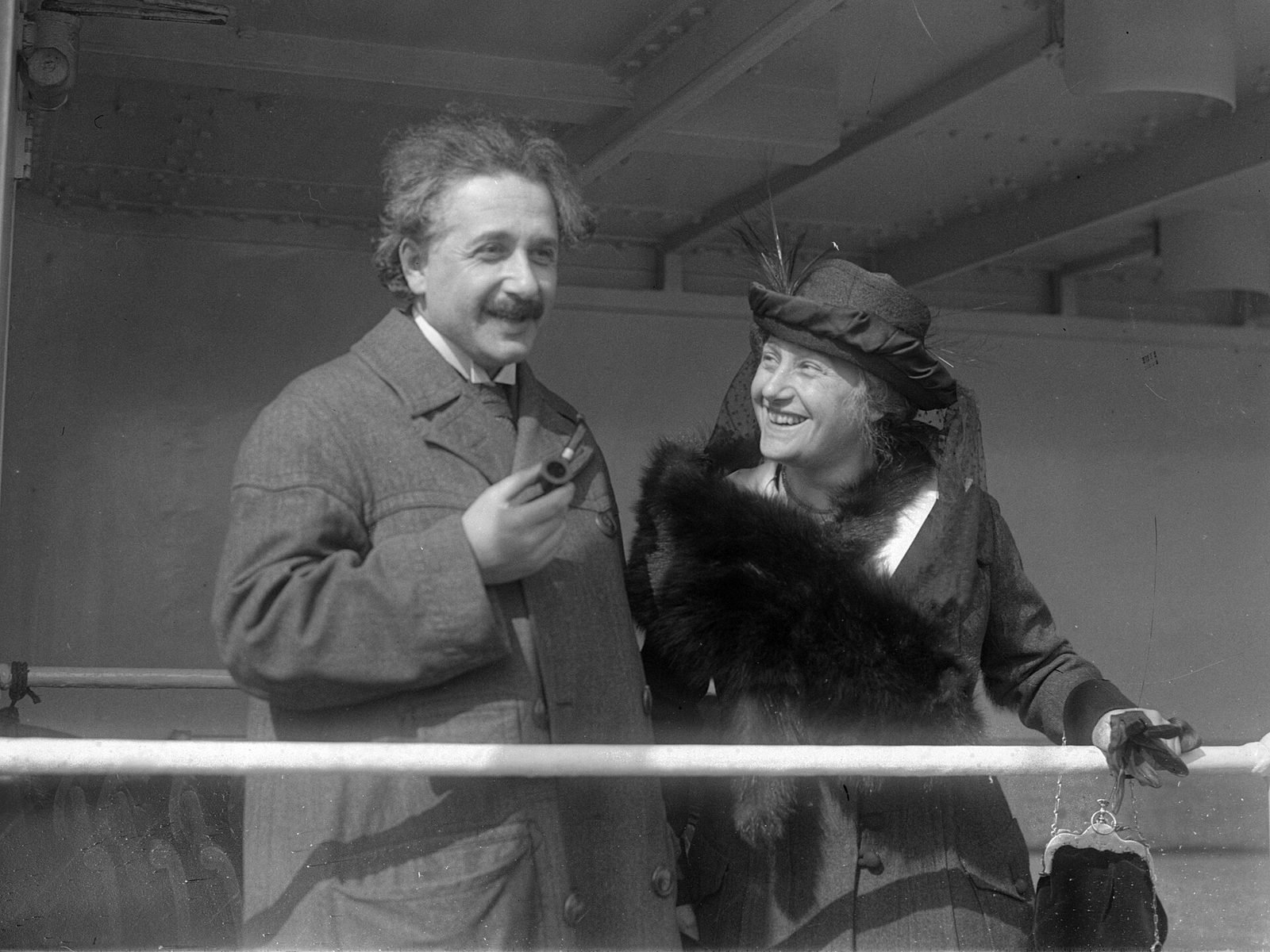
In between, Einstein’s own life changed. He was divorced in February 1919, and married his cousin Elsa on 2 June 1919, four days after the eclipse.
1919, day by day
Ringed: the eclipse, 29 May 1919. Lit: the 161 days to the announcement, 6 November 1919. White: the wedding, 2 June 1919.
Caputh
In 1929 the city’s Magistrat decided to give Einstein a plot by the water for his 50th birthday. The plan fell apart in the city council, where conservatives and nationalists campaigned against him. Einstein declined any gift from Berlin and bought the plot, in Caputh, himself; the building permit came on 21 June 1929.
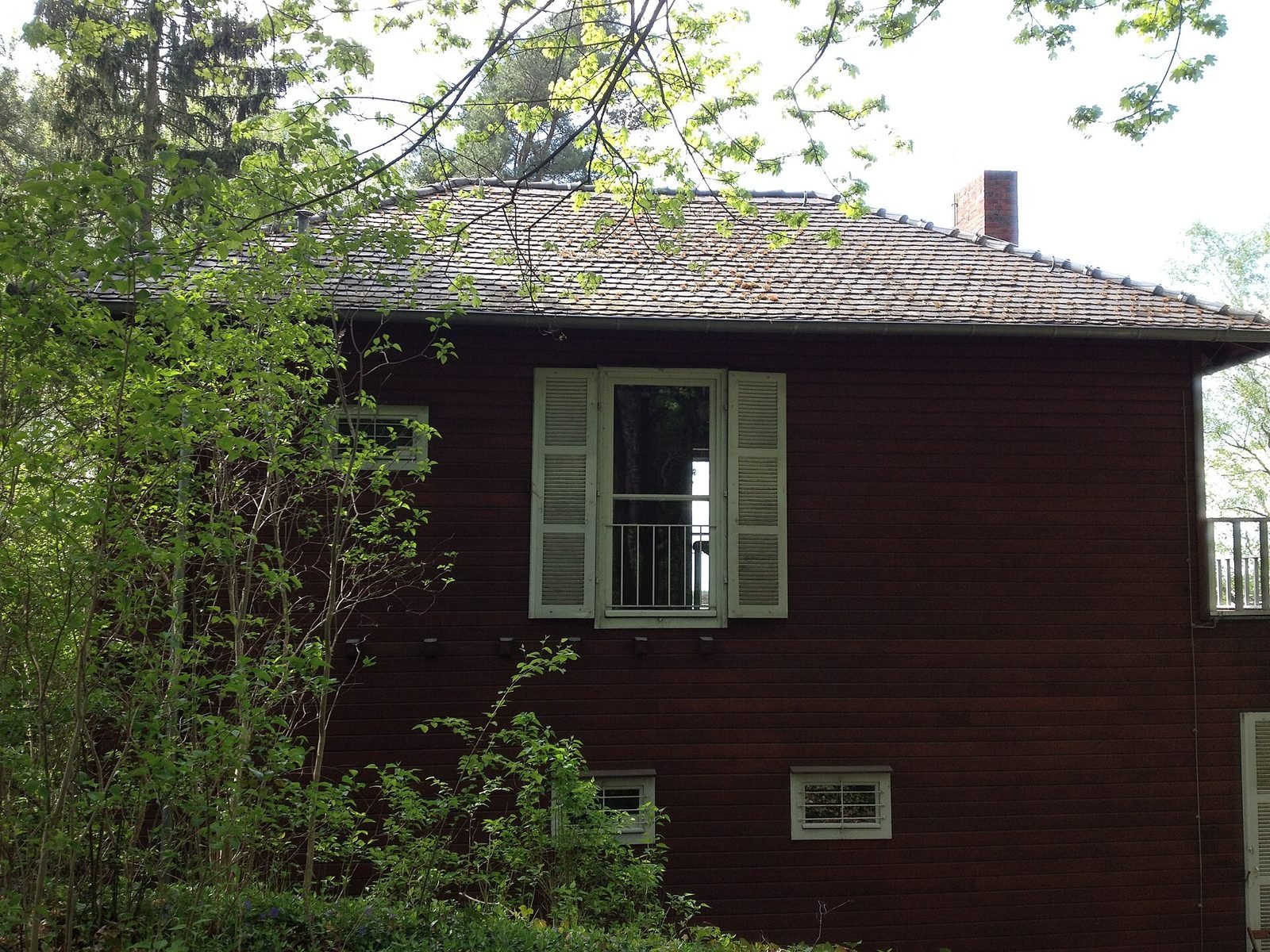
His architect was Konrad Wachsmann, 28 years old, who designed a prefabricated timber house. The Einsteins spent the summers of 1930 to 1932 there, sailing the Havel in his boat, the Tümmler. In the summer of 1933 the regime confiscated the house and the boat.
1933
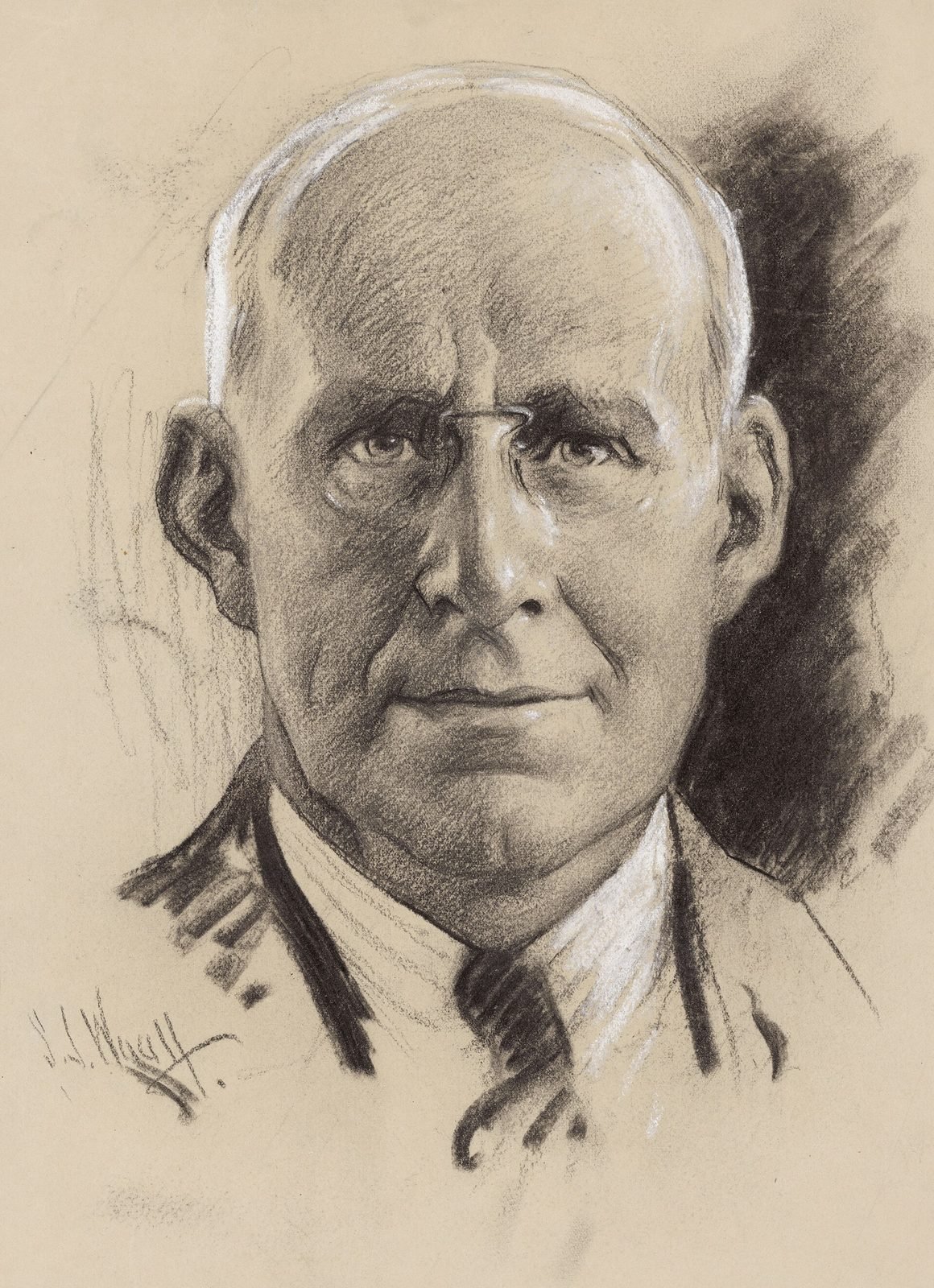
Einstein’s resignation, dated 28 March 1933, was noted by the Academy’s plenum on 30 March 1933. Two days later the Academy issued its statement: it had “no reason to regret Einstein’s withdrawal”. Lenard’s and Stark’s “Deutsche Physik” movement was already attacking relativity as “Jewish physics”.
The flat in the Haberlandstraße was searched by the SA several times that spring. Most of the furniture, his library and his papers were packed in the summer of 1933 and sent, with the help of the French embassy, to Paris and then to Princeton. The house itself was destroyed by bombs in the Second World War. On 24 March 1934 Germany stripped Einstein of his citizenship.

Berlin gave Einstein almost nineteen years and the freedom to finish general relativity. In return it took his house, his boat and his citizenship.
Press & citation
Free to publish under CC BY 4.0 — in print, online, on Wikipedia and in teaching, commercially or not — with credit to Berlinfographics and a link to this page.

Ready-to-use image
The infographic as one image: headline, key figures, chart, sources and credit, 2,400 × 1,350 px PNG. Please use it unedited.
Download landscape (PNG)
Square format
A 1:1 version for social media and narrow columns, 1,800 × 1,800 px.
Download square (PNG)
Portrait 4:5
For Instagram and LinkedIn feeds, 1,620 × 2,025 px.
Download portrait (PNG)Credit line
Berlinfographics (berlinfographics.com), CC BY 4.0
Citation
Berlinfographics (2026). “Einstein’s Berlin, 1914–1933”. Berlin Experiences. https://berlinfographics.com/einstein-berlin-years/
Wikipedia
{{cite web |title=Einstein’s Berlin, 1914–1933 |url=https://berlinfographics.com/einstein-berlin-years/ |website=Berlinfographics |publisher=Berlin Experiences |date=2026-11-09 |access-date=2026-11-09}}
Our infographics, charts and texts are licensed CC BY 4.0: free to republish, including commercially, with credit to Berlinfographics and a link. Photographs keep their own licences, named in each caption. How to credit
Topics: The Second World War · Cold War Berlin · Nazi Berlin · Persecution & the Holocaust · Weimar Berlin · Prussia & the Kaiserreich · Architecture & the built city · Culture, science & society · Reunified Berlin · Unusual facts
Contact: info@berlinfographics.com · Press: press@berlinfographics.com · Imprint · Privacy