Berlinfographicsby Berlin Experiences

Escape through the Wall · 1963

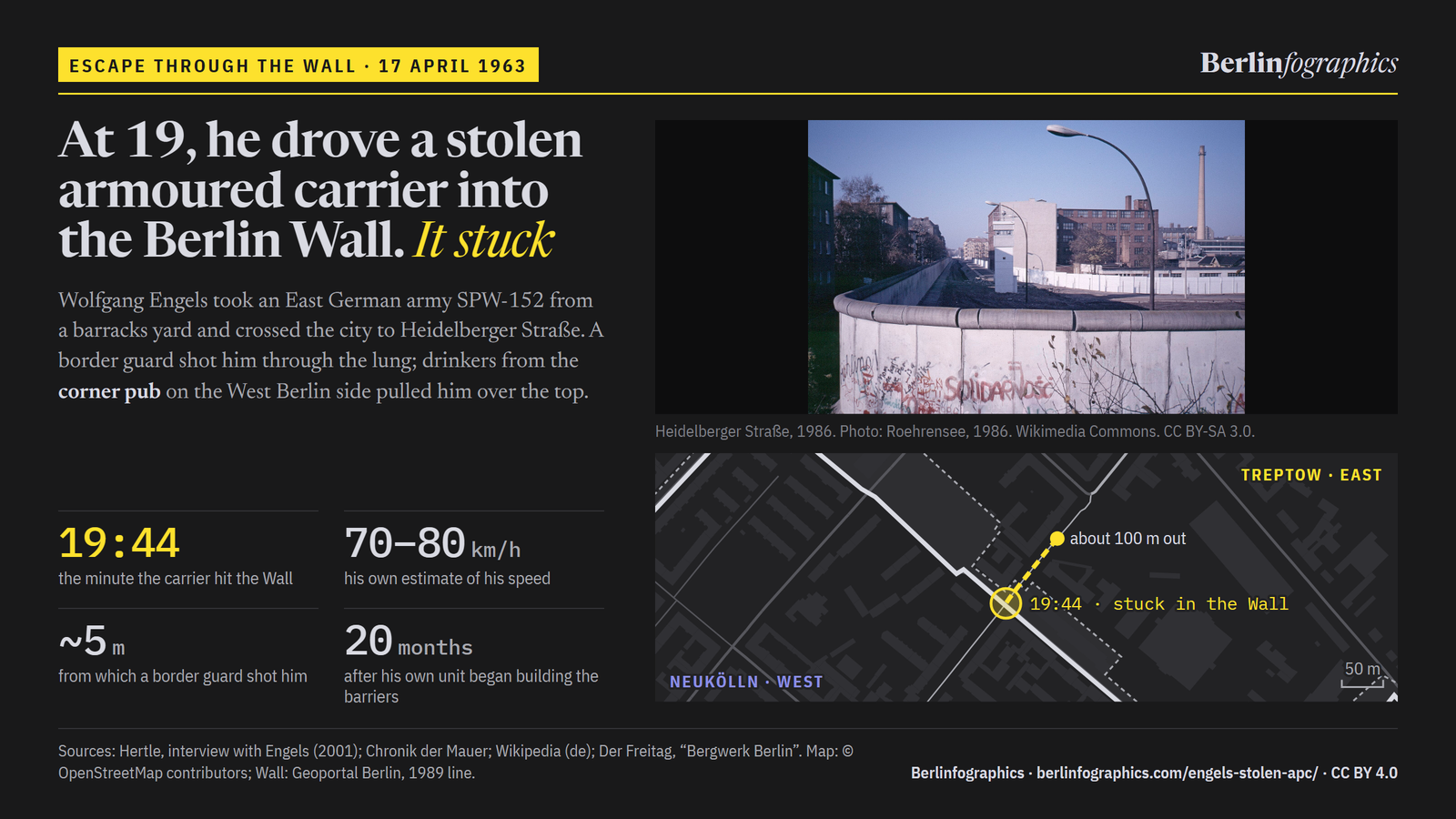
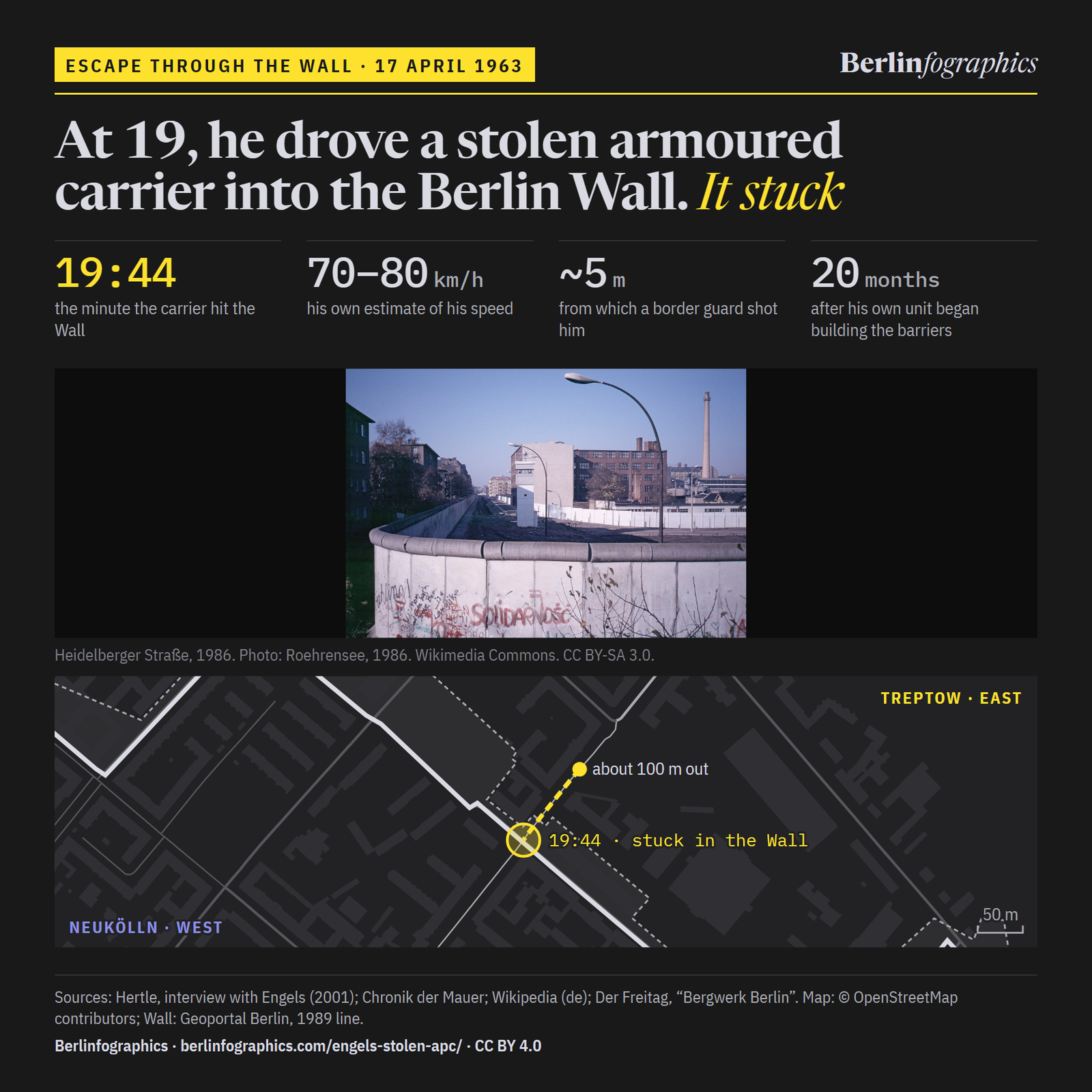
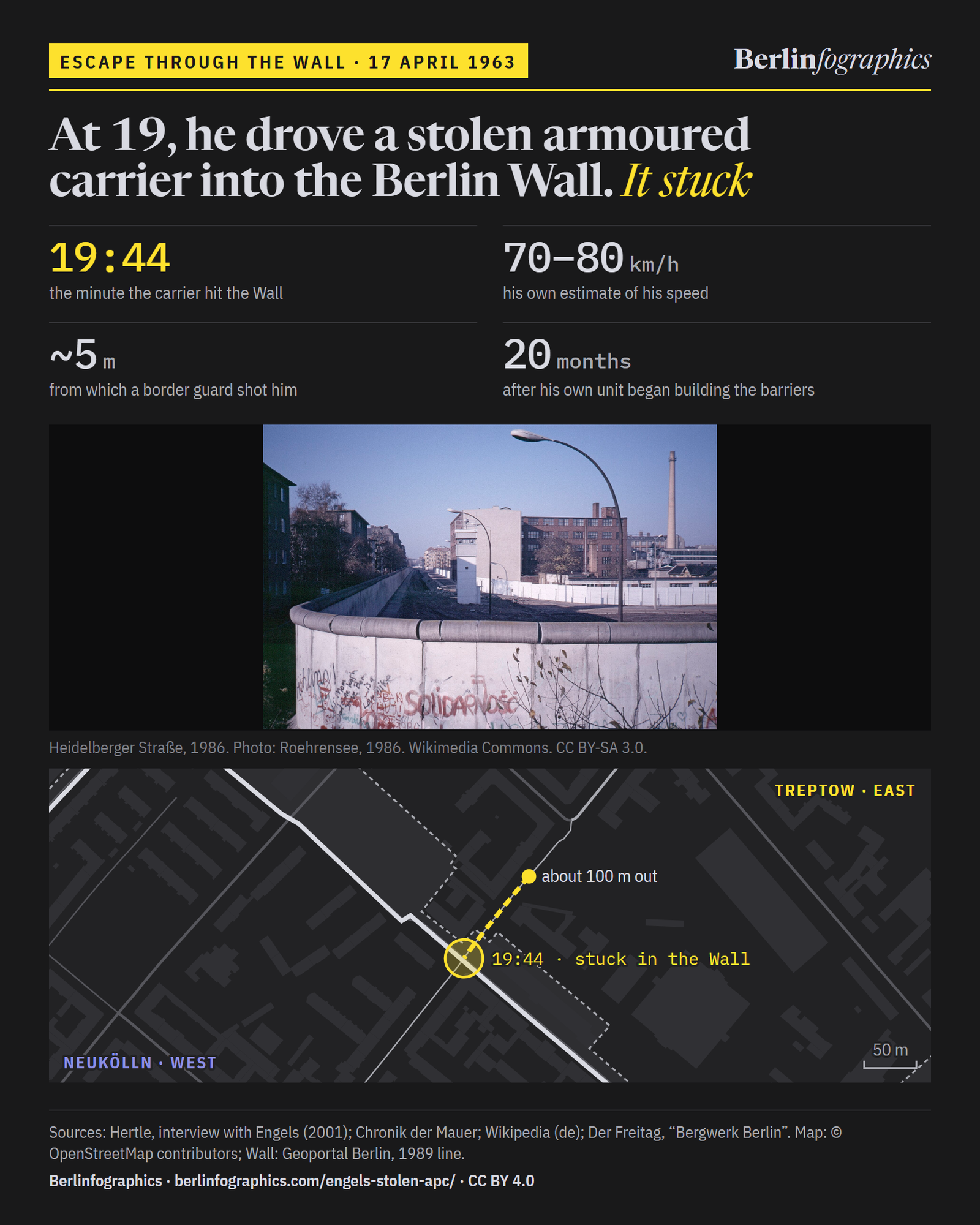
At 19, Wolfgang Engels drove a stolen armoured carrier into the Berlin Wall. It stuck, and drinkers from the corner pub pulled him over the top

On the evening of 17 April 1963 he took an army SPW-152 from a barracks yard in East Berlin and crossed the city to Heidelberger Straße. A border guard shot him through the lung. He lived.

Heidelberger Straße from the West in November 1986, walled by a later generation of the Wall.Photo: Roehrensee, 1986. Wikimedia Commons. CC BY-SA 3.0.

19:44
the time it hit the Wall, 17 April 1963
70–80km/h
his own estimate of his speed at the Wall
~5m
from which a border guard shot him
20months
after his own army unit began building the barriers
01Berlin, 13 Aug 1961

He escaped through barriers his own unit had begun to build

Engels was born in 1943 in Düsseldorf and spent his first ten years in the West. In 1952 or 1953 his mother, a Communist party member, moved to East Germany on the party’s orders and took him with her.

On 13 August 1961, aged 18, he was a soldier in an army engineer battalion quartered at the Magerviehhof in Friedrichsfelde. Its job that week was to put up the first barriers that sealed the border to West Berlin.

20 months later, he drove out of the same yard in an armoured carrier, heading for the Wall.

By 1963 he was a civilian driver for the army. Before Easter 1963: stopped with two friends near the Reichstag and accused of trying to flee, he resolved to take the next chance.

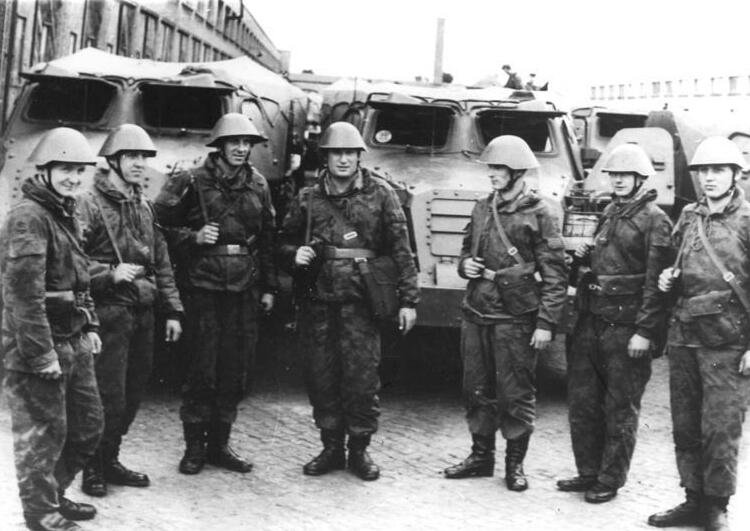
Seven helmeted soldiers in camouflage stand in a row on cobbles in front of a line of armoured carriers.
East German soldiers in front of their SPW-152 carriers in Berlin, 14 August 1961, the day after the border was closed. The archive’s original caption is propaganda and is not quoted here.Photo: Bundesarchiv, Bild 183-85455-0001 / Unknown author / CC BY-SA 3.0 de
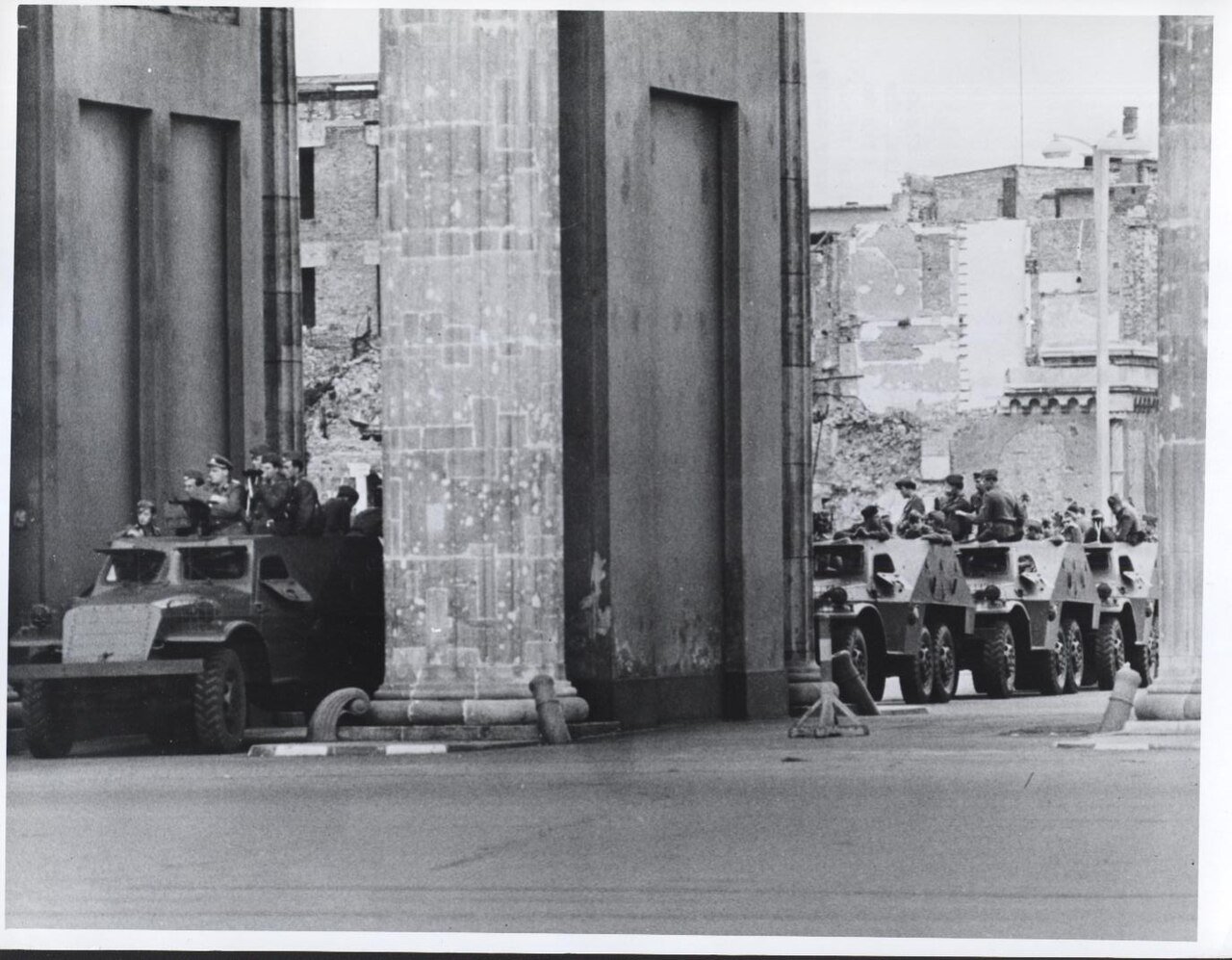
Six-wheeled armoured carriers with soldiers sitting on top, lined up between the columns of the Brandenburg Gate; ruined buildings behind.
The type he stole: East German SPW-152s behind the Brandenburg Gate, late August 1961.Photo: The Central Intelligence Agency, 1961. Wikimedia Commons. Public domain.
The Reichstag building seen across a lawn.
The Reichstag, which stood in West Berlin beside the border, around 1990.Photo: Dietmar Rabich, 1990. Wikimedia Commons. CC BY-SA 4.0.

02Magerviehhof, Friedrichsfelde

The carrier had no key, only a switch and a foot starter

Carriers newly arrived for the May Day parade stood in the yard. All evening he had got their drivers to explain the controls. There was no key to take. A Soviet BTR-152 (the NVA called it the SPW-152): armour on a lorry chassis. It had no ignition key, only a main switch and a foot starter. Engels held a lorry licence but had never driven one.

About 7 pm, the crews went to dinner. He climbed in.

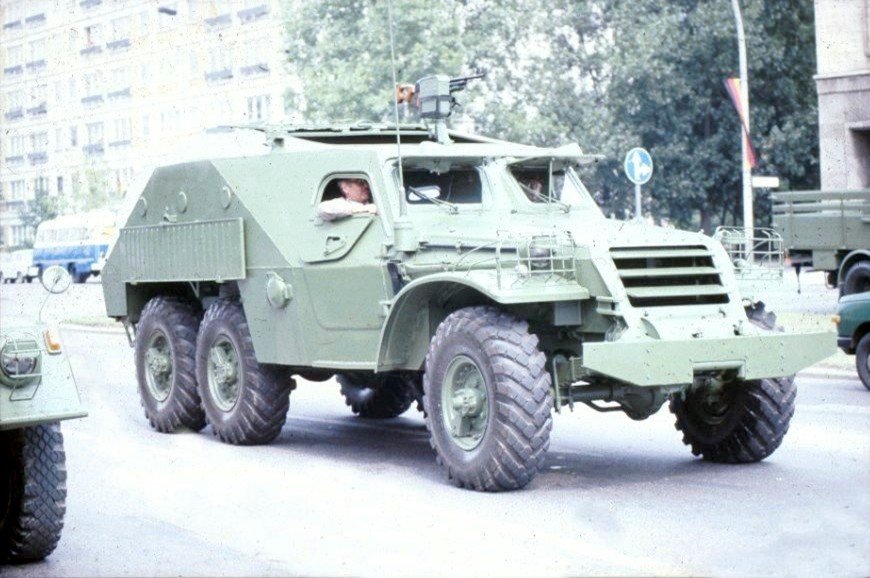
A pale green six-wheeled armoured carrier with an open top drives along a wide city street; a driver leans out of the side window.
A BTR-152 in an East Berlin street, undated: armour on a lorry chassis, with three axles.Photo: US Army photo. Wikimedia Commons. Public domain.

The SPW-152: a Soviet BTR-152 in East German service

9 t
Combat weight
110 hp
Six-cylinder petrol engine
6 × 6
Three axles, all driven
70–80
km/h at the Wall, his estimate

0317 April 1963

From the barracks yard to the Wall, step by step

Nobody stopped an army vehicle in East Berlin. The record of that evening comes from Engels’s own account, given to a historian in 2001, and from the files and press of the time.

East and West Berlin, 1963

A map of East and West Berlin, from the Magerviehhof in Friedrichsfelde to Kreuzberg, that zooms in to the corner of Elsenstraße and Heidelberger Straße, where Engels drove into the Wall, and back out to the Urban hospital.

The Wall drawn here is the border of the 1989 survey; in 1963 the barrier at this corner was concrete slabs, a screen and a wire fence. His route across the city is not recorded beyond Frankfurter Allee. Map: © OpenStreetMap contributors; Wall: Geoportal Berlin.

Seven helmeted soldiers in camouflage stand in a row on cobbles in front of a line of armoured carriers.

East German soldiers in front of their SPW-152 carriers in Berlin, 14 August 1961, the day after the border was closed. The archive’s original caption is propaganda and is not quoted here. Photo: Bundesarchiv, Bild 183-85455-0001 / Unknown author / CC BY-SA 3.0 de

About 7 pmMagerviehhof Friedrichsfelde

The crews went to dinner. He climbed in.

Carriers newly arrived for the May Day parade stood in the yard. All evening he had got their drivers to explain the controls. There was no key to take.

A pale green six-wheeled armoured carrier with an open top drives along a wide city street; a driver leans out of the side window.

A BTR-152 in an East Berlin street, undated: armour on a lorry chassis, with three axles. Photo: US Army photo. Wikimedia Commons. Public domain.

The barracks gate

An officer stepped into the road. Engels drove straight at him.

The officer jumped clear. The gate was closed only by a chain; he drove through it.

Black-and-white street scene: people in coats walk along a wide pavement in front of a tall apartment block with a domed tower.

Karl-Marx-Allee at the Frankfurter Tor, where the avenue runs on as Frankfurter Allee, photographed for the East German press agency on the day of the escape. Photo: Bundesarchiv, Bild 183-B0416-0011-001 / Voigt / CC BY-SA 3.0 de

Frankfurter Allee

Traffic police turned the lights green for him.

An army vehicle drew no attention in East Berlin. The drive across the city took about 20 minutes.

A long graffiti-covered concrete wall in long grass; behind it a watchtower and the back walls of old apartment blocks.

The Wall at Heidelberger Straße in 1990, seen from Neukölln, with the backs of the Elsenstraße tenements and a watchtower on the Treptow side. Photo: Klimper, 1990. Wikimedia Commons. CC BY-SA 4.0.

Elsenstraße, about 100 m from the Wall

“I'm getting out — anyone coming?”

He stopped and shouted it to young people on the pavement. Nobody climbed in.

A curved concrete wall covered in graffiti in the foreground; behind it a sandy border strip with a watchtower, street lamps and a long white inner wall, factory buildings and a chimney beyond.

Heidelberger Straße from the West in November 1986, walled by a later generation of the Wall. Photo: Roehrensee, 1986. Wikimedia Commons. CC BY-SA 3.0.

19:44Corner of Elsenstraße and Heidelberger Straße

The carrier smashed a hole in the Wall — and stuck in it.

Concrete slabs stacked three deep, a screen and a wire fence bled off its speed. His foot slipped off the pedal, the engine stalled and the axles broke. The doors were still on the Eastern side.

Black-and-white photograph of a long, straight border strip between a concrete wall topped with a pipe and a line of curved street lamps, with a watchtower at right.

The Wall between Neukölln and Treptow in March 1990: the outer wall at left, the raked strip, lamps and a watchtower. Photo: Gerd Danigel, 1990. Wikimedia Commons. CC BY-SA 4.0.

In the barbed wire

“Don't shoot!” A border guard fired from about 5 metres.

The bullet went into his back and out of his chest, through the lung. He climbed back through the cab and crouched on the bonnet, where a ricochet tore his left hand.

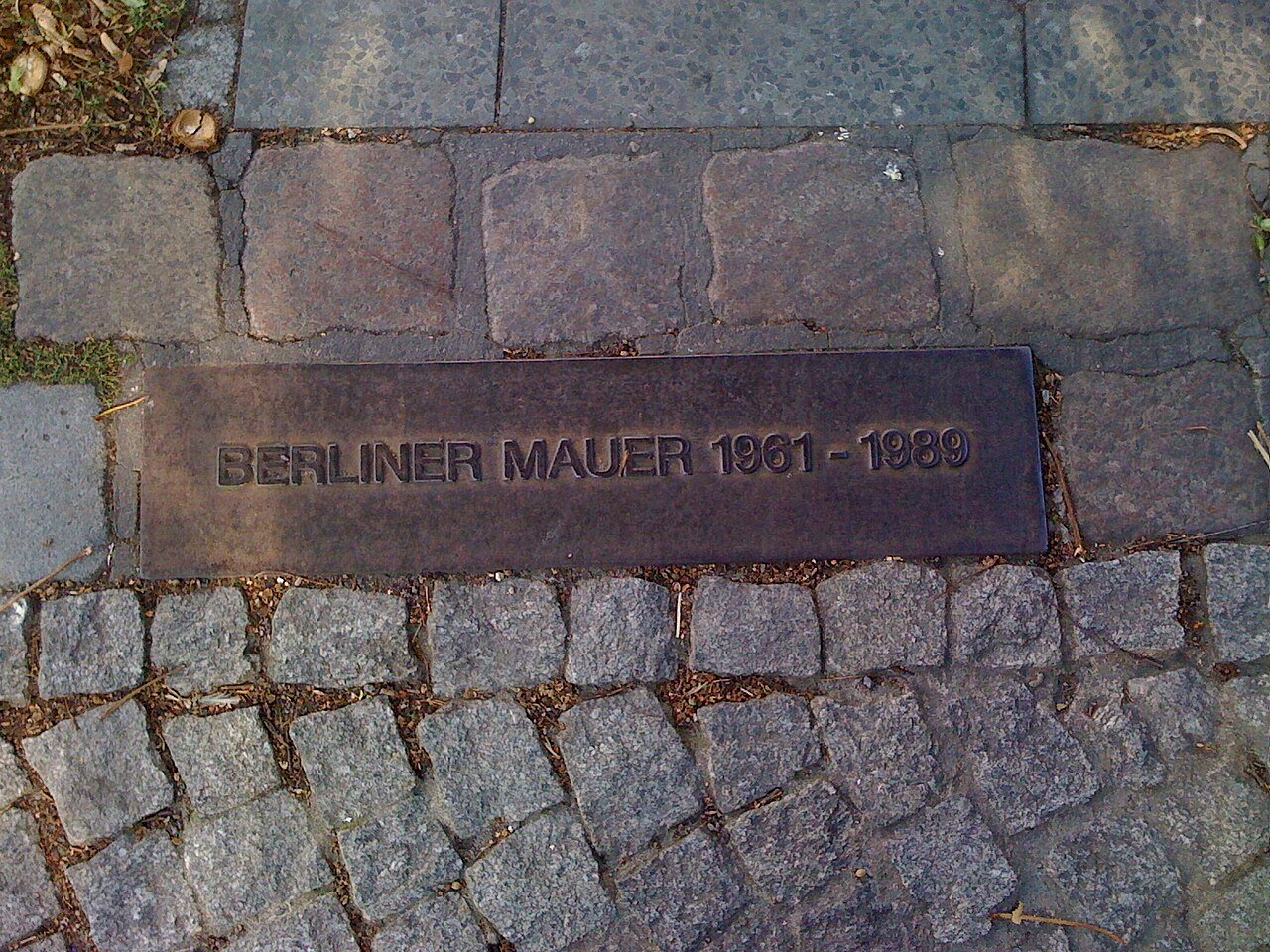
A bronze strip in cobblestones reading Berliner Mauer 1961–1989.

Where the Wall stood: the bronze strip set into the pavement at Wildenbruchstraße and Heidelberger Straße, 2012. Photo: Aude, 2012. Wikimedia Commons. CC BY-SA 3.0.

West Berlin police post

A West Berlin policeman fired back.

The guards took cover. Engels climbed onto the top of the Wall and lay full length in the wire.

Heidelberger Krug

A savings club drinking in the corner pub pulled him down.

They made a human ladder, lifted him off the wire and carried him inside. The shutters came down; the guards shot out the pub's neon sign. His first request, a regular told RIAS radio next morning: a beer and a schnapps.

Yellow-and-red brick hospital pavilions along a lane, with a tall chimney behind.

The old pavilions of the Urban hospital in Kreuzberg, a listed monument, in 2015. Photo: Bodo Kubrak, 2015. Wikimedia Commons. CC BY-SA 4.0.

Urban hospital, West Berlin

Firemen carried him out through the neighbours' flats.

The pavement outside the pub was East German ground, so the rescuers came in through back courtyards. Two weeks later he was fit for work.

The Wall drawn here is the border of the 1989 survey; in 1963 the barrier at this corner was concrete slabs, a screen and a wire fence. His route across the city is not recorded beyond Frankfurter Allee. Map: © OpenStreetMap contributors; Wall: Geoportal Berlin.

04Heidelberger Straße

A savings club in the corner pub lifted him off the Wall

The Heidelberger Krug stood on the West Berlin side of Heidelberger Straße. They made a human ladder, lifted him off the wire and carried him inside. The shutters came down; the guards shot out the pub's neon sign. His first request, a regular told RIAS radio next morning: a beer and a schnapps.

Firemen carried him out through the neighbours' flats. The pavement outside the pub was East German ground, so the rescuers came in through back courtyards. Two weeks later he was fit for work.

A long graffiti-covered concrete wall in long grass; behind it a watchtower and the back walls of old apartment blocks.
The Treptow sideThe Wall at Heidelberger Straße in 1990, seen from Neukölln, with the backs of the Elsenstraße tenements and a watchtower on the Treptow side.Photo: Klimper, 1990. Wikimedia Commons. CC BY-SA 4.0.

The street had been the border since 13 August 1961. The barrier he hit was later replaced by the wall and border strip in these photographs.

A bronze strip in cobblestones reading Berliner Mauer 1961–1989.
Where the Wall stood: the bronze strip set into the pavement at Wildenbruchstraße and Heidelberger Straße, 2012.Photo: Aude, 2012. Wikimedia Commons. CC BY-SA 3.0.
Black-and-white photograph of a long, straight border strip between a concrete wall topped with a pipe and a line of curved street lamps, with a watchtower at right.
The Wall between Neukölln and Treptow in March 1990: the outer wall at left, the raked strip, lamps and a watchtower.Photo: Gerd Danigel, 1990. Wikimedia Commons. CC BY-SA 4.0.

05Düsseldorf, 1943 – Bergen-Belsen, 1988

Born in the West, taken east at ten, back in the West at 19

He went through the Wall on 17 April 1963, from the same yard where his unit had built the barriers. What came after, in the West:

Hunted by the StasiThe Stasi drew up a plan to bring him back; an informer watched him in Düsseldorf. It was never carried out.
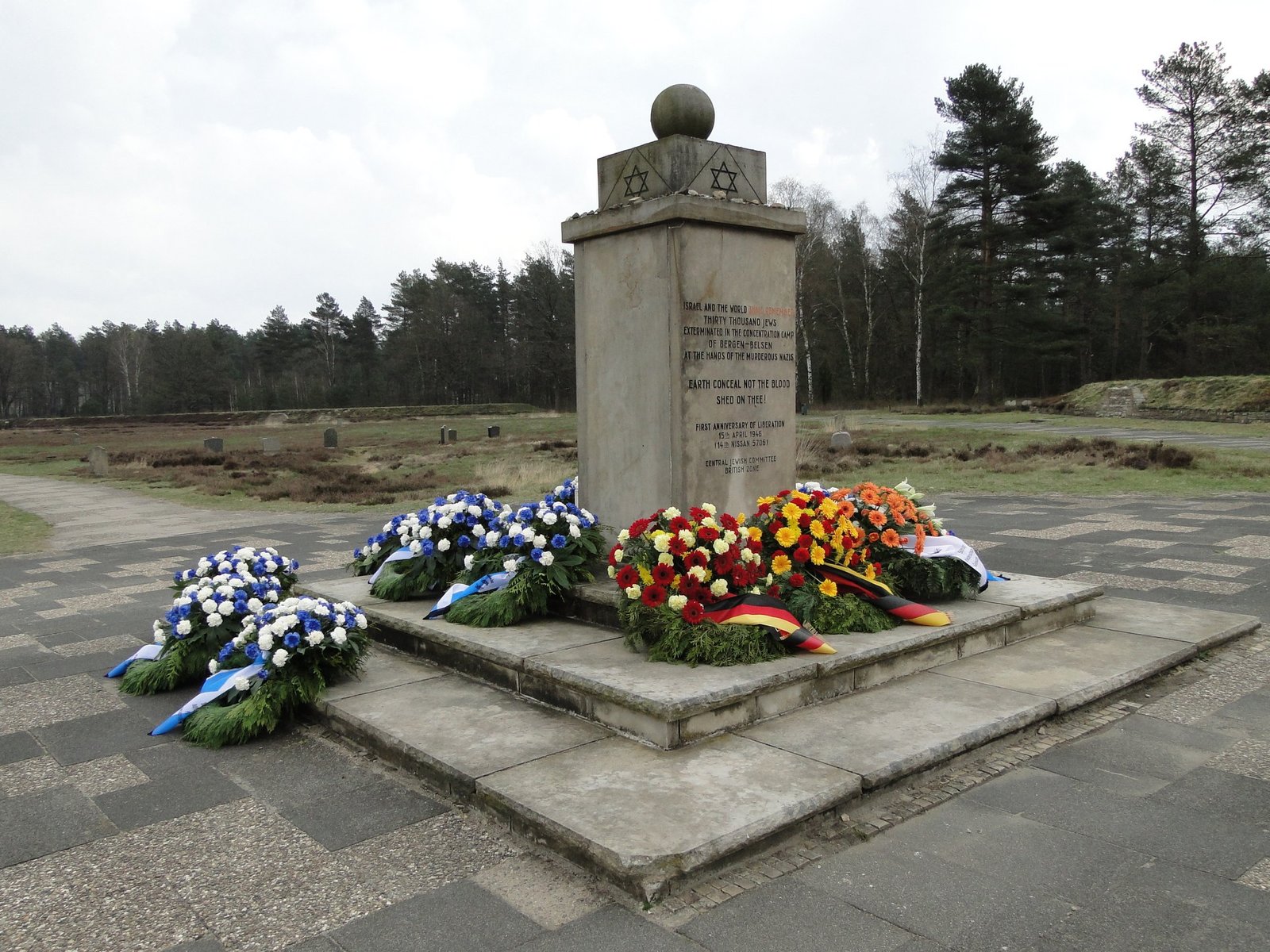
A schoolteacherHe taught history and biology at the Realschule in Soltau, and from 1988 guided groups at the Bergen-Belsen memorial.
A stone memorial pillar with wreaths laid around its base, on a heath fringed by pines.
The Jewish memorial at the Bergen-Belsen concentration camp memorial, 2012. Engels guided groups there from 1988.Photo: Drow69, 2012. Wikimedia Commons. CC BY-SA 3.0.

06Heidelberger Straße, May 1963

Weeks later, a ditch would have swallowed the carrier

On 17 April 1963 there was no ditch at the corner. What stopped the carrier, in Engels’s words:

  • Concrete slabs, stacked three deep
  • A screen
  • A barbed-wire fence

The ditch dug along the street by the end of May 1963, in profile

By the end of May 1963 East Germany had dug a ditch 3 metres wide and 2.5 metres deep along Heidelberger Straße. Had Engels come a few weeks later, the carrier would have ended in it.

Press & citation

Use this Berlinfographic

Free to publish under CC BY 4.0 — in print, online, on Wikipedia and in teaching, commercially or not — with credit to Berlinfographics and a link to this page.

The stolen carrier: Wolfgang Engels at Heidelberger Straße, 1963: ready-to-use landscape image

Ready-to-use image

The infographic as one image: headline, key figures, chart, sources and credit, 2,400 × 1,350 px PNG. Please use it unedited.

Download landscape (PNG)
The stolen carrier: Wolfgang Engels at Heidelberger Straße, 1963: square version

Square format

A 1:1 version for social media and narrow columns, 1,800 × 1,800 px.

Download square (PNG)
The stolen carrier: Wolfgang Engels at Heidelberger Straße, 1963: portrait version

Portrait 4:5

For Instagram and LinkedIn feeds, 1,620 × 2,025 px.

Download portrait (PNG)

Credit line

Berlinfographics (berlinfographics.com), CC BY 4.0

Citation

Berlinfographics (2026). “The stolen carrier: Wolfgang Engels at Heidelberger Straße, 1963”. Berlin Experiences. https://berlinfographics.com/engels-stolen-apc/

Wikipedia

{{cite web |title=The stolen carrier: Wolfgang Engels at Heidelberger Straße, 1963 |url=https://berlinfographics.com/engels-stolen-apc/ |website=Berlinfographics |publisher=Berlin Experiences |date=2026-11-05 |access-date=2026-11-05}}