Berlinfographicsby Berlin Experiences

BundeskanzlerTen chancellors · 1949–2026

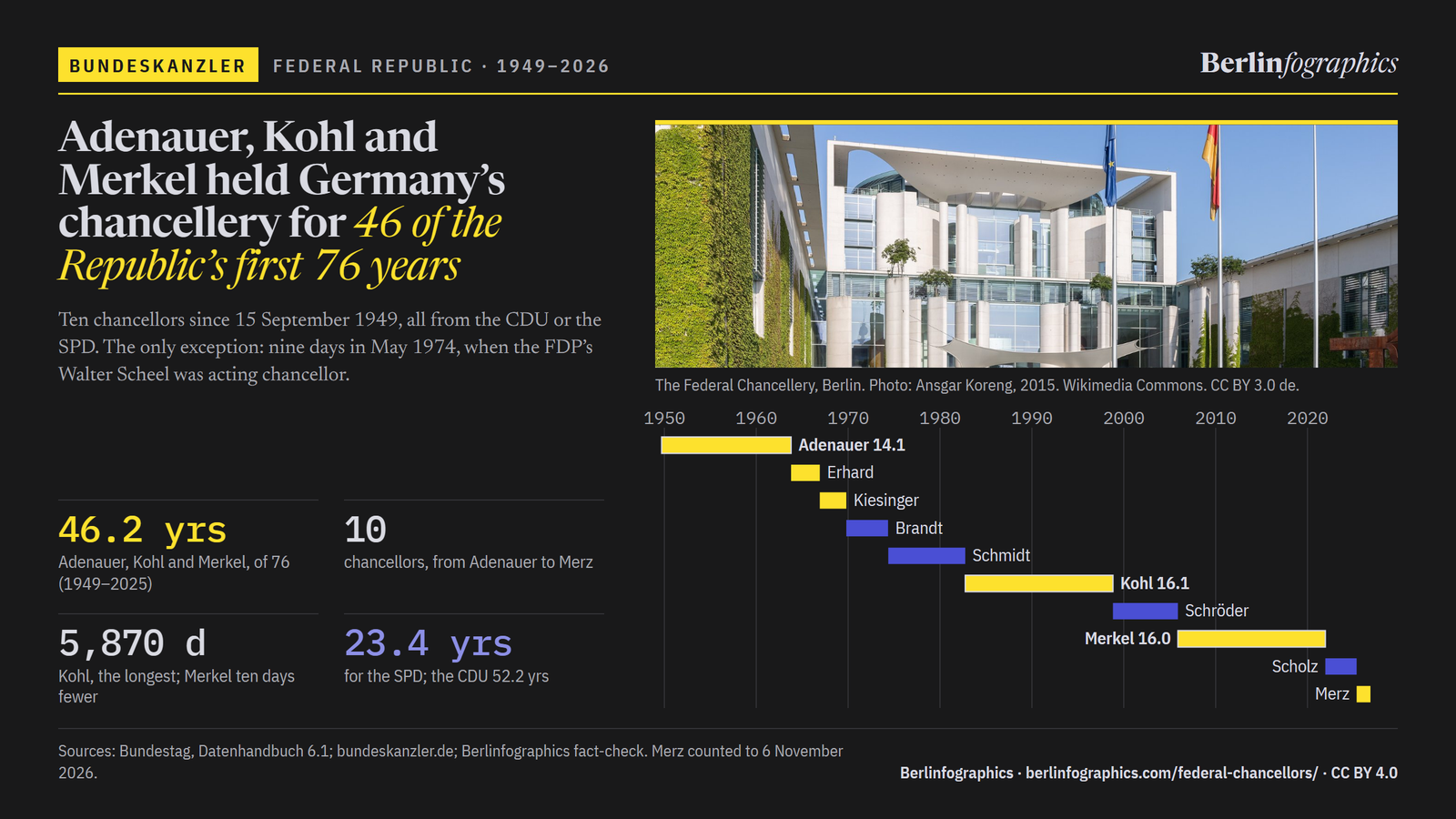
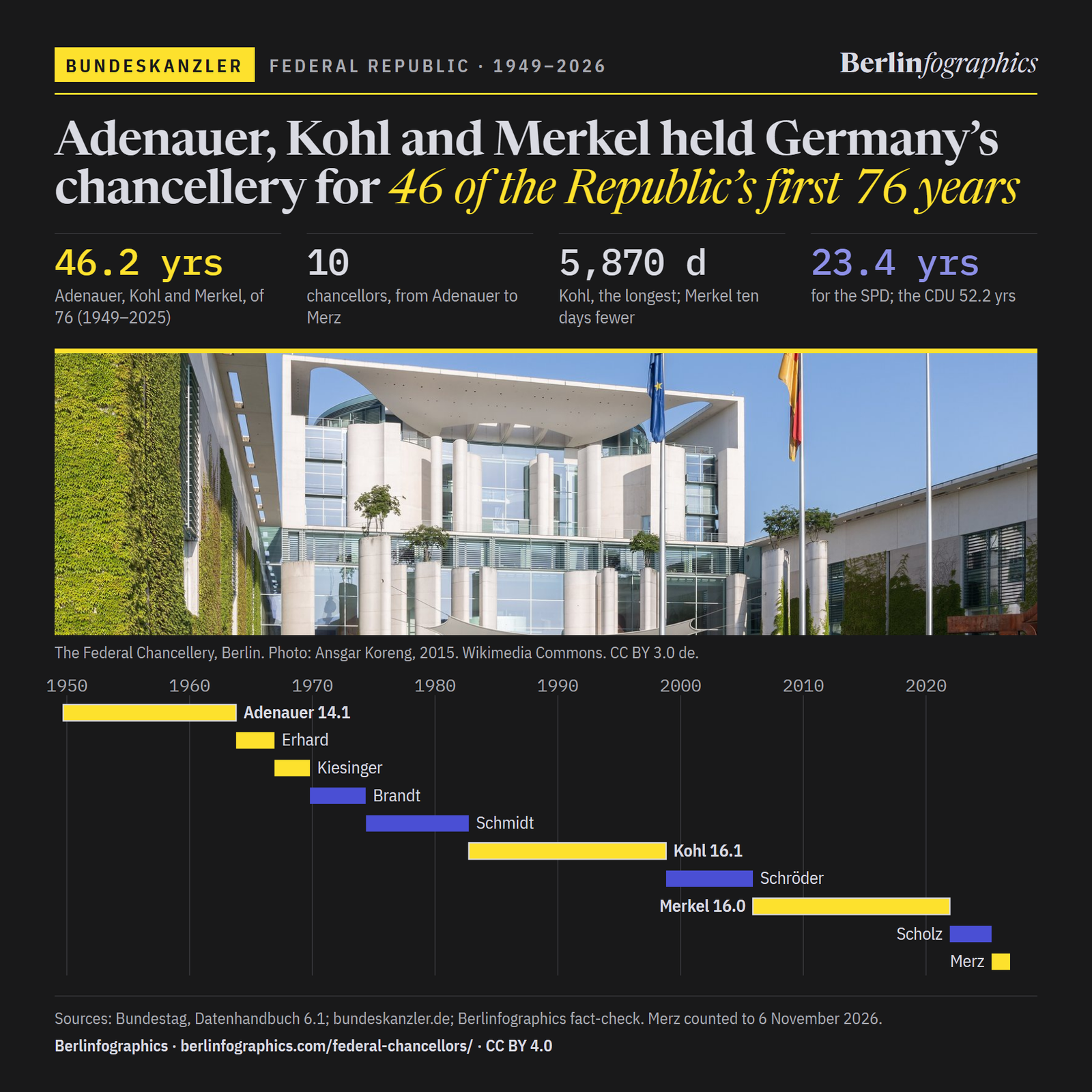
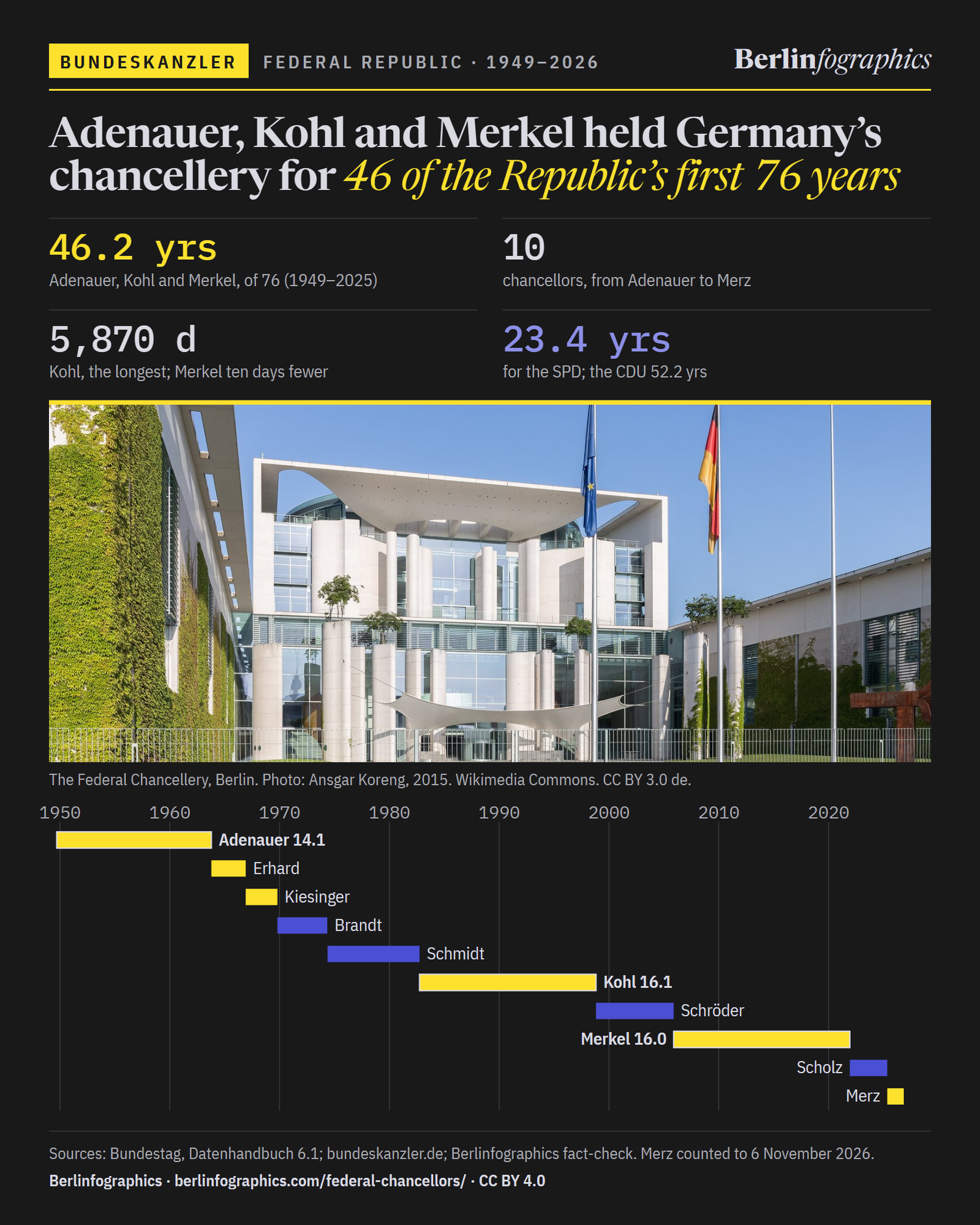
Adenauer, Kohl and Merkel held Germany’s chancellery for 46 of the Federal Republic’s first 76 years

Ten chancellors have led the Federal Republic since 15 September 1949, all of them from just two parties. Three of them governed for 46.2 years between them. The tenth, Friedrich Merz, took office on 6 May 2025.

Scroll through the chancellors

The Federal Chancellery in Berlin, by Axel Schultes and Charlotte Frank, built 1997–2001. Gerhard Schröder moved in on 2 May 2001.Ansgar Koreng, 2015. Wikimedia Commons. CC BY 3.0 de.

01The office

Germans never vote for a chancellor. In 76 years the Bundestag has given the job to ten people

The chancellor is elected by the members of the Bundestag, on the federal president’s proposal (Basic Law, Article 63), and governs until the next Bundestag elects a successor. Only the CDU, with its Bavarian sister party the CSU, and the SPD have ever held the office. Between 1949 and 2025, three CDU chancellors held it for 46.2 of those 76 years: more than three years in every five.

The Bonn plenary chamber with members seated in rows facing the government bench and a large eagle on the wall.
The Bundestag in Bonn, 1955, during the debate on the Paris Treaties, under the federal eagle. The chancellor is elected by the members of the Bundestag, not directly by the voters.Bundesarchiv, B 145 Bild-F002450-0003 / Unterberg, Rolf / CC BY-SA 3.0 de
46.2 yearsunder Adenauer, Kohl and Merkel, of the 76 from 1949 to 2025
10chancellors from Adenauer to Merz
9 daysthe only gap, in May 1974, filled by an acting chancellor

02Ten chancellors on one timeline

Ten chancellors in 76 years. Three of them stayed for a generation

Each bar is one chancellor’s time in office, from the day the Bundestag elected them to the day it elected their successor. Scroll, and the Republic fills in.

CDUSPDacting chancellor (FDP)
10chancellors1949 → today
A timeline from the founding of the Federal Republic to today with one row for each federal chancellor. As you read, each chancellor's term is drawn as a bar, yellow for the CDU and blue for the SPD, ending with the three long terms of Adenauer, Kohl and Merkel highlighted.
Completed terms: 0.0 yrs CDU · 0.0 yrs SPDCDUSPD
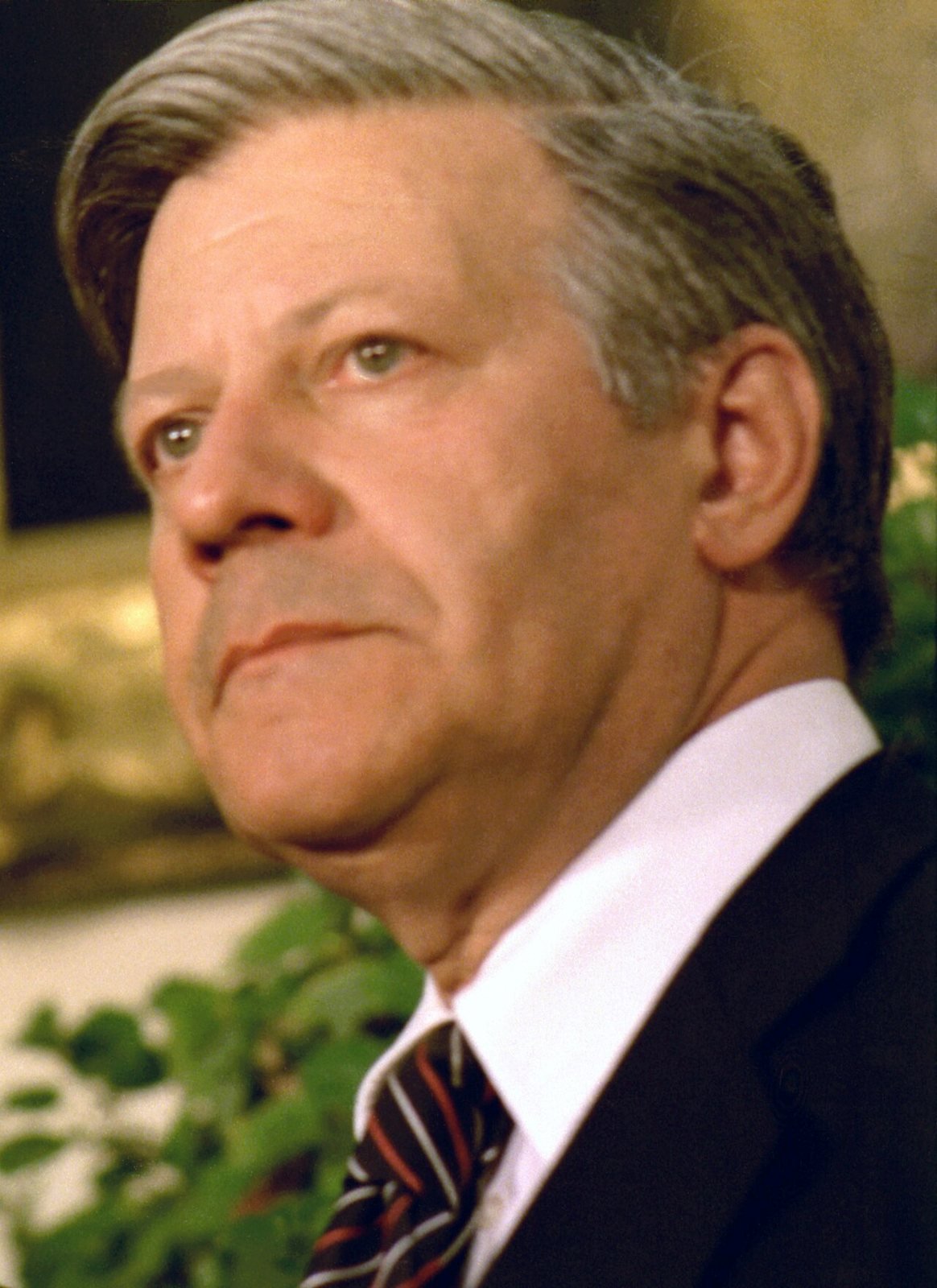
Close-up portrait of Helmut Schmidt looking past the camera.
Helmut Schmidt, July 1977.Jack Kightlinger, 1977. Wikimedia Commons. Public domain.
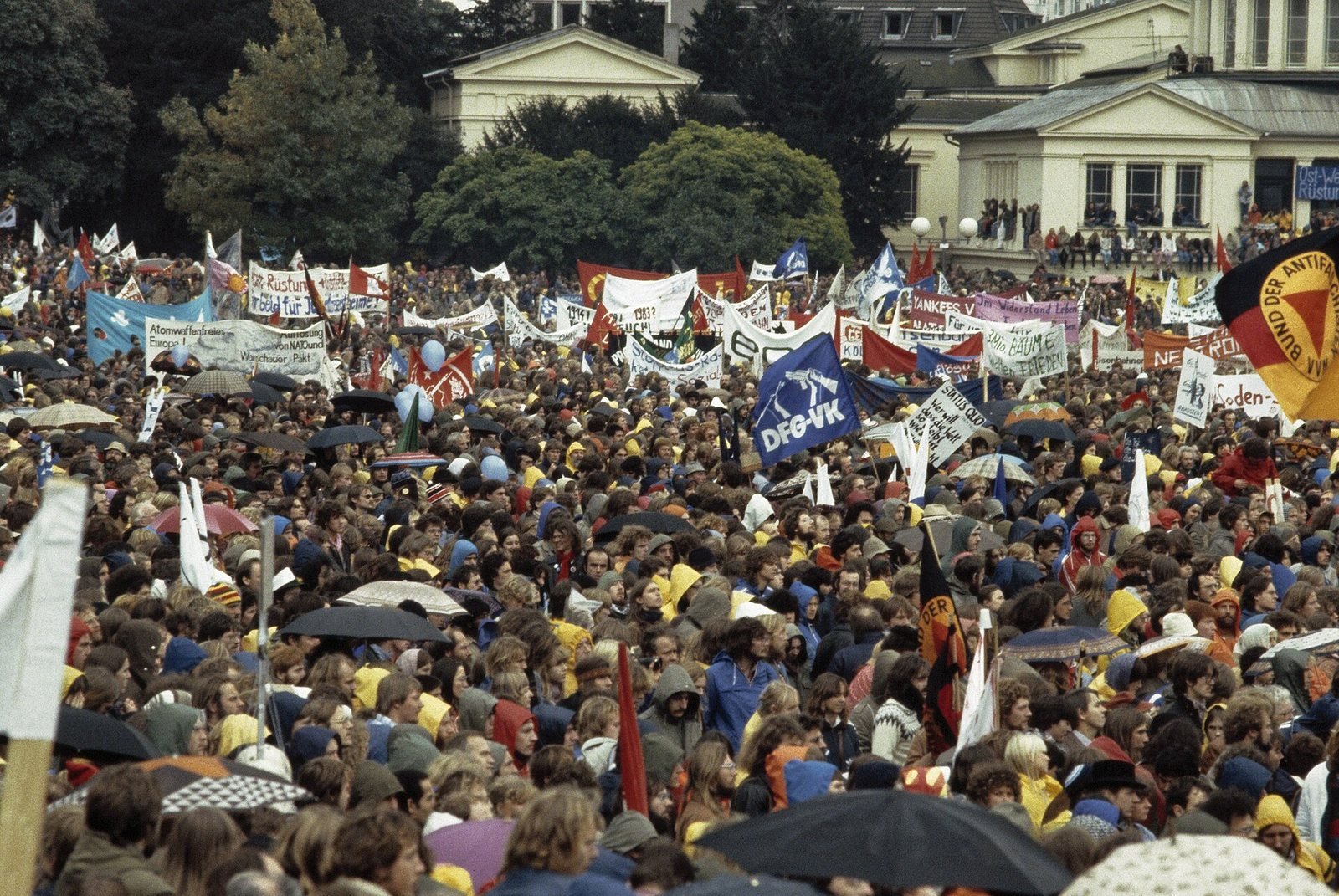
A huge crowd with banners and flags in front of a classical university building in Bonn.
Bonn, 10 October 1981: a mass demonstration against the modernisation of NATO’s nuclear weapons in Western Europe, two years after the alliance’s dual-track decision.Rob Bogaerts / Anefo, 1981. Nationaal Archief. Wikimedia Commons. CC0.
Flags of the German states on tall poles in front of the Reichstag building, with crowds below.
Berlin, 3 October 1990, the day of reunification: the flags of all the German Länder around the black, red and gold in front of the Reichstag.Bundesarchiv, Bild 183-1990-1003-417 / Uhlemann, Thomas / CC BY-SA 3.0 de

03Time in office

Kohl outlasted Merkel by ten days. Kiesinger lasted less than a fifth as long

Counted from the day of election to the day of the successor’s election, Helmut Kohl served 5,870 days and Angela Merkel 5,860 days. The shortest completed term, Kurt Georg Kiesinger’s, lasted 1,055 days. Friedrich Merz’s bar is still growing.

Days in office, longest first (Merz: to 6 November 2026)

04Two parties

The CDU has held the office for 52.2 years, the SPD for 23.4. Everyone else: nine days

Counting completed terms only, the CDU’s chancellors governed for 19,071 days and the SPD’s for 8,547 days. No other party has ever had a chancellor. The FDP came closest in May 1974, when its Walter Scheel stood in for nine days.

Time in office by party, 1949 – 2025 (completed terms)

05Bonn to Berlin

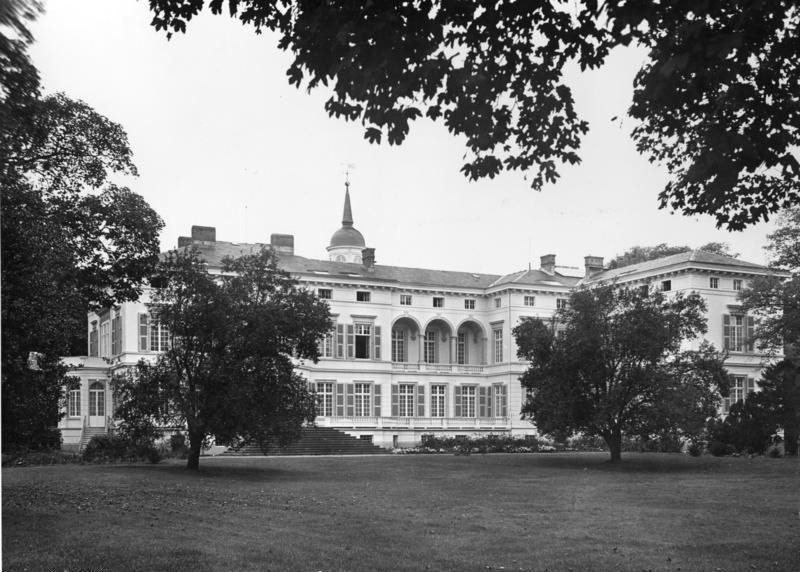
Five chancellors ruled from a Bonn villa. Since 2001, they rule from Berlin

Konrad Adenauer moved into Palais Schaumburg, a villa on the Rhine in Bonn, on 25 November 1949; it stayed the chancellor’s office until 1976. Gerhard Schröder was the first to work in the new Federal Chancellery in Berlin, by Axel Schultes and Charlotte Frank, which he moved into on 2 May 2001. Merkel, Scholz and Merz have governed from there since.

A white villa behind a lawn and trees in Bonn.
Palais Schaumburg in Bonn, 1950. Adenauer moved in on 25 November 1949; it was the chancellor’s office until 1976.Bundesarchiv, B 145 Bild-001502 / Arntz; Burow, E. / CC BY-SA 3.0 de
The white cube of the Federal Chancellery in Berlin behind its forecourt and fence, with the German and European flags flying.
The Federal Chancellery in Berlin, by Axel Schultes and Charlotte Frank, built 1997–2001. Gerhard Schröder moved in on 2 May 2001.Ansgar Koreng, 2015. Wikimedia Commons. CC BY 3.0 de.
Bundeskanzler · 1949–2026

Germany has had ten chancellors in 76 years. Three of them governed for 46.2 of those years, and no voter ever elected one directly.

Press & citation

Use this Berlinfographic

Free to publish under CC BY 4.0 — in print, online, on Wikipedia and in teaching, commercially or not — with credit to Berlinfographics and a link to this page.

Germany’s federal chancellors, 1949–2026: ready-to-use landscape image

Ready-to-use image

The infographic as one image: headline, key figures, chart, sources and credit, 2,400 × 1,350 px PNG. Please use it unedited.

Download landscape (PNG)
Germany’s federal chancellors, 1949–2026: square version

Square format

A 1:1 version for social media and narrow columns, 1,800 × 1,800 px.

Download square (PNG)
Germany’s federal chancellors, 1949–2026: portrait version

Portrait 4:5

For Instagram and LinkedIn feeds, 1,620 × 2,025 px.

Download portrait (PNG)

Credit line

Berlinfographics (berlinfographics.com), CC BY 4.0

Citation

Berlinfographics (2026). “Germany’s federal chancellors, 1949–2026”. Berlin Experiences. https://berlinfographics.com/federal-chancellors/

Wikipedia

{{cite web |title=Germany’s federal chancellors, 1949–2026 |url=https://berlinfographics.com/federal-chancellors/ |website=Berlinfographics |publisher=Berlin Experiences |date=2026-11-06 |access-date=2026-11-06}}