Berlinfographicsby Berlin Experiences

Court and countryBrandenburg-Prussia · Religion

A Reformed dynasty ruled Lutheran Brandenburg for 204 years

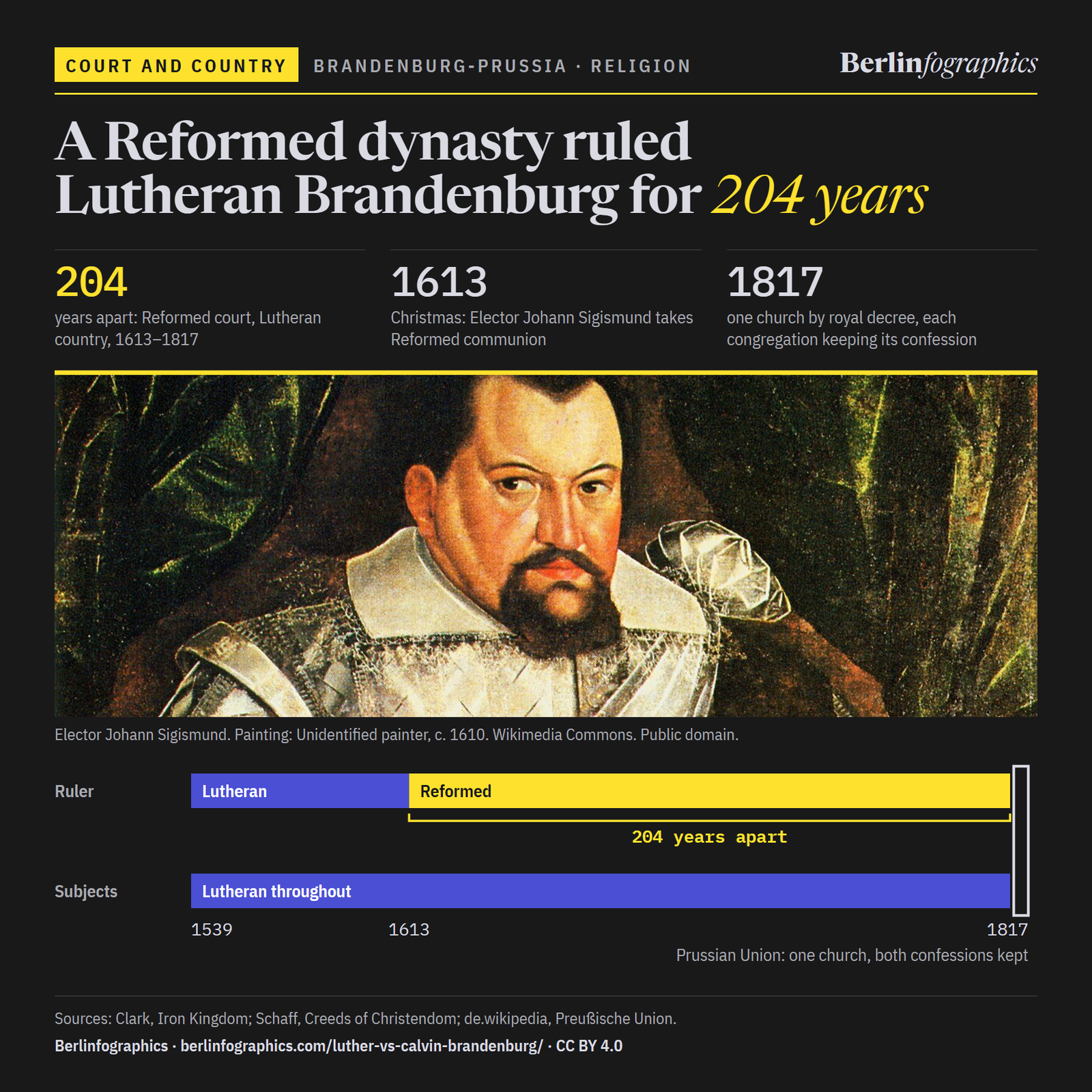
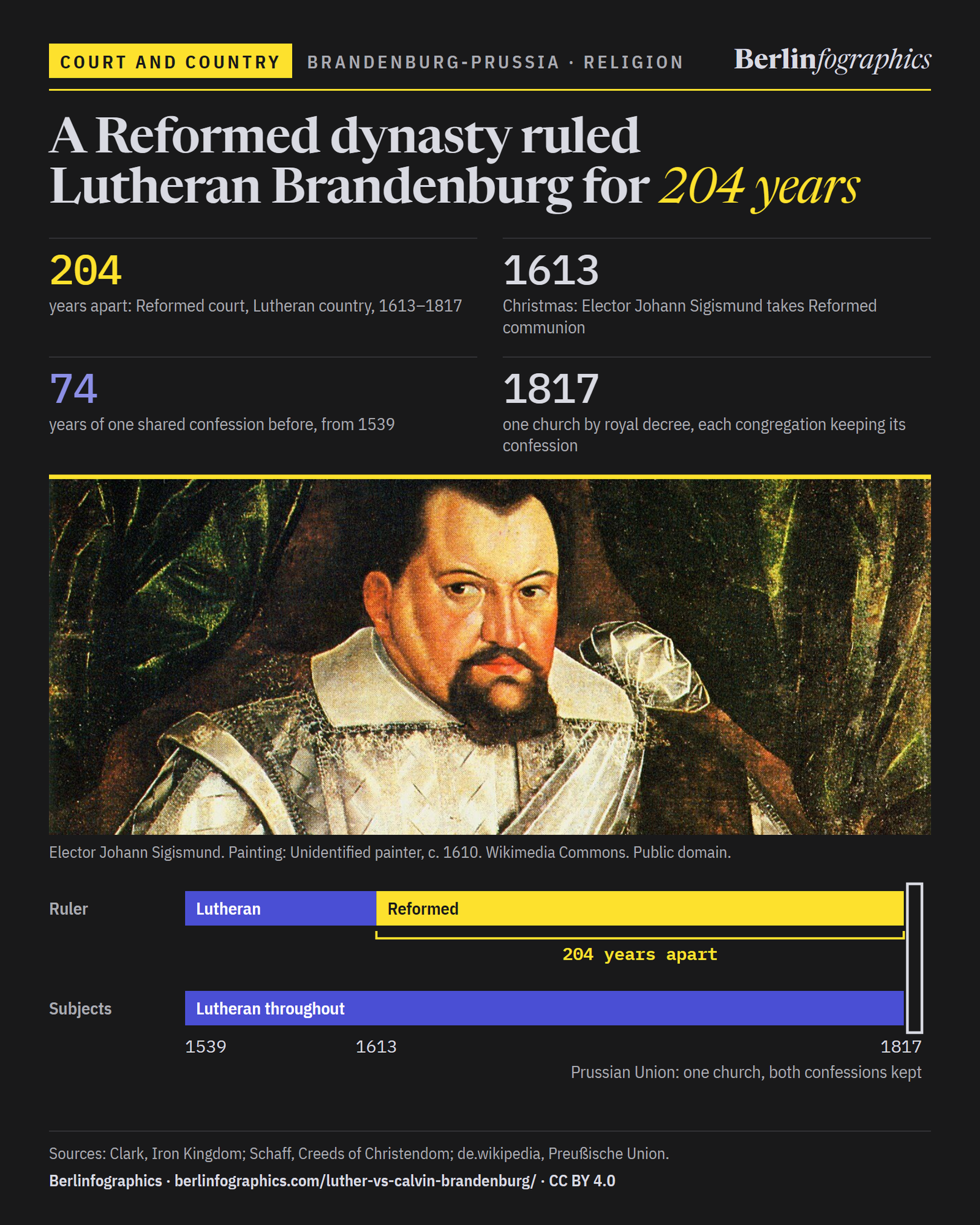
Elector Johann Sigismund took communion by the Reformed rite at Christmas 1613; his subjects stayed Lutheran. The divide lasted until Friedrich Wilhelm III joined both churches in the Prussian Union of 1817.

Scroll through two centuries

Elector Johann Sigismund of Brandenburg, painted around 1610, a few years before he changed his confession. Jagdschloss Grunewald (SPSG).Unidentified painter, c. 1610. Wikimedia Commons. Public domain.
01Two Reformations

For 74 years, prince and people shared one church

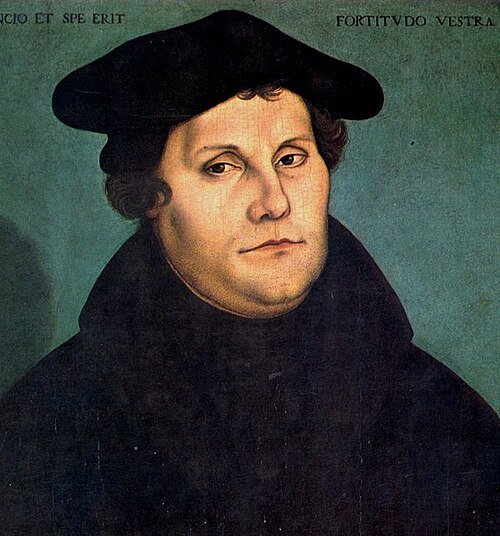
Brandenburg became Lutheran in 1539 under Elector Joachim II Hector. Its rulers and its people then shared one confession — the faith of Martin Luther.

In 1613 Elector Johann Sigismund took the other Protestant road, the Reformed confession that descends from Jean Calvin. By then both reformers had been dead for decades.

A head-and-shoulders portrait of a stout man in a black gown and cap against a blue-green ground.
Martin Luther, painted by Lucas Cranach the Elder in 1529.Lucas Cranach the Elder, 1529. Wikimedia Commons. Public domain.

Lutheran

A portrait of a bearded man in profile to the right, in a black cap and dark gown with a white collar, against a brown ground.
Jean Calvin as a young man; portrait of the Flemish school.Flemish school, 16th century. Wikimedia Commons. Public domain.

Reformed

02Court and country

74years, one confession1539–1613
Joachim II Hector
Two bands across time: the confession of Brandenburg's rulers and the confession of their subjects. Both are Lutheran until the Elector turns Reformed at Christmas; the subjects stay Lutheran. As you read, the view zooms in on the dated events that kept court and country apart, then out to the Prussian Union, which joined both churches by royal decree.
LutheranReformedone church, both confessions
A half-length portrait of a heavy, grey-bearded man in a tall fur hat with a jewelled pin, a red doublet striped with gold and a fur-collared robe, gold chains with jewelled pendants on his chest and gloves in one hand, against a grey-blue ground.
Elector Joachim II Hector, under whom Brandenburg became Lutheran; Lucas Cranach the Younger, about 1570.Lucas Cranach the Younger, c. 1570. Stiftung Preußische Schlösser und Gärten (GKI1113). Wikimedia Commons. Public domain.

1539–1613

74 years, one confession

From 1539, under Joachim II Hector, the Hohenzollern Electors and their Brandenburg subjects were Lutheran together.

Source: Schaff, Creeds of Christendom

A heavy-set man with a dark goatee and a white ruffled collar, in a silver-white doublet with a sash and a fur-edged mantle, against a dark green curtain.
Elector Johann Sigismund, painted a few years before his Christmas communion.Unidentified painter, c. 1610. Wikimedia Commons. Public domain.

25 December 1613

The Elector takes communion by the Reformed rite in the Berlin Dom

Broken bread instead of the Lutheran wafer; candles and crucifix removed. His wife and most of his subjects stay Lutheran.

Source: Clark, Iron Kingdom · Schaff, Creeds of Christendom

A portrait of a bearded man in profile to the right, in a black cap and dark gown with a white collar, against a brown ground.
Jean Calvin, from whom the Reformed confession descends.Flemish school, 16th century. Wikimedia Commons. Public domain.

May 1614

His own confession rejects the Lutheran teaching on the Lord’s Supper

The Confessio Sigismundi adopts the Reformed doctrine of the sacrament, rejects Christ’s bodily omnipresence and teaches an unconditional election of grace.

Source: Schaff, Creeds of Christendom

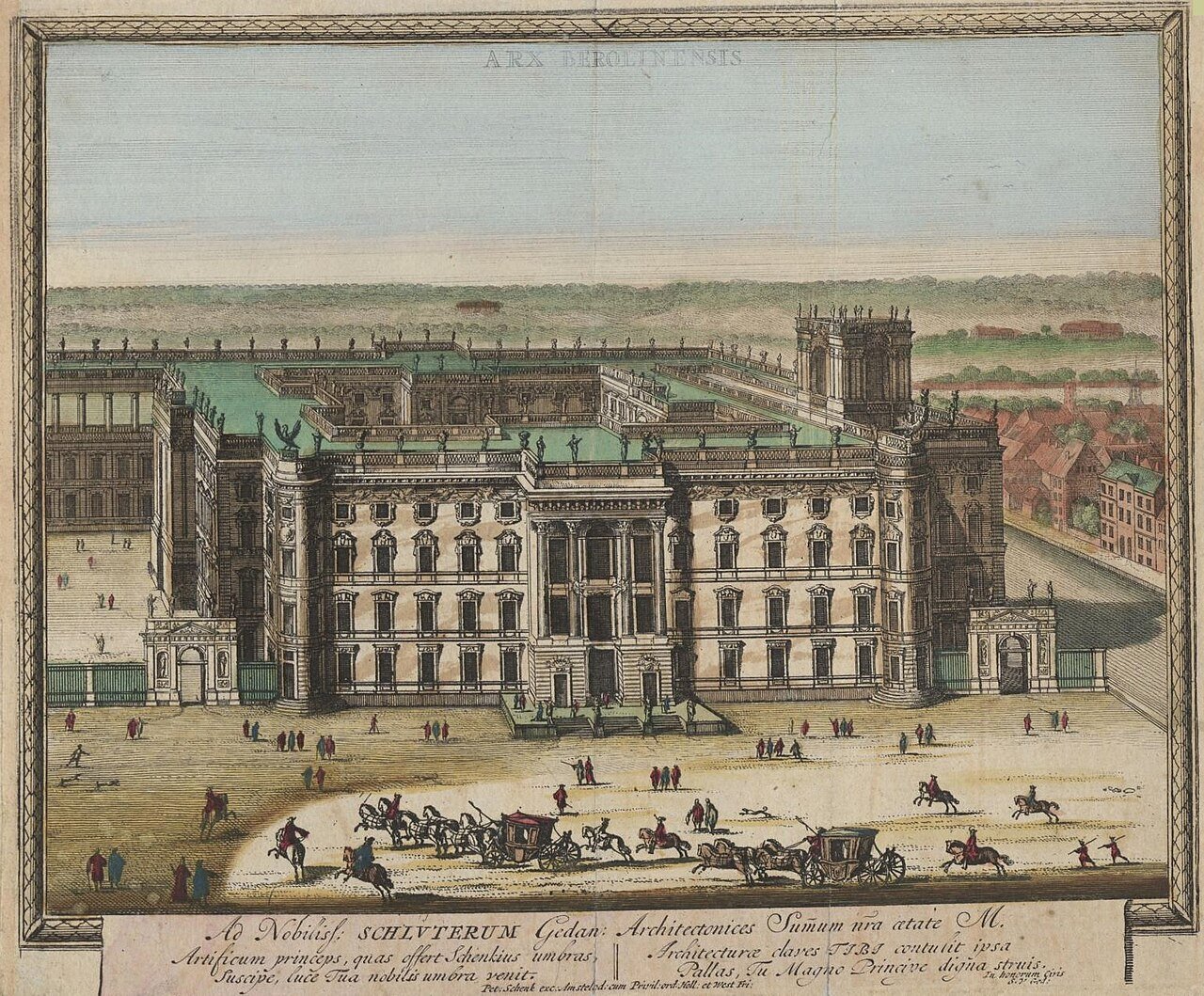
A detailed engraving of a large palace complex with towers and courtyards beside a river, boats on the water.
The Electors’ residence on the Spree in Berlin, engraved by P. Schenk after S. Blesendorf.Kupferstich von P. Schenk nach einer Zeichnung von S. Blesendorf, 1702. Wikimedia Commons. Public domain.

February 1615

The estates tie their taxes to a promise: no Lutheran will be forced to convert

The Elector’s edict says his Lutheran subjects must not be “pressed or compelled” to give up their faith.

Source: Clark, Iron Kingdom

A pen drawing of a square: on the left a tall Gothic church with a clock tower and a domed chapel, ahead a long arcade before a many-gabled palace, with riders, a carriage and walkers in the square and a numbered key below.
The older Domkirche — the former Dominican church beside the palace — drawn by Johann Stridbeck the Younger in 1690.Johann Stridbeck the Younger, 1690. Wikimedia Commons. Public domain.

30 March 1615

Altars, font and crucifix are stripped from the Dom, and Berlin riots

Shots are fired; crowds sack the houses of Calvinist preachers.

Source: Clark, Iron Kingdom

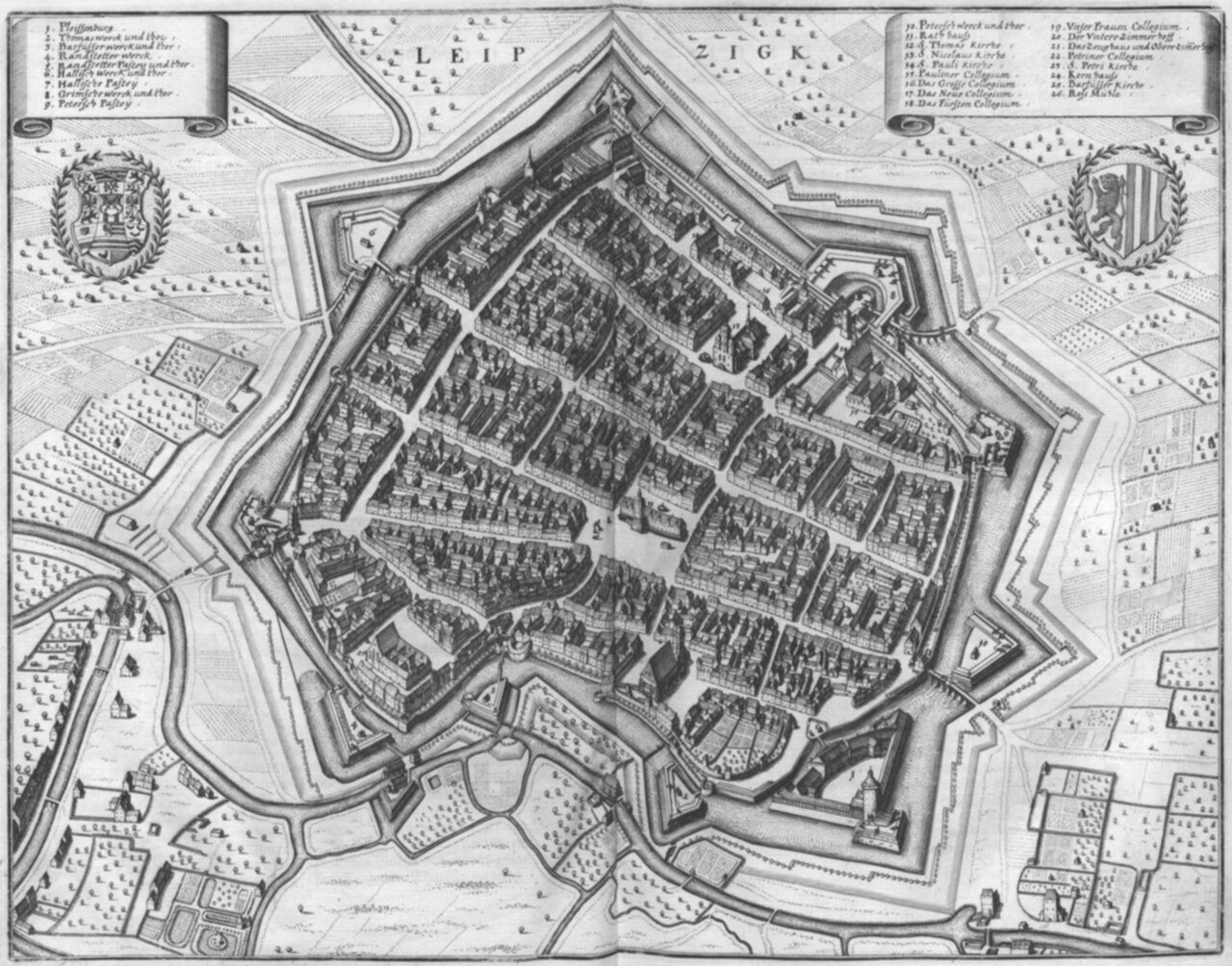
A copper-engraved bird’s-eye plan of a walled city with star-shaped bastions and a moat, two coats of arms and a numbered key in the upper corners, and gardens, fields and a river around it.
Leipzig in Matthäus Merian’s Topographia Superioris Saxoniae, 1650.Matthäus Merian, 1650. Wikimedia Commons. Public domain.
1631

At Leipzig the two sides agree on almost everything except the Supper

They part over Christ’s omnipresence and the eating of his body with the mouth. The talks leave no lasting effect.

Source: Schaff, Creeds of Christendom

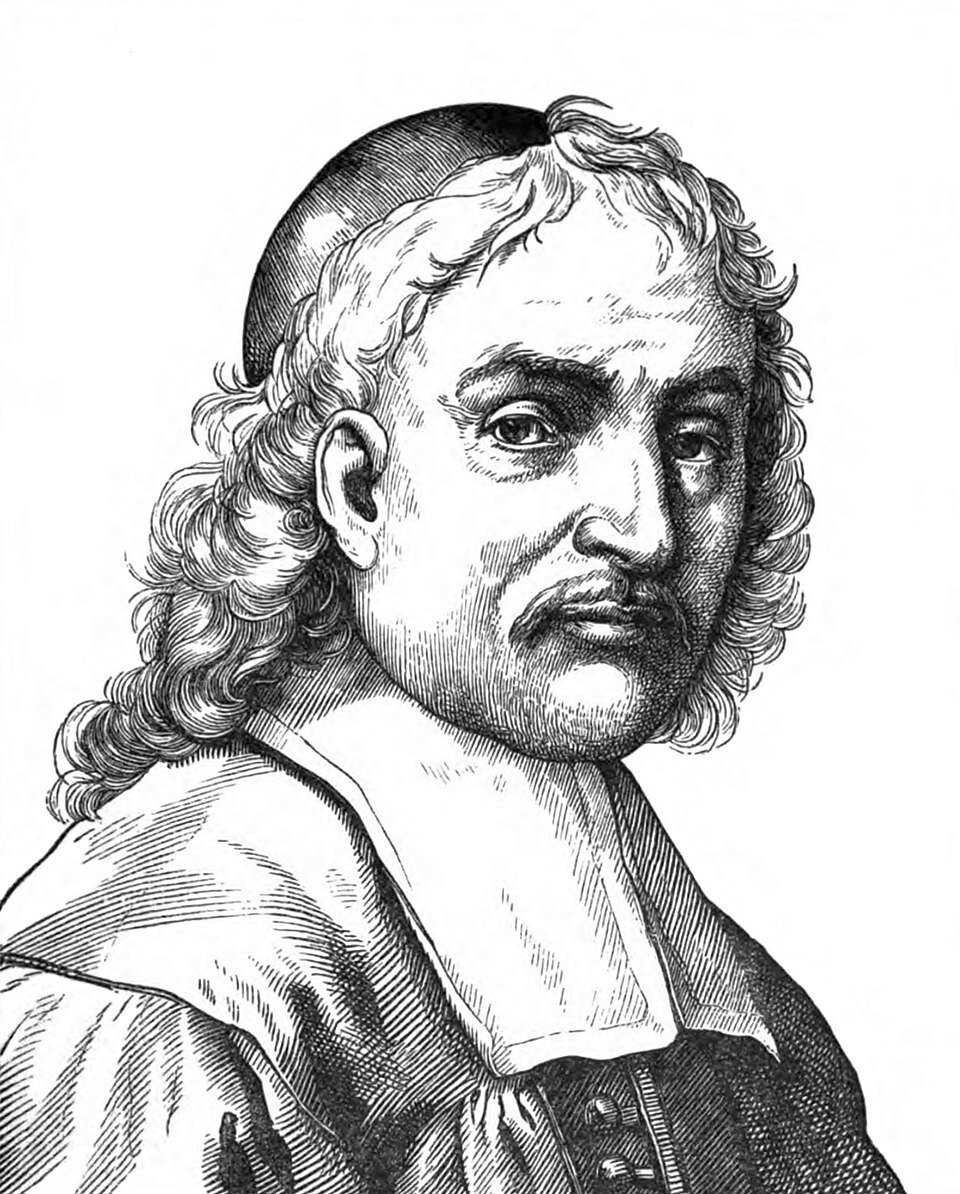
A black-and-white engraving of a man with shoulder-length curly hair, a skullcap and a broad white clerical collar.
Paul Gerhardt, the Lutheran hymn-writer, in a wood engraving.Unknown author, 1854. Wikimedia Commons. Public domain.

1664

A tolerance edict bans the clergy from attacking each other; Paul Gerhardt will not sign

The greatest of the Lutheran hymn-writers is suspended for refusing.

Source: Clark, Iron Kingdom

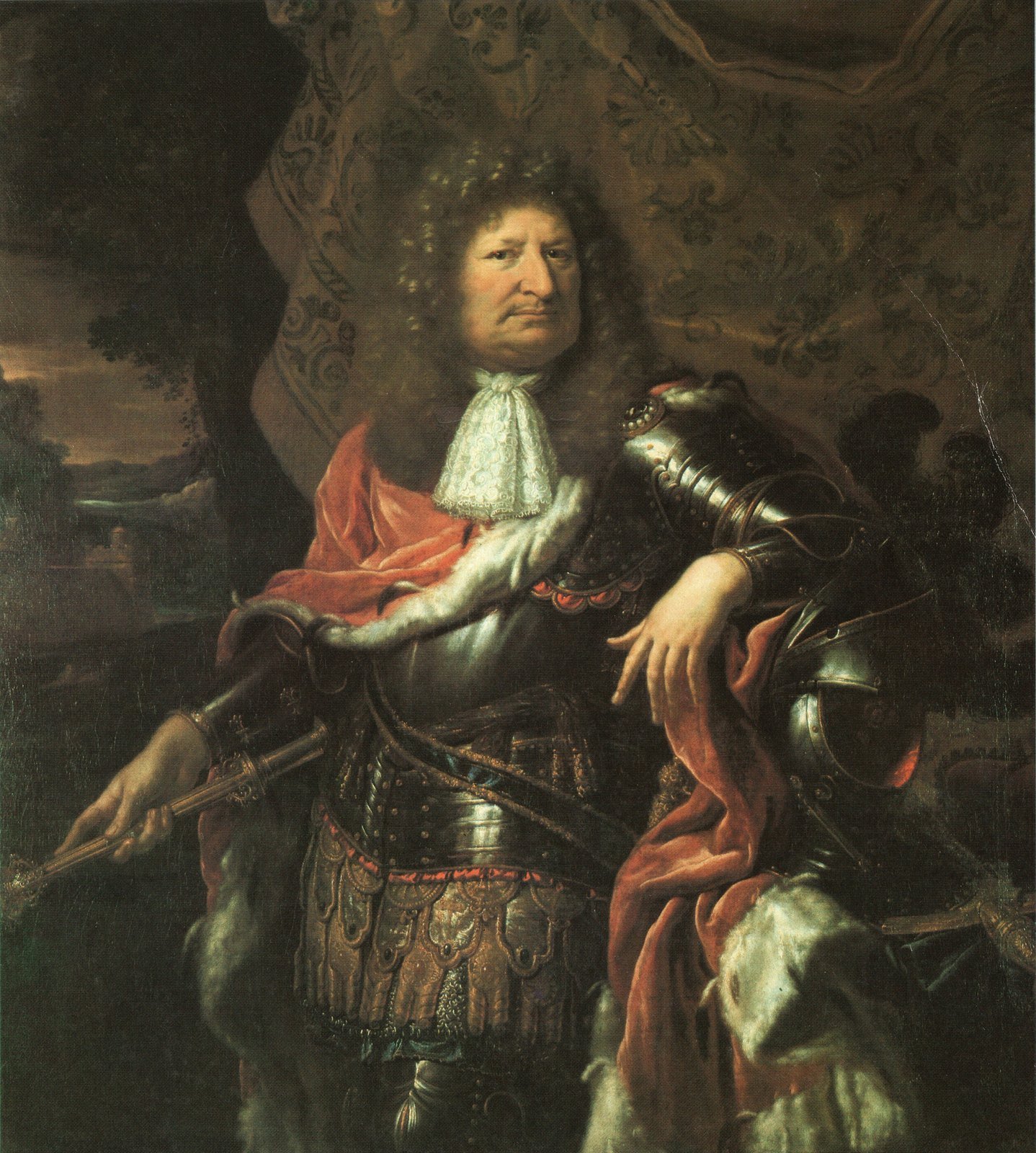
A portrait of a man with long curled hair in polished armour and an ermine-lined mantle.
The Great Elector, Friedrich Wilhelm of Brandenburg, painted by Gedeon Romandon.Gedeon Romandon, 1687. Wikimedia Commons. Public domain.
1685

Edict of Potsdam opens the country to Huguenots

The Great Elector’s Edict of Potsdam brought in some 20,000 French Calvinist refugees — fellow believers of the dynasty, settling among Lutheran subjects.

Source: Clark, Iron Kingdom

Both faces of a silver medal: on the left the overlapping profiles of Luther and a bearded Calvin in a cap; on the right an open Bible in a burst of rays, with a date along the rim.
Henri François Brandt’s medal on the founding of the church union: Luther and Calvin on one face.Henri François Brandt (medal); photograph Reinhard Saczewski, Münzkabinett, Staatliche Museen zu Berlin. Wikimedia Commons. Public domain.
1817

1817: one church by royal decree

Friedrich Wilhelm III joined both churches in the Prussian Union: a royal decree joins Lutheran and Reformed congregations in one church, each keeping its confession. It was, in the words of the German encyclopedia, “eine Verwaltungs- und keine Bekenntnisunion” — a union of administration, not of confession.

Source: de.wikipedia, Preußische Union

A portrait of an older man in a dark military coat with epaulettes and orders, his hair grey and swept forward.
Friedrich Wilhelm III of Prussia, the king of the union, painted by Franz Krüger.Franz Krüger, c. 1830. Via Wikimedia Commons (Public domain).

1830s

Old Lutherans later broke away

Lutherans who refused the union broke away later, from the 1830s — not in 1817.

Source: Old Lutheran histories · de.wikipedia, Preußische Union

A pen drawing of a square: on the left a tall Gothic church with a clock tower and a domed chapel, ahead a long arcade before a many-gabled palace, with riders, a carriage and walkers in the square and a numbered key below.
“Die Dom-Kirch sampt der Stech-Bahan in Cöllen an der Spre”: the older Domkirche, the former church of the Dominican friars (left), and the Renaissance palace on the Schlossplatz; drawing by Johann Stridbeck the Younger, 1690.Johann Stridbeck the Younger, 1690. Wikimedia Commons. Public domain.
03Berlin, 1613–1615

The Elector changed his faith. His wife and his people did not

25 December 1613: Broken bread instead of the Lutheran wafer; candles and crucifix removed. His wife and most of his subjects stay Lutheran. Then, on 30 March 1615: altars, font and crucifix are stripped from the Dom, and Berlin riots. Shots are fired; crowds sack the houses of Calvinist preachers.

“The great majority of the Elector’s subjects and his own wife remained Lutherans.”

Philip Schaff, The Creeds of Christendom, vol. 1

February 1615

“pressed or compelled”

The estates tie their taxes to a promise: no Lutheran will be forced to convert. The Elector’s edict says his Lutheran subjects must not be “pressed or compelled” to give up their faith.

A wide engraved view of a long baroque palace front with a square and figures before it.
The royal residence in Berlin, engraved by Johann David Schleuen in 1757.Johann David Schleuen, 1757. Wikimedia Commons. Public domain.

04Leipzig, 1631

They agreed on almost everything — except the Lord’s Supper

At Leipzig the two sides agree on almost everything except the Supper. They part over Christ’s omnipresence and the eating of his body with the mouth. The talks leave no lasting effect. The Elector’s own confession of 1614, the Confessio Sigismundi, had already drawn the line: it adopts the Reformed doctrine of the sacrament, rejects Christ’s bodily omnipresence and teaches an unconditional election of grace.

Where the talks of 1631 parted

A black-and-white engraving of a man with shoulder-length curly hair, a skullcap and a broad white clerical collar.
Paul Gerhardt, the Lutheran hymn-writer, in a wood engraving published in 1854.Unknown author, 1854. Wikimedia Commons. Public domain.

05Berlin, 1664

Paul Gerhardt refused to sign — and was suspended

A tolerance edict bans the clergy from attacking each other; Paul Gerhardt will not sign. The greatest of the Lutheran hymn-writers is suspended for refusing. 51 years after the Elector’s Christmas communion, the clergy of the two confessions still had to be ordered to stop disparaging each other.

Source: Christopher Clark, Iron Kingdom: The Rise and Downfall of Prussia 1600–1947 (Penguin 2006), ch. 5

06Potsdam, 1685

The dynasty found fellow believers — from France

The Great Elector, Friedrich Wilhelm, issued the Edict of Potsdam in 1685. It opens the country to Huguenots, and brought in some 20,000 French Calvinist refugees.

A printed title page in German blackletter with the Brandenburg arms at its head.
The title page of the Edict of Potsdam, 1685.Der Große Kurfürst Friedrich Wilhelm (The Great Elector), 1685. Wikimedia Commons. Public domain.
A portrait of a man with long curled hair in polished armour and an ermine-lined mantle.
The Great Elector, Friedrich Wilhelm of Brandenburg, in armour and electoral mantle; Gedeon Romandon, 1687.Gedeon Romandon, 1687. Wikimedia Commons. Public domain.

07Prussia, 1817

1817: one church — and both confessions kept

Friedrich Wilhelm III ended the 204 years of division by royal decree. In the Prussian Union, a royal decree joins Lutheran and Reformed congregations in one church, each keeping its confession.

It was, in the German encyclopedia’s words, “eine Verwaltungs- und keine Bekenntnisunion” — an administrative union, not a union of confession. Old Lutherans later broke away, from the 1830s.

The Prussian Union of 1817

Both faces of a silver medal: on the left the overlapping profiles of Luther and a bearded Calvin in a cap; on the right an open Bible in a burst of rays, with a date along the rim.
Henri François Brandt’s medal on the founding of the church union: “M. Luther” and “J. Calvin” side by side on one face; an open Bible and the inscription “Den 31 October 1817” on the other. Münzkabinett, Staatliche Museen zu Berlin.Henri François Brandt (medal); photograph Reinhard Saczewski, Münzkabinett, Staatliche Museen zu Berlin. Wikimedia Commons. Public domain.
A portrait of an older man in a dark military coat with epaulettes and orders, his hair grey and swept forward.
Friedrich Wilhelm III of Prussia, painted by Franz Krüger around 1830.Franz Krüger, c. 1830. Via Wikimedia Commons (Public domain).
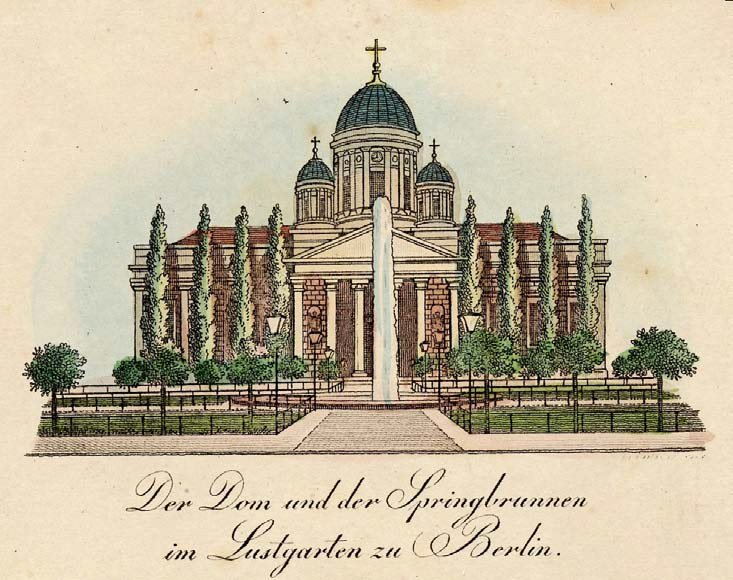
A hand-coloured print of a domed classical church with a portico behind a row of cypress trees, a tall fountain jet in the garden before it, and a handwritten title below.
“Der Dom und der Springbrunnen im Lustgarten zu Berlin”: the Berlin Dom and the Lustgarten fountain, a coloured engraving from Ludwig Linsen’s series “Erinnerungen aus Berlin”, 1838.Ludwig Linsen, 1838. Wikimedia Commons. Public domain.
Court and country · 1613–1817

A prince could change his church in a day. Making it his people’s took two centuries — and even then each kept its own.

Press & citation

Use this Berlinfographic

Free to publish under CC BY 4.0 — in print, online, on Wikipedia and in teaching, commercially or not — with credit to Berlinfographics and a link to this page.

A Reformed court over a Lutheran country, 1613–1817: ready-to-use landscape image

Ready-to-use image

The infographic as one image: headline, key figures, chart, sources and credit, 2,400 × 1,350 px PNG. Please use it unedited.

Download landscape (PNG)
A Reformed court over a Lutheran country, 1613–1817: square version

Square format

A 1:1 version for social media and narrow columns, 1,800 × 1,800 px.

Download square (PNG)
A Reformed court over a Lutheran country, 1613–1817: portrait version

Portrait 4:5

For Instagram and LinkedIn feeds, 1,620 × 2,025 px.

Download portrait (PNG)

Credit line

Berlinfographics (berlinfographics.com), CC BY 4.0

Citation

Berlinfographics (2026). “A Reformed court over a Lutheran country, 1613–1817”. Berlin Experiences. https://berlinfographics.com/luther-vs-calvin-brandenburg/

Wikipedia

{{cite web |title=A Reformed court over a Lutheran country, 1613–1817 |url=https://berlinfographics.com/luther-vs-calvin-brandenburg/ |website=Berlinfographics |publisher=Berlin Experiences |date=2026-11-05 |access-date=2026-11-05}}