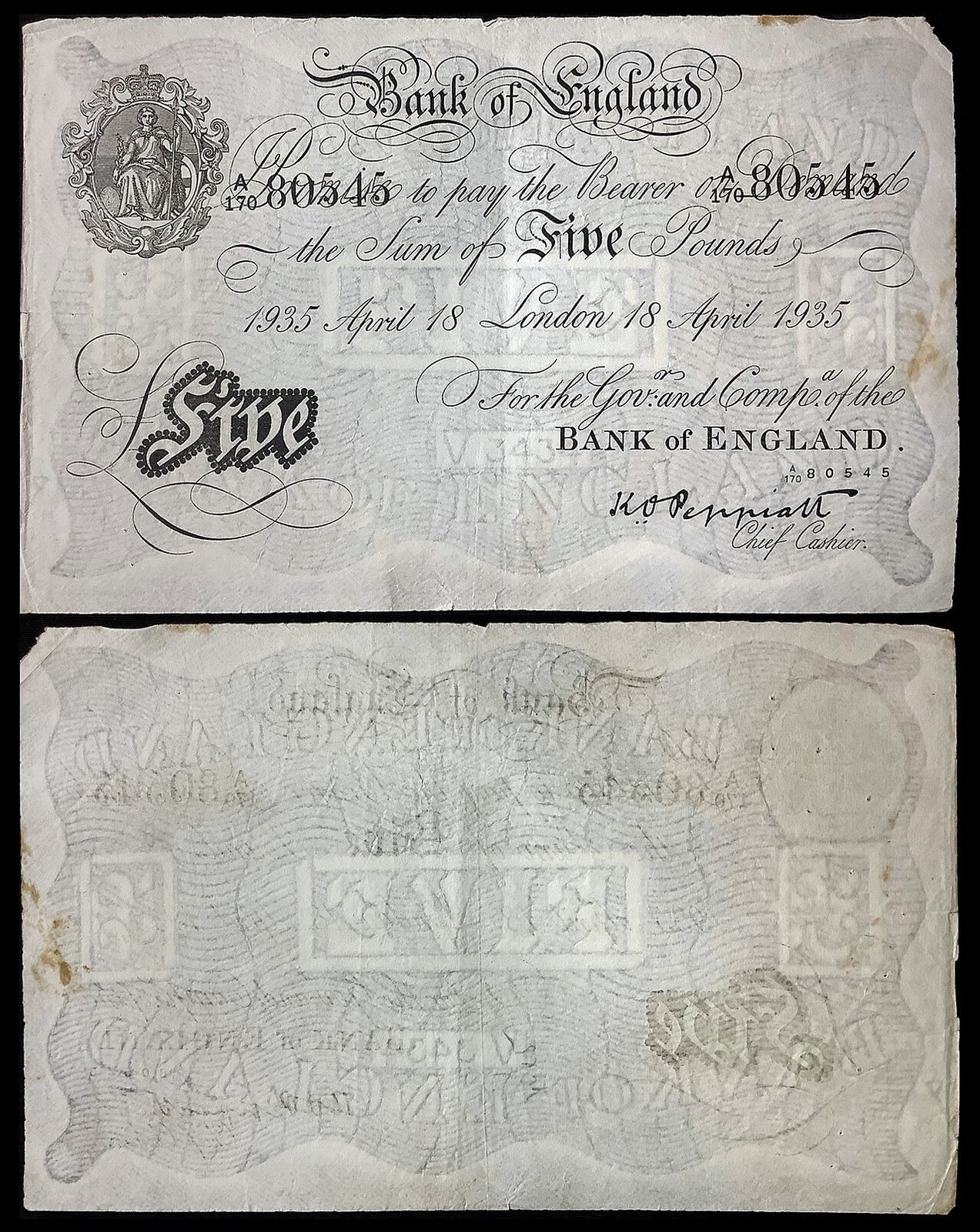
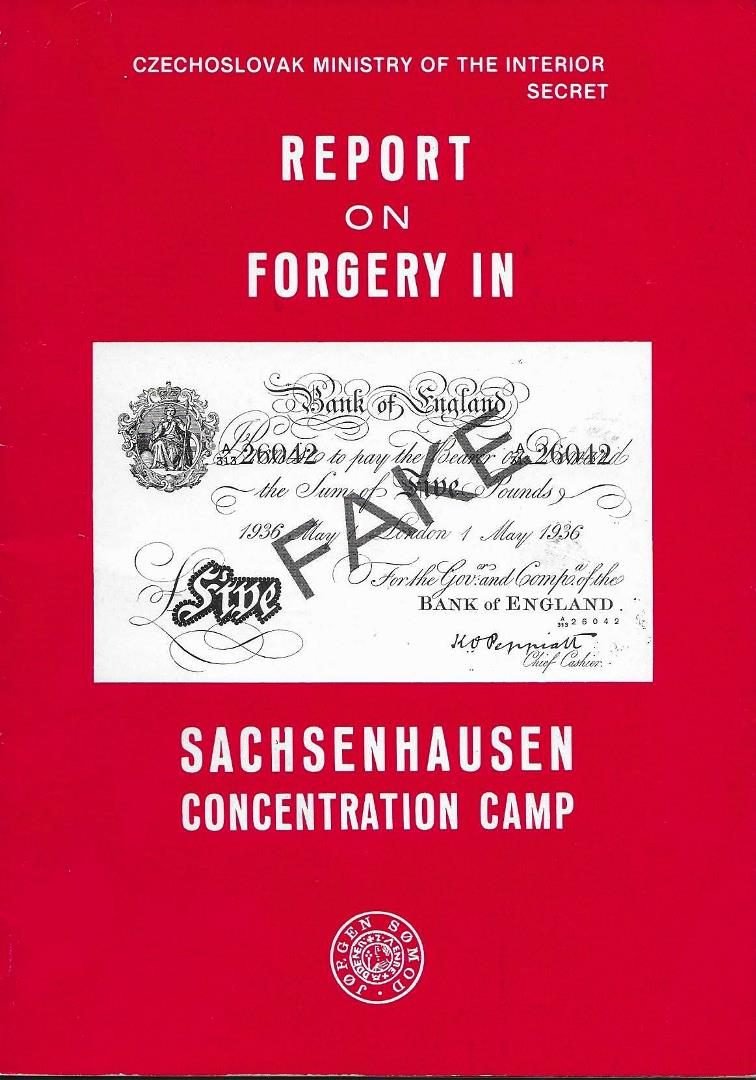
A £20 note forged by prisoners in Sachsenhausen, dated 7 June 1937 in imitation of a genuine issue. It is graded and sealed in a collector’s holder, as it was offered at auction.Photo: Forgery by prisoners of Sachsenhausen after a Bank of England design. Wikimedia Commons. Public domain.
Operation Bernhard
From autumn 1942, in two barracks of the camp north of Berlin, the SS made 142 Jewish prisoners copy the Bank of England’s notes. Their forgeries are worth £130–135 million by different counts.
01Sachsenhausen, autumn 1942
The SS plan to flood Britain with forged money went back to the first months of the war: in 1939, says the Sachsenhausen memorial; in 1940, says the Bank of England Museum. Its first code name was Operation Andreas. It was revived in 1942 under SS-Sturmbannführer Bernhard Krüger of the RSHA Amt VI, and took his first name.
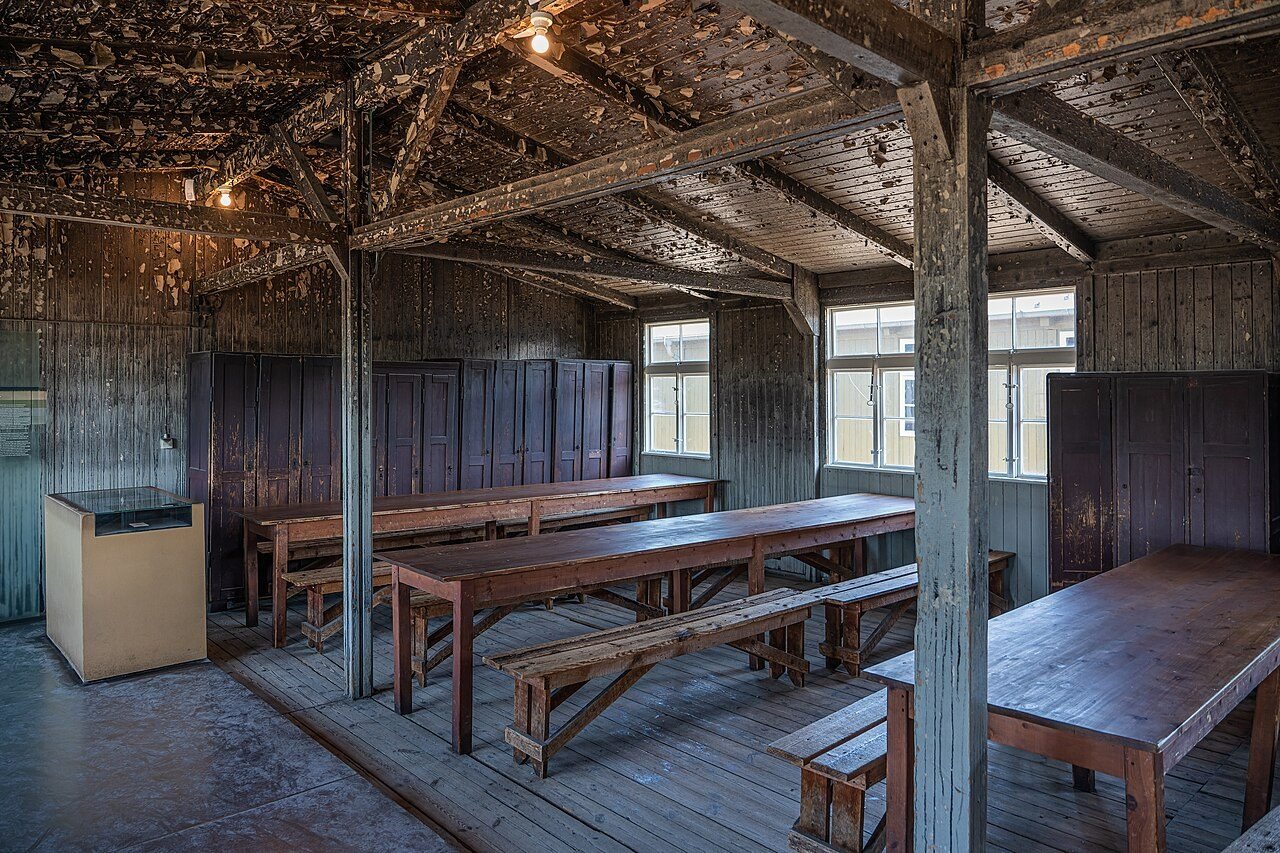
Krüger had several concentration camps searched for Jewish prisoners from the graphics trade, paper specialists or other skilled manual workers. In autumn 1942 the SS fitted out Barracks 18 and 19 of Sachsenhausen’s “small camp” as a print shop. By the memorial’s count, 142 Jewish prisoners were put to work there.
They knew that “illness, failure or termination of the operation would mean their death”.
They were kept apart from the rest of the camp. Their job was to make Bank of England notes that the Bank itself could not tell from its own.

Sachsenhausen, London, and the road south
Land: Natural Earth. Modern borders are left out: in 1945 Austria was part of the Reich.
1939–1940
The SS aimed at the pound itself. Operation Andreas, planned in Berlin from 1939 or 1940, was meant to forge the Bank of England’s notes.
Autumn 1942
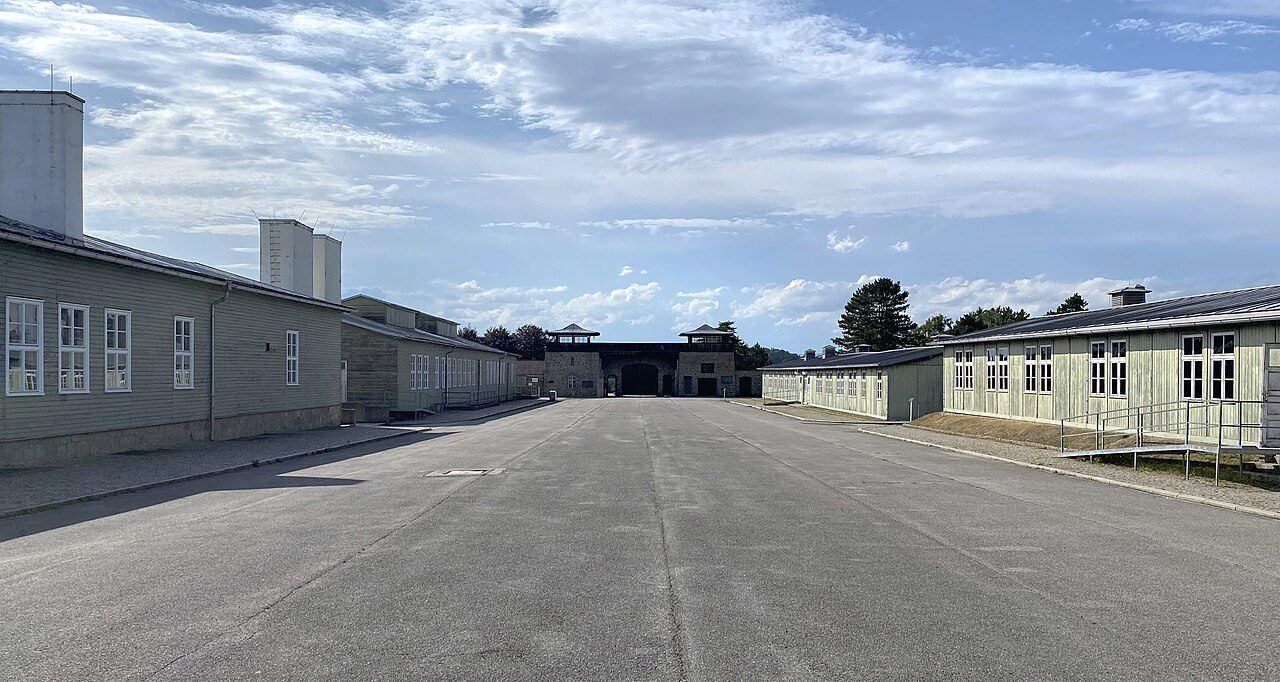
The SS set up a secret print shop in Barracks 18 and 19 of the camp at Oranienburg, north of Berlin. 142 Jewish prisoners were forced to work in it.
21 September 1942
Nine forged £10 notes reached the Bank from Tangier, “of a most dangerous likeness to genuine notes”. Only the feel of the paper gave them away.
February 1945
In February 1945 the SS moved the forgery squad south, to the Mauthausen camp in annexed Austria.
Spring 1945
From Mauthausen the squad went on to the subcamp at Redl-Zipf. The SS cleared and burned the camp on 3 May 1945.
6 May 1945
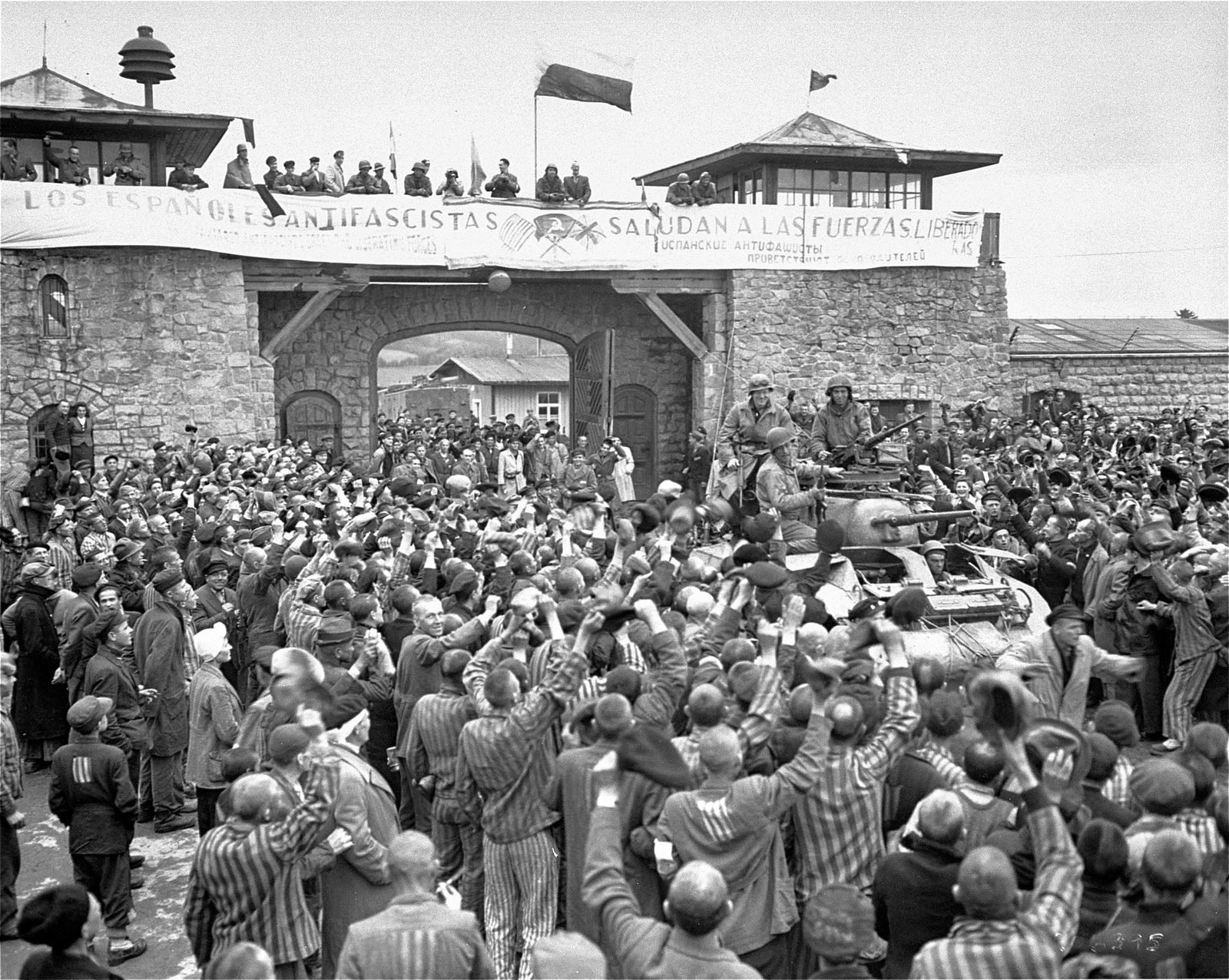
The prisoners were taken to the Ebensee camp. American troops liberated it on 6 May 1945.
Early May 1945
In early May 1945 SS men took about 60 wooden crates to Lake Toplitz and sank them.
02London, 1942–43
The first of these forgeries reached the Bank of England on 21 September 1942: nine £10 notes from Tangier. The Bank’s internal history judged them the work of craftsmen with “machinery comparable to that at the Bank's printing Works”.
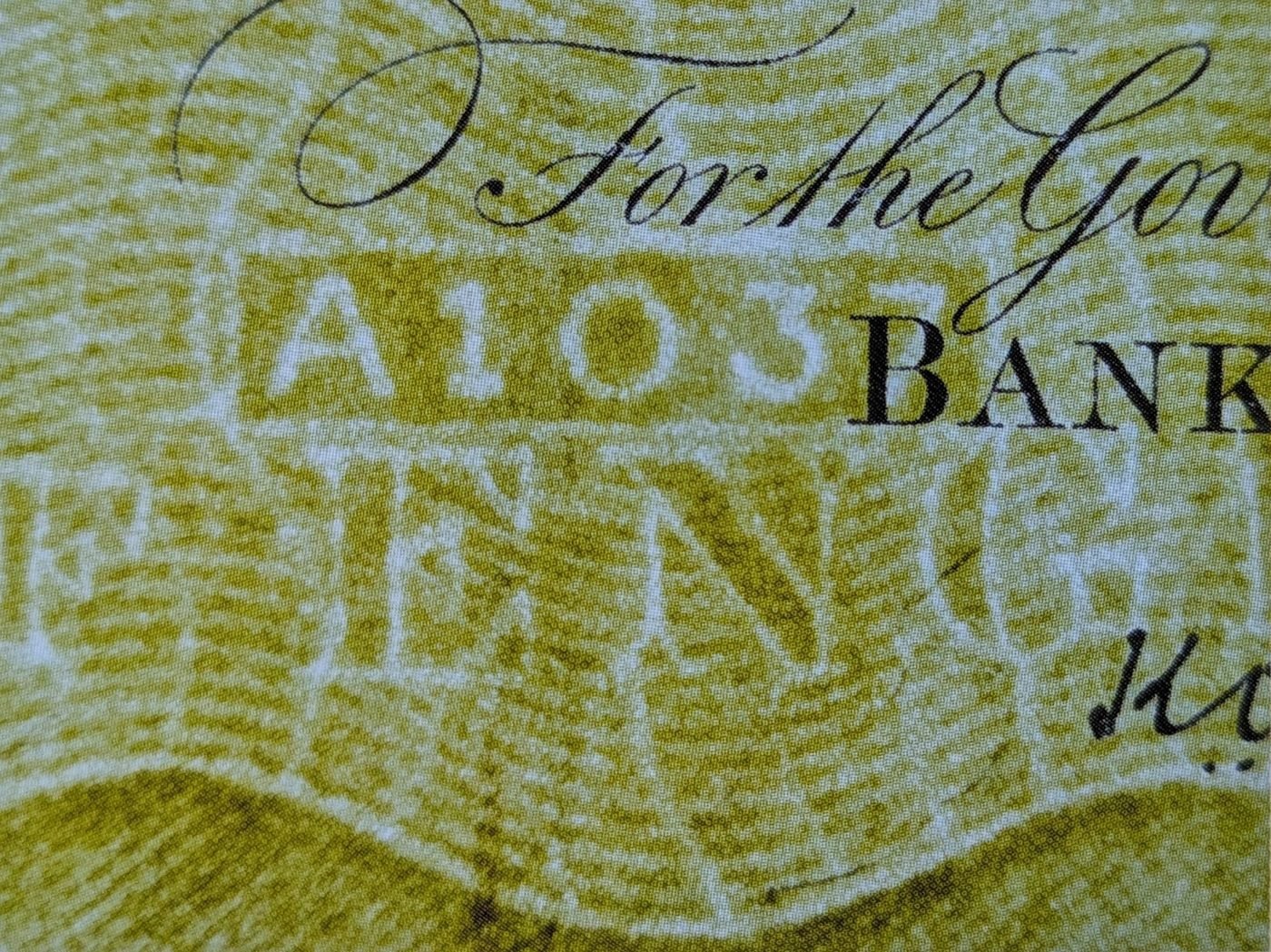
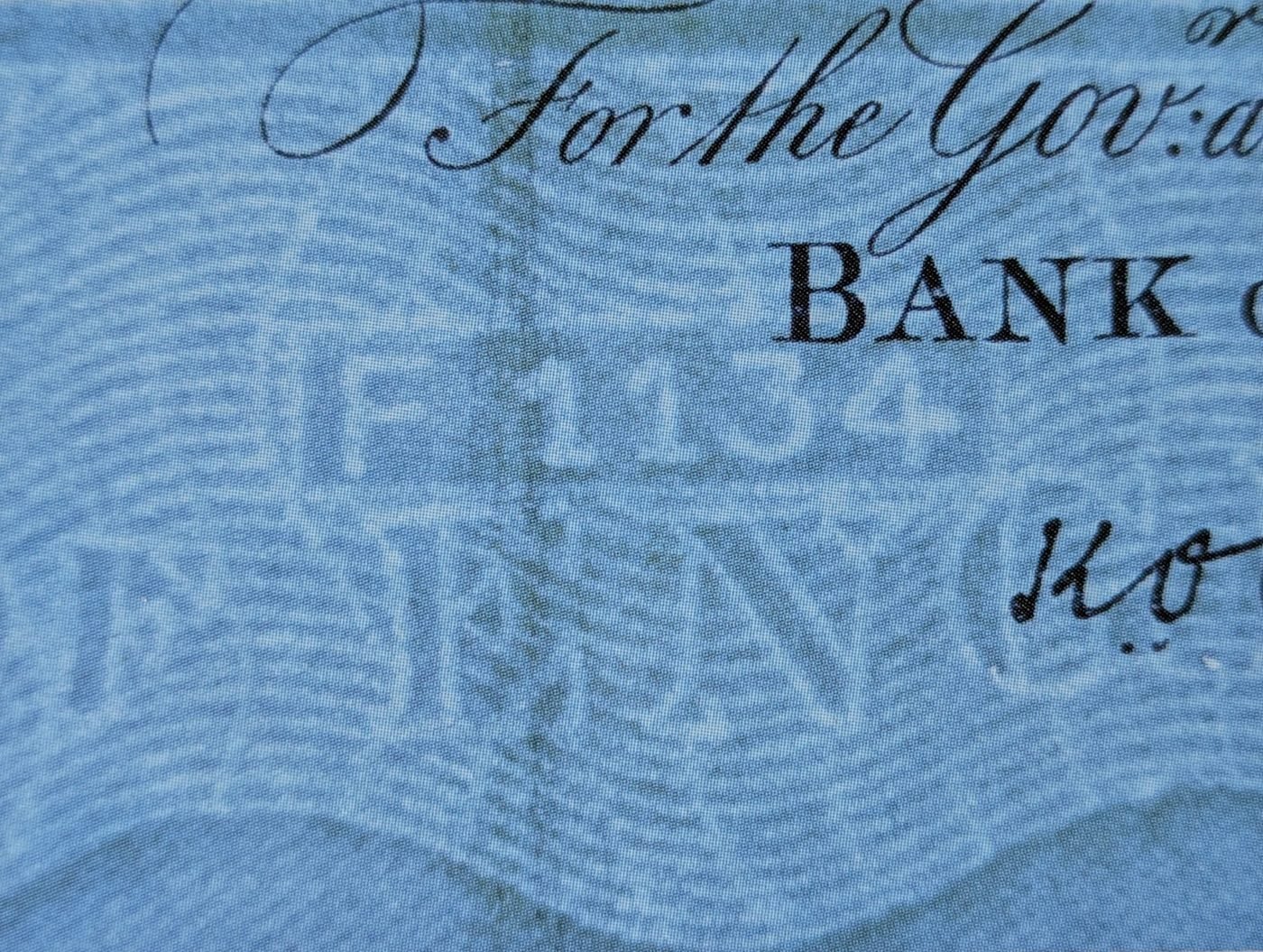
At first the only clue was the “feel” of the paper. An ultraviolet lamp then showed that the forgers’ paper lacked the chemistry of the Bank’s. Long work under the microscope found a single consistent slip in the printing, in the hair falling to the right side of the face of Britannia.
Genuine

Forged in Sachsenhausen

The forgers also made the notes look used. “A team of prisoners, with dirty hands, repeatedly rubbed and folded the notes”, the Bank of England Museum records. Soon after the first specimens arrived, the Swiss National Bank grew suspicious of a parcel of 6,000 £10 and 4,000 £5 notes from a neighbouring country. The samples it sent to London were forgeries of the same type.
Bernhard forgeries the Bank had received by 8 May 1945

03The flood, 1943–45
From 1939 to 1942 the Bank saw a few dozen forged fivers a year. In 1943 it received 400. In 1945 it received 15,544, most of them the German type. The Bank believed that until the Allies invaded France the bulk of the output had stayed abroad.
The Bank had seen the danger early. It issued no note larger than £5 after 22 April 1943.
Forged £5 notes the Bank of England received, by year
Forged £5 notes of all kinds received through normal channels, from the Bank’s internal history; in 1945 most were the German type. Total 16,533.
04How much did they print?
No one counted the whole output and published it. Guinness World Records gives £130 million; Lawrence Malkin gives £132 million; Sachsenhausen Memorial gives over £135 million, the last from secretly kept statistics. Guinness counts more than nine million notes.
The Bank of England made its own estimate from the serial prefixes it saw: 152 of them. If each, like its own, had been used for 100,000 notes, the forgers had printed over 15 million. That is an assumption, not a count. The Allies seized forgeries with a face value of more than £26 million at the end of the war.
Face value of the forgeries, by three counts
Each dot is one published figure; the band is the range. Tap a figure for its source.
05The Bank’s answer
The Bank stopped issuing notes above £5 in April 1943. In autumn 1944 it prepared a new £5, and from 1945 its fivers carried a metal thread for the first time. On 16 April 1945 the old £10, £20, £50, £100, £500 and £1,000 notes ceased to be legal tender.
The larger notes came back only slowly: the £10 in 1964, the £20 in 1970 and the £50 in 1981, the Bank of England Museum records.
Years without the note: the Bank’s denominations above £5
From the last issue of notes above £5 (22 April 1943) to each note’s return, as the Bank of England Museum gives it.

06Austria, May 1945
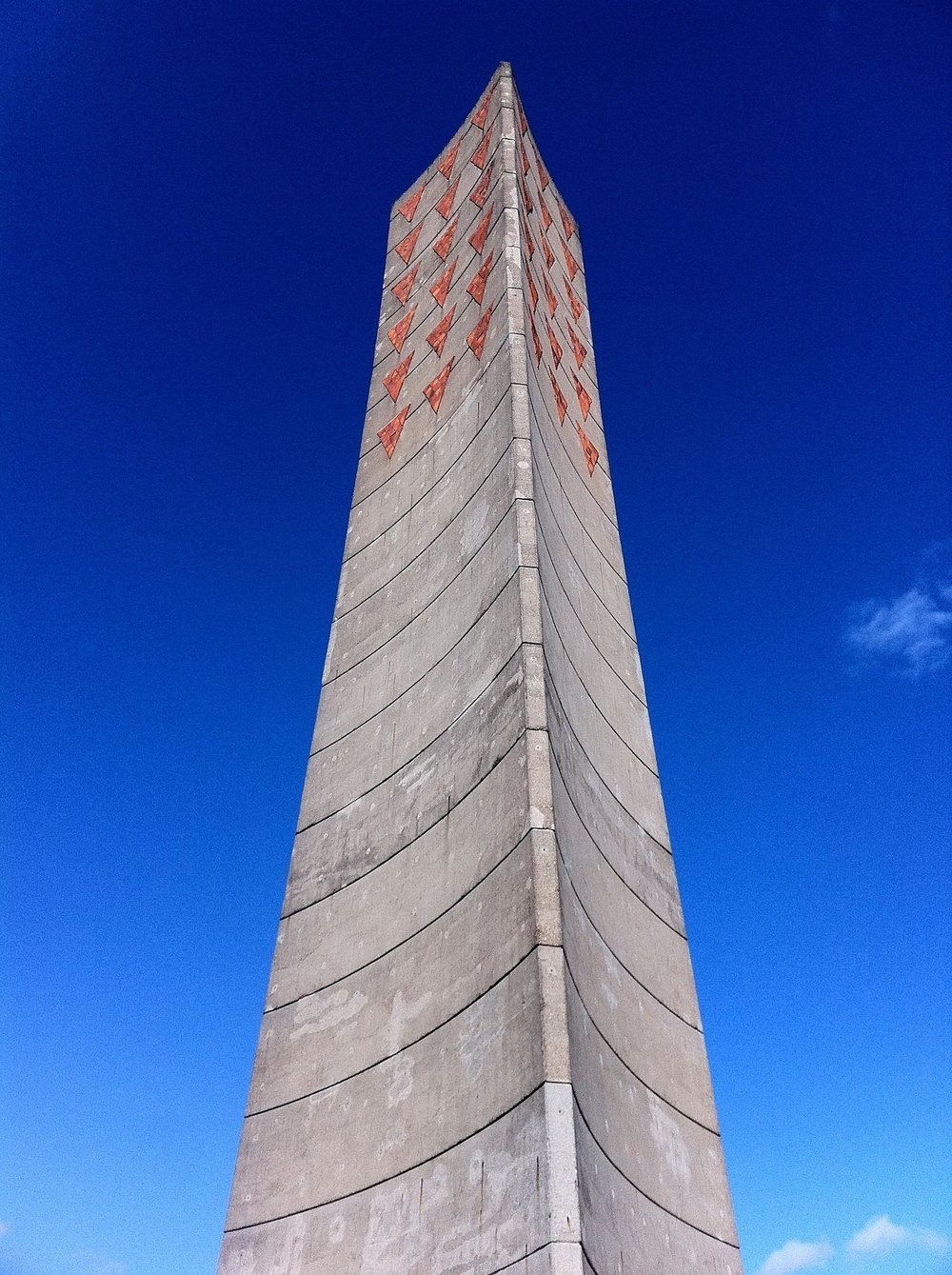
In February 1945 the SS packed up the workshop and moved its prisoners south: first to Mauthausen, then to the subcamp at Redl-Zipf, and finally to Ebensee in the Salzkammergut. Redl-Zipf was cleared and burned on 3 May 1945. American troops reached Ebensee on 6 May 1945.
Their work for the SS did not guarantee their lives. The memorial’s exhibition also tells of “those whom the SS murdered nonetheless”.


07Lake Toplitz, 1945–64
In early May 1945, SS men took about 60 wooden crates to Lake Toplitz, a deep mountain lake in Styria, and sank them. In 1959 an expedition paid for by the magazine Der Stern raised crates of forged pound notes from the lake, and with them a prisoner list from Sachsenhausen.
An Austrian government search in 1963 brought up more notes and 44 printing blocks. On 28 April 1964 the notes were burned at the Austrian National Bank, with two officials of the Bank of England present. Divers raised more as late as 1984.
08The witness
Burger was born in Veľká Lomnica, Slovakia on 12 August 1917 and trained as a printer. Arrested in 1942, he was deported to Auschwitz-Birkenau, then sent to the forgery workshop at Sachsenhausen.
He spent the rest of his long life describing it. His memoir, published in English as The Devil’s Workshop, became the film Die Fälscher, which won the Oscar for best foreign-language film in 2008. He died in 2016. The Sachsenhausen memorial keeps some of the forged notes.

Forced to forge for their lives, the prisoners of Barracks 18 and 19 made notes so good that Britain went 38 years without a £50.
Press & citation
Free to publish under CC BY 4.0 — in print, online, on Wikipedia and in teaching, commercially or not — with credit to Berlinfographics and a link to this page.
Ready-to-use image
The infographic as one image: headline, key figures, chart, sources and credit, 2,400 × 1,350 px PNG. Please use it unedited.
Download landscape (PNG)
Square format
A 1:1 version for social media and narrow columns, 1,800 × 1,800 px.
Download square (PNG)
Portrait 4:5
For Instagram and LinkedIn feeds, 1,620 × 2,025 px.
Download portrait (PNG)Credit line
Berlinfographics (berlinfographics.com), CC BY 4.0
Citation
Berlinfographics (2026). “Operation Bernhard, 1942–45”. Berlin Experiences. https://berlinfographics.com/operation-bernhard/
Wikipedia
{{cite web |title=Operation Bernhard, 1942–45 |url=https://berlinfographics.com/operation-bernhard/ |website=Berlinfographics |publisher=Berlin Experiences |date=2026-11-09 |access-date=2026-11-09}}
Our infographics, charts and texts are licensed CC BY 4.0: free to republish, including commercially, with credit to Berlinfographics and a link. Photographs keep their own licences, named in each caption. How to credit
Topics: The Second World War · Cold War Berlin · Nazi Berlin · Persecution & the Holocaust · Weimar Berlin · Prussia & the Kaiserreich · Architecture & the built city · Culture, science & society · Reunified Berlin · Unusual facts
Contact: info@berlinfographics.com · Press: press@berlinfographics.com · Imprint · Privacy