Berlinfographicsby Berlin Experiences

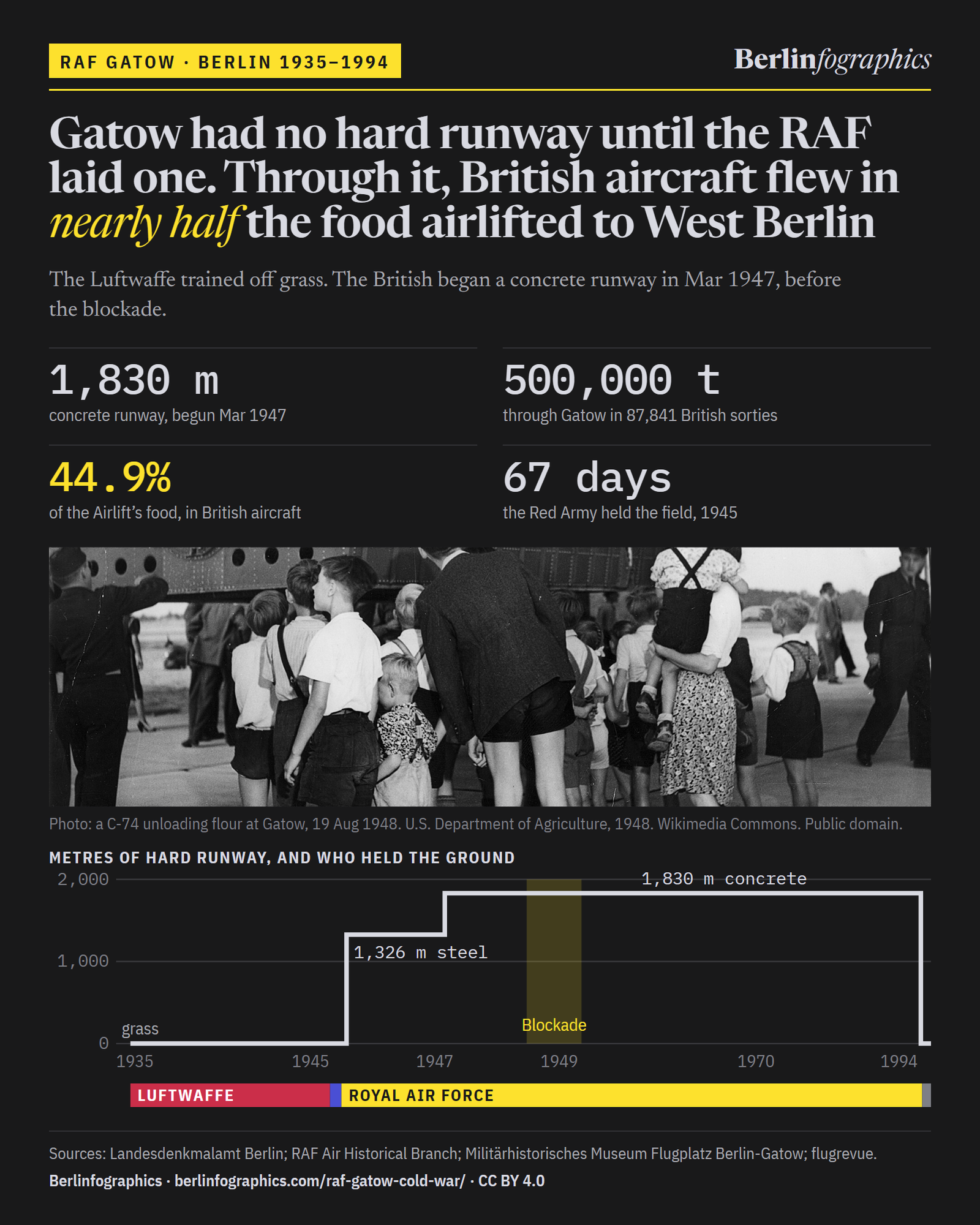
A US Air Force C-74 Globemaster unloading flour from the United States at Gatow, 19 August 1948.Photo: U.S. Department of Agriculture, 1948. Wikimedia Commons. Public domain.

RAF Gatow

Gatow had no hard runway until the RAF laid one. Through it, British aircraft flew in nearly half the food airlifted to West Berlin

The field in Spandau changed hands three times without moving an inch: Luftwaffe, Red Army, Royal Air Force, Bundeswehr. The Luftwaffe trained off grass. The British laid steel, then concrete, fifteen months before the Soviet blockade of West Berlin began.

1,830m
concrete runway, begun Mar 1947; before 1945 the field was grass
500,000t
brought in by the British through Gatow, in 87,841 sorties
44.9%
of the Airlift’s food, flown by British aircraft (nearly 45 per cent)
up to 248
flight movements a day at its best

01Kladower Damm, 1935–1945

For its first decade the airfield was a grass field

Fliegerhorst Gatow opened on 1 November 1935, on the western bank of the Havel. Its air-war school followed; from 15 January 1940 it was Luftkriegsschule 2. Officers learned to fly off grass. There was no hard runway.

On 26 April 1945, in the battle for Berlin, the Red Army took the field. It held it for 67 days. On 2 July 1945 the Soviets handed it to the Royal Air Force: Avro Anson PW698 landed at 11.55.

The dates the ground changed hands are not the dates it changed what it could do.

A Spitfire fighter parked on grass, seen from the side, in wartime camouflage.
A Supermarine Spitfire LF Mark IX at No. 33 Maintenance Unit, Lyneham, before delivery. Spitfires of No. 453 Squadron RAAF flew in to Gatow on 16 September 1945: the first Commonwealth squadron based in Berlin.Photo: Royal Air Force official photographer. Imperial War Museum collection via Wikimedia Commons. Public domain.

Metres of hard runway, and who held the ground

The length of the longest hard runway at Gatow from 1935 to 1995, as a stepped line, with a band beneath it showing who held the airfield: the Luftwaffe, the Red Army, the Royal Air Force and the Bundeswehr.

Steps sit at the dates the record gives for each change to the ground; where it gives only a month, at the month. The years 1945–1949 are widened while you read about them.

1935 – 1945

A Luftwaffe field without a hard runway

For the whole of its first decade the field was grass. When the British arrived, the runway, in the words of Berlin’s monument office, “consisted of a grass strip”.

26 Apr 1945 – 2 Jul 1945

67 days of the Red Army

The Red Army held the field for 67 days, then handed it over on 2 July 1945. The runway was still grass: the ownership changed, the ground did not.

From August 1945

Steel mats bolted down over the grass

The British began laying 1,450 yards (1,326 m) of pierced steel planking, prefabricated perforated mats, each 3 m × 40 cm and 30 kg, strong enough for heavy transports.

From March 1947

A second runway, of concrete

A concrete runway was begun in March 1947 and reached 1,830 metres. It did not replace the steel strip, which was lengthened by 150 m. Work began fifteen months before the blockade.

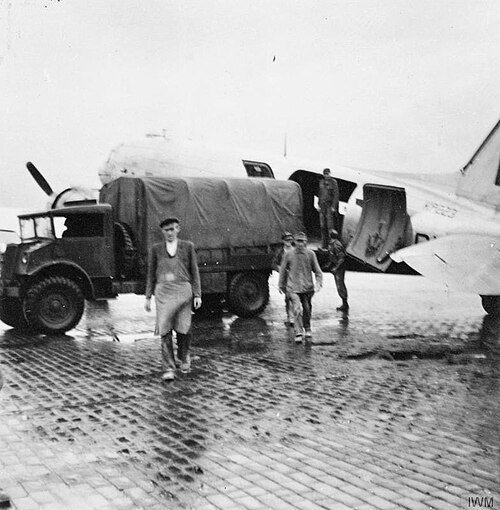
Workers carry sacks out of the side door of a twin-engined transport aircraft into a lorry.

German civilian workers unload an RAF Dakota, KP223 of No. 53 Squadron, at Gatow in the early weeks of the Airlift, 1948. Photo: Unknown photographer, 1948. Imperial War Museum (HU 98409) via Wikimedia Commons. Public domain.

24 Jun 1948 – 12 May 1949

The runway was ready when the roads closed

For 322 days the Soviets blockaded West Berlin. Through Gatow the British brought in 500,000 tonnes in 87,841 sorties.

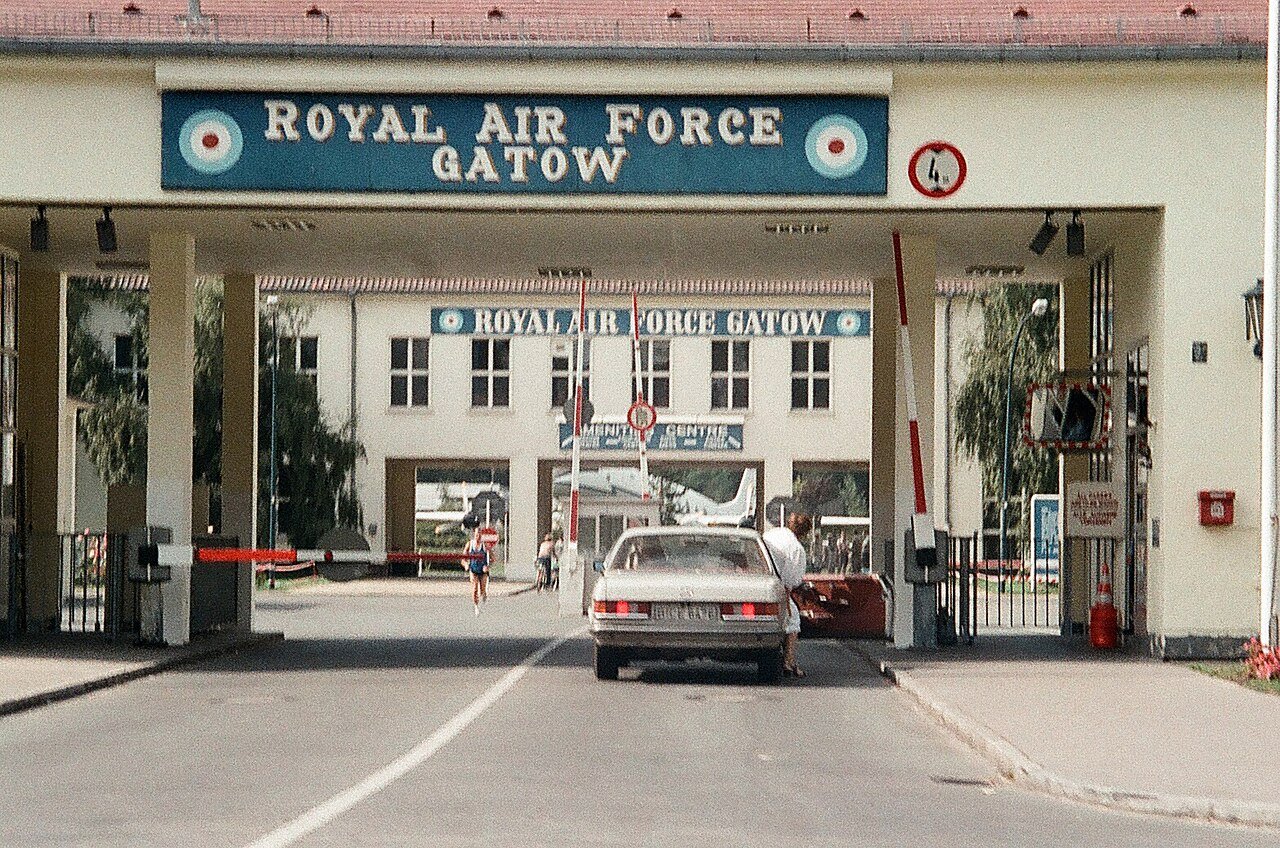
A gatehouse with a sign reading Royal Air Force Gatow and RAF roundels; a car waits at the barrier.

The main gate of Royal Air Force Gatow, 1983, eleven years before the British left. Photo: BajanZindy, 1983. Wikimedia Commons. Public domain.

30 Jun 1994 · 7 Sep 1994

49 years of British flying, then none

Flying ended with the end of 30 June 1994. On 7 September 1994 the field passed to the Bundeswehr, its fourth owner.

02Gatow, April to December 1945

The British moved Berlin’s boundary to get the whole airfield

An RAF Regiment squadron came overland via Magdeburg before the handover; the station took the name Royal Air Force Gatow on 19 August 1945. Then Britain fixed a problem on the map.

The British wanted the whole airfield inside Berlin so that the roads into it did not run through Seeburg, which lay in the Soviet zone. On 30 August 1945 the British traded away West-Staaken for the Seeburger Zipfel.

The Allied Kommandatura fixed the new boundary on 27 September 1945. West-Staaken went back to Spandau only on 3 October 1990.

April to December 1945, at true scale

03Gatow and the Havel, 1948–1949

When the Soviets blockaded West Berlin, the RAF already had a hard runway at Gatow

Eleven weeks before the blockade, on 5 April 1948, a Soviet fighter struck a British European Airways Viking on its approach to Gatow. All fourteen people aboard were killed, and the Soviet pilot.

The blockade began on 24 June 1948. The first airlift transport landed at Gatow on 28 June 1948; within a short time the field was turning over 1,000 tonnes a day.

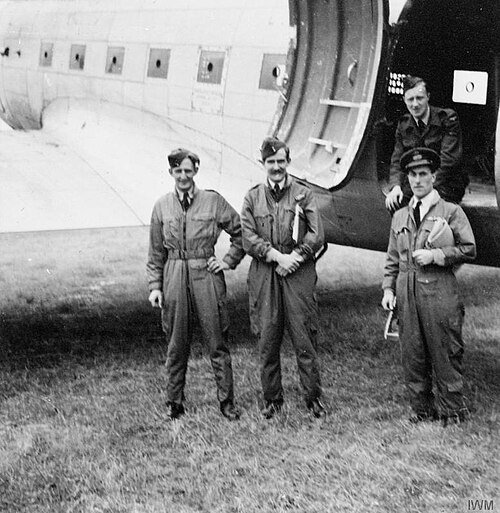
Four airmen stand in front of the open cargo door of a transport aircraft.
RAF pilot Brian Shepheard and his crew at the open door of their Dakota at Gatow, 1948.Photo: Unknown photographer, 1948. Imperial War Museum (HU 98408) via Wikimedia Commons. Public domain.

What the RAF’s chief promised, 28 Jun 1948

Lord Tedder to his senior colleagues, in tons a day into Berlin, as the RAF’s Air Historical Branch quotes him.

Through Gatow, to 12 May 1949

500,000 tonnes

in 87,841 British sorties, the museum on the site counts.

The RAF’s own historians count it another way: across all its airfields, British aircraft carried 542,236 short tons, just over 23% of the 2,324,808 lifted by all nations; 147,727 of them by British civil charter firms. Almost the whole British lift came down on this one runway, which is why the two counts are so close. They are not added together.

What British aircraft carried, as a share of the whole lift

164,800
short tons of coal in British aircraft
92,282
short tons of liquid fuel, some of it
6 min
minutes, the normal interval between arrivals
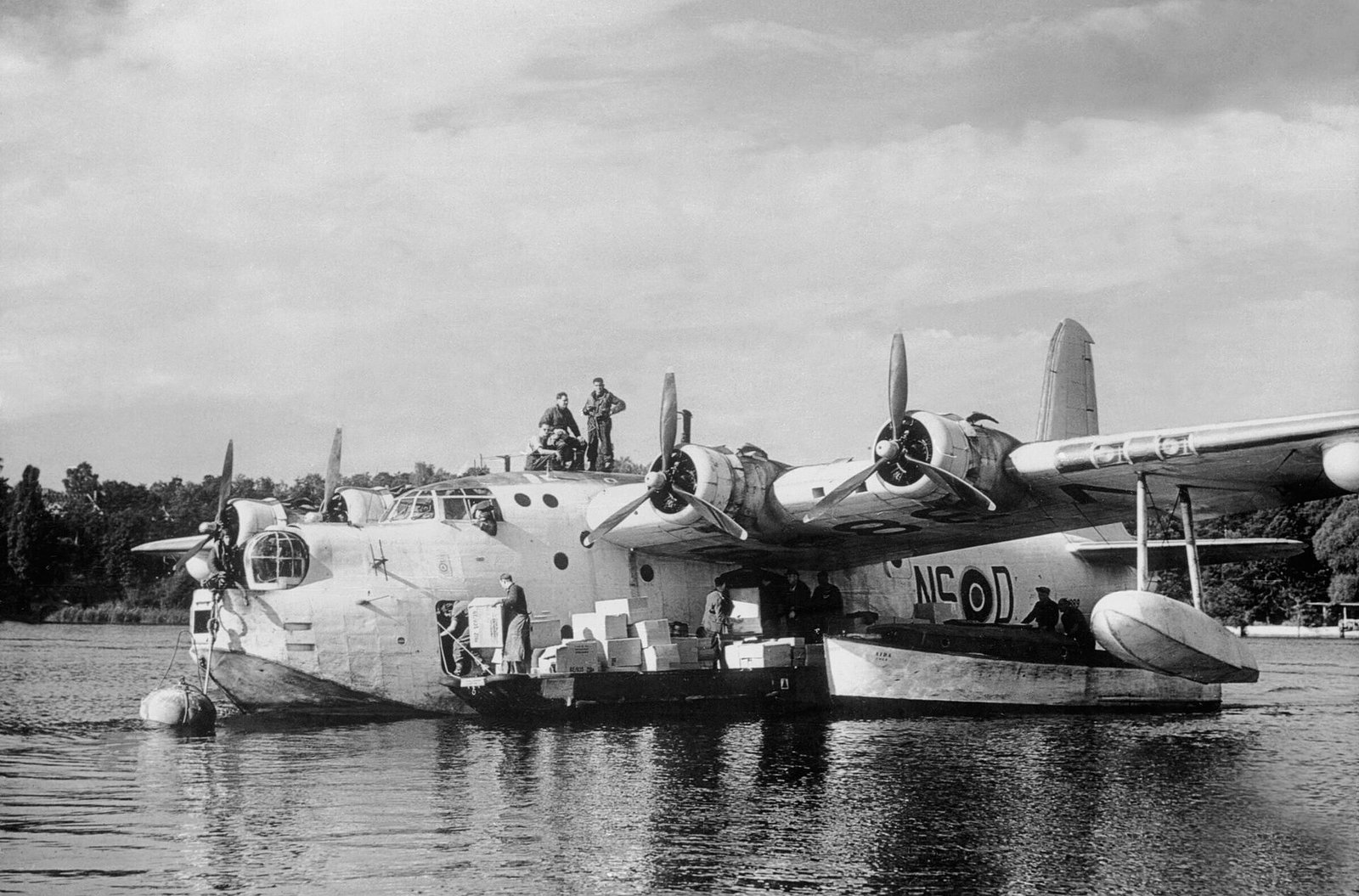
A large four-engined flying boat moored on a river; men sit on top of it while boxes are unloaded into a boat alongside.
A Short Sunderland of No. 201 Squadron moored on the Havel beside Gatow, its crew on the roof while the freight comes off. Flying boats worked the river from July until mid-December 1948, when ice stopped them.Photo: RAF official photographer, 1948. Wikimedia Commons. Public domain.

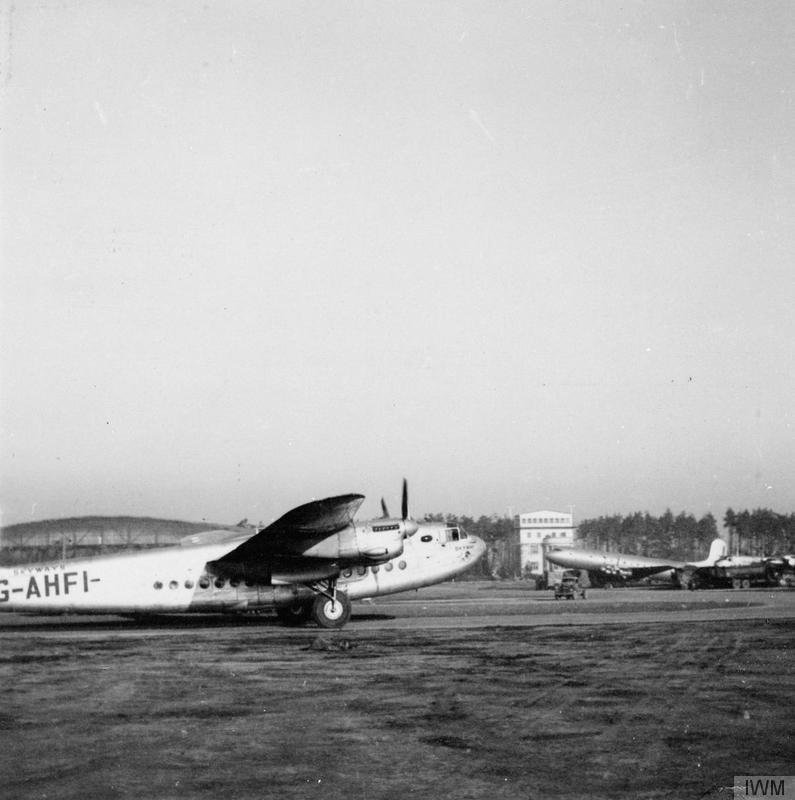
From 5 July 1948 flying boats alighted on the Havel beside the airfield. In bad weather by day Gatow could take only one aircraft every 15 minutes. On 15 March 1949 a chartered York, G-AHFI, crashed on its approach to Gatow; three people were killed.

A four-engined airliner with the registration G-AHFI taxis across a flat airfield; a control tower stands behind.
G-AHFI, a civil-registered Avro York of Skyways, taxiing at Wunstorf in November 1948. It crashed on its approach to Gatow on 15 March 1949.Photo: Unknown photographer, 1948. Wikimedia Commons. Public domain.
A four-engined transport aircraft in flight above fields, seen from above.
The Handley Page Hastings, the newest transport on the Airlift, as published in 1946.Photo: Keith Edkins, from a 1946 publication. Wikimedia Commons. Public domain.

04The middle of the airfield, March 1949

A fuel island let 14 tanker aircraft unload at once

By March 1949 Gatow had a new receiving system: 5 large tanks and 18 bays around a circular island in the middle of the airfield, with floodlight towers for work at night.

It could empty 14 tanker aircraft at the same time, with two hoses on each. At its best the field handled up to 248 flight movements a day.

Two men in uniform lean over a table model of aircraft parked around a circular installation.
At Gatow, Captain W. R. A. Bateman of the RASC uses a briefing model to show Aircraftsman Jenkins how tanker aircraft were positioned for unloading, 1948–49.Photo: RAF official photographer, 1948–49. Wikimedia Commons. Public domain.

5 tanks · 18 bays · 14 aircraft at once

Schematic: the arrangement as the RAF’s history describes it, not a plan of the site.

05The British sector’s airfield, 1949–1994

A trainer built for cadets photographed Soviet positions

British European Airways flew scheduled services from Gatow from 1946 until mid-1957. From 1956 the Station Flight’s Chipmunks flew over the Berlin Control Zone, photographing Soviet positions from an aircraft designed to teach cadets to fly.

The Chipmunks were the last aircraft on the station’s books. On 17 June 1994 two of them flew out to RAF Laarbruch.

A small silver-and-red single-engined training aircraft parked on tarmac, trees behind.
CC BY-SAA preserved de Havilland Canada Chipmunk T.10, WB671. Gatow’s Station Flight kept two of these and flew them over the Berlin Control Zone, photographing Soviet positions.Photo: Raimond Spekking, 2004. Wikimedia Commons. CC BY-SA 4.0.
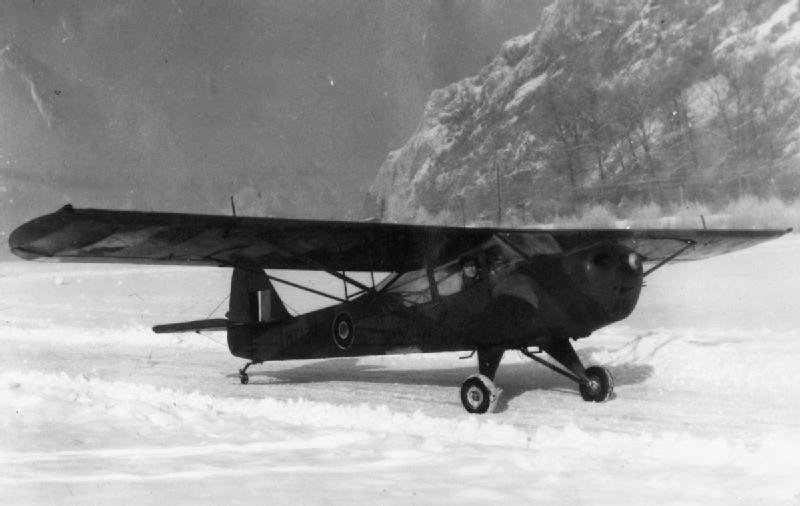
A small high-winged monoplane taxis through snow.
A Taylorcraft Auster of No. 662 (AOP) Squadron taxiing through snow at Yvert, Belgium, in the war. Austers were the first aircraft of the kind flown from Gatow by the British military mission to the Soviet forces in Germany; the photograph is shown for the type, not for an event.Photo: Tosetti J D A (Major). Imperial War Museum collection via Wikimedia Commons. Public domain.
A gatehouse with a sign reading Royal Air Force Gatow and RAF roundels; a car waits at the barrier.
The main gate of Royal Air Force Gatow, 1983, eleven years before the British left.Photo: BajanZindy, 1983. Wikimedia Commons. Public domain.

Flying ended with the end of 30 June 1994. On 7 September 1994 the airfield passed to the Bundeswehr, its fourth owner in 59 years.

06Gatow today

The museum keeps the hangars, the tower and most of the old runways

The museum was established on the airfield on 23 September 1995; today it is the Militärhistorisches Museum der Bundeswehr – Flugplatz Berlin-Gatow. Spandau’s district office says the hangars, the tower and most of the former runways are now part of it. Its aircraft stand where transports once landed.

On the rest of the field there are now houses, supermarkets and schools: Landstadt Gatow.

100 ha
museum grounds
155
aircraft among more than 200,000 objects
1995
the museum is established on the field
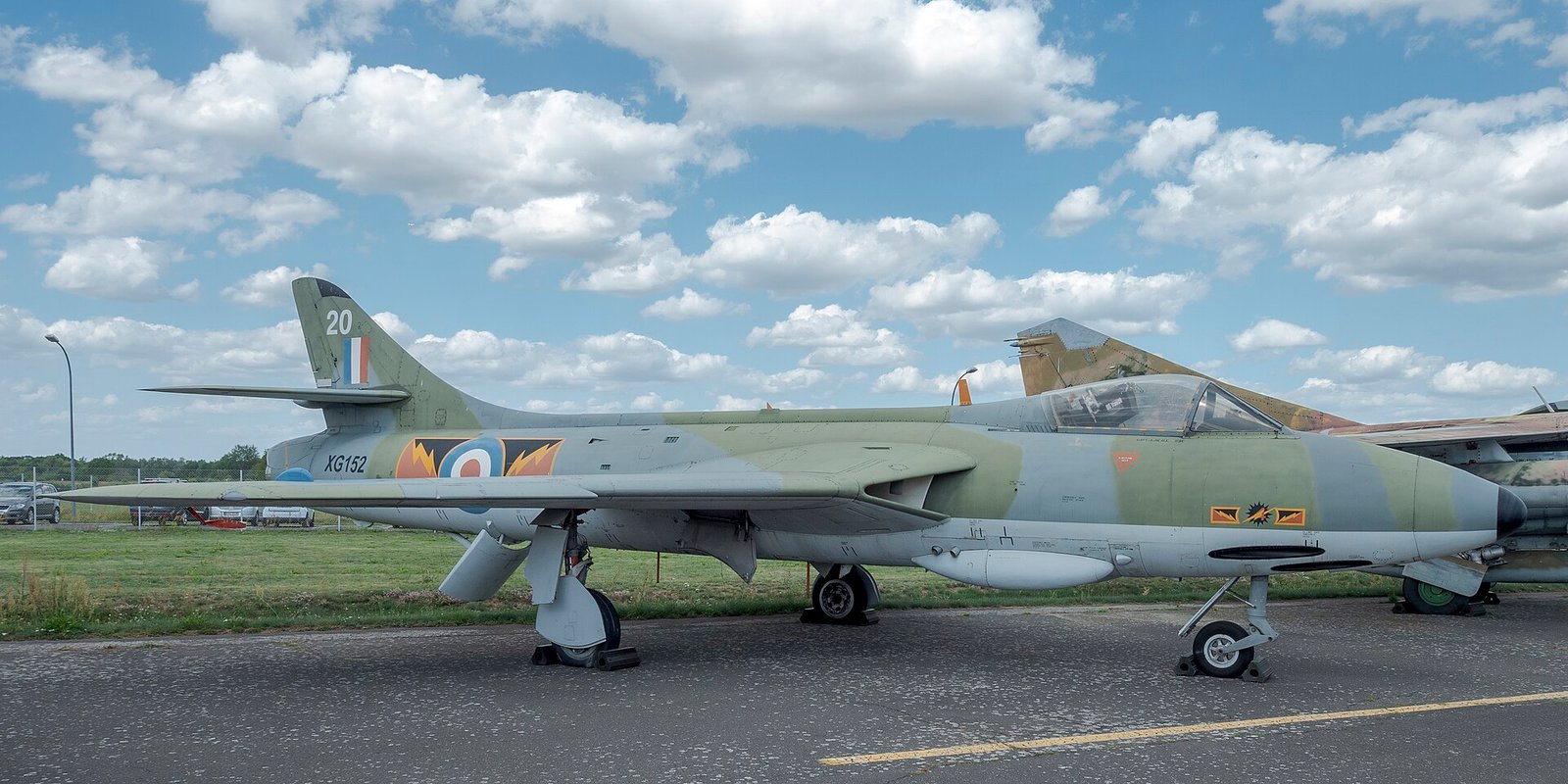
A camouflaged jet fighter with RAF roundels parked on tarmac under a cloudy blue sky.
CC BY-SAA Royal Air Force Hawker Hunter at the Militärhistorisches Museum der Bundeswehr on the Gatow airfield, 2019.Photo: JoachimKohler-HB, 2019. Wikimedia Commons. CC BY-SA 4.0.
A large grey twin-engined military transport aircraft parked on concrete.
CC BY-SAA Transall C-160 transport on the museum’s apron at Gatow, 2025.Photo: Ad Meskens, 2025. Wikimedia Commons. CC BY-SA 4.0.
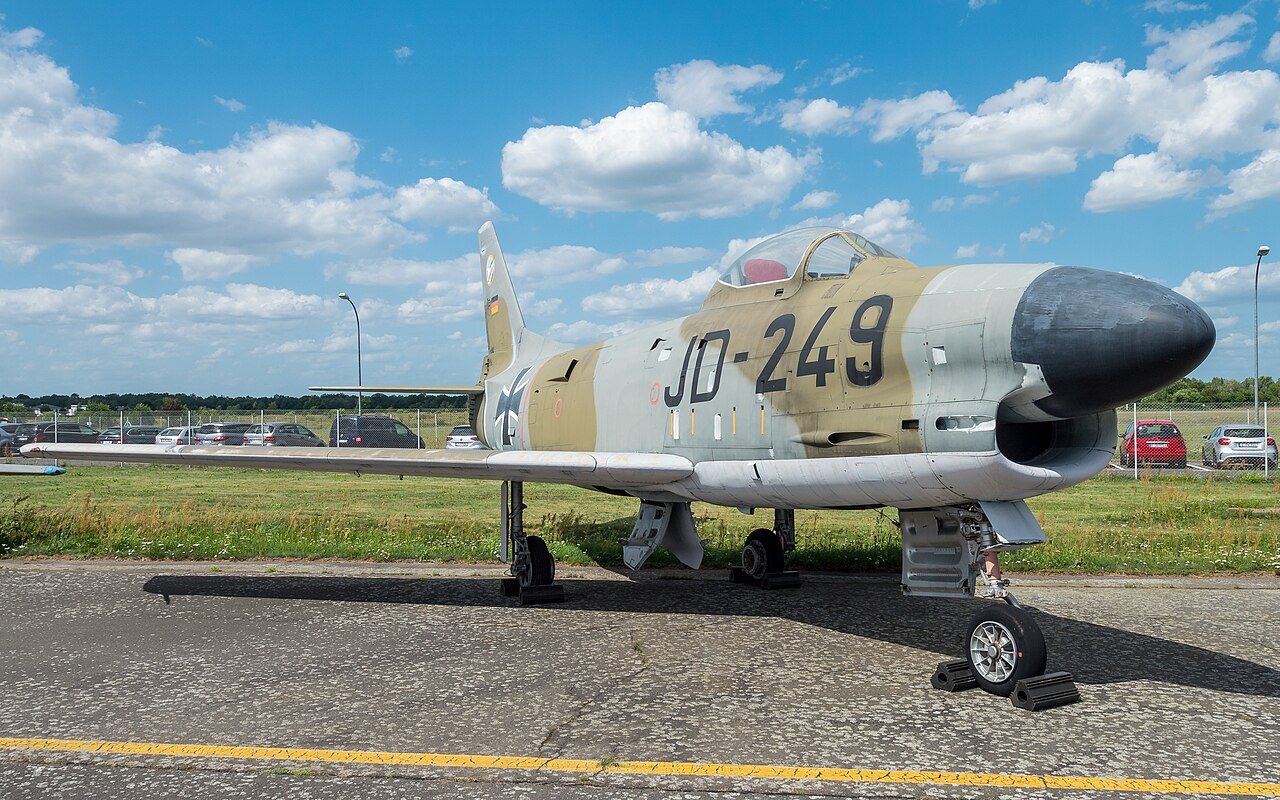
A silver swept-wing jet fighter parked outdoors.
CC BY-SAA North American F-86K Sabre at the museum on the Gatow airfield, 2019.Photo: JoachimKohler-HB, 2019. Wikimedia Commons. CC BY-SA 4.0.

The Luftwaffe trained on grass. The runway that carried the British airlift was laid after it left.

Press & citation

Use this Berlinfographic

Free to publish under CC BY 4.0 — in print, online, on Wikipedia and in teaching, commercially or not — with credit to Berlinfographics and a link to this page.

RAF Gatow: the field with four owners, 1935–1995: ready-to-use landscape image

Ready-to-use image

The infographic as one image: headline, key figures, chart, sources and credit, 2,400 × 1,350 px PNG. Please use it unedited.

Download landscape (PNG)
RAF Gatow: the field with four owners, 1935–1995: square version

Square format

A 1:1 version for social media and narrow columns, 1,800 × 1,800 px.

Download square (PNG)
RAF Gatow: the field with four owners, 1935–1995: portrait version

Portrait 4:5

For Instagram and LinkedIn feeds, 1,620 × 2,025 px.

Download portrait (PNG)

Credit line

Berlinfographics (berlinfographics.com), CC BY 4.0

Citation

Berlinfographics (2026). “RAF Gatow: the field with four owners, 1935–1995”. Berlin Experiences. https://berlinfographics.com/raf-gatow-cold-war/

Wikipedia

{{cite web |title=RAF Gatow: the field with four owners, 1935–1995 |url=https://berlinfographics.com/raf-gatow-cold-war/ |website=Berlinfographics |publisher=Berlin Experiences |date=2026-11-05 |access-date=2026-11-05}}