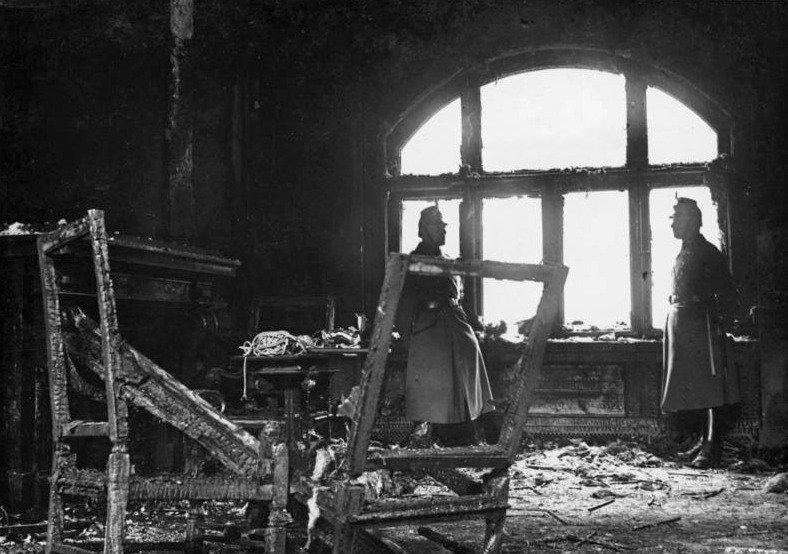
The Reichstag on the morning after the fire (archive caption: “Am Morgen nach dem Reichstagsbrand”).Bundesarchiv, Bild 146-1977-148-19A / Unknown author / CC BY-SA 3.0 de
The Reichstag fire · Berlin 1933
A 24-year-old Dutchman was arrested inside the burning building at 21:27. Before the next evening a presidential decree had suspended the basic rights of the constitution, and the state of emergency it created lasted until 1945. Who set the fire is still disputed. What was done with it is not.
01Platz der Republik, 27–28 February 1933
Monday, 27 February 1933. The alarm came shortly after 21:00. At 21:27 police seized Marinus van der Lubbe, 24, inside the burning building; he admitted at once that he had set the fire. At 21:42 the fire brigade raised its highest alarm.
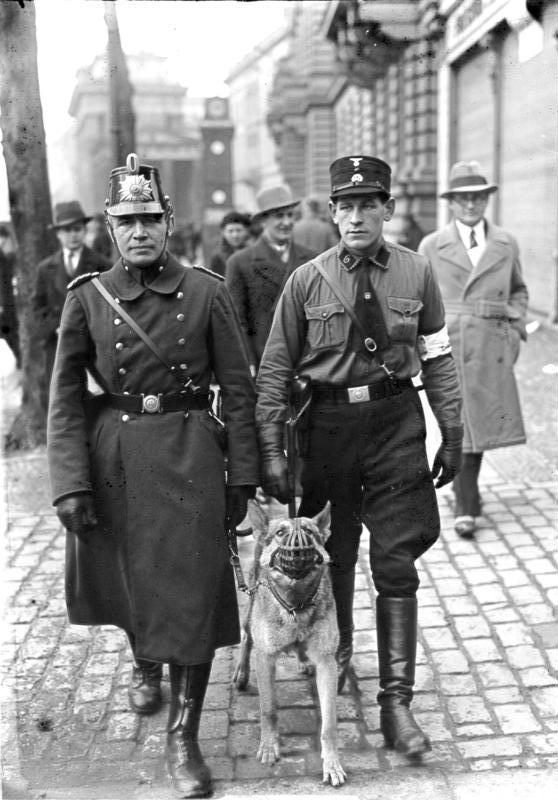
Hitler, Göring, Goebbels and Frick came to the building. Göring declared the fire the work of the Communists, a claim historians regard as refuted. A meeting there ended around 23:00 with an instruction to arrest all Communist deputies and officials and to ban every Communist newspaper. No decree yet existed. In the hours after the fire, police and SA men arrested several thousand people.
Tuesday, 28 February 1933. The cabinet sat from about 11:00 to 13:30, and again from 16:15. Hindenburg signed the decree soon after the second cabinet session; by about 19:45 Frick was already explaining it to the representatives of the German states.
Marinus van der Lubbe, born in Leiden in 1909, had been a member of the Communist Party of the Netherlands; he left it and joined the left-communist group “Spartacus” in 1931.
From the fire to the signature, hour by hour
Less than a day
Times as the sources give them. Where a source says “shortly after” or “about”, so does this clock; the dashed box is the window in which the signature must fall, between the start of the second cabinet session and the briefing of the states.


0227 February – 23 March 1933
From the day after the fire every day was lived under the decree. The calendar fills in as you read: red for each day under the emergency decree, a mark on the day of each event.
Day 0 · Monday 27 February 1933
Fire is reported shortly after 21:00. At 21:27 van der Lubbe is arrested inside the building. The constitution’s basic rights are still in force.
Day 0 · the night
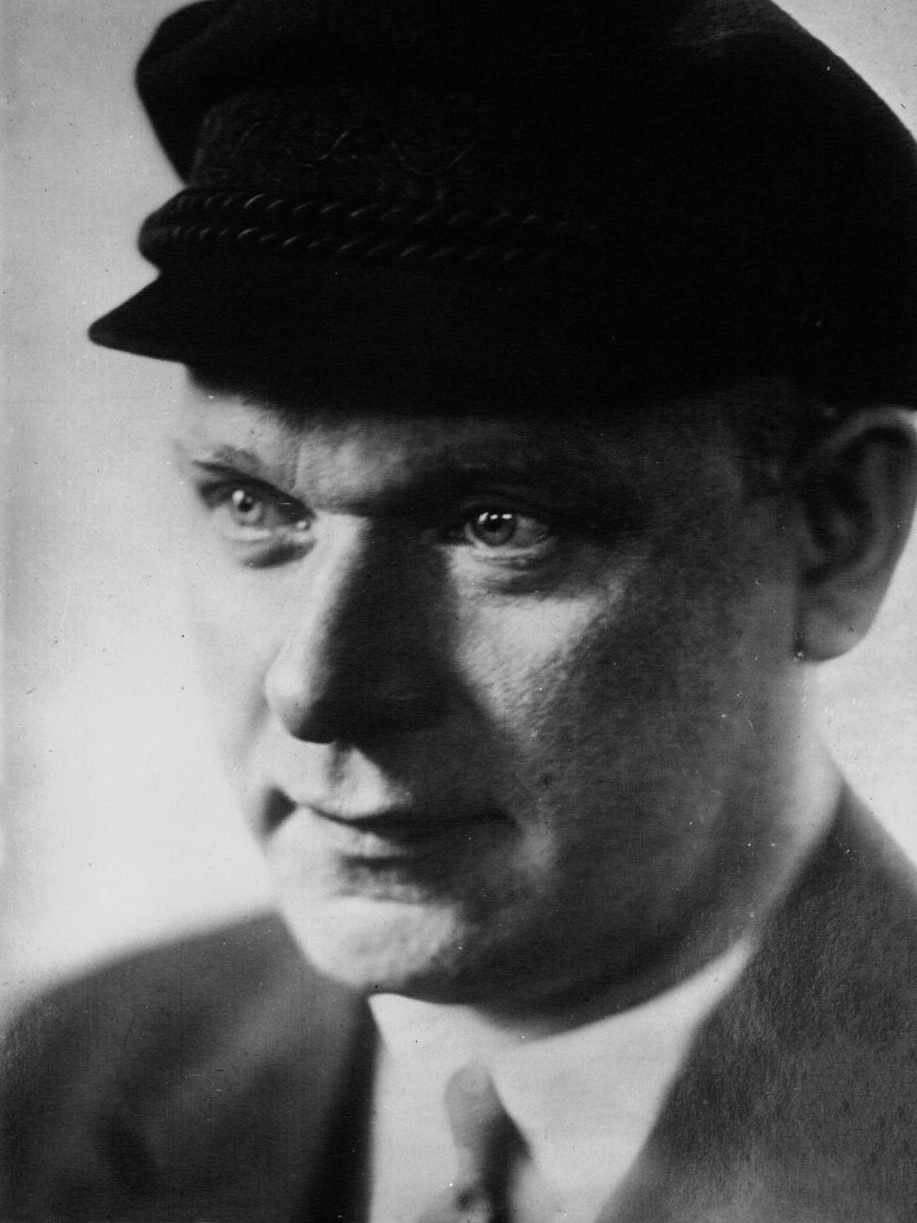
The order to arrest Communist deputies and officials goes out around 23:00. Police and SA men arrest several thousand people in the hours after the fire. Carl von Ossietzky, editor of Die Weltbühne, is taken to the police prison in Spandau.
Day 1 · Tuesday 28 February 1933
Two cabinet sessions, about 11:00 and 16:15. Hindenburg signs the “Decree for the Protection of People and State” soon after the second cabinet session. 7 articles of the constitution are suspended.
Vorwärts, the SPD's daily, is banned the same day.
Day 4 · Friday 3 March 1933
Ernst Thälmann, the KPD's chairman, is arrested in his hiding place in Berlin.
Day 6 · Sunday 5 March 1933
Reichstag election. The NSDAP wins 43.9 per cent, short of a majority on its own; with the DNVP it has one.
SPD 18.3 per cent, KPD 12.3 per cent, Centre 11.2 per cent, DNVP 8 per cent.
Day 9 · Wednesday 8 March 1933
The KPD's mandates in the Reichstag are annulled under the emergency decrees. The KPD had won 81 seats three days earlier. Many of its deputies were already in custody or in hiding.
Day 22 · Tuesday 21 March 1933
The SA opens a concentration camp in a former brewery in Oranienburg, north of Berlin, one of the first.
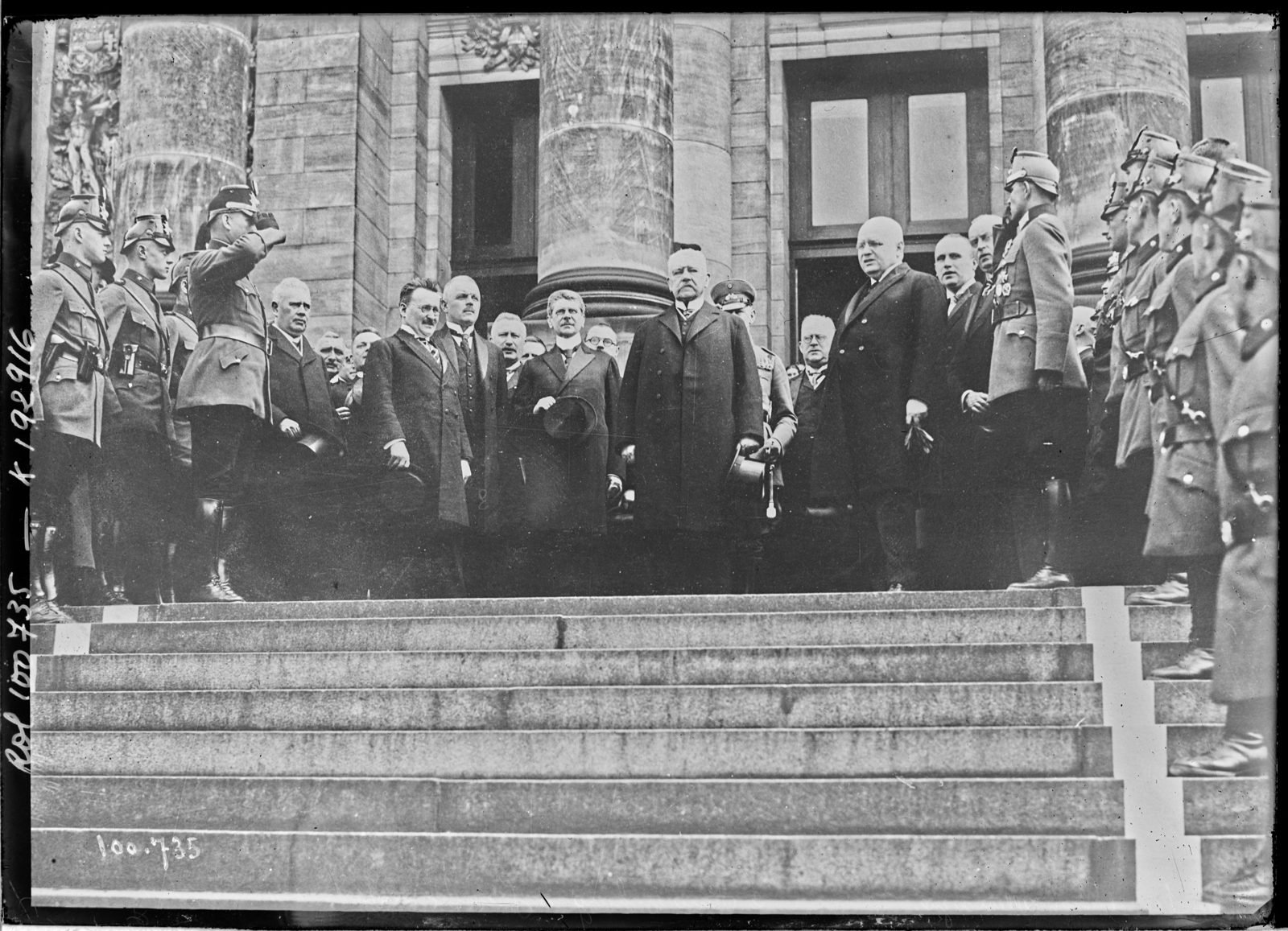
The new Reichstag is opened with a state ceremony in the Garrison Church in Potsdam; it then meets in the Kroll Opera.
Day 24 · Thursday 23 March 1933
Guarded by SA and SS, the Reichstag passes the Enabling Act by 444 votes to 94. Only the SPD votes against; 26 of its deputies are in custody or have fled. The government may now make laws without parliament, at first for 4 years.
27 February 1933 – 23 March 1933
24 days
From a fire on a Monday night to a parliament that had voted away its own power. Every day after the first was lived under the decree, and the state of emergency was not lifted until 1945.
03Reichsgesetzblatt, 28 February 1933
The “Decree of the Reich President for the Protection of People and State” was issued under Article 48 of the constitution, the President’s emergency power, and was signed by Paul von Hindenburg. It suspended, “until further notice”, the articles below. Arrests already under way that night now had a legal basis.

What the Weimar constitution had guaranteed
The state of emergency it created was not lifted until 1945.

04Berlin and Leipzig, 1933–2007
Decades of argument have not settled who lit the Reichstag. The fire’s use is on the record, day by day, above.
From the early 1960s Fritz Tobias and Hans Mommsen argued that van der Lubbe acted alone and that the Nazis exploited a fire they had not planned. For decades this was the prevailing view.
Critics ask how one visually impaired man could have set so many fires so quickly. Benjamin Carter Hett (2014) concludes that the evidence points to Nazi arsonists.
Who set the fire is still disputed.
The trial and after

The fire took one night. The decree took less than a day.
24 days after the fire, the Reichstag handed its power to Hitler’s government.
Press & citation
Free to publish under CC BY 4.0 — in print, online, on Wikipedia and in teaching, commercially or not — with credit to Berlinfographics and a link to this page.
Ready-to-use image
The infographic as one image: headline, key figures, chart, sources and credit, 2,400 × 1,350 px PNG. Please use it unedited.
Download landscape (PNG)
Square format
A 1:1 version for social media and narrow columns, 1,800 × 1,800 px.
Download square (PNG)
Portrait 4:5
For Instagram and LinkedIn feeds, 1,620 × 2,025 px.
Download portrait (PNG)Credit line
Berlinfographics (berlinfographics.com), CC BY 4.0
Citation
Berlinfographics (2026). “The Reichstag fire: twenty-four days to the Enabling Act, 1933”. Berlin Experiences. https://berlinfographics.com/reichstag-fire-1933/
Wikipedia
{{cite web |title=The Reichstag fire: twenty-four days to the Enabling Act, 1933 |url=https://berlinfographics.com/reichstag-fire-1933/ |website=Berlinfographics |publisher=Berlin Experiences |date=2026-11-09 |access-date=2026-11-09}}
Our infographics, charts and texts are licensed CC BY 4.0: free to republish, including commercially, with credit to Berlinfographics and a link. Photographs keep their own licences, named in each caption. How to credit
Topics: The Second World War · Cold War Berlin · Nazi Berlin · Persecution & the Holocaust · Weimar Berlin · Prussia & the Kaiserreich · Architecture & the built city · Culture, science & society · Reunified Berlin · Unusual facts
Contact: info@berlinfographics.com · Press: press@berlinfographics.com · Imprint · Privacy