1756–1763The Seven Years’ War
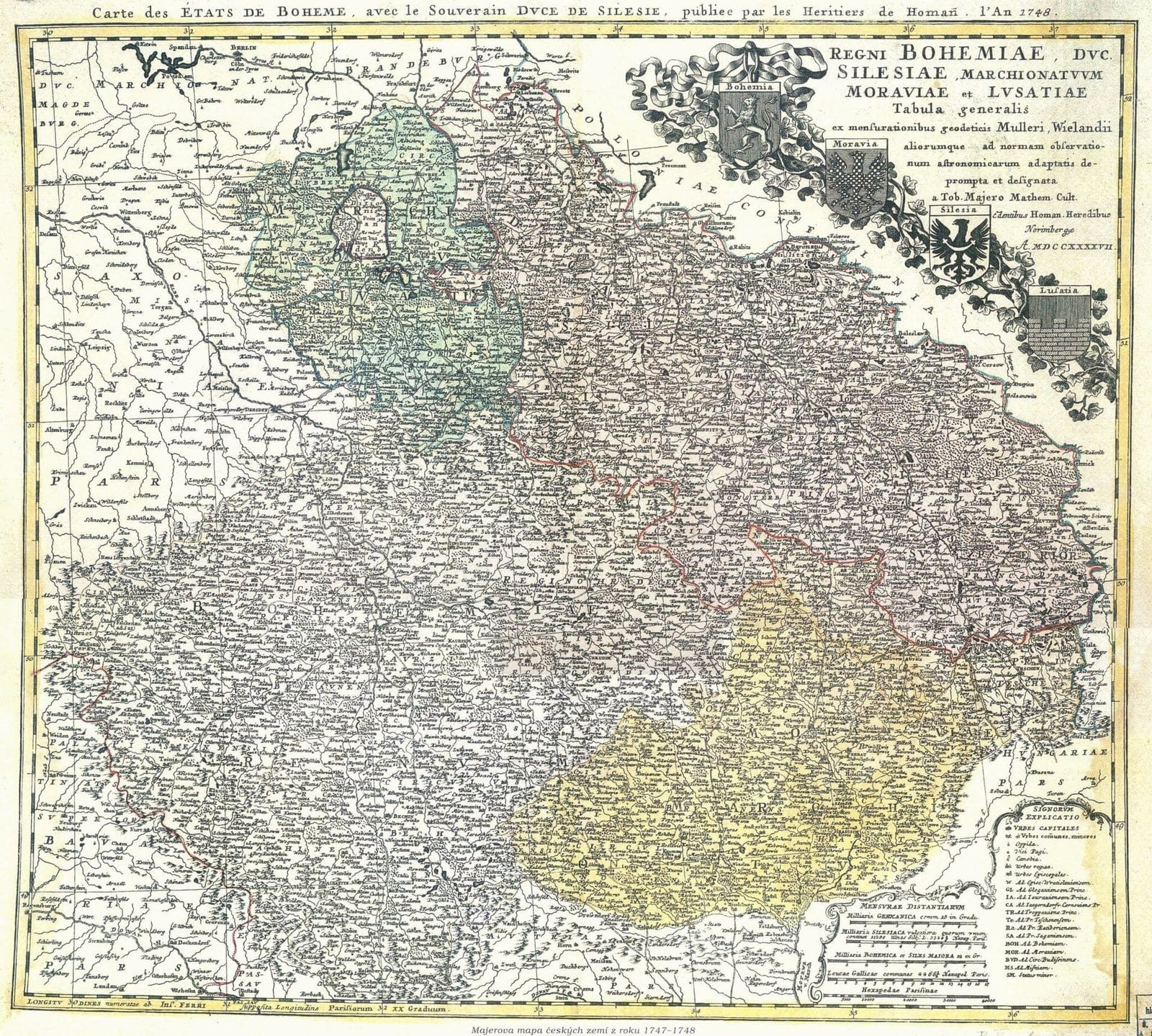
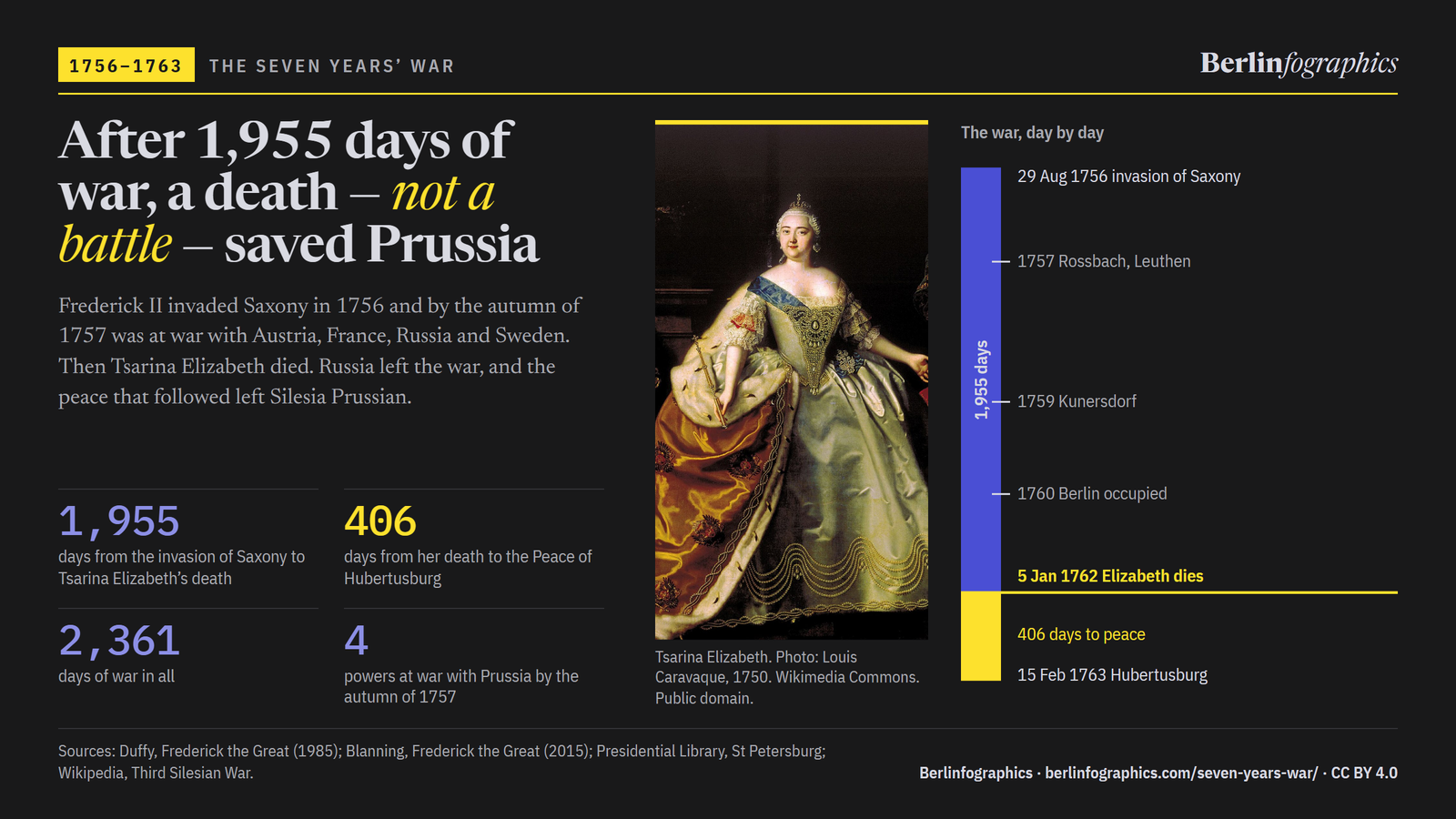
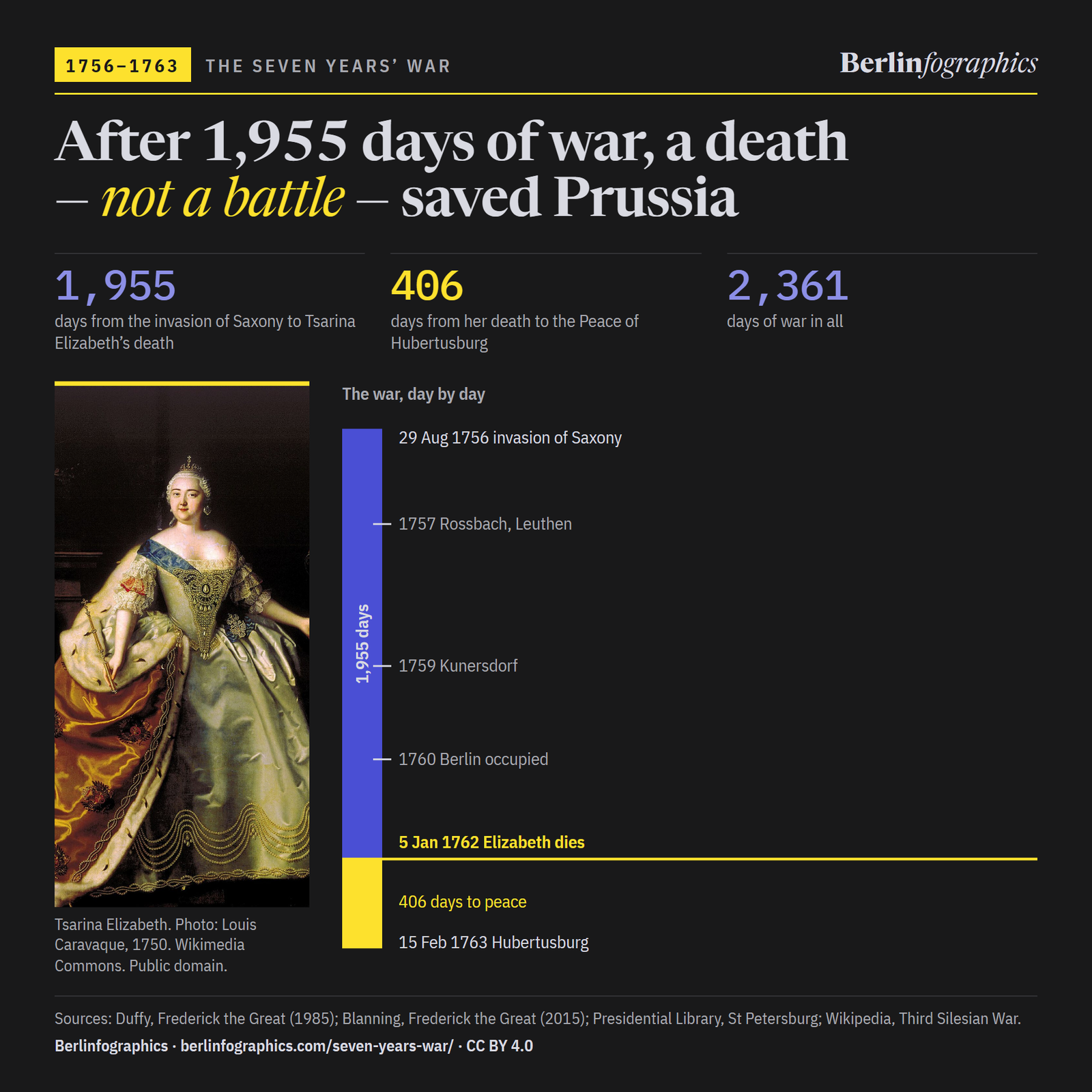
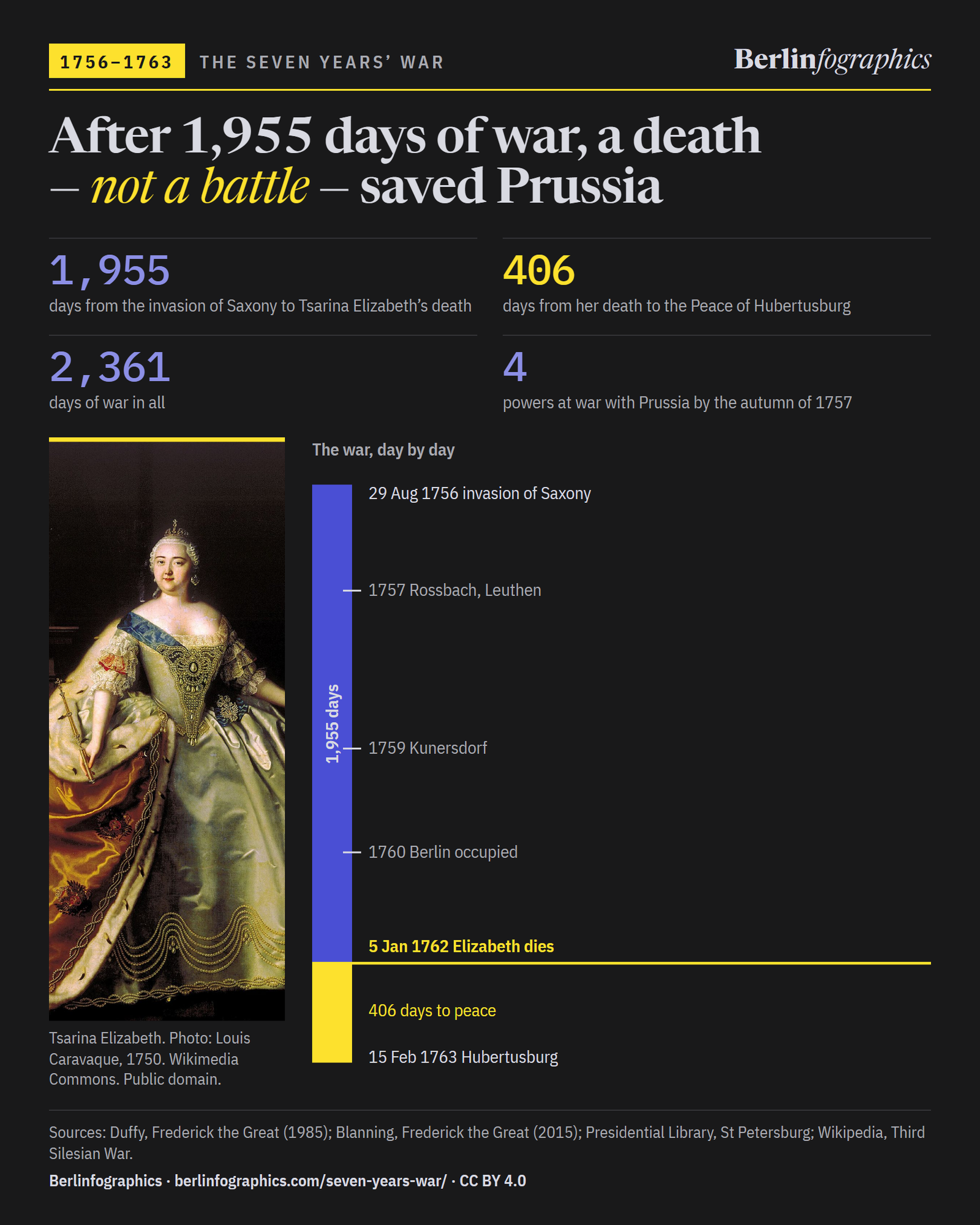
Frederick II invaded Saxony on 29 August 1756. By the autumn of 1757 he was at war with Austria, France, Russia and Sweden at once. Then, on 5 January 1762, Tsarina Elizabeth died. Her successor took Russia out of the war, and 406 days later the Peace of Hubertusburg left Silesia Prussian.
Scroll through the war
Adolph Menzel, “Frederick the Great addresses his generals before the Battle of Leuthen, 1757”, painted 1859–61 and left unfinished. Alte Nationalgalerie, Berlin.Adolph von Menzel, 1860. Wikimedia Commons. Public domain.
01The two sides
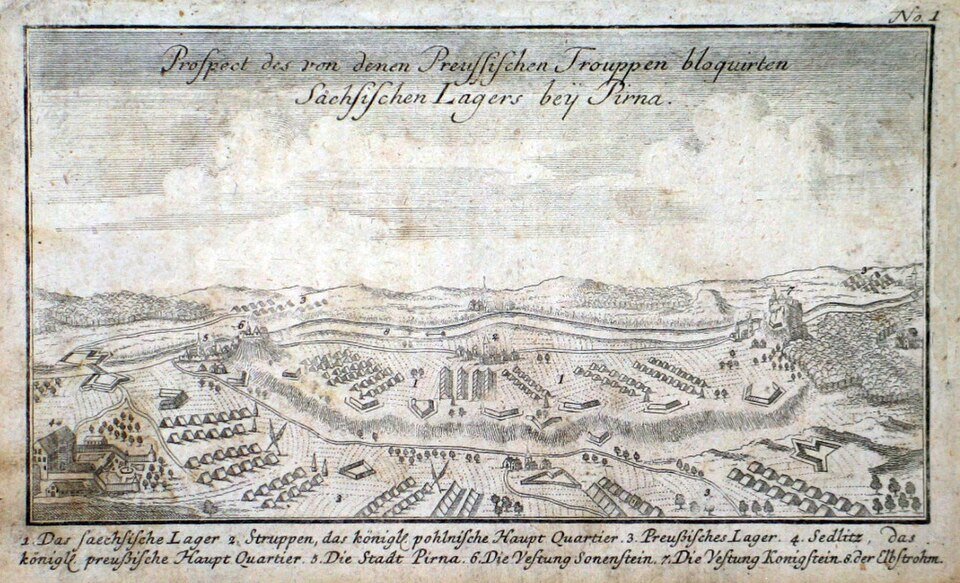
29 Aug 1756: Frederick pre-empts the gathering coalition by occupying Saxony. By the autumn of 1757 Prussia is at war with Austria, France, Russia and Sweden at once.
Prussia’s allies were Britain, Hannover and Hesse. Overseas, the war between Britain and France had already begun in 1754. At stake for Frederick was Silesia — and at the peace of 1763 it stayed Prussian.


02The war, day by day
29 Aug 1756
Frederick pre-empts the gathering coalition by occupying Saxony. By the autumn of 1757 Prussia is at war with Austria, France, Russia and Sweden at once.
Sources: Wikipedia, Third Silesian War · Duffy, Frederick the Great (1985)
5 Nov 1757
Franco-Imperial army of some 41,000 destroyed by about 22,000 Prussians in under 90 minutes. Frederick's most efficient victory.
Sources: Wikipedia, Battle of Rossbach · Duffy, Frederick the Great (1985) · Blanning, Frederick the Great (2015)
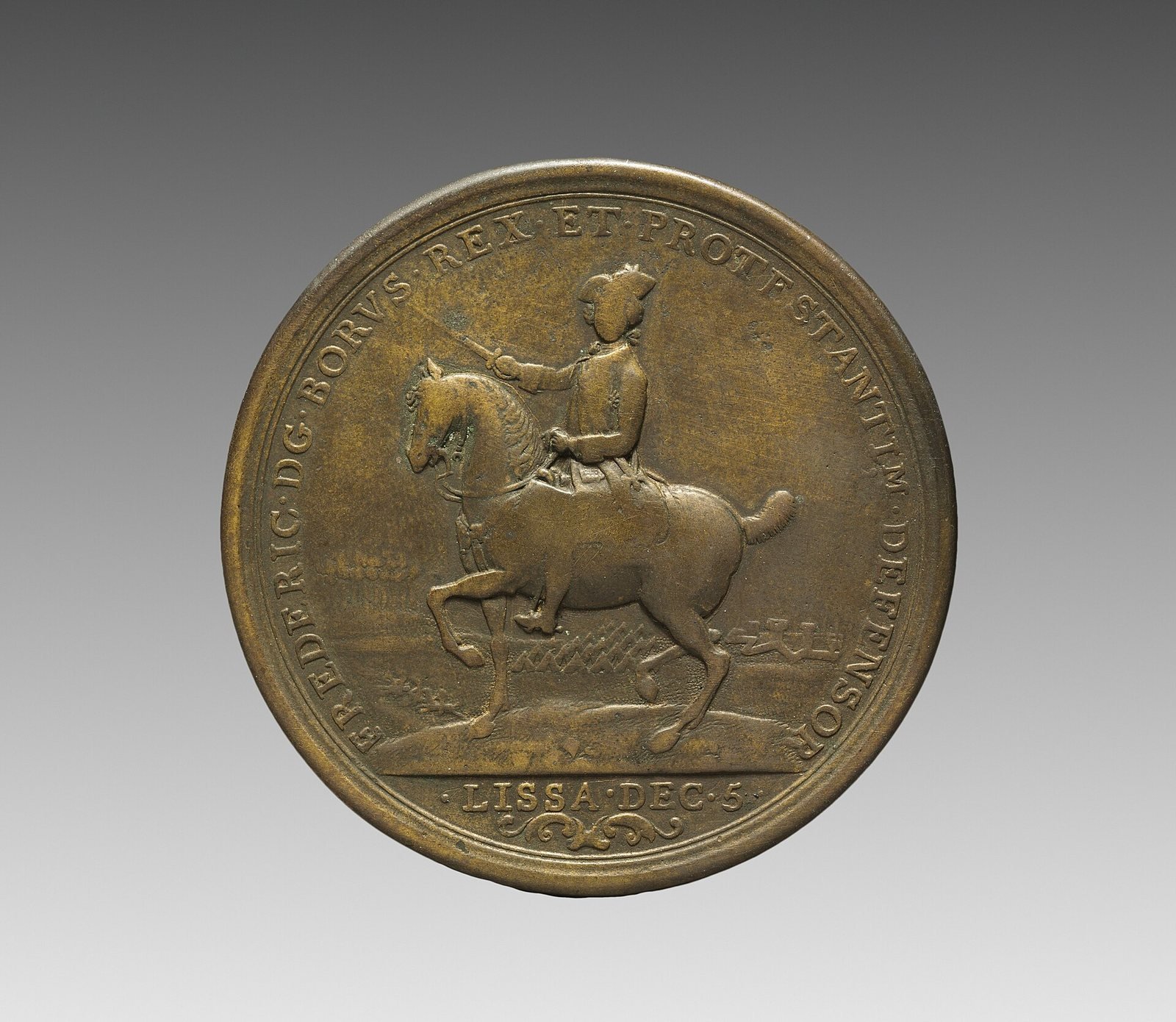
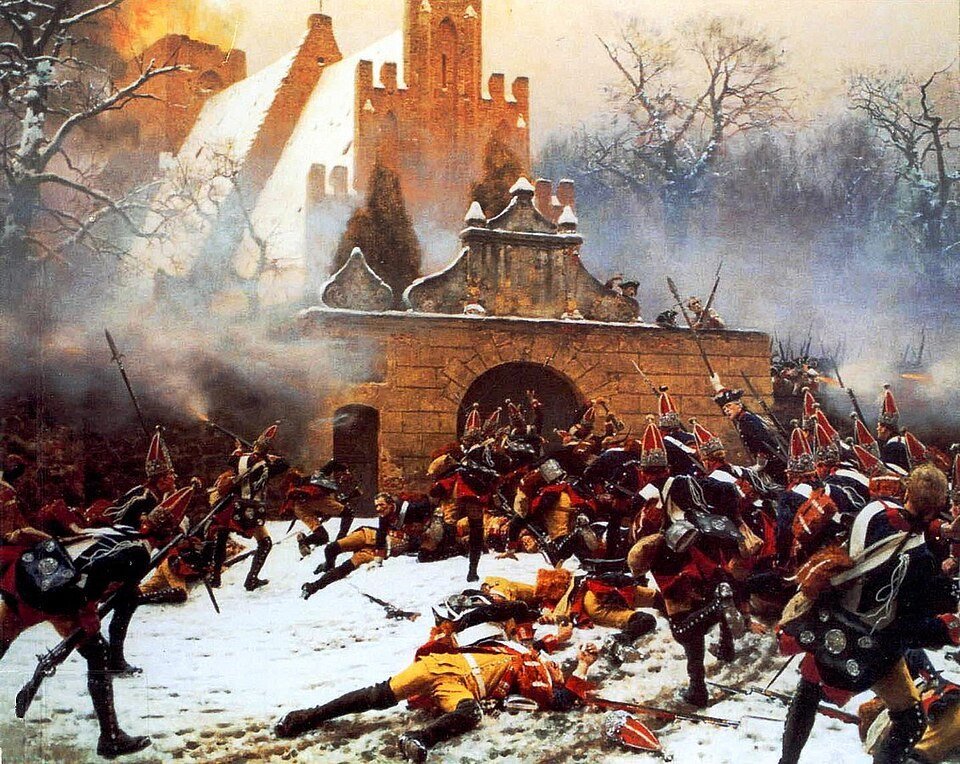
5 Dec 1757
Austrian army of some 65,000 broken by 36,000 Prussians, who marched unseen around the Austrian left and struck it end-on. Napoleon called it a masterpiece of movement, manoeuvre and resolution.
Sources: Wikipedia, Battle of Leuthen · Duffy, Frederick the Great (1985)
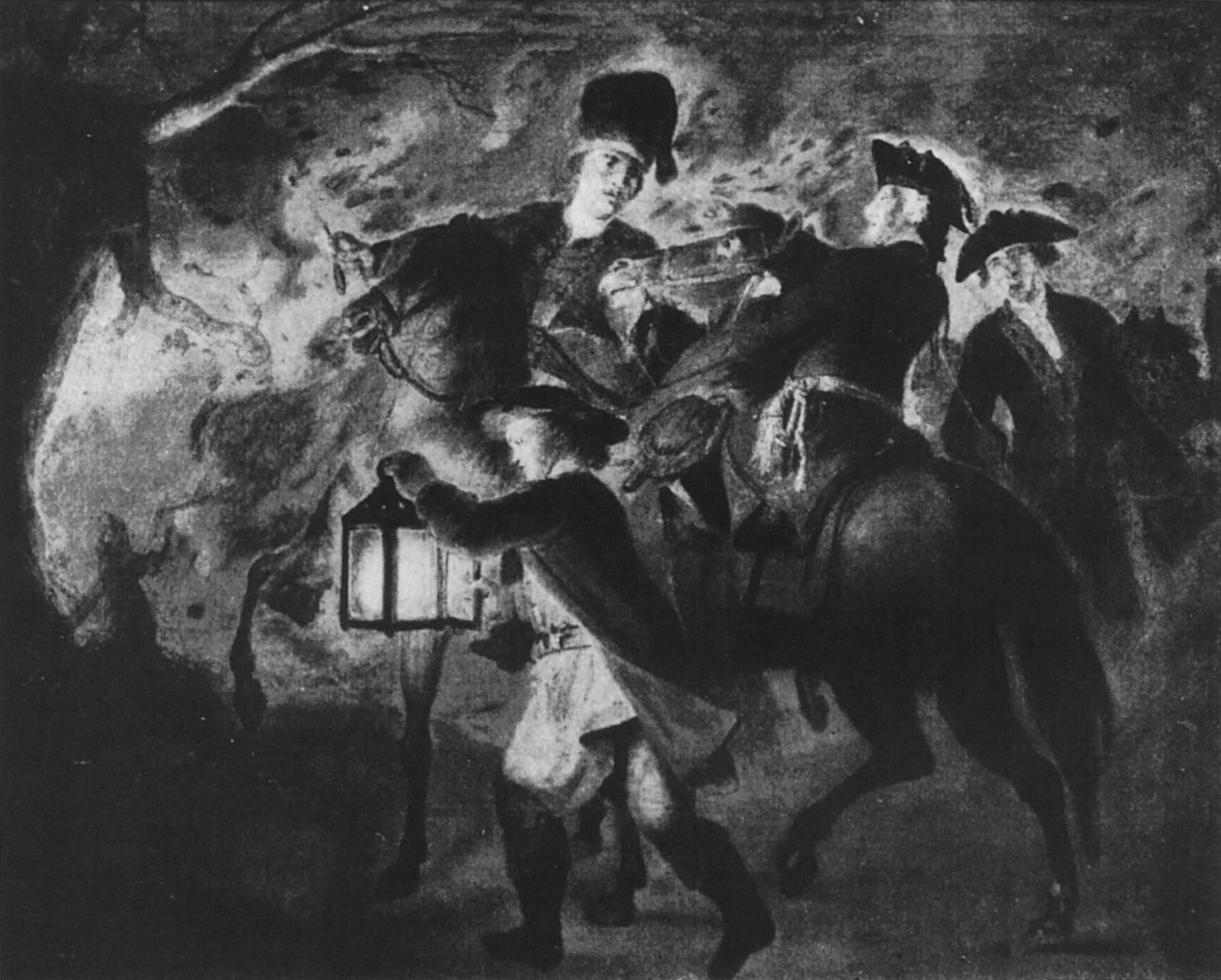
12 Aug 1759
Catastrophe. Frederick loses some 19,000 men against a combined Russo-Austrian army; that night he writes to his minister Finckenstein that he believes all is lost. The Russians fail to follow up — the first Miracle of the House of Brandenburg.
Sources: Wikipedia, Battle of Kunersdorf · Duffy, Frederick the Great (1985) · Wikipedia, Miracle of the House of Brandenburg
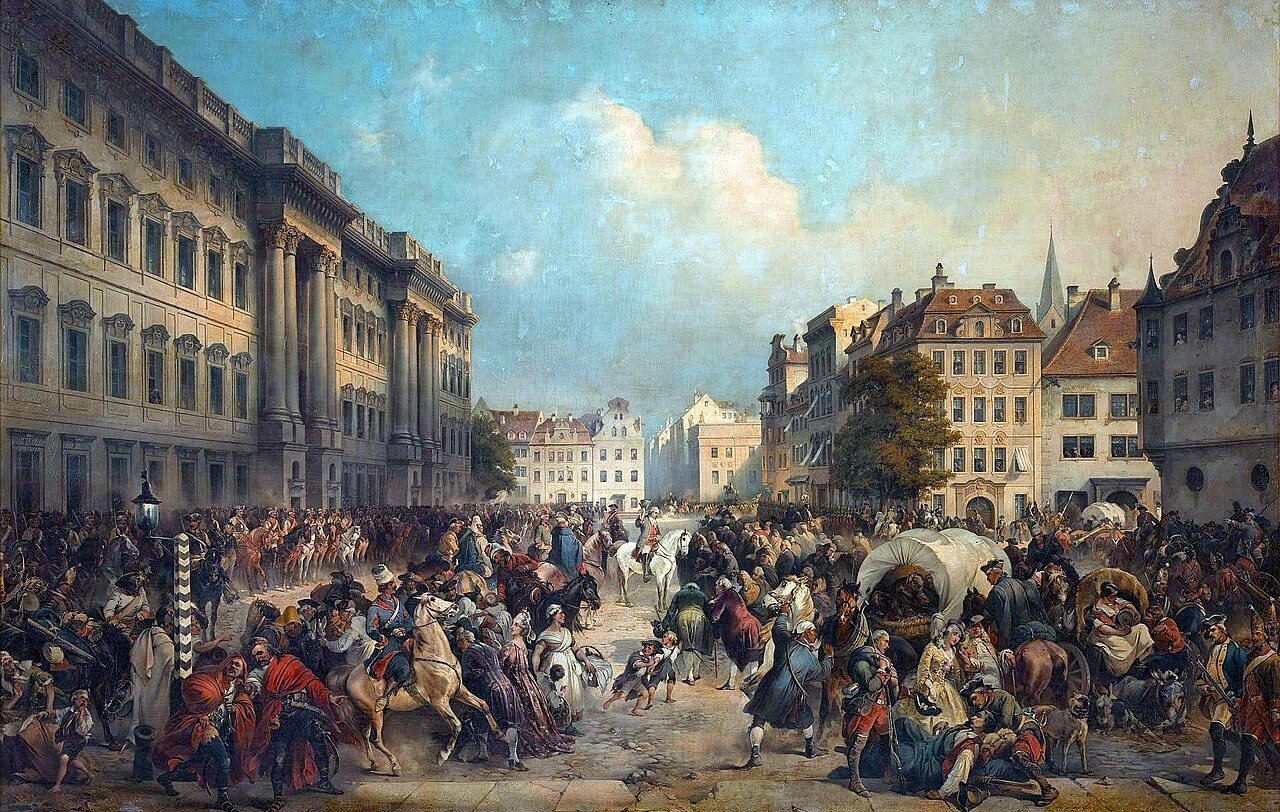
9 Oct 1760
Russian and Austrian raiding columns enter Berlin, levy a contribution and leave on 12 October. Austrian hussars under Hadik had already raided the city in October 1757.
Sources: Wikipedia, Third Silesian War · Wikipedia, 1757 raid on Berlin
Aug–Sep 1761
Frederick entrenches at Bunzelwitz in Silesia against the combined Austro-Russian army; the allies call off their assault and the camp survives without a battle. Bankruptcy approaches.
Sources: britishbattles.com; Carlyle · Duffy, Frederick the Great (1985)
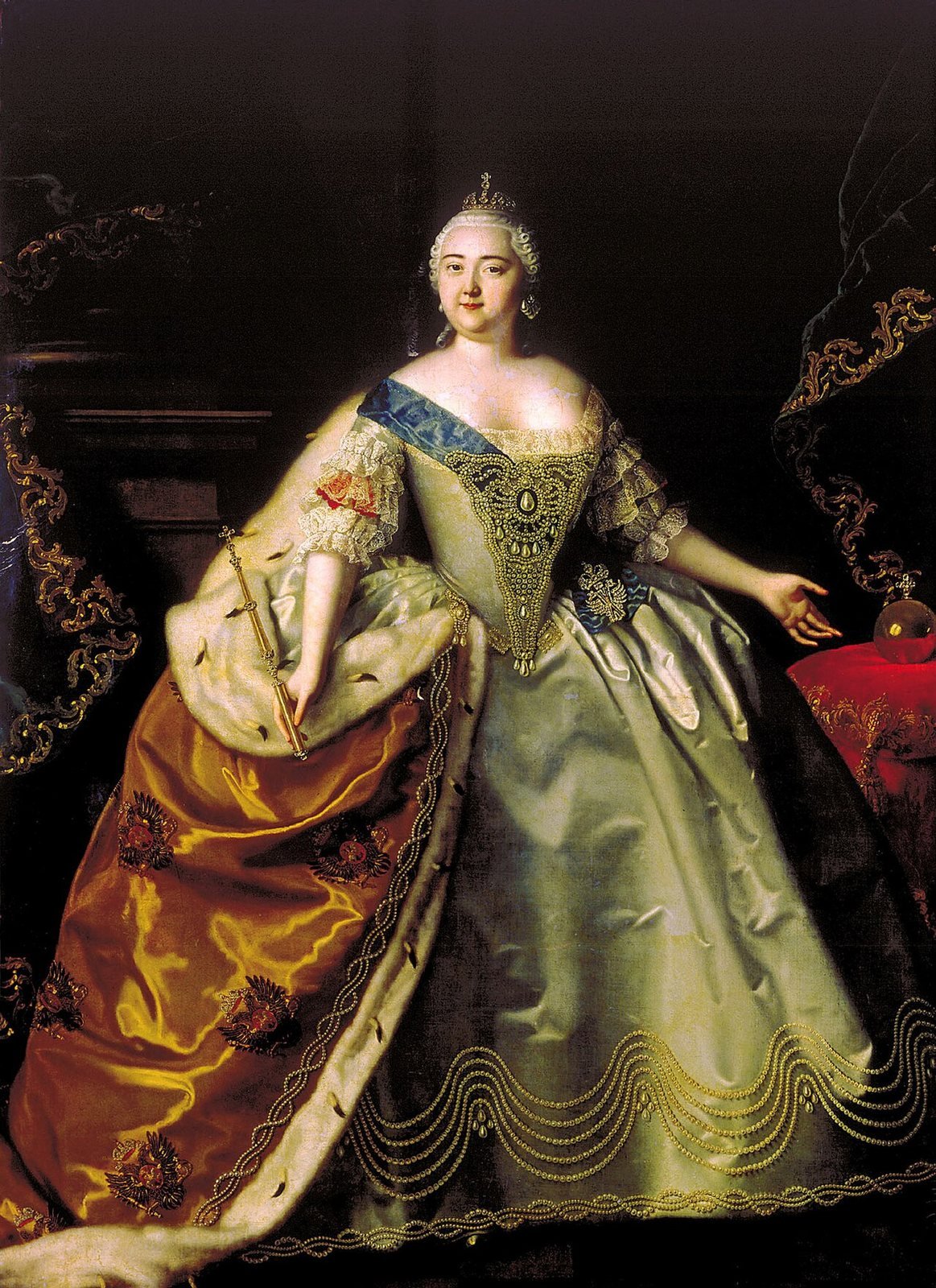
5 Jan 1762
The Miracle of the House of Brandenburg, second occurrence. Peter III withdraws Russia, returns East Prussia, and in June 1762 signs an alliance with Frederick. The eastern front collapses within months.
Sources: Presidential Library, St Petersburg · Wikipedia, Miracle of the House of Brandenburg
5 May 1762
Peace between Russia and Prussia is signed at Saint Petersburg, 120 days after Elizabeth’s death. In June the new tsar signs an alliance with Frederick — never ratified.
Sources: Presidential Library, St Petersburg
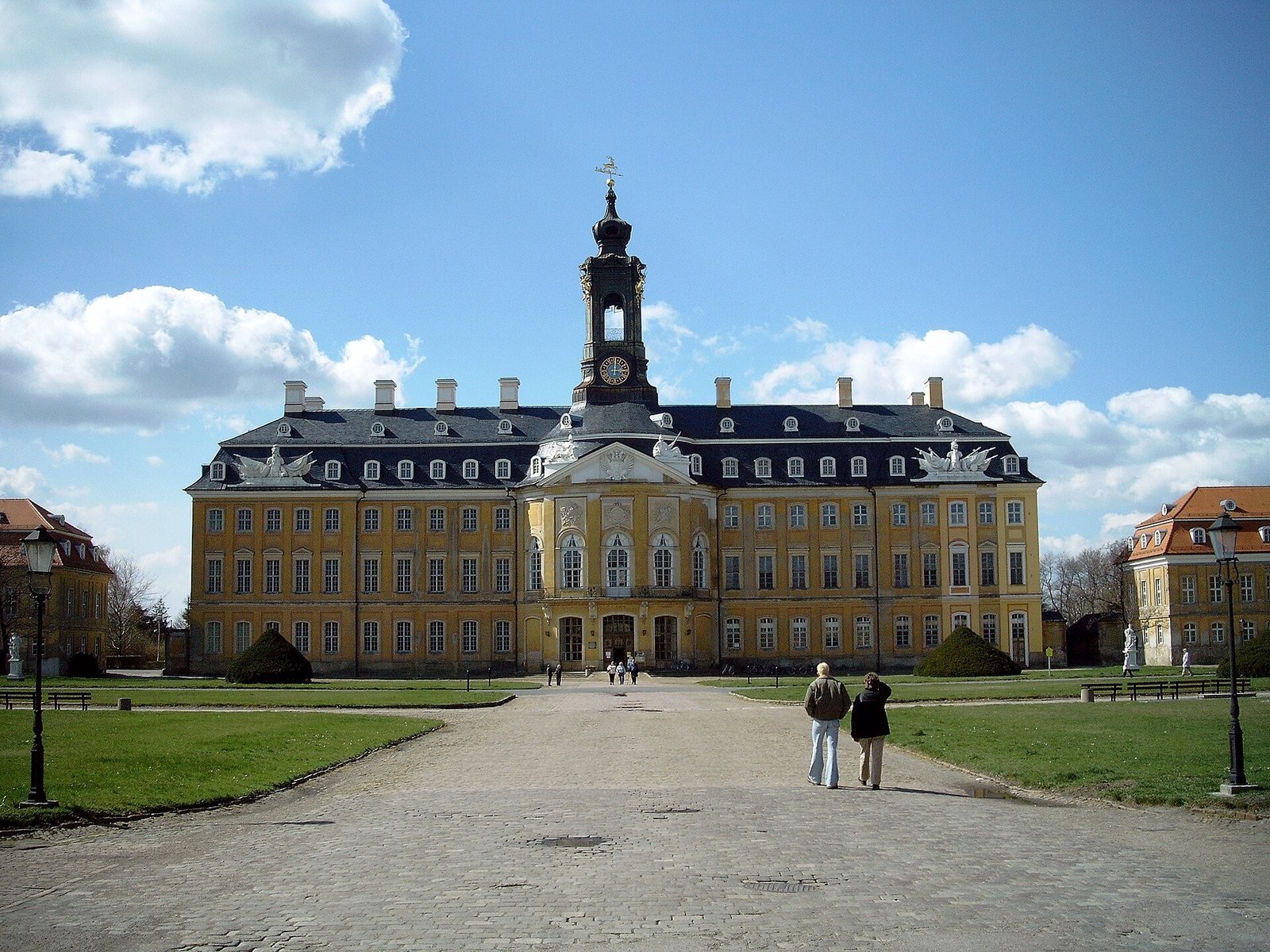
15 Feb 1763
Peace signed at the Saxon hunting lodge. Status quo ante 1756. Silesia stays Prussian, and Prussia is a great power.
Sources: Wikipedia, Third Silesian War · Duffy, Frederick the Great (1985) · Blanning, Frederick the Great (2015)
03Rossbach and Leuthen
5 Nov 1757, Rossbach: Franco-Imperial army of some 41,000 destroyed by about 22,000 Prussians in under 90 minutes. Frederick's most efficient victory.
5 Dec 1757, Leuthen: Austrian army of some 65,000 broken by 36,000 Prussians, who marched unseen around the Austrian left and struck it end-on.


“A masterpiece of movements, manoeuvres and resolution”
Napoleon on Leuthen, as quoted by Fuller


0412 August 1759
Catastrophe. Frederick loses some 19,000 men against a combined Russo-Austrian army; that night he writes to his minister Finckenstein that he believes all is lost. The Russians fail to follow up — the first Miracle of the House of Brandenburg. The letter went to Count Finck von Finckenstein.
Prussian losses at Kunersdorf, as counted

05Berlin and Bunzelwitz

9 Oct 1760: Russian and Austrian raiding columns enter Berlin, levy a contribution and leave on 12 October. Austrian hussars under Hadik had already raided the city in October 1757.
They held the city for three days, from 9 October 1760 to 12 October 1760.
Aug–Sep 1761: Frederick entrenches at Bunzelwitz in Silesia against the combined Austro-Russian army; the allies call off their assault and the camp survives without a battle. Bankruptcy approaches. The camp stood from about 20 August 1761; the assault planned for 1–2 Sep was called off.

065 January 1762
5 Jan 1762: Elizabeth of Russia dies. The Miracle of the House of Brandenburg, second occurrence. Peter III withdraws Russia, returns East Prussia, and in June 1762 signs an alliance with Frederick. The eastern front collapses within months.
Peace with Russia was signed at Saint Petersburg on 5 May 1762, 120 days after her death; the alliance of June 1762 was never ratified. The first “miracle” had come after Kunersdorf, when the Russians failed to follow up.


The war, cut at her death
0715 February 1763
15 Feb 1763, Hubertusburg: Peace signed at the Saxon hunting lodge. Status quo ante 1756. Silesia stays Prussian, and Prussia is a great power.


Frederick won at Rossbach and Leuthen and survived Kunersdorf. What saved Prussia was not a battle but a death.
Press & citation
Free to publish under CC BY 4.0 — in print, online, on Wikipedia and in teaching, commercially or not — with credit to Berlinfographics and a link to this page.
Ready-to-use image
The infographic as one image: headline, key figures, chart, sources and credit, 2,400 × 1,350 px PNG. Please use it unedited.
Download landscape (PNG)
Square format
A 1:1 version for social media and narrow columns, 1,800 × 1,800 px.
Download square (PNG)
Portrait 4:5
For Instagram and LinkedIn feeds, 1,620 × 2,025 px.
Download portrait (PNG)Credit line
Berlinfographics (berlinfographics.com), CC BY 4.0
Citation
Berlinfographics (2026). “The Seven Years’ War, 1756–1763”. Berlin Experiences. https://berlinfographics.com/seven-years-war/
Wikipedia
{{cite web |title=The Seven Years’ War, 1756–1763 |url=https://berlinfographics.com/seven-years-war/ |website=Berlinfographics |publisher=Berlin Experiences |date=2026-11-05 |access-date=2026-11-05}}
Our infographics, charts and texts are licensed CC BY 4.0: free to republish, including commercially, with credit to Berlinfographics and a link. Photographs keep their own licences, named in each caption. How to credit
Topics: The Second World War · Cold War Berlin · Nazi Berlin · Persecution & the Holocaust · Weimar Berlin · Prussia & the Kaiserreich · Architecture & the built city · Culture, science & society · Reunified Berlin · Unusual facts
Contact: info@berlinfographics.com · Press: press@berlinfographics.com · Imprint · Privacy