Berlinfographicsby Berlin Experiences

Cold War Berlin · Unter den Linden 55–65 · Built 1949–1951

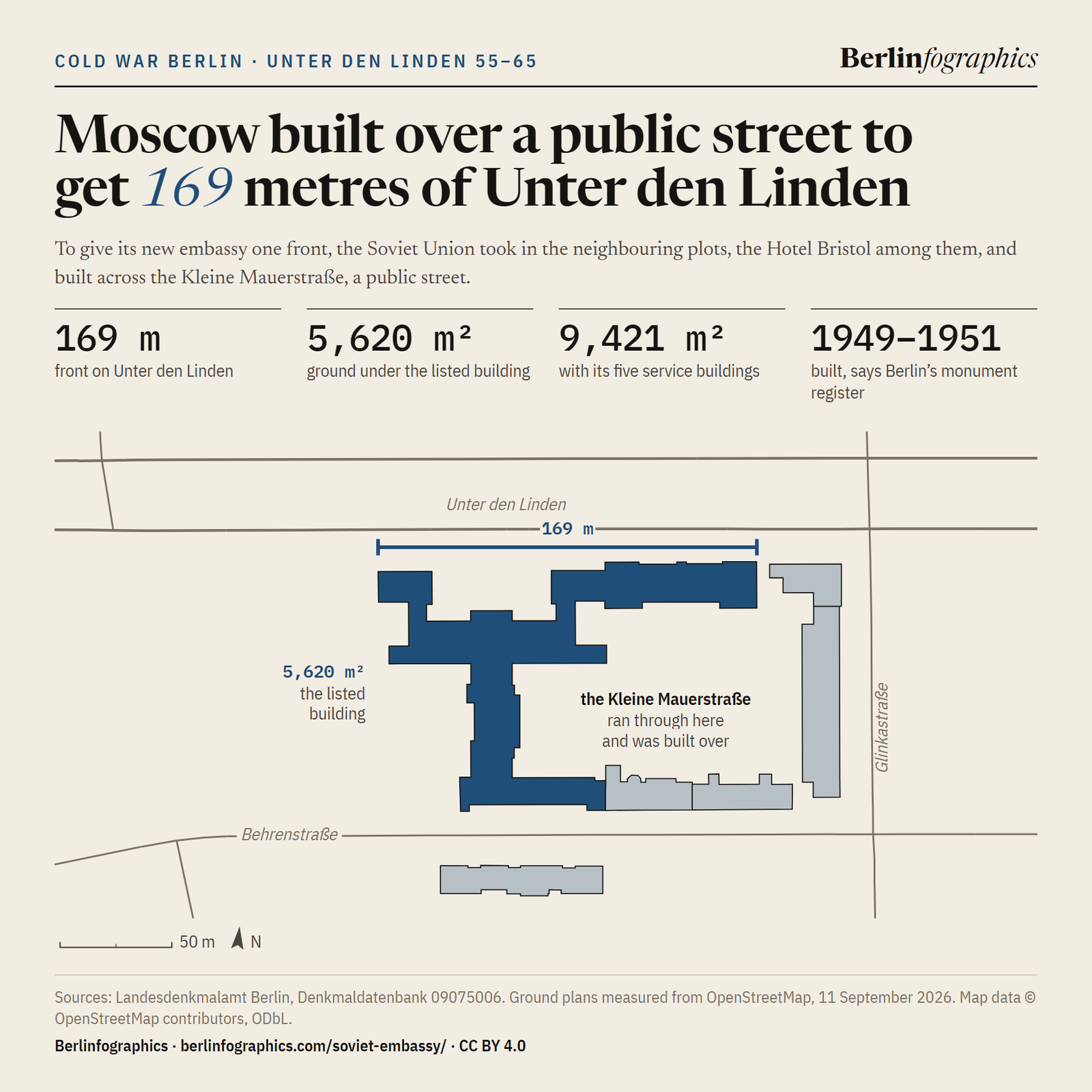
Moscow built over a public street to get 169 metres of Unter den Linden

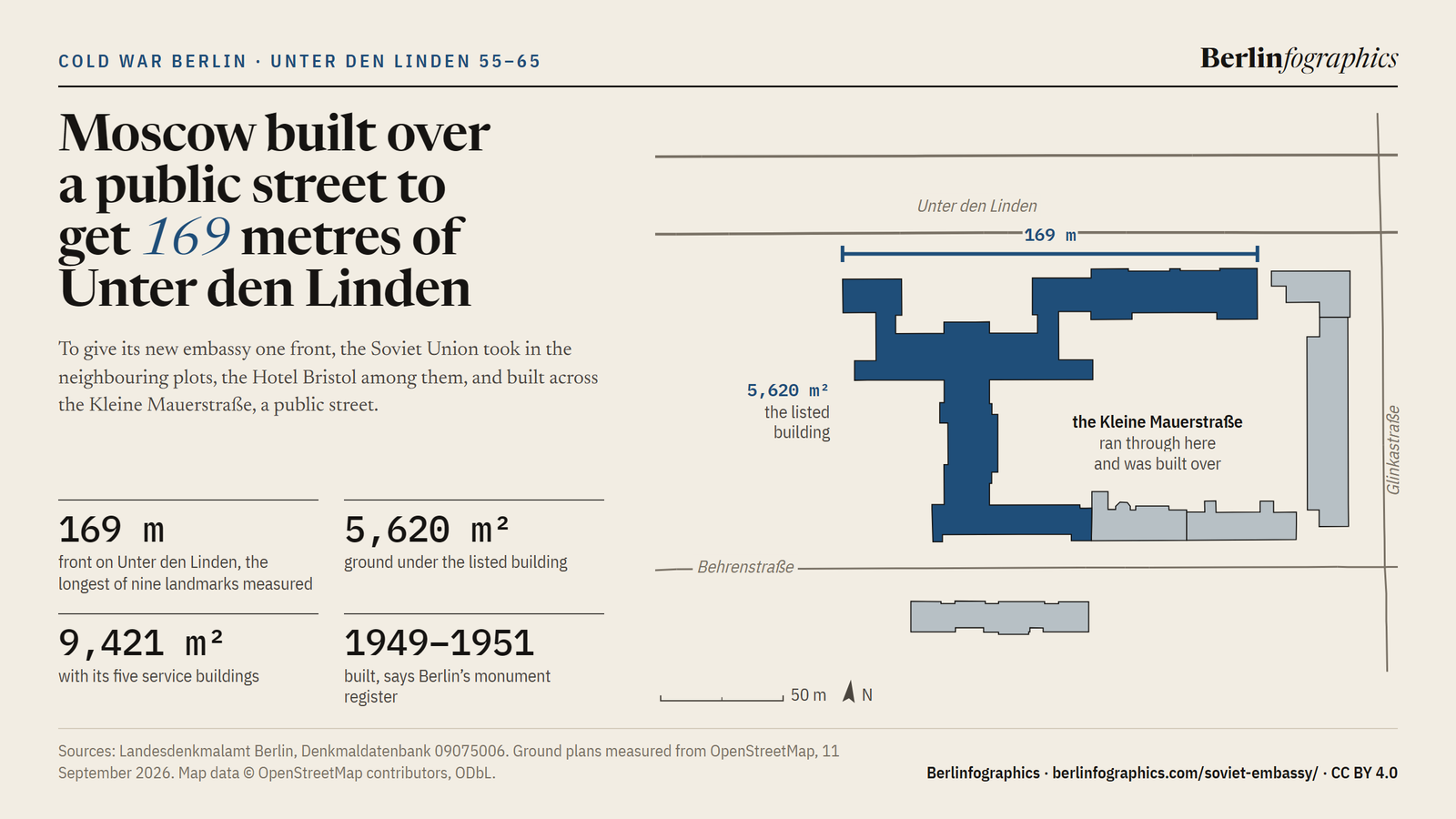
To make one front for its new embassy, the Soviet Union took in the neighbouring plots, the Hotel Bristol among them, and built across the Kleine Mauerstraße, a public street that stopped existing. Measured on the ground today, no embassy on the boulevard covers more: 5,620 m².

Black-and-white photograph of the Soviet embassy on Unter den Linden: a long four-storey stone front around a forecourt, with a raised centre topped by a lantern.
The finished front, 1951. The building takes the boulevard's building line from its neighbours and then cuts back from it for the courtyard.Photo: Bundesarchiv, Bild 183-10705-0001 / Schmidtke / CC BY-SA 3.0 de

The block south of Unter den Linden

Ground plans of the Russian Embassy and eight other buildings on Unter den Linden, from OpenStreetMap, drawn at one scale.

Ground plans and streets: © OpenStreetMap contributors, ODbL. One scale throughout each view. One scale per view.
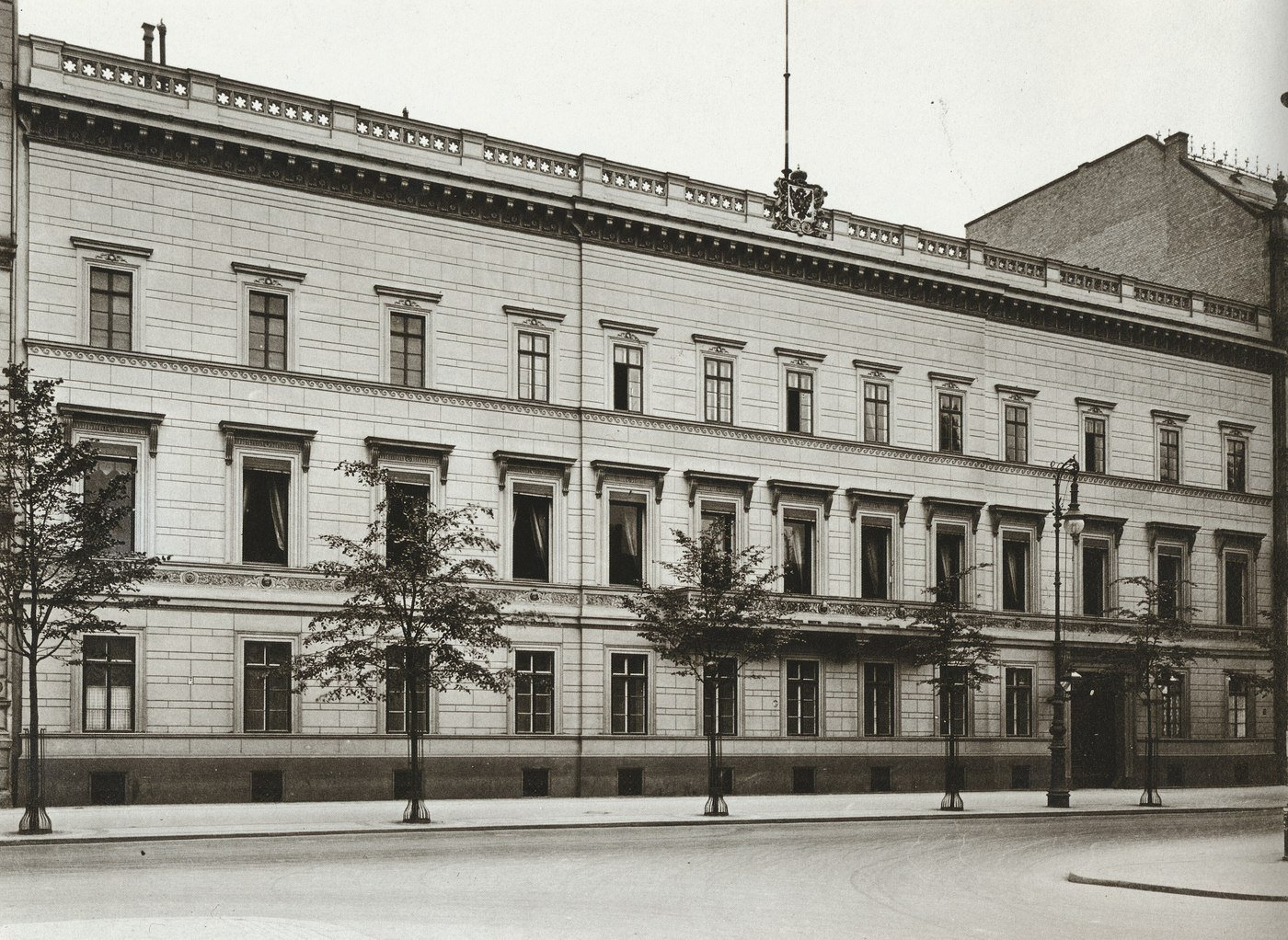
Old photograph of the Imperial Russian embassy palace on Unter den Linden: a long, richly ornamented three-storey front behind the lime trees.
The Imperial Russian embassy at Unter den Linden 7, about 1910: the palace that burned in 1944.Unknown author, c. 1910. Wikimedia Commons. Public domain.

Russia has held this plot since 1837

Russia has held this plot for longer than Germany has existed. The palace that stood here was bought by Nicholas I in 1837 and burned in an air raid in February 1944; the number on its door changed in 1937, when the boulevard was renumbered and No. 7 became No. 63.
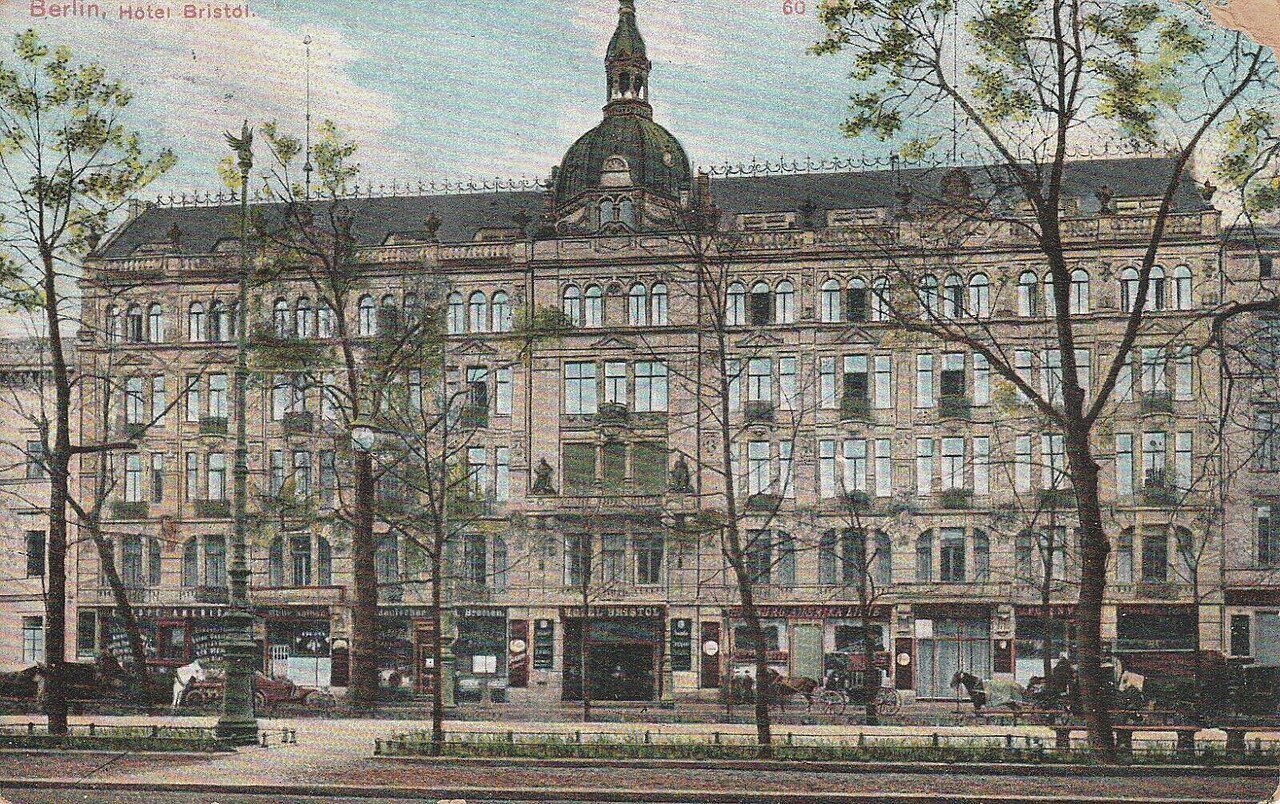
Old photograph of the Hotel Bristol, a grand hotel front on Unter den Linden.
Hotel Bristol, 1907Unknown author, 1907. Wikimedia Commons. Public domain.
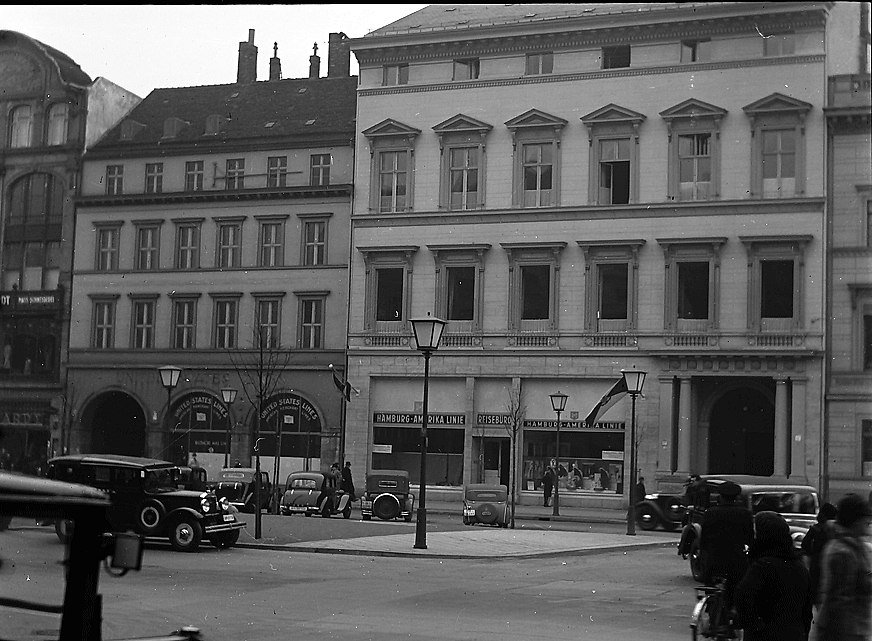
Black-and-white photograph of the south side of Unter den Linden at the corner of the Kleine Mauerstraße, 1936.
Kleine Mauerstraße, 1936Willy Pragher, 1936. Wikimedia Commons. CC BY 4.0.

Then Moscow took the neighbours, and a public street

To build its new embassy, the Soviet Union took in the adjoining plots, among them the Hotel Bristol, and built over the Kleine Mauerstraße. Berlin's monument register records it plainly:mit der Überbauung der Kleinen Mauerstraße, "by building over the Kleine Mauerstraße". The street stopped existing.

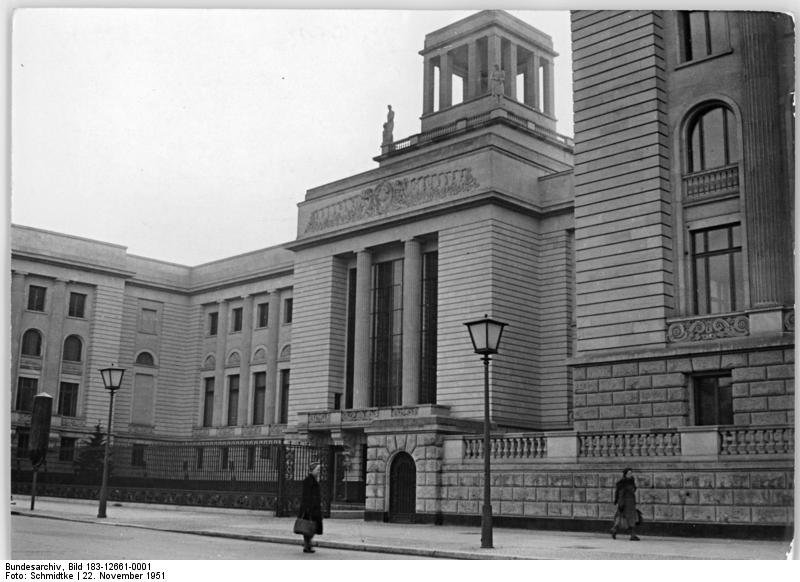
Black-and-white photograph of the embassy entrance: a tall pillared centre block crowned by a square lantern.
The entrance of the new embassy, photographed on 22 November 1951.Bundesarchiv, Bild 183-12661-0003 / Schmidtke / CC BY-SA 3.0 de

The embassy rose across it, 1949–1951

The Landesdenkmalamt dates the building 1949–1951. Its shell was already standing when the GDR was founded on 7 October 1949, and it was inaugurated on 7 November 1952, on the anniversary of the October Revolution. The listed building alone covers 5,620 m² of ground; with the flats, the school, the trade mission and the Aeroflot office behind it, the compound covers 9,421 m².
Black-and-white photograph of the embassy front running along the boulevard, with street lamps and passers-by.
The front along Unter den Linden, 22 November 1951.Bundesarchiv, Bild 183-12661-0001 / Schmidtke / CC BY-SA 3.0 de

One front, 169 metres long

Measured along the line of the boulevard, the listed building stands across 169 m of Unter den Linden. The German Wikipedia gives about 185 m for the whole complex, a figure that takes in the boundary wall and the railings either side of the forecourt.

Painting of Unter den Linden after rain: carriages and walkers on a wet, glinting boulevard under the trees.
Unter den Linden after the rain: Lesser Ury’s painting of the boulevard, 1888.Lesser Ury, 1888. Via Wikimedia Commons (Public domain).

Nine landmarks, one boulevard

Here is the embassy among eight of its neighbours, from the American and French embassies on Pariser Platz to the Zeughaus, each where it stands and all at the same scale. The survey measured every one of them from the same OpenStreetMap data, read on 11 September 2026.

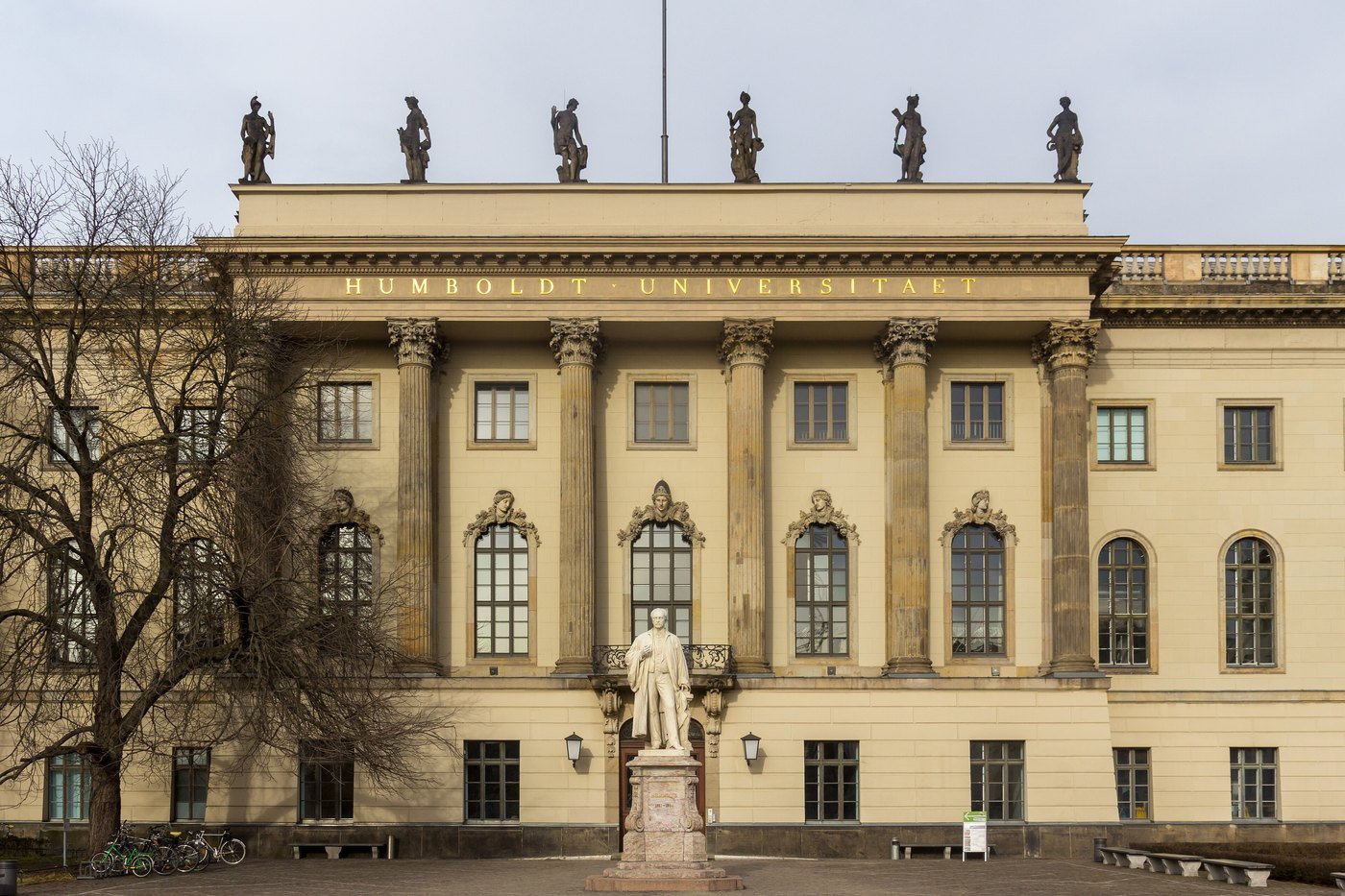
The pale classical main building of the Humboldt-Universität, with statues on its roof line.
Humboldt-UniversitätMike Peel, 2014. Wikimedia Commons. CC BY-SA 4.0.
The modern stone front of the French Embassy on Pariser Platz.
French EmbassyGryffindor, 2006. Wikimedia Commons. Public domain.
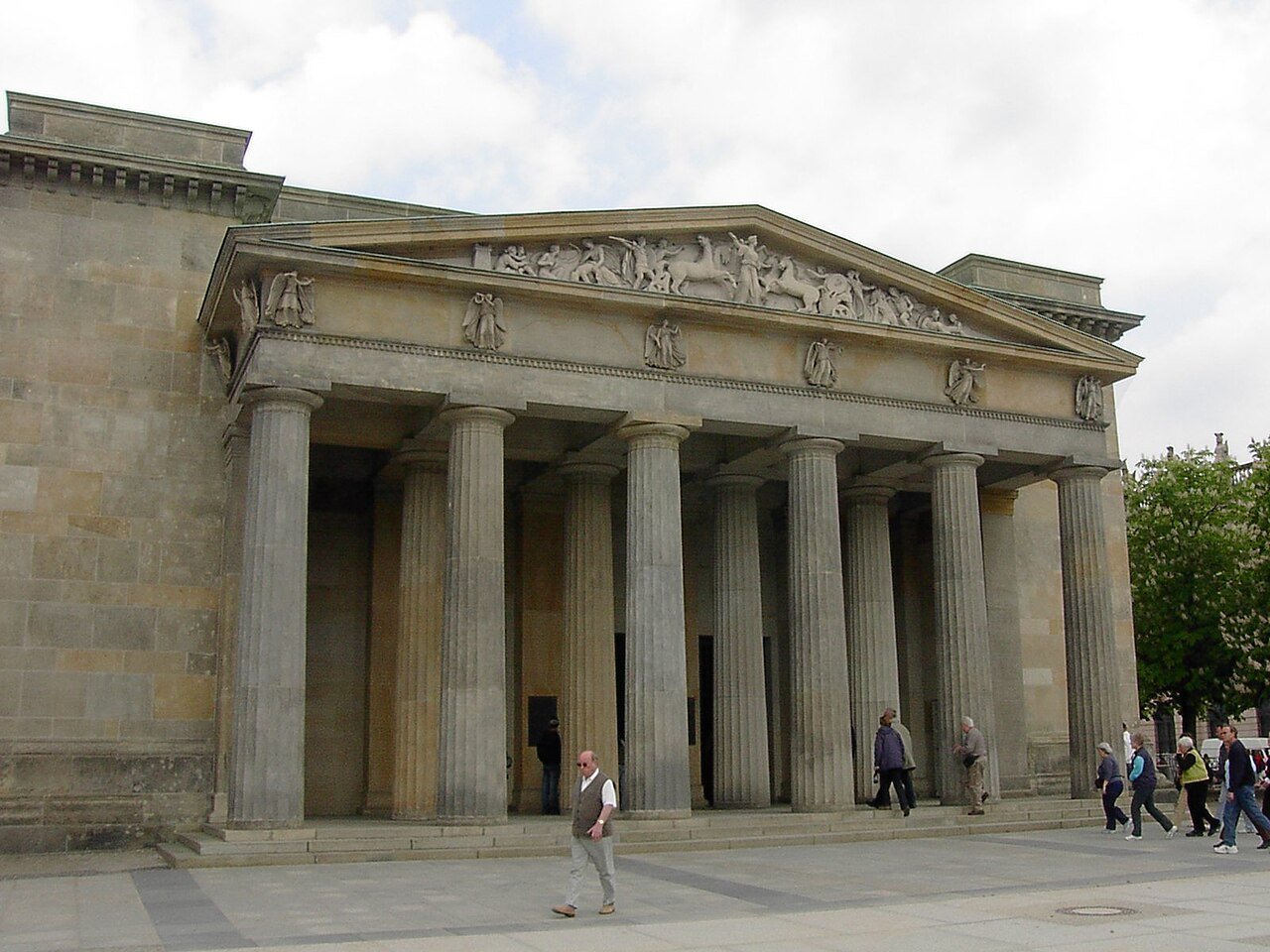
The Neue Wache: a Doric portico with a sculpted pediment.
Neue WacheAdam Carr, 2006. Wikimedia Commons. Public domain.

No landmark on the boulevard has a longer front

Lined up by the length of boulevard each one stands across, the embassy comes first with 169 m, ahead of the Humboldt-Universität at 150 m and the French Embassy at 116 m. The Neue Wache stands across 25 m: the embassy's front is 6.8 times as long.

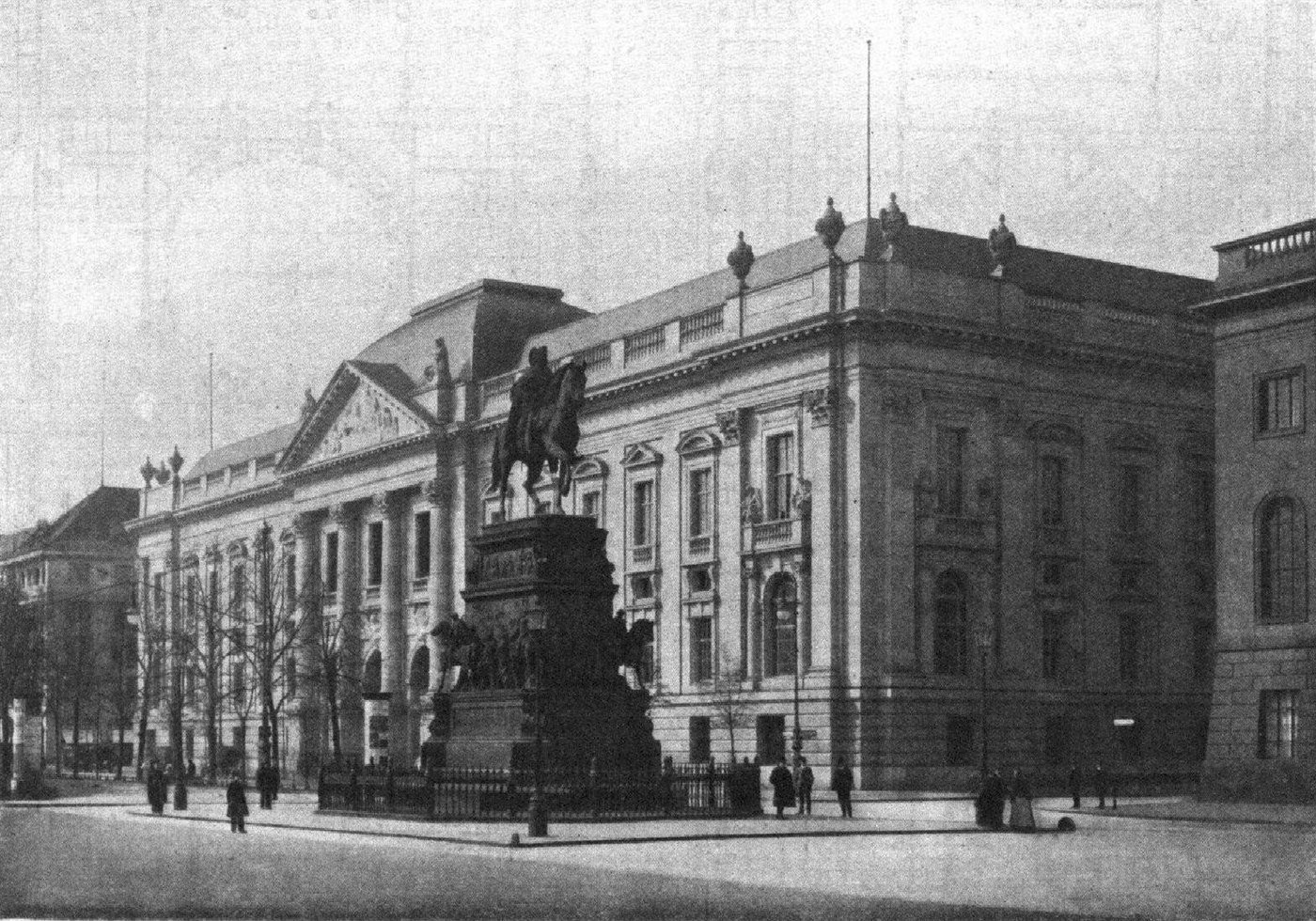
Old photograph of the Royal Library building on Unter den Linden, with the equestrian statue of Frederick the Great in front.
StaatsbibliothekErnst von Ihne, 1914. Wikimedia Commons. Public domain.
Postcard of Unter den Linden in 1904, with the Neue Wache and the long front of the Zeughaus behind it.
ZeughausVerlag Behr und Flether, 1904. Wikimedia Commons. Public domain.
The pale stone front of the US Embassy on Pariser Platz.
US EmbassyDguendel, 2013. Wikimedia Commons. CC BY 3.0.
The new building of the Polish Embassy on Unter den Linden.
Polish EmbassyHans-Rudi der Letzte, 2025. Wikimedia Commons. CC0.

Three older buildings cover more ground. No embassy does

By the ground it covers, the embassy ranks fourth: the Staatsbibliothek (13,501 m²), the Humboldt-Universität (10,226 m²), the Zeughaus (8,226 m²) are bigger. The other embassies come nowhere near: French 4,296 m², US 3,680 m², Polish 2,449 m². These are footprints, the ground under each building, not floor areas.

The nine compared

The landmarks of the boulevard, as they stand

Every building measured above, with the length of Unter den Linden it stands across and the ground it covers, from the same OpenStreetMap survey.
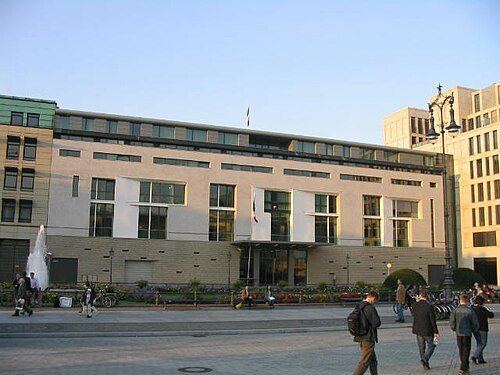
The Soviet embassy front on Unter den Linden in 1951.
Russian Embassy
169 m · 5,620 m²
Bundesarchiv, Bild 183-10705-0001 / Schmidtke / CC BY-SA 3.0 de
The pale classical main building of the Humboldt-Universität, with statues on its roof line.
Humboldt-Universität
150 m · 10,226 m²
Mike Peel, 2014. Wikimedia Commons. CC BY-SA 4.0.
The modern stone front of the French Embassy on Pariser Platz.
French Embassy
116 m · 4,296 m²
Gryffindor, 2006. Wikimedia Commons. Public domain.
Old photograph of the Royal Library building on Unter den Linden, with the equestrian statue of Frederick the Great in front.
Staatsbibliothek
108 m · 13,501 m²
Ernst von Ihne, 1914. Wikimedia Commons. Public domain.
Postcard of Unter den Linden in 1904, with the Neue Wache and the long front of the Zeughaus behind it.
Zeughaus
95 m · 8,226 m²
Verlag Behr und Flether, 1904. Wikimedia Commons. Public domain.
The new building of the Polish Embassy on Unter den Linden.
Polish Embassy
68 m · 2,449 m²
Hans-Rudi der Letzte, 2025. Wikimedia Commons. CC0.
The pale stone front of the US Embassy on Pariser Platz.
US Embassy
64 m · 3,680 m²
Dguendel, 2013. Wikimedia Commons. CC BY 3.0.
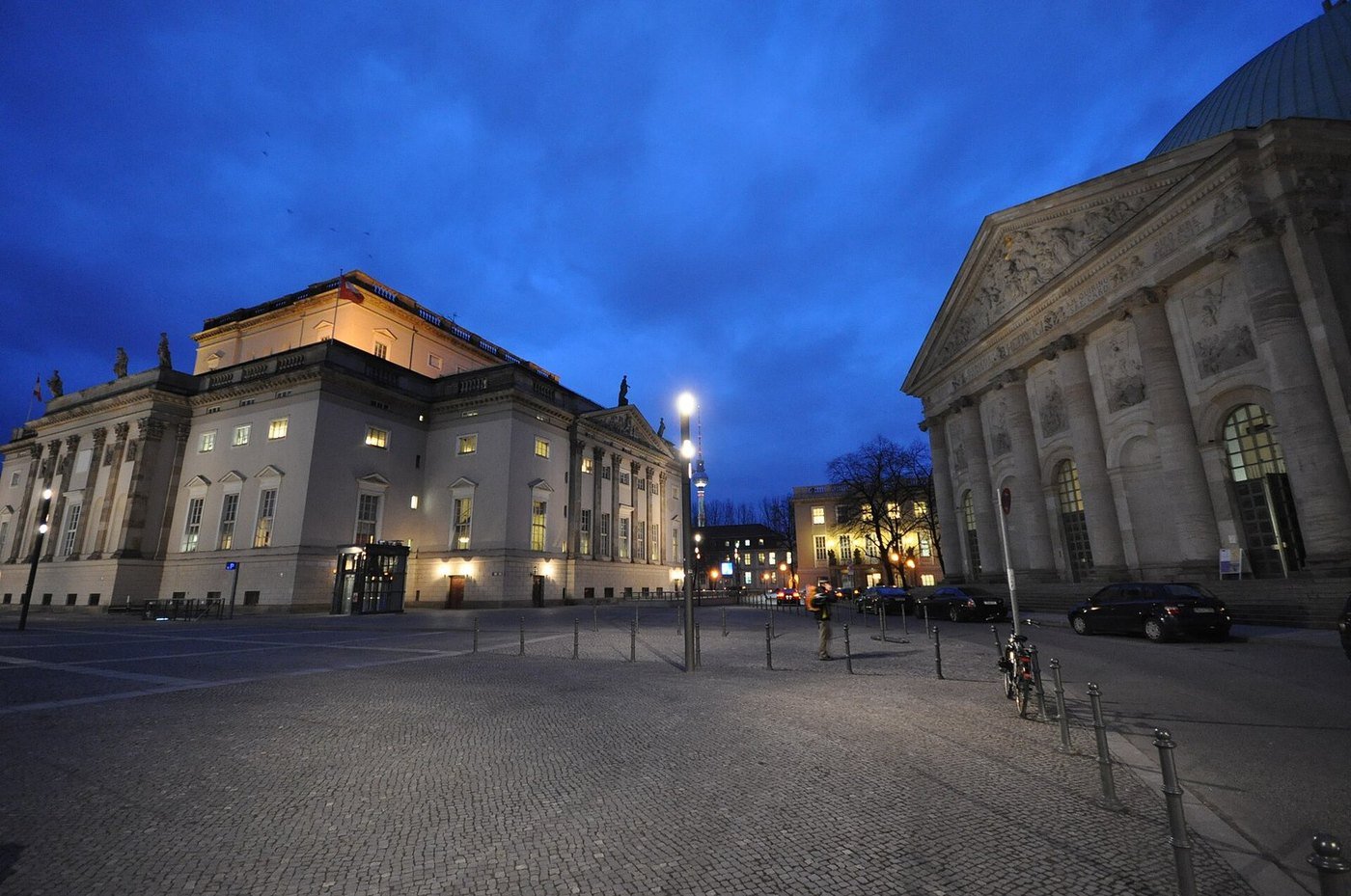
The Staatsoper and St Hedwig’s Cathedral on the Bebelplatz at dusk.
Staatsoper
56 m · 4,067 m²
Jorge Láscar from Australia, 2009. Wikimedia Commons. CC BY 2.0.
The Neue Wache: a Doric portico with a sculpted pediment.
Neue Wache
25 m · 636 m²
Adam Carr, 2006. Wikimedia Commons. Public domain.

What the monument listing says

Berlin lists it as the opening shot of socialist realism in East Germany

The design was by Anatoli Jakowlewitsch Stryshewski and the design collective Lebedinskij, Sichert, F. Skujin; the client was the government of the Soviet Union. Berlin's monument register describes it in eight terms. Two are rules the boulevard imposed on every house along it; six are what the embassy did instead.

Manifest und Auftakt der Architektur des „sozialistischen Realismus“ in der DDR.

"Manifesto and overture of the architecture of 'socialist realism' in the GDR." Landesdenkmalamt Berlin, monument no. 09075006
  • Baufluchtthe building line the boulevard's statute fixed. The embassy takes it from its neighbours, then breaks it with the courtyard.
  • Traufhöhethe eaves height the same statute fixed, taken up from the neighbours and broken by the raised centre.
  • Ehrenhofthe courtyard of honour, cut back from the street.
  • Turmartig erhöhter Mittelteilthe tower-like raised centre, the one part that climbs above the line.
  • Quadratische Laternethe square lantern that crowns it.
  • Kolossalordnung mit kannelierten Halbsäulenone order of fluted half-columns running the full height of the front.
  • Rustikaquaderung, Bänderung der Eckenrusticated blockwork, with the corners banded.
  • Hammer und Sichel im Relieffries über dem Hauptportalhammer and sickle, carved into the relief frieze over the main door.
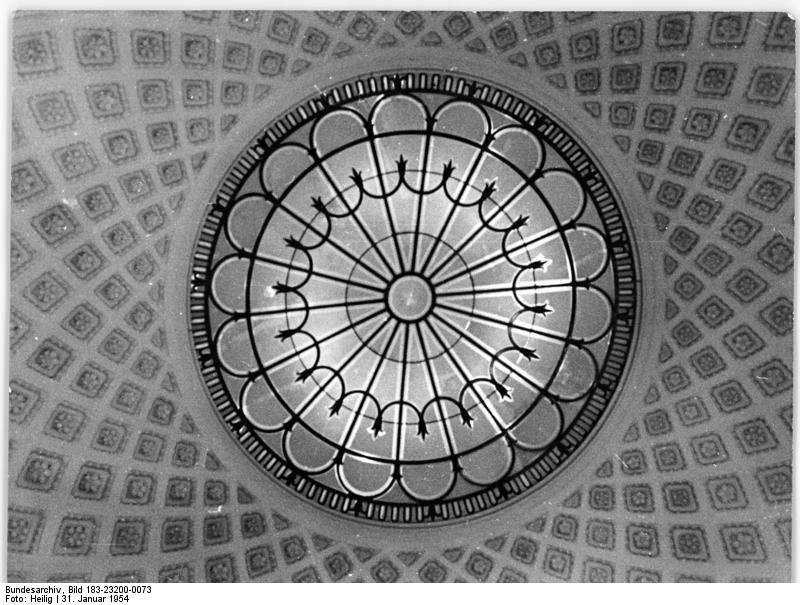
Looking up into the coffered dome of the embassy's central hall, with a round glass skylight.
The dome of the central hall, January 1954.Photo: Bundesarchiv, Bild 183-23200-0073 / Walter Heilig / CC BY-SA 3.0 de

9–10 November 1989

The night the Wall opened, the Soviet embassy was asleep

The Soviet Union's command over East Germany ran through this address, and on the night the Wall opened it was not used. Ambassador Wjatscheslaw Kotschemassow had gone to bed. Moscow learned that the border was open from the news; the embassy, like the Kremlin, had not been told. The ambassador reached Egon Krenz by telephone the following morning.
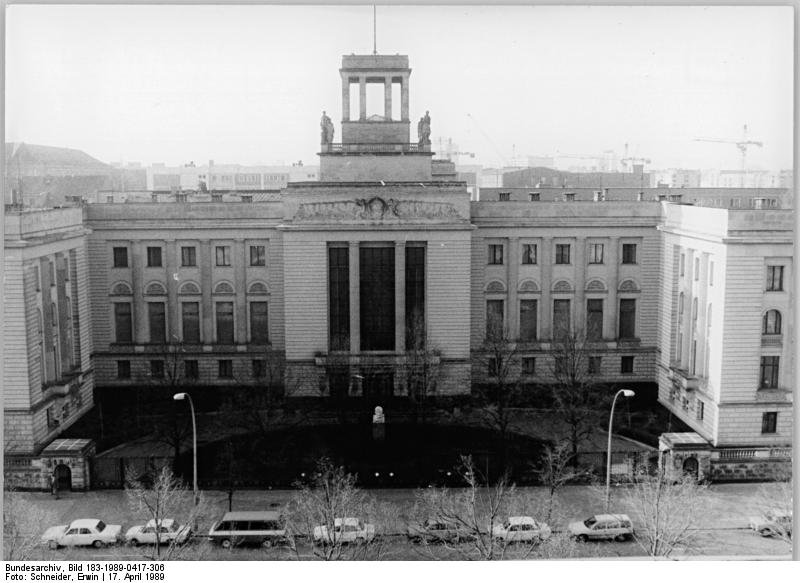
Colour photograph of the embassy front on Unter den Linden in 1989, with its raised centre and flagpole.
The embassy on 17 April 1989, seven months before the night below.Photo: Bundesarchiv, Bild 183-1989-0417-306 / Erwin Schneider / CC BY-SA 3.0 de
  • Evening, 9 November 1989Günter Schabowski announces the new travel rules. Neither the Kremlin nor the Soviet embassy in East Berlin has been told.
  • The nightThe border opens. Moscow learns of it from the news; the ambassador is asleep.
  • Before 08:00, 10 NovemberWassili Swirin, who runs the GDR desk at the Soviet foreign ministry, telephones the embassy's first counsellor Igor Maximytschew: “Was ist bei euch eigentlich los? Alle Presseagenturen der Welt sind wie von Sinnen. Sie behaupten, die Mauer sei weg!”
  • Morning, 10 NovemberKotschemassow reaches Egon Krenz by telephone and tells him he is worried about the situation in Berlin.

The Soviet embassy is not the biggest building on Unter den Linden. It has the longest front of all the boulevard's landmarks, 169 metres, and a Berlin street disappeared beneath it.
Press & citation

Use this Berlinfographic

Free to publish under CC BY 4.0 — in print, online, on Wikipedia and in teaching, commercially or not — with credit to Berlinfographics and a link to this page.

The Soviet Embassy on Unter den Linden: ready-to-use landscape image

Ready-to-use image

The infographic as one image: headline, key figures, chart, sources and credit, 2,400 × 1,350 px PNG. Please use it unedited.

Download landscape (PNG)
The Soviet Embassy on Unter den Linden: square version

Square format

A 1:1 version for social media and narrow columns, 1,800 × 1,800 px.

Download square (PNG)

Credit line

Berlinfographics (berlinfographics.com), CC BY 4.0

Citation

Berlinfographics (2026). “The Soviet Embassy on Unter den Linden”. Berlin Experiences. https://berlinfographics.com/soviet-embassy/

Wikipedia

{{cite web |title=The Soviet Embassy on Unter den Linden |url=https://berlinfographics.com/soviet-embassy/ |website=Berlinfographics |publisher=Berlin Experiences |date=2026-11-05 |access-date=2026-11-05}}