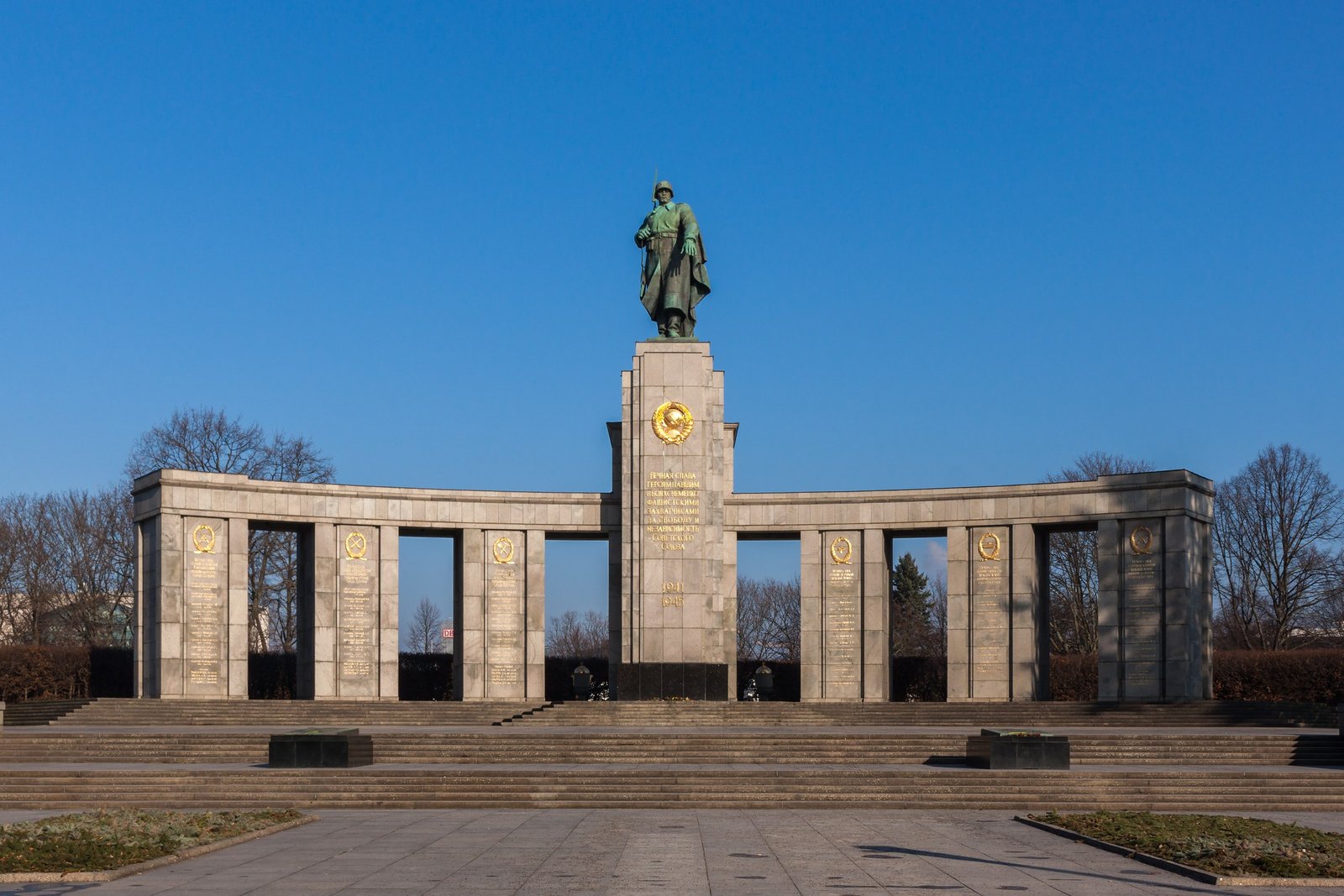
The Reichstag, 3 June 1945, a month after Berlin capitulated.Sgt Hewitt, No. 5 Army Film & Photographic Unit, 1945. Imperial War Museum BU 8573, via Wikimedia Commons. Public domain.
The rapes in Berlin · 1945
In 1992 the film-maker Helke Sander and Barbara Johr estimated that between 94,450 and 131,100 women and girls had been raped in Berlin, about 110,000. They started from the city’s births and two clinics’ files, and multiplied. This is how the estimate was made, what it rests on, and what historians have said since.
All four are estimates. None is a count: no count exists.
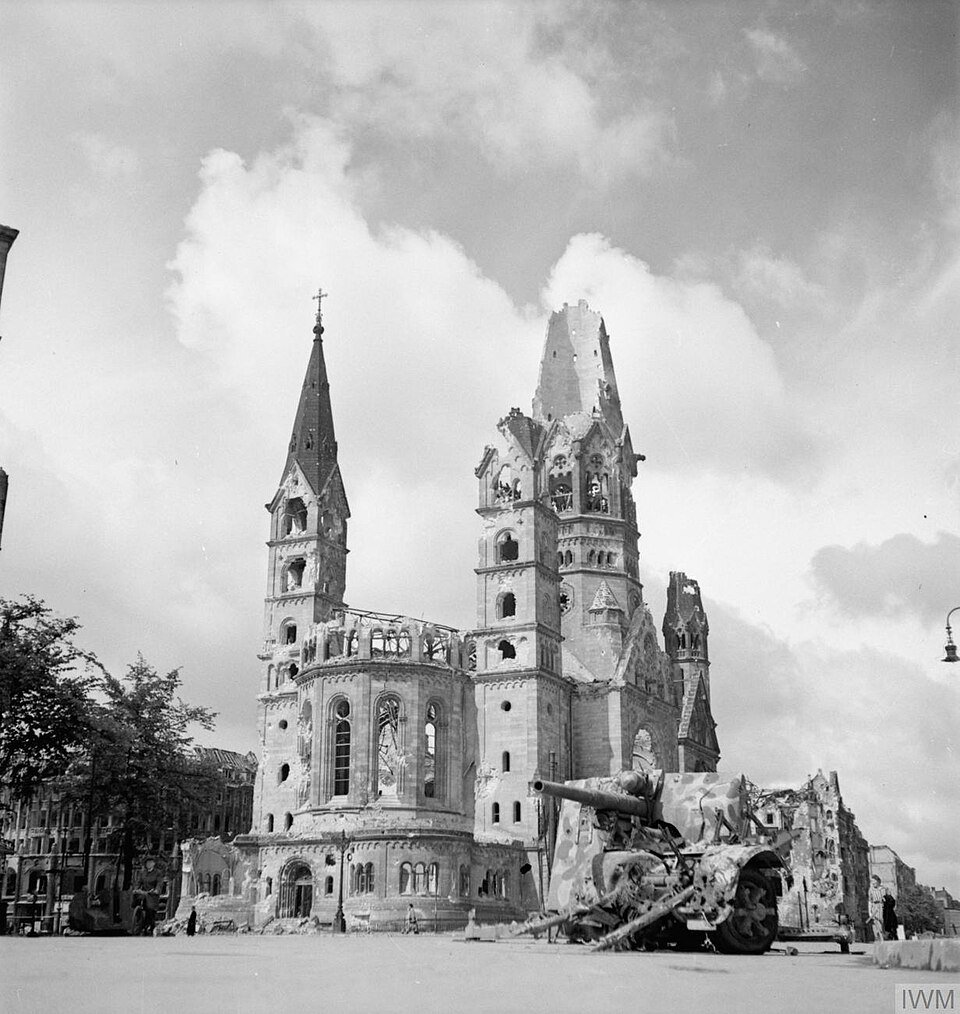
01April – May 1945
The battle for Berlin began on 16 April 1945; the city capitulated on 2 May 1945, and on 8 May 1945 the Wehrmacht’s unconditional surrender was signed at Karlshorst. In those weeks and the months of occupation that followed, women and girls became victims of sexual violence in great numbers, most of it by soldiers of the Red Army.
How many is not known and cannot be. Every figure in print is an estimate: a number that was recorded, such as births, hospital cases or children, multiplied by assumptions. Historians still disagree by a factor of four on the total for Germany.
“No unambiguous answer to this question is possible, because there is hardly any relevant statistical material.”Research service of the German Bundestag, 2021


02Sander and Johr, 1992
The first estimate for Berlin was published in BeFreier und Befreite (“Liberators and Liberated”), the book by Helke Sander and Barbara Johr published in 1992, the year of Sander’s film of the same name. Later works repeat its figures without new calculations of their own, among them Antony Beevor’s Berlin.
It runs in five steps. Each is drawn below at its true value, on one linear scale.
The 1992 Berlin estimate, step by step
Sep 1945 – Aug 1946
Berlin registered 23,124 births in the twelve months from September 1945. The calculation starts there: births were recorded, rapes were not.
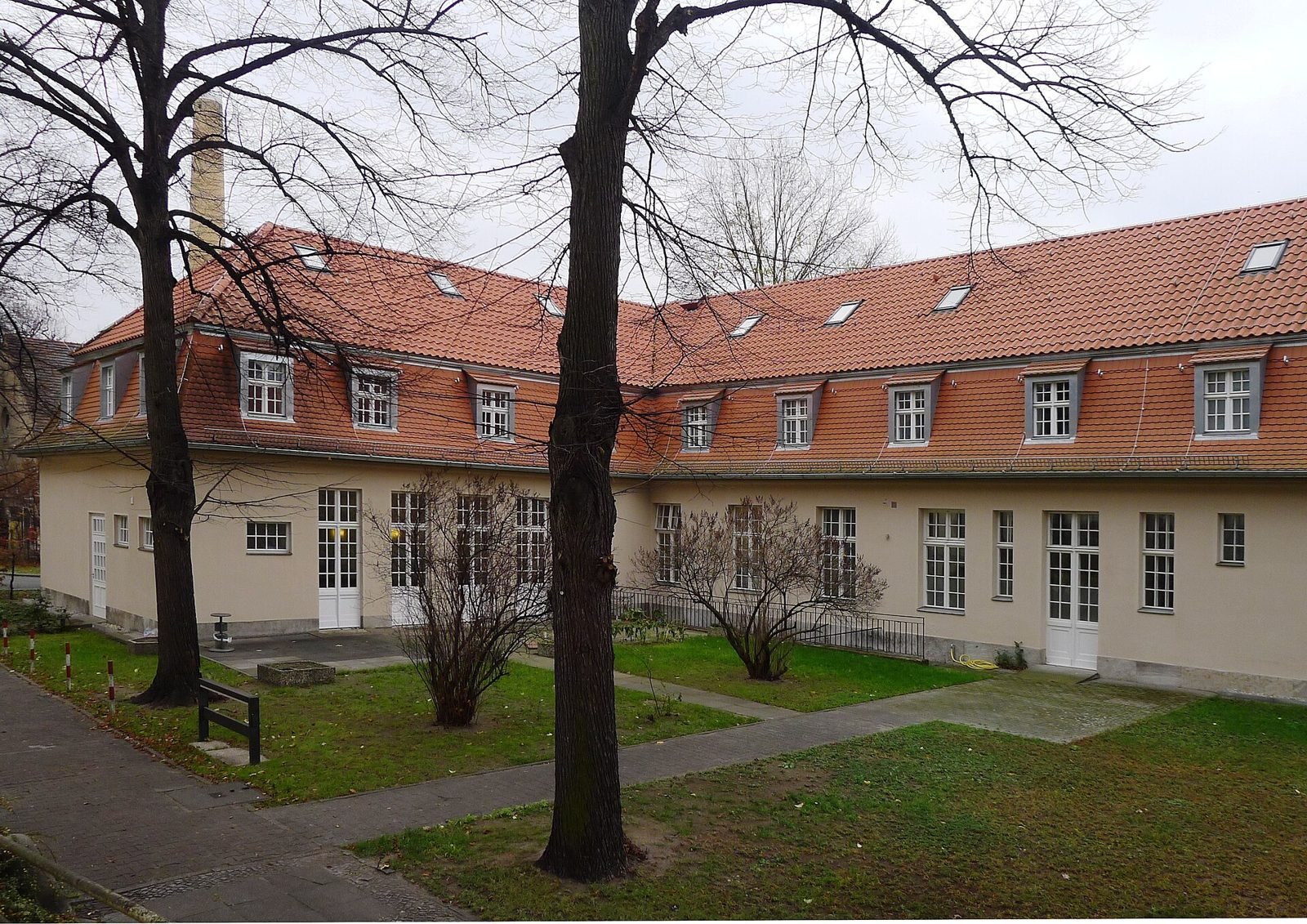
Kaiserin-Auguste-Victoria-Haus
In the files of the children’s clinic at the Kaiserin-Auguste-Victoria-Haus, 5% of the children born between late 1945 and summer 1946 had “Russian” fathers. Applied to every birth in Berlin, that gives 1,156 children.
Assumption
Sander and Johr assumed, from the literature and women’s own accounts, that 90% of these pregnancies were terminated. The 1,156 children then stand for 10% of them: 11,560 pregnancies. Abortion was still a crime under Paragraph 218, but doctors applied the law more leniently in those years.
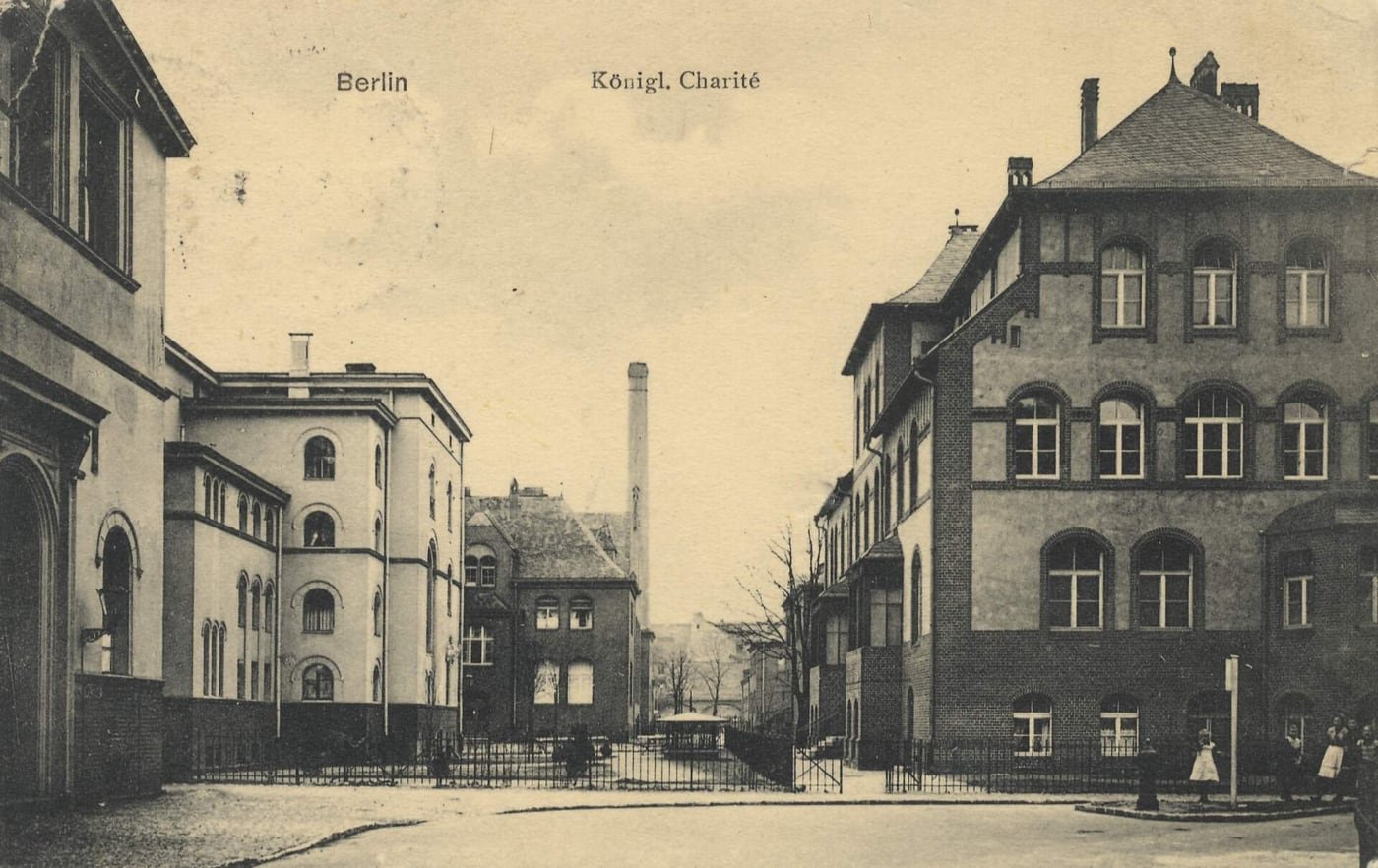
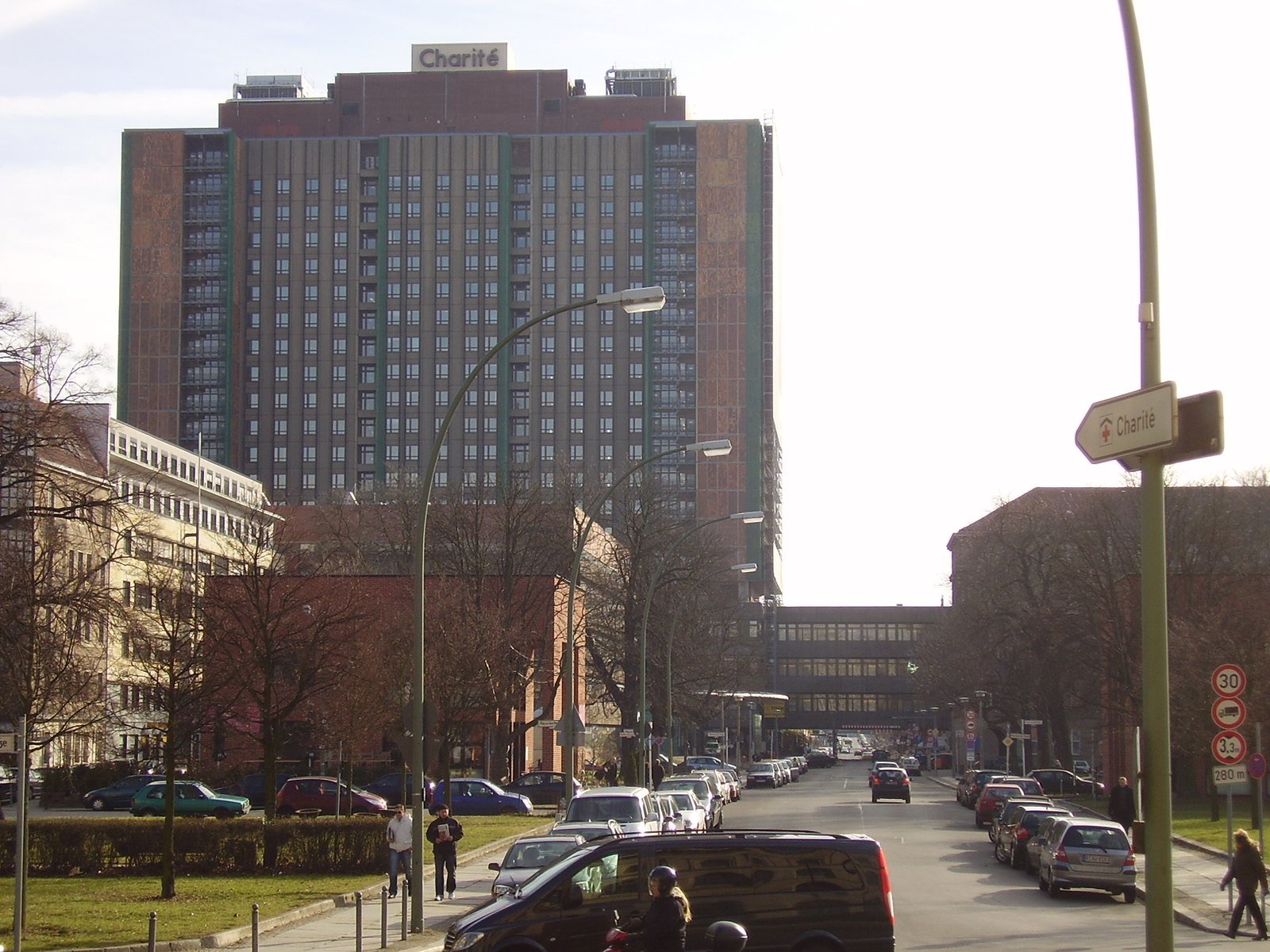
Charité
The Charité’s files recorded 514 women treated after rape, 23% of them pregnant. Sander and Johr took 20%: the 11,560 pregnancies then stand for 57,800 women of child-bearing age, 9.5% of all Berlin women that age.
All ages
Berlin also had about 800,000 girls of 14 to 18 and women over 45. Counting them at the same rate adds 73,300; at half the rate, 36,650. The result: between 94,450 and 131,100 women and girls, about 110,000.
Gebhardt, 2015
From the 1,156 children to the 57,800 women, the figure is multiplied 50 times. Miriam Gebhardt judged the 20% pregnancy assumption too high, and the hospital files samples of unknown representativeness. Because it long stood alone, she wrote, the figure “has taken on a life of its own”.
03Other estimates
In the same book Gerhard Reichling put Berlin at at least 100,000, from documents and statistics but without the clinic files, and the whole advance of the Red Army at 1,900,000 women and girls: 1,400,000 in the former eastern territories and on the flight west, 500,000 in what became the Soviet zone. How he reached those totals is not set out.
Published estimates, on one linear scale
These are not comparable counts. They cover different places, periods and armies, and each rests on its own assumptions. A bar from zero is a single figure; a bar that floats is a range; an open arrow means “at least”.
In Als die Soldaten kamen (“When the soldiers came”, 2015), the historian Miriam Gebhardt started not from Berlin but from the children of the occupation in West Germany, and counted the crimes of all four Allied armies from autumn 1944 to the end of the occupation statute in 1955.
+ 1,100
× 2
× 100
Gebhardt calls her estimate conservative and says the number of victims cannot be determined even approximately. It leaves out girls before puberty and women after menopause. Her split by army she calls “speculation”; on it, about 190,000 women living in West Germany were raped by American soldiers.
Gebhardt says herself that both of her approaches have many sources of error: the share of children conceived in rape, the factor of a hundred and the doubling for the East are all assumptions. Like Sander and Johr’s, her estimate shows an order of magnitude, not a number. What the two have in common is the starting point: the pregnancies that left a record, and an assumption about all the rapes that did not.
“Because Sander’s and Reichling’s figures long remained the first and only estimate, the assumption has taken on a life of its own. It is cited again and again, usually with the remark that nothing exact is known.”Miriam Gebhardt on the 1992 figures, 2015

041945 – 2021
For decades the best-known account was a diary. The first estimate came only in 1992, nearly half a century after the events.
Who told it, and when
Eine Frau in Berlin (“A Woman in Berlin”), kept by an anonymous Berlin woman from 20 April to 22 June 1945, is the best-known testimony. It is a testimony, not a statistic: it tells what happened to its author and to women around her, and this story takes no number from it. When it was reissued in 2003, after its author’s death, a critic noted that names and details had been changed and asked for a critical edition.
The historian Norman Naimark gave a chapter of his history of the Soviet zone to rape in 1995. Antony Beevor’s Berlin followed in 2002; its figures are the 1992 estimates, not a new calculation.


Official Russia has treated the subject as an attack on the Red Army. Russia’s ambassador in London called Beevor’s book “lies, slander, and blasphemy against the Red Army”; in 2015 the education ministry of the Sverdlovsk region ordered his books out of school libraries as “propagandistic nazi stereotypes”. The estimates themselves count victims. They say nothing about how many soldiers committed the crimes, and they are not a verdict on a people.
05After 1945
In the East, the GDR swept the crimes of the Soviet “big brother” under the carpet; in the West, Gebhardt argues, the rapes became a Cold War charge against the Soviets while the victims of American, British and French soldiers went unheard. Women met doctors who approved or refused an abortion at will, welfare officers who sent pregnant victims to reformatories, and judges who refused compensation because they did not believe them.
Remembering became, in Gebhardt’s words, “a question of right and left”: some on the right used the women’s suffering for their own politics, some on the left played the rapes down to protect the image of the liberators. Because the diary and the 1992 film were both set in Berlin with Red Army perpetrators, she adds, most Germans came to see wartime rape as a Soviet problem alone.
“They have no memorial sites worth the name, no rituals of remembrance, no public recognition, let alone an apology.”Miriam Gebhardt on the women raped in 1944–55, writing in 2015
Sexual violence was not only done to Germans. For the crimes of German soldiers in the occupied Soviet Union no estimate has been calculated at all; the historian Regina Mühlhäuser concluded in 2010 that such crimes “were no exception”.
None of this makes the Berlin figure firmer or the crime smaller. It explains why, more than eighty years on, the most quoted number still rests on two clinics’ files and two assumptions.

No register will ever give the number.
Every figure for Berlin is an estimate, with an author, a method and a range. Each one stands for women who were never officially recognised as victims of the war.
Press & citation
Free to publish under CC BY 4.0 — in print, online, on Wikipedia and in teaching, commercially or not — with credit to Berlinfographics and a link to this page.
Ready-to-use image
The infographic as one image: headline, key figures, chart, sources and credit, 2,400 × 1,350 px PNG. Please use it unedited.
Download landscape (PNG)
Square format
A 1:1 version for social media and narrow columns, 1,800 × 1,800 px.
Download square (PNG)
Portrait 4:5
For Instagram and LinkedIn feeds, 1,620 × 2,025 px.
Download portrait (PNG)Credit line
Berlinfographics (berlinfographics.com), CC BY 4.0
Citation
Berlinfographics (2026). “The rapes in Berlin, 1945”. Berlin Experiences. https://berlinfographics.com/soviet-rapes-berlin/
Wikipedia
{{cite web |title=The rapes in Berlin, 1945 |url=https://berlinfographics.com/soviet-rapes-berlin/ |website=Berlinfographics |publisher=Berlin Experiences |date=2026-11-09 |access-date=2026-11-09}}
Our infographics, charts and texts are licensed CC BY 4.0: free to republish, including commercially, with credit to Berlinfographics and a link. Photographs keep their own licences, named in each caption. How to credit
Topics: The Second World War · Cold War Berlin · Nazi Berlin · Persecution & the Holocaust · Weimar Berlin · Prussia & the Kaiserreich · Architecture & the built city · Culture, science & society · Reunified Berlin · Unusual facts
Contact: info@berlinfographics.com · Press: press@berlinfographics.com · Imprint · Privacy