Berlinfographicsby Berlin Experiences

The office of the Minister for State Security, Erich Mielke, in Haus 1 of the former Stasi headquarters in Berlin-Lichtenberg, now the Stasimuseum.Photo: Anagoria, 2012. Wikimedia Commons. CC BY 3.0.

The Stasi and the RAF

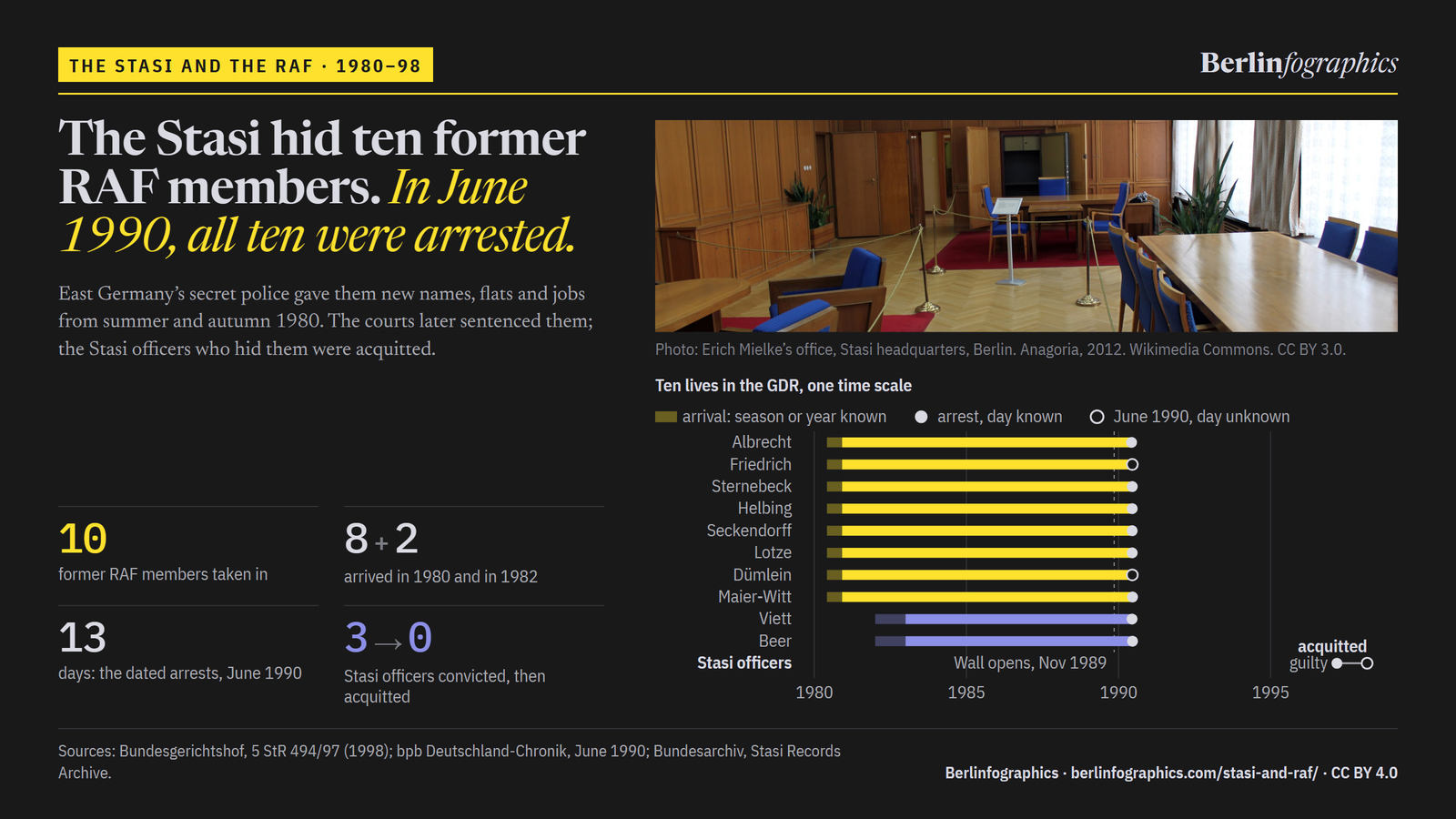
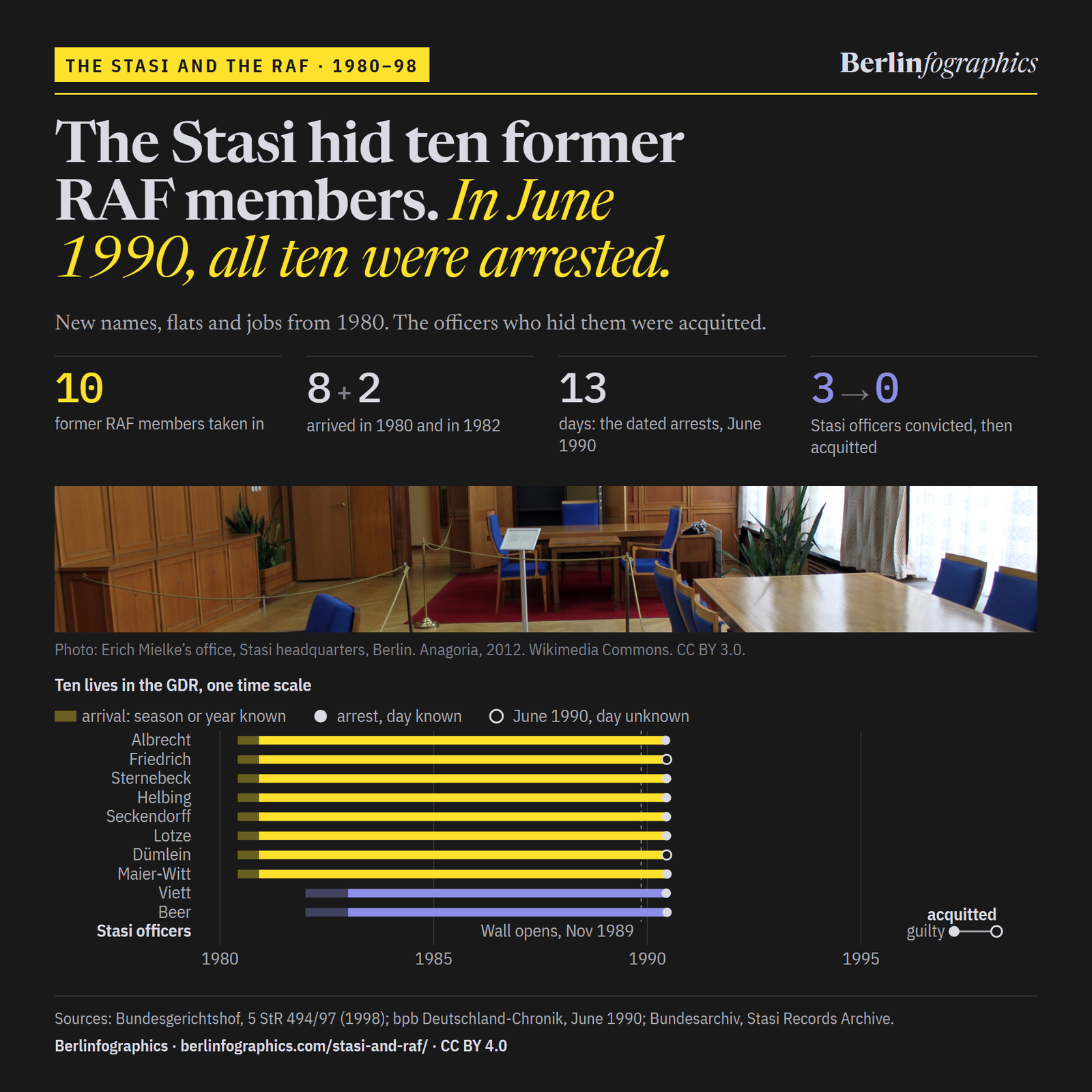
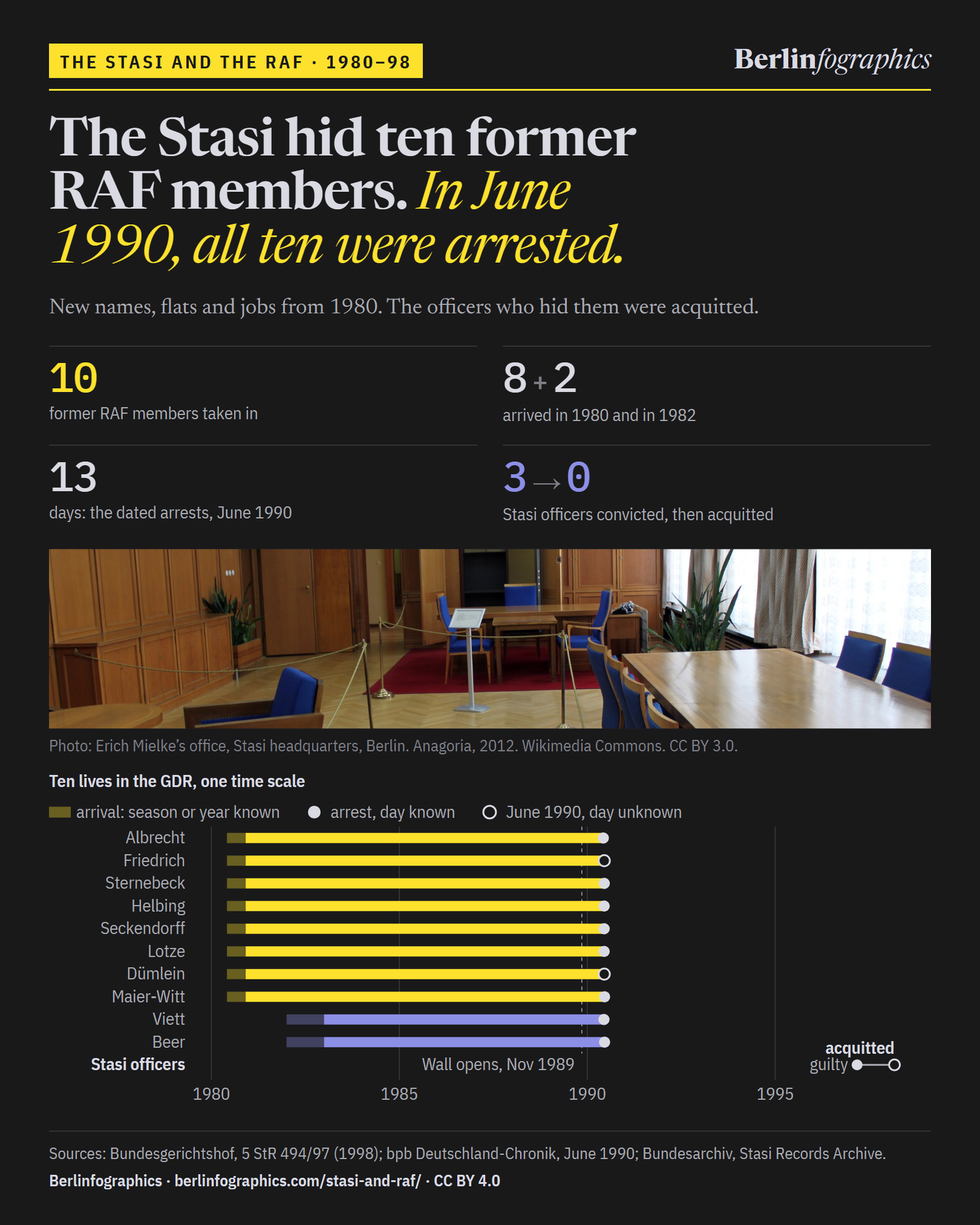
The Stasi gave ten former RAF members new names, flats and jobs. In June 1990, all ten were arrested.

From 1980 East Germany’s Ministry for State Security hid former members of the Red Army Faction, the West German left-wing terrorist group, under invented life stories. Three were recognised by East German citizens. None was arrested until seven months after the Wall opened.

10
former RAF members taken in by the Stasi
8+2
came in summer and autumn 1980; two more in 1982
13days
from the first dated arrest to the last, 6 June – 18 June 1990
3→0
Stasi officers convicted in 1997, then acquitted on appeal in 1998
01East Berlin, end of 1979

The terrorists asked to disappear, and the Stasi said yes

At the end of 1979, eight members of the Red Army Faction who wanted to give up the armed struggle asked the Stasi, through a member still active in the group, to help them settle in a “socialist” country. The Stasi set conditions: a final break with terrorism, and no word, ever, of its own part in the arrangement.

The case went to Abteilung XXII, the ministry’s counter-terrorism department, which ran it as operation “Stern”. Inge Viett, a former leader of the Movement 2 June who had joined the RAF, helped arrange the move. In 1982 she followed the others east.

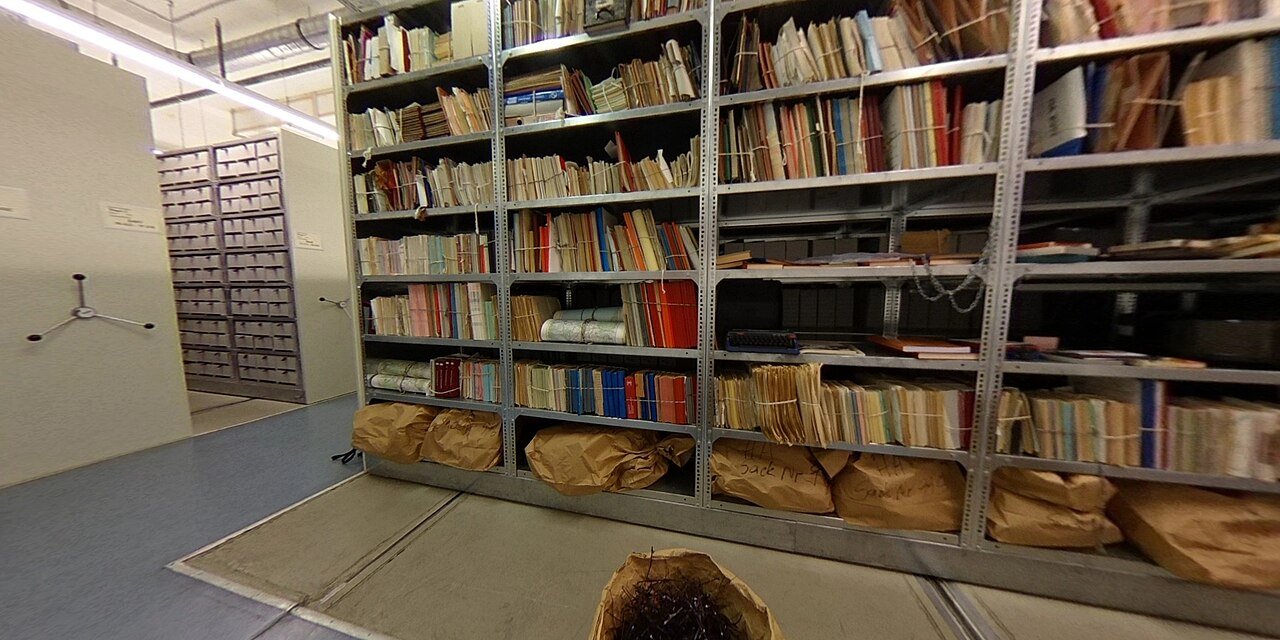
“1980 entschied sich das MfS aussteigewillige Mitglieder der RAF, unter falscher Identität in der DDR einzubürgern.”In 1980 the Stasi decided to naturalise RAF members who wanted out, under false identities. Bundesarchiv, Stasi Records Archive.

Rows of archive shelving with grey file boxes.
The Stasi Records Archive in Berlin-Lichtenberg, 2018. The files of Abteilung XXII on the RAF dropouts are kept here.Photo: Maximilian Schönherr, 2018. Wikimedia Commons. CC BY-SA 4.0.

Ten former RAF members, one time scale

Ten rows, one for each former RAF member the Stasi took in, on one time scale from 1979 to 1999: when each arrived in East Germany, the years they lived there, their arrest in June 1990, the court sentences, and the trial of the Stasi officers.

Each row is one person. Scroll to see what the record dates.

A grey multi-storey office block of the former Ministry for State Security.
Haus 1, the ministry’s building at the former Stasi headquarters in Berlin-Lichtenberg, 2015.Photo: Angela Monika Arnold (=44Pinguine), 2015. Wikimedia Commons. CC BY 2.5.

End of 1979

Eight ask to vanish

Eight former RAF members ask the Stasi for a new life in the East. Abteilung XXII takes the case.

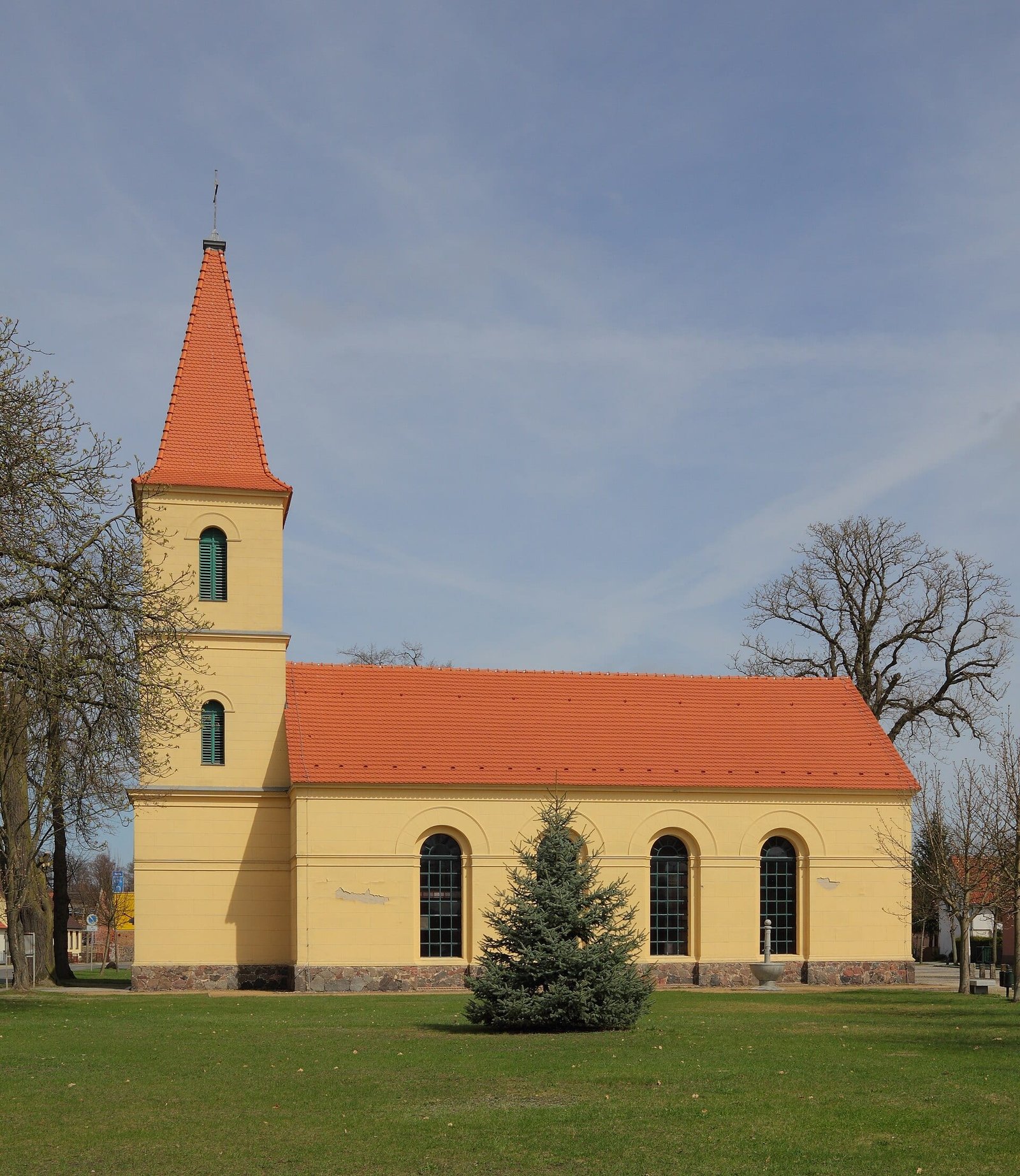
A small yellow church with a red roof and a short tower on a village green.
The village church of Briesen (Mark), east of Berlin, 2013. The Stasi’s “Objekt 74”, a forester’s lodge, lay in the woods near the village.Photo: A.Savin, 2013. Wikimedia Commons. CC BY-SA 3.0.

Summer and autumn 1980

New names, new towns

The eight cross to the GDR in summer and autumn 1980. In a forester’s lodge near Briesen they are prepared for invented lives, then sent to different towns.

A street in Magdeburg in 1980 with a red car passing a dark stone building and the cathedral behind it.
Magdeburg, May 1980. Inge Viett was arrested here in June 1990.Photo: Michel Huhardeaux from Brussels, Belgium, 1980. Wikimedia Commons. CC BY-SA 2.0.

1982

Two more

In 1982 Inge Viett and Henning Beer follow. All ten now live as East German citizens.

A black-and-white view over roofs and gardens of Frankfurt an der Oder, with a church spire.
Frankfurt (Oder) in the 1950s, where Monika Helbing and Ekkehard von Seckendorff-Gudent were given new lives in 1980.Photo: Bundesarchiv, Bild 183-50781-0003 / Mahler / CC BY-SA 3.0 de

The 1980s

Ordinary jobs, watched flats

They get flats and jobs. Monika Helbing works at a polyclinic in Frankfurt (Oder). The Stasi watches them all and bugs their flats.

The town centre of Neubrandenburg in 1984.
Neubrandenburg, 1984. Silke Maier-Witt’s second cover life ended here.Photo: Bundesarchiv, Bild 183-1984-1126-311 / Benno Bartocha / CC BY-SA 3.0 de

1985/86

Recognised

In 1985/86 GDR citizens recognise three of them. The Stasi moves Silke Maier-Witt overnight under another new name.

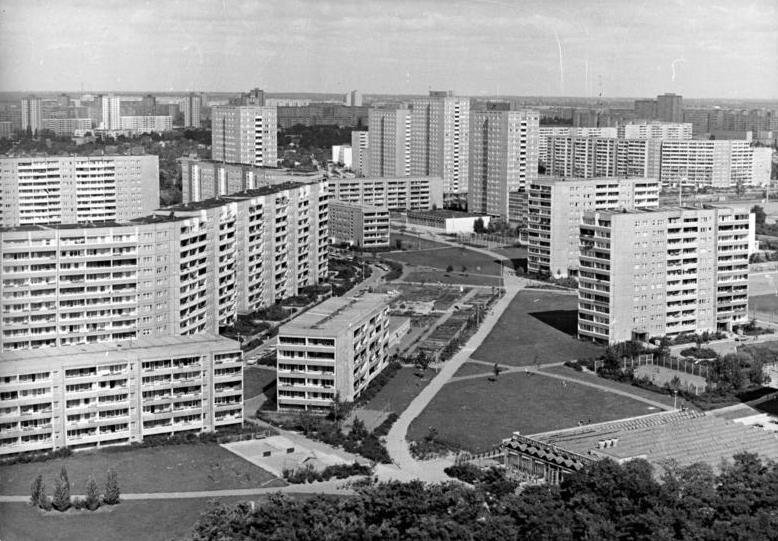
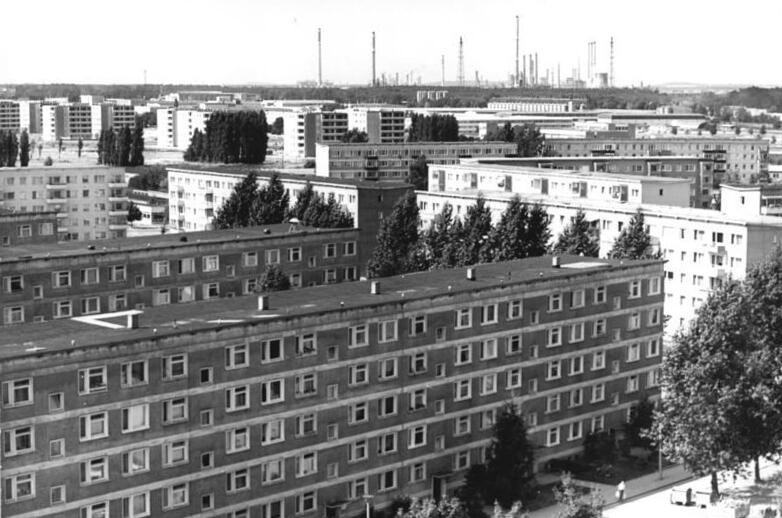
A wide view of high-rise prefabricated apartment blocks and open green space.
Marzahn, East Berlin, 1987. Susanne Albrecht was arrested in Marzahn on 6 June 1990.Photo: Bundesarchiv, Bild 183-1987-0128-310 / Link, Hubert / CC BY-SA 3.0 de

June 1990

All ten arrested

6 June to 18 June: the arrests come seven months after the Wall opened.

A black-and-white photograph of a low prison complex beyond a field path under a clouded sky.
Stuttgart-Stammheim, 2022. The Oberlandesgericht Stuttgart tried Susanne Albrecht here in 1991.Photo: k61s, 2022. Wikimedia Commons. CC0.

1991–92

The courts

German courts try the dropouts. The sentences we could confirm run from 6½ to 13 years.

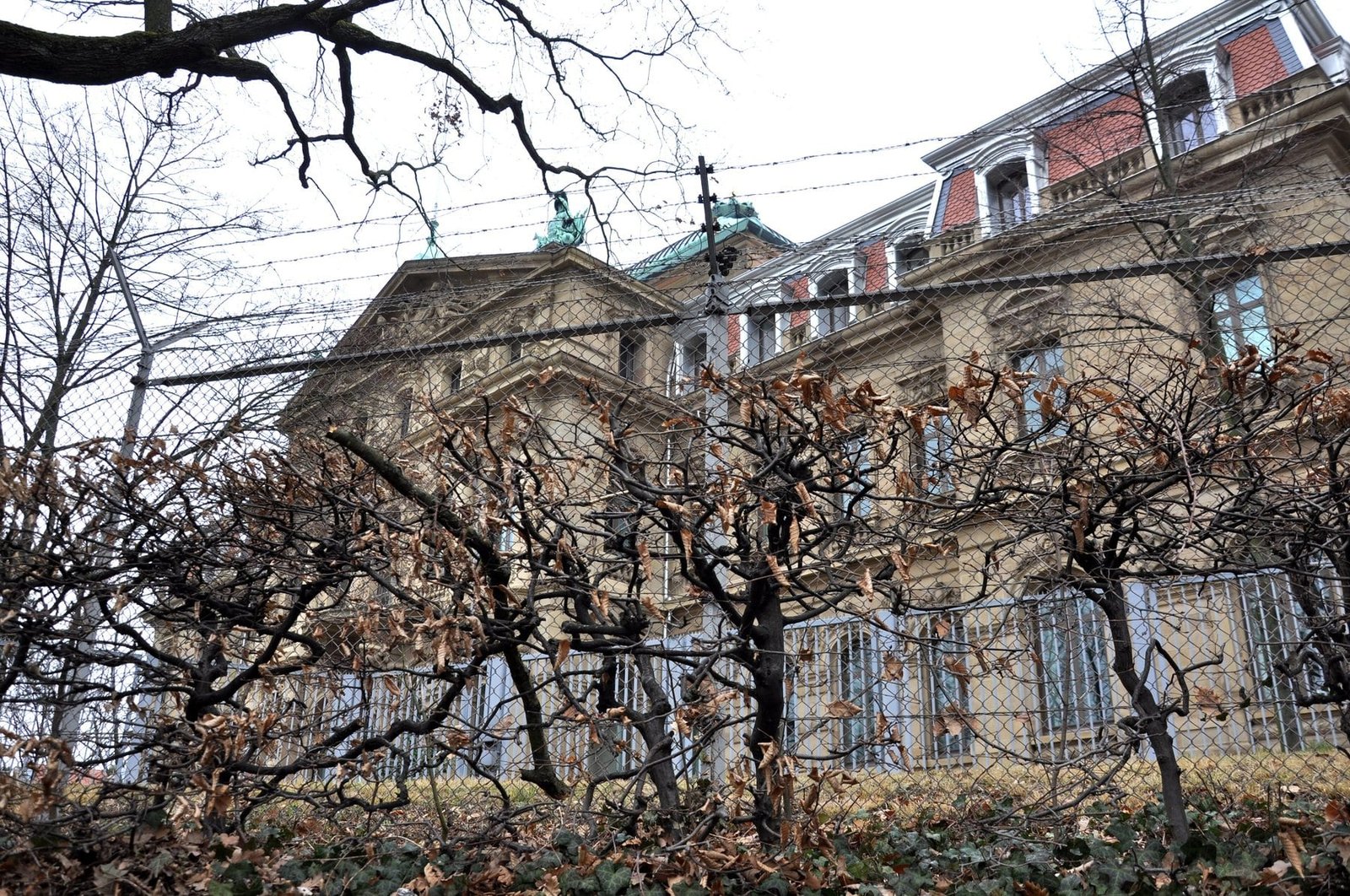
A grand nineteenth-century palace building seen through bare branches and a fence.
The Bundesgerichtshof, Germany’s Federal Court of Justice, in Karlsruhe, 2012.Photo: Andreas Praefcke, 2012. Wikimedia Commons. CC BY 3.0.

1997–98

The officers walk free

A Berlin court convicts three Stasi officers of attempted obstruction of justice. In 1998 the Federal Court of Justice acquits them.

02Objekt 74, near Briesen

They learned their new lives by heart in a forester’s lodge

The Stasi’s “Objekt 74” was a forester’s lodge, “An der Flut”, in the woods near Briesen, east of Berlin. Silke Maier-Witt, Monika Helbing and Susanne Albrecht learned their new biographies by heart there. Later the ten met there once a year.

Each had to invent a life story that gave nothing away and could not easily be checked, in case a colleague or neighbour later moved West. On paper they then went through the same admission procedure as any other migrant from the West, and applied for East German citizenship.

Born as

Susanne Albrecht

Lived as

Ingrid Jäger

Lived in the GDR from 1980 to 1990. Arrested in Marzahn, 6 June 1990.

Born as

Monika Helbing

Lived as

Elke Köhler

Rheumatology welfare worker at a polyclinic in Frankfurt (Oder).

Born as

Ekkehard von Seckendorff-Gudent

Lived as

Horst Winter

Hospital doctor and addiction therapist. Married Helbing; they raised a son.

Born as

Silke Maier-Witt

Lived as

Angelika Gerlach

then Sylvia Beyer

Nurse’s training in Weimar. After 1986, a second identity.

The Stasi watched them, bugged their flats, and later recruited some of them as informers. The Stasi listed Susanne Albrecht as an informer, under the male code name “Ernst Berger”; the archive notes that no signed commitment from her has been found. The files name Silke Maier-Witt, too, as an informer, “Anja Weber”.

03East Germany, June 1990

Seven months after the Wall opened, the hiding ended in 13 days

The arrests came after tips from citizens and from former Stasi staff. They were made by officers of the GDR’s Zentrales Kriminalamt, working with West German security forces. Susanne Albrecht was first, in her flat in Marzahn. The record gives a date for eight of the ten; Christine Dümlein and Ralf Baptist Friedrich were arrested in the same month, on days the sources do not give.

June 1990: the arrests, day by day

  • 6 JuneSusanne Albrecht · East Berlin (Marzahn)
  • 12 JuneInge Viett · Magdeburg
  • 14 JuneMonika Helbing · Frankfurt (Oder)
  • 14 JuneEkkehard von Seckendorff-Gudent · Frankfurt (Oder)
  • 14 JuneWerner Lotze · Senftenberg
  • 15 JuneSigrid Sternebeck · Schwedt
  • 18 JuneSilke Maier-Witt · Neubrandenburg
  • 18 JuneHenning Beer · Neubrandenburg
  • JuneRalf Baptist Friedrich · day and place not in the sources
  • JuneChristine Dümlein · day and place not in the sources
A wide view of high-rise prefabricated apartment blocks and open green space.
Berlin-Marzahn: Albrecht, 6 June 1990. The new estate of Marzahn, East Berlin, 1987.Photo: Bundesarchiv, Bild 183-1987-0128-310 / Link, Hubert / CC BY-SA 3.0 de
A street in Magdeburg in 1980 with a red car passing a dark stone building and the cathedral behind it.
Magdeburg: Viett, 12 June 1990. Magdeburg, May 1980, with the cathedral behind.Photo: Michel Huhardeaux from Brussels, Belgium, 1980. Wikimedia Commons. CC BY-SA 2.0.
A black-and-white view over roofs and gardens of Frankfurt an der Oder, with a church spire.
Frankfurt (Oder): Helbing and Seckendorff, 14 June 1990. Frankfurt (Oder), 1957.Photo: Bundesarchiv, Bild 183-50781-0003 / Mahler / CC BY-SA 3.0 de
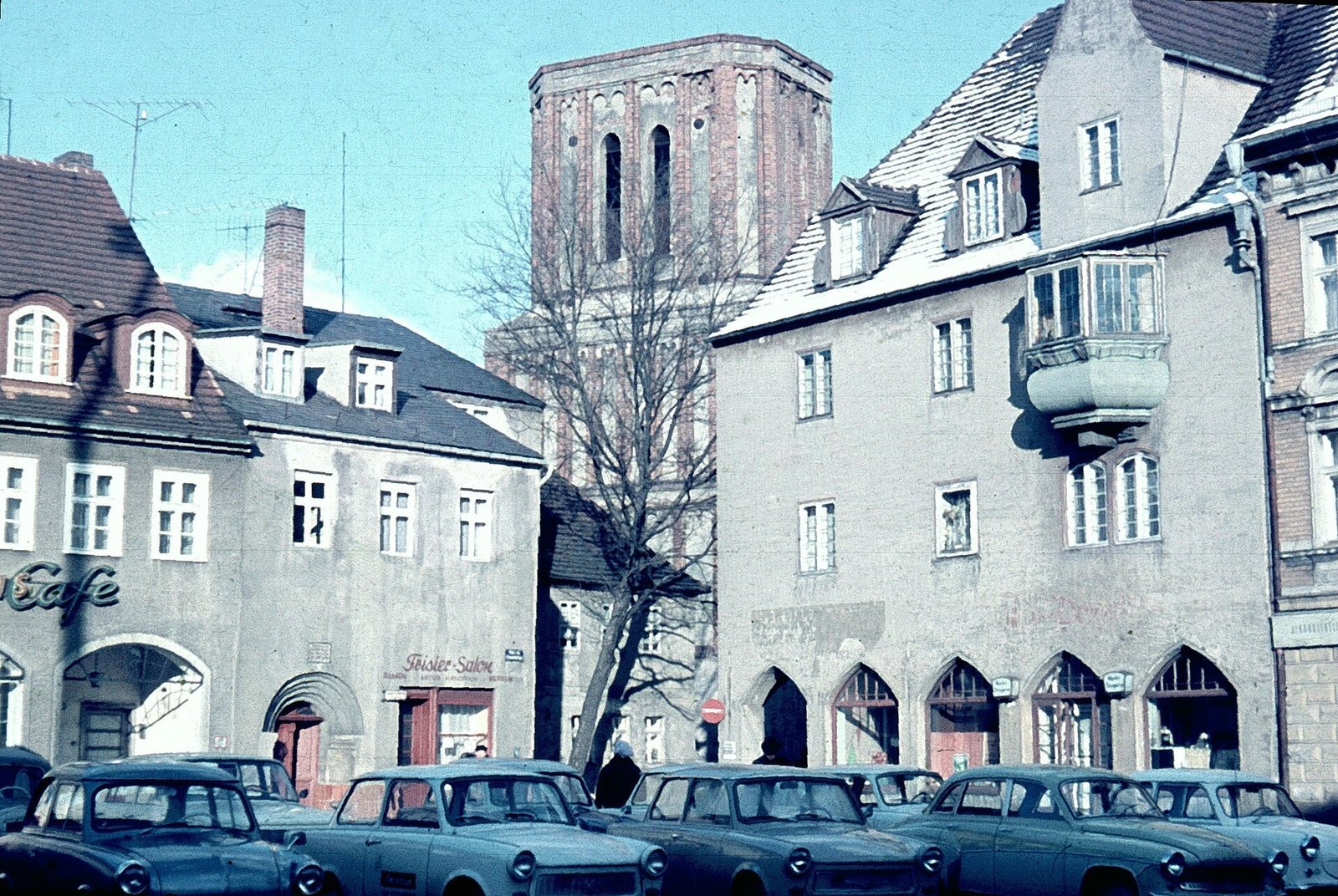
Old houses on a town square with parked cars and a church tower behind.
Senftenberg: Lotze, 14 June 1990. The market square of Senftenberg, 1969.Photo: Dguendel, 1969. Wikimedia Commons. CC BY 3.0.
Rows of prefabricated apartment blocks with industrial chimneys on the horizon.
Schwedt: Sternebeck, 15 June 1990. New housing in Schwedt, 1986, with the petrochemical works behind.Photo: Bundesarchiv, Bild 183-1986-0816-001 / Müller / CC BY-SA 3.0 de
The town centre of Neubrandenburg in 1984.
Neubrandenburg: Maier-Witt and Beer, 18 June 1990. The centre of Neubrandenburg, 1984.Photo: Bundesarchiv, Bild 183-1984-1126-311 / Benno Bartocha / CC BY-SA 3.0 de
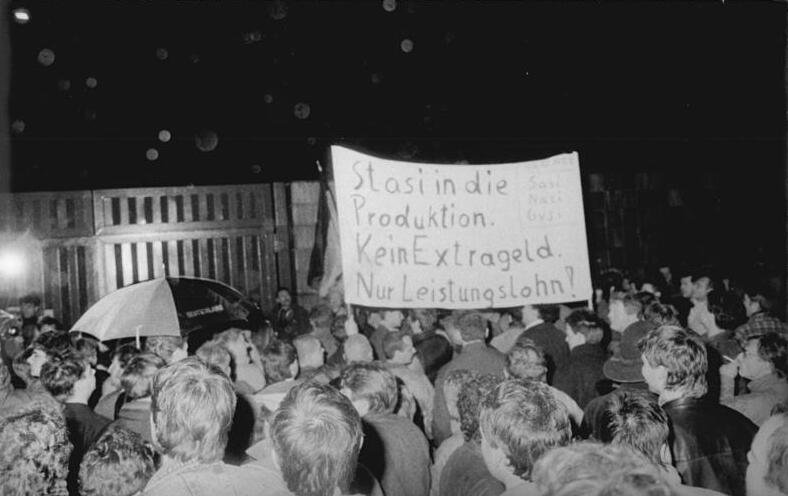
A crowd of demonstrators in front of the Stasi headquarters gate.
Demonstration at the Stasi headquarters in Berlin-Lichtenberg, 15 January 1990.Photo: Bundesarchiv, Bild 183-1990-0115-026 / Uhlemann, Thomas / CC BY-SA 3.0 de

In January 1990, months before the arrests, demonstrators had gathered at the Stasi’s headquarters in Lichtenberg. Once arrested, the dropouts talked. The crown-witness rule (Kronzeugenregelung) was applied to every RAF member arrested in the GDR, and the courts cut their sentences for it.

04Stuttgart, Munich, Koblenz, 1991–92

Prison for the dropouts: up to thirteen years

Susanne Albrecht was sentenced by the Oberlandesgericht Stuttgart on 3 June 1991 for the murder of Jürgen Ponto (1977) and attempted murder in the attack on Alexander Haig (1979). Inge Viett was sentenced by the Oberlandesgericht Koblenz for the attempted murder of a French policeman in Paris in 1981. The judges said that without the crown-witness rule Albrecht’s sentence, and Lotze’s, would have been life.

Sentences, in years, on one scale

Prison sentences on one scale in years, each dot at its true value, with the prosecution's demand where it is recorded.

Werner Lotze: 12 years in the taz report of the verdict (31 January 1991); 11 years in bpb (2024). The Bundesanwaltschaft appealed. Not shown: the sentences of Helbing, Sternebeck and Friedrich, which we could not confirm against a report of the verdict, and Dümlein and von Seckendorff-Gudent, for whom we found no verdict.

A black-and-white photograph of a low prison complex beyond a field path under a clouded sky.
Stuttgart-Stammheim, 2022. The Oberlandesgericht Stuttgart tried Susanne Albrecht here in 1991.Photo: k61s, 2022. Wikimedia Commons. CC0.
A tall sculpture of upright metal and stone slabs on a paved square, with old town houses behind.
Jürgen-Ponto-Platz in Frankfurt am Main, 2013, named after the banker murdered in July 1977.Photo: Epizentrum, 2013. Wikimedia Commons. CC BY 3.0.
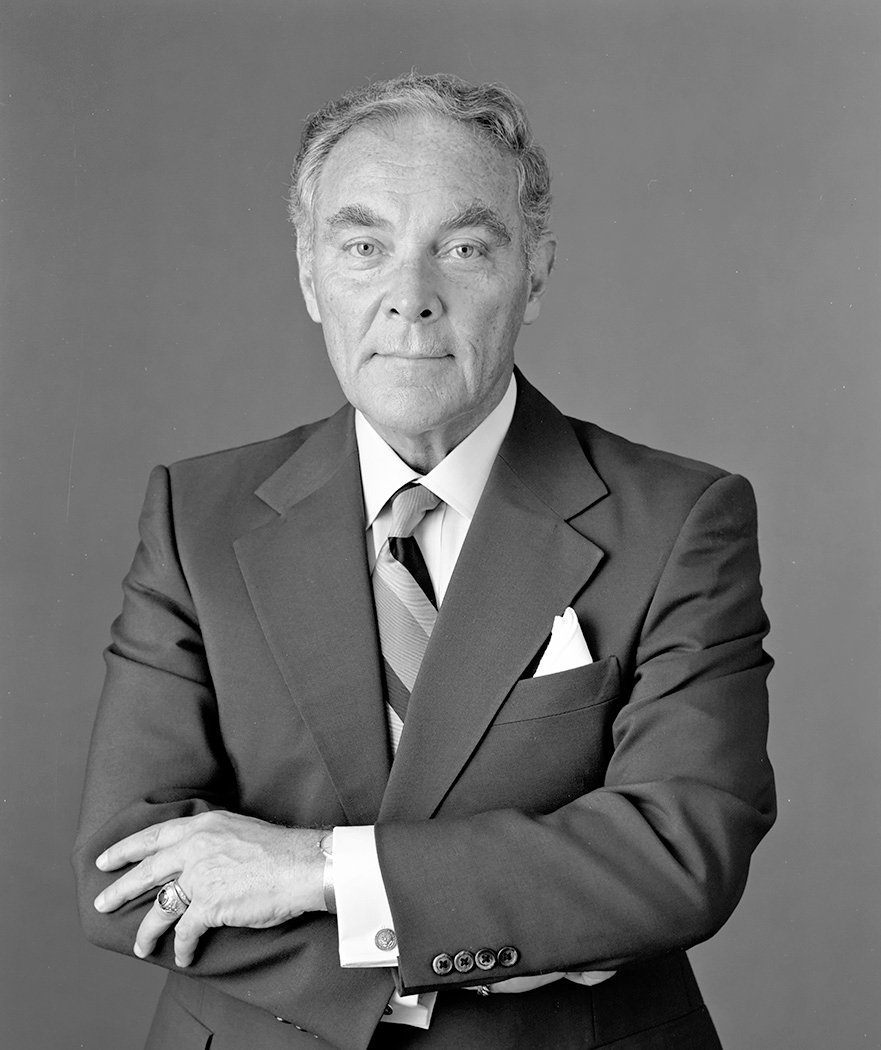
A black-and-white portrait of Alexander Haig in a suit, arms folded.
Alexander Haig, photographed in 1983. In June 1979, when the RAF attacked him, he was NATO’s supreme commander in Europe.Photo: Michael Evans, 1983. Wikimedia Commons. Public domain.

05Berlin and Karlsruhe, 1997–98

The officers who hid them were acquitted

On 7 March 1997 the Landgericht Berlin found the head of the "Stern" working group in Abteilung XXII and his deputy, both colonels, and the case officer guilty of attempted Strafvereitelung (obstructing prosecution); warnings only, with the fines reserved.

On 5 March 1998 the Bundesgerichtshof set the verdict aside and acquitted all three. Its ruling set limits, under international law, on applying the West German offence of obstructing prosecution to what East German officials had done for their own state.

“Letztlich verurteilte kein Gericht auch nur eine Person aus der SED oder ihrer Geheimpolizei für die Kollaboration mit der RAF zu einer Haftstrafe.”In the end no court sent a single member of the SED or its secret police to prison for collaborating with the RAF. Harald Bergsdorf, bpb Deutschland Archiv, 2024.

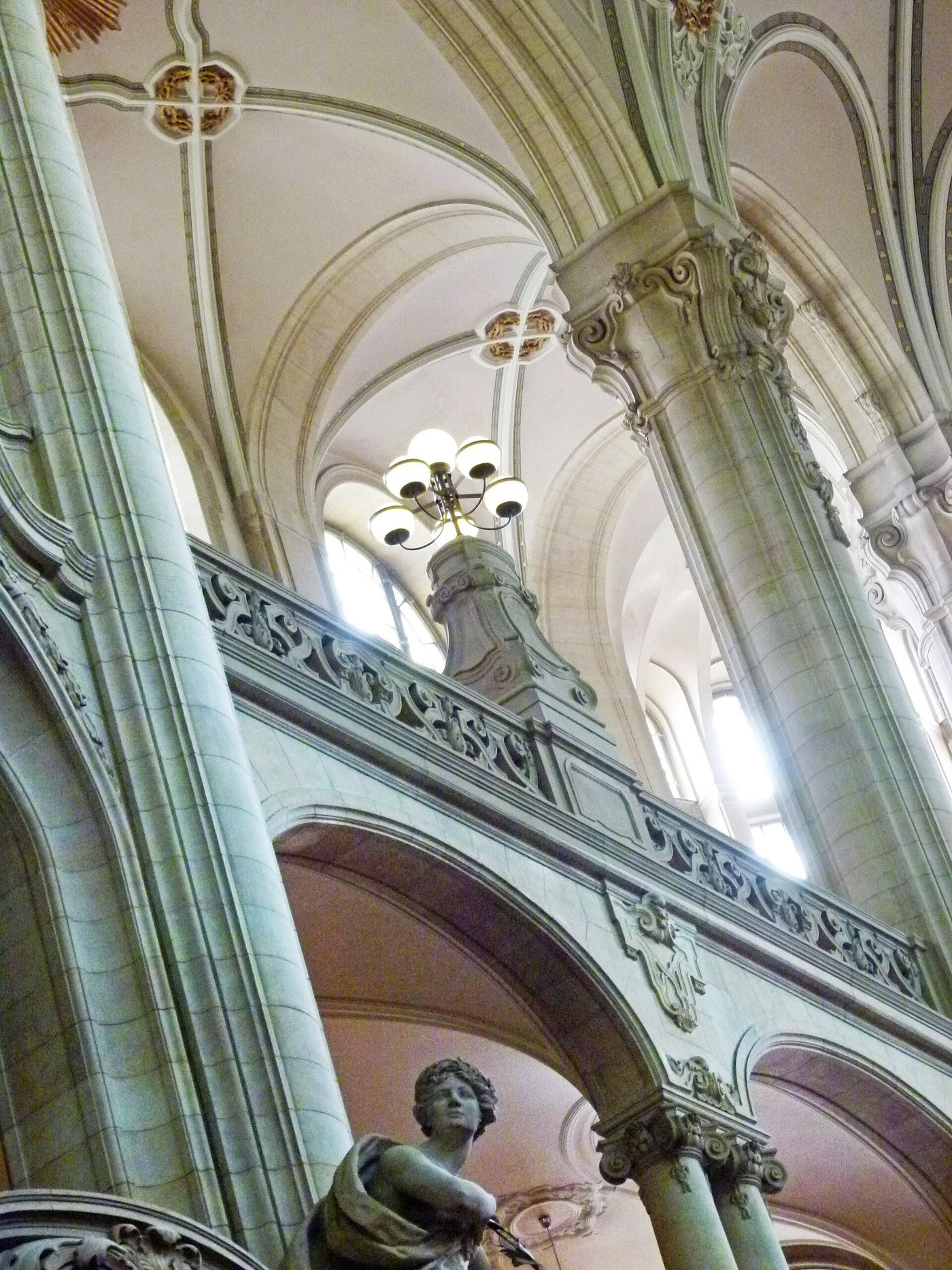
A Gothic-revival vaulted hall with galleries and a stone statue.
The great hall of the Kriminalgericht Moabit, the Berlin criminal court building, where the Stasi officers were tried in 1997.Photo: dierk schaefer, 2013. Wikimedia Commons. CC BY 2.0.
A grand nineteenth-century palace building seen through bare branches and a fence.
The Bundesgerichtshof, Germany’s Federal Court of Justice, in Karlsruhe, 2012.Photo: Andreas Praefcke, 2012. Wikimedia Commons. CC BY 3.0.

The courts sent the RAF members to prison for up to thirteen years. The Stasi officers who hid them walked free.

Press & citation

Use this Berlinfographic

Free to publish under CC BY 4.0 — in print, online, on Wikipedia and in teaching, commercially or not — with credit to Berlinfographics and a link to this page.

The Stasi and the RAF, 1980–98: ready-to-use landscape image

Ready-to-use image

The infographic as one image: headline, key figures, chart, sources and credit, 2,400 × 1,350 px PNG. Please use it unedited.

Download landscape (PNG)
The Stasi and the RAF, 1980–98: square version

Square format

A 1:1 version for social media and narrow columns, 1,800 × 1,800 px.

Download square (PNG)
The Stasi and the RAF, 1980–98: portrait version

Portrait 4:5

For Instagram and LinkedIn feeds, 1,620 × 2,025 px.

Download portrait (PNG)

Credit line

Berlinfographics (berlinfographics.com), CC BY 4.0

Citation

Berlinfographics (2026). “The Stasi and the RAF, 1980–98”. Berlin Experiences. https://berlinfographics.com/stasi-and-raf/

Wikipedia

{{cite web |title=The Stasi and the RAF, 1980–98 |url=https://berlinfographics.com/stasi-and-raf/ |website=Berlinfographics |publisher=Berlin Experiences |date=2026-11-09 |access-date=2026-11-09}}