Berlinfographicsby Berlin Experiences

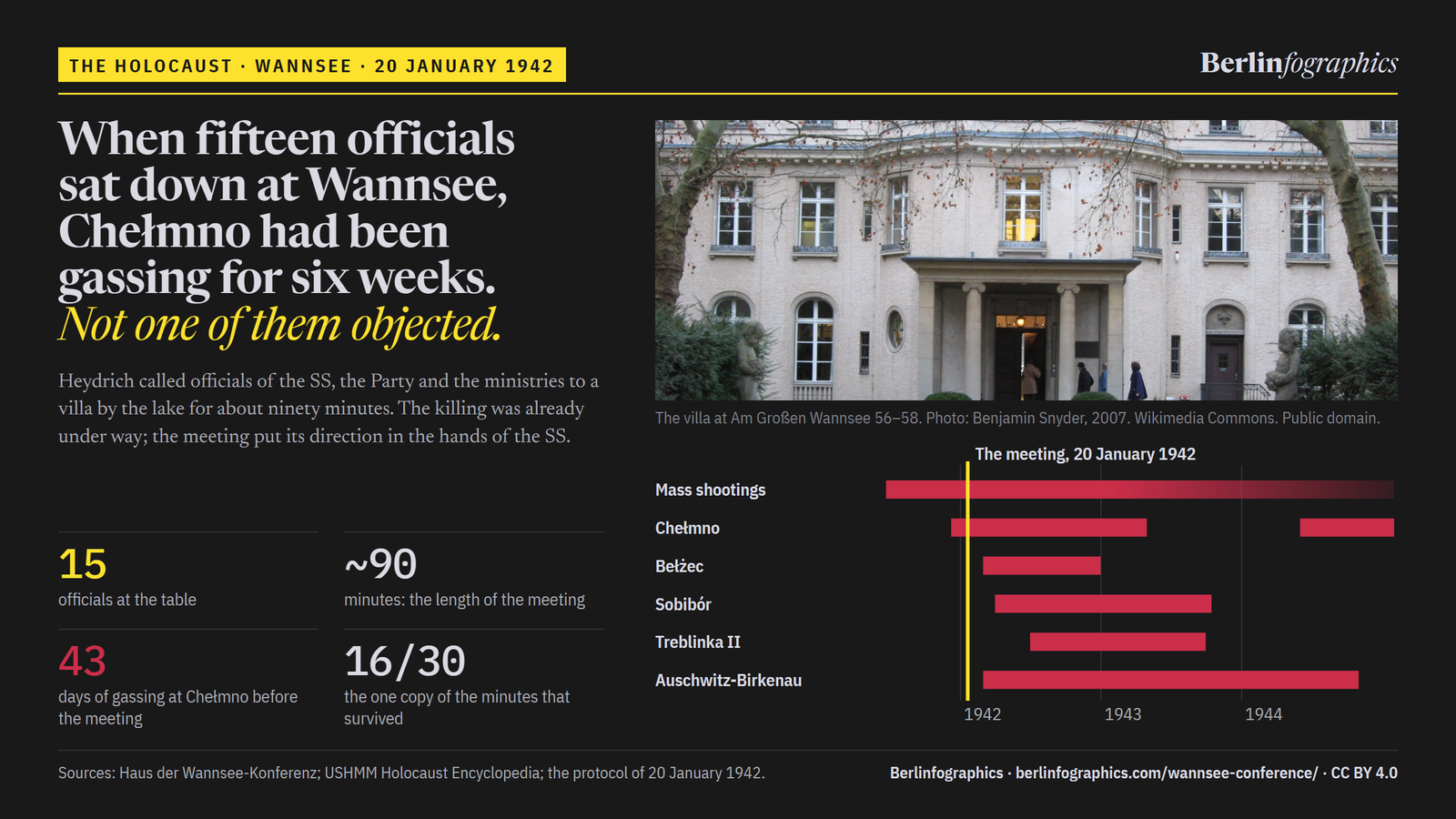
The villa at Am Großen Wannsee 56–58, now the Haus der Wannsee-Konferenz memorial and education centre.Photo: Benjamin Snyder, 2007. Wikimedia Commons. Public domain.

The Wannsee Conference

When fifteen officials sat down at Wannsee, Chełmno had been gassing for six weeks. Not one of them objected.

On 20 January 1942 Reinhard Heydrich called fifteen senior officials of the SS, the Nazi Party and the Reich ministries to a villa on the Wannsee, for a meeting of about ninety minutes. The murder of Europe’s Jews was already under way. The meeting put its direction in the hands of the SS, everywhere in Europe, and drew in every ministry it would need.

15
officials of the SS, the Party and the ministries
~90
minutes: the length of the meeting
43
days of gassing at Chełmno before the meeting began
16 of 30
the one copy of the minutes that survived

01June 1941 – November 1944

The killing did not wait for the meeting

The conference did not order the Holocaust. When the invitations went out, Jews were being shot in their hundreds of thousands in the occupied Soviet Union, a killing centre was being built at Bełżec, and at Chełmno the gas vans had begun. The meeting’s business was who would direct the rest, and how the ministries would serve it.

Killing operations, month by month · the meeting

A timeline from June 1941 to January 1945. One row for the mass shootings in the east and one for each of the five killing centres, each bar running over the months the centre operated, with a vertical line at 20 January 1942, the day of the Wannsee meeting.
Killing in operationBeing built20 Jan 1942
A rough fieldstone with an incised inscription stands in a forest clearing.
The memorial stone in the Rumbula forest outside Riga, where at least 25,000 Jews from the Riga ghetto were shot in late 1941.Adam Jones, 2011. Wikimedia Commons. CC BY-SA 2.0.

From June 1941

Shot in the occupied east

Behind the German armies in the Soviet Union, the Einsatzgruppen of Heydrich’s Security Police and SD, with police battalions and local auxiliaries, shot Jewish men, women and children town by town. Einsatzgruppe A alone reported “the execution of 229,052 Jews” in its area by 31 January 1942. At Rumbula, outside Riga, at least 25,000 were shot in late 1941.

The historian Timothy Snyder puts the number of Jews killed in the Soviet Union and the Baltics by the end of 1941 at a million. It is an estimate; the USHMM gives no total for that date.

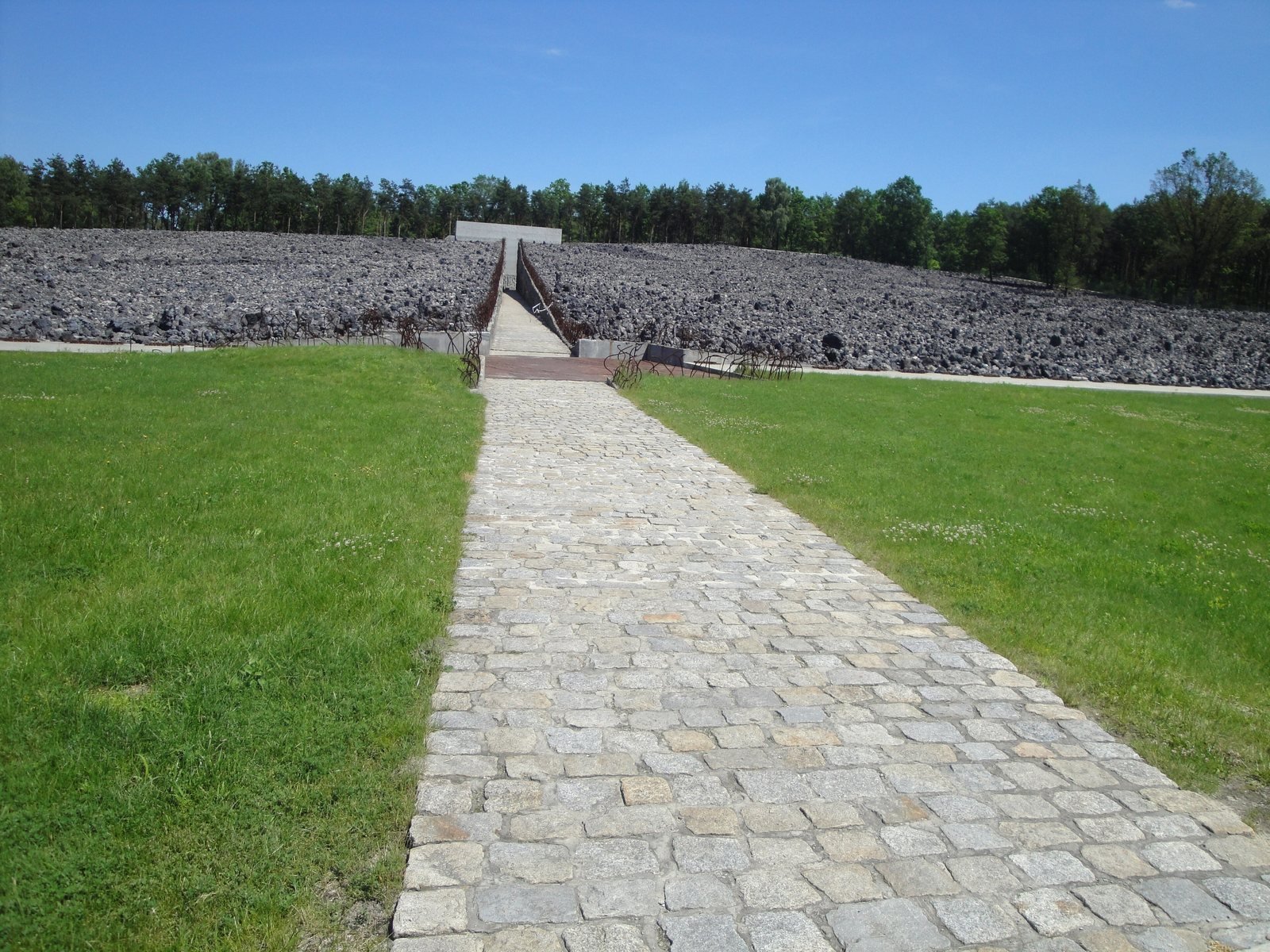
A cobbled path across a lawn leads to a narrow cutting through a wide field of dark slag stones, with pine forest behind.
The memorial at the site of the Bełżec killing centre: a field of slag over the camp ground, cut by a path that descends into it.Ulranen, 2010. Wikimedia Commons. CC BY 3.0.

From 1 November 1941

Bełżec was being built

Construction of a killing centre at Bełżec, in the occupied Polish General Government, began on 1 November 1941. It was not yet killing when the officials met.

A long concrete monument raised on three tapering pillars, its side carved in relief with a procession of figures, in a forest clearing.
The memorial in the Rzuchów forest near Chełmno, where the victims of the gas vans were buried.צביקה, 2007. PikiWiki – Israel free image collection project, via Wikimedia Commons. CC BY 2.5.

From 8 December 1941

Chełmno: the gas vans

At Chełmno, in western Poland, the SS and police began killing Jews in gas vans on 8 December 1941: six weeks before the meeting at Wannsee.

A typed page in German with a two-column table of countries and numbers, divided into groups A and B.
A page of the surviving copy of the minutes: Eichmann’s table of the Jews of Europe, country by country.Wannsee protocol, 20 January 1942, copy 16 (Political Archive of the Foreign Office). Wikimedia Commons. Public domain.

20 January 1942

The meeting at Wannsee

Heydrich told the fifteen officials that the Reich Marshal had made him responsible for preparing the “final solution of the Jewish question in Europe”, and that its direction lay with the Reichsführer-SS “without regard to geographic borders”. The minutes speak of evacuation to the East and count approximately 11 million Jews.

A low circular mound of grey ash and gravel inside a concrete ring, with trees behind.
The mausoleum at the site of the Sobibór killing centre.Merlin. Wikimedia Commons. CC BY-SA 3.0.

March – July 1942

Four more killing centres

Bełżec began killing in March 1942, Auschwitz-Birkenau in March 1942, Sobibór in April 1942 and Treblinka in July 1942. The three in the General Government were the camps of Operation Reinhard.

A cobbled path runs past upright granite stones inscribed Belgia, Francja, Jugosławia and ZSRR towards a distant monument, under pines and a cloudy blue sky.
Stones at the Treblinka memorial, many of them inscribed with the names of the countries whose Jews were murdered there. The monument stands at the far end of the path.mamik, 2012. Wikimedia Commons (fotopolska.eu). CC BY-SA 3.0.

August – October 1942

About a hundred days

Of the about 1.7 million people murdered in the Operation Reinhard camps, 1.32 million were killed in about a hundred days from August 1942: about 15,000 people a day, by Lewi Stone’s count.

“Two thirds of the Jews who would be killed during the war were already dead by the end of 1942.” — Timothy Snyder.

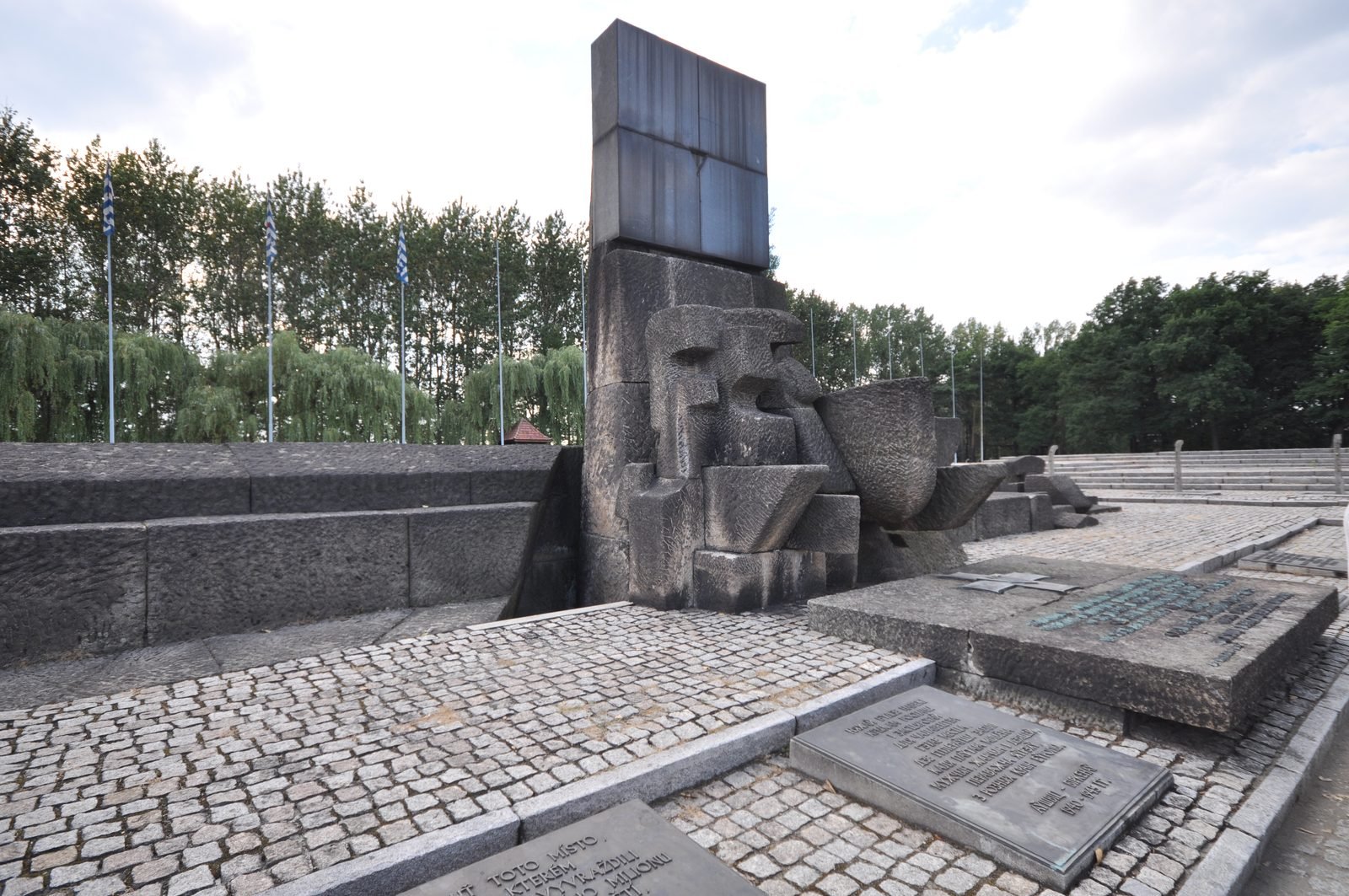
A long monument of dark stone blocks on a raised platform at the end of the rail track at Birkenau.
The International Monument at Auschwitz II-Birkenau.Jorge Láscar from Australia, 2012. Wikimedia Commons. CC BY 2.0.

To November 1944

Auschwitz-Birkenau ran longest

Birkenau killed from March 1942 until the autumn of 1944; about one million Jews were murdered in the Auschwitz camp complex. In all, about six million Jews were murdered: about 2.7 million in the killing centres, about two million in shootings, 800,000–1,000,000 in ghettos and camps, and at least 250,000 in other violence.

0220 January 1942

About ninety minutes, and no clock

The meeting lasted about 90 minutes. The protocol records no clock times. Only the length of the meeting and the rough split between the two parts are documented. By Christopher Browning’s account, Heydrich spoke for nearly an hour; then followed about thirty minutes of questions and comments.

A secretary, Ingeburg Werlemann, took notes. Adolf Eichmann, head of the Gestapo’s office for Jewish affairs, wrote them up as the minutes, and took the plain talk out.

“Certain over-plain talk and jargon expressions had to be rendered into office language by me.”Adolf Eichmann, Jerusalem, 1961

A typed page in German with a two-column table of countries and numbers, divided into groups A and B.
The page of the surviving copy that carries Eichmann’s table of “approximately 11 million” Jews, country by country.Wannsee protocol, 20 January 1942, copy 16 (Political Archive of the Foreign Office). Wikimedia Commons. Public domain.

The meeting, drawn to its length · items in the order the minutes record them

Proportions after Browning; total after the Haus der Wannsee-Konferenz.

In the hour Heydrich spoke
1

The mandate

Heydrich · § II

The Reich Marshal has appointed Heydrich “delegate for the preparations for the final solution of the Jewish question in Europe”. The Reichsführer-SS holds “the official central handling … without regard to geographic borders”. The meeting is called for “clarifying fundamental questions”.

2

The record so far

Heydrich · § II

537,000 Jews “sent out of the country” by 31 October 1941 — 360,000 from Germany, 147,000 from Austria, 30,000 from the Protectorate. Foreign Jewish organisations had supplied around $9,500,000 towards it. Emigration is now prohibited.

3

The eleven million

Eichmann's table · § III

“Approximately 11 million Jews will be involved.” Thirty-three lines in two groups — A under German control, B allied, neutral or at war. England 330,000. Ireland 4,000. Switzerland 18,000. Sweden 8,000. Spain 6,000. Portugal 3,000.

What followedThe table's own arithmetic comes to 11,292,300, of which 6,755,800 lay outside German reach. About six million Jews were murdered. The neutrals on the list were never reached.

4

The method

Heydrich · § III

Jews “allocated for appropriate labor in the East”, in “large work columns … in the course of which action doubtless a large portion will be eliminated by natural causes”. The “possible final remnant … will have to be treated accordingly”.

What followedBełżec opened in March 1942, Sobibór in April, Treblinka in July; Birkenau began as a killing centre in March. About 2.7 million people were murdered in the killing centres.

5

The order of work

Heydrich · § III

“Europe will be combed through from west to east.” Germany and the Protectorate first, “due to the housing problem”. The evacuated to go first to “so-called transit ghettos”.

6

The exemptions

Heydrich · § III

Jews over 65 not to be evacuated but sent to “an old-age ghetto — Theresienstadt is being considered”; likewise severely wounded veterans and holders of the Iron Cross First Class. “With this expedient solution, in one fell swoop many interventions will be prevented.”

What followedFrom June 1942 about 58,000 German and Austrian Jews were sent to Theresienstadt, the elderly and the decorated veterans among them. Around 88,000 people were deported onward from it; about 3,500 of those survived. Some 34,000 died in the ghetto itself.

7

The satellites

Heydrich, then Luther and Hofmann · § III

Romania “has appointed a commissioner for Jewish affairs”; for Hungary “it will soon be necessary to force an adviser for Jewish questions onto the Hungarian government”. Luther warns that the Scandinavian states will be difficult and advises deferring them. Hofmann offers to attach a race expert to the police attaché in Budapest.

In the half hour of questions
8

Who counts as a Jew

Hofmann and Stuckart · § IV

Hofmann: sterilisation “will have to be widely used”. Stuckart calls the six marriage cases unworkable — “endless administrative work” — and proposes forced sterilisation instead, with the law simply declaring that mixed marriages “have been dissolved”.

9

Workers the war needed

Neumann (Four Year Plan) · § IV

Jews in industries vital to the war effort, where no replacement is available, “cannot be evacuated”. Heydrich answers that they would not be, under the rules he has already approved.

10

Begin here

Bühler (General Government) · § IV

Bühler “would welcome it if the final solution … could be begun in the General Government”, where transport is not a problem. Of “approximately 2 1/2 million Jews concerned, the majority is unfit for work”. He “had only one request, to solve the Jewish question in this area as quickly as possible”. Meyer agrees that preparatory work should start at once, “alarming the populace must be avoided”.

What followedHe got what he asked for. About 1.7 million people were murdered in the three Aktion Reinhard camps in the General Government; 1.32 million of them in roughly a hundred days from August 1942.

03Section III of the protocol

A list of every Jew in Europe, including the neutral countries

The minutes include a table drawn up in Eichmann’s office: 33 lines, approximately 11 million Jews. Group A is the territory Germany held or occupied. Group B is everywhere else: Germany’s allies, the countries at war with it, and the neutral states — Ireland, Portugal, Spain, Sweden, Switzerland and European Turkey. Three in five of the people counted lived in group B. The lines as printed add up to 11,292,300.

The table’s two groups, to scale

Eichmann’s table, line by line, as printed · neutral states outlined

The USSR line is subdivided in the document: Ukraine 2,994,684; White Russia excluding Białystok 446,484. Estonia is entered as “judenfrei”, free of Jews. The minutes give the total as approximately 11 million; the country lines add up to 11,292,300.

04Who was in the room

State secretaries, lawyers, doctors of law

Six of the men came from Heydrich’s own SS and police apparatus. The other nine came from the ministries and the Party: state secretaries and department heads of the Interior, Justice and the Occupied East, the Foreign Office, the Reich Chancellery, the Four Year Plan, the General Government and the Party Chancellery. Ten had been to university; eight had studied law; eight held doctorates. Seven were under forty. The youngest, Rudolf Lange, was 31; the oldest, Friedrich Wilhelm Kritzinger, 51.

None of the officials present at the meeting objected to the “Final Solution” policy that Heydrich announced.

Tried and executed · 3Imprisoned, then released · 1Sentenced to time served · 1Never tried · 4Dead by May 1945 · 5Never found · 1
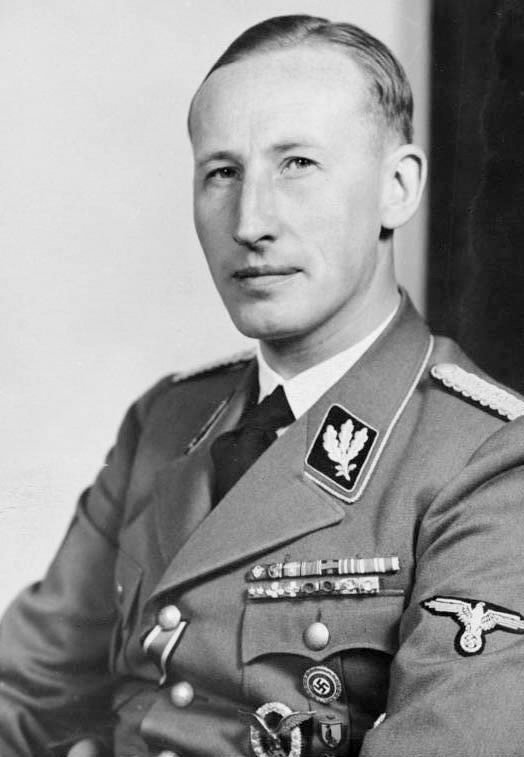
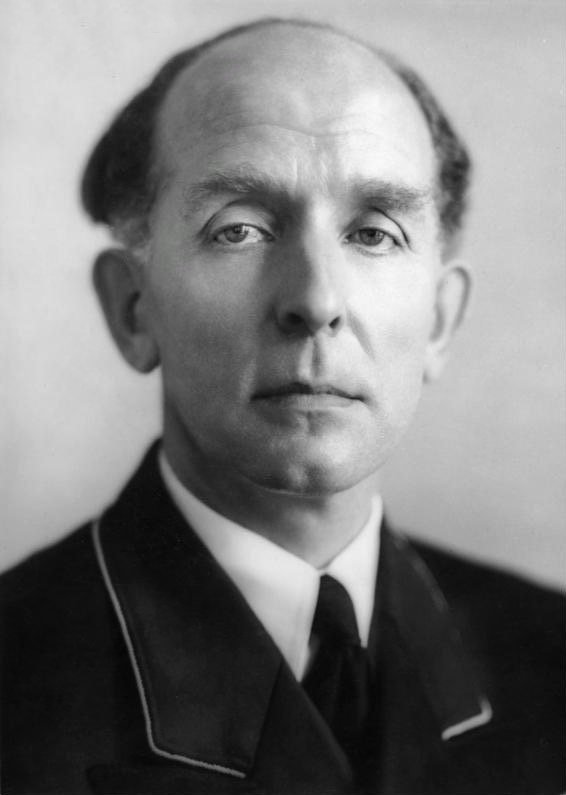
Portrait photograph of Reinhard Heydrich

Reinhard Heydrich

SS-Obergruppenführer · Chief of the Security Police and SD (RSHA) · in the chair

aged 37

Attacked by Czechoslovak agents in Prague on 27 May 1942; died of his wounds on 4 June.

Bundesarchiv, Bild 146-1969-054-16 / Hoffmann, Heinrich / CC-BY-SA 3.0 de
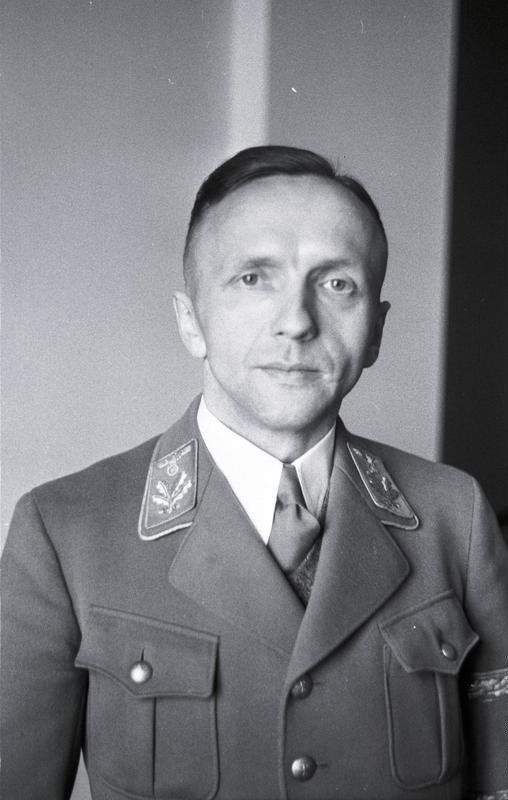
Portrait photograph of Heinrich Müller

Heinrich Müller

SS-Gruppenführer · Chief of the Gestapo, RSHA Amt IV

aged 41

Last seen in Berlin in the first days of May 1945. Never captured, never confirmed dead.

Unknown author, 1941. Wikimedia Commons. Public domain.
Portrait photograph of Adolf Eichmann

Adolf Eichmann

SS-Obersturmbannführer · RSHA Referat IV B 4 · wrote the minutes

aged 35

Escaped to Argentina; seized by Israel in 1960, tried in Jerusalem and hanged in 1962.

Unknown photographer. Wikimedia Commons. Public domain.
Portrait photograph of Otto Hofmann

Otto Hofmann

SS-Gruppenführer · SS Race and Settlement Main Office

aged 45

Sentenced to twenty-five years at Nuremberg in 1948; released in 1954.

Office of Chief of Counsel for War Crimes, US Army, Nuremberg. Wikimedia Commons. Public domain.
Portrait photograph of Karl Eberhard Schöngarth

Karl Eberhard Schöngarth

SS-Oberführer · Security Police and SD, General Government

aged 38

Sentenced to death by a British military court for the killing of an Allied airman; hanged in 1946.

Unknown photographer. Wikimedia Commons. Public domain.
Portrait photograph of Gerhard Klopfer

Gerhard Klopfer

SS-Oberführer · Party Chancellery

aged 36

Never prosecuted. Died in 1987.

Bundesarchiv, Bild 119-06-44-12 / Unknown / CC-BY-SA 3.0 de
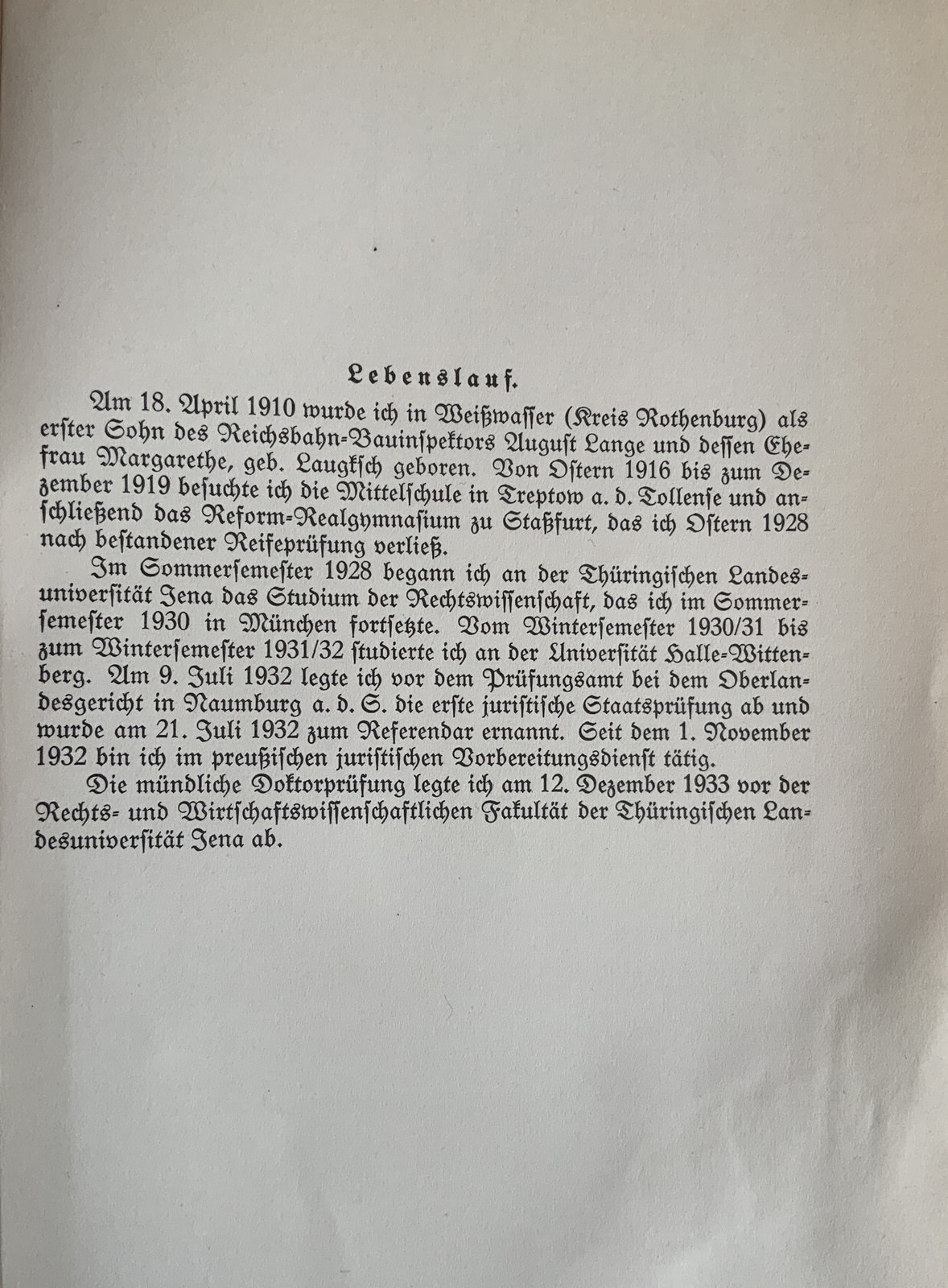
A typed curriculum vitae, 1933

Rudolf Lange

SS-Sturmbannführer · Commander of the Security Police and SD, Latvia

aged 31

The youngest man in the room. Killed at Posen (Poznań) in February 1945.

His 1933 curriculum vitae. Rudolf Lange, dissertation, University of Jena, 1933. Wikimedia Commons. Public domain.
No photograph with a clear licence

Georg Leibbrandt

Reichsamtsleiter · Reich Ministry for the Occupied Eastern Territories

aged 42

Proceedings against him were dropped. Died in 1982.

Portrait photograph of Alfred Meyer

Alfred Meyer

Gauleiter · Reich Ministry for the Occupied Eastern Territories

aged 50

Killed himself in April 1945.

Bundesarchiv, Bild 183-1991-0712-500 / Unknown / CC-BY-SA 3.0 de
Portrait photograph of Josef Bühler

Josef Bühler

State Secretary · Government of the General Government, Kraków

aged 37

Tried in Poland and hanged in Kraków in 1948.

Unknown author, 1942. Wikimedia Commons. Public domain.
Portrait photograph of Roland Freisler

Roland Freisler

State Secretary · Reich Ministry of Justice

aged 48

President of the People's Court from August 1942. Killed in an air raid on Berlin on 3 February 1945.

Bundesarchiv, Bild 183-J03238 / Heinscher / CC-BY-SA 3.0 de
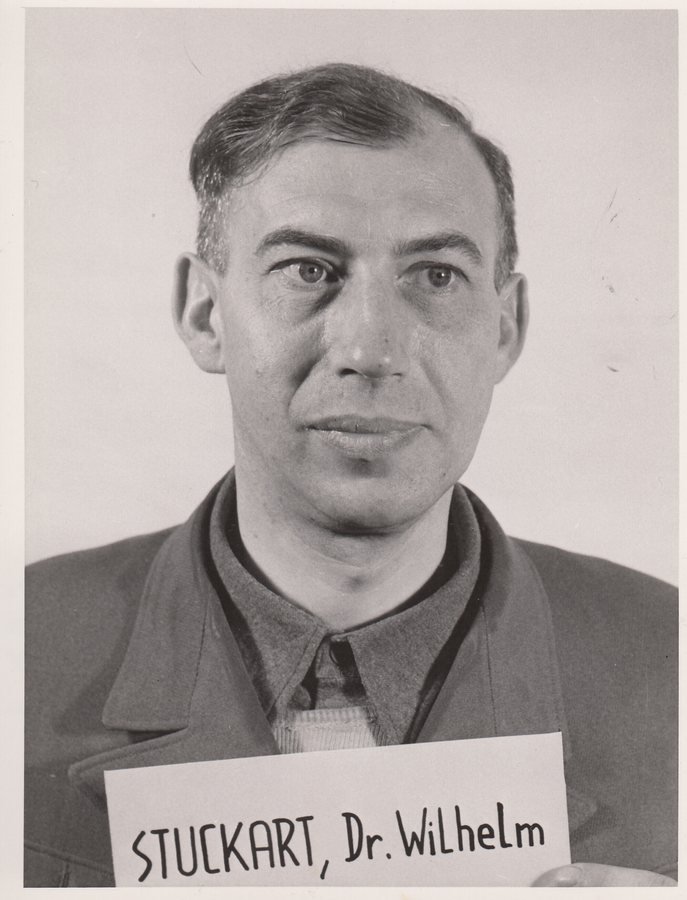
Portrait photograph of Wilhelm Stuckart

Wilhelm Stuckart

State Secretary · Reich Ministry of the Interior

aged 39

Convicted in the Ministries case in 1949 and sentenced to the time he had already served. Died in a road accident in 1953.

Office of Military Government for Germany (U.S.). Wikimedia Commons. Public domain.
No photograph with a clear licence

Erich Neumann

State Secretary · Plenipotentiary for the Four Year Plan

aged 49

Interned, released in 1948 on grounds of ill health, never tried. Died in 1951.

No photograph with a clear licence

Friedrich Wilhelm Kritzinger

Ministerialdirektor · Reich Chancellery

aged 51

The oldest man in the room. Died in 1947 without having been tried.

No photograph with a clear licence

Martin Luther

Unterstaatssekretär · Foreign Office

aged 46

Sent to a concentration camp in 1943 after plotting against Ribbentrop. Died in May 1945. His copy of the minutes is the one that survived.

05The document

Thirty copies. One was found.

The minutes were typed in 30 numbered copies. Only copy 16 has been found: the one sent to Martin Luther, Foreign Office.

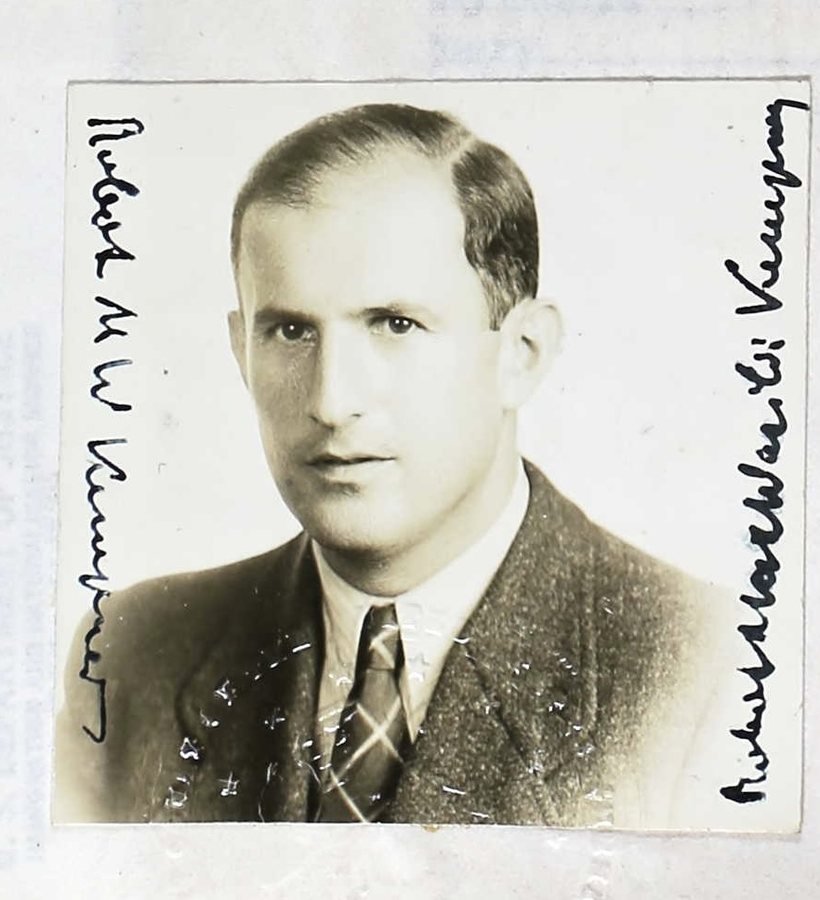
The copy came to light among the files of the German Foreign Office in late 1946. In March 1947 Kenneth Duke, of the American microfilming staff, alerted the prosecutor Robert Kempner. It was put in evidence at Nuremberg, in the trial of the ministry officials, as document NG-2586-G. The original is kept in the Political Archive of the Foreign Office, Berlin.

Luther himself had been sent to a concentration camp in 1943 after plotting against his minister, Ribbentrop, and died in May 1945. The paper he filed outlasted him.

A black-and-white identity photograph of a man in a suit and tie, wearing glasses.
Robert Kempner, from his United States naturalisation records, 1940. He returned to Germany as a prosecutor at Nuremberg.US Federal Government, 1940. Wikimedia Commons. Public domain.

06Theresienstadt

The “old-age ghetto”

Jews over 65 not to be evacuated but sent to “an old-age ghetto — Theresienstadt is being considered”; likewise severely wounded veterans and holders of the Iron Cross First Class. “With this expedient solution, in one fell swoop many interventions will be prevented.” (§ III) From June 1942 about 58,000 German and Austrian Jews were sent to Theresienstadt, the elderly and the decorated veterans among them.

Theresienstadt: deported onward, and survived

USHMM figures; all three bars on one scale.

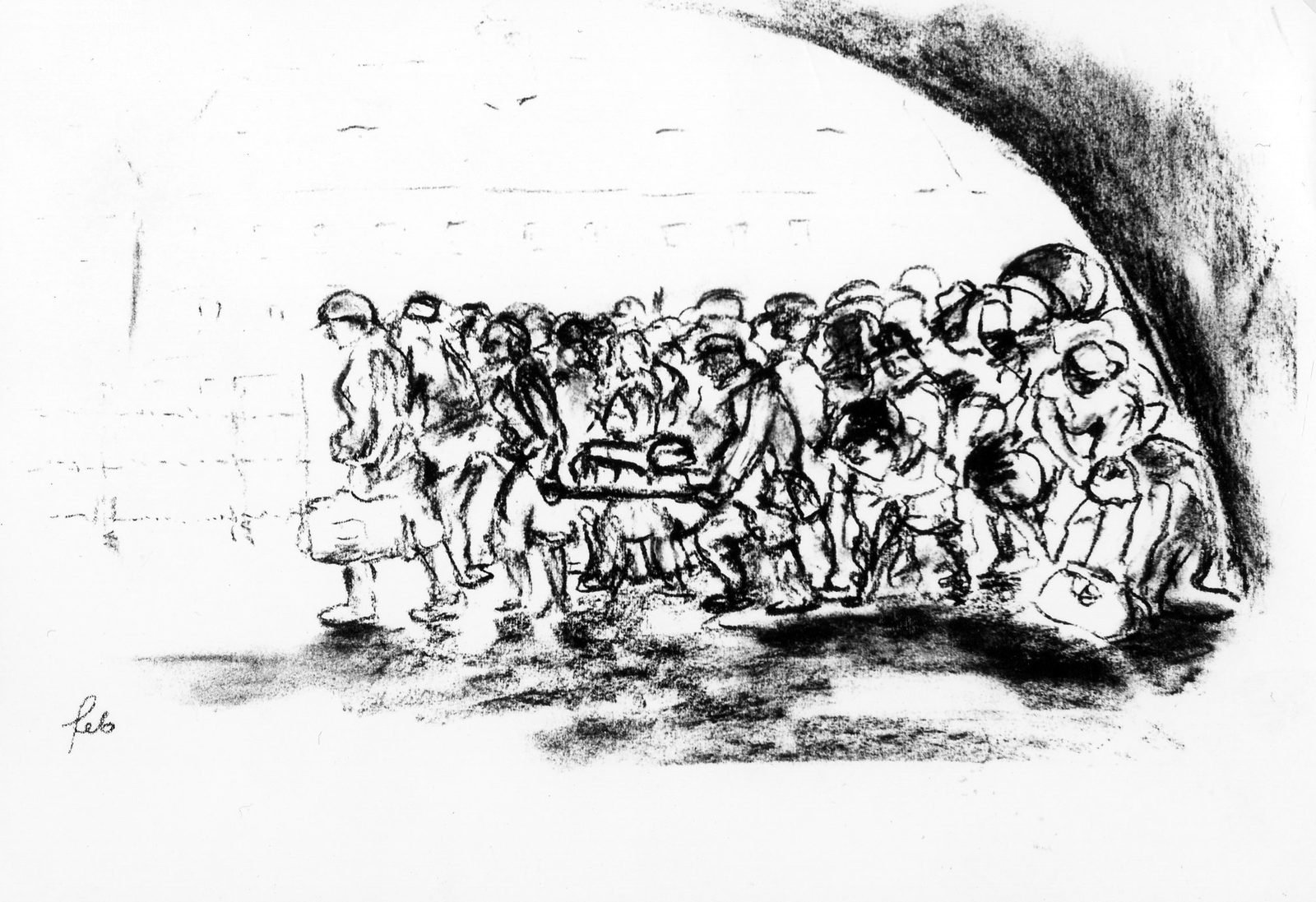
A painting of a crowd of people with bundles arriving at the gate of a walled town, watched by guards.
Ferdinand Bloch, “A Transport Arrives in the Terezín Ghetto”, gouache, painted in the ghetto, 1942–44. Bloch was murdered in 1944.Ferdinand Bloch · Ghetto Fighters' House · public domain · Wikimedia Commons

The villa had been the guest house of the Chief of the Security Police and SD. From 1952 to 1988 it was a country home for the schools of Neukölln. On 20 January 1992, fifty years to the day after the meeting, it opened as a memorial and education centre.

No one in the room objected.

Press & citation

Use this Berlinfographic

Free to publish under CC BY 4.0 — in print, online, on Wikipedia and in teaching, commercially or not — with credit to Berlinfographics and a link to this page.

The Wannsee Conference, 20 January 1942: ready-to-use landscape image

Ready-to-use image

The infographic as one image: headline, key figures, chart, sources and credit, 2,400 × 1,350 px PNG. Please use it unedited.

Download landscape (PNG)
The Wannsee Conference, 20 January 1942: square version

Square format

A 1:1 version for social media and narrow columns, 1,800 × 1,800 px.

Download square (PNG)
The Wannsee Conference, 20 January 1942: portrait version

Portrait 4:5

For Instagram and LinkedIn feeds, 1,620 × 2,025 px.

Download portrait (PNG)

Credit line

Berlinfographics (berlinfographics.com), CC BY 4.0

Citation

Berlinfographics (2026). “The Wannsee Conference, 20 January 1942”. Berlin Experiences. https://berlinfographics.com/wannsee-conference/

Wikipedia

{{cite web |title=The Wannsee Conference, 20 January 1942 |url=https://berlinfographics.com/wannsee-conference/ |website=Berlinfographics |publisher=Berlin Experiences |date=2026-11-09 |access-date=2026-11-09}}