Berlinfographicsby Berlin Experiences
Black-and-white portrait of an older woman with grey hair pulled back, resting her cheek on her hand and looking past the camera.
Käthe Kollwitz1867–1945 · printmaker and sculptor
A painted portrait of a seated woman with a black bob and fringe in a green blouse and grey skirt, hands folded, in a red armchair.
Hannah Höch1889–1978 · Dada artist and inventor of photomontage
A white porcelain plaque headed Berliner Gedenktafel, with blue lettering naming Jeanne Mammen, 21.11.1890 – 22.4.1976.
Jeanne Mammen1890–1976 · painter and illustrator
A white porcelain plaque on a brick wall headed Berliner Gedenktafel, naming Lotte Laserstein, 28.11.1898 – 21.1.1993.
Lotte Laserstein1898–1993 · painter
Black-and-white photograph of a woman in a white shirt gazing up at a small standing figure of a nude she holds on a draped pedestal.
Milly Steger1881–1948 · sculptor
Black-and-white photograph from above of a young woman in a dark swimsuit lying asleep on sand, arms flung out, a bag and camera case beside her head.
Eva Besnyö1910–2003 · photographer

From left: Käthe Kollwitz (Hugo Erfurth, 1927); Hannah Höch (Chris Lebeau, 1933 (Drents Museum, Assen); photograph Derbrauni, 2025); Jeanne Mammen (OTFW, Berlin, 2009); Lotte Laserstein (OTFW, Berlin, 2020); Milly Steger (Atelier Binder (Alexander Binder), 1922. Die Dame 14/1922); Eva Besnyö (Workshop of Peter Weller, Berlin, 1931. Rijksmuseum, Amsterdam). No photograph of Jeanne Mammen or Lotte Laserstein is free to show: their frames are the plaques on their Berlin houses. All credits in full below.

Weimar Berlin6 women artists and the Nazi dictatorship

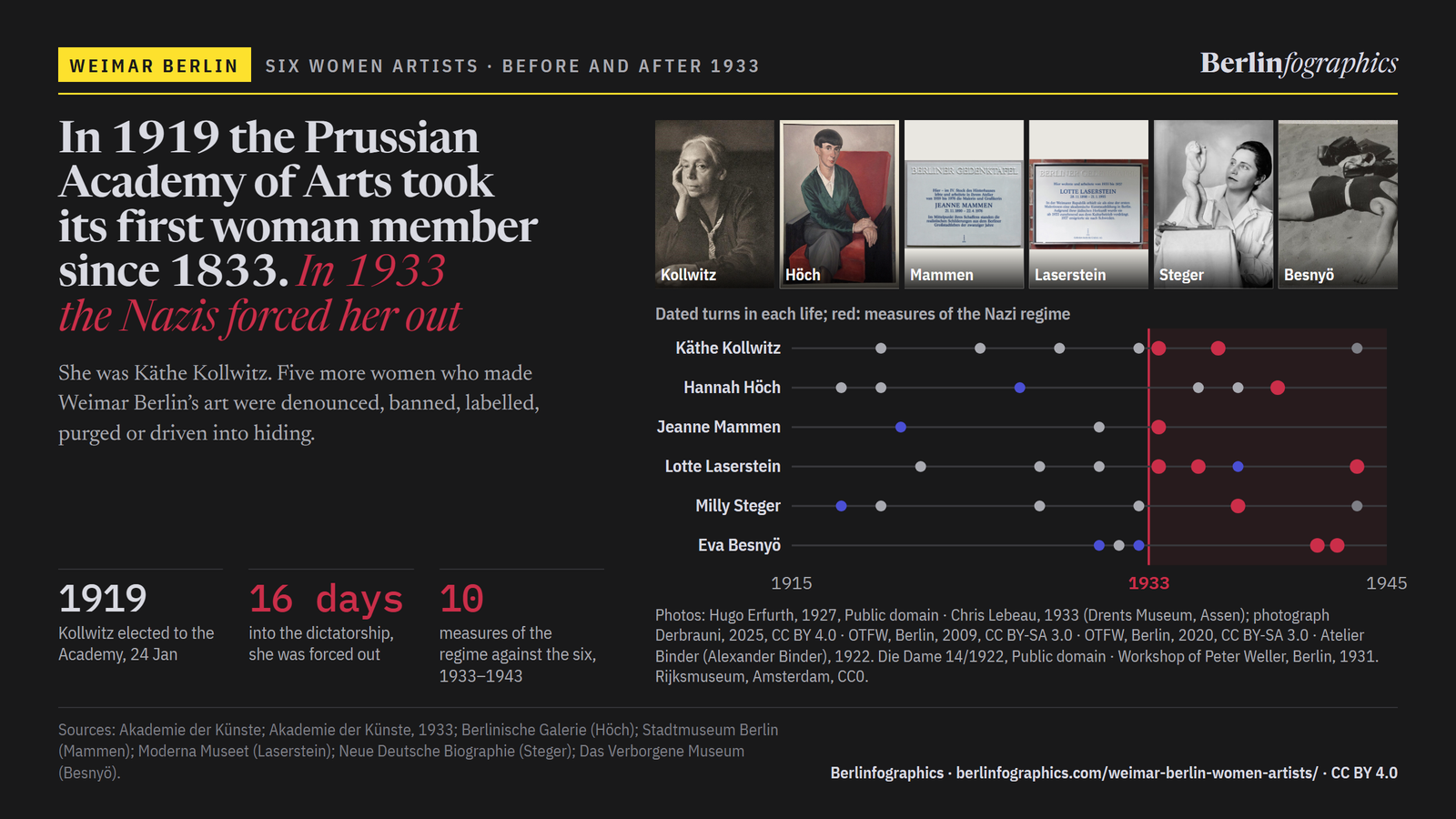
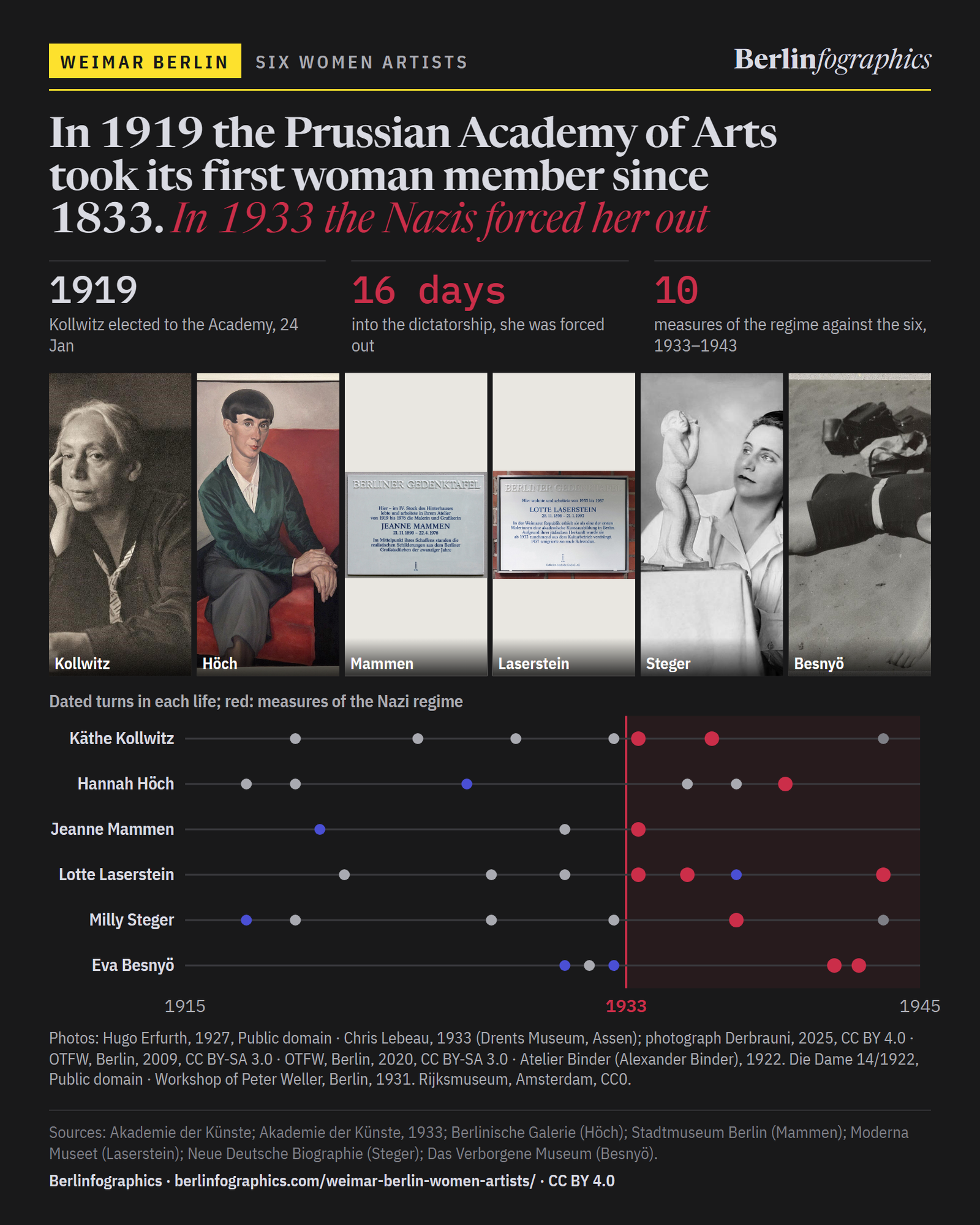
In 1919 the Prussian Academy of Arts took its first woman member since 1833. In 1933 the Nazis forced her out

She was Käthe Kollwitz, one of six women who drew, cut, painted, carved and photographed Weimar Berlin. Hannah Höch was denounced as a “cultural Bolshevik”. Jeanne Mammen lost the magazines she drew for. Lotte Laserstein, labelled a “three-quarter Jew”, fled to Sweden; her mother was murdered in Ravensbrück. Museums removed Milly Steger’s work. Eva Besnyö, gone to Amsterdam, survived the German occupation in hiding.

Scroll: six lives across 1933

01Before and after 1933

six women1915–1945Weimar Berlin
and after
Six horizontal lanes on a time axis, one for each artist, with dots for the dated turns in her life: her own work in yellow, moves in blue, measures of the Nazi regime against her in red, war damage in grey, and a vertical line at the Nazi takeover.
her worka moveNazi measures against herwar damage
  1. Scroll to follow each life.
Black-and-white portrait of an older woman with grey hair pulled back, resting her cheek on her hand and looking past the camera.
Käthe Kollwitz, 1927.Hugo Erfurth, 1927. Wikimedia Commons. Public domain.

1867–1945 · printmaker and sculptor

Käthe Kollwitz: the Academy’s first woman member since 1833, forced out 16 days into the dictatorship

Kollwitz came to Berlin in 1891, married to a doctor whose practice in the north of the city brought her face to face with poverty and illness. On 24 January 1919 the Prussian Academy of Arts elected her a full member, the first woman since 1833. On 15 February 1933, 16 days after the Nazis took power, she was forced out.

Source: Neue Deutsche Biographie (Kollwitz) · Akademie der Künste · Akademie der Künste, 1933

A painted portrait of a seated woman with a black bob and fringe in a green blouse and grey skirt, hands folded, in a red armchair.
Hannah Höch, painted by Chris Lebeau, 1933.Chris Lebeau, 1933 (Drents Museum, Assen); photograph Derbrauni, 2025. Wikimedia Commons. CC BY 4.0.

1889–1978 · photomontage

Hannah Höch: denounced as a “cultural Bolshevik”, she went to ground at the city’s edge

Höch was in Berlin Dada from 1917; her “Cut with the Kitchen Knife” of 1919 hangs in the Nationalgalerie. From 1926 she lived with the Dutch writer Til Brugman; they parted in 1935, when a same-sex household had become dangerous. In 1939 she withdrew to a small house in Heiligensee.

Source: Berlinische Galerie (Höch) · German History in Documents · visitBerlin, Hannah-Höch-Haus

A white porcelain plaque headed Berliner Gedenktafel, with blue lettering naming Jeanne Mammen, 21.11.1890 – 22.4.1976.
The plaque at Kurfürstendamm 29.OTFW, Berlin, 2009. Wikimedia Commons. CC BY-SA 3.0.

1890–1976 · painter and illustrator

Jeanne Mammen: the reporter of Weimar nightlife lost her magazines in 1933

Mammen took a studio at Kurfürstendamm 29 in April 1920 and drew the cafés, dance halls and drag bars of Berlin for the illustrated papers. Her first solo show, at the Galerie Gurlitt in 1930, was a success. Three years later, the Stadtmuseum writes, “it is all over”: most of the magazines she worked for were banned.

Source: Stadtmuseum Berlin (studio) · Stadtmuseum Berlin (Mammen)

A white porcelain plaque on a brick wall headed Berliner Gedenktafel, naming Lotte Laserstein, 28.11.1898 – 21.1.1993.
The plaque at Jenaer Straße 3.OTFW, Berlin, 2020. Wikimedia Commons. CC BY-SA 3.0.

1898–1993 · painter

Lotte Laserstein: labelled a “three-quarter Jew”, she reached Sweden in 1937

Laserstein studied at the Berlin academy from 1921 to 1927 and opened her own studio and painting school in 1927. In 1933 the Nazis labelled her a “three-quarter Jew”; in 1935 her school was closed and she was barred from exhibiting. She emigrated in 1937. Her mother, who stayed, was murdered in Ravensbrück in January 1943.

Source: Moderna Museet (Laserstein) · Stolpersteine in Berlin

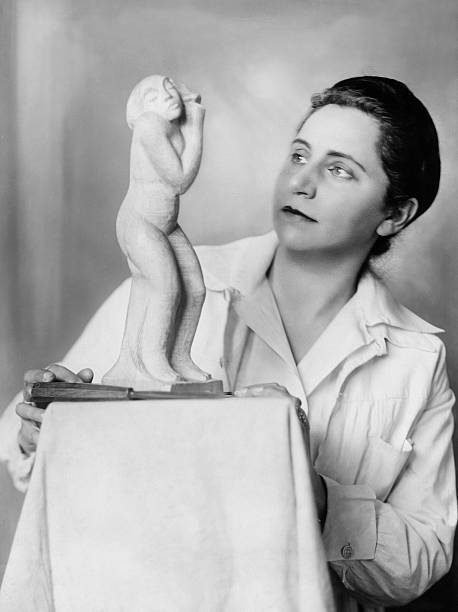
Black-and-white photograph of a woman in a white shirt gazing up at a small standing figure of a nude she holds on a draped pedestal.
Milly Steger, 1922.Atelier Binder (Alexander Binder), 1922. Die Dame 14/1922. Wikimedia Commons. Public domain.

1881–1948 · sculptor

Milly Steger: in 1937 some of her work was pulled from museums as “degenerate”

Steger moved to Berlin for good in 1917; in 1919 she published a plea for admitting women to the art academies, which had barred her. She taught at the school of the Verein der Künstlerinnen from 1927. In 1937 some of her works were removed from museums, though she could keep working; in November 1943 bombs destroyed her studio.

Source: Neue Deutsche Biographie (Steger)

Black-and-white photograph from above of a young woman in a dark swimsuit lying asleep on sand, arms flung out, a bag and camera case beside her head.
Eva Besnyö, 1931.Workshop of Peter Weller, Berlin, 1931. Rijksmuseum, Amsterdam. Wikimedia Commons. CC0.

1910–2003 · photographer

Eva Besnyö: she left Berlin before the takeover, and the occupation caught up with her

Besnyö came to Berlin from Budapest in 1930, aged 20, and in 1931 worked in the press photographer Peter Weller’s studio before opening her own. She left in October 1932 for Amsterdam, feeling threatened by National Socialism. After the German Journalism Decree of May 1941 she could not publish under her own name; in 1942 she went underground.

Source: Das Verborgene Museum (Besnyö) · Berlinische Galerie (Besnyö)

A poster: a young person with wild hair shouts, right arm raised with two fingers lifted as if swearing an oath; the words Nie wieder Krieg are hand-lettered across the sheet.
“Nie wieder Krieg”, 1924.Käthe Kollwitz, 1924. Wikimedia Commons. Public domain.

All six

What 1933 meant for each of them

After 1933 the regime reached every one of the six: an expulsion, a ban, a label, a closure, a purge of museums, a murder, a life underground. Only two of the six, Kollwitz and Steger, died long enough ago for their work to be shown freely today.

Source: Akademie der Künste, 1933 · Stadtmuseum Berlin (Mammen) · Moderna Museet (Laserstein) · Neue Deutsche Biographie (Steger) · visitBerlin, Hannah-Höch-Haus · Das Verborgene Museum (Besnyö) · Urheberrechtsgesetz §§ 64, 69

02Prenzlauer Berg, 1891–1943

Käthe Kollwitz lived 52 years in one flat in Prenzlauer Berg, among the poor of her husband’s practice

She married the doctor Karl Kollwitz in 1891 and moved with him to Berlin for good. Through his health-insurance practice in the north of the city she met poverty, illness and the misery of the new industrial working class — her subject from then on. The family lived at what was then Weißenburger Straße 25, today Kollwitzstraße 56a, from 1891 until bombs destroyed the flat on 25 November 1943.

Her cycle “Ein Weberaufstand” (1893–97) brought her first great success at the Great Berlin Art Exhibition of 1898. On 24 January 1919 the Prussian Academy of Arts elected her a full member — in the Academy’s own words, the first woman since 1833. In 1928 she took charge of a master studio for graphic art.

In 1924 she drew “Nie wieder Krieg” for the socialist youth rally in Leipzig. On 15 February 1933, 16 days after the Nazis took power, the new Reich Commissioner made an example of her and Heinrich Mann and forced them out of the Academy; she also lost her master class. When her work was taken out of the Berlin art exhibition of 1936, the Academy writes, it amounted to a ban on exhibiting.

Black-and-white portrait of an older woman with grey hair pulled back, resting her cheek on her hand and looking past the camera.
Käthe Kollwitz, photographed by Hugo Erfurth in 1927, eight years after the Prussian Academy of Arts elected her.Hugo Erfurth, 1927. Wikimedia Commons. Public domain.
An etching of a dense column of ragged men and women marching from left to right, some carrying tools, a woman with a sleeping child on her back.
Käthe Kollwitz, “Weberzug” (March of the weavers), from the cycle “Ein Weberaufstand” (A weavers’ uprising), etching, 1893–97: the cycle that brought her first great success in 1898.Käthe Kollwitz, 1893–1897. Statens Museum for Kunst, Copenhagen. Wikimedia Commons. Public domain.
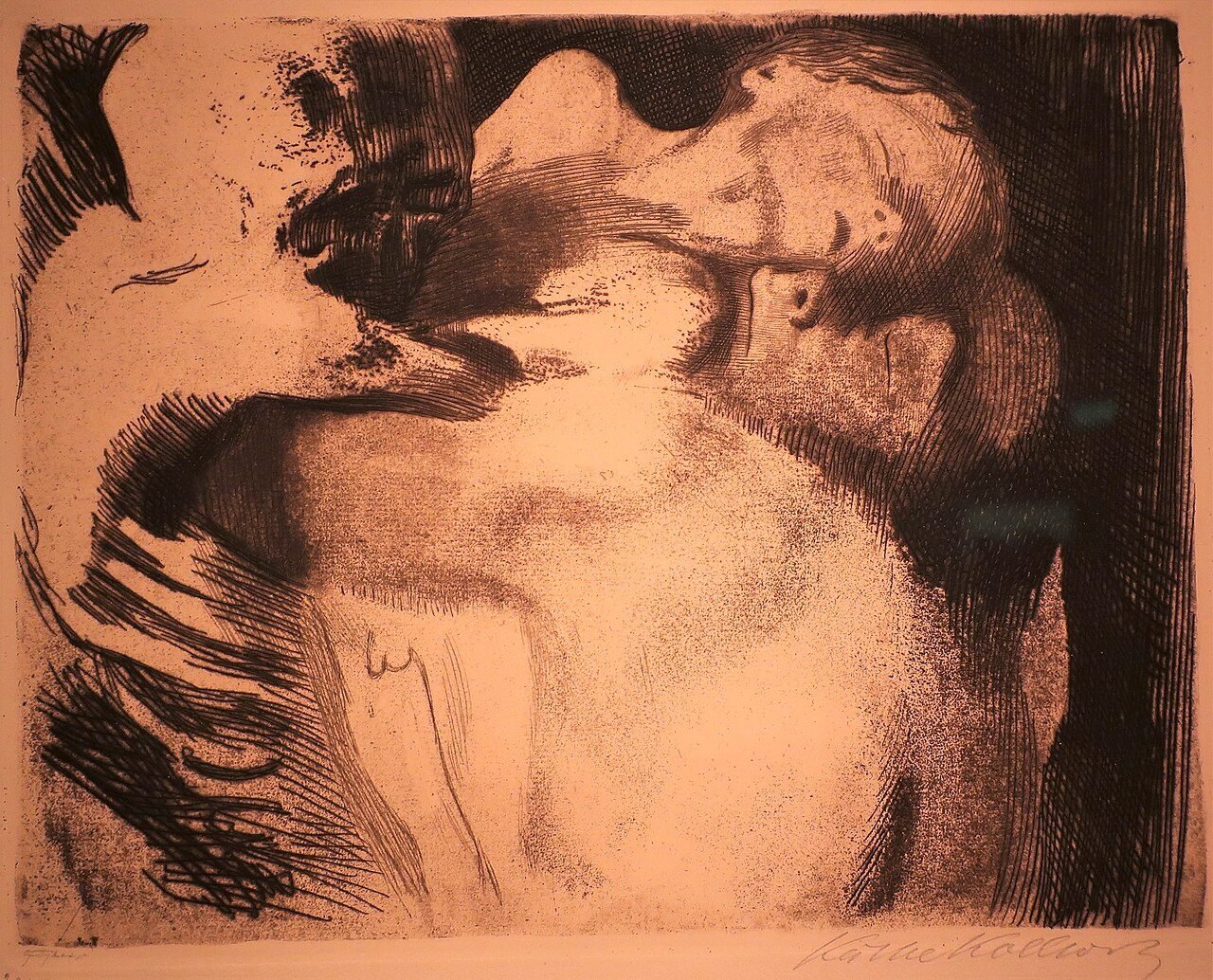
A dark lithograph printed on salmon-coloured paper: a mother bends over sleeping children, their heads together under a blanket.
Käthe Kollwitz, “Städtisches Obdach” (Municipal shelter), lithograph, 1926.Käthe Kollwitz, 1926. Osthaus Museum Hagen. Wikimedia Commons. Public domain.
A poster: a young person with wild hair shouts, right arm raised with two fingers lifted as if swearing an oath; the words Nie wieder Krieg are hand-lettered across the sheet.
Käthe Kollwitz, “Nie wieder Krieg” (Never again war), poster, 1924, designed for the Mitteldeutscher Jugendtag, the central German youth rally of the socialist youth in Leipzig.Käthe Kollwitz, 1924. Wikimedia Commons. Public domain.
Two grey granite figures on blocks in a green cemetery: a kneeling man with arms folded tight across his chest and, apart from him, a kneeling woman bent forward in grief.
Käthe Kollwitz’s “Die Eltern” (The parents): two kneeling granite figures she made from 1924 to 1932 for the cemetery where her son Peter lay. They stand today in the German war cemetery at Vladslo, Belgium.Bva at German Wikipedia, 2009. Wikimedia Commons. CC BY-SA 3.0.
A dark bronze of a seated mother holding her dead grown son across her lap, alone in a bare stone hall lit from an opening in the ceiling.
In the Neue Wache on Unter den Linden: an enlargement by the sculptor Harald Haacke of Kollwitz’s “Mutter mit totem Sohn” (Mother with her dead son), also known as the Pietà — not “Die Eltern”.Dguendel, 2013. Wikimedia Commons. CC BY 3.0.

The parents, and the son

Her son Peter was killed near Diksmuide in Flanders on 22/23 October 1914, aged 18. From 1924 to 1932 she worked on a memorial for the cemetery where he lay: two kneeling parents in Belgian granite, set up in 1932. They stand today in the German war cemetery at Vladslo.

The figure in Berlin’s Neue Wache is a different work: an enlargement, by the sculptor Harald Haacke, of her small “Mutter mit totem Sohn” (Mother with her dead son), also called the Pietà.

A painted portrait of a seated woman with a black bob and fringe in a green blouse and grey skirt, hands folded, in a red armchair.
Hannah Höch, painted in 1933 by the Dutch artist Chris Lebeau (1878–1945), in the years she shared with the writer Til Brugman.Chris Lebeau, 1933 (Drents Museum, Assen); photograph Derbrauni, 2025. Wikimedia Commons. CC BY 4.0.

03Heiligensee, 1939–1978

Denounced as a “cultural Bolshevik”, Hannah Höch saved Berlin Dada in a small house at the edge of the city

Höch was born in Gotha in 1889 and came to Berlin at 22 to study at the School of Decorative Crafts — the Academy, she wrote, was a demand she “did not even dare to formulate”. She met Raoul Hausmann in 1915, was in Dada circles with him from 1917, and cut her “Cut with the Dada Kitchen Knife” out of the Berliner Illustrirte Zeitung and other papers in 1919. They split in 1922. From 1926 she lived with the Dutch writer Til Brugman, first in The Hague, then in Berlin; they parted in 1935, the Berlinische Galerie notes, probably not just for personal reasons: under the Nazis a same-sex household was dangerous.

In 1939, denounced as a “cultural Bolshevik”, she withdrew to a little house in Heiligensee and sold flowers at the cemetery and fruit at the market. There she kept the Dada material she had saved through the dictatorship. She lived there 39 years, until her death in 1978 at 88.

“By about 1937 the radical loneliness had set in. The last of my friends had left and could not even be reached by letter. […] Everyone distrusted everyone else. So one did not talk to anybody any more. One forgot how to speak.”

Hannah Höch, quoted by the Berlinische Galerie, which holds her estate

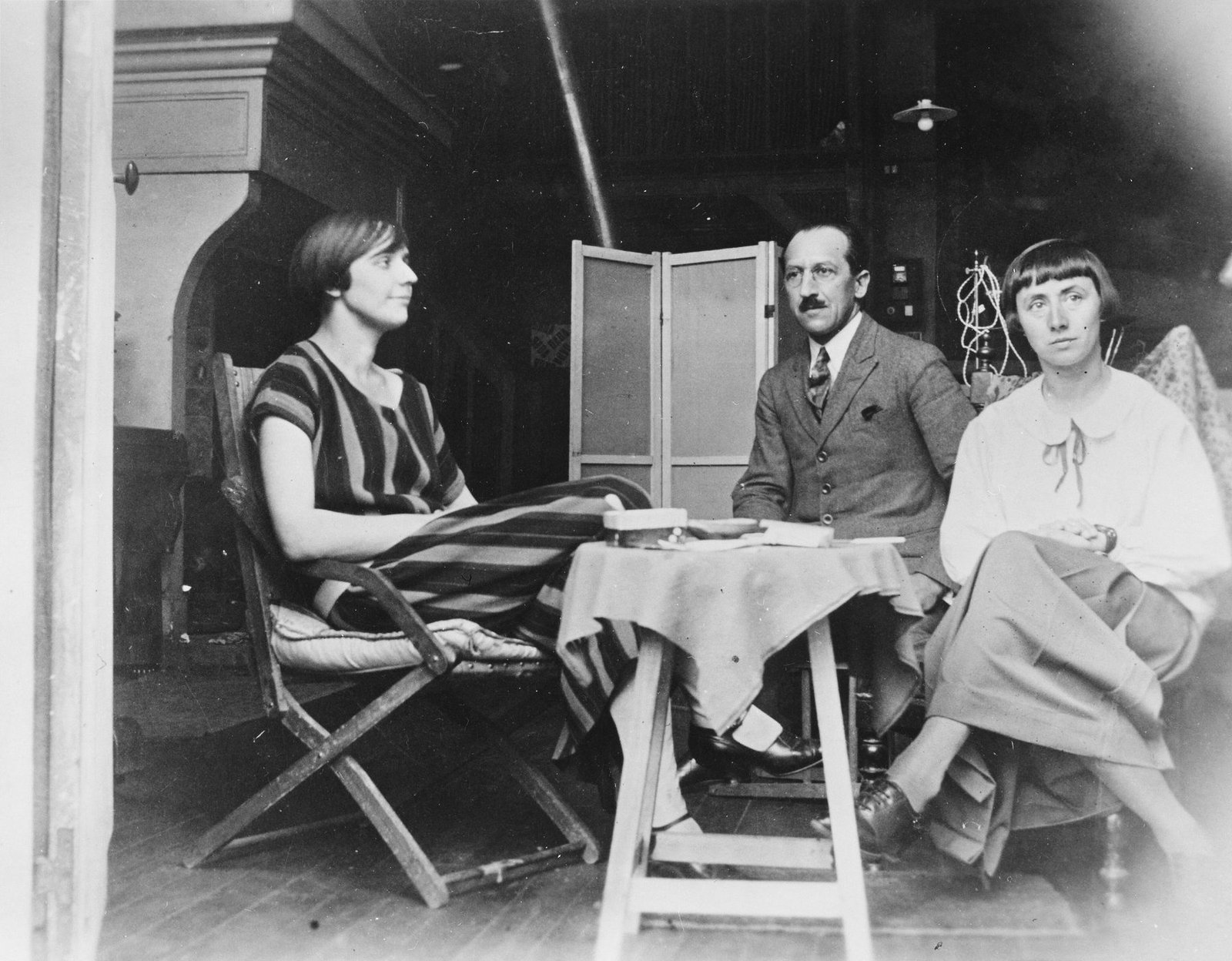
Black-and-white photograph of two women and a man sitting round a small cloth-covered table on a veranda; the woman on the right has a black bob.
Hannah Höch (right) with Nelly van Doesburg and Piet Mondrian, photographed by Theo van Doesburg at Clamart near Paris, April 1924.Theo van Doesburg, 1924. Wikimedia Commons. Public domain.
A low white house with many small-paned windows, almost hidden behind a dense, overgrown summer garden.
The small house in Heiligensee, on Berlin’s northern edge, where Hannah Höch withdrew in 1939 and lived until her death in 1978.JanManu, 2010. Wikimedia Commons. CC BY-SA 3.0.
Black-and-white photograph of a very old woman with white hair, chin on her hand, holding a magnifying glass.
Hannah Höch in 1974, four years before her death.Dietmar Bührer, 1974. Wikimedia Commons. CC BY-SA 4.0.

04Kurfürstendamm 29, 1920–1976

Jeanne Mammen drew Weimar’s bars and dance halls, then painted in secret through the dictatorship, in one Kurfürstendamm studio for 56 years

Born in Berlin in 1890, Mammen grew up in Paris and studied there, in Brussels and in Rome. In the First World War the family, as “enemy foreigners”, lost everything and fled back to Berlin. In April 1920 she and her sister Marie Luise rented a former photographer’s studio at Kurfürstendamm 29. The plaque on the house says 1919.

The Stadtmuseum calls her the reporter of Berlin’s wild twenties: cafés and clubs, dance halls and drag bars. After her first solo show at the Galerie Gurlitt in 1930, the Nazi takeover closed most of the magazines she drew for, and she turned, pointedly, to abstract painting the regime called degenerate, working in seclusion and living on odd jobs. She stayed in the studio until her death on 22 April 1976; it has been kept almost unchanged and is run by the Stadtmuseum since 2018.

A white porcelain plaque headed Berliner Gedenktafel, with blue lettering naming Jeanne Mammen, 21.11.1890 – 22.4.1976.
The Berlin memorial plaque at Kurfürstendamm 29: Jeanne Mammen “lived and worked here, on the fourth floor of the rear building, in her studio from 1919 to 1976”. The Stadtmuseum, which now runs the studio, dates the lease to April 1920.OTFW, Berlin, 2009. Wikimedia Commons. CC BY-SA 3.0.
A black-and-white street view of a broad boulevard with café awnings, pedestrians and a few cars.
The Kurfürstendamm in March 1934, a year after the Nazi takeover: Mammen’s street, where she lived through the dictatorship and the war.Willy Pragher, 1934. Wikimedia Commons. CC BY 3.0.

Years at one Berlin address

05Wilmersdorf and Steglitz, 1933–1943

Lotte Laserstein got out to Sweden in 1937. She could not get her mother out

Laserstein studied at the Berlin academy under Erich Wolfsfeld from 1921 to 1927, the last two years in his master class, and in 1927 opened her own studio and painting school. Her largest work, “Abend über Potsdam” (1930), measures 110 × 205.5 cm; the Nationalgalerie bought it in 2010.

In 1933, because of her Jewish ancestry, the Nazis labelled her a “three-quarter Jew” and pushed her out of public art life. In 1935 her school was closed and she was forbidden to exhibit, to sell or to buy paint. She emigrated to Sweden in 1937 and lived there until her death in Kalmar in 1993.

Despite every effort she could not get Swedish residence permits for her mother and her sister. Her mother, Meta Laserstein, was arrested in Berlin on 29 July 1942 after refusing to say where her daughter Käte was hiding; she was deported to Ravensbrück on 23 December 1942 and murdered there in January 1943. Käte survived in hiding in Berlin.

A white porcelain plaque on a brick wall headed Berliner Gedenktafel, naming Lotte Laserstein, 28.11.1898 – 21.1.1993.
The Berlin memorial plaque for Lotte Laserstein at Jenaer Straße 3, Wilmersdorf, where she lived and worked from 1935 to 1937.OTFW, Berlin, 2020. Wikimedia Commons. CC BY-SA 3.0.
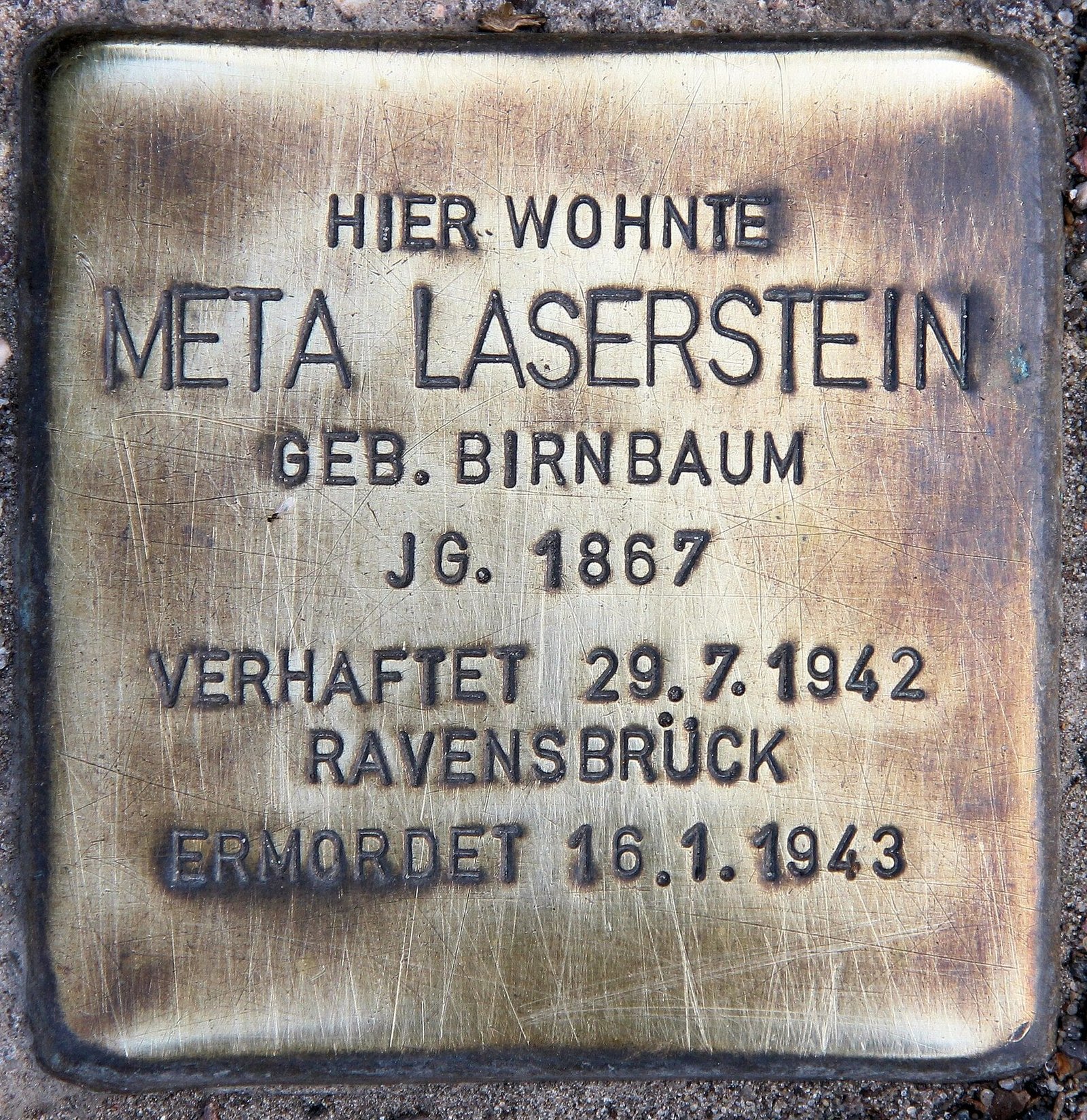
A small square brass plate set in the pavement, engraved: Hier wohnte Meta Laserstein, geb. Birnbaum, Jg. 1867, verhaftet 29.7.1942, Ravensbrück, ermordet 16.1.1943.
The Stolperstein for Lotte Laserstein’s mother at Immenweg 7, Steglitz: “Here lived Meta Laserstein, née Birnbaum, born 1867, arrested 29.7.1942, Ravensbrück, murdered 16.1.1943.”OTFW, Berlin, 2010. Wikimedia Commons. CC BY-SA 3.0.

The Stolperstein outside her mother’s last home gives the date of death as 16 January 1943. The painting “Abend über Potsdam” cannot be shown here: Laserstein’s work stays in copyright until the end of 2063.

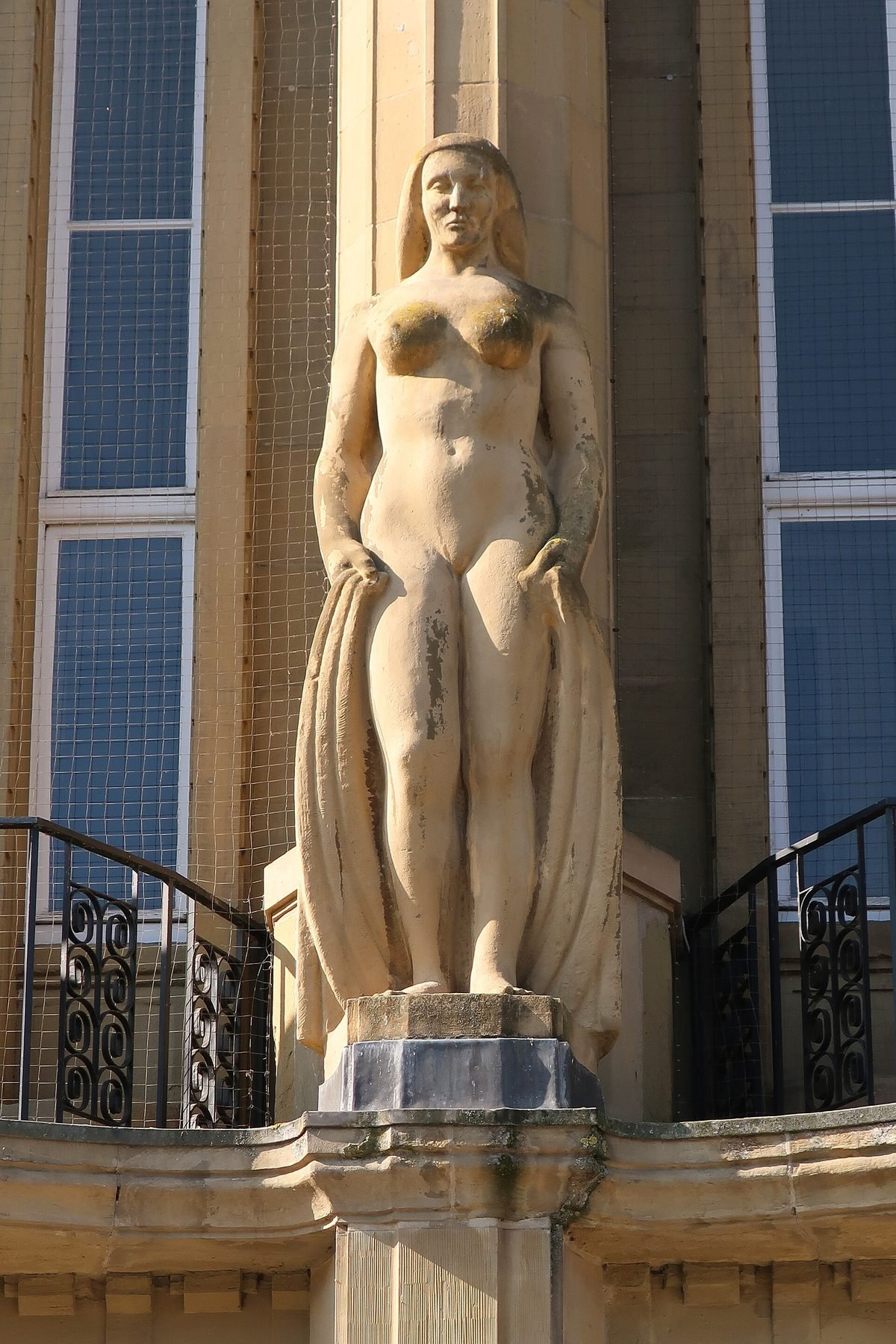
A tall pale sandstone statue of a standing nude woman, a cloth hanging at her side, set against the columns and windows of a theatre façade.
One of Milly Steger’s four larger-than-life sandstone figures on the façade of the theatre in Hagen, 1911 — the nudes that were rejected for their nakedness.Aquamunda, 2025. Wikimedia Commons. CC BY 4.0.

06Hagen and Berlin, 1911–1943

The academies would not teach Milly Steger. She carved four stone nudes for a theatre, and they were rejected for their nakedness

Born in Rheinberg on the Lower Rhine in 1881, Steger was taught privately by the sculptor Karl Janssen, because women were not yet allowed to study at the academy. Karl Ernst Osthaus brought her to Hagen in 1910. Her first big commission there, four larger-than-life stone figures for the façade of the theatre, caused a scandal in 1911: they were rejected because they were nude. The row made her known far beyond Hagen.

She moved to Berlin for good in 1917. In 1919 her plea for admitting women to the art academies was published. From 1927 to 1942 she taught sculpture and life drawing at the school of the Verein der Künstlerinnen, and from 1932 she worked in Georg Kolbe’s former studio — the sculptor she liked to call her teacher, though she never studied with him.

In 1937, in the campaign against “degenerate art”, some of her works were removed from museums; she was able to go on working, mostly on private commissions. In November 1943 bombs destroyed her studio and with it much of her work. She died in Berlin in 1948.

The stone front of a theatre with three tall windows and three bronze doors; four standing female statues stand between the windows above the balconies.
The four figures above the entrance of the theatre in Hagen today.Klaus Bärwinkel, 2019. Wikimedia Commons. CC BY-SA 4.0.
Black-and-white photograph of a woman in a white shirt gazing up at a small standing figure of a nude she holds on a draped pedestal.
Milly Steger with one of her figures, photographed by Atelier Binder for the magazine Die Dame, 1922.Atelier Binder (Alexander Binder), 1922. Die Dame 14/1922. Wikimedia Commons. Public domain.
Black-and-white head-and-shoulders portrait of a man in his forties with a high forehead and a dark suit.
The sculptor Georg Kolbe in 1921. Steger called herself his pupil without ever having been one; from 1932 she worked in his former studio.Hugo Erfurth, 1921. Wikimedia Commons. Public domain.

07Nollendorfplatz, 1931

Eva Besnyö left Berlin before the Nazis took power. In 1942, in occupied Holland, she had to go underground

Born in Budapest in 1910, Besnyö trained with the photographer József Pécsi and left for Berlin after her examination in September 1930, aged 20. From February to July 1931 she worked as a volunteer for the press photographer Peter Weller at Nollendorfplatz 7; after the summer she opened her own studio with a darkroom at Nachodstraße 25.

In October 1932 she moved to Amsterdam: she felt threatened by National Socialism, the Berlinische Galerie writes. It followed her. After the German Journalism Decree of May 1941 she could no longer publish under her own name because she was Jewish, and late in 1942 she went underground. She survived the occupation and died in Laren in 2003, aged 93.

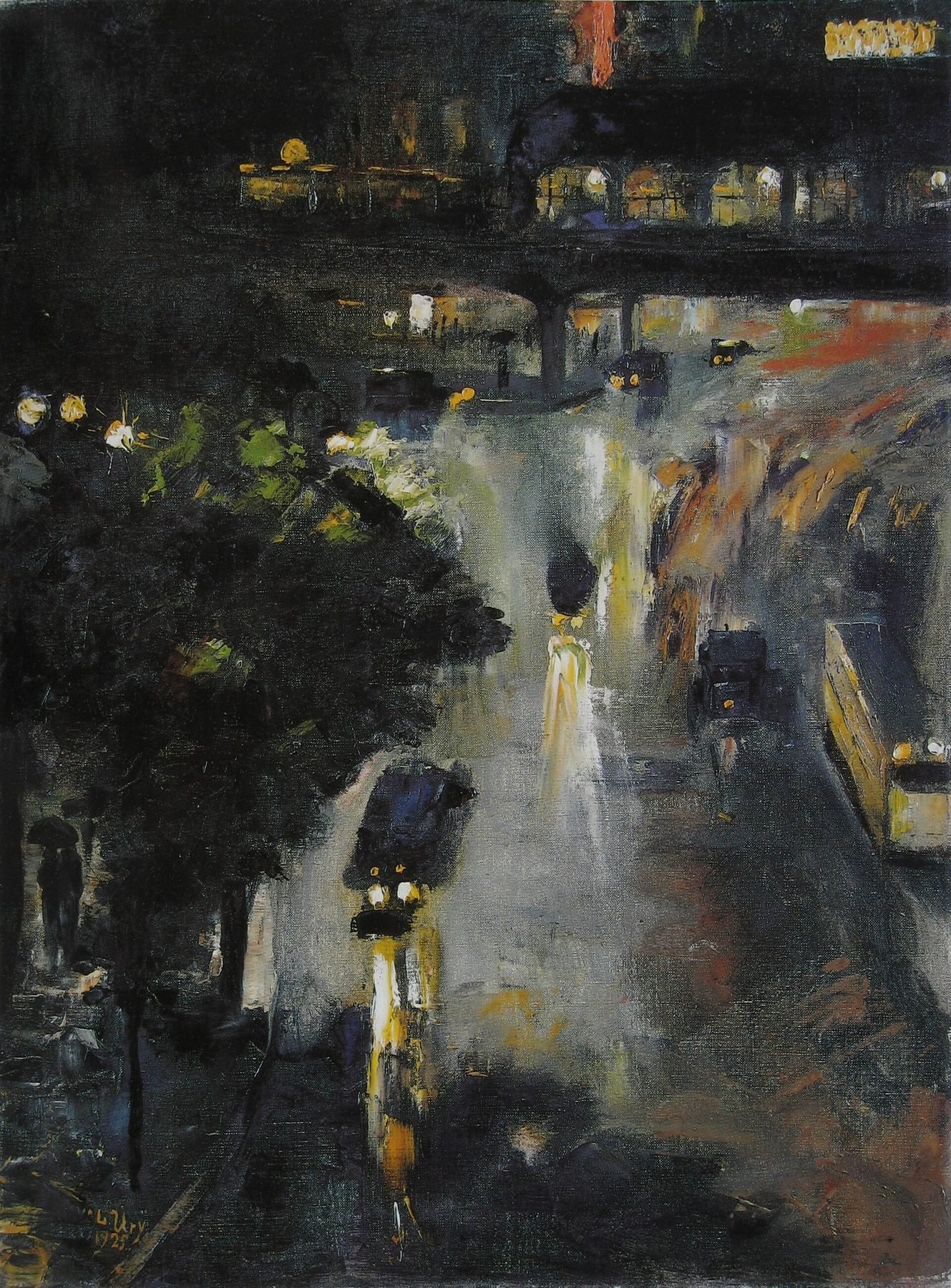
A painting of a city square at night, wet street reflecting yellow lamps, the dark arch of an elevated railway station.
Lesser Ury, “Nollendorfplatz bei Nacht” (Nollendorfplatz at night), 1925. Weller’s studio was at Nollendorfplatz 7.Lesser Ury, 1925. Wikimedia Commons. Public domain.
Black-and-white photograph from above of a young woman in a dark swimsuit lying asleep on sand, arms flung out, a bag and camera case beside her head.
Eva Besnyö on a beach, 1931, from the Berlin workshop of the press photographer Peter Weller, where she worked that spring.Workshop of Peter Weller, Berlin, 1931. Rijksmuseum, Amsterdam. Wikimedia Commons. CC0.

08Seventy years after death

Why this page can show Kollwitz’s and Steger’s work, and not one picture by the other four

German copyright lasts 70 years after the artist’s death, counted from the end of the year in which she died. Kollwitz died in 1945 and Steger in 1948: their work has been free since 2016 and 2019.

Mammen’s work will be free in 2047, Höch’s in 2049, Laserstein’s in 2064 and Besnyö’s photographs in 2074. Until then their pictures belong to their heirs, and so the portraits of Höch here are by other artists, and the frames for Mammen and Laserstein are the plaques on their houses.

From death to public domain

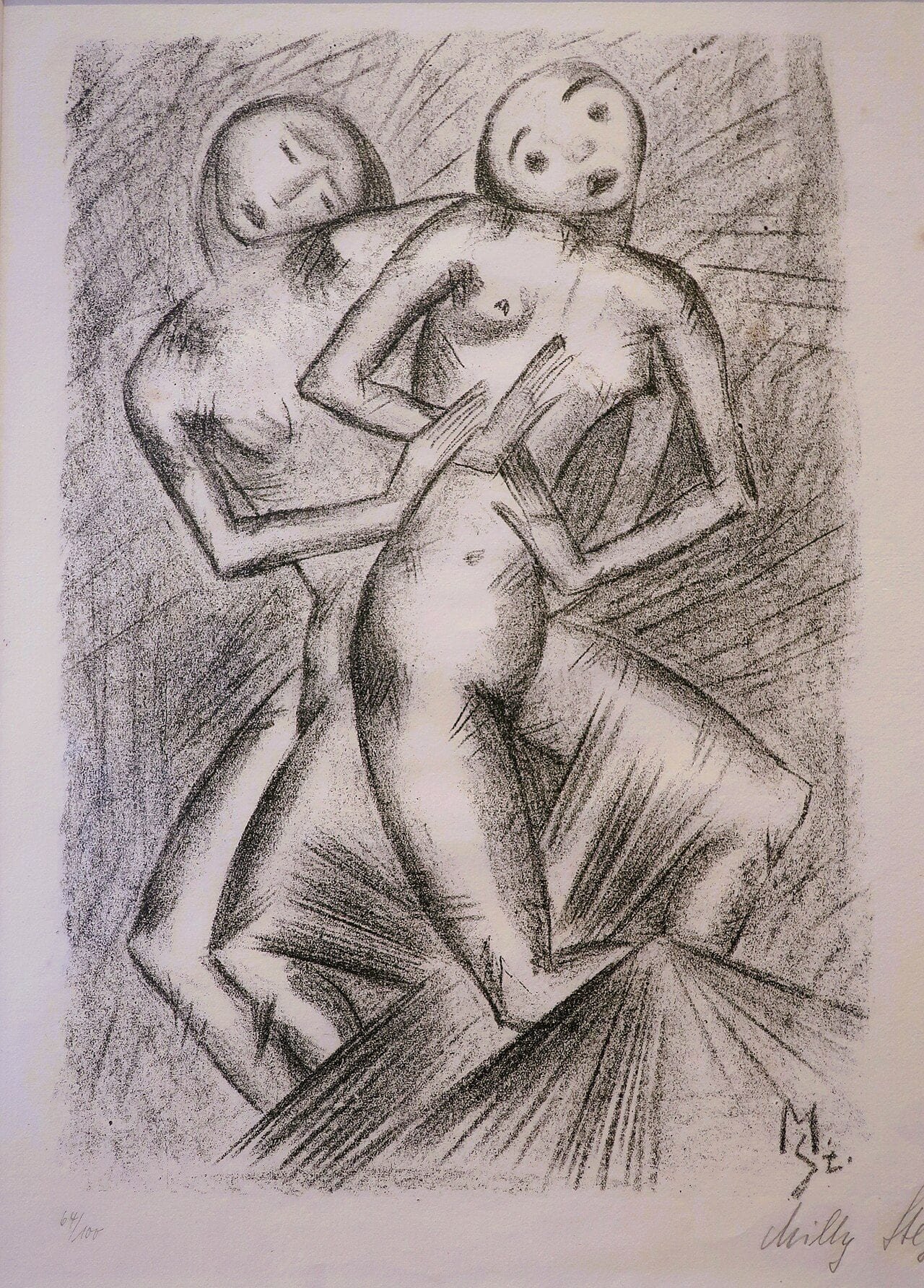
A pencil-grey lithograph of two slender nude figures dancing, their bodies twisting against each other.
Milly Steger, “Zwei Tanzende” (Two dancers), lithograph, about 1920.Milly Steger, about 1920. Osthaus Museum Hagen. Wikimedia Commons. Public domain.
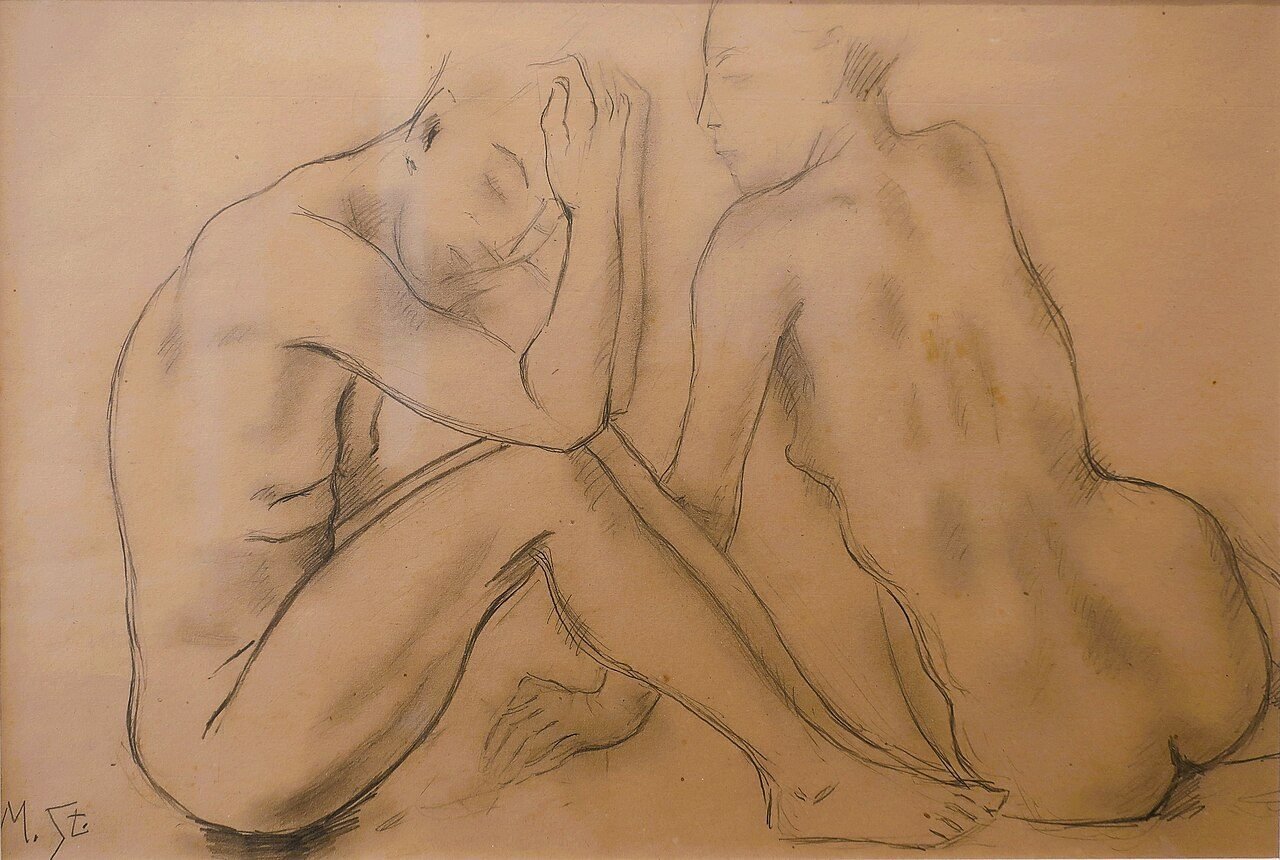
A light pencil drawing on tinted paper of two seated nude women seen from behind and the side.
Milly Steger, “Zwei weibliche Akte, sitzend” (Two seated female nudes), pencil, 1930s.Milly Steger, 1930s. Osthaus Museum Hagen. Wikimedia Commons. Public domain.
Weimar Berlin · six women

Weimar Berlin opened its academies and galleries to women. 16 days into the dictatorship, Käthe Kollwitz was out of the Academy — and in the years that followed, not one of the six was spared.

A poster: a young person with wild hair shouts, right arm raised with two fingers lifted as if swearing an oath; the words Nie wieder Krieg are hand-lettered across the sheet.
Käthe Kollwitz, “Nie wieder Krieg” (Never again war), poster, 1924, designed for the Mitteldeutscher Jugendtag, the central German youth rally of the socialist youth in Leipzig.Käthe Kollwitz, 1924. Wikimedia Commons. Public domain.

Corrected from our earlier sheet

  • The Kollwitz figure in the Neue Wache is an enlargement of her Pietà, “Mutter mit totem Sohn”; “Die Eltern” stands at Vladslo.
  • The Academy calls Kollwitz the first woman member since 1833.
  • “Nie wieder Krieg” was designed for the socialist youth rally in Leipzig.
  • Höch’s garden house is in Heiligensee, from 1939; she parted from Til Brugman in 1935 and married in 1938.
  • Mammen took the Kurfürstendamm studio in April 1920 (the plaque says 1919).
  • Laserstein was labelled a “three-quarter Jew” in 1933; her school was closed in 1935.
  • Steger was born in Rheinberg, trained with Karl Janssen, and her rejected figures were for the theatre in Hagen.
  • The portrait of Besnyö is from the workshop of Peter Weller; she died in Laren.

Press & citation

Use this Berlinfographic

Free to publish under CC BY 4.0 — in print, online, on Wikipedia and in teaching, commercially or not — with credit to Berlinfographics and a link to this page.

Six women artists of Weimar Berlin: ready-to-use landscape image

Ready-to-use image

The infographic as one image: headline, key figures, chart, sources and credit, 2,400 × 1,350 px PNG. Please use it unedited.

Download landscape (PNG)
Six women artists of Weimar Berlin: square version

Square format

A 1:1 version for social media and narrow columns, 1,800 × 1,800 px.

Download square (PNG)
Six women artists of Weimar Berlin: portrait version

Portrait 4:5

For Instagram and LinkedIn feeds, 1,620 × 2,025 px.

Download portrait (PNG)

Credit line

Berlinfographics (berlinfographics.com), CC BY 4.0

Citation

Berlinfographics (2026). “Six women artists of Weimar Berlin”. Berlin Experiences. https://berlinfographics.com/weimar-berlin-women-artists/

Wikipedia

{{cite web |title=Six women artists of Weimar Berlin |url=https://berlinfographics.com/weimar-berlin-women-artists/ |website=Berlinfographics |publisher=Berlin Experiences |date=2026-11-07 |access-date=2026-11-07}}