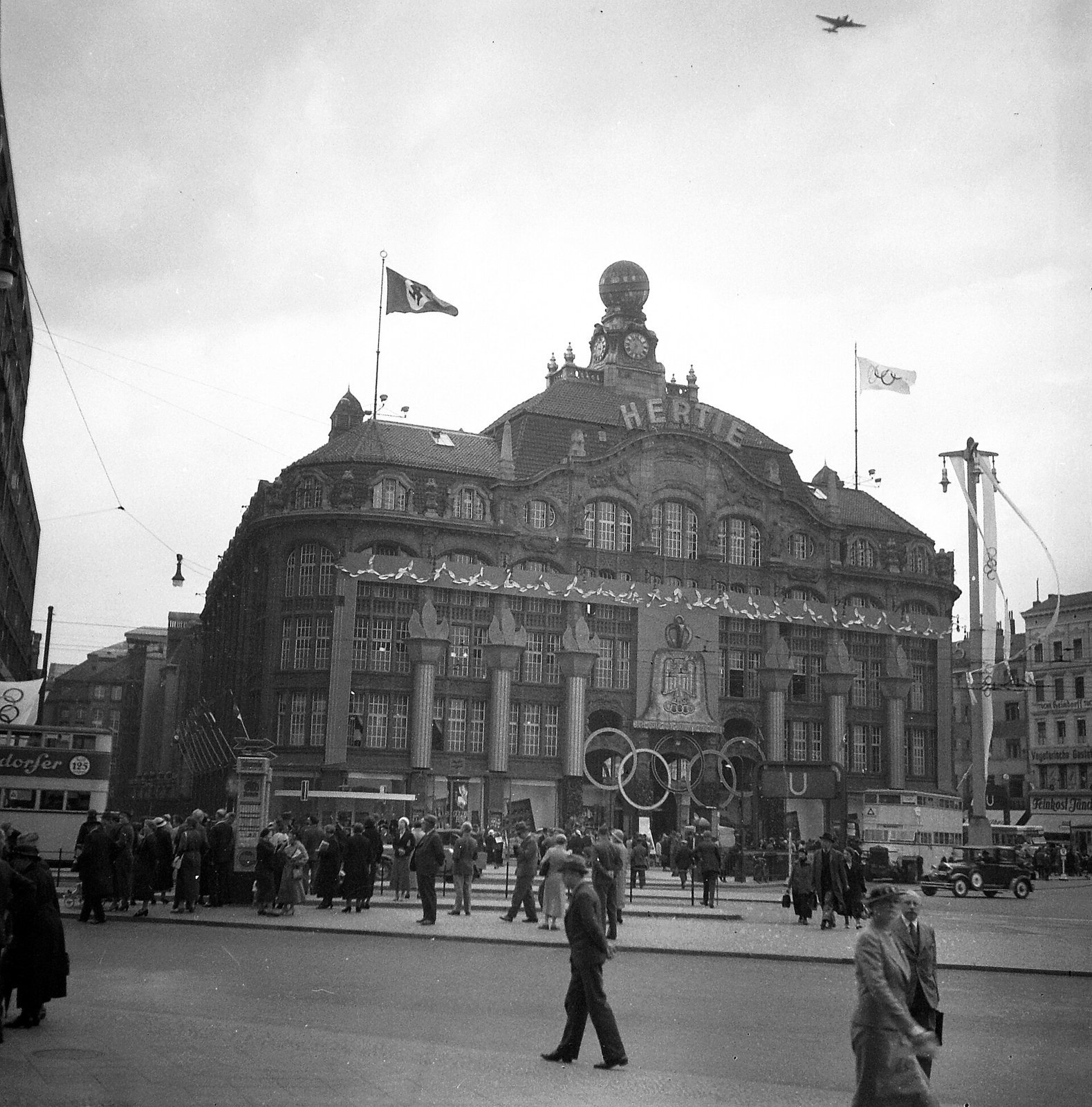
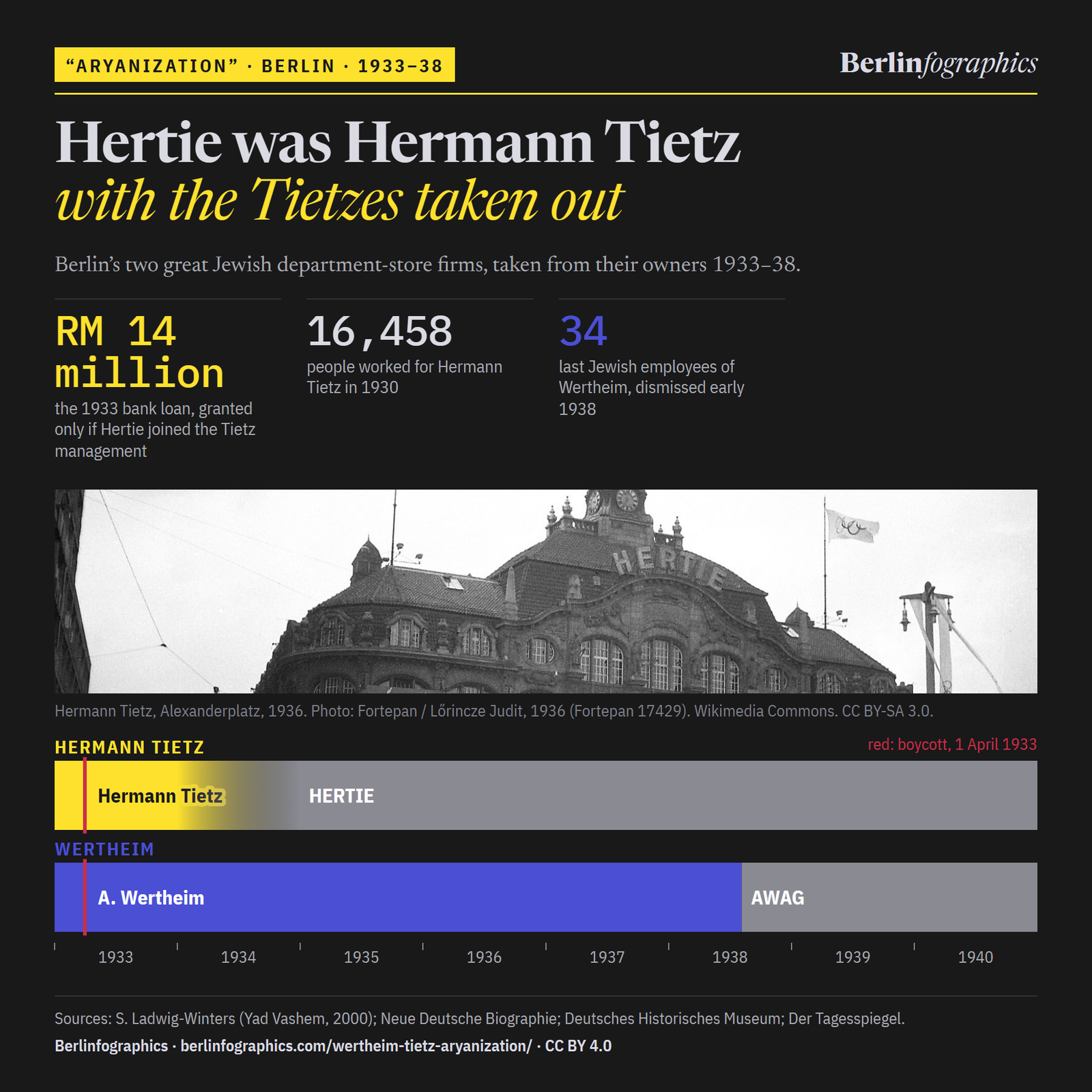
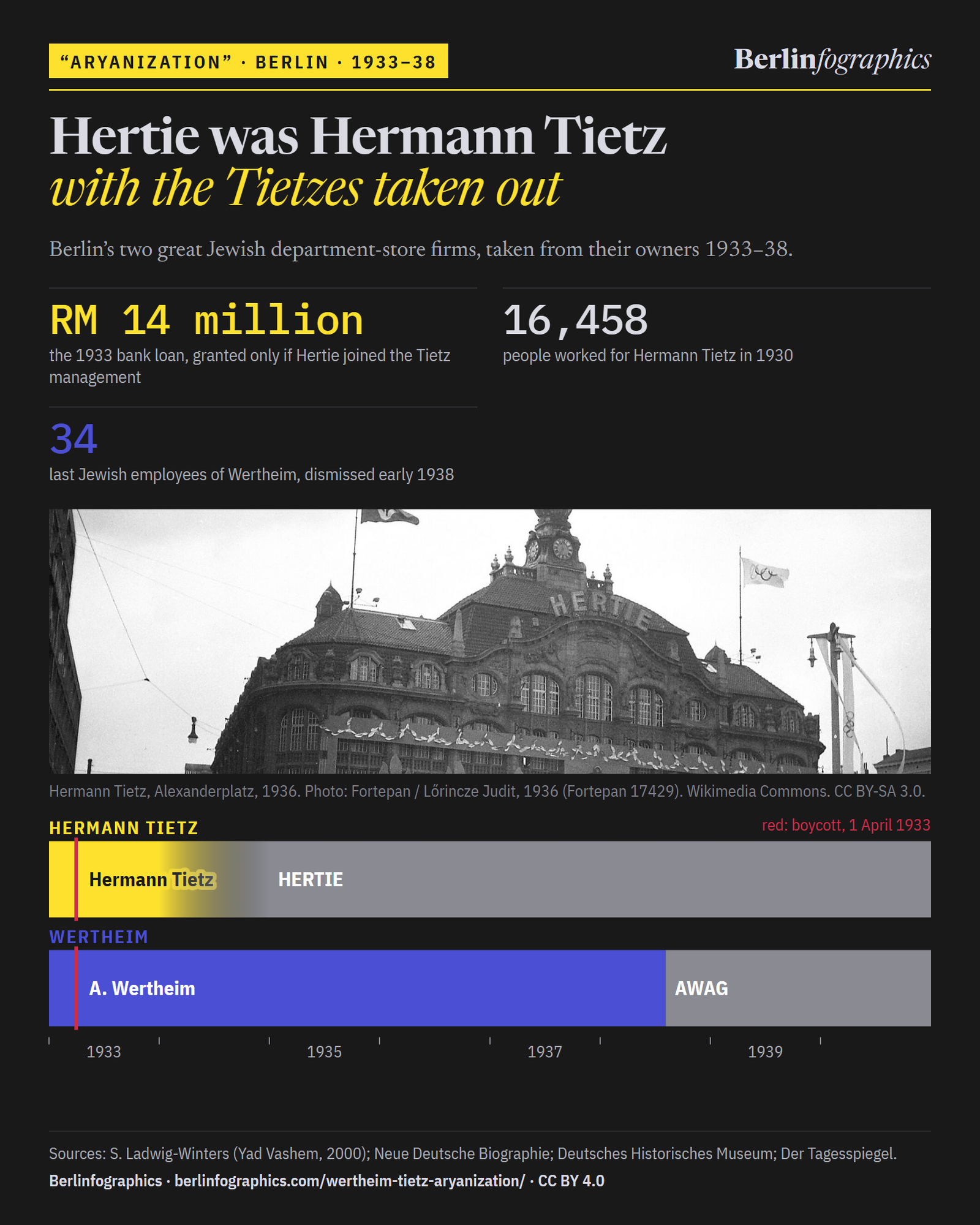
The Hermann Tietz store on Alexanderplatz in 1936, with HERTIE on its roof, decked out for the Olympic Games under a swastika flag.Photo: Fortepan / Lőrincze Judit, 1936 (Fortepan 17429). Wikimedia Commons. CC BY-SA 3.0.
“Aryanization” · Berlin · 1933–38
In 1933 Berlin’s big banks made a rescue loan to the Jewish-owned Hermann Tietz stores conditional on a new company, Hertie, joining the management. By mid-1934 the family was out; only the shortened name was left. Wertheim, the city’s other great Jewish department store, was made “German” step by step until 1938.
01Stralsund · Gera · Berlin
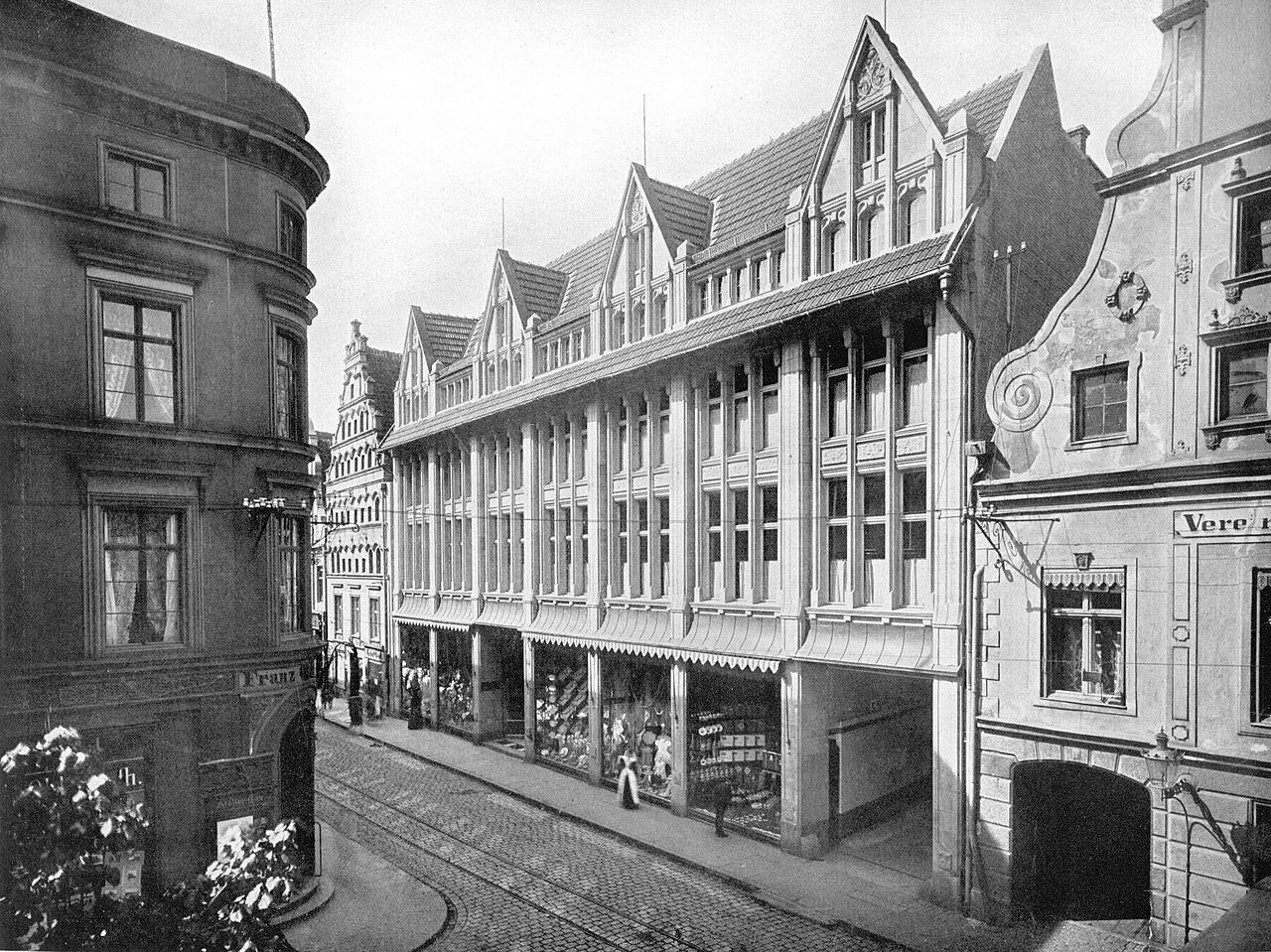
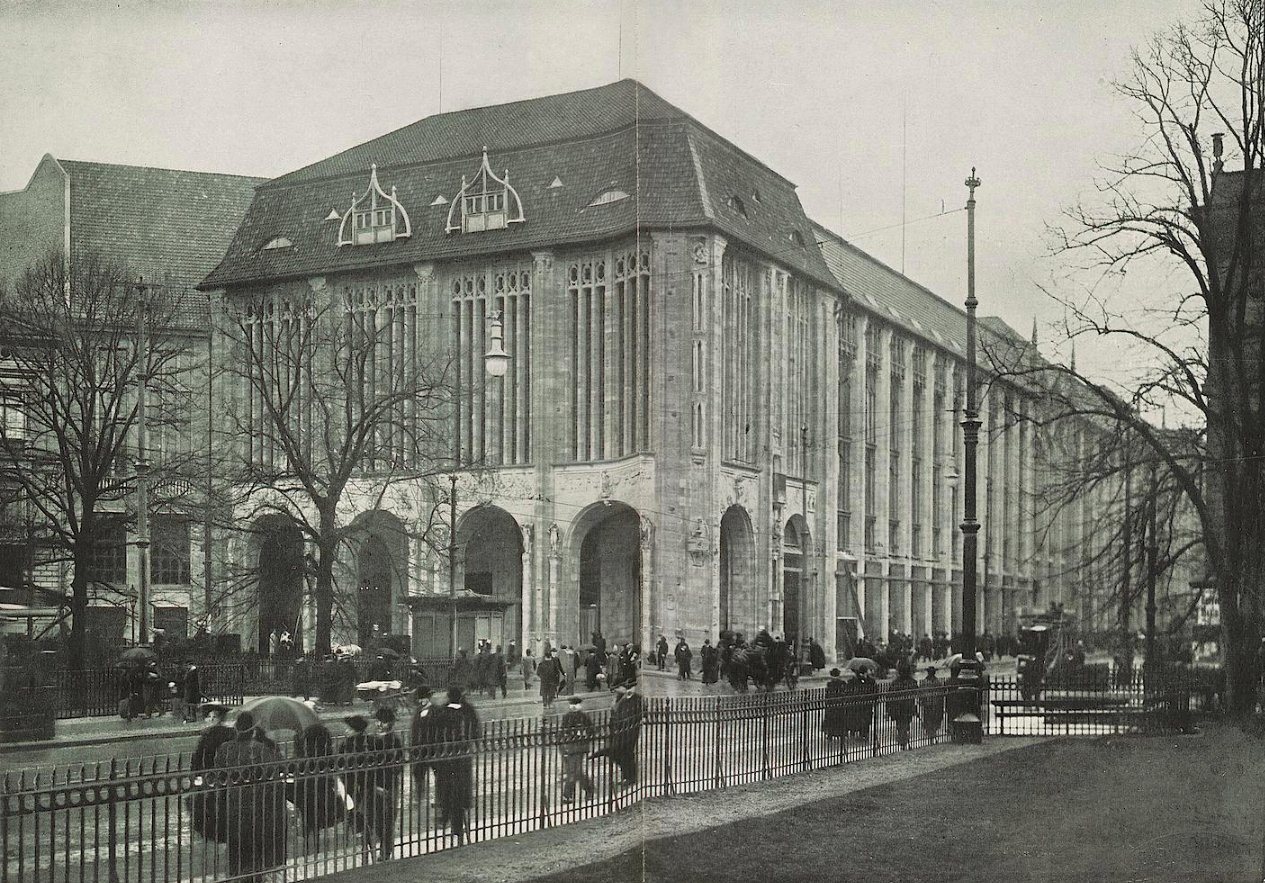
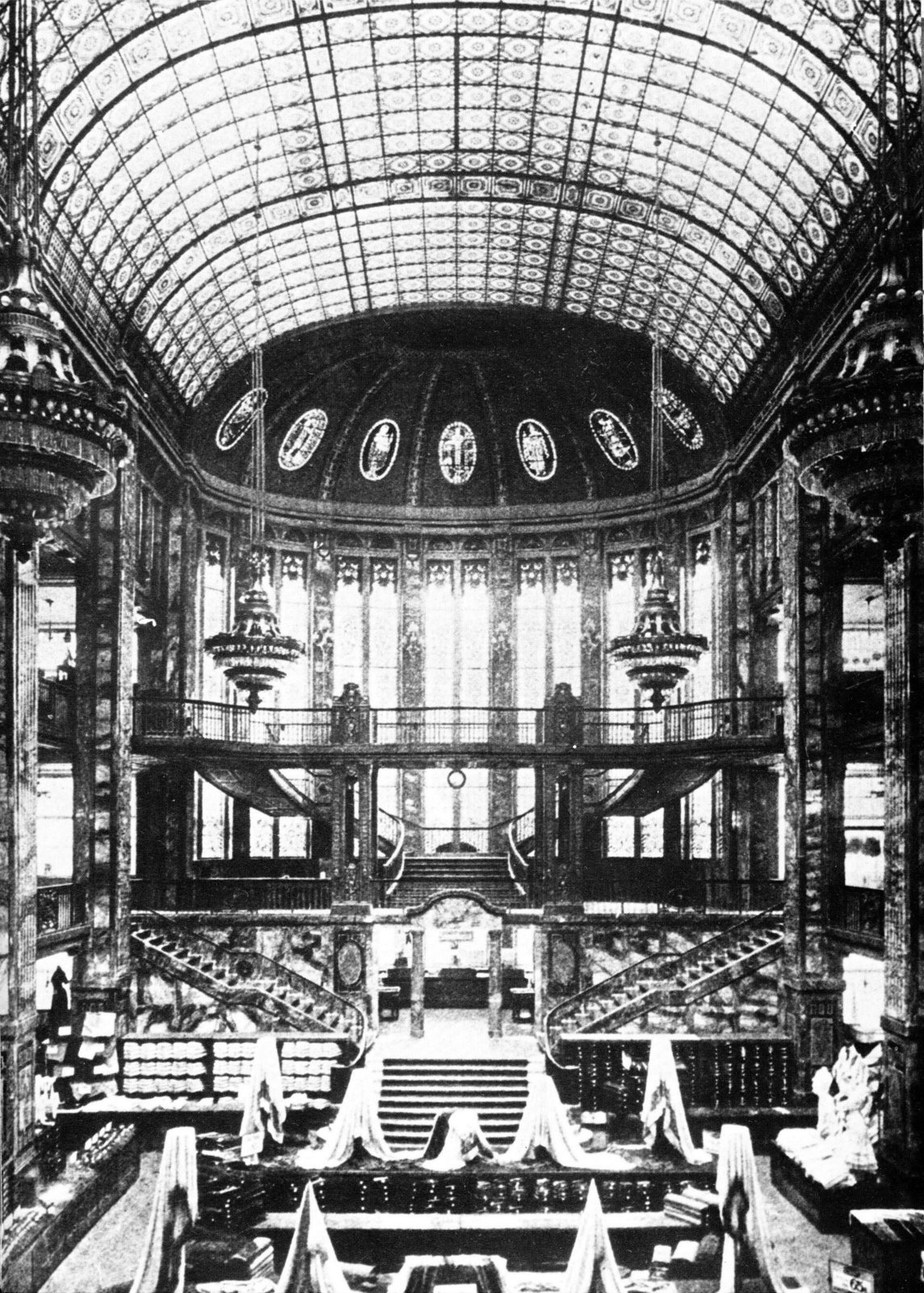
In 1875 Ida and Abraham Wertheim opened a small shop for clothes and manufactured goods in Stralsund, on the Baltic. Their sons took it to Berlin in 1885. In 1897 the first part of Alfred Messel’s store on Leipziger Straße opened; the corner building on Leipziger Platz followed in 1904. For the first decade of the century Wertheim was, in the words of its historian Simone Ladwig-Winters, “the top Warenhaus in Germany”. It was the first to give all its staff Sundays off.
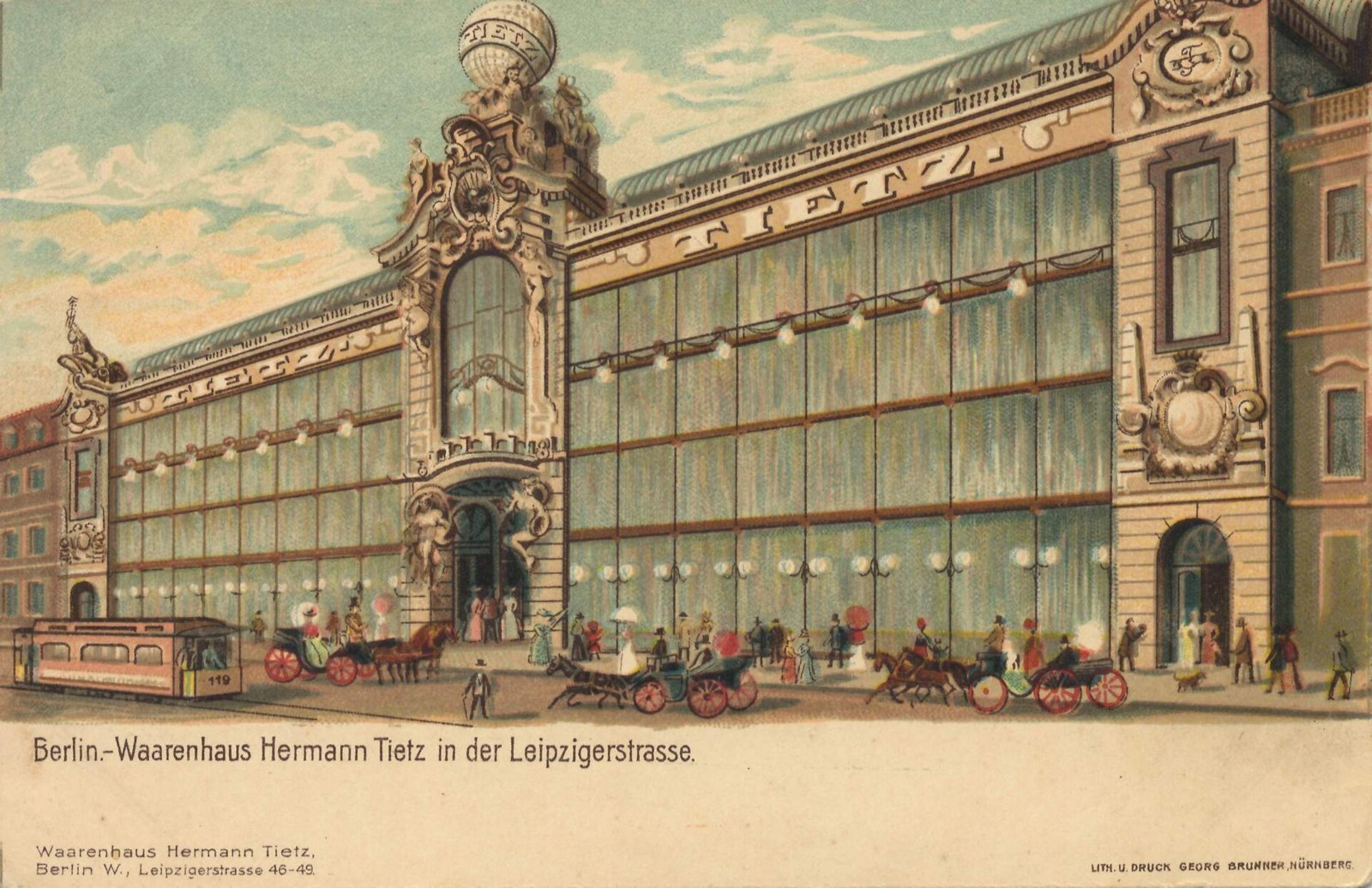
Oscar Tietz opened his first shop in Gera in 1882, and named it after the uncle who lent him the money: Hermann Tietz. The firm came to Berlin in 1900, on Leipziger Straße, and built its great store on Alexanderplatz in 1905. “Nearly all the founders of Warenhaeuser happened to be Jews,” Ladwig-Winters writes. That made the stores a target long before the Nazis came to power: a special Prussian tax on department stores was nicknamed the “lex Wertheim”.


Germany’s department-store groups, around 1930
Bars on one linear scale from zero: employees, 1930. Hermann Tietz and Wertheim together employed 26,908 people in 1930. Figures from Ladwig-Winters’s table of the groups in the late 1920s and early 1930s. The Kaufhof chain was a different Tietz firm: Leonhard Tietz of Cologne, whose head, Alfred Tietz, was forced out in April 1933, after which it was renamed Westdeutsche Kaufhof AG. Karstadt, the largest group, was not Jewish-owned; it sought an agreement with party leaders early on to escape the boycotts.
021 April 1933 – 1940
Neither firm was seized by decree. The banks that held their debts, the party and the ministries pressed from different sides, and the owners were pushed out step by step. The two stories ran side by side; the chart keeps them on one time scale.
Two firms on one time scale, 1933–40
Scroll on: the two takeovers, step by step.
1 April 1933
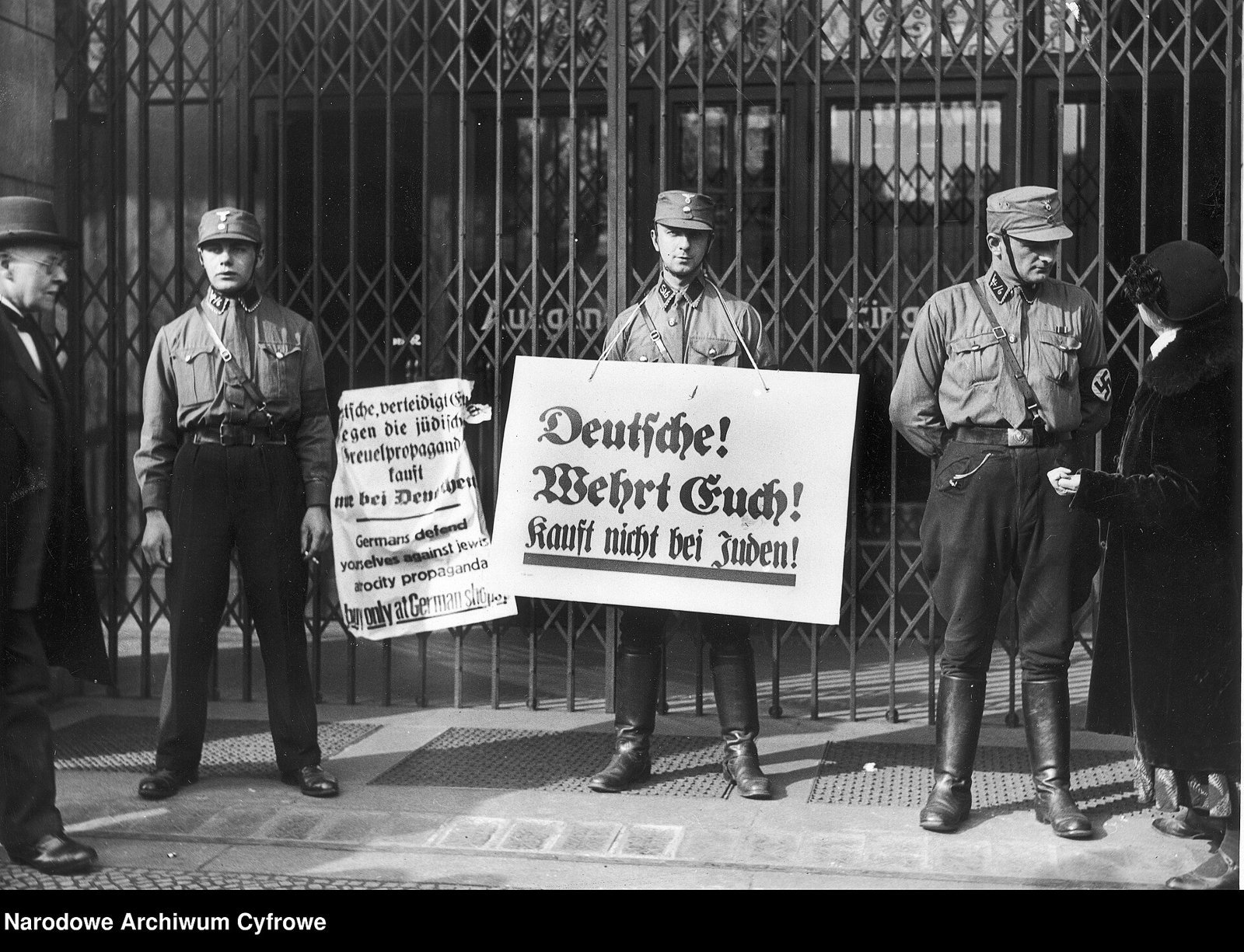
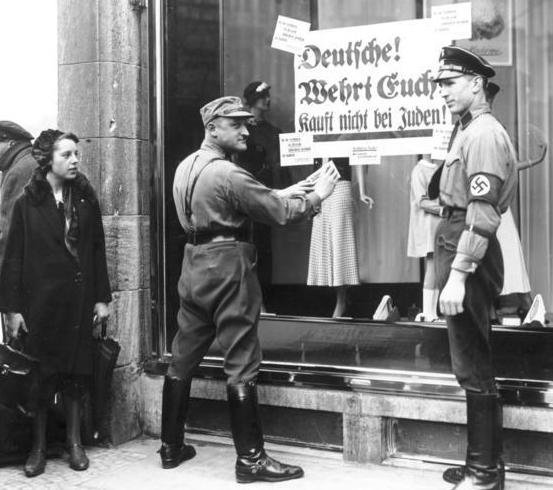
On the day of the Nazi boycott of Jewish businesses, the department stores stayed closed all day, though customers stood at the doors asking to come in. SA men held placards: “Deutsche! Wehrt Euch! Kauft nicht bei Juden!”.
24 July 1933 · 29 July 1933
Hermann Tietz needed RM 14 million more from its banks. The condition: Hertie, a new company led by Georg Karg, joins the management, with “Aryan predominance”. Karg himself could put up only RM 50,000.
mid-1934
Their partner Hugo Zwillenberg had gone at once. Georg and Martin Tietz stayed personally liable while auditors went through the group, until mid-1934, when they were forced to resign. The firm took a new name.
1934
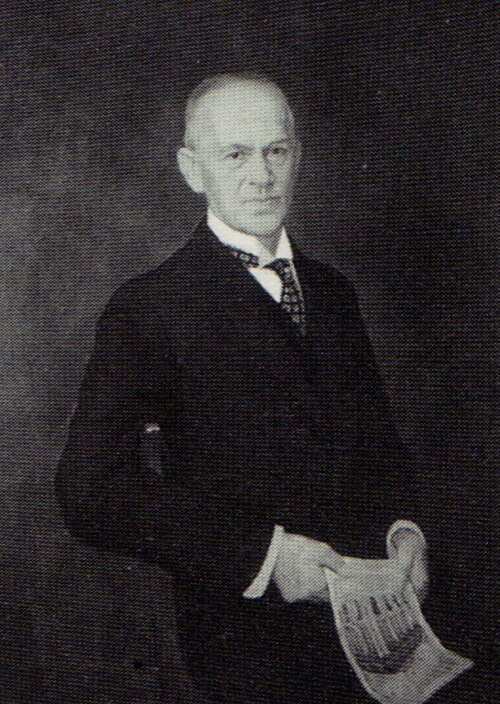
After the Tietz takeover, Georg Wertheim gave his shares to his wife Ursula, who was not counted as Jewish. He was unofficially barred from his own stores and never entered them again.
1 January 1937
On 1 January 1937 Georg Wertheim had to leave his firm. The banks made it sell land far below market value, some of it for the new Reich Chancellery.
late 1937 – early 1938
To count as “Aryanized”, Wertheim needed non-Jewish owners, non-Jewish employees and a new name. In early 1938 the last 34 Jewish employees were dismissed. 13 of them were later deported and murdered.
1938
In 1938 the last Jewish co-owners were removed and the firm became AWAG: Allgemeine Warenhandelsgesellschaft, not “A. Wertheim”, as customers believed. At the party’s demand Georg and Ursula divorced that December.
31 December 1939 · 1940
Georg Wertheim died on 31 December 1939, nearly blind, refusing to emigrate. Of his family, 3 were murdered in Auschwitz. By 1940 Karg owned Hertie outright.
03Alexanderplatz
“Hertie – das war die Abkürzung von Hermann Tietz”: Hertie was the abbreviation of Hermann Tietz. The historians Johannes Bähr and Ingo Köhler call the takeover the “largest Aryanisation in the early years of the Nazi regime”, and Georg Karg, its managing director, its main beneficiary.


What the family got for the whole group is told three ways. All three sources agree it was a small part of what the firm was worth.
Ladwig-Winters, from the Deutsche Bank files
Neue Deutsche Biographie (1977)
Deutsches Historisches Museum
The three figures measure different things, and the sources do not reconcile them, so they are not drawn as a chart.

Liquidating the firm was never an option. It would have put 14,000 jobs at risk, and the banks’ own money. So the stores stayed open, under a shortened name. By 1940 Karg owned the group outright. After the war the Tietz heirs made claims, and in 1949 the two sides reached a settlement; its terms were not published.
Ladwig-Winters: “In the case of the Hermann Tietz take over, the new owner was simply interested in enriching himself.”
04Leipziger Platz · 1933–37
Georg Wertheim had become a Christian in 1906 and married a Christian, and hoped that friends in the bank and the party could protect the firm. The shoppers stayed loyal: nothing on the shop floor seemed to have changed. But while its sales rose, the firm itself was being taken apart, share by share.
Wertheim’s sales in Berlin, in Reichsmarks
Both bars on one linear scale from zero, at the exact figures of Wertheim’s internal sales report. The report has no figure for 1934, so none is drawn.


051944 – today
The Wertheim buildings were severely damaged in an air raid in 1944 and stood as empty ruins after the war. Instead of being rebuilt, the store was pulled down in 1955–56, and when the Wall went up the square lay on the border itself.
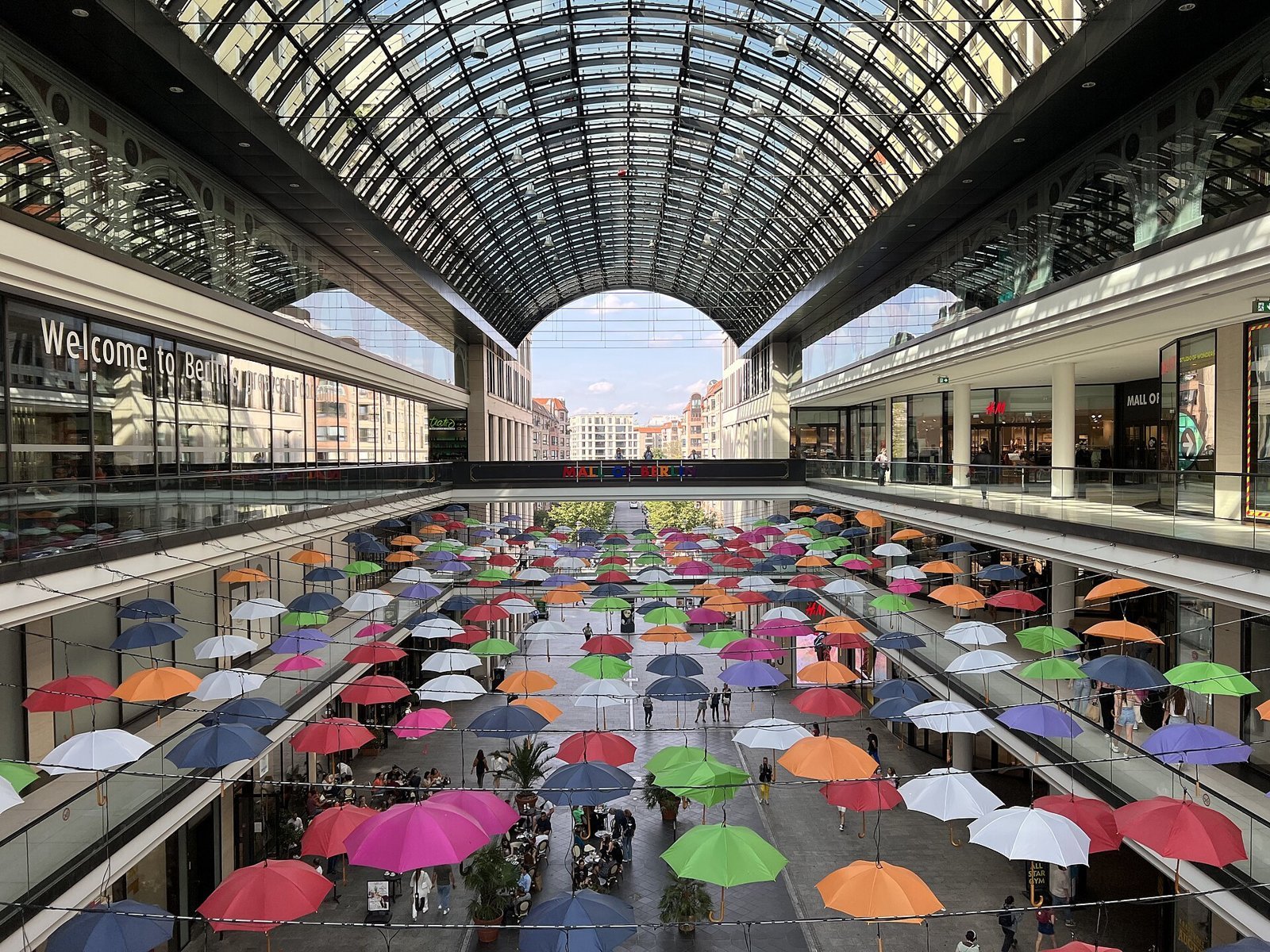
Its vaults survived underground. In March 1991 a techno club opened in them and named itself after them: Tresor, “the vault”. Today the Mall of Berlin stands where Wertheim stood.


The heirs’ claims ran for decades. In March 2007 KarstadtQuelle agreed to pay €88 million to the heirs for the Lenné triangle at Potsdamer Platz, land that had belonged to the Wertheim family.
The Hertie Foundation, heir to Karg’s fortune, founded the Hertie School in Berlin in 2003. In 2018, former students who wanted to know more about the foundation’s history set up an initiative and lobbied for research. They called it Her.Tietz.
Georg and Martin Tietz emigrated to the United States.
Their name stayed over the doors, cut down to HERTIE.
Press & citation
Free to publish under CC BY 4.0 — in print, online, on Wikipedia and in teaching, commercially or not — with credit to Berlinfographics and a link to this page.
Ready-to-use image
The infographic as one image: headline, key figures, chart, sources and credit, 2,400 × 1,350 px PNG. Please use it unedited.
Download landscape (PNG)
Square format
A 1:1 version for social media and narrow columns, 1,800 × 1,800 px.
Download square (PNG)
Portrait 4:5
For Instagram and LinkedIn feeds, 1,620 × 2,025 px.
Download portrait (PNG)Credit line
Berlinfographics (berlinfographics.com), CC BY 4.0
Citation
Berlinfographics (2026). “Hermann Tietz and Wertheim, 1933–38”. Berlin Experiences. https://berlinfographics.com/wertheim-tietz-aryanization/
Wikipedia
{{cite web |title=Hermann Tietz and Wertheim, 1933–38 |url=https://berlinfographics.com/wertheim-tietz-aryanization/ |website=Berlinfographics |publisher=Berlin Experiences |date=2026-11-09 |access-date=2026-11-09}}
Our infographics, charts and texts are licensed CC BY 4.0: free to republish, including commercially, with credit to Berlinfographics and a link. Photographs keep their own licences, named in each caption. How to credit
Topics: The Second World War · Cold War Berlin · Nazi Berlin · Persecution & the Holocaust · Weimar Berlin · Prussia & the Kaiserreich · Architecture & the built city · Culture, science & society · Reunified Berlin · Unusual facts
Contact: info@berlinfographics.com · Press: press@berlinfographics.com · Imprint · Privacy