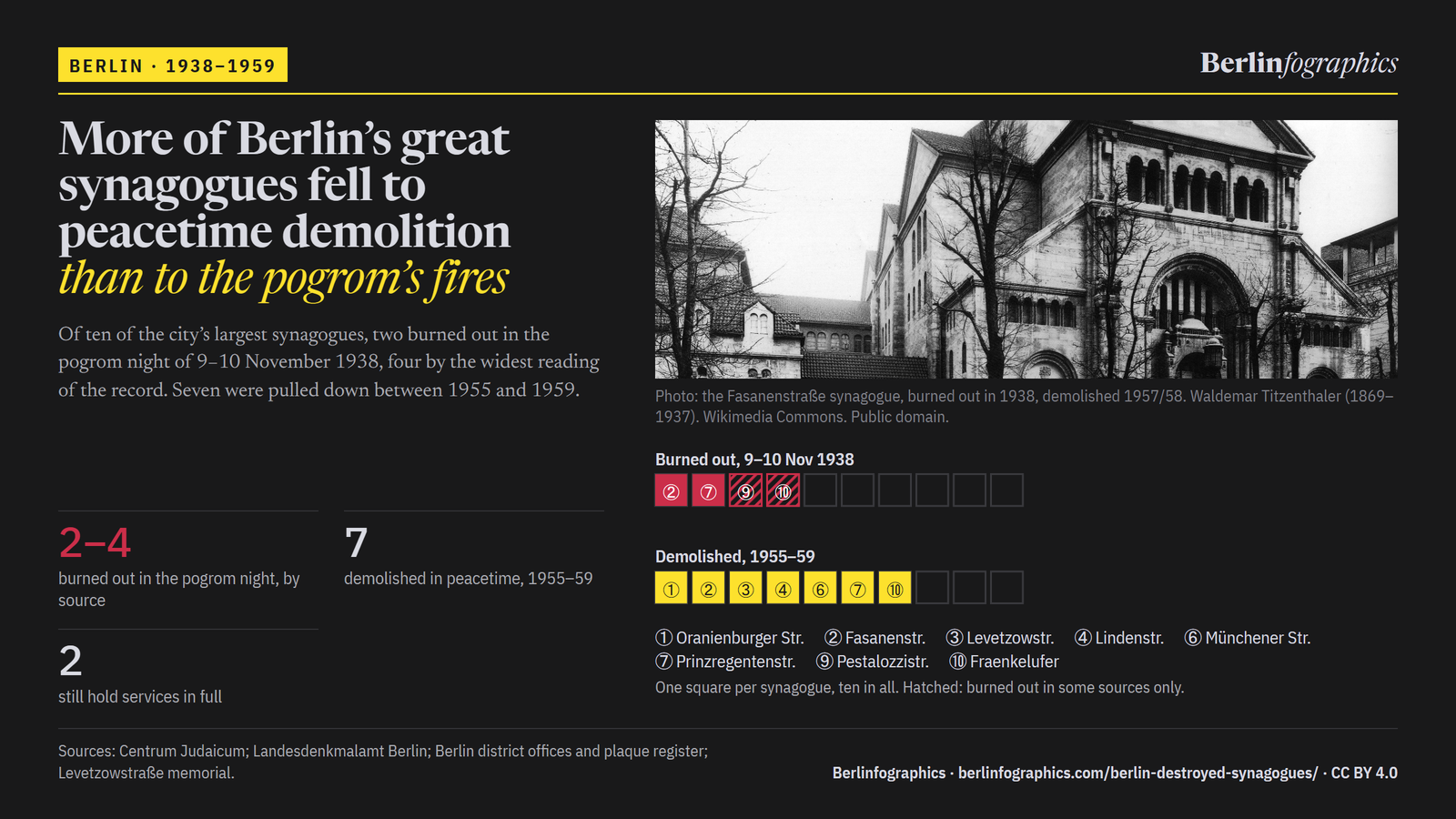
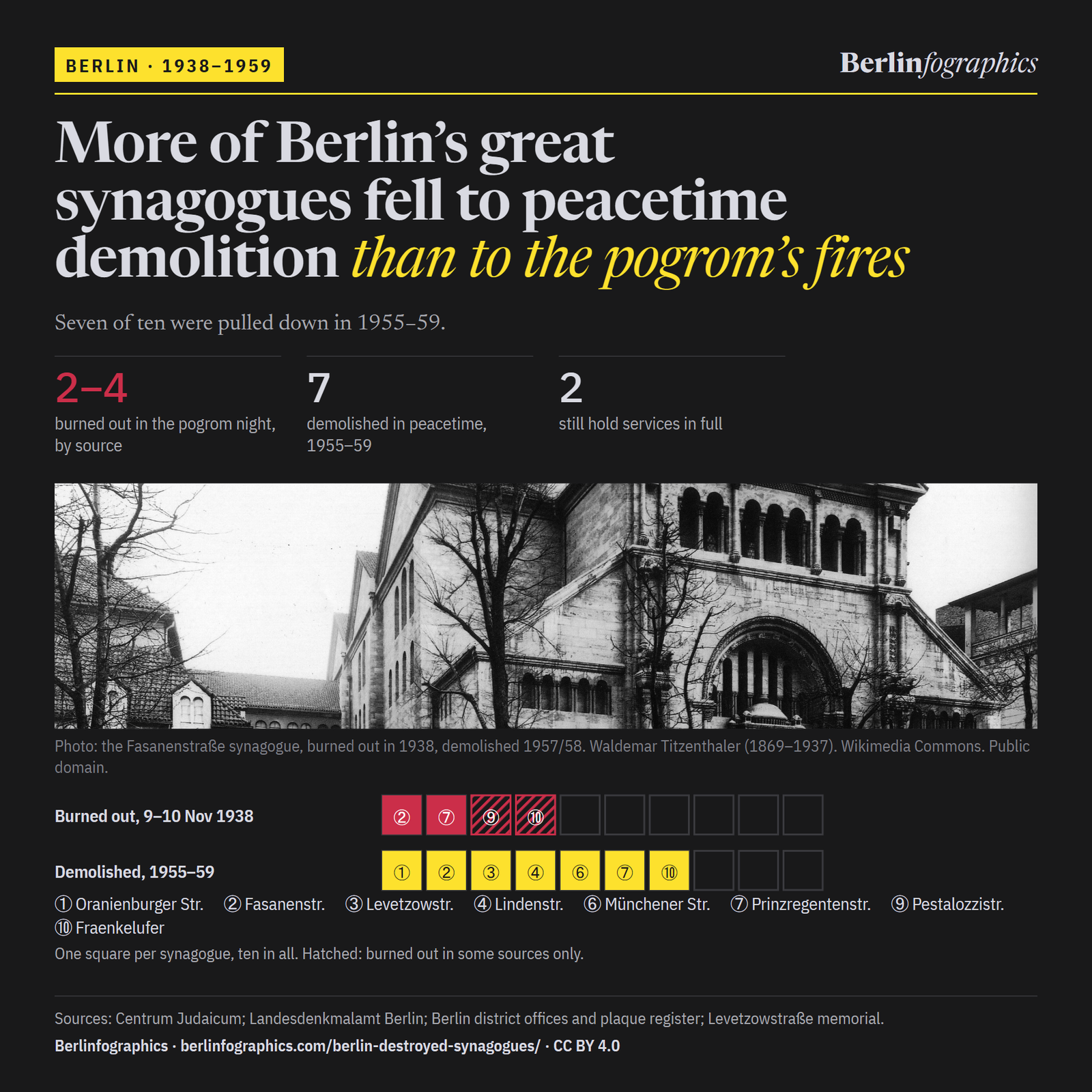
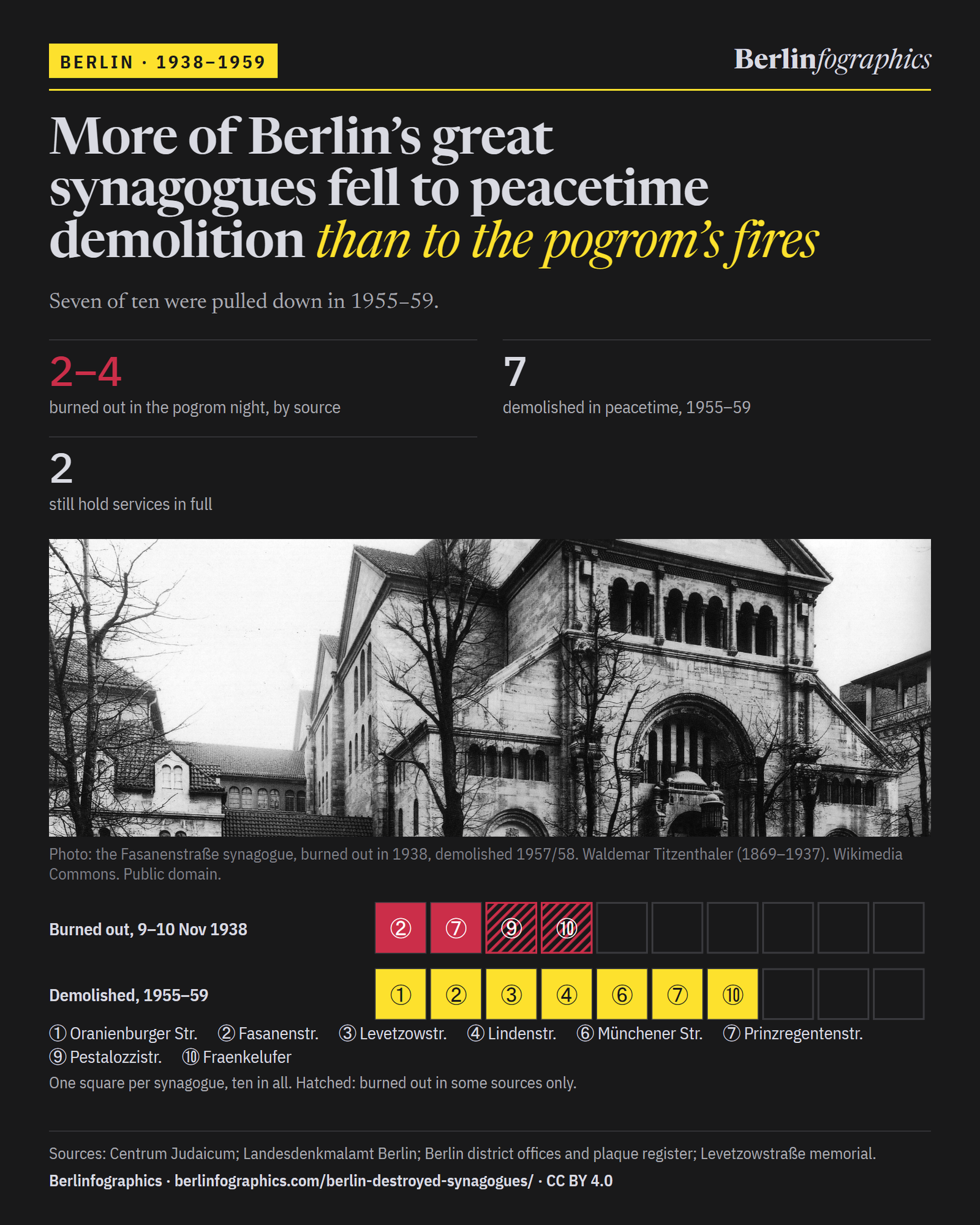
The synagogue in the Fasanenstraße, Charlottenburg, photographed by Waldemar Titzenthaler, who died in 1937. It burned out in the pogrom night of 1938; its ruin was pulled down in 1957/58.Waldemar Titzenthaler (1869–1937). Wikimedia Commons. Public domain.
Berlin’s great synagogues · 1938–1959
Of ten of the city’s largest synagogues, two burned out in the pogrom night of 9–10 November 1938, or four by the widest reading of the record. Seven were pulled down between 1955 and 1959, in a city at peace.
01Mitte · Charlottenburg · Kreuzberg · Moabit
In June 1933 about 160,000 Jews lived in Berlin. The memorial on the site of the Levetzowstraße synagogue has a floor plate for each of 34 synagogues, and the city also had 80 private prayer halls. This story follows ten of the largest synagogues, from the oldest, in the Heidereutergasse, to the newest, in the Prinzregentenstraße.
Their records come from the institutions that keep them: the Centrum Judaicum, the Landesdenkmalamt, the district offices and the plaques on the sites. Where those records disagree, this story says so and names each source.

Seats, synagogue by synagogue
One scale for all ten; each bar is drawn to the figure on record. The memorial plate gives the Neue Synagoge 3,000 seats and the Centrum Judaicum 3,200. For the Fraenkelufer the record runs from 1,700 to 2,300: about 1,700 (Landesdenkmalamt), about 2,000 (the synagogue), 2,300 (memorial plate).
021714–today
Each line below is one synagogue, from the year it opened. Scroll on, and the timeline adds what happened to each building: on the night of 9–10 November 1938, under the Nazi state, in the air war, and in the fifteen years after it.
Ten synagogues, 1860 to today
03Synagogue by synagogue
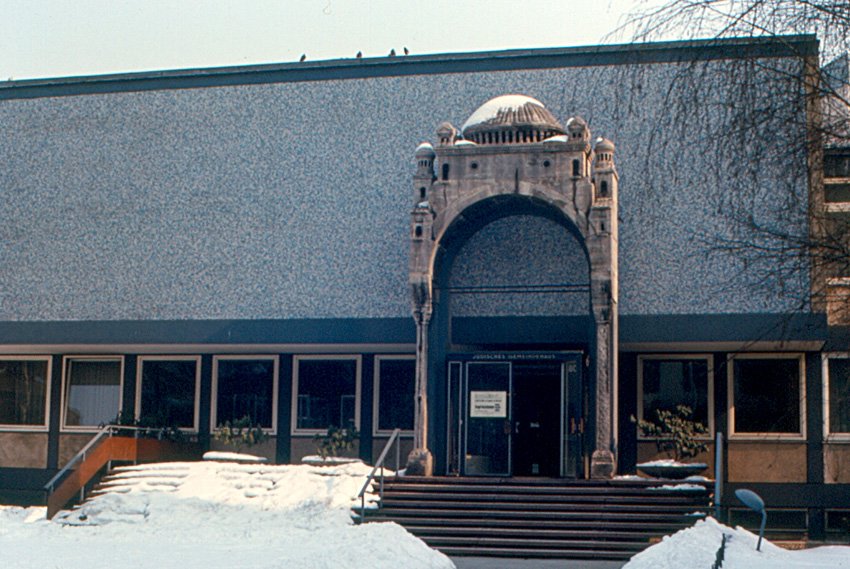
The memorial plates of 1988 call even the Fasanenstraße only “damaged” in 1938; the district office says it burned out. The Fraenkelufer plaque says the synagogue was burned down, though its main building stood until the 1950s. Each card names its sources; tap a line to see them.
049–10 November 1938 · 1955–59
Count the buildings, not the flames. The pogrom gutted two, or four by the widest reading. Bombs finished one, the Alte Synagoge. Between 1955 and 1959, seven came down: ruins of the pogrom, and buildings it had barely touched. The two that burned out on the night were among them.
Three counts on one scale: one square per synagogue
One square per synagogue; the empty outlines make up the ten. Hatched: Pestalozzistraße and Fraenkelufer, burned out according to the Landesdenkmalamt and a memorial plaque but not according to other records. Rykestraße and Pestalozzistraße were never demolished.
Why? Mostly for housing, the Centrum Judaicum says, in a city that had lost much of its housing in the war. The Jewish communities took part: at the Fraenkelufer the community itself decided to clear the main building, and at the Neue Synagoge the East Berlin community consented on condition that the street front was kept. Of about 160,000 Berlin Jews in 1933, more than 60,000 had been deported.
The Münchener Straße synagogue survived the pogrom because it stood among flats. It was demolished in 1956.


05Oranienburger Straße · Mitte
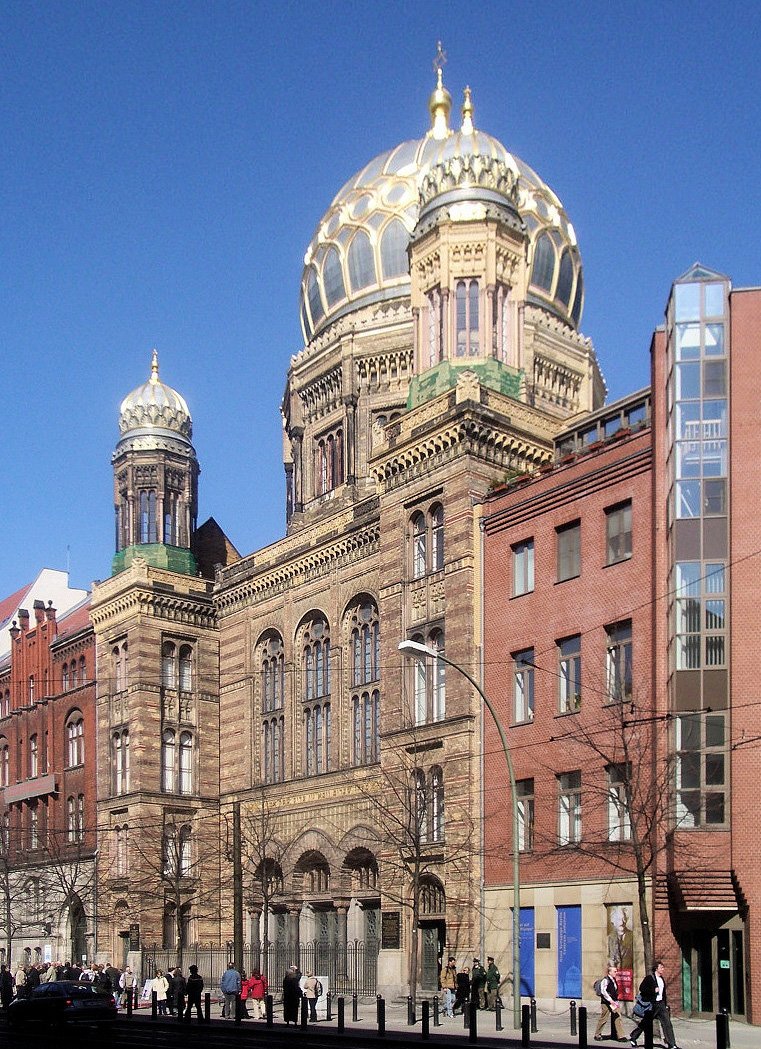
On the pogrom night fire was set inside the Neue Synagoge. Officers of the 16th police precinct, at the Hackescher Markt, stood up to the SA, pointing out that the building was a protected monument, and called the fire brigade. Their chief, Wilhelm Krützfeld, is honoured by a plaque on the building as the man who saved it. How much of the credit is his alone is contested: the memorial museum that tells the story names the officers of the precinct.
The building it saved was hit by bombs in November 1943, and its hall was blown up in 1958. The night itself, and how its orders went out, are told in the November pogrom in Berlin.


The pogrom set Berlin’s synagogues alight. Most of the buildings, or their ruins, were still standing when the war ended.
Seven of these ten were pulled down in peacetime, between 1955 and 1959.
Press & citation
Free to publish under CC BY 4.0 — in print, online, on Wikipedia and in teaching, commercially or not — with credit to Berlinfographics and a link to this page.
Ready-to-use image
The infographic as one image: headline, key figures, chart, sources and credit, 2,400 × 1,350 px PNG. Please use it unedited.
Download landscape (PNG)
Square format
A 1:1 version for social media and narrow columns, 1,800 × 1,800 px.
Download square (PNG)
Portrait 4:5
For Instagram and LinkedIn feeds, 1,620 × 2,025 px.
Download portrait (PNG)Credit line
Berlinfographics (berlinfographics.com), CC BY 4.0
Citation
Berlinfographics (2026). “Berlin’s destroyed synagogues”. Berlin Experiences. https://berlinfographics.com/berlin-destroyed-synagogues/
Wikipedia
{{cite web |title=Berlin’s destroyed synagogues |url=https://berlinfographics.com/berlin-destroyed-synagogues/ |website=Berlinfographics |publisher=Berlin Experiences |date=2026-11-09 |access-date=2026-11-09}}
Our infographics, charts and texts are licensed CC BY 4.0: free to republish, including commercially, with credit to Berlinfographics and a link. Photographs keep their own licences, named in each caption. How to credit
Topics: The Second World War · Cold War Berlin · Nazi Berlin · Persecution & the Holocaust · Weimar Berlin · Prussia & the Kaiserreich · Architecture & the built city · Culture, science & society · Reunified Berlin · Unusual facts
Contact: info@berlinfographics.com · Press: press@berlinfographics.com · Imprint · Privacy