Berlinfographicsby Berlin Experiences

Berlin technoCulture · Kreuzberg to Rummelsburg · 1988–2024

Berlin techno began in a Kreuzberg cellar in 1988. In 2024 Germany listed it as national heritage — on the same day as Saxon mountaineering

Eight rooms carry the story, from Ufo, which lasted two years, to Berghain, whose club nights Germany’s highest tax court has ruled are concerts. On 13 March 2024, 36 years after Ufo opened, “Technokultur in Berlin” joined the national register of intangible cultural heritage.

Scroll through the rooms, one year at a time

Berghain on a winter night, January 2016: the queue crosses the forecourt of the old Friedrichshain heating plant.Michael Mayer, 2016. Wikimedia Commons. CC BY 2.0.
01Eight rooms, one clock

The rooms never lasted. The scene moved from each one to the next

Every bar below covers the calendar years a club was open, as far as the record has them; a hatched year is one the sources disagree on. The bars grow as you read.

1988the clock startseight clubs · 1988 to today
A time line from 1988 to today with one bar for each of eight Berlin clubs, Ufo, Tresor, E-Werk, Ostgut, Watergate, Berghain, Renate and Sisyphos, each bar covering the calendar years the club was open. Vertical markers show the fall of the Wall in 1989 and the heritage listing in 2024. As the story moves on, the bars grow year by year and the club the text describes is lit.
open year disputed closed
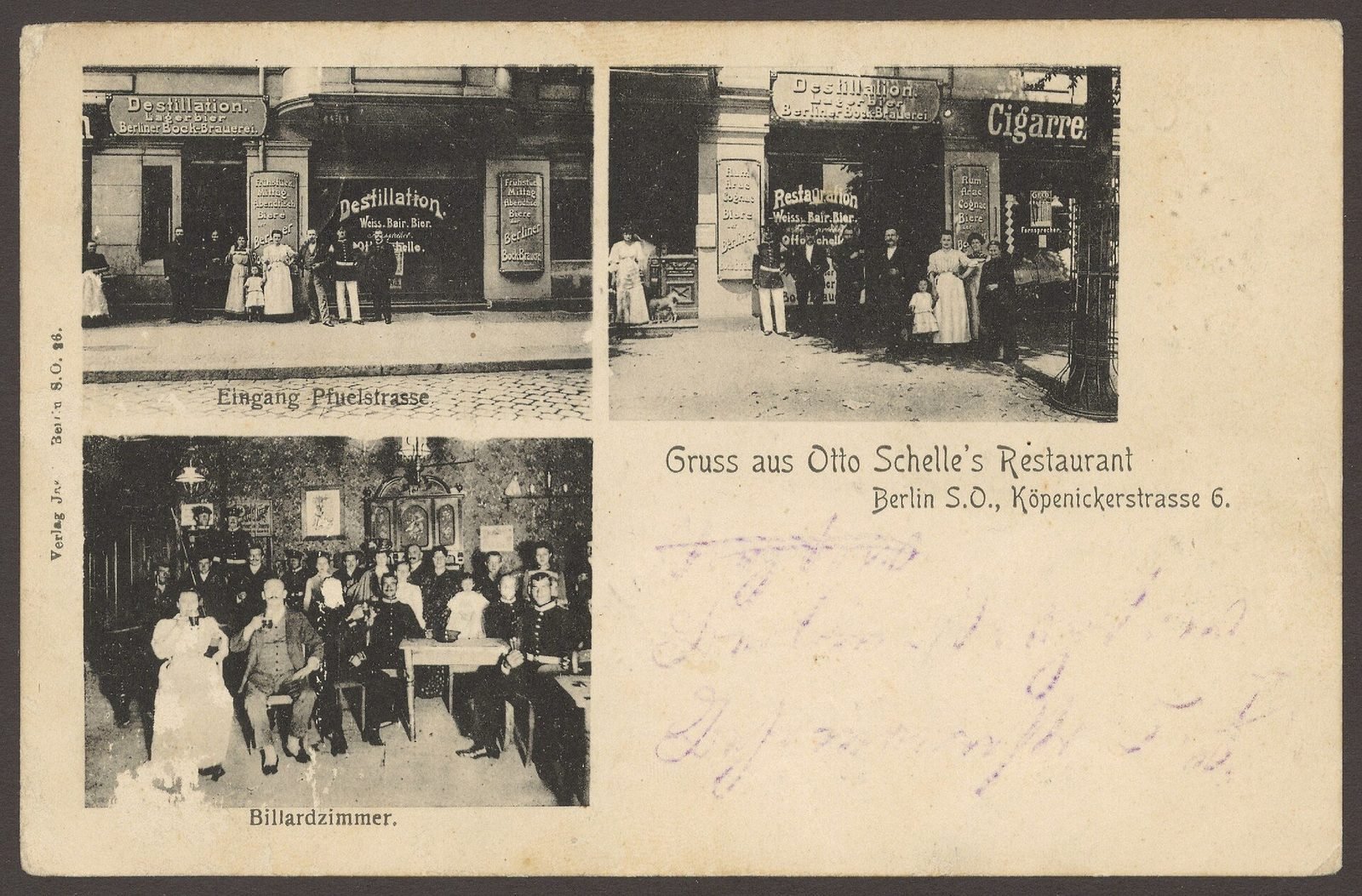
An old postcard with three photographs of a corner restaurant, its staff in the doorway and a billiard room, and a handwritten message.
Köpenicker Straße 6 on a postcard sent in 1914: the address club directories give for Ufo.Postcard, sent 1914. FHXB Friedrichshain-Kreuzberg Museum (Sammlung Peter Plewka). Public domain.

1988

Ufo opens in a basement in Kreuzberg

Ufo began in 1988 in a basement on Köpenicker Straße, reached by a ladder through a hole in the floor of a private flat. The nights were illegal.

Source: Red Bull Music Academy · Westbam, Rave The Planet

A dense crowd fills a wide boulevard lined with trees, with music floats and a large balloon among them.
The Love Parade, 11 July 1998.Ago76, 1998. Wikimedia Commons. Public domain.
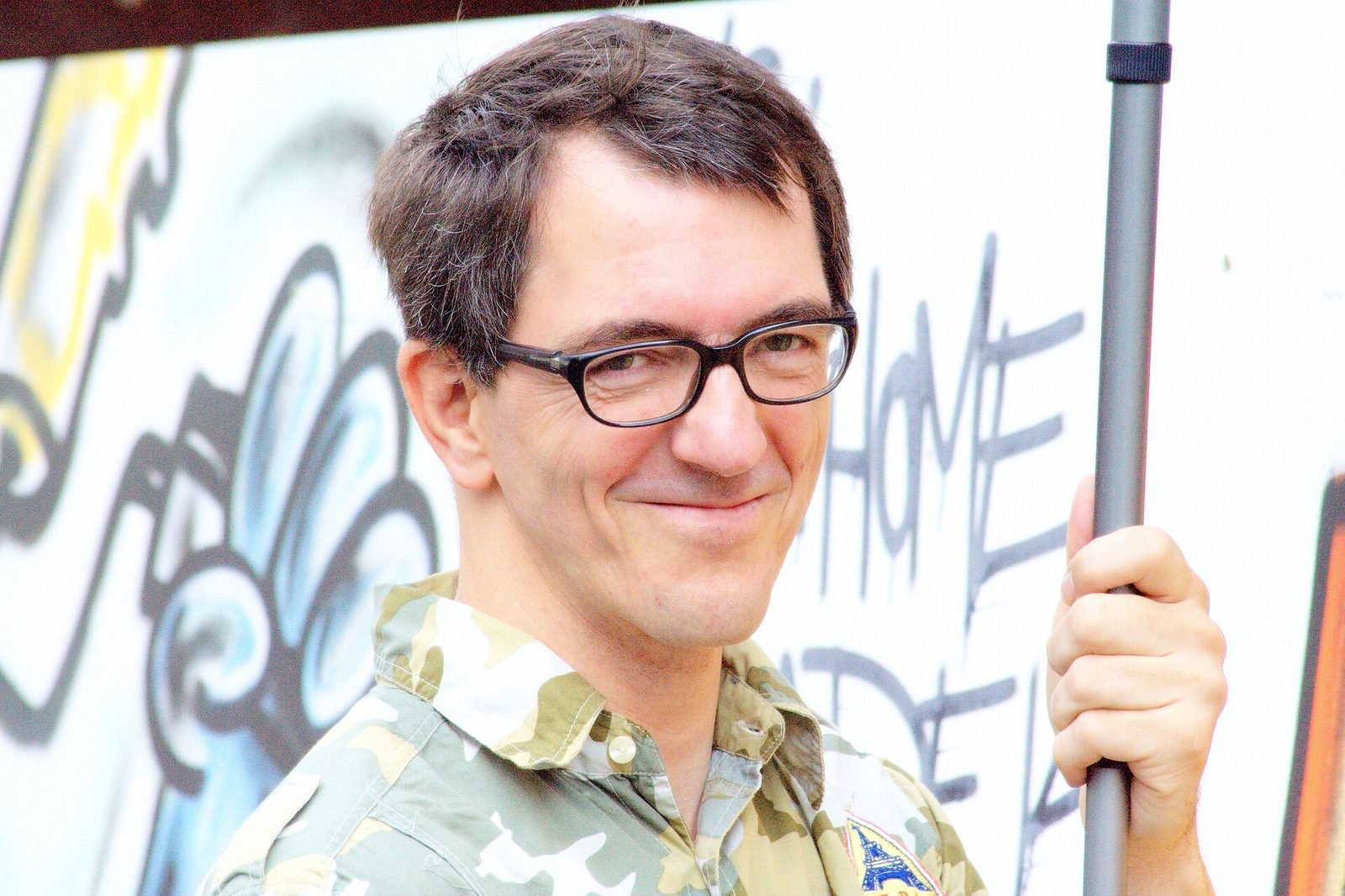
A smiling man with glasses and short dark hair in a patterned shirt, holding a pole, in front of a graffiti-covered wall.
Dr. Motte, 2006.Till Krech, 2006. Wikimedia Commons. CC BY 2.0.

1 July 1989

150 people dance down the Kurfürstendamm

Dr. Motte’s first Love Parade, on 1 July 1989, was 150 techno fans behind a few small trucks, under the motto “Friede, Freude, Eierkuchen”.

Source: berlin.de · Haus der Geschichte, Orte der Einheit

1989–1990

The Wall falls, and a second Ufo opens in Schöneberg

After 9 November 1989, a second Ufo opened in 1990 in a former supermarket in Schöneberg. It shut on 31 December 1990.

Source: Red Bull Music Academy · Westbam, Rave The Planet · Haus der Geschichte, Orte der Einheit

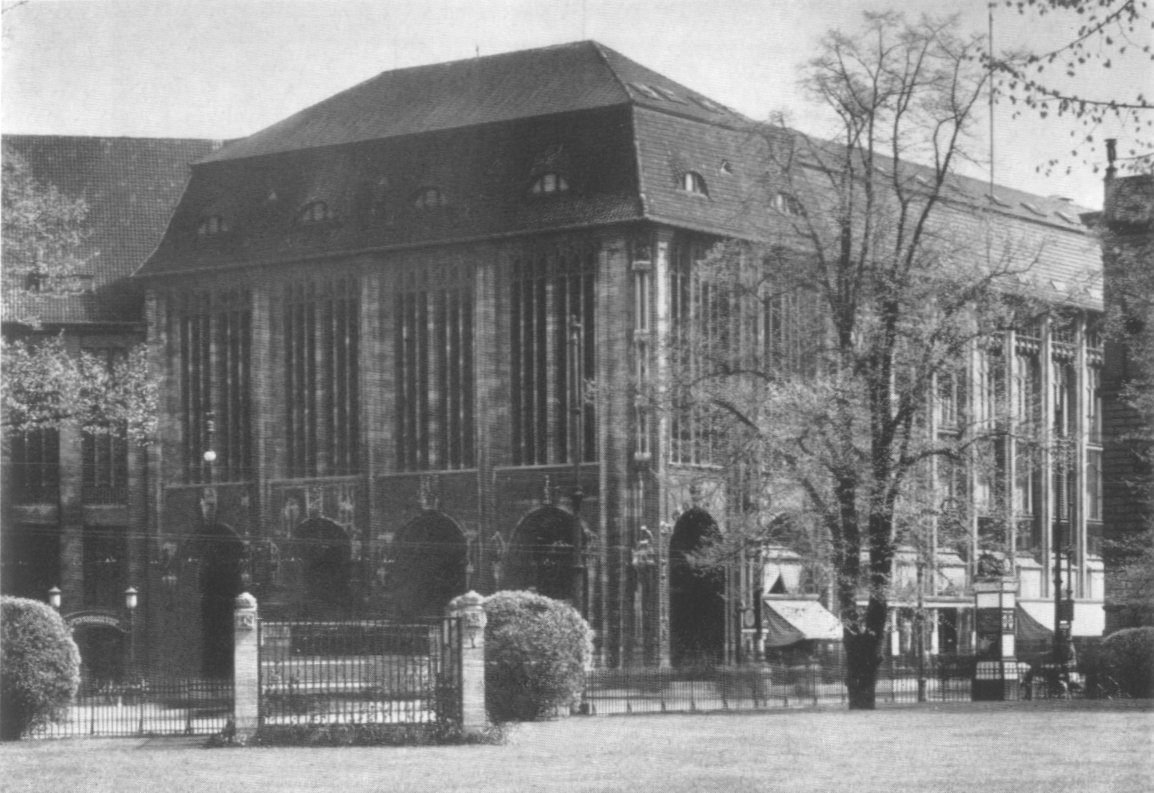
A large stone department-store façade with tall arched windows, behind a garden with a low railing.
Wertheim on Leipziger Platz, about 1910: Tresor was its vault.Otto Hagemann, c. 1910. Wikimedia Commons. Public domain.

March 1991

Tresor opens in a department store’s forgotten vault

The people behind Ufo opened Tresor in March 1991 in the old safe of the Wertheim store on Leipziger Platz, with its own record label.

Source: Haus der Geschichte, Orte der Einheit

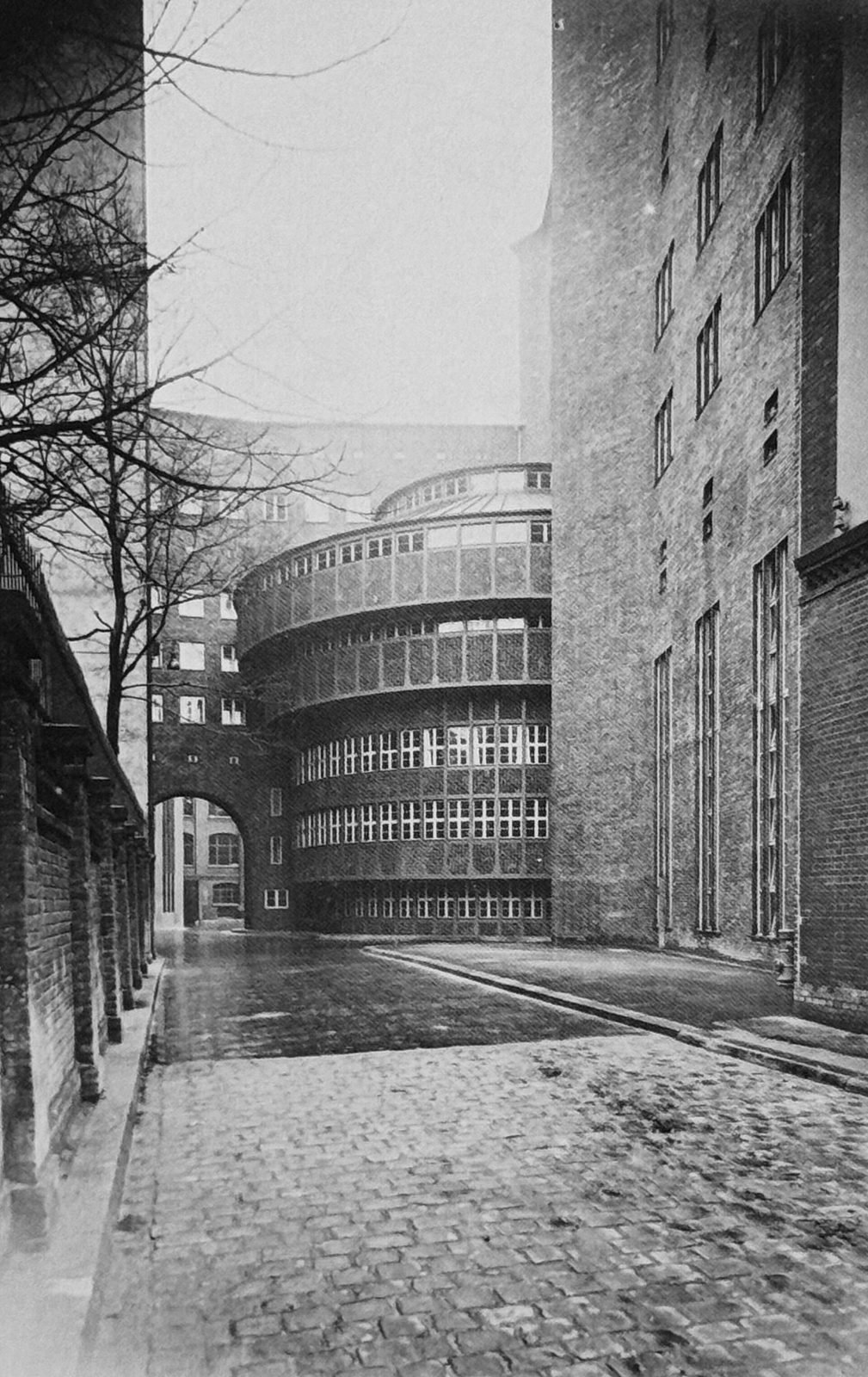
A black-and-white photograph of a cobbled courtyard closed by a curved brick building with bands of windows.
The Buchhändlerhof substation, 1928: the E-Werk from 1993.Hans Heinrich Müller, 1928. Wikimedia Commons. Public domain.

1993

E-Werk takes over a 1920s substation

In 1993 the E-Werk opened in the Abspannwerk Buchhändlerhof between Wilhelmstraße and Mauerstraße. It closed in July 1997.

Source: Vielfalt der Moderne

A tall, plain concrete power-station building lit from below at night, with figures walking across a snowy forecourt towards it.
Berghain, Ostgut’s successor, 2016. No licensed photograph of Ostgut was found.Michael Mayer, 2016. Wikimedia Commons. CC BY 2.0.
1998 or 1999

Ostgut opens in a goods-station hall by Ostbahnhof

Ostgut opened in the old hall of the Ost-Güterbahnhof in 1998 or 1999 — the sources differ — and held its last night in January 2003. It was torn down for the O2 Arena.

Source: Der Tagesspiegel, 6 Jan 2003 · Red Bull Music Academy, Ostgut

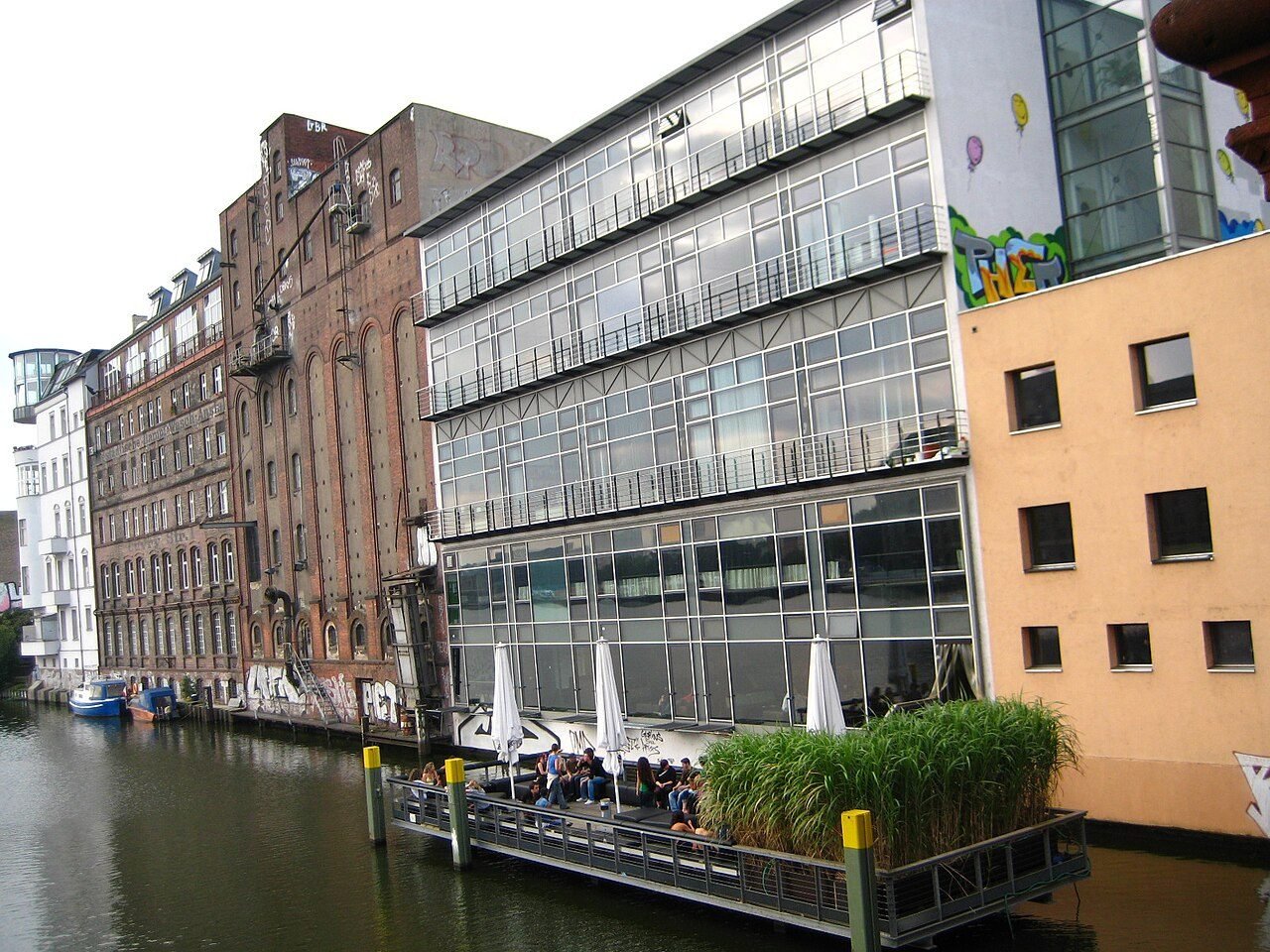
Buildings on a river bank: an old brick warehouse, a glass-fronted building with a floating terrace on the water, and a pale modern block.
Watergate on the Spree, 2007.foldscheap, 2007. Wikimedia Commons. CC0.

October 2002

Watergate opens on the Spree

Watergate opened in October 2002 on the Kreuzberg bank of the river, at the Oberbaumbrücke.

Source: Euronews, 18 Sep 2024 · Crack Magazine

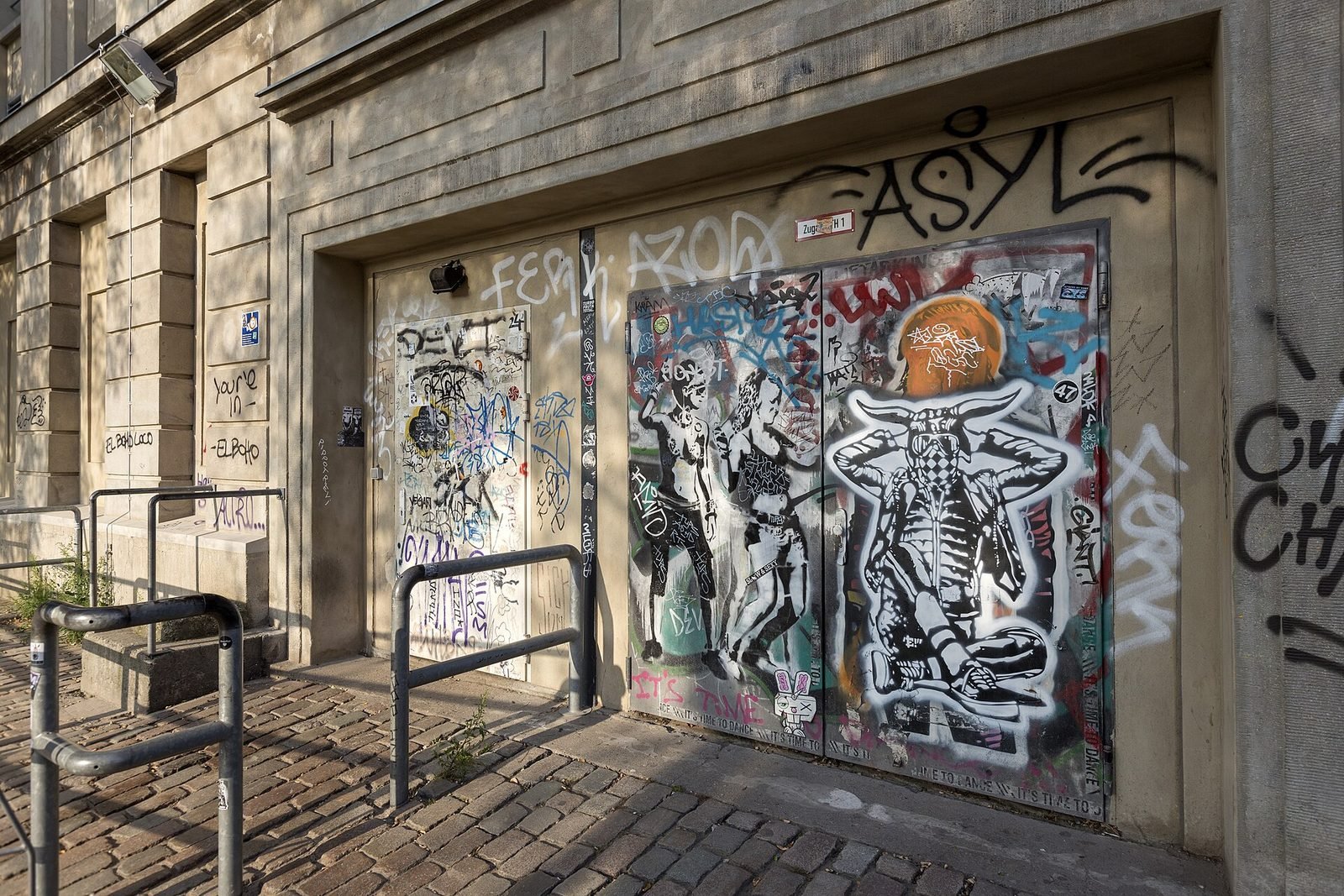
A heavy graffiti-covered door set in the pale stone wall of an old industrial building, behind metal barriers.
Berghain’s entrance, 2017.Michael Mayer, 2017. Wikimedia Commons. CC BY 2.0.

2004

Ostgut’s successor opens in a power plant

Berghain opened in 2004 in a Friedrichshain heating plant built in 1952–55 and shut down in 1997.

Source: VDE, Heizkraftwerk Friedrichshain · APA via Salzburg24, 2024 · Red Bull Music Academy, Ostgut

A power station with two tall chimneys and a large grey block behind trees on the far bank of a river.
Heizkraftwerk Mitte, 2006: Tresor’s home since 2007.Georg Slickers, 2006. Wikimedia Commons. CC BY-SA 3.0.
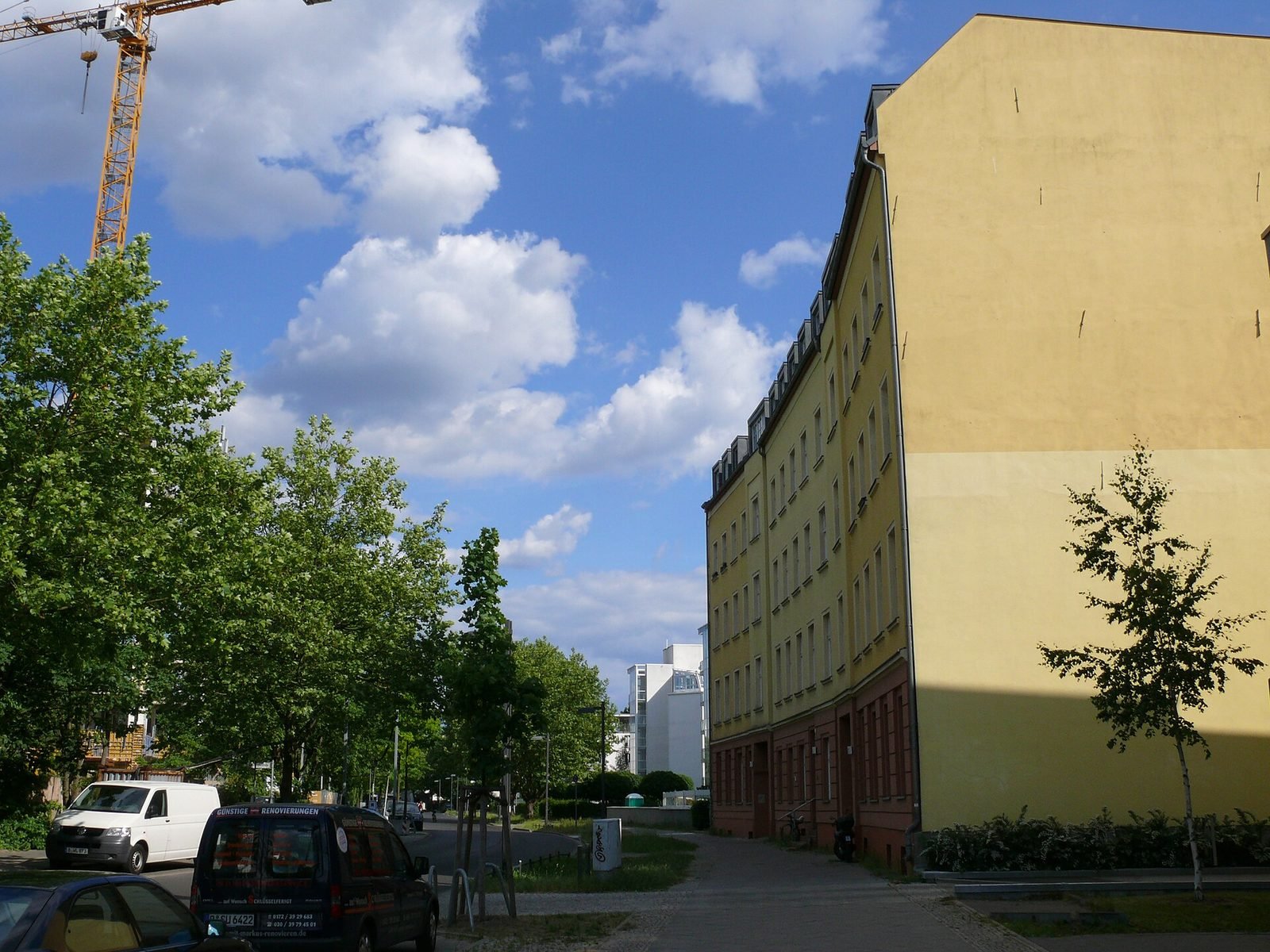
A street of trees and a yellow old apartment house on the Stralau peninsula, with a crane in a blue sky.
Alt-Stralau, 2012: Renate’s street.Fridolin freudenfett (Peter Kuley), 2012. Wikimedia Commons. CC BY-SA 3.0.

2007

Tresor’s second life, and Renate

Tresor, out of its vault since 2005, reopened in 2007 in the old Heizkraftwerk Mitte. The same year Renate opened at Alt-Stralau 70.

Source: Haus der Geschichte, Orte der Einheit · Mixmag, 2024 · Mixmag, Dec 2025

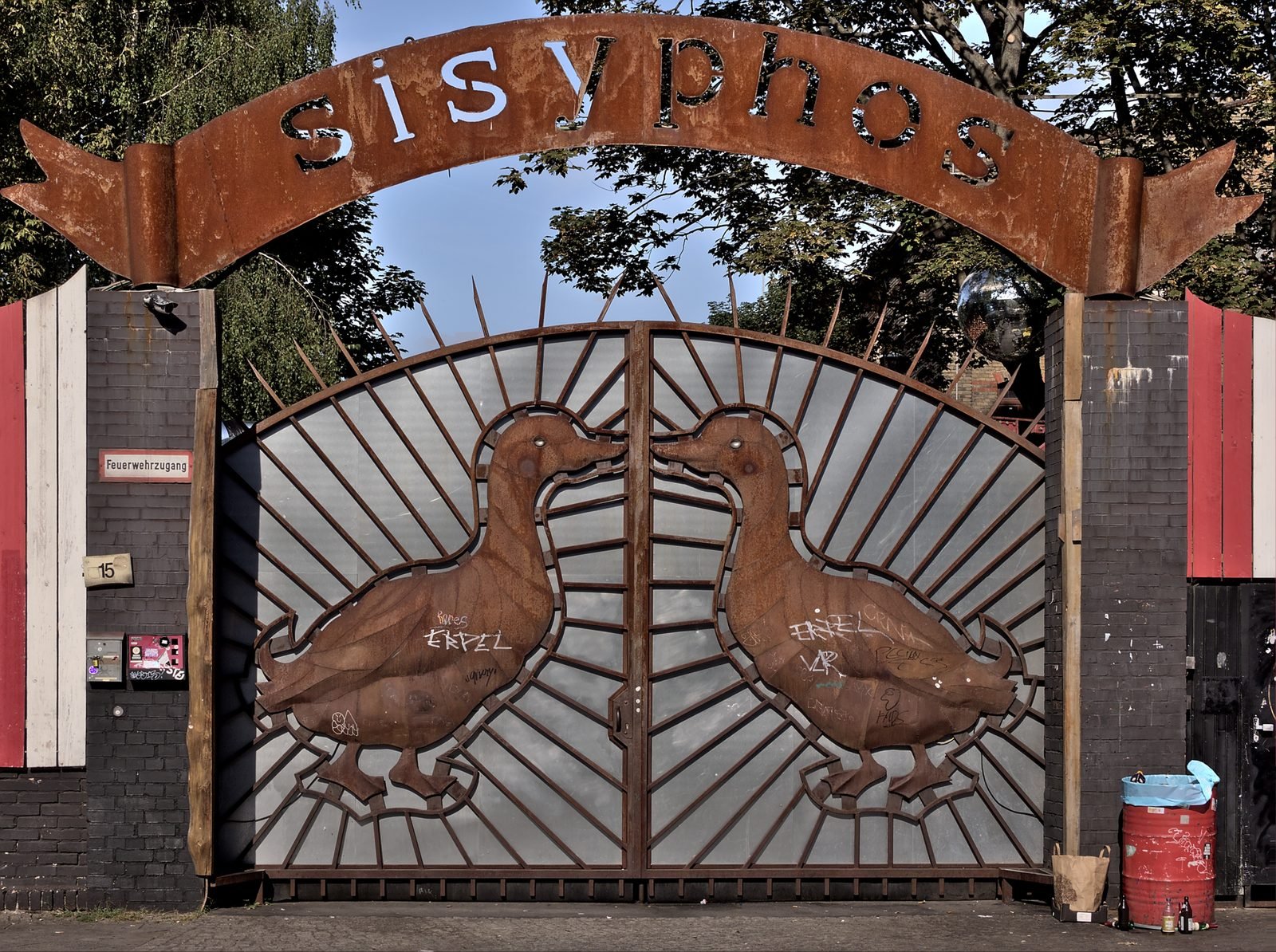
A rusted iron gate with two ducks facing each other under an arched sign reading sisyphos.
Sisyphos’s gate, 2022.Babewyn, 2022. Wikimedia Commons. CC BY-SA 4.0.

2008 or 2009

Sisyphos moves into a dog-biscuit factory

Sisyphos is in Spratt’s old dog-biscuit factory in Rummelsburg. The club dates from 2008 or 2009; the sources differ.

Source: Entwicklungsstadt

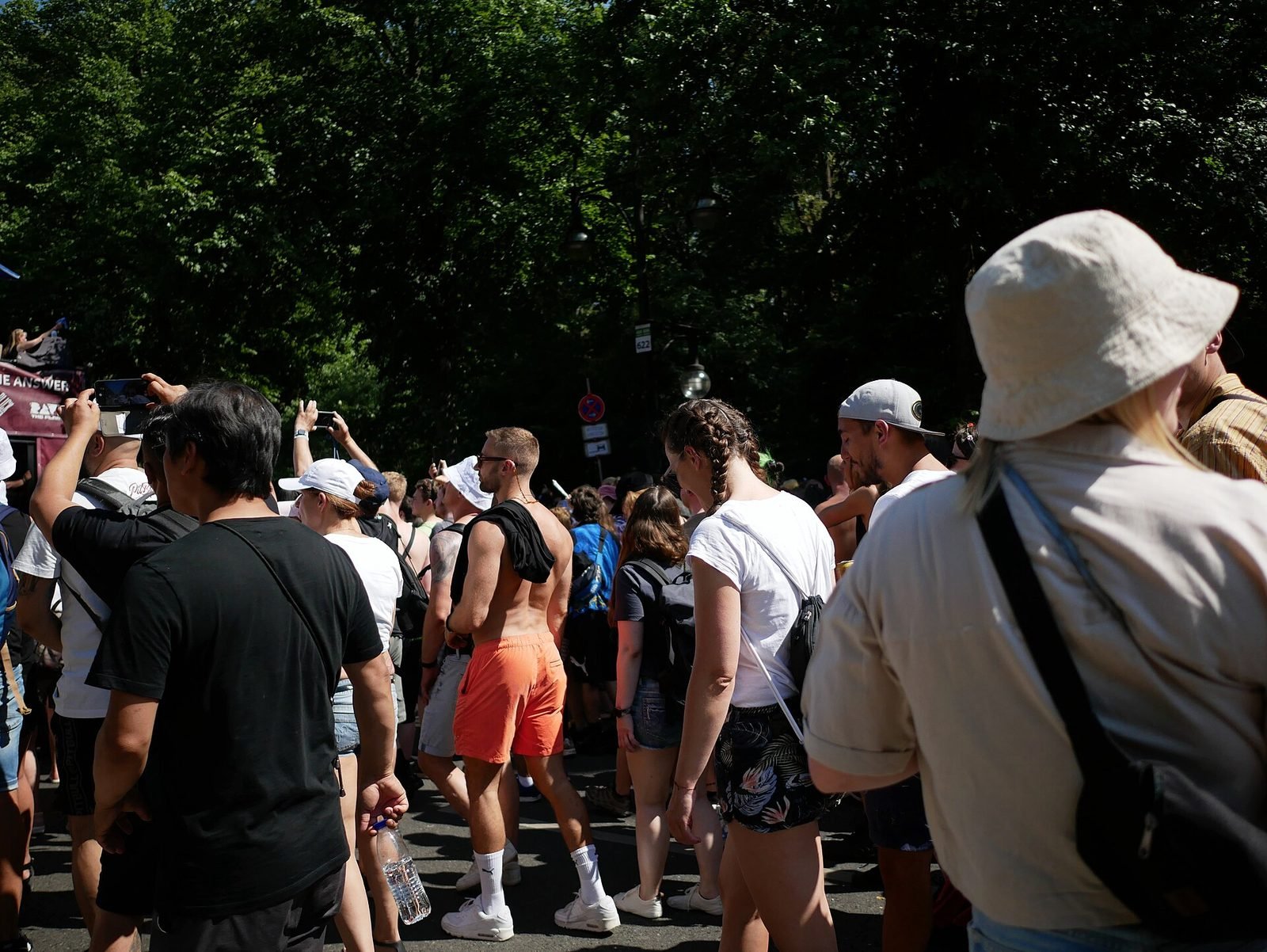
A crowd of young people in summer clothes walking along a tree-lined street, seen from behind.
Rave The Planet parade, July 2023.Ben Kaden, 2023. Wikimedia Commons. CC0.

2024

Heritage — and Watergate’s last night

On 13 March 2024 techno culture in Berlin joined Germany’s heritage register. At the end of 2024 Watergate closed, after 22 years.

Source: KMK, 13 Mar 2024 · Deutsche UNESCO-Kommission · tip Berlin · Euronews, 18 Sep 2024 · Crack Magazine

02Where the rooms were

Eight of the nine rooms lay less than a kilometre from where the Wall had stood

The clubs took what the divided city had left empty: a vault under Leipziger Platz, a substation off Wilhelmstraße, a railway depot and power plants along the Spree, which the Wall followed between Kreuzberg and Friedrichshain. Only Sisyphos, out in Rummelsburg, is further away.

Club sites and the line of the Wall in 1989

the Wall, 1989the Spree and the canals
  1. 1Ufo1988–1990
  2. 2Tresor (vault)1991–2005
  3. 3E-Werk1993–1997
  4. 4Ostgut1998/99–2003
  5. 5Watergate2002–2024
  6. 6Berghainsince 2004
  7. 7Tresor (since 2007)since 2007
  8. 8Renatesince 2007
  9. 9Sisyphossince 2008/09

03The court case

Germany’s highest tax court ruled that a night at Berghain is a concert

The tax office treated Berghain’s club nights as parties, taxed at the full rate. The Finanzgericht Berlin-Brandenburg disagreed in 2016, and on 23 July 2020 the Bundesfinanzhof agreed with it (V R 17/17): the DJs’ music is the point of the night, even every week, and even when a doorman chooses who gets in. Tickets carry the reduced rate for concerts, 7% instead of 19%.

VAT on a club ticket, per cent of the price

2016
Finanzgericht Berlin-Brandenburg: the nights are concerts
2020
Bundesfinanzhof, 23 July 2020: upheld
A heavy graffiti-covered door set in the pale stone wall of an old industrial building, behind metal barriers.
The entrance of Berghain, 2017.Michael Mayer, 2017. Wikimedia Commons. CC BY 2.0.

04The listing

Techno joined the national register on the same day as Saxon mountaineering, a Bavarian Perchten run and Viez cider

On 13 March 2024 the culture ministers of the Länder and the federal culture commissioner added six entries to Germany’s national register of intangible cultural heritage, which then held 150. One was “Technokultur in Berlin”, filed under performing arts, social practices, rituals and festive events. The application came from Rave The Planet, the organisation of the Love Parade’s founder, Dr. Motte. The register is Germany’s own, kept with the German UNESCO Commission; it is not UNESCO’s international list.

The national register after 13 Mar 2024: one square per entry

  • Mountaineering in Saxony
  • The singing tradition of Finsterwalde
  • The Perchten run of Kirchseeon
  • Schwalm whitework embroidery
  • Techno culture in Berlin
  • Viez, the Moselle and Saar cider
“For more than 30 years techno has been an important sound of our capital.”The federal culture commissioner (translated from the German), 13 March 2024 (KMK)
A crowd of young people in summer clothes walking along a tree-lined street, seen from behind.
Rave The Planet, the parade of the organisation that applied for the heritage listing, on 8 July 2023.Ben Kaden, 2023. Wikimedia Commons. CC0.
A smiling man with glasses and short dark hair in a patterned shirt, holding a pole, in front of a graffiti-covered wall.
Dr. Motte (Matthias Roeingh), founder of the Love Parade, in July 2006.Till Krech, 2006. Wikimedia Commons. CC BY 2.0.
A dense crowd fills a wide boulevard lined with trees, with music floats and a large balloon among them.
The Love Parade on the Straße des 17. Juni, 11 July 1998.Ago76, 1998. Wikimedia Commons. Public domain.
Berlin techno · 1988–2024

The rooms keep closing — Ufo after two years, Watergate after 22. What Germany listed was not a building but the habit of finding the next one.

Press & citation

Use this Berlinfographic

Free to publish under CC BY 4.0 — in print, online, on Wikipedia and in teaching, commercially or not — with credit to Berlinfographics and a link to this page.

Berlin techno, 1988–2024: the rooms and the listing: ready-to-use landscape image

Ready-to-use image

The infographic as one image: headline, key figures, chart, sources and credit, 2,400 × 1,350 px PNG. Please use it unedited.

Download landscape (PNG)
Berlin techno, 1988–2024: the rooms and the listing: square version

Square format

A 1:1 version for social media and narrow columns, 1,800 × 1,800 px.

Download square (PNG)
Berlin techno, 1988–2024: the rooms and the listing: portrait version

Portrait 4:5

For Instagram and LinkedIn feeds, 1,620 × 2,025 px.

Download portrait (PNG)

Credit line

Berlinfographics (berlinfographics.com), CC BY 4.0

Citation

Berlinfographics (2026). “Berlin techno, 1988–2024: the rooms and the listing”. Berlin Experiences. https://berlinfographics.com/berlin-techno-clubs/

Wikipedia

{{cite web |title=Berlin techno, 1988–2024: the rooms and the listing |url=https://berlinfographics.com/berlin-techno-clubs/ |website=Berlinfographics |publisher=Berlin Experiences |date=2026-11-09 |access-date=2026-11-09}}