Berlinfographicsby Berlin Experiences

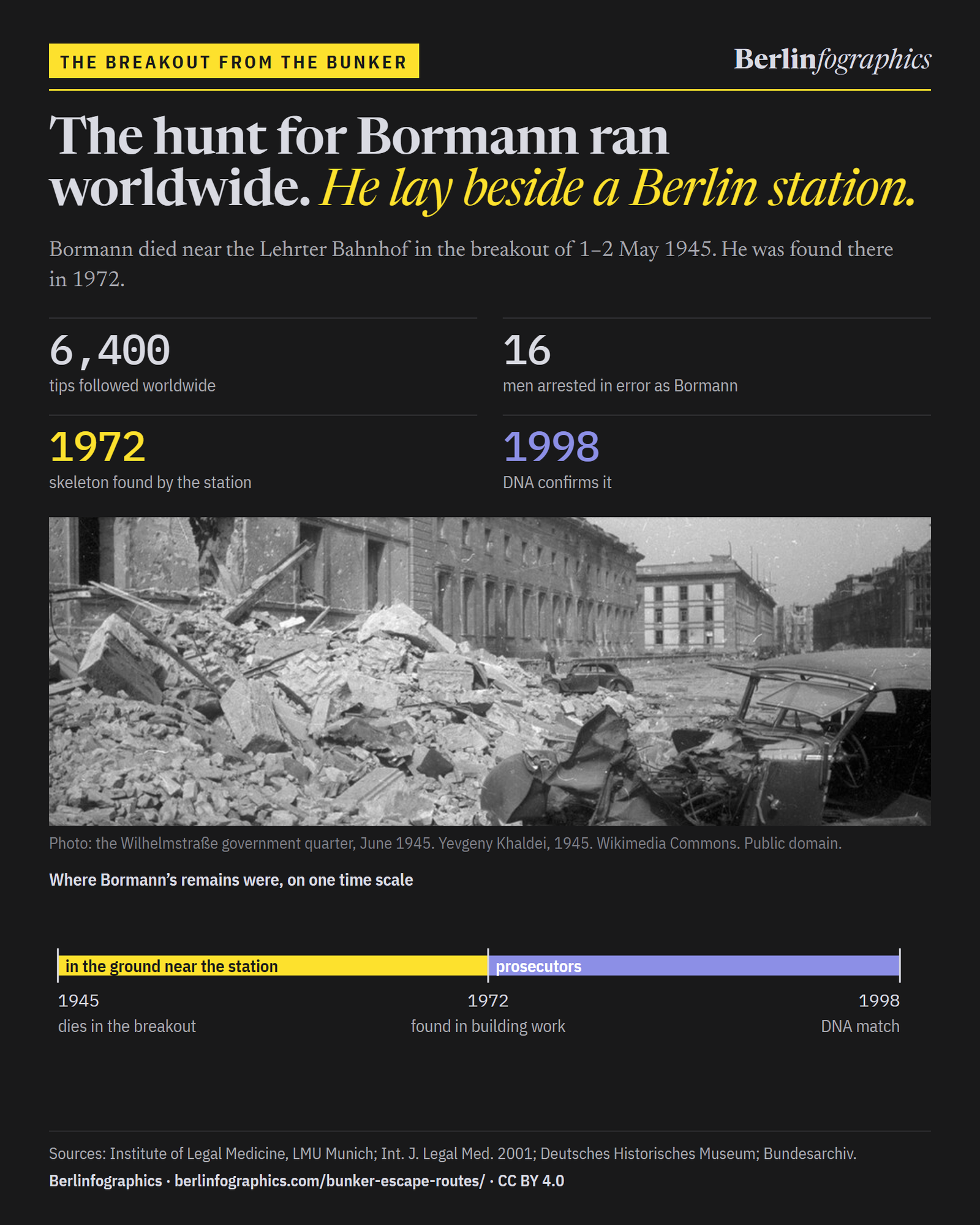
The government quarter on Wilhelmstraße in June 1945, photographed by Yevgeny Khaldei. The Reich Chancellery and its bunker stood a few steps away.Yevgeny Khaldei, 1945. Wikimedia Commons. Public domain.

The breakout from the bunker

Investigators followed 6,400 tips and jailed sixteen wrong men. Bormann lay beside a Berlin station all along.

On the night of 1–2 May 1945 the last people in Hitler’s bunker tried to break out of the encircled government quarter. Martin Bormann got less than two kilometres before he died, near the Lehrter Bahnhof. His skeleton stayed there, unfound, for twenty-seven years.

1–2 May 1945
the breakout from the Reich Chancellery and the bunker
6,400
tips followed worldwide in the hunt for Bormann
16
men arrested for a time in the belief that they were Bormann
1998
a DNA test confirms the skeleton found by the station
01The night

The way out ran under the streets and over one bridge

Hitler killed himself in the bunker on 30 April 1945. On 1 May 1945 Joseph and Magda Goebbels killed their children and themselves there. Soviet troops were a few streets away. Those left decided to try to get out. Bormann, who had been Hitler’s private secretary, wrote one word in his diary that day: “Ausbruchsversuch”, breakout attempt.

The map is drawn from OpenStreetMap. The yellow lines follow streets, tunnels and tracks that still lie where they lay in 1945; the dashed ones are the legs the accounts give only roughly.

From the bunker to the Lehrter Bahnhof

A street map of central Berlin drawn from OpenStreetMap. A yellow line runs from the site of the Führerbunker through the U-Bahn tunnels to Friedrichstraße station, then up Friedrichstraße to the Weidendammer Brücke over the Spree. A dashed line follows the Stadtbahn railway west to the Lehrter Bahnhof, today the Hauptbahnhof. A grey arrow points north from the river for the group led by Mohnke.
documentedapproximatebunker siteMap: © OpenStreetMap contributors, ODbL
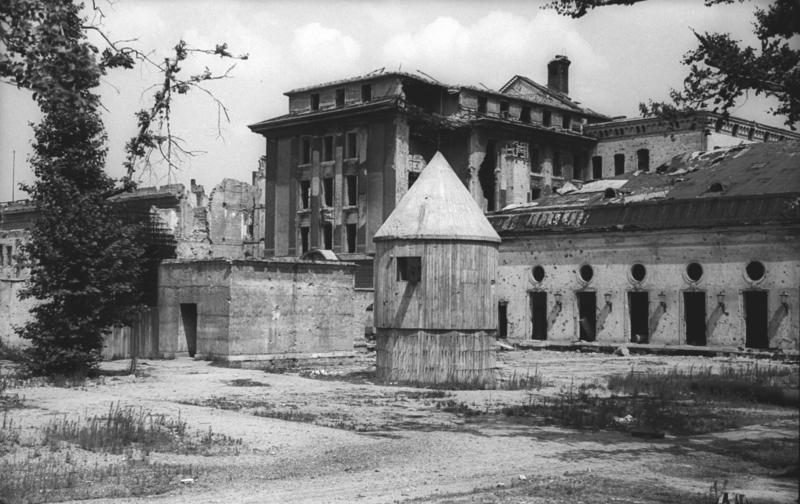
A ruined classical building behind a square concrete blockhouse and a conical concrete tower.
The garden of the ruined Reich Chancellery, 1947, with the blockhouse of the bunker’s garden exit.Bundesarchiv, Bild 183-V04744 / Unknown author / CC BY-SA 3.0 de
Two blue Berlin street-name signs, Voßstraße and Wilhelmstraße, on a post in front of modern apartment blocks.
The corner of Voßstraße and Wilhelmstraße in 2006. The New Reich Chancellery filled the length of Voßstraße.Adam Carr at English Wikipedia, 2006. Wikimedia Commons. Public domain.

The bunker

Under the Chancellery garden

The bunker lay beneath the garden of the Reich Chancellery, whose front ran the length of Voßstraße. The breakout was planned for the night: small groups, one after another.

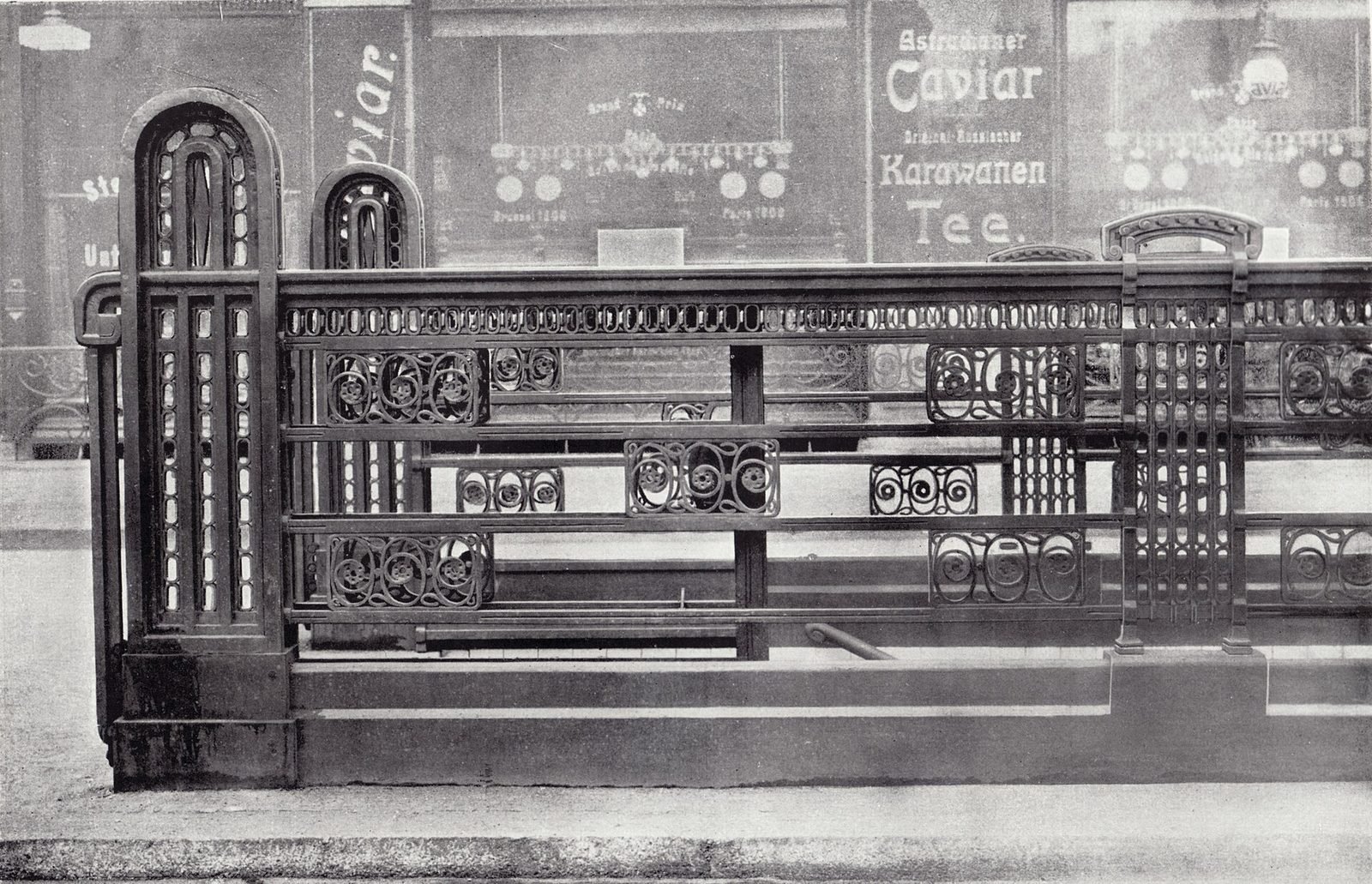
An ornate Art Nouveau cast-iron railing around a stairway down to an underground station, shop windows behind.
An entrance to the U-Bahn on Mohrenstraße, about 1908. The line beneath it led from Wilhelmplatz towards Friedrichstraße.Unknown author, 1908. Wikimedia Commons. Public domain.

Under the streets

Through the U-Bahn tunnels

The groups went out through the Chancellery’s cellars and into the U-Bahn tunnels, heading for Friedrichstraße station. Wilhelm Mohnke, the SS commander of the government quarter, led the first group.

A row of people sitting on folding chairs on a pavement, a tram and gutted buildings behind, with a Bundesarchiv caption strip below.
Friedrichstraße station in spring 1951: Berliners on chairs in the sun, burnt-out buildings and the bridge railing behind them.Bundesarchiv, Bild 183-10439-0001 / Köhler, Gustav / CC BY-SA 3.0 de

Friedrichstraße

Up at Friedrichstraße station

From the station, Friedrichstraße runs north to the Spree. Across the river lay the way out of the Soviet ring.

A black-and-white photograph of a wide iron bridge over a river, with ornate lamps and buildings on the far bank.
The Weidendammer Brücke carries Friedrichstraße over the Spree, 1898. In the night of 1–2 May 1945 it was the crossing under Soviet fire.Waldemar Titzenthaler, 1898. Wikimedia Commons. Public domain.

The Spree

The Weidendammer Brücke

The bridge was the crossing point, under heavy Soviet fire. Bormann’s party tried to cross behind a King Tiger tank and an assault gun. Most breakthrough attempts there failed.

North

Mohnke’s group goes north

Mohnke’s group, with Traudl Junge and Otto Günsche, avoided the main Weidendammer Brücke. On 2 May 1945 Soviet troops found it in a brewery cellar in the north of the city; the map shows only its direction.

A black-and-white panorama of a river with a stone bridge and a large station hall with an arched front.
The Lehrter Bahnhof beyond the Spree and the Moltkebrücke, about 1900.Waldemar Titzenthaler, c. 1900. Wikimedia Commons. Public domain.

The Lehrter Bahnhof

Bormann dies near the station

Bormann and Ludwig Stumpfegger, Hitler's doctor went on toward the Lehrter Bahnhof. Artur Axmann and Erich Kempka later testified that both died there that night. The spot is less than two kilometres from the bunker.

Tilted slabs of broken concrete and a dead tree in a field of rubble.
The blown-up Führerbunker in the garden of the ruined Reich Chancellery, 1947.Bundesarchiv, Bild 183-M1204-319 / Otto Donath / CC BY-SA 3.0 de

2 May 1945

The city surrenders

Generals Hans Krebs and Wilhelm Burgdorf killed themselves that night. On 2 May 1945 Berlin’s defenders surrendered.

02The count

Nobody counted who ran, who died and who was taken

The groups left in the dark, under fire, and scattered. None of the accounts cited here gives a count of how many tried to break out, how many died or how many were captured.

How many broke out?How many died?How many were taken?Not known.An earlier version of this graphic gave round totals for all three. No source supports them, and they have been withdrawn.

What can be traced are the fates of named people, from interrogation files, court records and their own later accounts. Bormann and Stumpfegger died. Others were captured within hours. A few got clear of the city for a time.

Mohnke’s group was found in a cellar on 2 May 1945, the day Berlin surrendered.

Captured: how long until they came home

Five horizontal bars on one time axis from the end of the war to the late nineteen-fifties, one for each of five people from the bunker who were taken by the Soviets. Traudl Junge's bar is a few months long. Rochus Misch's runs to the early nineteen-fifties and fades across two years because the sources differ. Otto Günsche, Heinz Linge and Wilhelm Mohnke's bars run for a decade.
held by the Soviets; the fade spans the year or years a release is dated to

Bars begin on the day of capture (2 May 1945 for the men; Junge was arrested on 9 June 1945 and held about six months). Misch’s release is given as 1953 by one account and 1954 by another. Linge and Günsche testified in a West German court the year after they came home.

03The search

For twenty-seven years the world looked everywhere but the station

Two witnesses said within months that Bormann was dead. Hardly anyone believed them. The rumour that he had escaped to South America outlived almost everyone who had been in the bunker.

Two men, and where they really were

A timeline from the end of the war to the twenty-tens with three lanes: the search for Bormann, Bormann's remains, and Heinrich Müller. Bormann's remains lie in the ground near the Lehrter Bahnhof until they are found, then are held by prosecutors until a DNA test confirms them. Müller's lane shows his burial in the year the war ended and the discovery of the burial record decades later.
in the groundheld by prosecutorsthe search

2 May 1945

Two witnesses say he is dead

Artur Axmann and Erich Kempka had both broken out with Bormann. They said he and Stumpfegger died near the Lehrter Bahnhof. Both men were arrested in October 1945, and their story was given little credence.

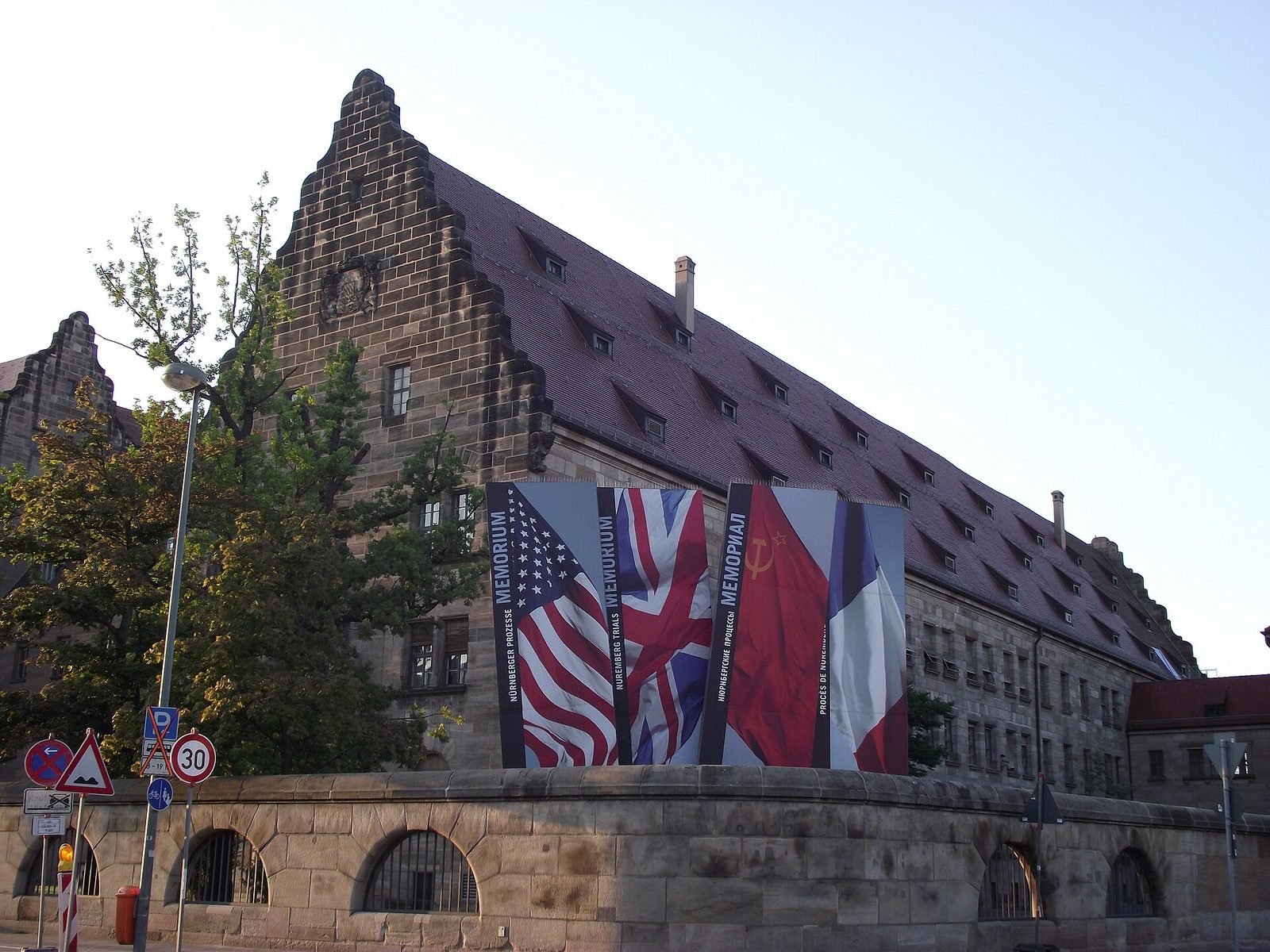
A large sandstone court building with a tall central gable behind trees.
The Palace of Justice in Nuremberg, 2014, where the international military tribunal tried the leaders of the Nazi state.Photo: Fred Romero, 2014. Wikimedia Commons. CC BY 2.0.

1946

Sentenced to death in his absence

The Nuremberg tribunal tried him in his absence and sentenced him to death. The tribunal could not say whether he was alive.

1945–1972

A worldwide hunt

Investigators followed 6,400 tips worldwide, and sixteen men were arrested for a time in the belief that they were Bormann. Berlin prosecutors reopened the case in 1959; Frankfurt took it over in 1961.

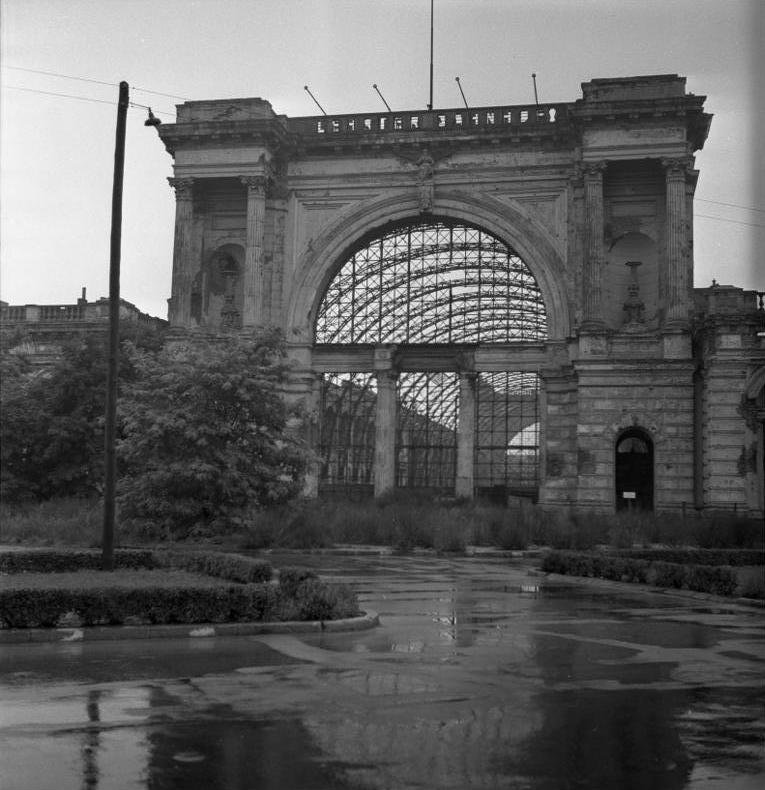
The arched stone front of a ruined railway station, its glass roof gone, weeds in front and a wet forecourt.
The ruined Lehrter Bahnhof in 1955. Bormann’s skeleton lay in the ground near the station until 1972.Bundesarchiv, B 145 Bild-F003101-0008 / Brodde / CC BY-SA 3.0 de

1972

Found beside the station

In 1972 two skeletons were found by chance, during building work near the Lehrter Bahnhof. One had a “window crown”, a speciality of his dentist Hugo Blaschke. Bormann’s death was confirmed in 1973.

A glass-and-steel railway station reflected in a harbour basin, a tour boat passing.
Berlin Hauptbahnhof in 2016, on the site of the Lehrter Bahnhof.Ansgar Koreng, 2016. Wikimedia Commons. CC BY 3.0 de.

1998

DNA ends the rumours

Rumours went on, so the bones were never buried. In 1998 the Munich Institute of Legal Medicine matched their DNA to an 83-year-old cousin on his mother’s side. The file was closed after fifty-three years, and the remains were cremated and the ashes scattered at sea.

Weathered stone gravestones set against a red brick wall.
Gravestones in the wall of the old Jewish cemetery on Große Hamburger Straße, Mitte, 2017.Z thomas, 2017. Wikimedia Commons. CC BY 3.0.

August 1945 · 2013

The other man who “got away”

Heinrich Müller, the head of the Gestapo, was also said to have escaped. In 2013 the historian Johannes Tuchel found the record: Müller’s body was identified in August 1945 and buried in a mass grave in the Jewish cemetery on Große Hamburger Straße, Mitte.

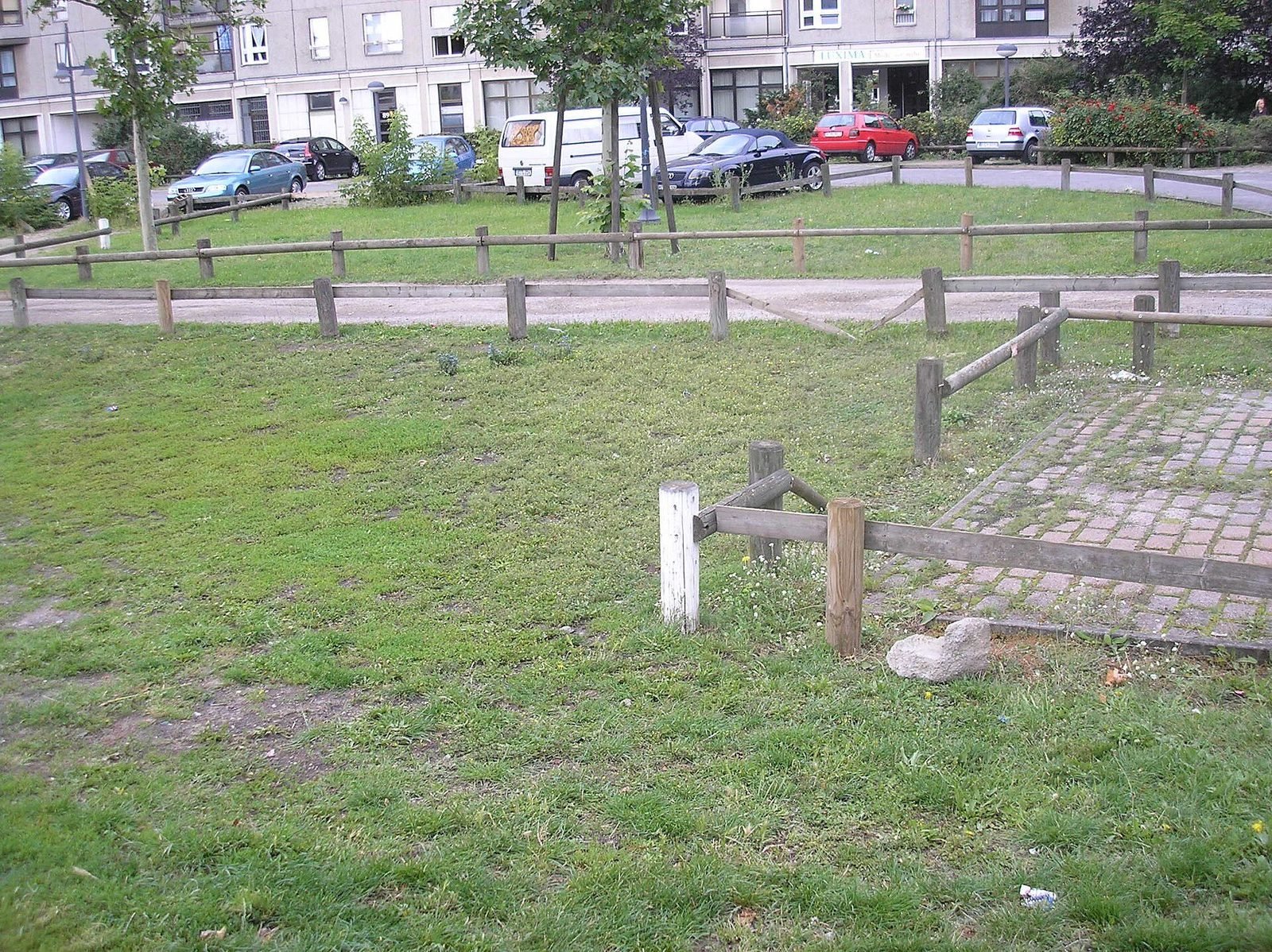
A scruffy lawn crossed by low wooden fences, with parked cars and grey apartment blocks behind.
The site of the Führerbunker in 2007: a lawn, a fence and a car park.Deror avi, 2007. Wikimedia Commons. Attribution.

The bunker was blown up after the war, and its site is now a lawn and a car park off Wilhelmstraße. Hitler’s own death there, and the escape story that grew around it, are set out in our companion piece.

Hitler did not escape to Argentina: the evidenceThe eyewitnesses, the court and the teeth in Moscow, against the Grey Wolf story.

The breakout has no reliable count, only names, and for each name a record of where the night ended: a cellar, a Soviet camp, the ground beside a station.

Martin Bormann never left Berlin. He lay less than two kilometres from the bunker until 1972.

Press & citation

Use this Berlinfographic

Free to publish under CC BY 4.0 — in print, online, on Wikipedia and in teaching, commercially or not — with credit to Berlinfographics and a link to this page.

The breakout from Hitler’s bunker, May 1945: ready-to-use landscape image

Ready-to-use image

The infographic as one image: headline, key figures, chart, sources and credit, 2,400 × 1,350 px PNG. Please use it unedited.

Download landscape (PNG)
The breakout from Hitler’s bunker, May 1945: square version

Square format

A 1:1 version for social media and narrow columns, 1,800 × 1,800 px.

Download square (PNG)
The breakout from Hitler’s bunker, May 1945: portrait version

Portrait 4:5

For Instagram and LinkedIn feeds, 1,620 × 2,025 px.

Download portrait (PNG)

Credit line

Berlinfographics (berlinfographics.com), CC BY 4.0

Citation

Berlinfographics (2026). “The breakout from Hitler’s bunker, May 1945”. Berlin Experiences. https://berlinfographics.com/bunker-escape-routes/

Wikipedia

{{cite web |title=The breakout from Hitler’s bunker, May 1945 |url=https://berlinfographics.com/bunker-escape-routes/ |website=Berlinfographics |publisher=Berlin Experiences |date=2026-11-09 |access-date=2026-11-09}}