Berlinfographicsby Berlin Experiences

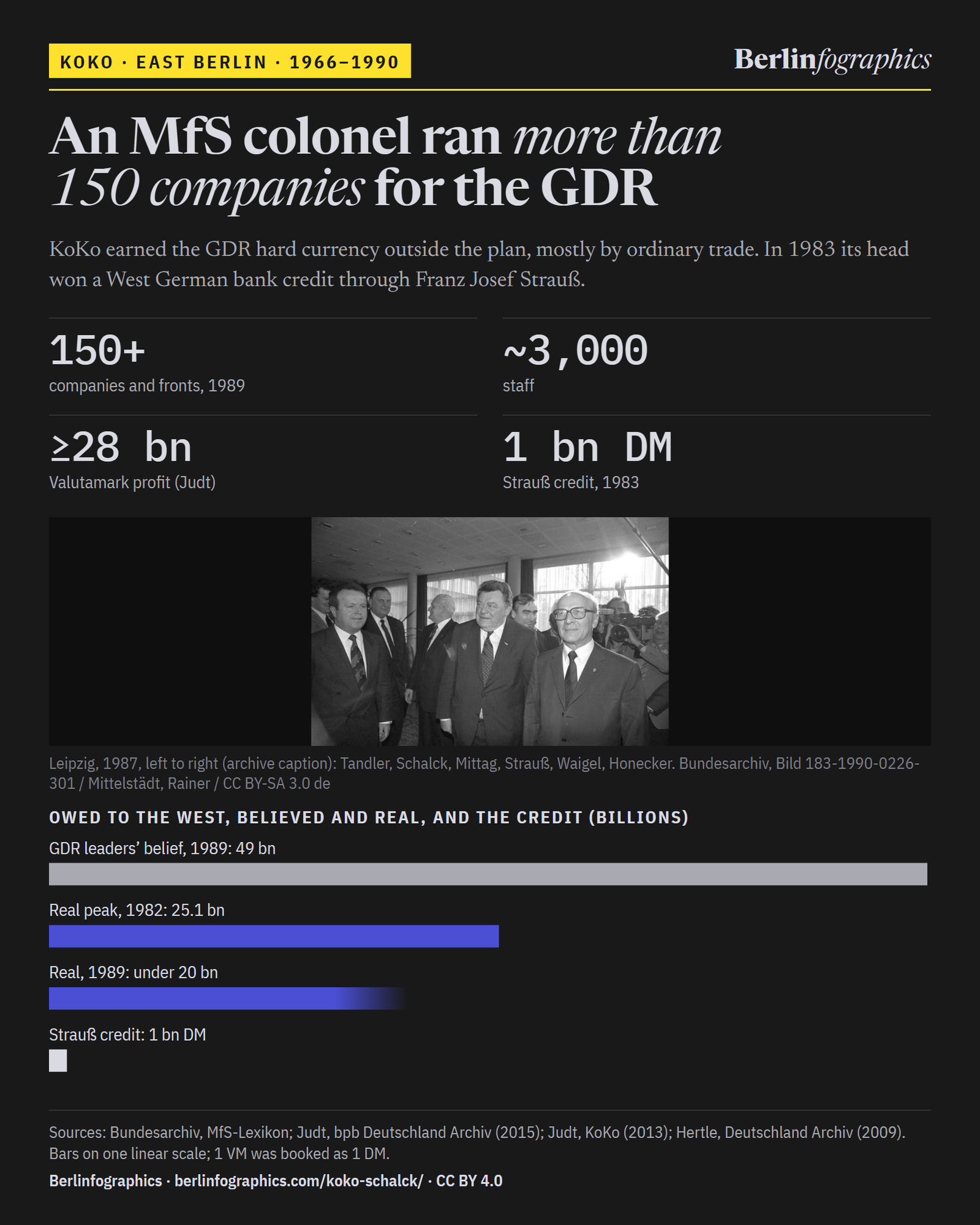
Leipzig spring fair, 1987, at the GDR government guest house. From left: Gerold Tandler, Alexander Schalck-Golodkowski, Günter Mittag, Franz Josef Strauß, Theo Waigel and Erich Honecker (archive caption, ADN).Photo: Bundesarchiv, Bild 183-1990-0226-301 / Mittelstädt, Rainer / CC BY-SA 3.0 de

KoKo

An MfS colonel ran more than 150 companies for the GDR. Most East Germans first heard of them in 1989

KoKo, the “Commercial Coordination” department of the Ministry of Foreign Trade, earned hard currency outside the plan. Under Alexander Schalck-Golodkowski it made at least 28 billion Valutamark in profit. Most of it came from ordinary trade; some came from selling prisoners, antiques and arms.

>150
companies and fronts in KoKo, 1989
~3,000
people on its staff
≥28bn VM
profit under Schalck, by Matthias Judt’s count
1bn DM
West German credit Schalck negotiated with Strauß, 1983

01East Berlin, 1966

A ministry department with the freedoms of a Western firm

By a decree of 1 April 1966, the GDR gathered a handful of special trading companies under one roof inside the Ministry of Foreign Trade. Their task was to earn hard currency “outside the plan”. The department was constituted on 1 October 1966; in December 1966 it took the name Kommerzielle Koordinierung, KoKo, and a 34-year-old head, Alexander Schalck-Golodkowski.

KoKo and its firms could hold accounts abroad and trade like any Western company. Schalck ran it until December 1989, as state secretary in the ministry and, at the same time, an officer on special duty of the Ministry for State Security: from 1975, an MfS colonel.

“The end of a mysterious economic empire whose existence the citizens of the GDR had learned of only weeks before.” Matthias Judt

Head-and-shoulders portrait of a man in glasses, suit and tie.
Alexander Schalck-Golodkowski in March 1988, then a member of the SED Central Committee and state secretary in the Ministry of Foreign Trade.Photo: Bundesarchiv, Bild 183-1988-0317-312 / Brüggmann, Eva / CC BY-SA 3.0 de
A large grey prefabricated office block with rows of windows.
The former Ministry for State Security headquarters in Normannenstraße, Berlin-Lichtenberg, 2005. An MfS working group, the AG BKK, watched over KoKo from 1983.Photo: Andreas Praefcke, 2005. Wikimedia Commons. CC BY 3.0.

KoKo inside the GDR state

A diagram of KoKo inside the East German state: the Ministry of Foreign Trade around it, the SED's economics secretary above it, the Ministry for State Security watching it, its firms below it and its Western partners at the bottom. Each step lights up one line of business.

Firms shown are KoKo’s best known; it had many more.

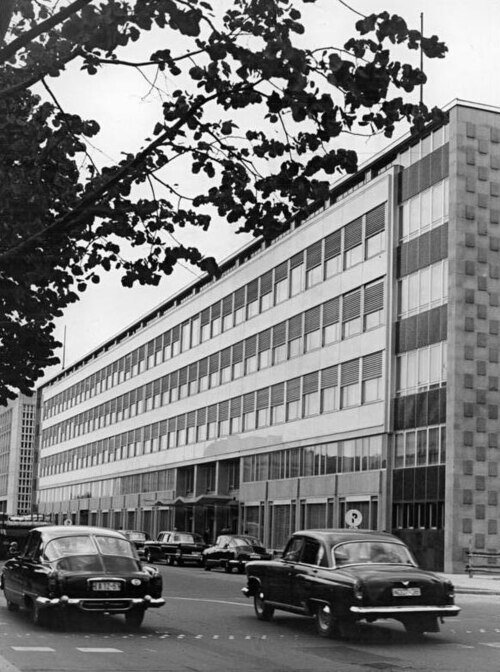
A multi-storey post-war office building on a wide boulevard, with a few cars in front.
The GDR Ministry of Foreign Trade on Unter den Linden, East Berlin, July 1965. KoKo was set up inside this ministry the following year.Photo: Bundesarchiv, Bild 183-D0726-0010-001 / Spremberg, Hans-Joachim / CC BY-SA 3.0 de

1966

A trading house inside a ministry

KoKo sat inside the Ministry of Foreign Trade but worked outside the plan, with its own firms and foreign accounts. Schalck headed it from December 1966.

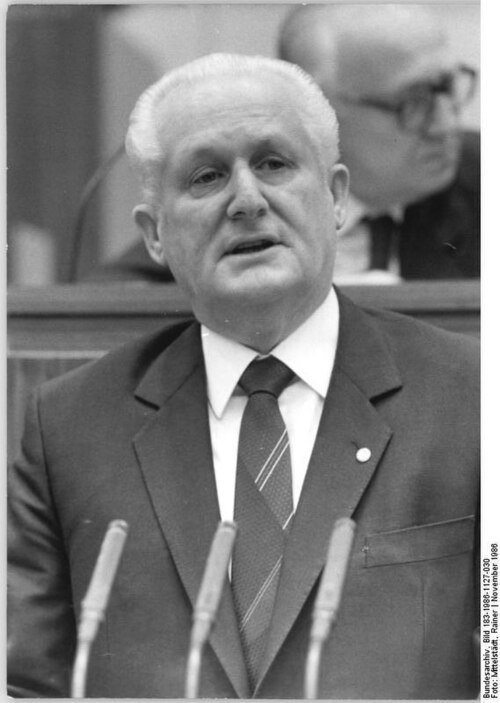
Portrait of a grey-haired man in glasses and a dark suit.
Günter Mittag, the SED Central Committee’s secretary for the economy, November 1986. From 1977 KoKo answered to him.Photo: Bundesarchiv, Bild 183-1986-1127-030 / Mittelstädt, Rainer / CC BY-SA 3.0 de

1977–1983

Two masters: the Party and the Stasi

From November 1977 KoKo answered to Günter Mittag, the SED’s economics secretary. The MfS vetted its staff and, from 1983, guarded it with a working group of its own.

A path at a motorway rest area with a sign reading: Nutzen Sie die Pause! Zu einem Einkauf im Intershop. Mitropa transit.
Signs for a Mitropa snack bar and an Intershop at the Theeßen rest area on the transit motorway through the GDR, August 1989. Intershops sold Western goods for hard currency, supplied by KoKo firms.Photo: Aad van der Drift, 1989. Wikimedia Commons. CC BY 2.0.

By 1989

More than 150 companies

KoKo grew to more than 150 trading companies, letterbox firms and fronts, with about 3,000 staff. Intrac, which traded oil and chemicals, was by far the largest. Forum supplied the Intershops.

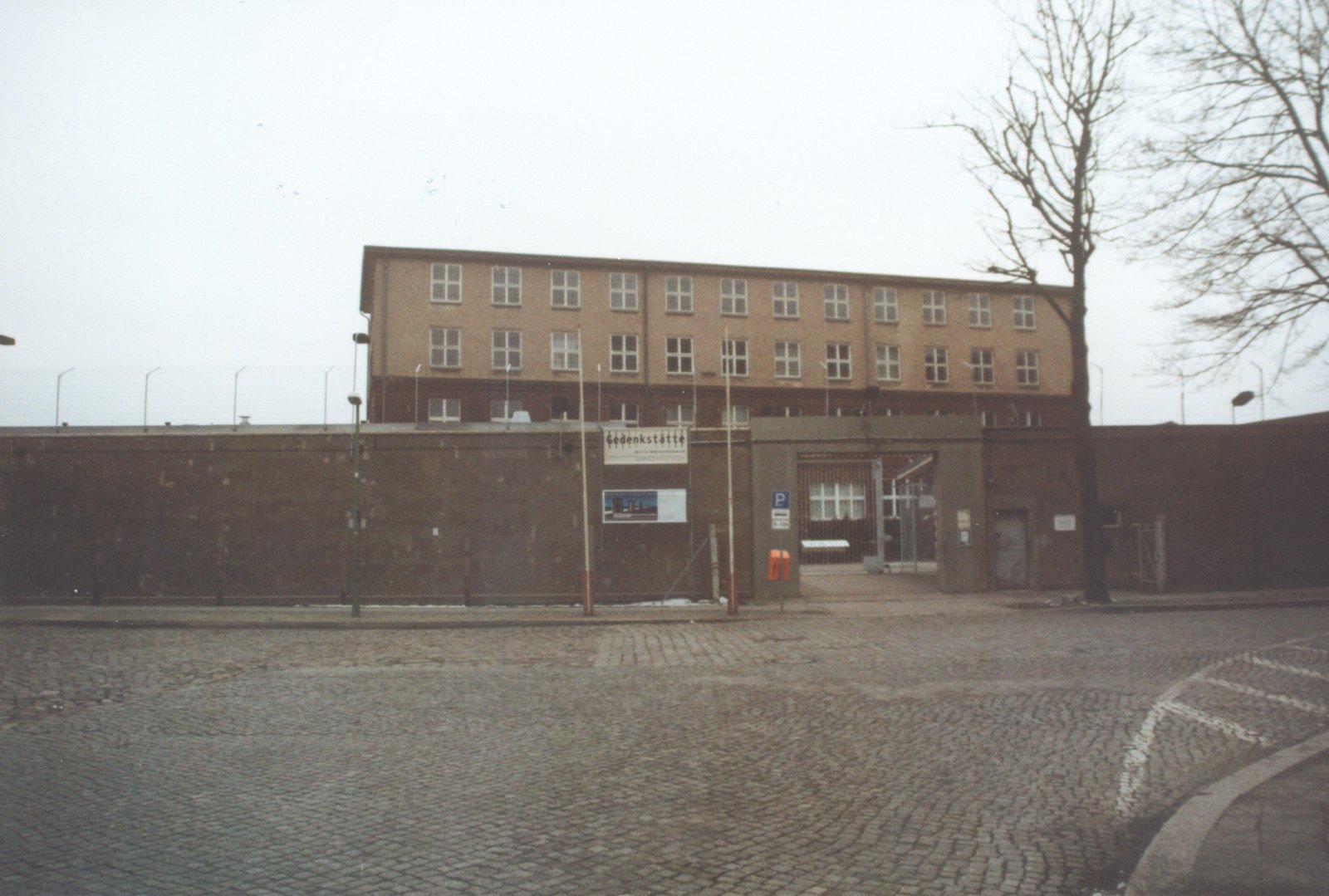
A gate and gatehouse in a high wall topped with wire.
Entrance to the former Stasi remand prison at Berlin-Hohenschönhausen, now a memorial, 2006. The MfS chose which political prisoners went on the lists for sale to the West.Photo: Christian Liebscher, 2006. Wikimedia Commons. Public domain.

1962–1990

People for raw materials

Bonn paid for political prisoners in goods. The MfS chose who went on the lists; KoKo’s Intrac took the oil, copper and silver and sold them on, for just over 3.44 billion Valutamark.

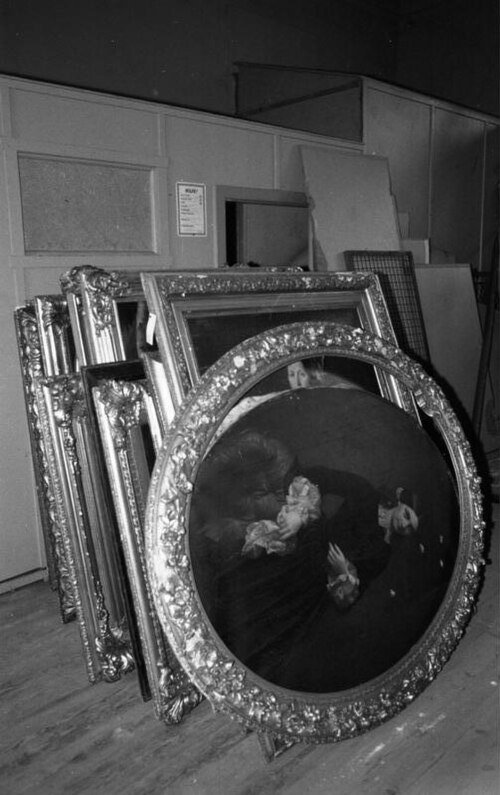
Gilt-framed paintings, one of them oval, leaning against a wall in a bare store room.
The Kunst und Antiquitäten GmbH store at Mühlenbeck, north of Berlin, December 1989. The GDR news agency reported that 298 paintings, drawings and prints found here would go back to the Dresden State Art Collections; 372 more had already been sold for hard currency (ADN caption).Photo: Bundesarchiv, Bild 183-1989-1206-034 / Grimm, Peer / CC BY-SA 3.0 de

From 1973

Antiques taken in lieu of tax

Kunst und Antiquitäten GmbH exported antiques for hard currency. Collectors were given inflated wealth-tax bills; their pieces were seized against the debt and sold to the firm.

Early 1980s

Guns through the back door

Mittag had Schalck buy small arms and night-vision devices in the West, against the Western embargo. KoKo’s own arms firm, IMES, kept a depot at Kavelstorf near Rostock.

Five men in suits talking in a panelled room with antlers on the wall; Strauß stands at the right.
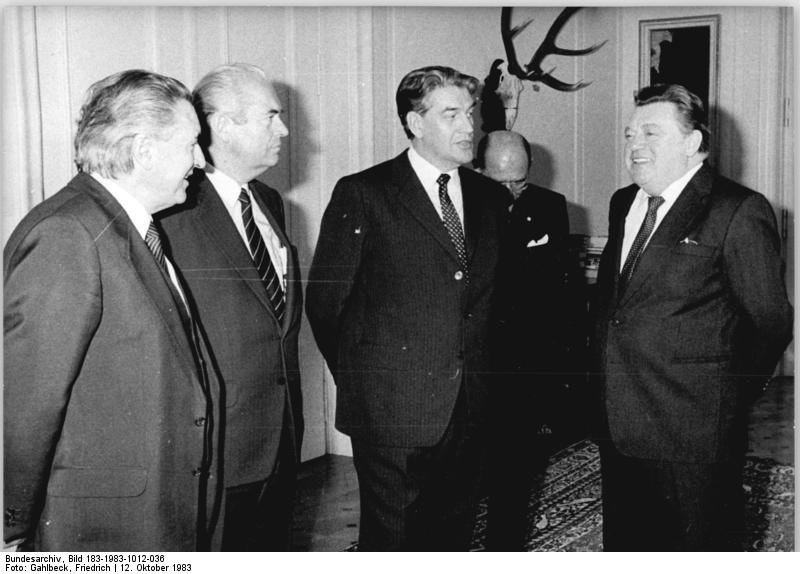
Franz Josef Strauß (right), Bavaria’s minister-president, receives the GDR minister Hans Reichelt (second from right) in Munich, 12 October 1983 (archive caption, ADN).Photo: Bundesarchiv, Bild 183-1983-1012-036 / Gahlbeck, Friedrich / CC BY-SA 3.0 de

1 July 1983

A billion from Bavaria

With Western banks closed to the GDR, Schalck negotiated with Franz Josef Strauß. A consortium led by the Bayerische Landesbank lent 1 billion DM; Bonn guaranteed it.

Demonstrators outside a large building holding a banner that demands the handing-over of Schalck-Golodkowski.
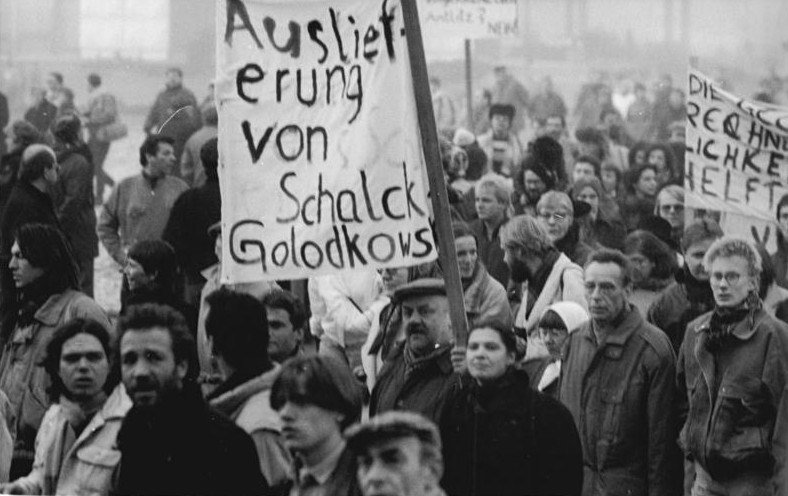
East Berlin, 3 December 1989, the day Schalck fled: artists at a rally outside the SED Central Committee building, during its 12th session, carry a banner reading “Auslieferung von Schalck-Golodkowski”, a demand that he be handed over (archive caption, ADN).Photo: Bundesarchiv, Bild 183-1989-1203-016 / Senft, Gabriele / CC BY-SA 3.0 de

3 December 1989

The head of KoKo crosses to the West

As KoKo’s secrets came out, Schalck fled to West Berlin in the night of 2–3 December 1989. KoKo itself closed by the end of March 1990.

02Where the money came from

Most of KoKo’s money came from ordinary trade

KoKo is remembered for its scandals. But by the reckoning of the historian Matthias Judt, the questionable deals brought in perhaps 15 per cent of its profit. The bulk came from ordinary business: Intrac, by far the largest KoKo firm by turnover, traded oil, raw materials and chemicals, and in 1970 the GDR covered half of West Berlin’s need for petrol and diesel.

The Intershop company, founded in 1962 and later renamed Forum, stocked the shops where Western goods were sold for hard currency, at border crossings, on the transit roads and in East German towns.

KoKo’s profit, and the share of the questionable deals

One linear scale, in billions. The two totals measure different things (Judt’s is profit in Valutamark; Schalck’s is a rounded figure in D-Mark) and are not added. A Valutamark was booked as one D-Mark in inner-German trade. Soft edges mark “at least”, “about” and “perhaps”: the sources give no closer figure.

A path at a motorway rest area with a sign reading: Nutzen Sie die Pause! Zu einem Einkauf im Intershop. Mitropa transit.
Signs for a Mitropa snack bar and an Intershop at the Theeßen rest area on the transit motorway through the GDR, August 1989. Intershops sold Western goods for hard currency, supplied by KoKo firms.Photo: Aad van der Drift, 1989. Wikimedia Commons. CC BY 2.0.
A shop door with an Intershop sign.
The door of a closed Intershop in Dresden, 1990.Photo: Ncarste, 1990. Wikimedia Commons. CC BY-SA 4.0.

03Prisoners and antiques

The deals that did not fit in the books

The most lucrative of them was the trade in political prisoners. The MfS chose who went on the lists; Bonn paid in goods; KoKo’s Intrac sold on the oil, copper, industrial diamonds, silver and mercury, which brought in just over 3.44 billion Valutamark. The Federal Republic bought 33,755 prisoners free between 1963 and 1989.

The full storyWest Germany bought 33,755 political prisoners out of East German jails

Antiques went the same way. In 1973 a Council of Ministers plan to sell museum holdings worth 55 million Valutamark failed in the face of the museums’ resistance. The new firm, Kunst und Antiquitäten GmbH, found most of its stock in private hands instead, though some lesser museum pieces still passed through it.

During house searches, valuers from the firm and its main supplier set the highest possible wealth tax on collectors’ holdings; the pieces were seized as security for the debt, and the local finance offices sold them to the firm, which exported them from a warehouse complex at Mühlenbeck, north of Berlin. Its staff grew from seven to 92.

Gilt-framed paintings, one of them oval, leaning against a wall in a bare store room.
The Kunst und Antiquitäten GmbH store at Mühlenbeck, north of Berlin, December 1989. The GDR news agency reported that 298 paintings, drawings and prints found here would go back to the Dresden State Art Collections; 372 more had already been sold for hard currency (ADN caption).Photo: Bundesarchiv, Bild 183-1989-1206-034 / Grimm, Peer / CC BY-SA 3.0 de

04Spöck, Chiemsee, June 1983

The GDR’s leaders thought they owed the West far more than they did

From the end of 1981, Western banks stopped lending to the GDR. Schalck went looking for money in the most unlikely place. On 5 June 1983, at Spöck on the Chiemsee, he met Bavaria’s anti-communist minister-president, Franz Josef Strauß.

On 1 July 1983 a consortium led by the Bayerische Landesbank lent the GDR 1 billion DM, with the federal government as guarantor and the GDR’s transit fees as its security. A second credit of 950 million DM followed in 1984.

The GDR’s debt to the West, and the two credits, on one scale

One linear scale, in billions; each bar at its source’s value. “Under 20” fades out before the line, because the source gives only an upper bound. The leaders’ figure is from the October 1989 analysis by Schürer, Schalck and others; the recalculation is the Bundesbank’s of 1999, as reported by Judt. Valutamark and D-Mark are drawn on one scale, as the GDR booked them one to one in inner-German trade.

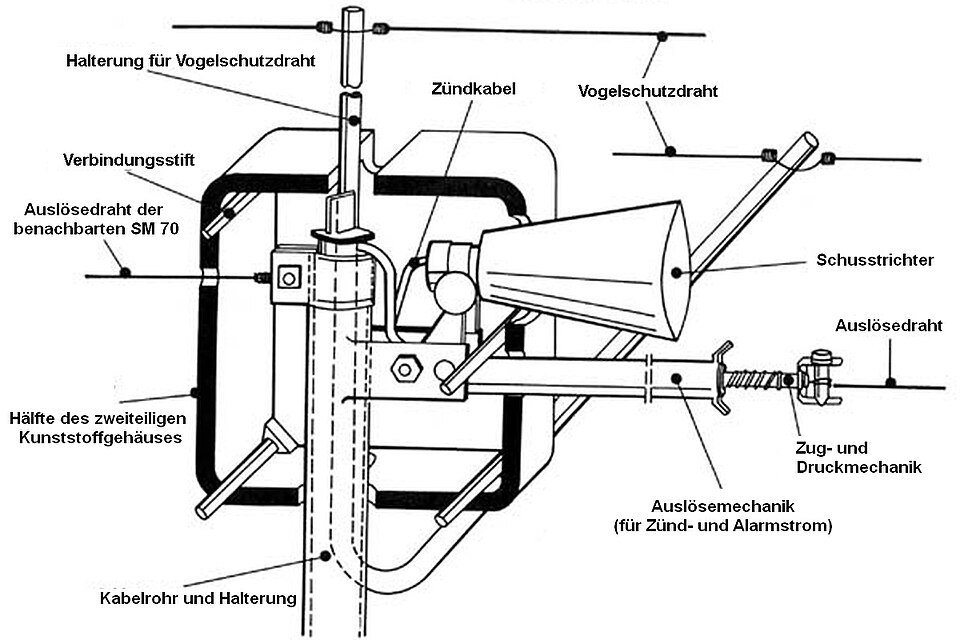
Judt reads the credits less as cash than as a signal that reopened the door to other Western lenders. No formal price was attached, but the GDR made concessions on travel and visits, and took down the fragmentation mines and spring-guns on its border with the Federal Republic by the end of 1985.

A technical drawing of a cone-shaped mine mounted on a fence post, with German labels.
The SM-70, the fragmentation mine fixed to the GDR’s border fence, in a 1973 US Army drawing. The GDR took the mines down by the end of 1985.Document: U.S. Army, V Corps, 1973. Wikimedia Commons. Public domain.
Five men in suits talking in a panelled room with antlers on the wall; Strauß stands at the right.
Franz Josef Strauß (right), Bavaria’s minister-president, receives the GDR minister Hans Reichelt (second from right) in Munich, 12 October 1983 (archive caption, ADN).Photo: Bundesarchiv, Bild 183-1983-1012-036 / Gahlbeck, Friedrich / CC BY-SA 3.0 de

05Autumn 1989

Five weeks from a television interview to flight

On 30 October 1989 a youth-television programme introduced Schalck to East German viewers, and asked about the Western goods supplied to the Politburo’s estate at Wandlitz. In the weeks that followed, people found an IMES arms depot at Kavelstorf near Rostock and the antiques warehouse at Mühlenbeck.

Demonstrators outside a large building holding a banner that demands the handing-over of Schalck-Golodkowski.
East Berlin, 3 December 1989, the day Schalck fled: artists at a rally outside the SED Central Committee building, during its 12th session, carry a banner reading “Auslieferung von Schalck-Golodkowski”, a demand that he be handed over (archive caption, ADN).Photo: Bundesarchiv, Bild 183-1989-1203-016 / Senft, Gabriele / CC BY-SA 3.0 de
A gate and gatehouse at the entrance of a wooded estate.
The gate of the Waldsiedlung at Wandlitz, the closed housing estate of the SED leadership, 2004. The youth-television interview of 30 October 1989 that introduced Schalck to East German viewers was about Western goods for this estate.Photo: Mazbln, 2004. Wikimedia Commons. CC BY-SA 3.0.

Schalck crossed to West Berlin in the night of 2–3 December 1989. His deputy was arrested on 6 December 1989, and by the end of March 1990 KoKo had stopped work.

A Bundestag committee of inquiry sat from 6 June 1991 and reported on 27 May 1994. On 31 January 1996 a Berlin court gave Schalck a one-year suspended sentence for breaking the Allied embargo law in 36 cases, a verdict the Federal Court of Justice upheld. He died in Bavaria on 21 June 2015.

Alexander Schalck-Golodkowski, on a true-scale time line

KoKo carried the GDR through its worst debt crisis with a credit from its fiercest Western critic. Its own citizens learned it existed only in the last weeks.

Press & citation

Use this Berlinfographic

Free to publish under CC BY 4.0 — in print, online, on Wikipedia and in teaching, commercially or not — with credit to Berlinfographics and a link to this page.

KoKo: Schalck-Golodkowski and the GDR’s hard-currency empire: ready-to-use landscape image

Ready-to-use image

The infographic as one image: headline, key figures, chart, sources and credit, 2,400 × 1,350 px PNG. Please use it unedited.

Download landscape (PNG)
KoKo: Schalck-Golodkowski and the GDR’s hard-currency empire: square version

Square format

A 1:1 version for social media and narrow columns, 1,800 × 1,800 px.

Download square (PNG)
KoKo: Schalck-Golodkowski and the GDR’s hard-currency empire: portrait version

Portrait 4:5

For Instagram and LinkedIn feeds, 1,620 × 2,025 px.

Download portrait (PNG)

Credit line

Berlinfographics (berlinfographics.com), CC BY 4.0

Citation

Berlinfographics (2026). “KoKo: Schalck-Golodkowski and the GDR’s hard-currency empire”. Berlin Experiences. https://berlinfographics.com/koko-schalck/

Wikipedia

{{cite web |title=KoKo: Schalck-Golodkowski and the GDR’s hard-currency empire |url=https://berlinfographics.com/koko-schalck/ |website=Berlinfographics |publisher=Berlin Experiences |date=2026-11-09 |access-date=2026-11-09}}