Berlinfographicsby Berlin Experiences

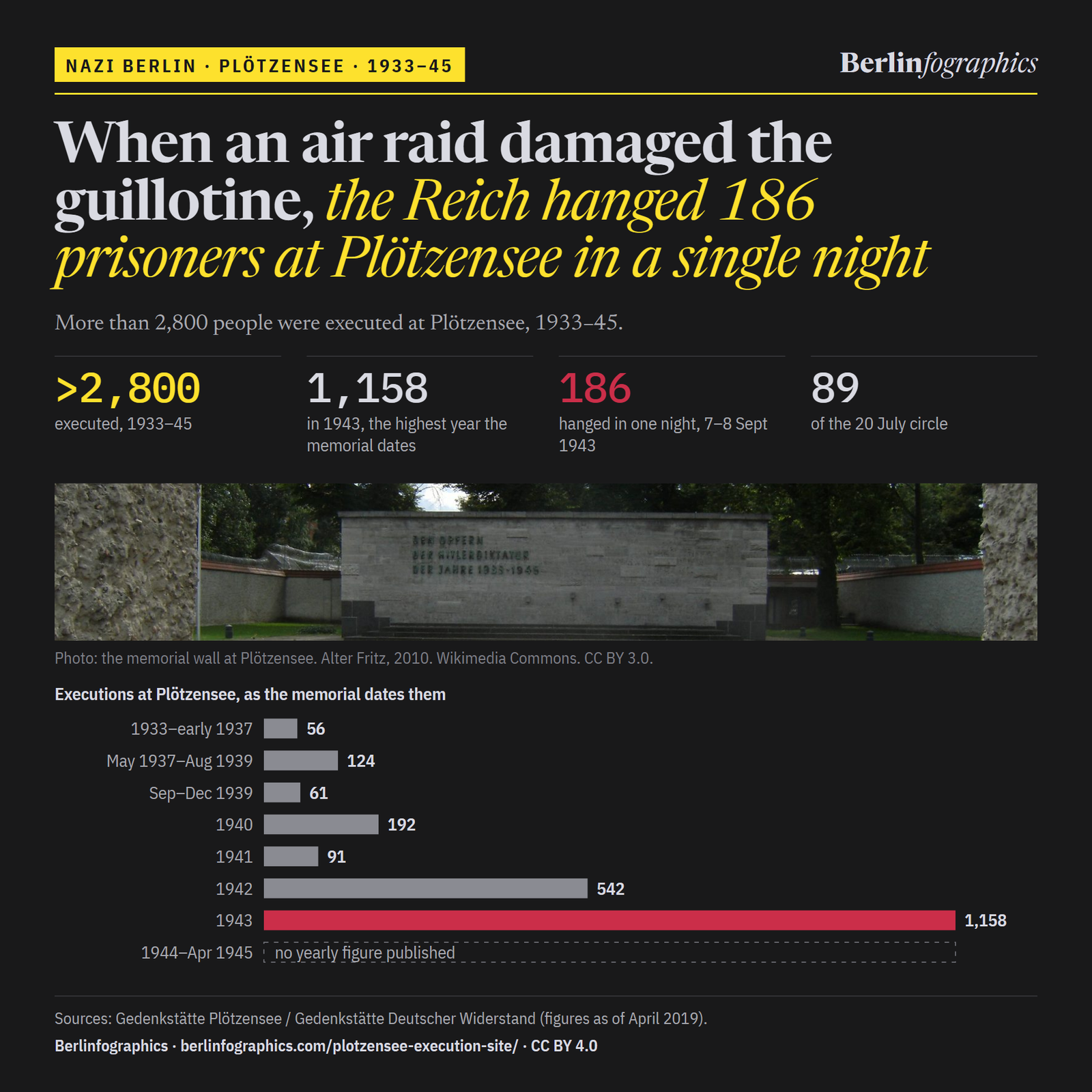
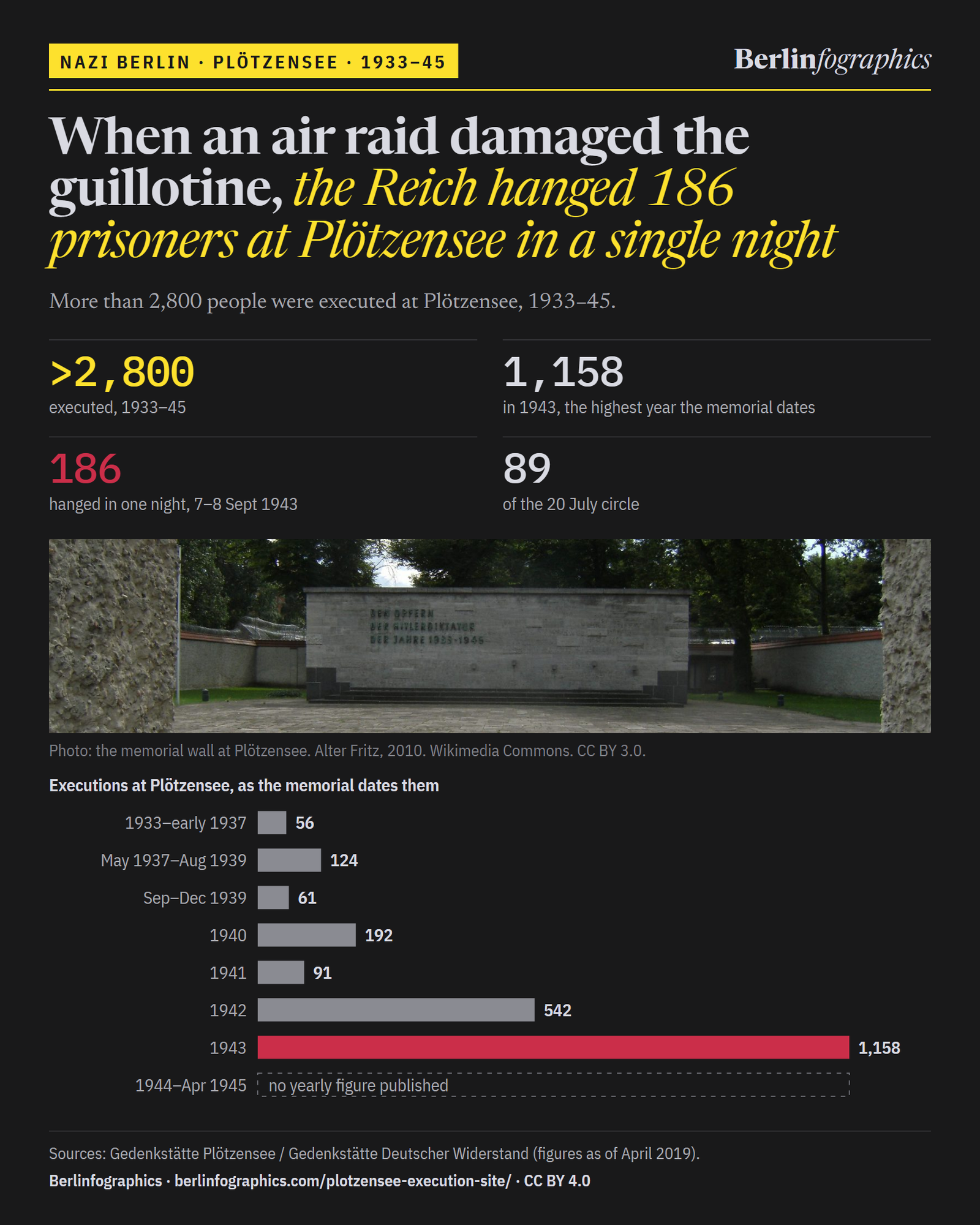
The memorial wall in the courtyard of the Gedenkstätte Plötzensee. The execution shed stands behind it.Alter Fritz, 2010. Wikimedia Commons. CC BY 3.0.

Plötzensee · 1933–45

When an air raid damaged the guillotine, the Reich hanged 186 prisoners at Plötzensee in a single night

Between 1933 and 1945 more than 2,800 people from 20 nations were beheaded or hanged in Plötzensee prison, in Charlottenburg, most of them in a brick shed in its yard. The memorial dates 1,158 of them to 1943 alone.

over2,800
people executed, 1933–45, from 20 nations
1,158
executions in 1943, the highest yearly count the memorial publishes
186
hanged in the night of 7–8 September 1943
89
of the 20 July circle, 8 Aug 1944 – 9 Apr 1945

01Strafgefängnis Plötzensee

Almost one in four of the executions ordered by German courts took place here

Plötzensee prison, opened in 1879 on the edge of Charlottenburg, was an ordinary jail for short sentences. Under the Nazis it became the execution place for the courts of Berlin. German courts sentenced at least 16,560 people to death between 1933 and the end of the war; 11,881 were executed by the end of 1944, and almost one quarter of those executions took place here.

Until early 1937 the condemned were beheaded with a hand axe in a prison yard. On 14 October 1936 Hitler decided, on the proposal of his justice minister Franz Gürtner, that death sentences would be carried out by guillotine. In 1937 a work barrack in the prison yard was fitted with one, brought from the prison at Bruchsal in Baden. The barrack is two brick rooms under a low gable roof; the killings took place in the northern room.

Detail of a coloured city map showing the Plötzensee lake, cemeteries, a military bathing establishment and a walled prison compound.
Plötzensee on a Berlin map of 1914–15: the lake, the cemeteries and the prison beside them.Lithographische Anstalt von Leopold Kraatz, Berlin, 1914–15. Wikimedia Commons. Public domain.
A single-storey red-brick building with barred, arched windows and two arched doorways, seen across a lawn in spring sunlight.
The execution shed in 2015: two brick rooms under a low gable roof. The executions took place in the northern room.A.Savin, 2015. Wikimedia Commons. CC BY-SA 3.0.

02Year by year

In 1943 alone the memorial counts more executions than in the ten years before it

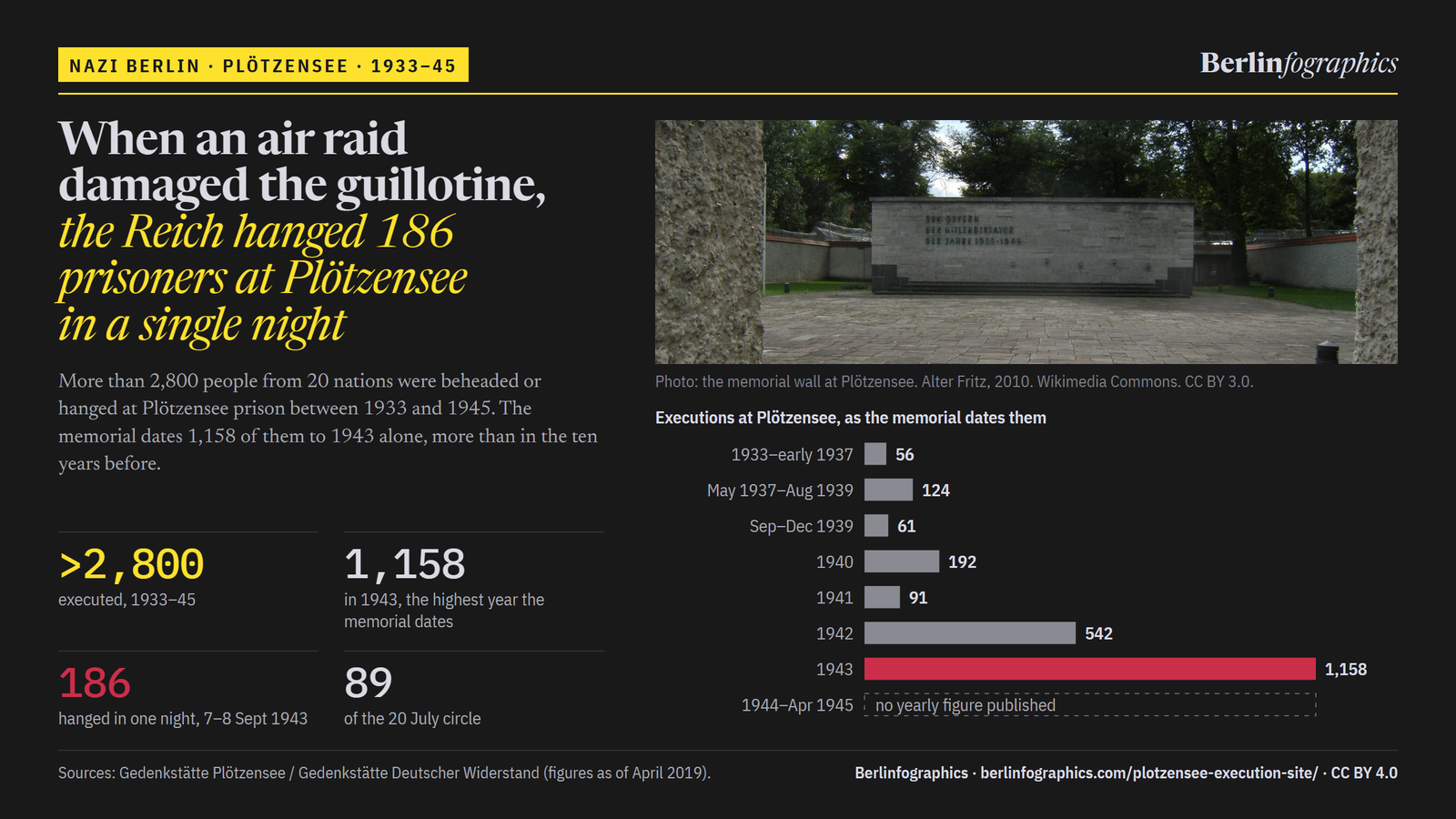
The Gedenkstätte publishes its count in seven periods, from 1933 to the end of 1943: 2,224 executions in all. In 1943 there were 1,158; in the ten years from 1933 to 1942, 1,066. For 1944 and 1945 it publishes no yearly figure, and none is drawn here.

Executions at Plötzensee, as the memorial dates them

Executions at Plötzensee in the periods the memorial dates them, drawn as bars on one linear scale: 1933 to early 1937, May 1937 to August 1939, the last four months of 1939, 1940, 1941, 1942 and 1943. For 1944 to April 1945 the memorial publishes no figure; only the people of the 20 July circle are counted there.
Executions in the period readOther periodsNo figure published
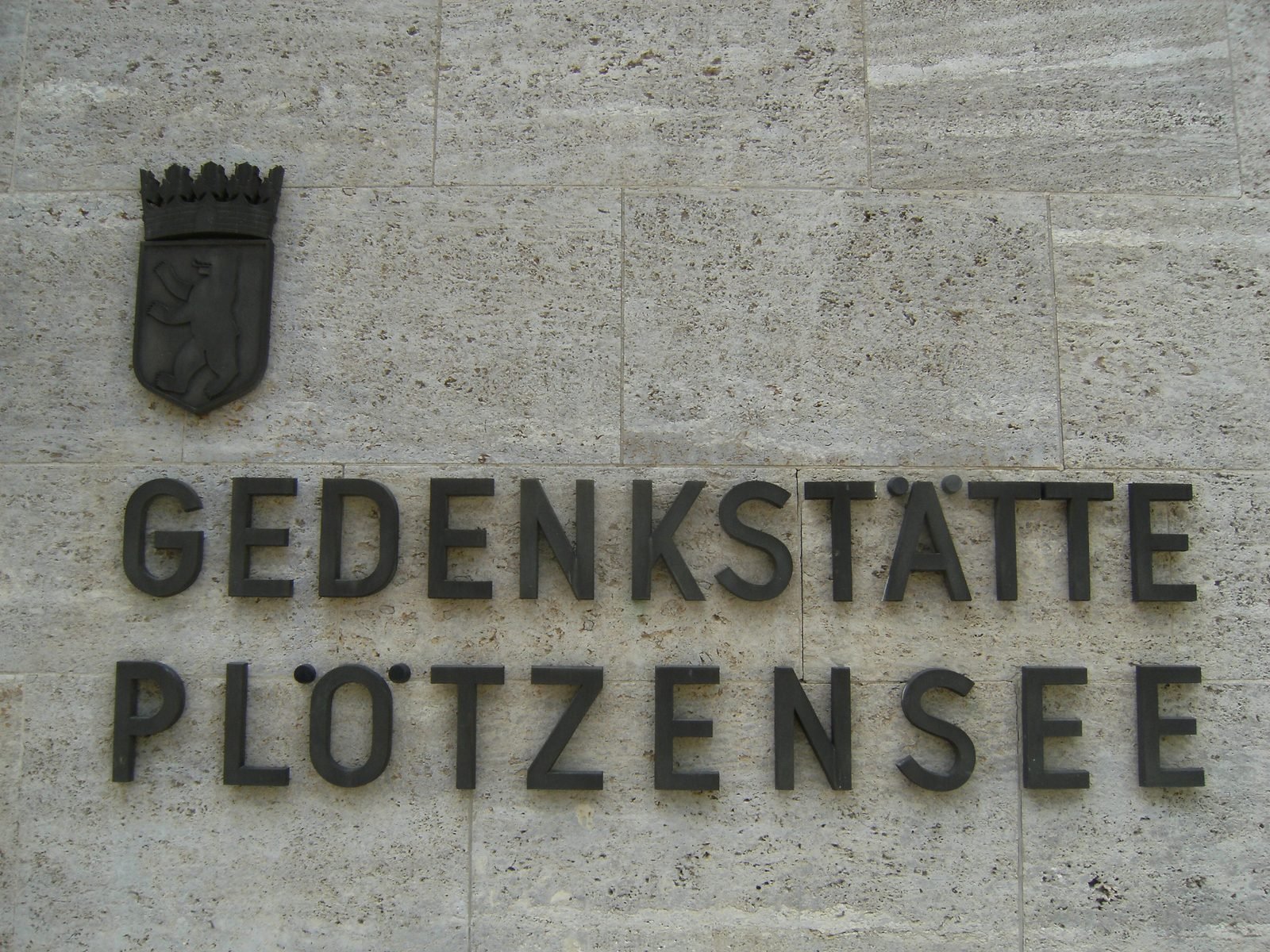
The words Gedenkstätte Plötzensee and the Berlin bear coat of arms in bronze letters on a stone pier.
The memorial’s gate on Hüttigpfad.Alter Fritz, 2010. Wikimedia Commons. CC BY 3.0.

1933 – early 1937

56 beheaded with a hand axe

In the first four years the prison yard saw 56 executions, all with the hand axe. The shed was not yet in use.

The red-brick front of a small building with an open arched doorway between two barred, arched windows.
The doorway of the execution shed, 2010.Alter Fritz, 2010. Wikimedia Commons. CC BY-SA 3.0.

May 1937 – August 1939

124 in the shed, by guillotine

From May 1937 the condemned were killed in the barrack with the guillotine from Bruchsal: 124 people in twenty-eight months.

A bound book with a pale linen cover lettered Ehrenbuch der Opfer von Berlin-Plötzensee.
The Ehrenbuch, the book of the victims’ names, kept at the memorial.BrThomas at de.wikipedia, 2011. Wikimedia Commons. Public domain.

September 1939 – 1941

War, and the count rises at once

After the war began in September 1939 the number rose quickly: 61 in the last four months of 1939, 192 in 1940, 91 in 1941.

A white plaque with two paragraphs of German text describing the Rote Kapelle resistance network.
A memorial plaque to the Rote Kapelle, Schulze-Boysen-Straße 12, Berlin-Lichtenberg, 2013.OTFW, Berlin, 2013. Wikimedia Commons. CC BY-SA 3.0.

1942

542, and a beam for hanging

Roland Freisler became president of the Volksgerichtshof, the People’s Court, in 1942. At the end of the year a steel beam carrying eight iron hooks was fitted across the execution room. The first to be hanged from it, in December 1942, were members of the resistance organisation Rote Kapelle.

A single-storey red-brick building with barred, arched windows and two arched doorways, seen across a lawn in spring sunlight.
The execution shed in 2015: two brick rooms under a low gable roof. The executions took place in the northern room.A.Savin, 2015. Wikimedia Commons. CC BY-SA 3.0.

1943

1,158 executions in one year

More than in all the ten years before: 1,066 from 1933 to 1942. More than 250 of them were killed in four days of September, after an air raid damaged the guillotine.

Black-and-white photograph of a man in a dark suit led between two uniformed police guards.
Peter Yorck von Wartenburg before the Volksgerichtshof, 1944.Bundesarchiv, Bild 151-03-26 / Unknown / CC BY-SA 3.0 de

1944 – April 1945

No yearly figure is published

The memorial gives no count for 1944 or 1945. One group is counted: 89 people of the 20 July 1944 resistance circles, killed here between 8 August 1944 and 9 April 1945. Soldiers of the Red Army freed the prison on 25 April 1945.

033 – 10 September 1943

The guillotine was damaged. The Ministry of Justice ordered the prisoners hanged instead

In the night of 3–4 September 1943 an air raid on Berlin hit the prison and damaged the guillotine in the shed. Over 300 condemned prisoners were waiting in House III. On 7 September 1943 the Reich Ministry of Justice, at Hitler’s personal request, resolved to execute all of them in rapid succession. Its state secretary, Curt Rothenberger, ordered the first 142 hanged that day.

The nights of 7 to 10 September 1943 · one square is one person

The 186 are the memorial’s count for the first night. For the nights to 10 September it gives “over 60” more, and “more than 250” in all; the outlined squares are that minimum, not a count.

The guillotine could only be repaired weeks later, so the prisoners were hanged. The names were checked against lists in haste. Some of those hanged in the first night had not yet had their pleas for clemency decided: four, by the memorial’s 2002 guide; six, by its website today.

“The executions had to be carried out by candlelight because the electric light had failed.”
Harald Poelchau, the prison's Protestant chaplain

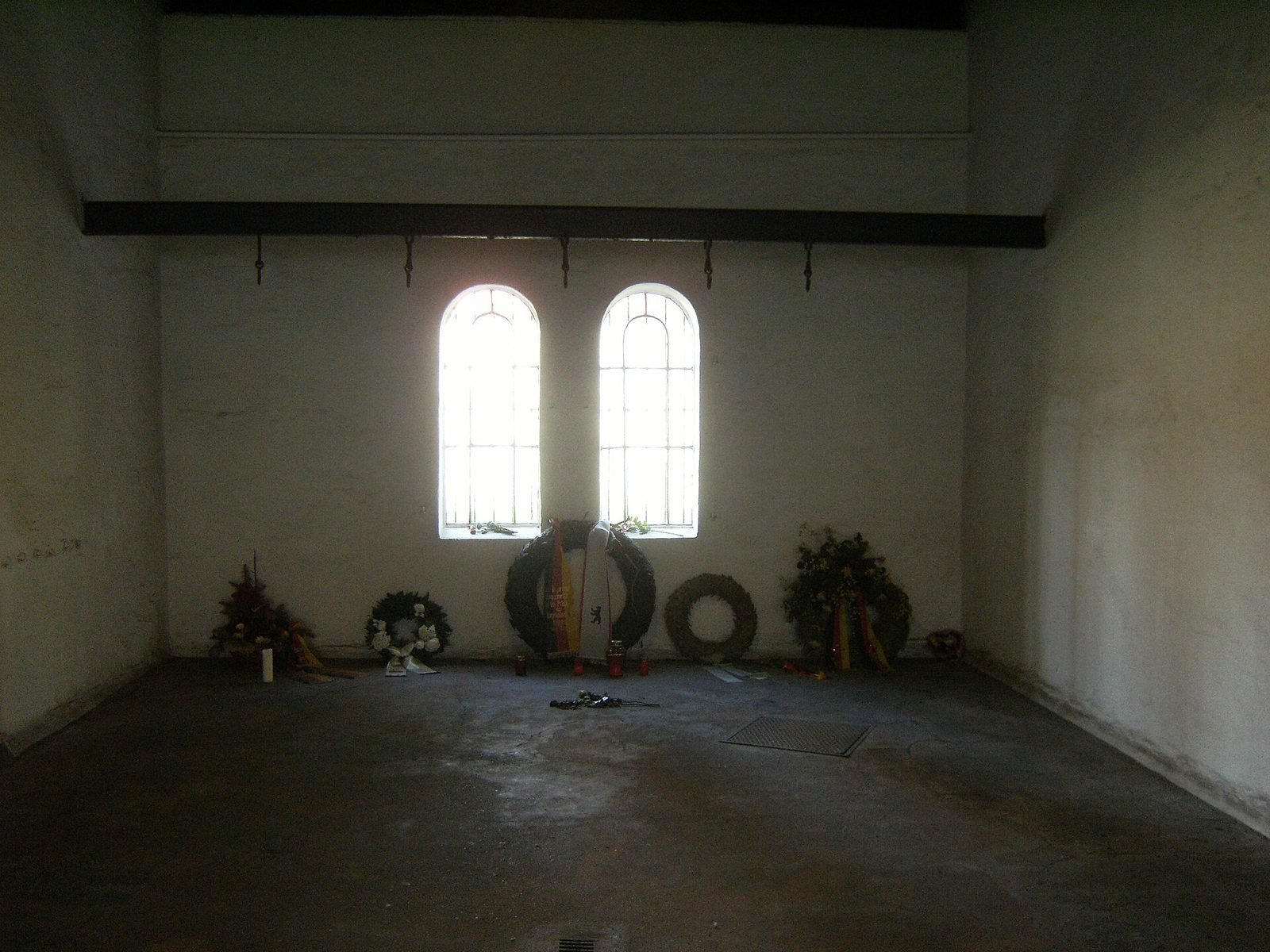
A bare whitewashed room with two arched windows; wreaths stand on the floor beneath them and a dark iron beam crosses the room under the ceiling.
The former execution room, now the memorial room, 2010. The iron beam still runs across it below the ceiling.Alter Fritz, 2010. Wikimedia Commons. CC BY-SA 3.0.

04From twenty nations

Communists and conspirators, a caretaker and a seventeen-year-old

Many of those killed here had resisted the regime: Communists, the Rote Kapelle network, the Kreisau Circle, the officers and civilians of 20 July 1944. Many others were condemned by special courts for petty offences, and many were foreigners from the occupied countries. More than 50 members of the Rote Kapelle alone were hanged or beheaded at Plötzensee.

A printed notice in black-letter type headed Bekanntmachung, announcing that the 17-year-old Helmuth Hübener from Hamburg has been executed.
A brass paving stone engraved: Hier wohnte Helmuth Hübener, Jg. 1925, enthauptet 27.10.1942 Berlin-Plötzensee.

Helmuth Hübener

Executed 27 October 1942

A young man from Hamburg who, with friends, wrote leaflets on the war from what they heard on foreign radio. The Volksgerichtshof sentenced him to death on 11 August 1942. The notice of his execution gave his age: 17.

The public notice of Helmuth Hübener’s execution, issued by the chief prosecutor at the Volksgerichtshof, Berlin, 27 October 1942. Oberreichsanwalt beim Volksgerichtshof, 1942. Wikimedia Commons. Public domain. · Helmuth Hübener’s Stolperstein, Sachsenstraße 42, Hamburg: „Enthauptet 27.10.1942 Berlin-Plötzensee“. Hinnerk11, 2015. Wikimedia Commons. CC BY-SA 4.0.

A gloved hand presses two small brass-topped paving stones into a gap in a cobbled pavement.

Mildred Harnack

Executed 16 February 1943

She grew up in Milwaukee, Wisconsin, taught literature in Berlin, and with her husband Arvid was at the centre of a resistance circle. The Reich Military Court gave her six years in prison; Hitler refused to accept the verdict, and a second trial sentenced her to death.

The Stolpersteine for Mildred and Arvid Harnack being set into a Berlin pavement, 2013. usbotschaftberlin, 2013. Wikimedia Commons. Public domain.

No photograph of him is known to us. His name is in the memorial’s book of the dead.

Hans Dobroszczyk

Executed 3 March 1943

A caretaker, born in 1907. Denounced for picking up a bag from a bombed site, he was sentenced to death by a Berlin special court on 2 March 1943 and beheaded the next morning.

Black-and-white photograph of a courtroom: a man in a dark suit speaks from the dock, flanked by uniformed police guards.

Helmuth James von Moltke

Executed 23 January 1945

One of the leading minds of the Kreisau Circle, which planned a Germany after Hitler. The Volksgerichtshof sentenced him to death on 11 January 1945.

Helmuth James von Moltke before the Volksgerichtshof, at his trial after 20 July 1944. Bundesarchiv, Bild 151-08-01A / Unknown / CC BY-SA 3.0 de

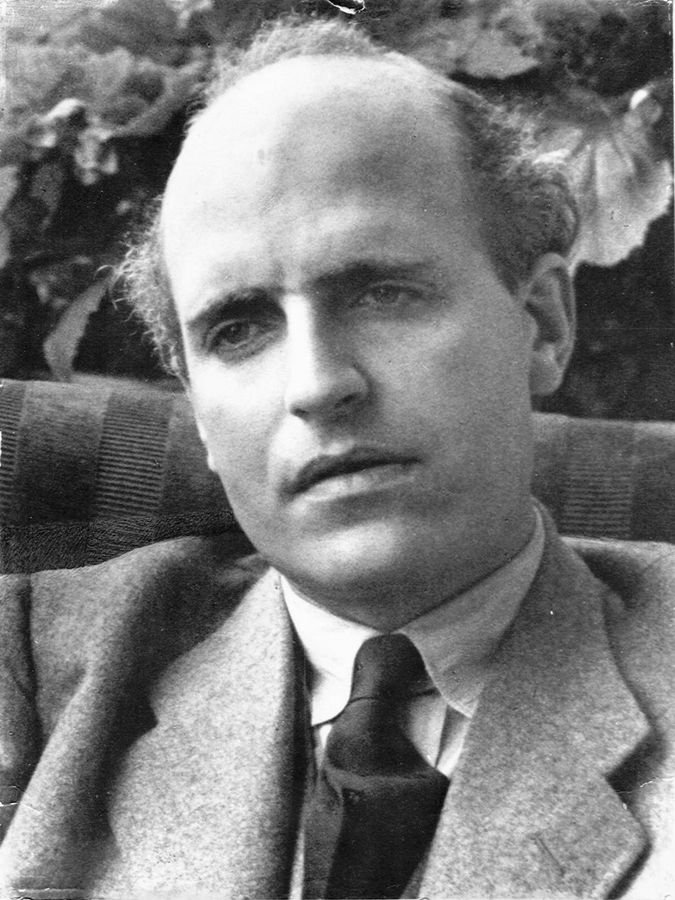
Black-and-white portrait of a man with a high forehead in a dark suit and tie.

Adam von Trott zu Solz

Executed 26 August 1944

A diplomat. The Volksgerichtshof sentenced him to death on 15 August 1944; he was hanged at Plötzensee eleven days later.

Adam von Trott zu Solz, 1943. Familie von Trott, 1943. Wikimedia Commons. Public domain.

Black-and-white photograph of a man in a dark suit led between two uniformed police guards.

Peter Yorck von Wartenburg

Executed 8 August 1944

With Field Marshal Erwin von Witzleben, tried in the first 20 July trial and hanged the same day. Their executions were filmed: Hitler ordered camera teams to record them.

Peter Yorck von Wartenburg before the Volksgerichtshof, 1944. Bundesarchiv, Bild 151-03-26 / Unknown / CC BY-SA 3.0 de

The 89 of 20 July

After the failed attempt on Hitler’s life the Volksgerichtshof held more than 55 trials, with over 100 death sentences; those condemned were hanged at Plötzensee the same day. Between 8 August 1944 and 9 April 1945, 89 people of the 20 July circles and their helpers were killed here.

The 20 July plot, and how it failed →

05How many

“More than 2,800”: the memorial counts its dead as a floor, not a sum

The Gedenkstätte’s own figure has grown as the records were worked through: over 2,500 in its guide of 2002, more than 2,800 in its calculation of April 2019. A precise 2,891 circulates widely; the memorial itself does not publish it. The years it does date add up to 2,224, to the end of 1943.

The count of the dead, by who gives it · one linear scale from zero

A line ending in an arrow is a minimum (“over”, “more than”). The 2,891 is repeated on visitBerlin’s page for the memorial, while its exhibition page gives “more than 2,800”; no publication of the memorial or the Gedenkstätte Deutscher Widerstand that we could find gives it.

06Hüttigpfad, since 1952

The shed was never torn down. Since 1952 it has been a memorial

West Berlin dedicated the Gedenkstätte Plötzensee on 14 September 1952. The stone wall in front of the shed carries the words “Den Opfern der Hitlerdiktatur der Jahre 1933 - 1945”, to the victims of Hitler’s dictatorship. The senator who opened it spoke of more than 2,000 victims executed on this spot. An urn in the courtyard holds earth from the concentration camps: “In honor and remembrance of the victims of the concentration camps”.

The execution room is a memorial room today; the iron beam still crosses it. The Gedenkstätte Deutscher Widerstand runs the site, and with the Landesarchiv Berlin keeps an online book of the dead. The prison around it is still in use.

The words Gedenkstätte Plötzensee and the Berlin bear coat of arms in bronze letters on a stone pier.
The memorial’s gate on Hüttigpfad, 2010.Alter Fritz, 2010. Wikimedia Commons. CC BY 3.0.
A tall stone urn with a lid on a paved courtyard, a small inscribed plaque set into the paving before it.
The stone urn in the courtyard, in remembrance of the victims of the concentration camps.Alter Fritz, 2010. Wikimedia Commons. CC BY 3.0.
A paved path leads between two tall stone piers and an iron gate towards a courtyard.
The way into the memorial from Hüttigpfad, 2010.Alter Fritz, 2010. Wikimedia Commons. CC BY 3.0.

In the ten years from 1933, 1,066 people were executed at Plötzensee. In 1943 alone, 1,158.

In all, more than 2,800, from 20 nations. Their record is still incomplete.

Press & citation

Use this Berlinfographic

Free to publish under CC BY 4.0 — in print, online, on Wikipedia and in teaching, commercially or not — with credit to Berlinfographics and a link to this page.

Plötzensee, 1933–45: ready-to-use landscape image

Ready-to-use image

The infographic as one image: headline, key figures, chart, sources and credit, 2,400 × 1,350 px PNG. Please use it unedited.

Download landscape (PNG)
Plötzensee, 1933–45: square version

Square format

A 1:1 version for social media and narrow columns, 1,800 × 1,800 px.

Download square (PNG)
Plötzensee, 1933–45: portrait version

Portrait 4:5

For Instagram and LinkedIn feeds, 1,620 × 2,025 px.

Download portrait (PNG)

Credit line

Berlinfographics (berlinfographics.com), CC BY 4.0

Citation

Berlinfographics (2026). “Plötzensee, 1933–45”. Berlin Experiences. https://berlinfographics.com/plotzensee-execution-site/

Wikipedia

{{cite web |title=Plötzensee, 1933–45 |url=https://berlinfographics.com/plotzensee-execution-site/ |website=Berlinfographics |publisher=Berlin Experiences |date=2026-11-09 |access-date=2026-11-09}}