Berlinfographicsby Berlin Experiences

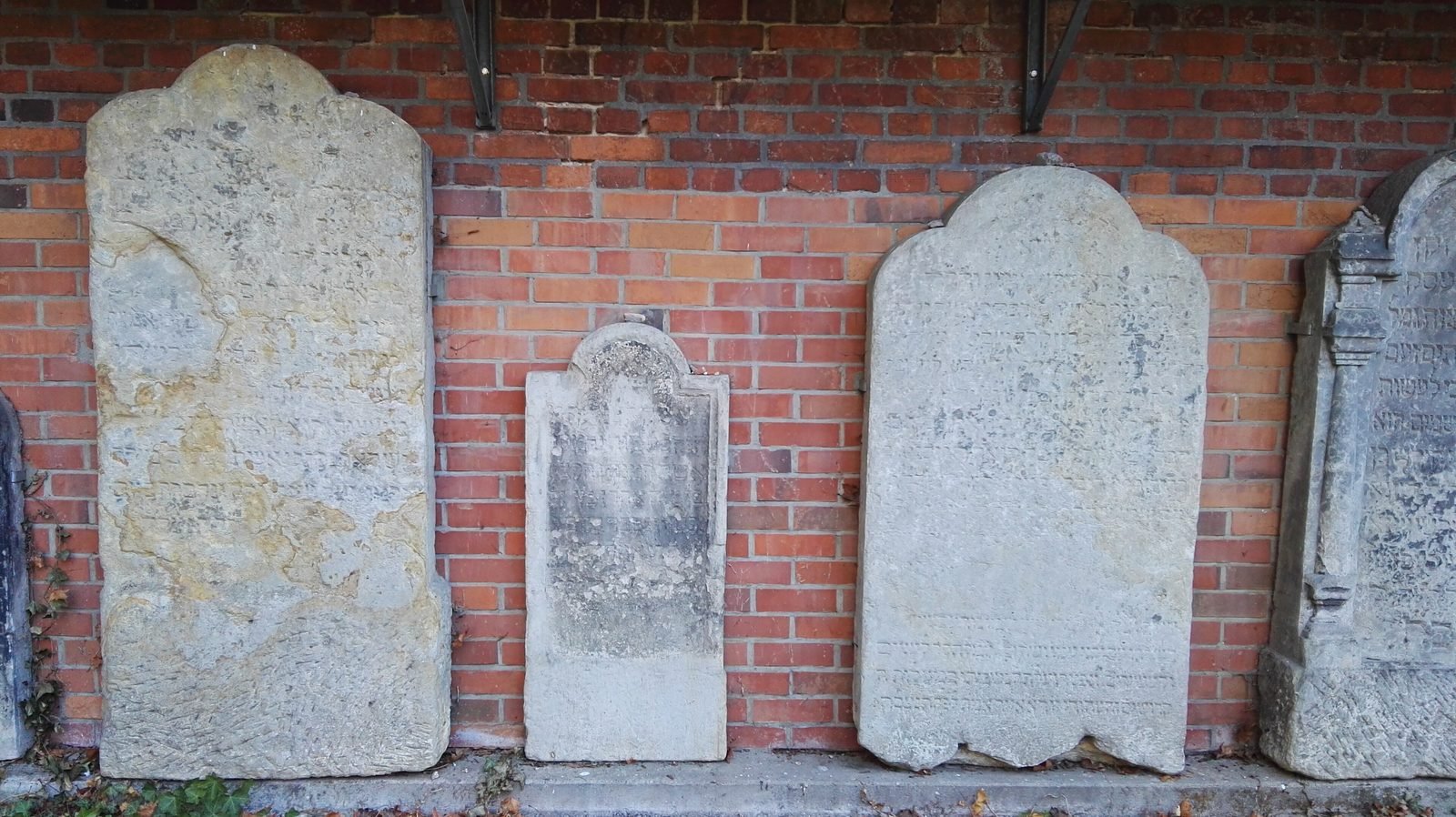
Gravestones in the wall of the Jewish cemetery in the Große Hamburger Straße, Mitte, where the community buried its dead from 1672 to 1827.Z thomas, 2017. Wikimedia Commons. CC BY 3.0.

Brandenburg · 21 May 1671

Berlin’s Jewish community began with an edict that forbade it a synagogue

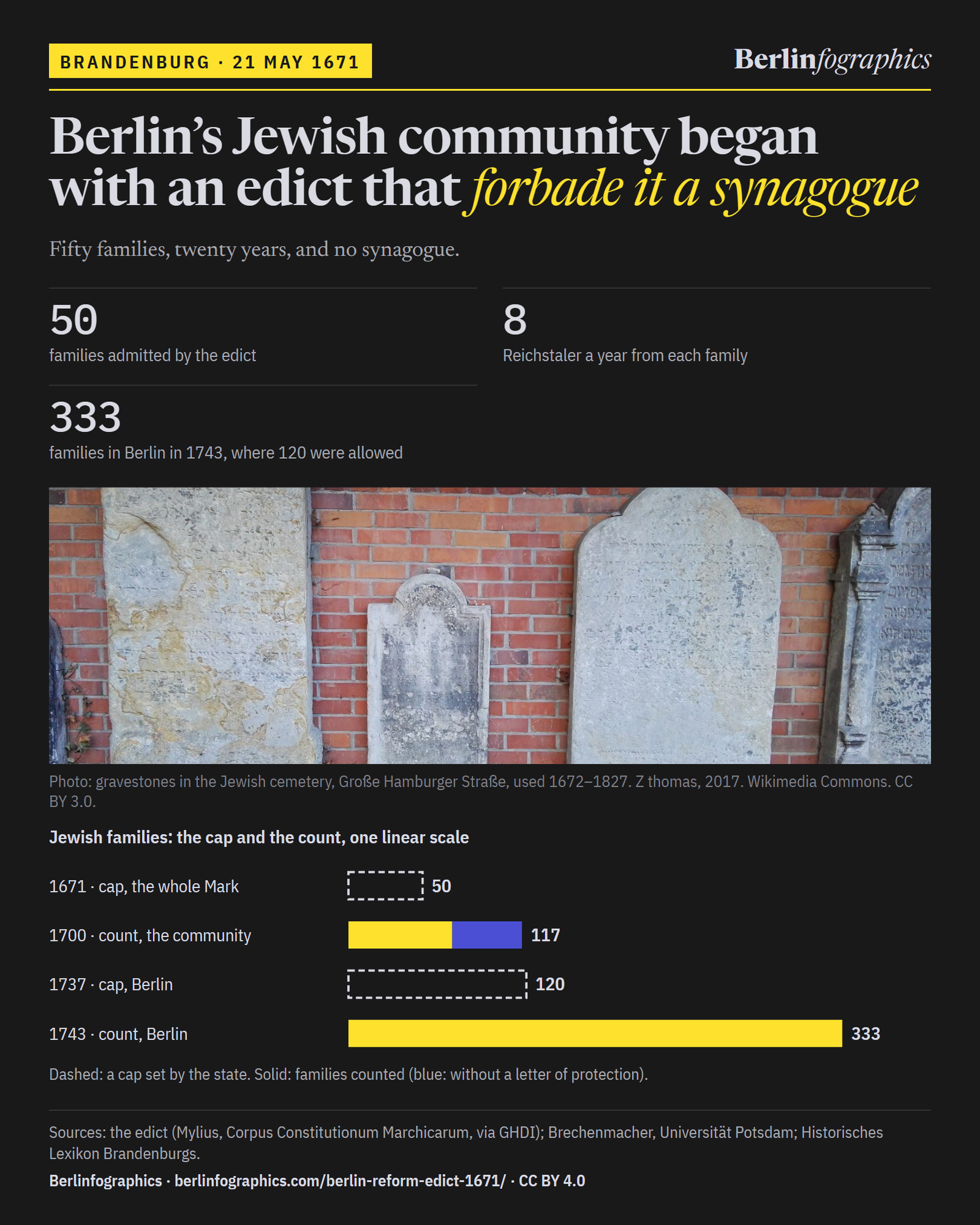
On 21 May 1671 the Great Elector let fifty Jewish families expelled from Vienna settle in Brandenburg: for twenty years, for eight Reichstaler a family a year, and on condition that they prayed only in their own houses.

50
Jewish families admitted to the Mark Brandenburg
20
years of protection, renewable, and revocable before they were up
8
Reichstaler a year from every family, and a gold gulden at each wedding
43
years until the first synagogue was consecrated, in 1714
01Vienna · Kölln an der Spree

An emperor expelled them; an elector went looking for the rich among them

In 1670 Emperor Leopold I expelled the Jews of Vienna. The Historisches Lexikon Brandenburgs counts 1,346 people driven out of the city. The historian Thomas Brechenmacher puts those forced out of the whole archduchy, Lower Austria included, at 2,000 to 3,000 by 1671.

Brandenburg had expelled its own Jews in 1573. By the 1660s only one Jew, the court supplier Israel Aron, had been given the right to live in the Mark again, in 1665.

How many were expelled: two counts, two areas

a counta range: the source gives a span

One linear scale of people. The two figures cover different areas and come from different sources, so both are shown.

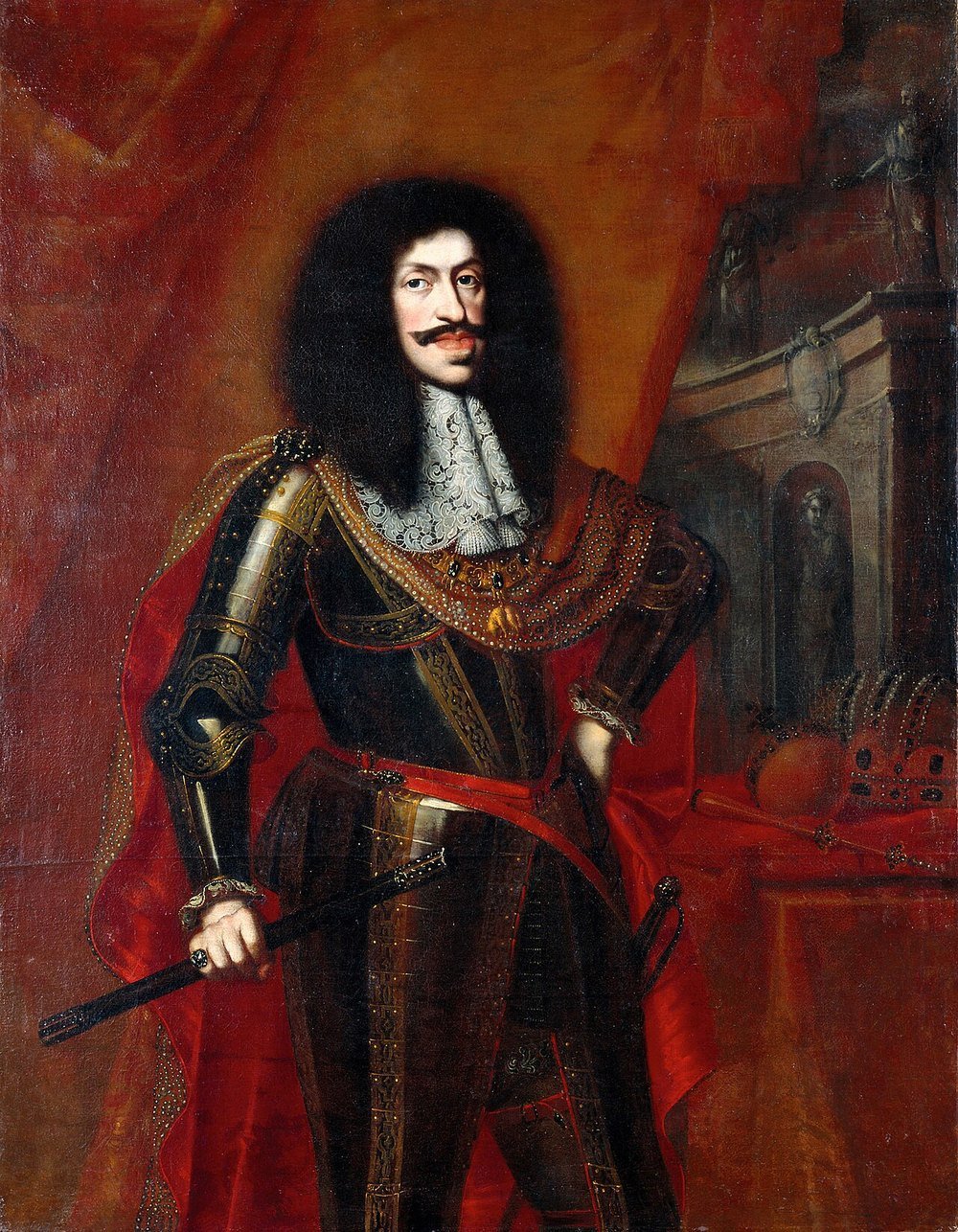
Three-quarter portrait of Emperor Leopold I in armour, holding a commander’s baton.
Emperor Leopold I, who expelled the Jews of Vienna in 1670, painted by Benjamin Block in 1672.Benjamin Block, 1672. Kunsthistorisches Museum Wien. Wikimedia Commons. Public domain.
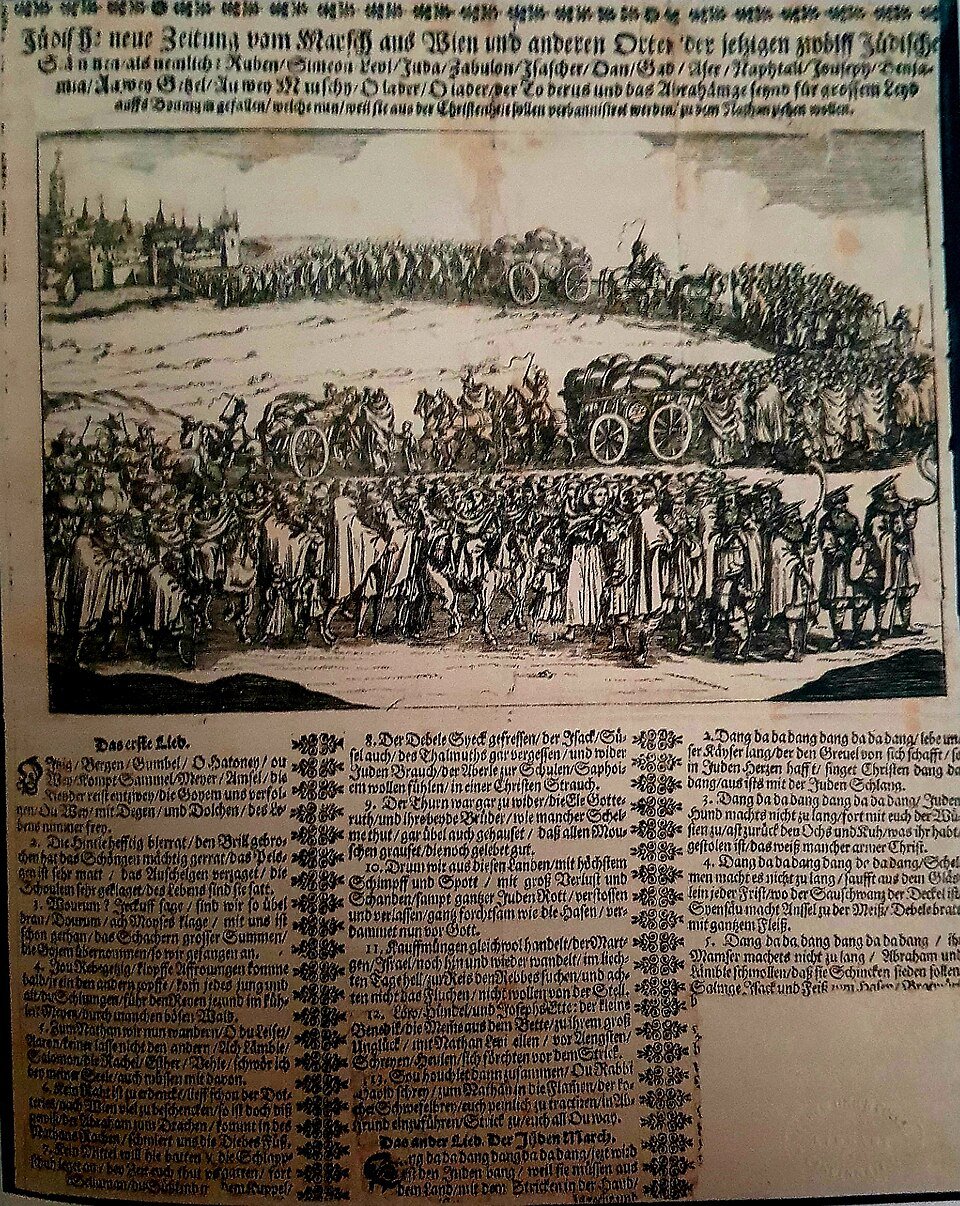
An old printed broadsheet: an engraving of a long column of people and covered carts leaving a walled city, above columns of Gothic-type verse.
A hostile broadsheet of about 1670 on the expulsion of the Jews from Vienna. Its verses mock them; its picture shows the column of carts and people leaving the city.Broadsheet, about 1670; photograph: Ari Fischkopf, 2020. Wikimedia Commons. CC BY-SA 4.0.

Berlin watched. In April 1670 the Elector’s government told its resident in Vienna that forty to fifty families could be taken in, on one condition:

„daferne es reiche, wohlhabende Leute wären““provided they were rich, well-to-do people” (our translation)

Portrait of the Great Elector in armour and an ermine-lined electoral mantle, with a long curled wig.
Friedrich Wilhelm, Elector of Brandenburg, the “Great Elector”, painted by Gedeon Romandon in 1687.Gedeon Romandon, 1687. Wikimedia Commons. Public domain.

02Potsdam · 21 May 1671

Ten articles, and the title already said no synagogue

A delegation of Austrian Jews came to Berlin to negotiate. The edict, signed on 21 May 1671, names three of them as its petitioners. Its title carried its condition. Scroll through its articles: each card quotes the printed 1671 text, with our English translation.

The title, as printed

„Edict wegen auffgenommenen 50. Familien Schutz-Juden, jedoch daß sie keine Synagogen halten“

“Edict concerning the fifty families of protected Jews admitted, but on condition that they hold no synagogues” (our translation)

The edict of 21 May 1671, part by part

grantsrestrictsbothcostsorders
The edict of 21 May 1671 drawn as a page of parts: the preamble, the numbered articles and the closing clause. Each part is coloured by what it does: grants, restrictions, costs or orders to officials. As the reader scrolls, the parts each card discusses are lit.

031672–1743

The edict said fifty families. By 1743 Berlin alone had 333

The towns, the Estates and the guilds complained. In December 1672 the Elector answered that the Jews’ trade appeared „nicht schädlich, sondern vielmehr nutzbar“: not harmful, but rather useful. In June 1674 twelve heads of family signed the first statute of a Jewish community in Berlin.

The term ran out in 1691, and the letters of protection were renewed, not cancelled. The state kept setting caps: 100 families for the capital in 1730, 120 in 1737. In 1743 333 families, just under 2,000 people, lived in Berlin.

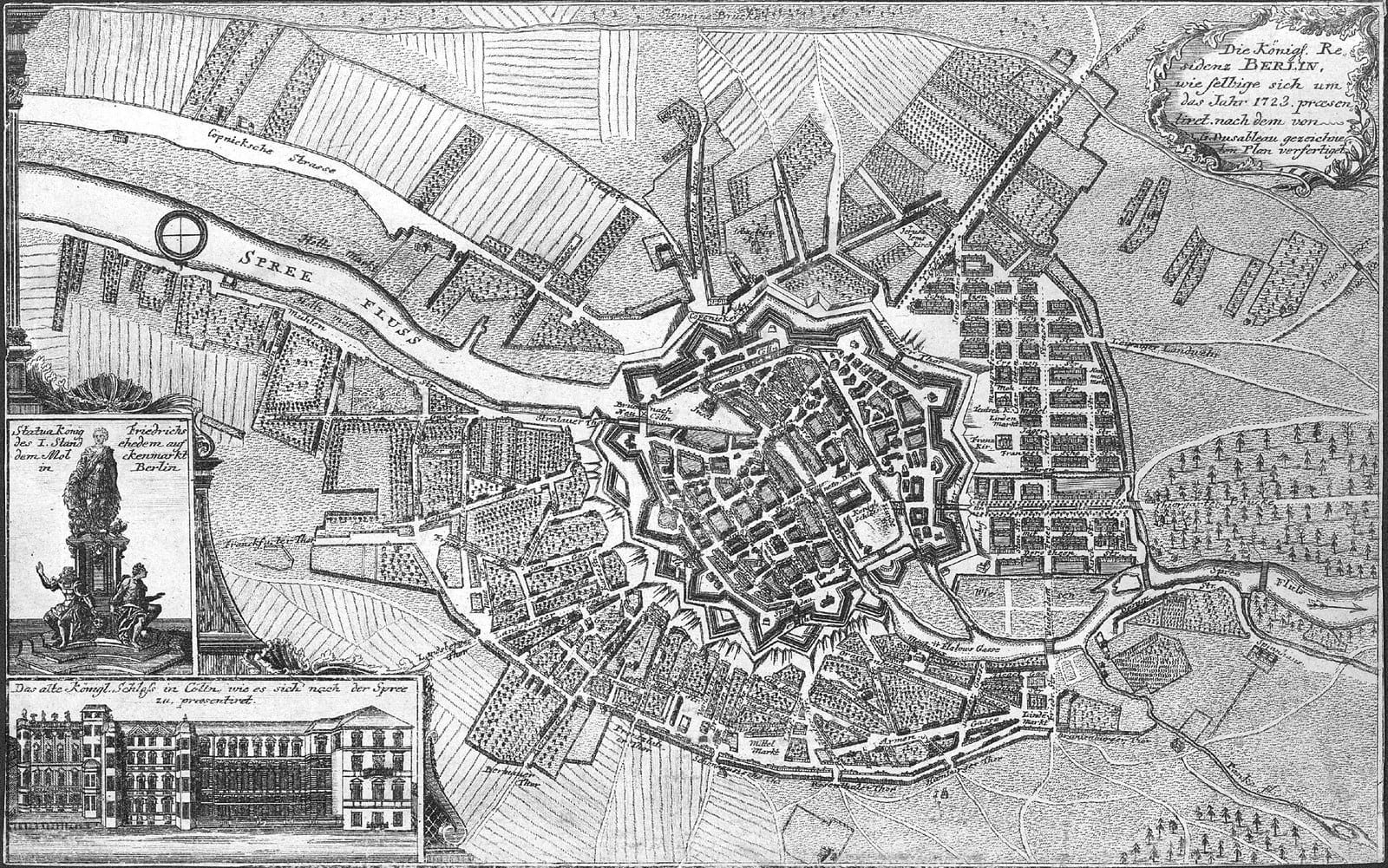
Engraved plan of Berlin in 1723, with its fortifications, the Spree, and the new western quarters.
Berlin in 1723, after the plan by Abraham Guibert Dusableau: the city of the capped and counted families.Abraham Guibert Dusableau, 1723. Wikimedia Commons. Public domain.

The cap and the count: Jewish families, on one linear scale

a cap set by the statea count of familiesof which without a letter of protection

Every bar is drawn to its figure on one scale. Each row names the area its source covers: the first cap was for the whole Mark, and the 1714 list covered the whole monarchy; the rest are Berlin. The 1700 figure is Diekmann’s; the 1714 list and the caps are Brechenmacher’s. In 1743 the count was about 2.8 times the cap.

04Heidereutergasse · Mitte

43 years after the edict, a synagogue

In September 1714 the community consecrated its first synagogue building, in the Heidereutergasse. The Centrum Judaicum gives the 7th; other sources give the 14th. What became of it, and of the synagogues that followed, is told in Berlin’s destroyed synagogues.

Oval engraved portrait of Moses Mendelssohn in a wig and coat, smiling slightly, with four lines of Dutch verse below.
Moses Mendelssohn (1729–1786), engraved by Jan Kobell after a portrait by Anton Graff.Jan Kobell (I) after Anton Graff, between 1766 and 1833. Rijksmuseum, Amsterdam. Wikimedia Commons. CC0.

051743–1786

Even Moses Mendelssohn lived on a letter of protection

Moses Mendelssohn (1729–1786) came to Berlin in 1743 as a young Talmud scholar. He became a celebrated philosopher, yet he was granted the right to live in Berlin only in 1762. In 1763 he was declared an “Extraordinary Protected Jew”. In 1779 his request to extend his letter of protection to his wife and children was refused.

He was buried in 1786 in the cemetery in the Große Hamburger Straße, in use from 1672 to 1827: the burial ground that § 8 had promised. Two years before his death, in 1784, the Historisches Lexikon counts 3,670 Jews among 145,000 Berliners: about one in 40.

Four weathered old gravestones with worn Hebrew inscriptions, set against a red brick wall.
Gravestones in the wall of the Jewish cemetery in the Große Hamburger Straße, Mitte, where the community buried its dead from 1672 to 1827.Z thomas, 2017. Wikimedia Commons. CC BY 3.0.

0629 October 1685

Fourteen years later, the same Elector issued a second invitation

On 29 October 1685 the Great Elector issued the Edict of Potsdam for French Protestants. That story is told in Berlin’s Huguenots.

Title page of a printed edict of 1685, in German and French type, under the electoral arms.
The printed Edict of Potsdam, 29 October 1685: the same Elector’s invitation to French Protestants.Der Große Kurfürst Friedrich Wilhelm (The Great Elector), 1685. Wikimedia Commons. Public domain.
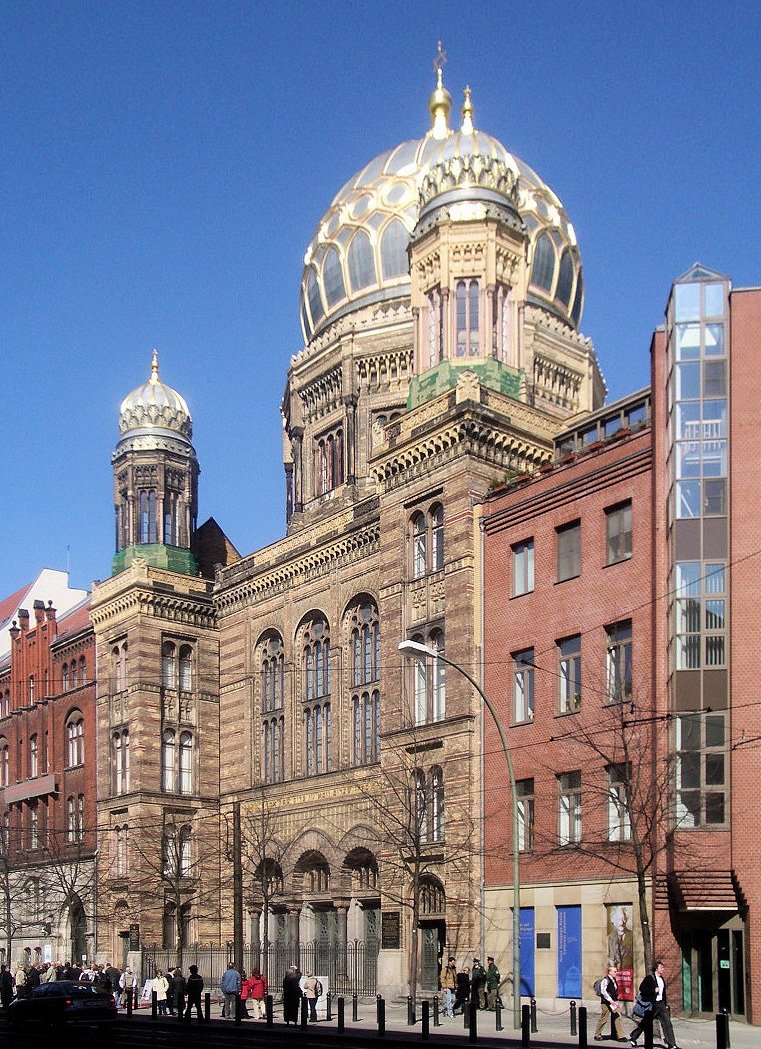
The gilded, ribbed dome and towers of the Neue Synagoge in Berlin against a blue sky.
The Neue Synagoge in the Oranienburger Straße, home of the Centrum Judaicum, which dates the founding of the Berlin Jewish community to 1671.Andreas Praefcke, 2005. Wikimedia Commons. CC BY 3.0.

The edict let fifty families in for twenty years and told them to pray at home.

In 1812, 141 years later, Prussia declared its protected Jews „Einländer und Preußische Staatsbürger“: natives and Prussian citizens.

Press & citation

Use this Berlinfographic

Free to publish under CC BY 4.0 — in print, online, on Wikipedia and in teaching, commercially or not — with credit to Berlinfographics and a link to this page.

The Great Elector’s edict of 1671: ready-to-use landscape image

Ready-to-use image

The infographic as one image: headline, key figures, chart, sources and credit, 2,400 × 1,350 px PNG. Please use it unedited.

Download landscape (PNG)
The Great Elector’s edict of 1671: square version

Square format

A 1:1 version for social media and narrow columns, 1,800 × 1,800 px.

Download square (PNG)
The Great Elector’s edict of 1671: portrait version

Portrait 4:5

For Instagram and LinkedIn feeds, 1,620 × 2,025 px.

Download portrait (PNG)

Credit line

Berlinfographics (berlinfographics.com), CC BY 4.0

Citation

Berlinfographics (2026). “The Great Elector’s edict of 1671”. Berlin Experiences. https://berlinfographics.com/berlin-reform-edict-1671/

Wikipedia

{{cite web |title=The Great Elector’s edict of 1671 |url=https://berlinfographics.com/berlin-reform-edict-1671/ |website=Berlinfographics |publisher=Berlin Experiences |date=2026-11-09 |access-date=2026-11-09}}