Berlinfographicsby Berlin Experiences

MisstrauensvotumBundestag · 27 April 1972

Rainer Barzel fell two votes short of toppling Willy Brandt. The Stasi had bought at least one of them, very probably both

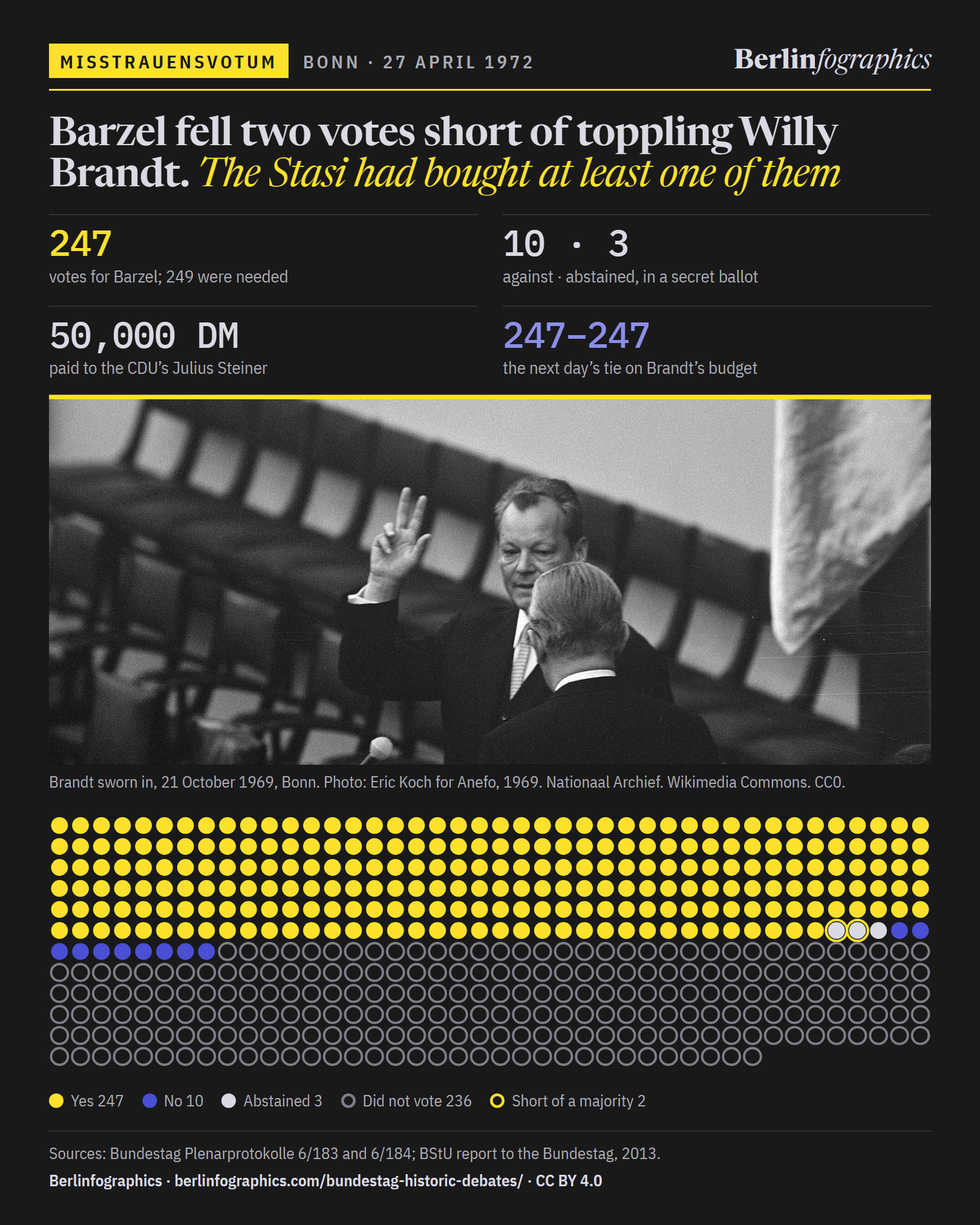
On 27 April 1972 the opposition leader needed 249 votes in the Bundestag to replace the chancellor and his opening to the East. He got 247. A year later one of his own members confessed to taking 50,000 DM; East Germany’s spy chief later said the money was his.

Scroll through the vote

Bonn, 21 October 1969: Willy Brandt, just elected chancellor, takes the oath in the Bundestag before its president, Kai-Uwe von Hassel (back to camera).Eric Koch for Anefo, 1969. Nationaal Archief. Wikimedia Commons. CC0.
01The stakes

Brandt had made peace treaties with Moscow and Warsaw. The opposition set out to stop them with a new chancellor

Willy Brandt’s SPD–FDP coalition signed treaties with the Soviet Union on 12 August 1970 and with Poland on 7 December 1970, the heart of his new Ostpolitik. The CDU/CSU opposition under Rainer Barzel rejected them. Brandt’s coalition had started with a majority of only twelve, and as the treaties came up for ratification, members of the SPD and FDP began crossing the floor to the opposition.

On 24 April 1972 Barzel tabled a constructive vote of no confidence (Basic Law, Article 67): the Bundestag would remove Brandt by electing Barzel in his place. It had never been tried. To succeed, he needed a majority of all 496 full-voting members, not just of those who voted.

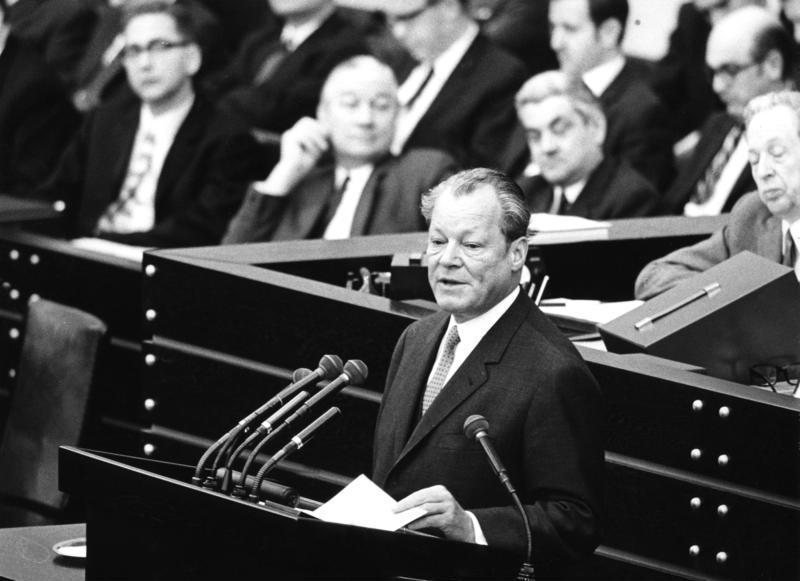
Black-and-white photograph of Willy Brandt speaking at a lectern with several microphones, members of parliament seated behind him.
Bonn, 28 January 1971: Chancellor Willy Brandt speaks in the Bundestag.Bundesarchiv, B 145 Bild-F033246-0009 / Wegmann, Ludwig / CC BY-SA 3.0 de
249votes Barzel needed: a majority of the 496 members with a full vote
12the coalition’s majority when it took office, before the floor-crossings
11West Berlin members voted as well; their votes did not count towards the result

02Four roll calls, one chamber

496 members. Watch where the votes went

Each dot is one member of the Bundestag with a full vote. Scroll, and the chamber fills in with four roll calls of 1972, each drawn from the official record.

YesNoAbstainedDid not voteMissing from a majority
496membersThe Bundestag, 1972
full-voting members
One dot for each full-voting member of the Bundestag. As you read, the dots are coloured by how each member voted: yes, no, abstained or did not vote, in the vote of no confidence of April 1972 and in three roll calls that followed.
Member with a full vote
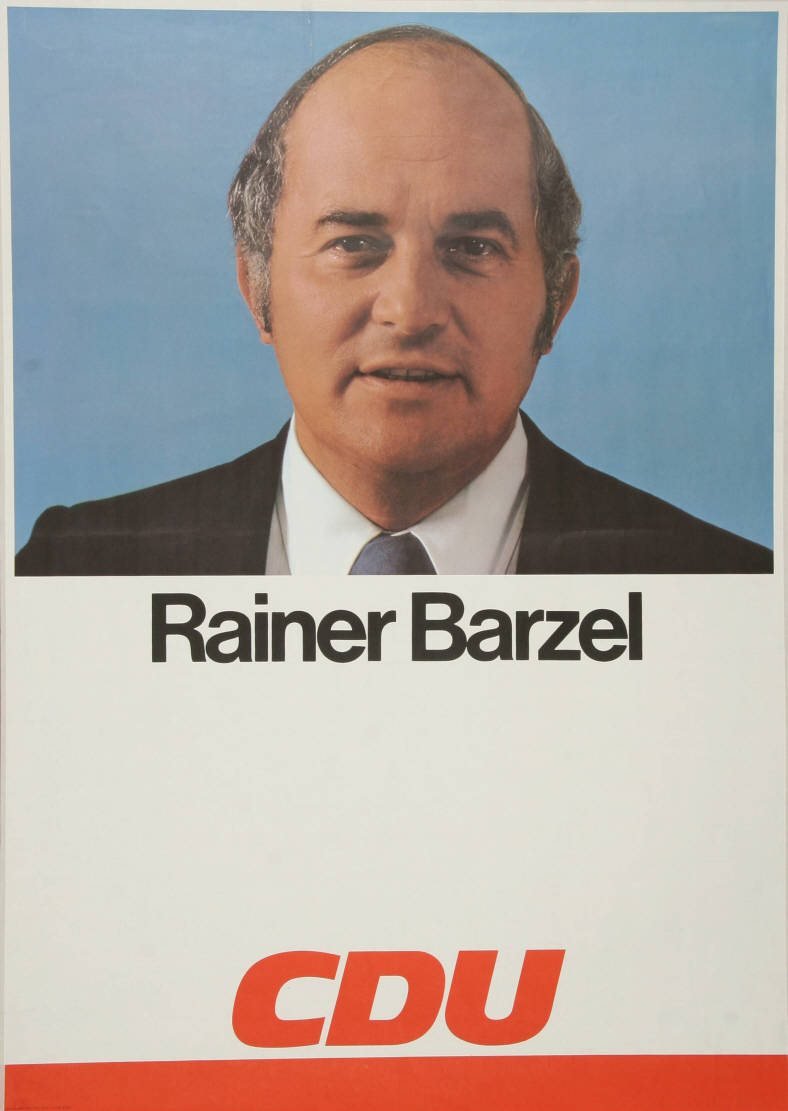
Election poster: a colour portrait of Rainer Barzel against a blue sky, his name beneath and the CDU logo at the foot.
Rainer Barzel, CDU poster, 1972KAS/ACDP 10-001: 1502 / CC BY-SA 3.0 de

24 April 1972 · motion tabled

To replace Brandt, Barzel needed 249 of 496

A constructive vote of no confidence is an election. Barzel had to win the votes of a majority of the members: 249. Abstaining, or not voting at all, counted the same as voting against him.

Source: Bundestag Plenarprotokoll 6/183 · Basic Law, Art. 67

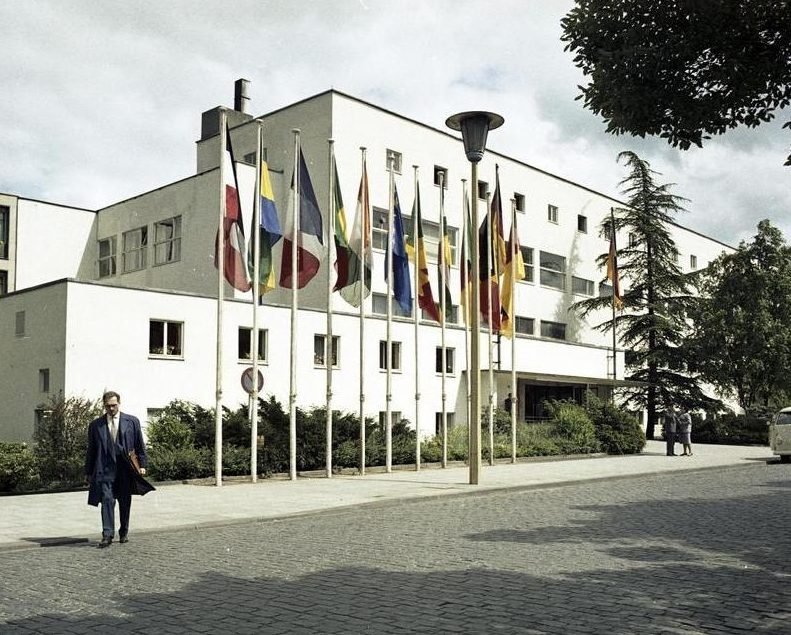
Black-and-white photograph of a long modernist building on the Rhine with a row of flags in front.
The Bundeshaus, BonnBundesarchiv, B 145 Bild-F010479-0006 / photographer unknown / CC BY-SA 3.0 de

27 April 1972 · 183rd sitting

260 members voted. 247 of them chose Barzel

The ballot was secret, and most SPD and FDP members did not take part. The count: 247 yes, 10 no, 3 abstentions.

Source: Bundestag Plenarprotokoll 6/183 · bpb chronicle, 27 April 1972

27 April 1972 · 13.22

Two votes short. At least two of Barzel’s own side had failed him

At 13.22 the Bundestag’s president, Kai-Uwe von Hassel, announced that Barzel had not won a majority of the members. The opposition had counted on those votes; they had to have been withheld from inside it.

Source: Bundestag Plenarprotokoll 6/183 · bundestag.de, 2012 · BStU report to the Bundestag, 2013

Black-and-white photograph of Willy Brandt speaking at a lectern with several microphones, members of parliament seated behind him.
Brandt in the Bundestag, January 1971Bundesarchiv, B 145 Bild-F033246-0009 / Wegmann, Ludwig / CC BY-SA 3.0 de

28 April 1972 · the chancellor’s budget

The next day the chamber split exactly in half

On 28 April the Bundestag voted by roll call on the budget of the chancellor and his office: 247 yes, 247 no, 1 abstention. On a tie a motion falls, so the budget was rejected. Brandt had survived, but he no longer had a majority.

Source: Bundestag Plenarprotokoll 6/184 · bpb chronicle, 27 April 1972 · bpb, Vertrauensfrage 1972

Black-and-white photograph of two delegations of men in dark coats walking out of a building.
Brandt in Erfurt, March 1970Bundesarchiv, B 145 Bild-F031406-0017 / Unknown / CC BY-SA 3.0 de

17 May 1972 · the treaties

The treaties passed, because the opposition abstained

On 17 May the Moscow Treaty was ratified with 248 yes, 10 no and 238 abstentions. The CDU/CSU group had agreed to abstain (KAS). The Warsaw Treaty passed the same day, 248 to 17.

Source: Bundestag Plenarprotokoll 6/187 · KAS, 17 May 1972

22 September 1972 · vote of confidence

Then Brandt asked for a vote of confidence, and lost it on purpose

With the House deadlocked, Brandt asked the Bundestag for its confidence so that he could lose it and call an election. He lost it deliberately: 233 yes, 248 no. He was 16 short of 249.

Source: Bundestag Plenarprotokoll 6/199 · bpb, Vertrauensfrage 1972

03The voters' answer

Seven months later the SPD won the best result in its history. Brandt had his majority back

The country voted again on 19 November 1972. Turnout was 91.1 per cent, a record that still stands. The SPD took 45.8 per cent of the second votes, its best result to date and more than the CDU and CSU together; with the FDP the coalition again held a clear majority of seats. The Bundestag re-elected Brandt on 14 December 1972, and a week later his government signed the Basic Treaty with East Germany, on 21 December 1972.

Second votes, federal election of 19 November 1972 (per cent)

Source: Bundeswahlleiterin, 1972

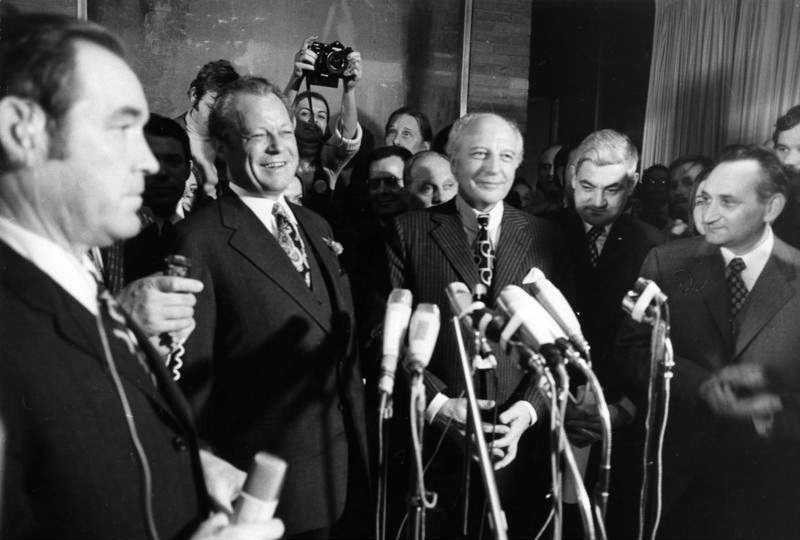
Black-and-white photograph of Willy Brandt and Walter Scheel smiling behind a cluster of microphones, surrounded by journalists and photographers.
Election night, 19 November 1972: Willy Brandt and Walter Scheel of the FDP make their first statement as winners, in Bonn.Bundesarchiv, B 145 Bild-F038347-0030 / Schaack, Lothar / CC BY-SA 3.0 de
Black-and-white photograph of two men seated at a press conference table with microphones.
East Berlin, 21 December 1972: after signing the Basic Treaty, the GDR’s Michael Kohl (right) and the Federal Republic’s Egon Bahr answer journalists’ questions.Bundesarchiv, Bild 183-L1221-0020 / Hubert Link / CC BY-SA 3.0 de

05Ten years later

The opposition finally won a constructive vote in 1982. It is still the only one that has ever succeeded

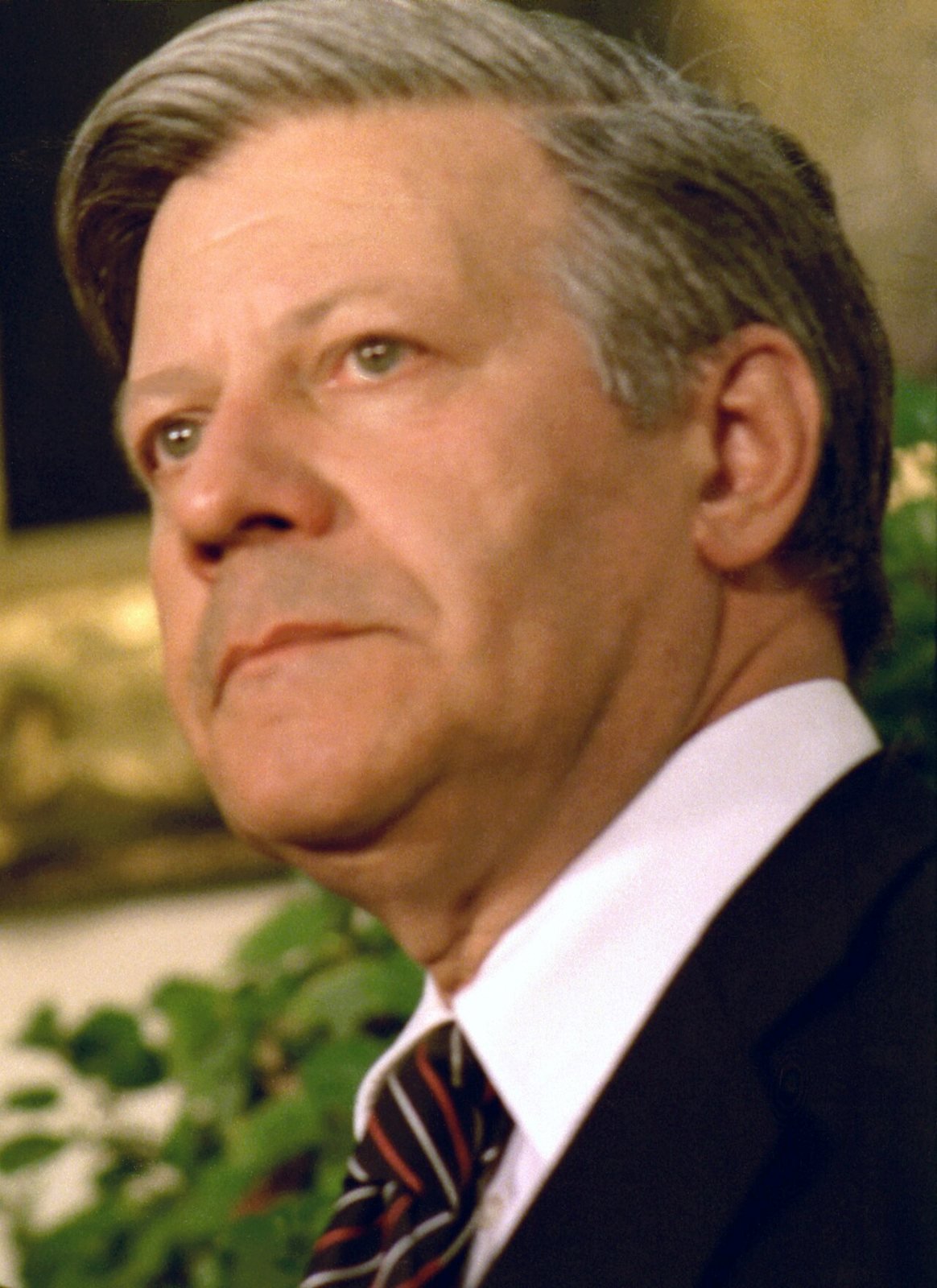
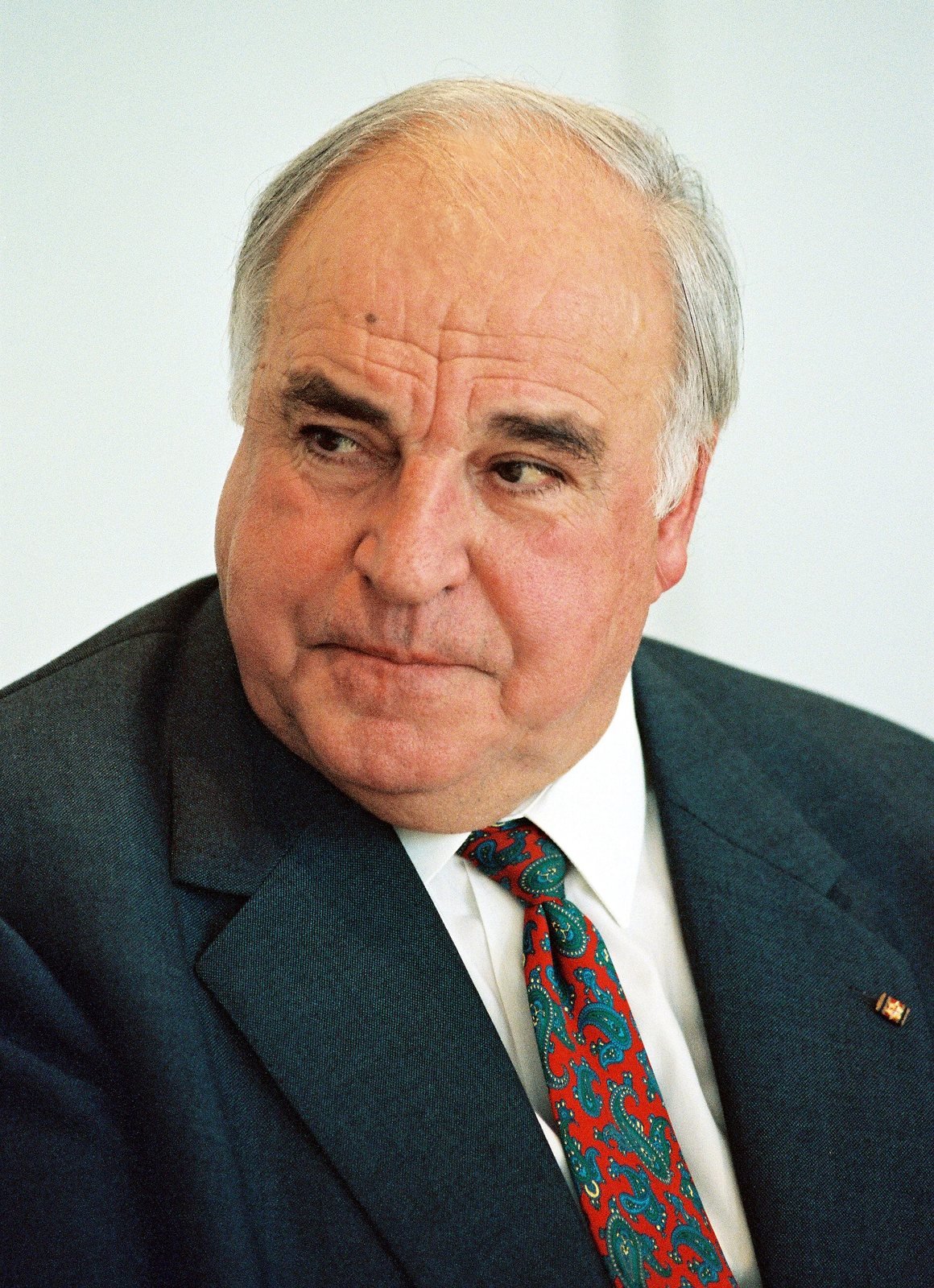
On 1 October 1982 the Bundestag replaced Helmut Schmidt with Helmut Kohl: the Union achieved what it had failed to do in 1972. The Bundestag has removed a chancellor this way only once (bpb). The full line of chancellors is in Germany’s federal chancellors.

Colour portrait of Helmut Schmidt.
Helmut Schmidt, July 1977.Jack Kightlinger, 1977. Wikimedia Commons. Public domain.
Colour portrait of Helmut Kohl.
Helmut Kohl, 1996.Christian Lambiotte, 1996. Wikimedia Commons. CC BY 4.0.
Bonn · 27 April 1972

The first attempt to replace a West German chancellor failed by two votes, and at least one of them had been bought in East Berlin.

More from Bonn: Germany’s federal chancellors · One majority in the Bundestag’s elections

Press & citation

Use this Berlinfographic

Free to publish under CC BY 4.0 — in print, online, on Wikipedia and in teaching, commercially or not — with credit to Berlinfographics and a link to this page.

Two votes short: the vote that saved Willy Brandt, 1972: ready-to-use landscape image

Ready-to-use image

The infographic as one image: headline, key figures, chart, sources and credit, 2,400 × 1,350 px PNG. Please use it unedited.

Download landscape (PNG)
Two votes short: the vote that saved Willy Brandt, 1972: square version

Square format

A 1:1 version for social media and narrow columns, 1,800 × 1,800 px.

Download square (PNG)
Two votes short: the vote that saved Willy Brandt, 1972: portrait version

Portrait 4:5

For Instagram and LinkedIn feeds, 1,620 × 2,025 px.

Download portrait (PNG)

Credit line

Berlinfographics (berlinfographics.com), CC BY 4.0

Citation

Berlinfographics (2026). “Two votes short: the vote that saved Willy Brandt, 1972”. Berlin Experiences. https://berlinfographics.com/bundestag-historic-debates/

Wikipedia

{{cite web |title=Two votes short: the vote that saved Willy Brandt, 1972 |url=https://berlinfographics.com/bundestag-historic-debates/ |website=Berlinfographics |publisher=Berlin Experiences |date=2026-11-09 |access-date=2026-11-09}}