Berlinfographicsby Berlin Experiences

Berliners read the Reich President’s decree on an advertising column, July 1932. The archive caption reads “Der Ausnahmezustand in Berlin!” (“The state of emergency in Berlin!”).Photo: Bundesarchiv, Bild 102-13680 / Pahl, Georg / CC BY-SA 3.0 de

Prussia

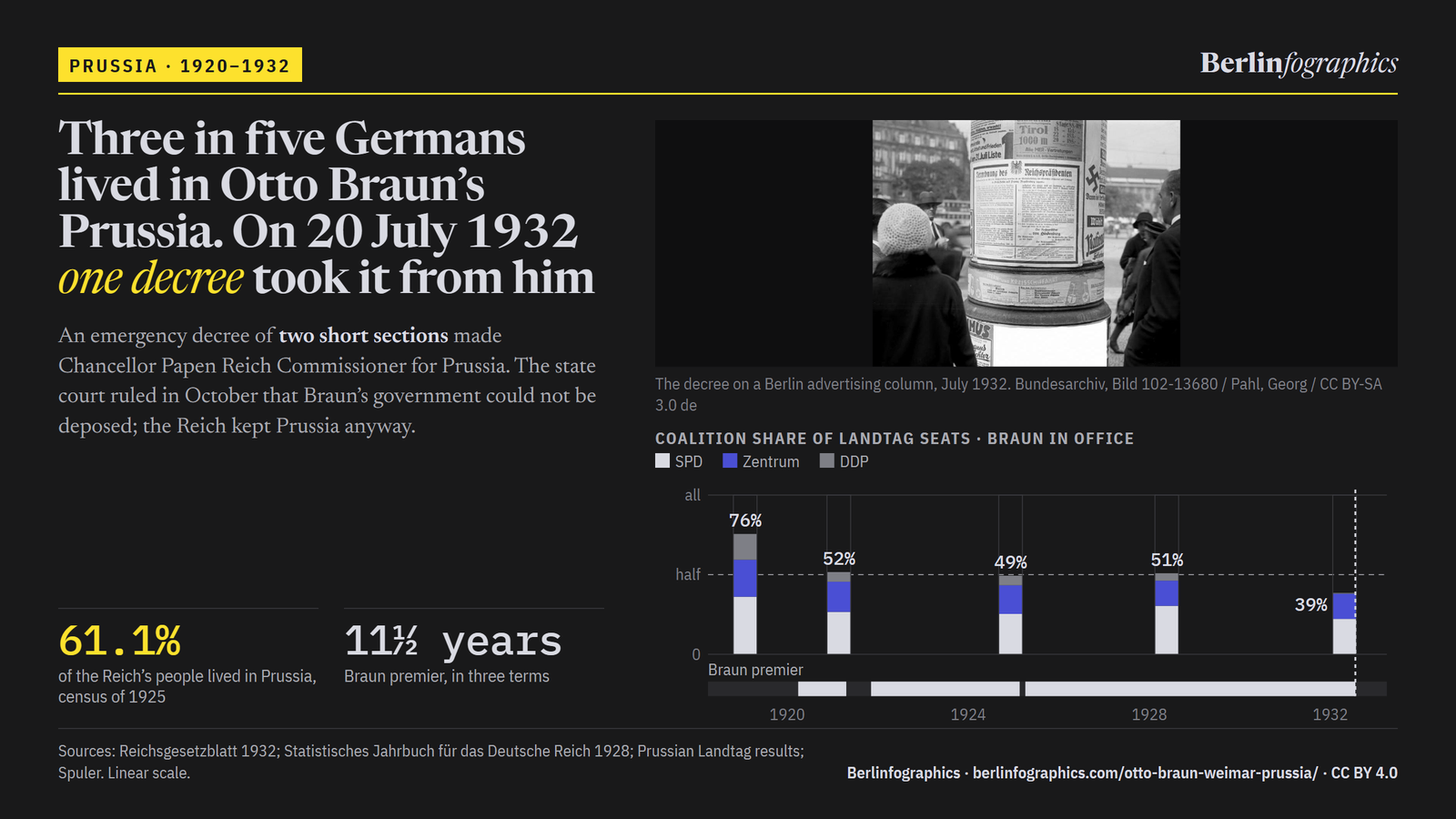
Three in five Germans lived in Otto Braun’s Prussia. On 20 July 1932 a decree of two short sections took it from him

For more than eleven and a half years the Social Democrat Otto Braun governed the Republic’s largest state. Then an emergency decree handed his government to the Reich chancellor, Franz von Papen. The state court in Leipzig ruled that Braun could not be deposed. He was never given Prussia back.

61.1%
of the Reich’s people lived in Prussia at the census of 1925
11½years
Braun’s time as premier, in three terms, 1920–1932
163of 423
Landtag seats left to his coalition in April 1932, down from 303 of 401 in 1919
7articles
of the constitution suspended in Berlin, 20 July – 26 July 1932
01The largest state

Prussia was most of Germany

At the census of 16 June 1925 the Free State of Prussia counted 38,120,173 people, against 62,410,619 in the whole Reich. It covered 62.2% of the Reich’s land, from the Rhine to East Prussia, and its capital, Berlin, was the Reich’s capital too.

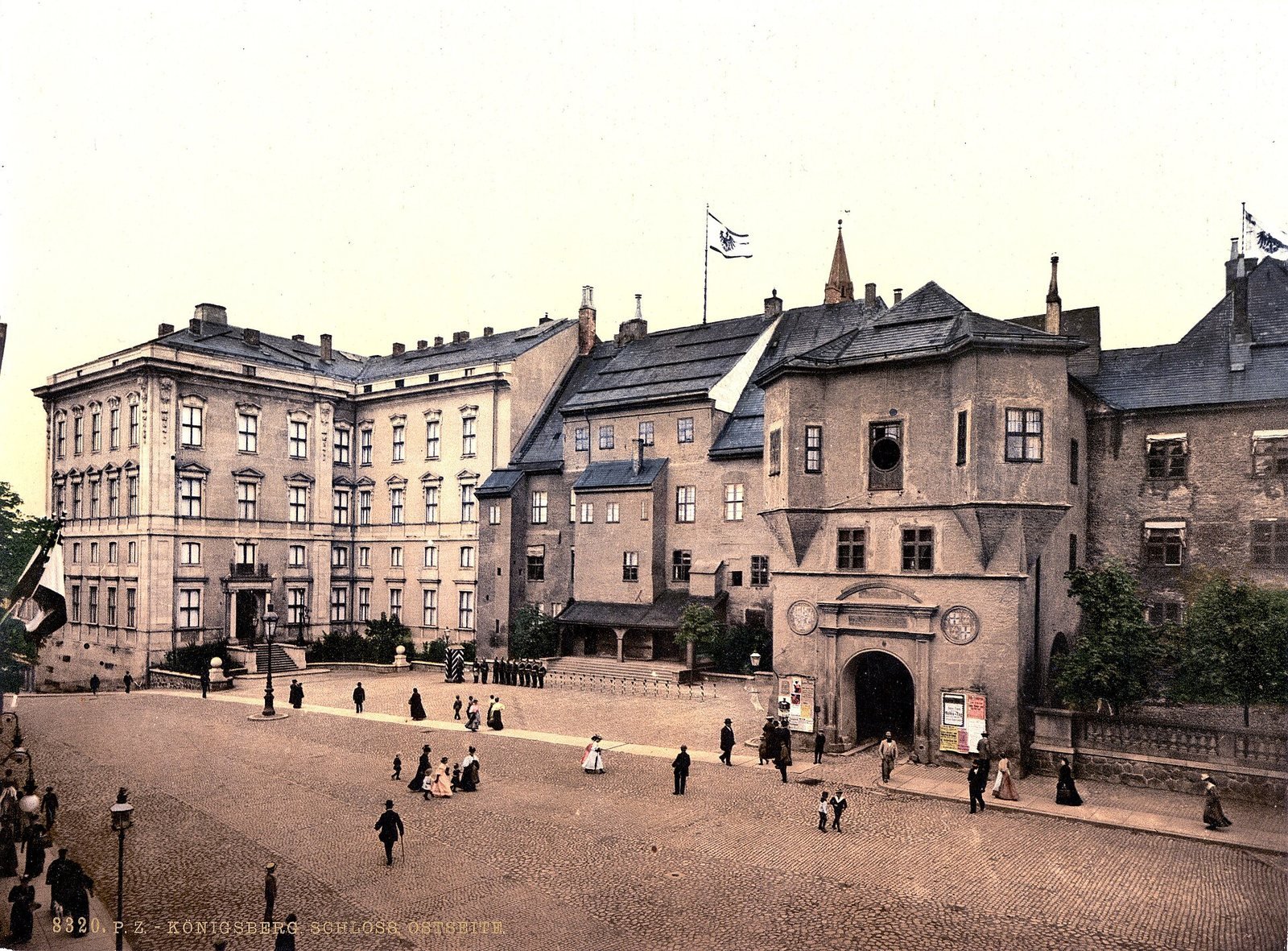
Otto Braun was born in Königsberg in 1872. A Social Democrat from his youth, he entered the Prussian Landtag in 1913. In the revolution of November 1918 he became Prussia’s agriculture minister, and in 1919 he was elected to the National Assembly.

Each bar is the whole Reich (without the Saar), on a linear scale; the line marks half. Berlin alone held 6.4% of the Reich’s people. Source: Statistisches Jahrbuch für das Deutsche Reich 1928, final census results.

A colour-tinted view of a large castle courtyard with a tower and an arched gate, a few people crossing the square.
The castle at Königsberg in East Prussia, in a photochrom print of the 1890s. Otto Braun was born in the city in 1872 and began his political life there.Photo: Unknown author, between 1890 and 1900. Wikimedia Commons. Public domain.

02Five elections

He held Prussia while his majority shrank

Braun governed with the Weimar Coalition: his SPD, the Catholic Zentrum and the liberal DDP. At five Landtag elections their share of the seats fell from three-quarters to well under half. Twice in between, he was out of office.

The coalition’s share of Landtag seats, and Braun in office

The Weimar Coalition's share of the seats in the Prussian Landtag at each election from 1919 to 1932, stacked by party on a linear scale from zero to all seats, with a line at half the seats; below, on the same time scale, the three periods Otto Braun was Prussian premier.
SPDZentrumDDPNSDAP, 1932

Each column is one Landtag election, at its date, stacked on a linear scale from no seats to all of them; the dashed line is half. The bar beneath runs while Braun was premier. Seats in the Prussian Landtag won by the three parties of the Weimar Coalition: SPD, Zentrum, and DDP (from 1930 the Deutsche Staatspartei). For 1928 the Zentrum's seats include the 3 won by its Lower Saxony list, as the source's overview counts them.

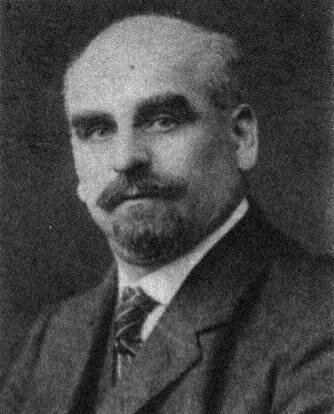
Head-and-shoulders portrait of a man with a high forehead, moustache and pointed beard, in a dark suit and tie.
Otto Braun, 1919.Photo: Deutsches Reich, Reichstag, 1919. Via Wikimedia Commons (Public domain).

1872–1919

From Königsberg to the Landtag

In January 1919 the Weimar Coalition won 303 of 401 seats in Prussia’s constituent assembly. Braun, the agriculture minister since the revolution, was one of its leaders.

Soldiers in steel helmets stand in a street before grand buildings beside a hand-painted sign reading Halt! Wer weitergeht wird erschossen.
Putschists close off the government quarter, 13 March 1920.Photo: Bundesarchiv, Bild 183-J0305-0600-003 / Unknown author / CC BY-SA 3.0 de

March 1920

Premier after a putsch

The Kapp Putsch held Berlin from 13 March to 17 March. Twelve days after it collapsed, on 29 March, Braun’s first cabinet took office.

A long sandstone parliament building with a columned central portico, seen across a quiet street.
The Prussian parliament building, Prinz-Albrecht-Straße, about 1900.Photo: Unknown author, 1900. Wikimedia Commons. Public domain.

1921

Lost, and won back

At the Landtag election of 20 February the coalition kept 221 of 428 seats. In April Braun gave way to a Zentrum premier. On 7 November he was back.

A poster in which a young man in shirtsleeves grips a ship’s wheel beneath a drawn portrait of Otto Braun, with the words Fester Kurs für die Republik and Wählt Otto Braun.
SPD poster for the Landtag election of 1924: “Wählt Otto Braun”.Photo: Fritz Gottfried Kirchbach, 1924; photo Bernd Schwabe in Hannover, 2013. Wikimedia Commons. Public domain.

December 1924

Short of half

On 7 December the coalition won 222 of 450 seats, short of the 226 a majority needed. In February 1925 Braun lost office for the second time.

Two men in suits and hats walk along a city pavement; the man on the left carries a walking stick.
Braun, the SPD’s candidate for Reich President, 1925.Photo: Bundesarchiv, Bild 102-01173 / Unknown author / CC BY-SA 3.0 de

1925

The presidency went to Hindenburg

Braun ran for Reich President for the SPD, then stood down for the Zentrum’s candidate in the second round. Hindenburg won on 26 April. Braun’s third cabinet, formed on 5 April, lasted seven years.

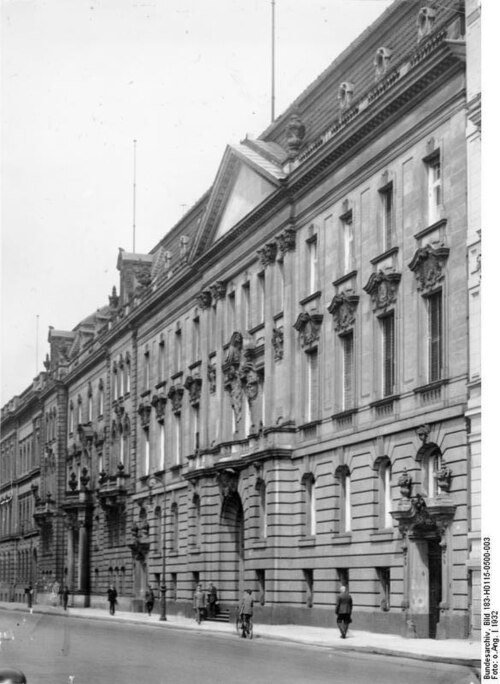
A long four-storey stone building with tall windows along a straight street.
The Prussian State Ministry, Wilhelmstraße 63/64, 1932.Photo: Bundesarchiv, Bild 183-H0115-0500-003 / Unknown author / CC BY-SA 3.0 de

May 1928

Just over half again

On 20 May the coalition won 229 of 450 seats. Braun governed from the Prussian State Ministry at Wilhelmstraße 63/64.

A tall man in a suit and hat, a briefcase in his hand, walks down the steps of a stone building.
Braun leaves the Reichstag on the day it was dissolved, 18 July 1930.Photo: Bundesarchiv, Bild 102-10131 / Unknown author / CC BY-SA 3.0 de

July 1930

The Reich slides

On 18 July the Reich President dissolved the Reichstag; Braun was photographed leaving it. At the election that September the Nazi Party went from 12 Reichstag seats to 107.

A poster showing a huge man in shirtsleeves holding two small shouting figures over a domed parliament building, with the words Hände weg von Preußen and Wählt Zentrum.
Zentrum poster for the Landtag election of April 1932.Photo: KAS/ACDP 10-043 : 18 / CC BY-SA 3.0 de

April 1932

The majority goes

On 24 April the coalition was left with 163 of 423 seats; the Nazi Party won 162. Braun’s cabinet resigned on 19 May and carried on as a caretaker, as the Prussian constitution provided.

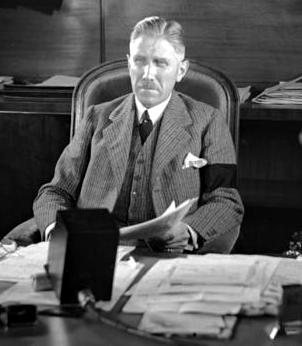
A grey-haired man in a double-breasted suit sits at a desk covered with papers, a microphone in front of him.
Franz von Papen at his desk, July 1932.Photo: Bundesarchiv, Bild 102-13708 / Unknown author / CC BY-SA 3.0 de

20 July 1932

Out, by decree

Citing the bloodshed in Altona three days earlier, the Reich President made Chancellor Franz von Papen Reich Commissioner for Prussia, with power to remove its ministers. Braun’s seven-year government was gone.

03Ninety-eight days

From the SA ban to the decree: fourteen weeks

On 13 April 1932 an emergency decree signed by Hindenburg and Chancellor Heinrich Brüning dissolved the SA and SS “with immediate effect”. Brüning resigned at the end of May. On 14 June the new cabinet under Franz von Papen repealed the ban, 62 days after it was imposed.

On 17 July street fighting between Nazis and Communists in Altona, then a Prussian town beside Hamburg, left 18 people dead. Three days later Papen used it as the reason to take Prussia.

Fourteen weeks in 1932, day by day

One linear day scale from 13 April to 26 July. Sources: Reichsgesetzblatt; Landtag results; Friedrich-Ebert-Stiftung.

The front page of a German newspaper in black-letter type with the headline Blutsonntag in Altona!
The morning after: the KPD’s Hamburger Volkszeitung of 18 July 1932, “Blutsonntag in Altona!” Its first count was twelve dead. A Communist paper’s account, shown as a document of the day.Document: Hamburger Volkszeitung, 18 July 1932. Photo: Wikimedia Commons user, 2019. Public domain.
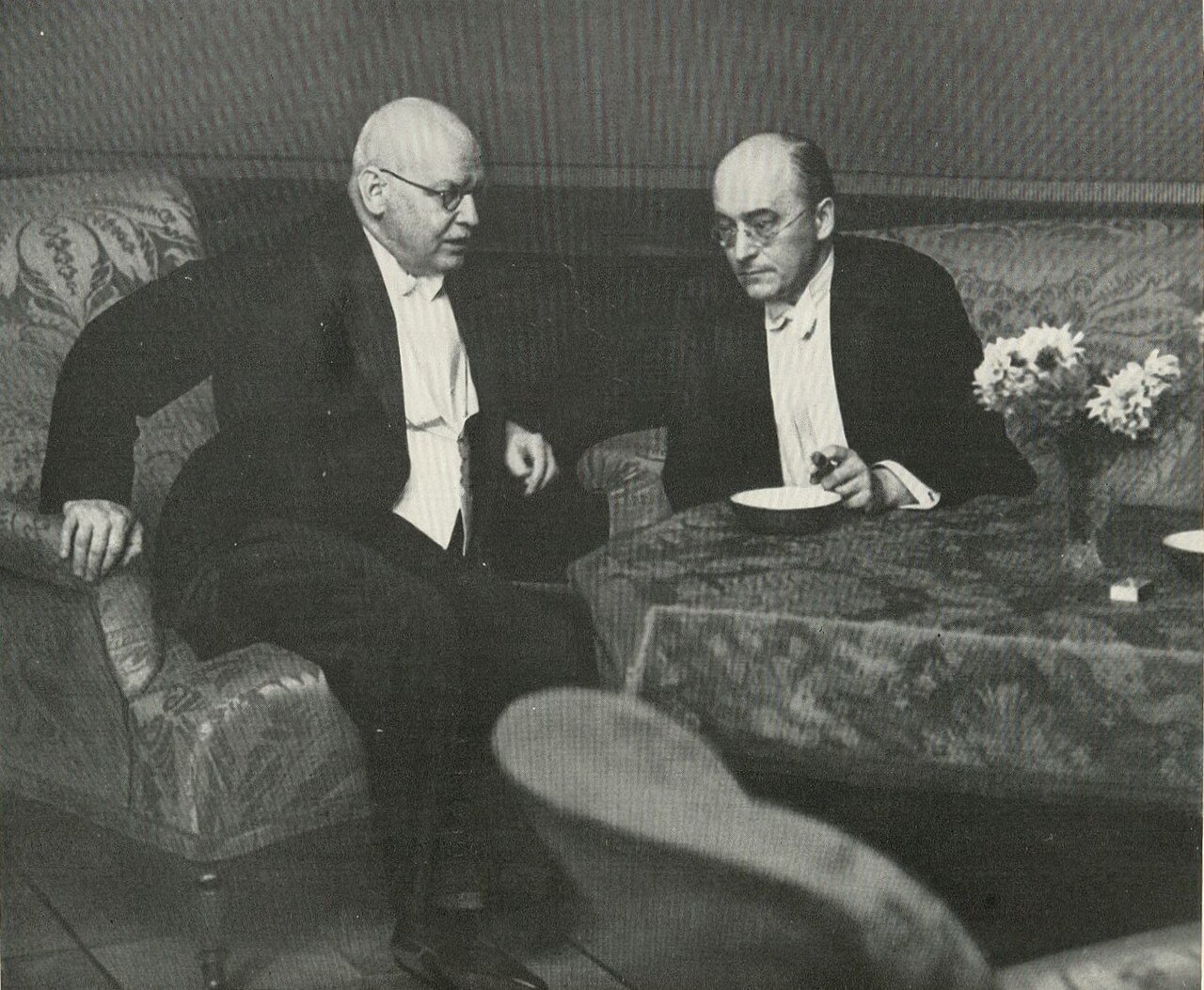
Two men in evening dress talking on a sofa beside a lamp.
Chancellor Heinrich Brüning (right) with the Reichsbank president Hans Luther, photographed by Erich Salomon in 1931. Brüning’s government banned the SA and SS on 13 April 1932.Photo: Erich Salomon, 1931. Wikimedia Commons. Public domain.

The whole decree

It was published the same day in the Reichsgesetzblatt, citing Article 48, paragraphs 1 and 2 of the constitution, the president’s emergency powers. Its first section made the chancellor Reich Commissioner for Prussia and allowed him to take over the premier’s duties himself. The second put it into force at once.

Verordnung des Reichspräsidenten, betreffend die Wiederherstellung der öffentlichen Sicherheit und Ordnung im Gebiet des Landes Preußen.

Vom 20. Juli 1932.

§ 1Für die Geltungsdauer dieser Verordnung wird der Reichskanzler zum Reichskommissar für das Land Preußen bestellt. Er ist in dieser Eigenschaft ermächtigt, die Mitglieder des Preußischen Staatsministeriums ihres Amtes zu entheben. …For as long as this decree is in force, the Reich Chancellor is appointed Reich Commissioner for the State of Prussia. In this capacity he is empowered to remove the members of the Prussian State Ministry from office. He is further empowered to take over the duties of the Prussian premier himself and to put other persons in charge of the Prussian ministries as commissioners of the Reich.
§ 2Diese Verordnung tritt mit dem Tage ihrer Verkündung in Kraft.This decree comes into force on the day of its publication.
Neudeck und Berlin, den 20. Juli 1932 · Der Reichspräsident von Hindenburg · Der Reichskanzler von PapenReichsgesetzblatt

Section 1 as published, shortened where marked; its second paragraph, on the commissioner’s powers, is summarised in the English. English: Berlinfographics, after Axel Tschentscher’s translation (Universität Bern).

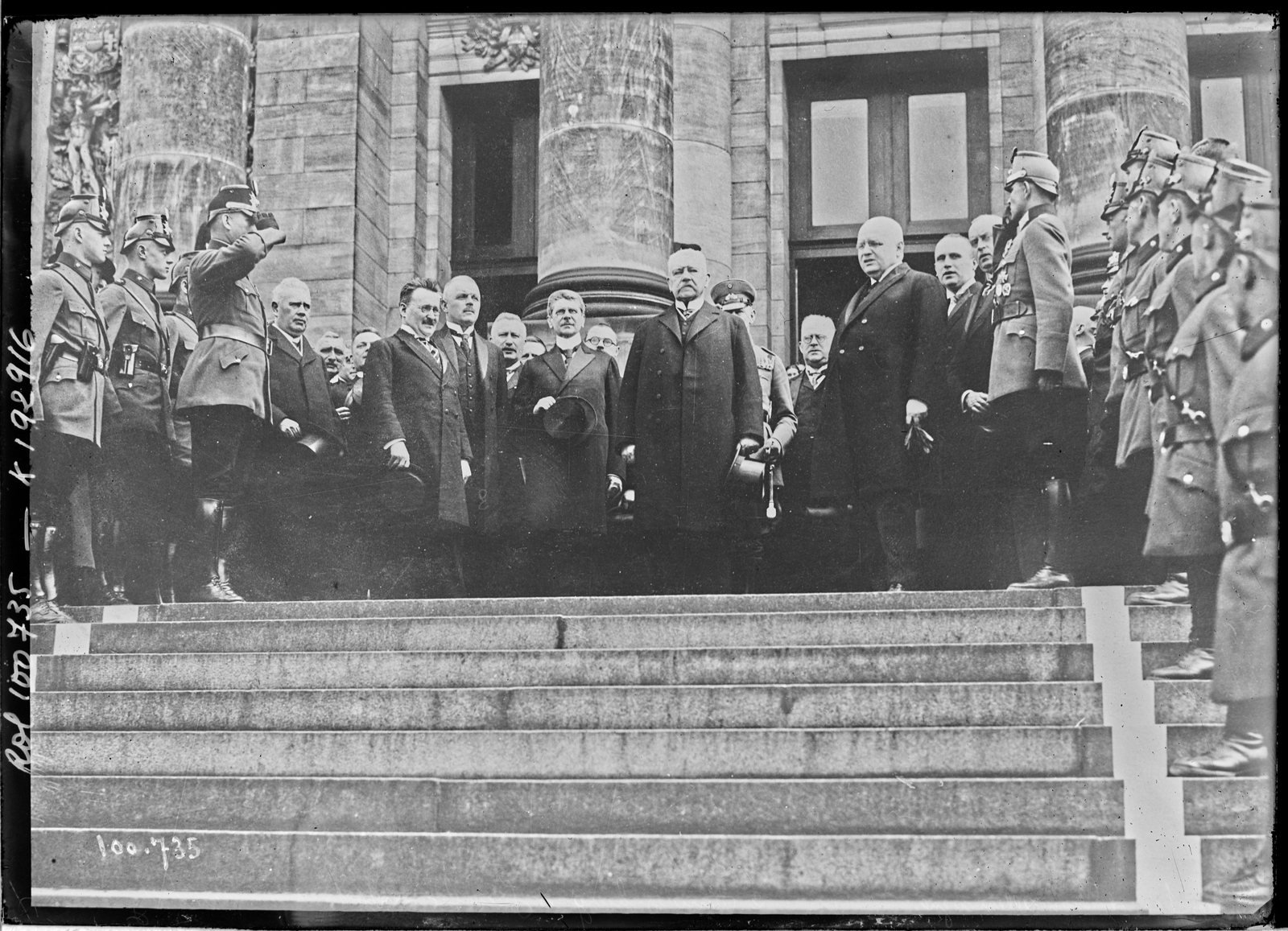
A group of men in dark coats, one tall white-moustached figure in the centre, descend the steps of a large stone building past a line of police.
Paul von Hindenburg (centre) leaves the Reichstag with Hans Luther and Otto Geßler in 1925, the year he was elected Reich President.Photo: Agence Rol, 1925. Via Wikimedia Commons (Public domain).

04Berlin, 20–26 July

For six days, Berlin was under the Reichswehr

A second decree, the same day, covered Greater Berlin and the province of Brandenburg. It handed executive power to the Reichswehr minister, put the whole Schutzpolizei of the area under his command, and suspended seven articles of the constitution. It was lifted on 26 July at 12 noon.

The articles suspended in Berlin and Brandenburg, 20 July – 26 July 1932

Art. 114
Freedom of the person
Art. 115
The home is inviolable
Art. 117
Secrecy of letters, post, telegraph and telephone
Art. 118
Freedom of expression, including the press
Art. 123
Freedom of assembly
Art. 124
Freedom of association
Art. 153
Property

The same seven articles were suspended for the whole Reich by the decree of 28 February 1933, the morning after the Reichstag fire.

A city square with trams and buildings behind, a crowd of men and women walking away as uniformed police move among them.
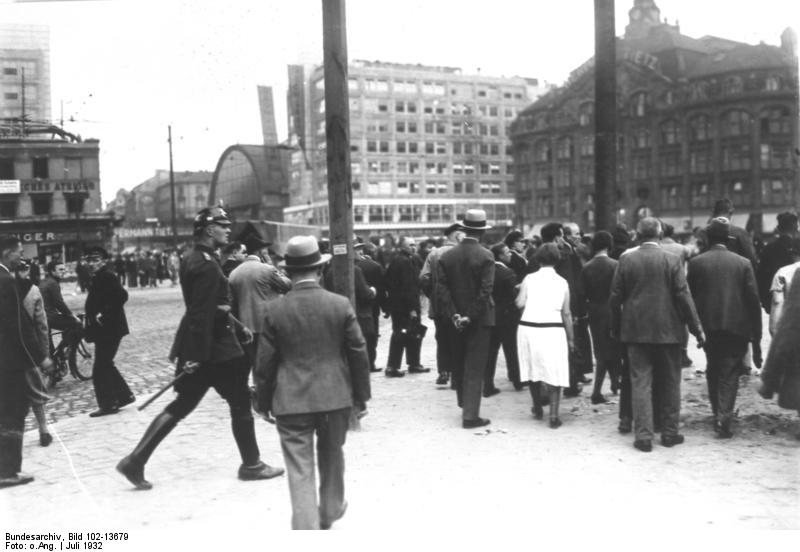
Under the state of emergency, Schutzpolizei with rubber truncheons break up crowds on Alexanderplatz, July 1932. The archive caption begins: “Der Ausnahmezustand in Berlin!”Photo: Bundesarchiv, Bild 102-13679 / Unknown author / CC BY-SA 3.0 de
Portrait of a man with thick swept-back grey hair, looking down to the right.
Carl Severing, Braun’s interior minister, in the handbook of the Prussian Landtag, 1932.Photo: Free State of Prussia, 1932. Via Wikimedia Commons (Public domain).

Carl Severing was Braun’s interior minister. The press caption the Bundesarchiv keeps from that July names him and three of Berlin’s police chiefs as “arrested and removed from office by the military authority”. To avoid a fight between the Prussian police and the army, the government chose to resist in court.

05Leipzig, 25 October

The court said Braun could not be deposed. It did not give him Prussia back

Prussia sued the Reich before the Staatsgerichtshof, the constitutional court of the Weimar Republic, which sat at the Reichsgericht in Leipzig. Its judgment came on 25 October 1932. Historians still disagree about who won: the Deutsches Historisches Museum says the court ruled the commissioners lawful, the Friedrich-Ebert-Stiftung that it ruled the dismissal unlawful. What each side kept is plainer.

A vast domed sandstone court building with a columned front, seen across a lawn.
The Reichsgericht building in Leipzig, where the Staatsgerichtshof heard Prussia against the Reich in October 1932. Photographed in 2010.Photo: Andreas Praefcke, 2010. Wikimedia Commons. CC BY 3.0.

The Reich Commissioner kept

The ministries and the police

The Reich could take over Prussia’s government business for a time, so its commissioners stayed in charge of the ministries and the police.

Braun’s ministers kept

Their offices, on paper

It could not depose the Prussian government, so Braun’s ministers kept the right to speak for Prussia, in the Reichsrat among other places. “Nach einer Reichsgerichtsentscheidung vom 25.10.1932 ist dieses Ministerium auch während der Zeit des Reichskommissariats als im Amt befindlich zu betrachten.”

The Reich did not hand back the offices, and the court did not insist. The German line is Bertold Spuler’s summary of the judgment in his handbook of governments: the ministry “is to be regarded as in office even during the commissioner’s administration”.

Hitler’s cabinet finished the job

When Hitler became chancellor on 30 January 1933, the commissioner’s powers passed to Papen as vice-chancellor. On 6 February 1933 a further decree transferred to the Reich Commissioner the powers the judgment had left to Braun’s ministry, blaming Prussia’s conduct after the ruling for “a confusion in the life of the state”.

After the Reichstag fire Braun left Germany. In March 1933 he crossed into Switzerland.

The Reichstag building with its dome, smoke-stained, people standing in the square in front.
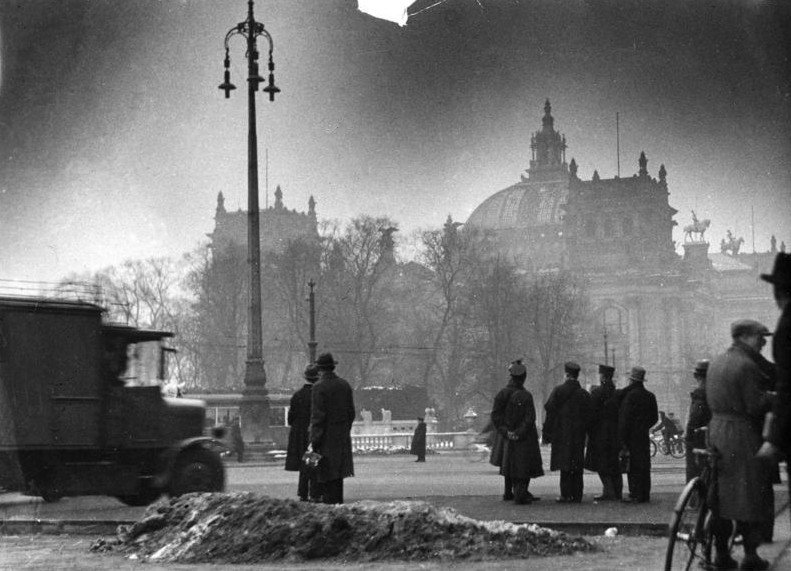
The Reichstag on the morning after the fire, 28 February 1933. The decree signed that day suspended the same seven articles of the constitution that Berlin had lost for six days in July 1932.Photo: Bundesarchiv, Bild 146-1977-148-19A / Unknown author / CC BY-SA 3.0 de

06Exile

He wrote it down in Switzerland

Braun spent the rest of his life in Swiss exile. In 1940 he published his account of the end of the Republic, Von Weimar zu Hitler (“From Weimar to Hitler”).

He died in Locarno on 15 December 1955, at 83.

A colour-tinted view across a lake shore with boats to a small town at the foot of wooded mountains under cloud.
Locarno on Lake Maggiore, in a photochrom print of the 1890s. Braun spent his exile in Switzerland and died in Locarno on 15 December 1955.Photo: Photochrom Print Collection, between 1890 and 1900. Library of Congress. Wikimedia Commons. Public domain.
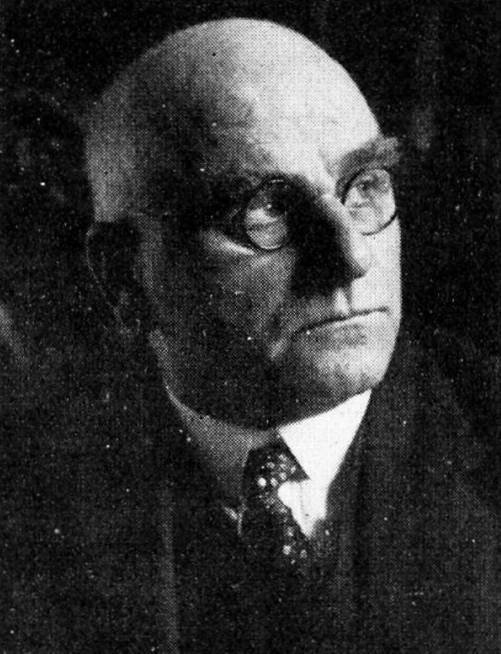
Head-and-shoulders portrait of a bald man with a moustache and round spectacles, looking to the side.
Otto Braun in the handbook of the Prussian Landtag, 1932.Photo: Free State of Prussia, 1932. Via Wikimedia Commons (Public domain).

The court ruled that Prussia’s government could not be deposed. It was never given back.

Press & citation

Use this Berlinfographic

Free to publish under CC BY 4.0 — in print, online, on Wikipedia and in teaching, commercially or not — with credit to Berlinfographics and a link to this page.

Otto Braun and the fall of democratic Prussia, 1920–1932: ready-to-use landscape image

Ready-to-use image

The infographic as one image: headline, key figures, chart, sources and credit, 2,400 × 1,350 px PNG. Please use it unedited.

Download landscape (PNG)
Otto Braun and the fall of democratic Prussia, 1920–1932: square version

Square format

A 1:1 version for social media and narrow columns, 1,800 × 1,800 px.

Download square (PNG)
Otto Braun and the fall of democratic Prussia, 1920–1932: portrait version

Portrait 4:5

For Instagram and LinkedIn feeds, 1,620 × 2,025 px.

Download portrait (PNG)

Credit line

Berlinfographics (berlinfographics.com), CC BY 4.0

Citation

Berlinfographics (2026). “Otto Braun and the fall of democratic Prussia, 1920–1932”. Berlin Experiences. https://berlinfographics.com/otto-braun-weimar-prussia/

Wikipedia

{{cite web |title=Otto Braun and the fall of democratic Prussia, 1920–1932 |url=https://berlinfographics.com/otto-braun-weimar-prussia/ |website=Berlinfographics |publisher=Berlin Experiences |date=2026-11-09 |access-date=2026-11-09}}